Be a champ
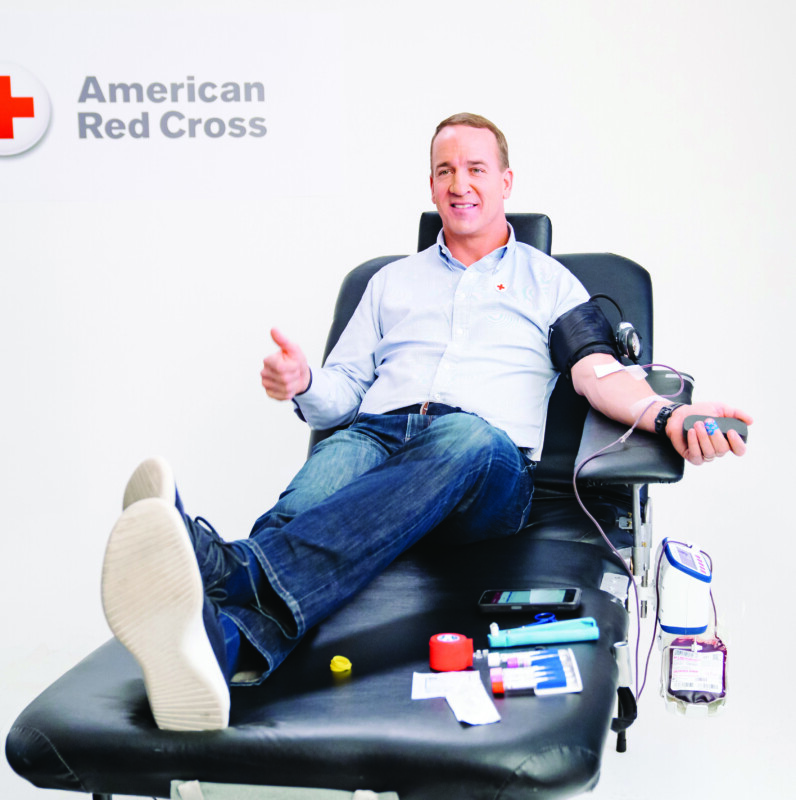
Pro Football Hall of Famer Peyton Manning is teaming up with the American Red Cross during January, National Blood Donor Month, in a call for blood and platelet donations to prevent a seasonal blood shortage. According to a press release from the Concord-based Northern New England Region Red Cross office, the Red Cross, in partnership with the National Football League, will enter everyone who donates blood, platelets or plasma now through Jan. 31 for a chance to win a trip for two to the Super Bowl LVII event in Arizona. Visit RedCrossBlood.org/SuperBowl.
QOL score: +1
Comment: To book a donation appointment at a Red Cross blood donation site near you, download the Red Cross Blood Donor app, visit redcrossblood.org or call 1-800-733-2767.
Land conservation
The New Hampshire Land and Community Heritage Investment Program (LCHIP) will award $4.3 million in matching grants to municipalities, nonprofit organizations and community groups to support 34 land conservation and historic preservation projects across the state. According to a press release, those projects include rehabilitating 17 historic structures and permanently conserving more than 2,700 acres of farm, timber, and ecologically significant land in all ten New Hampshire counties.
QOL score: +1
Comment: The grants will be additionally matched by more than $15 million funding from other public and private sources, according to the release. Recipients are expected to complete the funded projects within two years.
Hate crime increase
Newly released data from the FBI has revealed a significant increase in the number of hate crimes committed in New Hampshire, NHPR reported. New Hampshire law enforcement documented 34 reported hate crimes in 2021, up from 19 in 2020. Hate crimes are defined by the FBI as violent criminal acts against a person or property motivated by bias against a race, ethnicity, religion, disability, sexual orientation, gender or gender identity.
QOL score: -2
Comment: The hate crimes in New Hampshire included 16 instances of destruction or property or vandalism and 13 instances of intimidation. Nearly half of the crimes were targeted at Black residents, eight were motivated by religious bias and seven were related to sexual orientation, according to the article.
Help for families
Bank of New Hampshire has made a $5,000 donation to Harbor Care to support its efforts to help families that are experiencing homelessness or at risk of experiencing homelessness. According to a press release, Harbor Care serves more than 5,000 individuals through housing and residential services, primary and behavioral health care, substance use disorder treatment, home care, HIV/AIDS care, veteran services and food pantries and kitchens that make more than 100,000 meals available annually.
QOL score: +1
Comment:“Support from Bank of New Hampshire will provide thousands of meals and, in the long term, help create the foundations for our clients to build their lives,” Henry Och, President and CEO of Harbor Care, said in the release.
QOL score: 50
Net change: +1
QOL this week: 51
What’s affecting your Quality of Life here in New Hampshire? Let us know at news@hippopress.com.