Culpability, by Bruce Holsinger

(Spiegel and Grau, 341 pages)

Noah and Lorelei are traveling with their three children, en route to a youth lacrosse tournament in Delaware, when their top-of-the-line self-driving minivan hits a Honda that explodes into flames.

The Cassidy-Shaw family all survive; the couple in the Honda do not. The headline in the local paper: “Lucky five escape crash, two die at scene.”

Noah, a corporate attorney, doesn’t feel lucky — wouldn’t luck entail not being involved in a fatal crash? But the larger theme in this smart novel, the fourth from University of Virginia professor Bruce Holsinger, is encapsulated in the title: Culpability.

It is not always obvious who is to blame in any given tragedy, and the closer you look at the circumstances and the people involved, the muddier things get.

The accident occurred when the Honda drifted toward the minivan’s lane, but because the senior citizens in that car are dead, the investigation centers on the survivors — and the artificial intelligence powering the minivan.

Charlie, a star lacrosse player about to enter college on a full scholarship, was sitting in the driver’s seat when the accident happened and as such was the “de facto driver,” the person charged with monitoring the AI’s navigation. Noah, his father, was next to him, composing a memo on his laptop. The two were the only ones to emerge uninjured, and they are the center of the investigation: Charlie, because he jerked the steering wheel when his sister screamed, thus disabling the AI, and Noah, because he was supposed to be supervising his minor son. Lorelei and the couple’s two daughters, Izzy and Alice, were in the back and seemingly involved.

But as the family recovers from their injuries, both psychological and physical, it is gradually revealed that Charlie and Noah are not the only parties whose actions prior to the crash warrant scrutiny. There is a web of culpability with nearly invisible threads that expand in multiple directions, threads that go far past the family. These become increasingly more apparent as the family decamps to a rental house in Virginia, near the Chesapeake Bay — a place they’d stayed a year before. Noah and Lorelei are hoping that a week of kayaking and board games and hot fudge sundaes will do more to help heal the family than the therapy so far has.

The expectations take a turn as Noah notices dramatic changes on the property across in the inlet where they are staying. It turns out a billionaire tech mogul has bought 90 acres across the inlet and transformed the former rustic horse farm into a high-tech, high-security compound that fills Noah with disgust. A widower whose wife died in a car accident, this mogul has a lissome daughter about Charlie’s age, and the teens become smitten with each other after a chance encounter on the water.

But as the families intermingle, Noah begins to suspect that his wife has a prior connection with Daniel Monet, the billionaire, through her work in the field of “computational morality” — the ethics of AI. He has been distant from her career because of what he sees as a divide, in their education, intellect and luck — a state-school graduate, he comes from a family that struggled to do more than survive, while Lorelei comes from a seemingly gilded family, where the siblings went to Yale, Stanford and Princeton.

In dealings with his wife’s sister, Noah notes “a reflective condescension given away in a certain lift of her eyebrows and the angle of her pretty nose.” And on his first and only time to accompany his wife to a conference, Noah feels diminished, out of his league, experiencing “my own terrifying insignificance.”

“My wife became a different person in that rarefied world, as if her brain had suddenly shifted to a higher plane while I hovered by her side as the interloping cupbearer, unworthy of drinking so much as a sip from whatever Olympian ambrosia she was drinking,” Noah says in the novel’s first-person narration.
As the story unfolds, Holsinger injects excerpts from a book that Lorelei has written, which is titled “Silicon Souls: On the Culpability of Artificial Minds,” as well as text conversations between one of the daughters and her AI friend, a chatbot named Blair that knows in detail everything that is going on, and keeps offering advice.

For a while, these asides seem like unwelcome interruptions in the narrative, but by the novel’s end their significance is clear, and evidence of Holsinger’s skill in plotting a deeply intelligent storyline that blends technology, philosophy and ethics, while also plumbing an essential pain of parenting: “No matter what parents do, their children’s outcomes are neither predictable nor inevitable. Life is not an algorithm, and never will be.”

Like the TV show The Good Place, the novel delivers a crash course in mainstays of secular moral thought, such as situational ethics: “The relative morality of certain actions is determined by the circumstance and context rather than by some absolute, unchanging ethical code. Likewise, our morality as individuals is formed not by innate personality traits but by the variables of our environment.”

Culpability moves slowly at times — it’s told by a corporate lawyer, after all; no offense to corporate lawyers except to say that Noah’s musings on corporate acquisitions right before the crash seem designed to dull our senses. Also at times the book seems overly long, continuing after what seems a natural ending. But Holsinger, as it turns out, knows exactly what he’s doing, and his ending is nothing short of genius. AJennifer Graham

Featured Photo: Culpability, by Bruce Holsinger (Spiegel and Grau, 341 pages)

On Her Game, Caitlin Clark and the Revolution in Women’s Sports, by Christine Brennan

(Scribner, 250 pages)

The story of how Caitlin Clark entered the national consciousness begins not with basketball but with soccer. As Christine Brennan explains in On Her Game, it was specifically the Women’s World Cup championship in 1999, the one in which Brandi Chastain led her team to victory over China and ripped off her shirt.

There had been female athletes before, but they wore “tennis dresses, figure skating sequins, gymnastics leotards and swimming suits,” Brennan writes. What came after Title IX was different: “It was raw athleticism that Americans fell for that summer of ’99. It was the girl next door we’d all seen in our neighborhoods, coming back from a game with a grass-stained jersey and scuffed-up knees, now all grown up.”

It was what Caitlin Clark would become.

Clark, the Indiana Fever point guard who has ignited interest in women’s basketball nationwide, is the latest product of Title IX, the 1972 law that ensured equal opportunities in sports for women and girls. And Brennan’s book is a primer for anyone who hasn’t been paying attention and wants to understand why the Iowa native is all over the news.

Brennan writes for USA Today and is also a sought-after television commentator. She caught the fever when Clark was still a junior in college and made a ridiculous three-point shot in a game against Indiana. “There was no way on earth something like that could go in — until it did,” Brennan writes.

At the time, Clark was beginning to build a devoted fan base that would follow her from college to the WNBA. Brennan describes a young woman who benefited from both natural talent and a fierce spirit of competition honed in a family consumed with sports. (Her dad was a college athlete, her mother’s father was a football coach, and her two brothers were also athletes in school.) In the third grade, Clark’s No. 1 goal was to be in the WNBA. She was competitive even when it came to Halloween: “I was the first to the door. I had the best costume. I just dominated trick or treat,” she has said.

Combining interviews she conducted, and the interviews of others, Brennan offers as good a biography as one can compile of someone who is just 23 years old; it’s fleshed out with observations about how Title IX changed women’s sports, and play-by-plays of essential Clark games.

Like the Clark phenomenon, this book came about quickly — Brennan struck a deal with a Scribner editor within a day of their conversation about the project; she then went to Paris to cover the 2024 summer Olympics, before immersing herself in all things Clark for six weeks. Along the way, Brennan became part of the story herself when some WNBA players took offense at questions she posed to a Connecticut Sun player who bruised Clark’s eye during a game and later appeared to laugh about it. The players’ association wanted Brennan banned from covering the league — this did not happen, and Brennan says her questioning was in line with “questions I would ask any athlete — male or female” on a controversial topic.

While that may well be true, Brennan clearly is a fan: She writes about Clark’s “talent, her intelligence, her competitiveness, her sense of humor, and her sense of responsibility, especially toward young girls who love sports.” She believes the WNBA was unprepared for Clark and the attention she brought to the league and shows how some of the athletes were overtly hostile toward Clark because so much attention was being focused on her.

But she also offers a portrait of Clark as a hard-nosed and volatile athlete who often lets her own emotions get the best of her. Near the end of last season her teammates famously formed a “Caitlin Clark De-Escalation Committee,” intervening on the court when it looked like Clark was in danger of getting yet another technical foul. Much of the news coverage of Clark in the past year has focused on opponents’ heavy coverage of her, and fouls that may or may not have been intentional, but Clark has had her own bad-girl behavior, and those around her are constantly saying they need to let “Caitlin be Caitlin,” whatever that means in the moment.

Brennan says she first saw Clark in person at the Iowa-Maryland game in February 2024. Within a minute of watching Clark play, she understood why so many people were talking about her.

“This wasn’t just sports. It was entertainment. Clark was the high-wire act at the circus. She was the diva at the opera. She was a show. She was the show.”

Despite a slow start in the WNBA, Clark continued to draw crowds, filling arenas that were never sold out before Clark arrived (at least before an injury in Boston July 15 sidelined her indefinitely).

Her detractors say she has enjoyed “white privilege” and “pretty privilege” and is stealing attention from veterans in the WNBA; her defenders point out that the surge in popularity in women’s basketball has occurred because of her, and say that “a rising tide lifts all boats.” In fact, it was Brennan’s questioning last May about why WNBA teams had to fly commercial that led to the league’s implementing charter flights — but it came after video of Clark walking through baggage claim went viral, not after Brittney Griner was harassed at an airport by a YouTuber.

Brennan does a solid job laying out the Clark story, although at times it’s a bit of a slog to get through the play-by-play of each consequential game on which she reports. Those who follow Clark closely might find much of this book repetitive, as so much of it has been reported elsewhere. But anyone wanting to understand why Clark became a cultural flashpoint will appreciate the crash course offered in On Her Game. BJennifer Graham

Featured Photo: On Her Game, Caitlin Clark and the Revolution in Women’s Sports, by Christine Brennan (Scribner, 250 pages)

Class Clown, by Dave Barry

Class Clown, by Dave Barry (Simon & Schuster, 244 pages)

One thing that has been lost with the decline of newspapers is the syndicated humor columnist that most everyone knew of and read. For three decades, one of those was Dave Barry, whose home base was, and still is, the Miami Herald.

For many people, reading Barry’s “year in review” columns was a December tradition. He’s still writing them; it’s just that with paywalls and such, they seem harder to come by. (“Some readers look forward to it; others view it as an opportunity to inform me that I used to be funnier,” Barry says of the column now.)

At 77, somehow still possessed of a twenty-something head of hair, Barry has written a memoir to add to his oeuvre, which is populated with titles like Dave Barry Turns 40, Dave Barry Turns 50 and I’ll Mature When I’m Dead. It’s hard to imagine that there are any stories he hasn’t told, and sure enough, many make encores here. (Stop him if you already know he’s been in a rock band with Stephen King, but he’ll probably keep going.)

As someone who was reading Barry in the 1980s, when he was new to the Herald and newspapers were still a big deal, I feared this new book would feel overly familiar, like so much tired schtick turned out by long-in-the-tooth authors unwilling to hang up the typewriter. But he surprised me.

Not that there isn’t a certain predictability about Barry’s style and delivery; the surprise was in what he was willing to reveal when he wasn’t working to be funny.

He wallops us in the beginning with a story that promises to be boring — the title is simply “Mom and Dad” and he begins it, “Like so many members of the Baby Boom generation, I started out as a baby.”

Barry recounts his formative years in affluent Armonk, New York, where his own sense of humor was cultivated with decidedly quirky parents. Just when we think this is an idyllic story of shiny happy people having more fun than us, Barry reveals the problems his parents struggled with as they grew older. Juxtaposed with the wholesome upbringing the Barry children were given, the end of the parents’ stories is jarring and deeply poignant, reminiscent of some of the darker family stories told by the humorist David Sedaris. It’s unexpected, and reminds us that so often there is sadness behind the veil that funny people have to try to overcome.

After high school, he studied English at a (then) all-male college founded by Quakers, Haverford College in Pennsylvania, where he says he “read roughly a third of the way through many great literary works.” (When he later escaped the draft during the Vietnam War as a conscientious objector, he says that Society of Friends connection may have benefited his case.) It was at Haverford where he was first published, assigned to write an article about the opening of a Nixon for President office. “As a long-haired, pot-smoking hippie,” he had no interest in the subject and submitted a humor column, which may or may not have been published (he doesn’t remember).

Not knowing what else to do with an English degree, he flirted with straight-up journalism, even working as an intern with Congressional Quarterly, got hired as a reporter for a daily newspaper, and went on to work for the Associated Press, all the while writing humor columns when he could. Unhappy with the constraints of the AP, he quit that job to work at one of the most humorless writing jobs out there: that of a business-writing consultant, but he continued to work as a freelancer, and when a humorous piece he wrote on natural childbirth, focusing on the birth of his son, ran in the Philadelphia Inquirer, his humor writing career really took off. Barry no longer had to pitch his columns; editors were asking him to write for them.

Barry sails through the rest of his career with stories studded with famous people and irate readers and snippets of his columns and articles. There have been so many that unless you’re a 30-year subscriber to theHerald, many are fresh and riotously funny, despite their age. There is, for example, an excerpt of an “interview” Barry did with then Florida Gov. Bob Graham, in which the governor, as Barry puts it, “flipped a switch and went into Zany Mode,” and the two bantered as if they were on a late-night show.
“Barry: What can the state do about harmonica safety? I don’t know if you have any idea how many Floridians die every year in harmonica accidents….

Graham: Well last year we actually made some substantial improvement. In 1981, there were four people who died of harmonica accidents. Now actually, I think it’s only fair to count three of them, because the fourth one was actually, I would say it was more of a swimming pool accident.”

It goes on, gloriously, and it makes you long for the day — of what, I’m not sure. Newspapers? Politicians taking themselves less seriously? There is something in Barry’s career that hasn’t been replaced by a newcomer, let’s just say. The same when we lost Erma Bombeck, Lewis Grizzard, Art Buchwald and so many others.

Barry subtitles this book “the memoirs of a professional wiseass,” drawing on his mission in high school, which he says was wiseassery. He had a friend with whom he basically pranked his way through school without serious consequence. He recalls life events with the nostalgia of the Boomer he is, and sometimes he almost seems Forrest Gump-like as he romps his way through historic events, growing ever more famous, writing screenplays and novels, and even winning a Pulitzer Prize for commentary. Class Clown is unlikely to win any elite literary prizes, but Barry proves that on the cusp of 80 he can still make America laugh. B

Featured Photo: Class Clown by Dave Barry

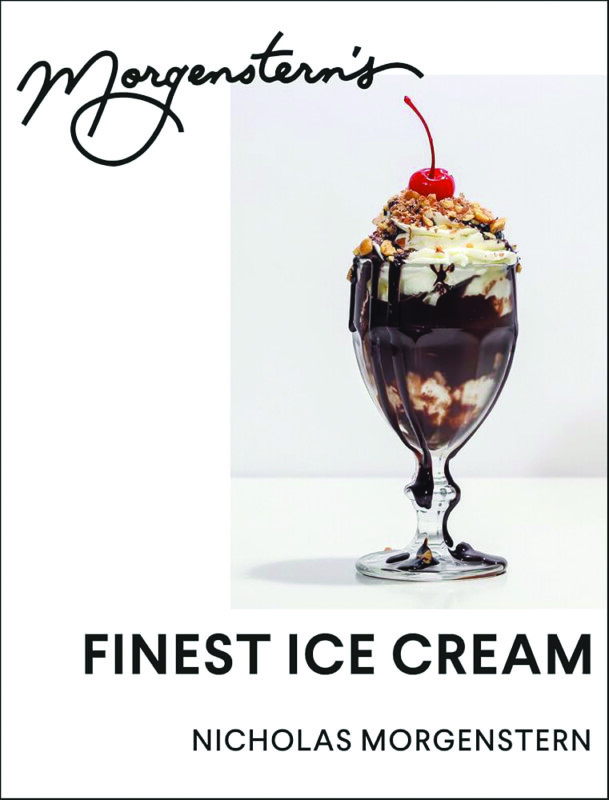
Morgenstern’s Finest Ice Cream, by Nicholas Morgenstern

Madeline Hill wasn’t looking to expand her family when a stranger in a PT Cruiser pulled up to her farm stand in Tennessee and announced that he was her half-brother. At 32, she’d settled into a life she’d built with her mother after her father left them 20 years earlier with no explanation and no future contact. Maybe it wasn’t her best life, but it also wasn’t a bad one. They ran an organic farm that had won acclaim for their meat, eggs, produce and cheese, and had even been featured in magazines. True, it was a largely solitary life, but Mad, as she was known, was comfortable in it. A sibling was not part of her life plan.

Enter Reuben Hill, or Rube, as he is known. The stranger in the PT Cruiser tells Mad that they shared a father, and he had a whole other life in Boston before he ran out on Rube’s family and took up with Mad’s mom. As an adult, Rube wanted to learn more about his father, and so he hired a private investigator who found a mysterious pattern: The man that Rube knew as Chuck Hill, a New England insurance salesman and author of detective novels, had reinvented himself as Charles Hill, a organic farmer in the deep South. But he hadn’t stopped there. There were, apparently, other families that their dad created and left.

In another writer’s hands, this storyline might be overwrought, but in the hands of Kevin Wilson, it’s comedy gold. In Run for the Hills, Wilson’s sixth novel, he sends Mad and Rube on the world’s weirdest road trip, in which they trace their father’s domestic settlements from Tennessee to California and meet their other half-siblings, in the hopes of figuring out what, exactly, their father was thinking, as he continually reinvented himself at the expense of others.

It’s an absurd story, as absurd as the PT Cruiser that Rube showed up in for a road trip. (It’s what the rental-car company gave him, he explains to a bemused Mad.) But it has a raw and poignant center — how this man had shaped his children’s lives, not by his presence, but by his absence, as Wilson writes.

Mad and Rube had built successful lives for themselves, despite the trauma that their father’s abrupt disappearance had inflicted upon their families; Rube had even followed in his father’s footsteps, becoming a mystery writer. Another sibling that they tracked down was a star college basketball — in the iteration of himself that the father gave that family, he had been a basketball coach who went by the name Chip Hill.

Curiously, despite the coldness of his departures, when he was living with the families their father was, by all accounts, a good father. Which made his willingness to abruptly remove himself from his children’s lives all the more a mystery.

What caused him to behave that way — and where he is now — are the central questions driving the narrative of Run for the Hills, but it’s the blooming relationships between the quirky half-siblings that give the story its heart. Mad at first is suspicious of Rube and his motives, and reluctant to even invite him into her house as a guest. Guests, she thinks, are an inconvenience: “They showed up and created work for you. They asked about your feelings, your day. They asked if maybe you had a beer in the fridge.They asked if you could adjust the air-conditioning just, like, two degrees. They asked if you knew the location of any legal papers that might speak to the true identity of the father you had not seen in over twenty years.”

Rube, whose mother recently died, is an excruciatingly polite and lonely man who wears his longing for a family on his Oxford shirt sleeve. He is gay and has been in relationships, but like Mad, had never married and is afraid of being left again. “Half of it is that Dad messed me up by leaving. And half of it is that my mom messed me up by staying but being so damn sad that I never forgot about it,” he tells Mad. He is hoping that he can make some lasting connection with these half-siblings, while Mad is hoping just to figure out the mystery and get home to her real life as soon as possible.

They track down the third child, Pepper (who goes by Pep — their father was very fond of nicknames) at the University of Oklahoma, where she was about to play in a championship game. Then it’s off to find a son in Salt Lake City, before the crowded car ultimately crosses into California, where they hope to find the father of them all.

Interspersed throughout the novel are descriptions of video the father had taken of all the children — Pep playing basketball, Mad feeding chickens, Rube playing with a paper airplane. The interludes are meant to show us Hill’s loving interactions with his children, adding to the mystery, and their meaning is more clear near the end of the book. But they don’t work — they are distractions to the natural flow of the story. As is Wilson’s inexplicable fondness for the word “offered” as a synonym for “said.” There are more offerings in this book than at a tent revival in the deep South.

But these are small quibbles with a genuinely fun novel that strikes the right balance between poignancy and comedy, no small task given the subject matter. Wilson has famously written about family dysfunction in his other novels, which include The Family Fang (made into a movie), Nothing to See Here and Now is Not the Time to Panic. If Hollywood options this too, I’ll be at the theater on opening day. A-Jennifer Graham

Featured Photo: Morgenstern’s Finest Ice Cream, by Nicholas Morgenstern

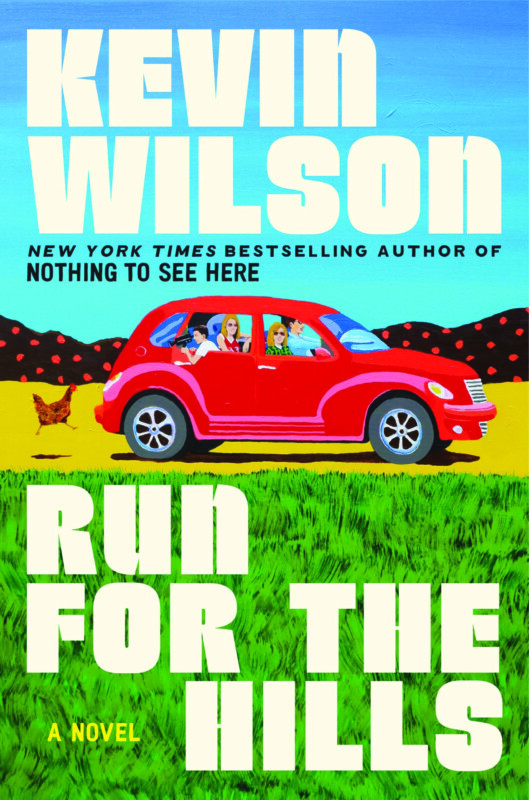
Run for the Hills, by Kevin Wilson

Madeline Hill wasn’t looking to expand her family when a stranger in a PT Cruiser pulled up to her farm stand in Tennessee and announced that he was her half-brother. At 32, she’d settled into a life she’d built with her mother after her father left them 20 years earlier with no explanation and no future contact. Maybe it wasn’t her best life, but it also wasn’t a bad one. They ran an organic farm that had won acclaim for their meat, eggs, produce and cheese, and had even been featured in magazines. True, it was a largely solitary life, but Mad, as she was known, was comfortable in it. A sibling was not part of her life plan.

Enter Reuben Hill, or Rube, as he is known. The stranger in the PT Cruiser tells Mad that they shared a father, and he had a whole other life in Boston before he ran out on Rube’s family and took up with Mad’s mom. As an adult, Rube wanted to learn more about his father, and so he hired a private investigator who found a mysterious pattern: The man that Rube knew as Chuck Hill, a New England insurance salesman and author of detective novels, had reinvented himself as Charles Hill, a organic farmer in the deep South. But he hadn’t stopped there. There were, apparently, other families that their dad created and left.

In another writer’s hands, this storyline might be overwrought, but in the hands of Kevin Wilson, it’s comedy gold. In Run for the Hills, Wilson’s sixth novel, he sends Mad and Rube on the world’s weirdest road trip, in which they trace their father’s domestic settlements from Tennessee to California and meet their other half-siblings, in the hopes of figuring out what, exactly, their father was thinking, as he continually reinvented himself at the expense of others.

It’s an absurd story, as absurd as the PT Cruiser that Rube showed up in for a road trip. (It’s what the rental-car company gave him, he explains to a bemused Mad.) But it has a raw and poignant center — how this man had shaped his children’s lives, not by his presence, but by his absence, as Wilson writes.

Mad and Rube had built successful lives for themselves, despite the trauma that their father’s abrupt disappearance had inflicted upon their families; Rube had even followed in his father’s footsteps, becoming a mystery writer. Another sibling that they tracked down was a star college basketball — in the iteration of himself that the father gave that family, he had been a basketball coach who went by the name Chip Hill.

Curiously, despite the coldness of his departures, when he was living with the families their father was, by all accounts, a good father. Which made his willingness to abruptly remove himself from his children’s lives all the more a mystery.

What caused him to behave that way — and where he is now — are the central questions driving the narrative of Run for the Hills, but it’s the blooming relationships between the quirky half-siblings that give the story its heart. Mad at first is suspicious of Rube and his motives, and reluctant to even invite him into her house as a guest. Guests, she thinks, are an inconvenience: “They showed up and created work for you. They asked about your feelings, your day. They asked if maybe you had a beer in the fridge.They asked if you could adjust the air-conditioning just, like, two degrees. They asked if you knew the location of any legal papers that might speak to the true identity of the father you had not seen in over twenty years.”

Rube, whose mother recently died, is an excruciatingly polite and lonely man who wears his longing for a family on his Oxford shirt sleeve. He is gay and has been in relationships, but like Mad, had never married and is afraid of being left again. “Half of it is that Dad messed me up by leaving. And half of it is that my mom messed me up by staying but being so damn sad that I never forgot about it,” he tells Mad. He is hoping that he can make some lasting connection with these half-siblings, while Mad is hoping just to figure out the mystery and get home to her real life as soon as possible.

They track down the third child, Pepper (who goes by Pep — their father was very fond of nicknames) at the University of Oklahoma, where she was about to play in a championship game. Then it’s off to find a son in Salt Lake City, before the crowded car ultimately crosses into California, where they hope to find the father of them all.

Interspersed throughout the novel are descriptions of video the father had taken of all the children — Pep playing basketball, Mad feeding chickens, Rube playing with a paper airplane. The interludes are meant to show us Hill’s loving interactions with his children, adding to the mystery, and their meaning is more clear near the end of the book. But they don’t work — they are distractions to the natural flow of the story. As is Wilson’s inexplicable fondness for the word “offered” as a synonym for “said.” There are more offerings in this book than at a tent revival in the deep South.

But these are small quibbles with a genuinely fun novel that strikes the right balance between poignancy and comedy, no small task given the subject matter. Wilson has famously written about family dysfunction in his other novels, which include The Family Fang (made into a movie), Nothing to See Here and Now is Not the Time to Panic. If Hollywood options this too, I’ll be at the theater on opening day. A-Jennifer Graham

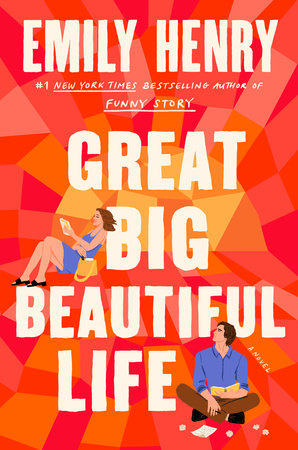
Great Big Beautiful Life by Emily Henry

Great Big Beautiful Life by Emily Henry (Berkley, 432 pages)

Cracking open a new Emily Henry novel is like settling into a beach chair, soaking up the warmth of the sun as you sink your feet into the cool sand and savor the moment of calm, unbothered bliss. And then it’s better than that, knowing you’ll be in this state of bliss for as long as the story lasts, rather than for a few minutes before the sun gets too hot and you start sweating and wishing you’d brought an umbrella.

That’s the experience I’ve had with all of Henry’s novels, and Great Big Beautiful Life was no exception — at first. That initial feeling of euphoria was real; as always, Henry’s engaging writing drew me right in and I was totally on board with the story, of two writers vying for a job to write the biography of a reclusive heiress who disappeared years ago following a series of tragedies and a lifetime of public scrutiny.

I love the premise. I’m a fan of the novel’s protagonist, Alice, a serial optimist, and her rival/love interest, Hayden, a serial pessimist. I even liked Margaret Ives, the mysterious octogenarian heiress.

So I was all in, at first, for Henry’s departure from her typical rom-com. But then the sun got too hot, so to speak. Because just as Alice and Hayden’s romance starts to heat up, Margaret’s telling of her “juicy” life story takes over and the focus shifts to her extensive family history.

And I do mean extensive. Even Alice notes some frustration when Margaret starts her story several generations back, rather than diving into the more recent past.

I already don’t love the story-within-a-story framework, because I almost always like one story more and feel antsy when I’m reading the “other” story, waiting to get back to the good stuff. In this case, I was by far more interested in Alice and Hayden. I loved their interactions and wanted more of them, to watch their relationship develop more explicitly.

Margaret’s family’s decades of secrets and deceptions? I really wanted to care, but it all felt so convoluted. I kept forgetting who was related to whom and in what way. And the element of mystery that permeates the Ives’ family history, that presumably the general public cares enough about to read a Margaret Ives biography, isn’t all that exciting.

I was hoping when we got to Margaret’s hyped-up romance with another briefly famous person, Cosmo, there would be similar vibes to Alice and Hayden’s story. But even that fell flat for me.

I truly believe that the cover of Great Big Beautiful Life is a disservice to what the novel actually is: more “women’s fiction” than rom-com. Every time I picked the book up, I could not align the cover image with the words inside — but only if I was on a Margaret chapter. The Alice/Hayden plot fit the cover perfectly. It’s like Henry wanted to try something more serious but also didn’t want to let go of the genre she does best, ultimately creating a disjointed reading experience.

All that being said, Emily Henry’s writing is so lovely, and I appreciate her attempt to step out of her comfort zone. I can’t help wondering, if Henry had written a book solely about the Ives family — and marketed it accurately, as women’s fiction rather than a rom-com — whether I would have been more invested, knowing that I’d be reading a historical family saga.

Likewise, I think Alice and Hayden’s story has more to offer, both their relationship and their individual stories. Alice as a character is refreshing in that she is so positive in a way that could be annoying but somehow is not. Hayden is the grumpy male character that’s been written plenty of times before, but there’s something about him that seems sincere from the beginning and more real than the average grump-turned-lover rom-com character. They also both have intriguing pasts that could have used more fleshing out.

Great Big Beautiful Life is two mostly good stories that just don’t mesh well. But it’s still worth the read. Henry’s writing is a warm hug, no matter what she’s writing about, so as long as you’re not expecting straight-up rom-com vibes, this is a few hours well spent. B Meghan Siegler

Stay in the loop!

Get FREE weekly briefs on local food, music,

arts, and more across southern New Hampshire!