Pop icon appearing in Concord
Last year, Dionne Warwick was inducted into the Rock & Roll Hall of Fame. It may seem an odd choice for a singer best-known for pop hits. However, her music guided more than a few rockers. The Beach Boys released a version of her “Walk on By” and Brian Wilson pointed to “Are You There (With Another Girl)” as one of the influences for Pet Sounds.
Beyond that, she was a trailblazer in other areas. Warwick was the first Black woman to win a Grammy for a pop song, and the first artist to garner Pop and R&B Grammys in the same year. In 1985, the recording she did with Elton John, Stevie Wonder and Gladys Knight of “That’s What Friends are For” raised awareness and millions of dollars for AIDS research.
Warwick spoke with the Hippo ahead of her Saturday, June 21, 7:30 p.m. show at the Chubb Theatre in Concord (edited for space). See ccanh.com for ticket information.
So many great American pop stories began at the Brill Building. Yours and Burt Bacharach’s did too. What are your memories of the two of you getting to know each other in those early days?
Well, I met Burt first on a recording session that my background group was doing with the Drifters…. He approached me after the session and asked if I’d be able to do more backgrounds and demonstration records with his new songwriting partner … Hal David. That was my good fortune meeting those two men. They became my producers, my songwriters, and became basically family.
You have gospel roots. I’ve heard that there was often a tension with gospel performers moving into pop music. Did you experience that?
Yes, I did, as a matter of fact. But fortunately, my biggest fan was my grandfather, who kind of set the record straight for me. He said, ‘My baby has a vocal ability that God gave her as a gift. She apparently is using it correctly, otherwise he would have taken it away from her. And I think most of you should not just let her be, let her know that she’s doing an honest living and it’s something that everybody can enjoy.’
One barrier I think you didn’t really expect to break happened when you first toured France. Apparently the album was issued in France using a cover with a picture of a white woman. How did you react?
The record company in France had not one idea of what I looked like. They had no photographs of me, all they heard was my voice. I don’t know why they thought I was a white girl, but they did. The president of Vogue Records was waiting for me to take me to lunch. I tapped him on his shoulder, and I said, ‘Aren’t you waiting for me?’ He said, ‘Oh no, no, no, I’m waiting for Dionne Warwick.’ I said, ‘Well that’s who I am.’ I thought he was going to choke on his own breath. That night when I opened at the Olympia, when I walked out on stage, there was an audible gasp from everybody…. Until I opened my mouth, they didn’t realize that that’s who I am. Then they said … ‘Yes, that’s definitely her.’ From that moment to this, I have become the sweetheart of Paris and of France, which I’m thrilled about.
You pivoted when you were no longer working with Bacharach and David in the 1970s. With Thom Bell, you made one of the best songs of the ’70s, ‘Then Came You.’ How did that working relationship begin?
I was on a summer tour with the Spinners, and I asked if they would like to come to Vegas for the first time and be a part of the show…. Thom happened to be not only a friend for many years prior to us recording, but [was] sitting in the audience on our closing night. He said, ‘I’ve got a gift for you guys.’ We said, ‘Oh, really? What is the gift?’ He said, ‘I’ve got a song for you.’ And that song was ‘Then Came You.’… That was my very first No. 1 recording nationally.
When did you begin collaborating with Stevie Wonder?
Gene Wilder called me [and] said, I’d love for you to be a part of this film that I’m doing [The Woman In Red] … I feel you have the ability to become the music coordinator for this [and] I want you to choose who you feel would be the person to do the writing of the music for it.’ The first choice I had was Lionel Richie. Unfortunately, Lionel let me know he was much too busy, [so] I called my baby, Stevie…. One thing led to another, and as we all know, not only did he write the songs and produce the recording, but he also won the Oscar that year for that song.
I saw in an interview that you discovered ‘That’s What Friends Are For’ while watching the movie Night Shift. Is that how you found that song?
It absolutely was. I was doing a collaboration with Burt Bacharach and Carole Bayer Sager Bacharach. I’d just left their home. They had been playing songs for me before. I was watching the film Night Shift, and I said, ‘Oh, I like that song by Rod Stewart, who’s singing it?’ The roll appeared where they give you credits from people, and I said, ‘Oh, Carole wrote this song. Why didn’t they just save that for me?’ The next day I told them, I heard this song and I want to record it. Carol, who was a complete hoot, said ‘Now four people know that song. I said, ‘four people?’ She said, ‘Yeah. Rod Stewart, me, Burt, and now you.’ I said, ‘Well, now we have to let everybody hear that song.’
Was using the song to raise money for AIDS research part of the motivation to do it in the first place?
No. Elizabeth Taylor, being a friend of Burt and Carol’s, was at the session. She pulled me aside [asking], ‘How would you feel about giving me this song to be the anthem for the AIDS issue?’ … Unfortunately, we all had lost people or felt the sting of this AIDS issue before we even knew what it was. … giving it to Elizabeth Taylor, we thought if our voices could make a difference, why not?
You really made a difference. President Ronald Reagan wouldn’t even utter the word AIDS until you prompted him. Did you know you were going to do that when it happened? That’s so incredible.
You know, I did. I remember at a press conference where he announced that he had made me the ambassador of health in the United States, and I’m still the only ambassador of health in the United States. And while he was giving me the honor, I was thanking people and letting them know how grateful I was for him to think I was someone that deserved something like that. I said, ‘Would you let them know, President Reagan, what it is I’m working on?’ He looked at me, and if his eyes could kill me, I would not be talking to you today. But he finally got up, and he was breathing very, very hard. He said, ‘OK; AIDS.’ I said, ‘See, you can say it — and if you say it, that means that we can follow this.’
We could use an ambassador of health right about now. AIDS research is really under threat. Care to comment?
Yeah. We’ve made major strides, I must say, within the scientific area as well as research and medications. We have a long way to go. We’re going to make this happen, I’m sure. Eventually, we’re going to get to that elusive word called cure … then I can get off [the] train ride that I promised people I would be on until we found the cure. It’s something that we all have to be very cognizant about. Health issues, such as AIDS, can be conquered.
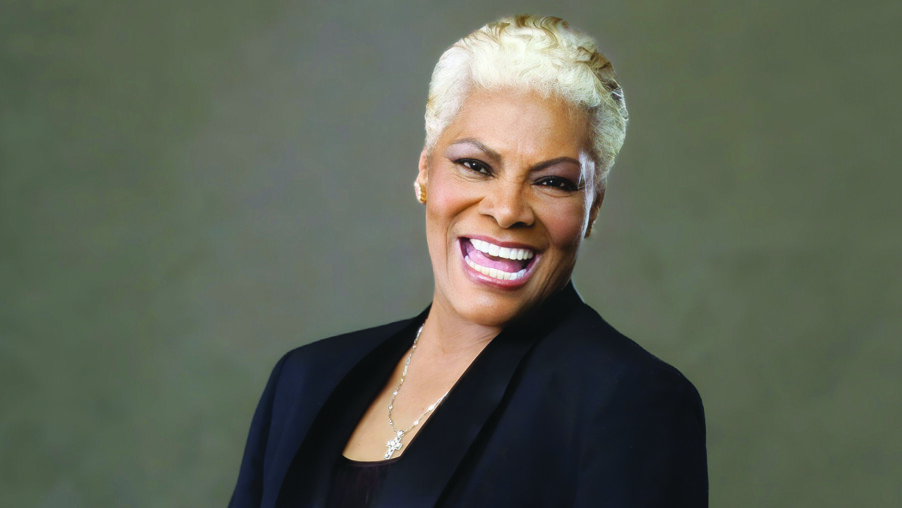
Featured photo: Dionne Warwick. Courtesy photo.