Local arts experts talk about 2024 and what’s getting them excited for 2025
Compiled by Zachary Lewis
zlewis@hippopress.com
I asked members of the local arts community what they were most proud of in 2024 and what they were looking forward to in 2025.
• Fallon Rae, co-founder and owner of Pillar Gallery + Projects,205 N. State St., Concord; pillargalleryprojects.com, 657-8111: “We are so proud of our last juried open call exhibition, “NANO’”… where we included over 60 artists and over 100 works of art in our 200-square-foot space…. We worked on showcasing our maximalist curatorial approach with concurrent themes that reflect, express and relate to the larger conversations in artists’ worlds and how they mirror one another….”
“The next exhibition we are excited about is “Currents” (Feb. 9-April 2, with a reception on Feb. 23). This show focuses on contemporary interpretations of the ocean, waterways, and reflections on the changes we are facing as a collective. … Some of the artists include Mary Mead, Jackie Brown and Hannah Perinne Mode, amongst others, with 5 percent of sales going to Blue Ocean Society…”
• Dan Pelletier, Artistic Director, Cue Zero Theatre Company, cztheatre.com:“Personally, most proud work this year had to be our June production William Shakespeare’s Long Lost First Play (abridged). We were blessed with three incredibly talented performers taking on over 12 characters each, a wonderful costumer, a fanatic stage crew, and we created something truly special. We had a rehearsal environment of everyone wanting to give better than their best, and audiences left dying of laughter.”
“Assuming my upcoming wedding doesn’t count as a production, then I’ll have to say my 2025 production which I am most excited for is People Like To Be Scared: an Exploration of Fear. This piece is scheduled Oct. 3 through Oct. 5 and will be our third main stage devised piece. The actors will come into the beginning of the rehearsal process with no script, only a concept of wanting to explore fear from many different angles …”
• Zackery Betty, Artistic Director, NSquared Dance, nsquareddance.org: “NSquared Dance’s The Lavender Scare, June 27 at The Rex Theatre. This was a pinnacle moment to share the story of The Lavender Scare, a mass firing of federal government workers due to their sexual orientation as a threat to America in the 1950s. …We paired with New Hampshire Dance Collaborative and Manchester True Collaborative for this performance.”
“[For 2025,] NSquared Dance’s return to The Rex Theatre on May 4, 2025!”
• Elizabeth “Betsy” Craumer, Creative Ventures Gallery,411 Nashua St., Milford, creativeventuresfineart.com, 672-2500: “The performance I’m most proud of is our ability to get the students into the right class to start or continue their art journey. This includes networking with others in the art field to help with their next step. I’m also proud to help students progress in their artwork.”
“For 2025, I guess my goal is to get a little more involved with town activities …”
• Jen Sakash, Member of the Granite State Choral Society (20 Allen Street, #1431Rochester; gschoralsociety.org): “We are currently celebrating our 50th anniversary of the choir. This December we had our first concert as part of that year-long celebration: “Winter’s Embrace: Celebrating 50 Years of Peace and Joy.” …
“ In the spring (May 2025) we will complete our anniversary year by performing more popular pieces from over the years, such as Broadway show tunes and patriotic pieces.”
• Matt Cahoon, Artistic Director, theatre KAPOW,66 Hanover St., Suite 101, Manchester, tkapow.com: “While 2024 has been a very productive one for theatre KAPOW, I think the show we are most proud of is our September production of Aaron Posner’s play Life Sucks. …Our cast was full of longtime collaborators and that made every rehearsal feel extra friendly and comfortable.”
“I am really excited for Every Brilliant Thing. I love that play and all of Duncan Macmillan’s plays! It’s a one-person show that we will be presenting in February at the BNH Stage and the Winnipesaukee Playhouse. I think it is exciting for theatre KAPOW fans because it is probably the most audience-interactive piece we have ever produced and we are doing it with two of theatre KAPOW’s most stalwart performers, Carey Cahoon and Peter Josephson. …”
• Meme Exum, owner, Glimpse Gallery,Patriot Building, 4 Park St., Concord, theglimpsegallery.com, 892-8307: “Each exhibit is special in its own way so that’s a super hard question to answer. Tied six ways for favorite, of the six shows we had in 2024.
“I’m looking forward to the Feb. 9-March 9 show.”
• Irene Cohen, President, New Hampshire Theatre Alliance,nhtheatrealliance.org: “We had our first Awards show after the pandemic with over 800 people in attendance!”
“We are gearing up for our 20th Anniversary award show for Saturday, Feb. 1!”
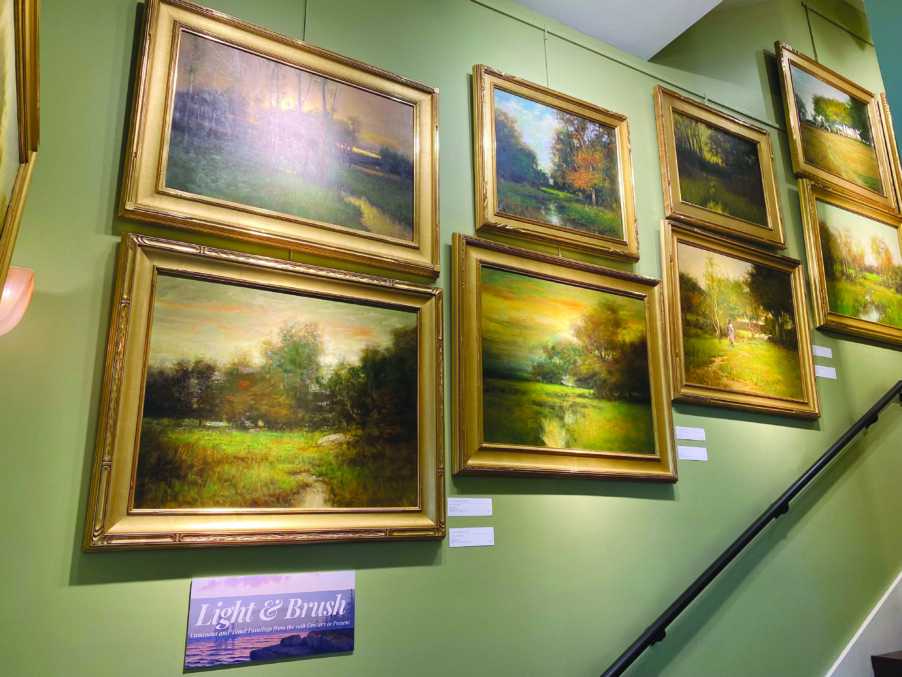
• Jason Hackler, manager and co-owner, New Hampshire Antique Co-op,323 Elm St., Milford, nhantiquecoop.com, 673-8499:“So my favorite exhibit of 2024 is this one [‘Light & Brush: Luminous and Tonal Paintings from the 19th Century to Present’].”
“In 2025 we are going to be working on an exhibit called ‘Selections 25,’ which will be 25 works that will showcase the curated collection of 25 paintings and sculptures spanning the 19th through 21st century. We believe it’s going to probably launch in June.”
• Amy Fortier, Director, Ballet Misha, 84 Myrtle St., Manchester, balletmisha.com, 668-4196: “Ballet Misha really enjoyed our collaboration with theatre KAPOW last July for an outdoor performance of A Midsummer Night’s Dream as part of the Dana Center’s Shakespeare on the Green Series at Saint Anselm College. It is always fun to perform outside, and the performances coincided with a stretch of really lovely summer weather. The experience gave my dancers some unique challenges as some of them had lines, and typically dance is an artform that expresses itself without spoken words. Theatre KAPOW was really great to work with and I loved watching the dancers and actors get increasingly comfortable with each other…”
‘In 2025, Ballet Misha will start its 17th year of bringing professional dance in New Hampshire. We are bringing back our March concert after a one-year hiatus, so I am excited about that. It will be at the Audi in Concord on Saturday, March 29, and I love that theater. “
• Margherita Giacobbi, Executive Director, The Players’ Ring, 105 Marcy St., Portsmouth, playersring.org, 436-8123: “I think the production I will pick as the one that has made us most proud is America America, written and directed by Joan Bigwood. It’s the story of a Colombian house cleaner, Modesta, who enters the life of the wealthy (but dysfunctional) Porter family in Palo Alto and creates an unexpected and all but straightforward friendship with the other female character, Jane Porter…. the playwright realized how critical it was that the play be written in two languages, English and Spanish (as Modesta speaks barely any English and a lot of the misunderstandings, humor and drama indeed come from this linguistic and cultural disconnect), … we embarked in the thrilling experiment of incorporating subtitles in the play, which ended up looking almost like operatic supertitles projected on the walls of the stark and fancy Porters’ house.”
“For 2025 … I am very excited about Gruesome Playground Injuries by Rajiv Joseph, running Feb. 28 through March 16.”
• Elizabeth Pieroni, Volunteer Executive Director, Mosaic Art Collective, 66 Hanover St., Suite 201, Manchester, mosaicartcollective.com, 512-6209: “My favorite show from 2024 is a tie between our ‘Full Circle Speed Of Light’ in September and our Halloween show ‘Spellbound.’ Both of these two shows exceeded my expectations on the quality work that came in and really knocked my socks off from a curatorial perspective. All of the work spoke to each other in such incredible ways.”
“I’m most looking forward to our next show in February, titled ‘Illusions.’ It’s going to be a different show for us in general because it will be art that deals with optical illusions or blacklight reactive glow. But also further out we have a really exciting show planned for the summer called ‘Pallets to Palates’ that I’ve been working on in the wings with John Fladd from the Hippo. It should be a tasty treat for the eyes and the tummy!”
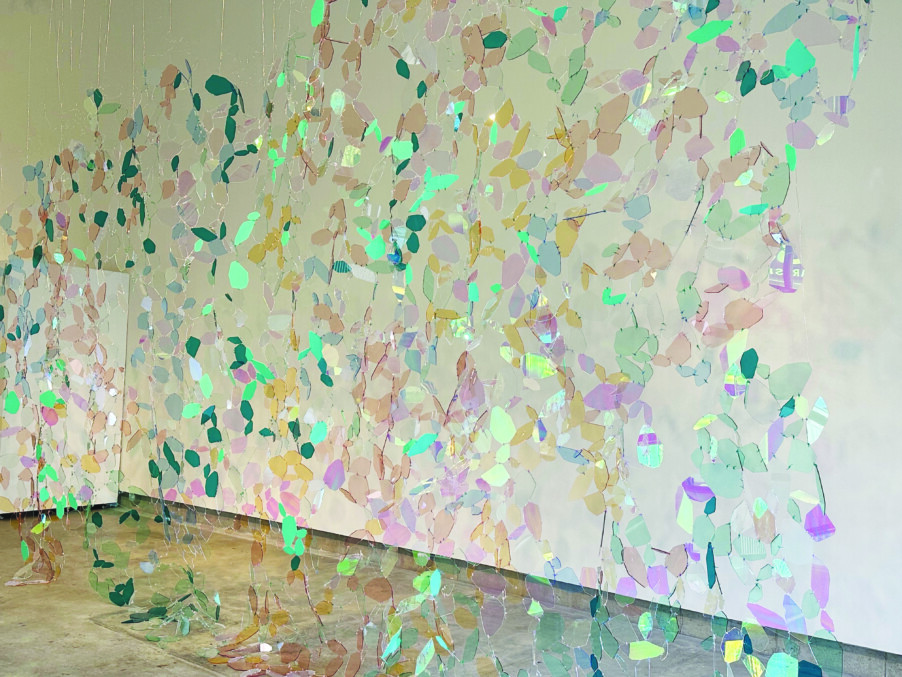
• Amy Regan, owner and operator, See Saw Art, 66 Hanover St., Suite 201, Manchester, seesaw.gallery:“In 2024, See Saw Art produced 13 exhibitions, worked with 140 artists and exhibited 668 pieces of art. I am really proud of ‘Heatwave,’ our February 2024 exhibition, which featured both regional and international artists and was a really beautifully installed and interactive exhibition. ‘Group Effort,’ our annual August community-focused open call, … Lastly, ‘Threads,’ our July exhibition focusing on textile artworks, was very well-received and very fun!”
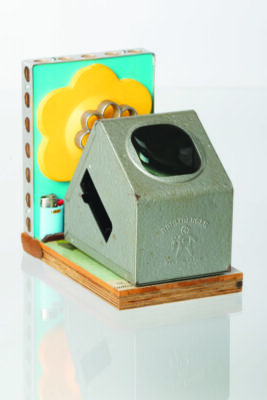
“In 2025, I am excited to continue to produce monthly exhibitions that highlight local talent and bring incredible fine art to Manchester … January will feature selections from Brunswick, Maine-based artist Ian Trask’s ‘Strange Histories,’ which are vintage slide viewer artworks — simply stunning!”
Featured image: Ryan Swedenborg Winks Series from See Saw Art. Courtesy photo.