
Book Review 20/08/13

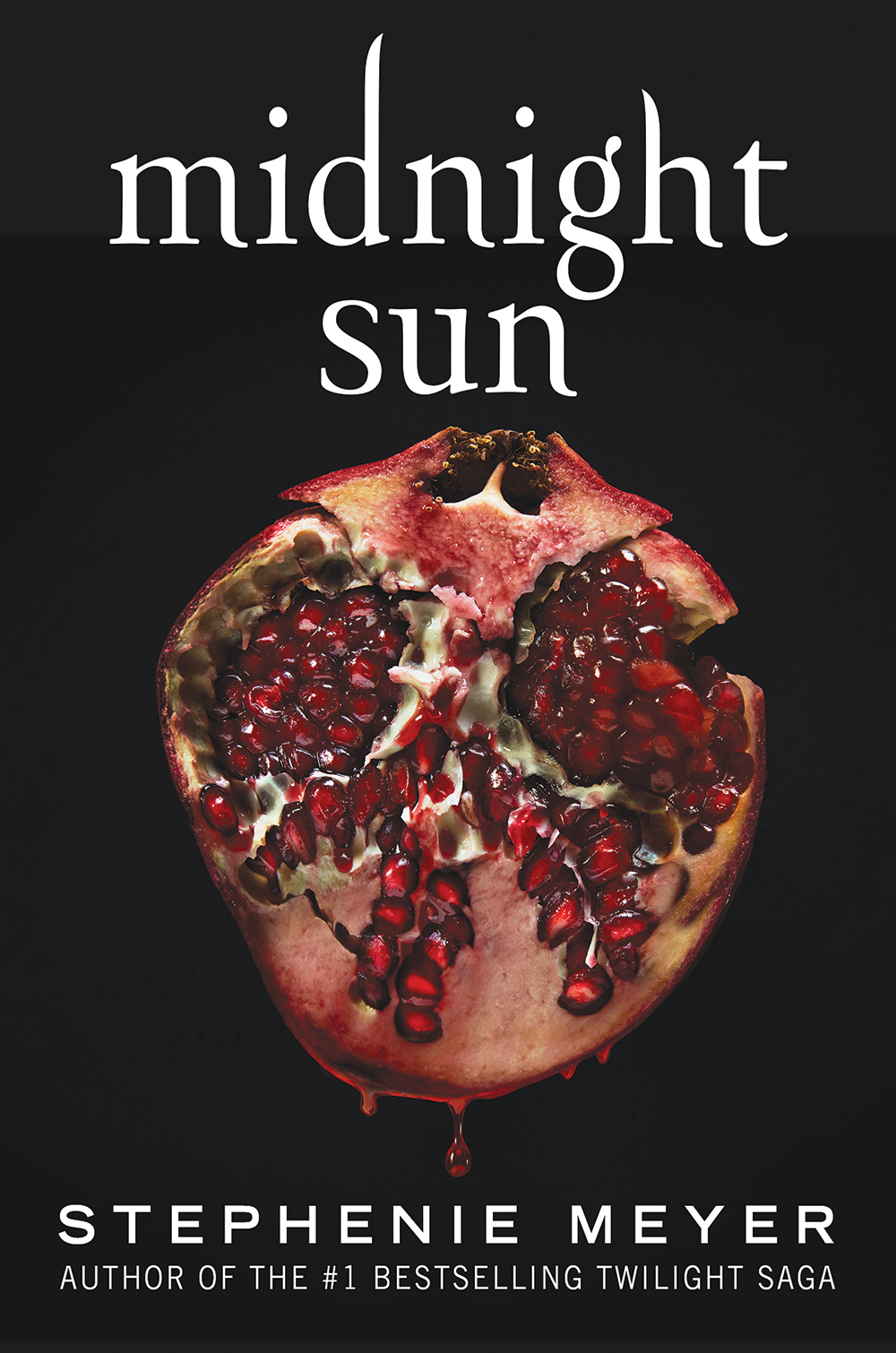
Midnight Sun, by Stephenie Meyer (Little, Brown and Co., 658 pages)

Twilight aficionados read the first pages of Midnight Sun 12 years ago. They just now found out how it ended.

That’s because when Stephenie Meyer learned that the beginning of Twilight 2.0 — the same vampire love story, told from another perspective — had been leaked on the internet, she fell into a foul funk and stopped writing. “If I tried to write Midnight Sun now, in my current frame of mind, James would probably win and all the Cullens would die,” Meyer wrote on her website in 2008.

At some point, however, Meyer’s state of mind improved, or maybe the contents of her bank account dwindled, and she was able to find the will to finish the story, providing a sparkly bit of happiness for Twilight fans in a dreary Forks kind of year.

I have suffered through it, and here is what happens: The vampire gets the girl, and she lives to tell the story in four bestselling books and five movies. Sorry if that spoiled anything.

It is a testament to American capitalism that Meyer has pulled a 658-page rabbit out of this tattered and blood-stained hat. Not that the franchise has aged poorly; the bones of the original story — “the lion fell in love with the lamb” — were always strong, and the excellent casting and memorable soundtrack of the first movie propelled Twilight from the “young reader” shelves to the stratosphere of publishing. It’s not the “modern classic” that the Midnight Sun book jacket boasts but something more commercially valuable: a cultural phenomenon.

That’s what makes Midnight Sun so disappointing.

There is little new in this interminable navel-gazing of an angsty vampire newly in love, other than the opportunity to reflect on plot holes. My puzzler grew sore trying to figure out why, if Edward Cullen has two medical degrees, he stands by so helplessly in the climactic scene where the dying Bella Swan convulses violently on the floor of a dance studio, leaving his father, the good doctor Carlisle, to do most of the work.

As Edward moans about the boredom of going to high school for the 30th — or is it the 50th? — time, the perpetual matriculation explained as necessary to keep the myth of the perfect family intact, something inside me curdles, and I switch movies and go from Robert Pattinson to Cher, and want to slap him and yell, “Snap out it.”

Why are you in high school at all? You have two medical degrees! Go to work with your dad and contribute something meaningful to the world!

But no. Edward Cullen’s eternal purpose seems to be to stalk, as Bella Swan’s is to pout, and they do this for nearly 700 pages, with brief interludes for scintillating first-love conversations that are as interesting to behold as paint in the process of drying. As it turns out, we waited 12 years to find out Bella’s candy (black licorice and Sour Patch Kids) and soda pop (Dr Pepper), and the stream-of-consciousness drivel that goes through the mind of everyone in Cullen’s orbit. (You will recall that he can read the minds of everyone but for Bella. Pity the reader.)

The biggest plot hole of all, however, is how someone with such an interesting existence can have such banal thoughts, too often delivered huskily with lowered eyelids. (Note to vampires: Don’t turn anyone immortal as a teenager, lest they be trapped in adolescent angst for all of eternity. Wait until they’re at least 30.)

That said, there are a few mildly interesting scenes, all having to do with Edward’s pre-Bella existence, such as Edward’s first Christmas as a vampire. But this made me long all the more for another book — not a companion novel, but a prequel. Midnight Sun would have been much more compelling as a novel that gave us Edward from Carlisle’s bite to the day he first saw Bella.

As it is, this is warmed over hash — the taste a bit different the next day, but overall the same dish.

Twihards will protest, and there will be some who can encounter the 18th worshipful reference to Bella’s liquid chocolate-brown eyes without perpetuating violence in a physical book. Which is good, because there is sufficient violence in Midnight Sun already.

In the first intoxicating hours of exposure to Bella, Edward mapped out a plan to slaughter a roomful of students so there would be no witnesses when he killed Bella. (“I wouldn’t have to worry about the windows, too high up and small to provide an escape for anyone. Just the door — block that and they were trapped.”)

However much this fantasy might align with vampire thought, it’s deeply unsettling to read in post-Newtown America, particularly in a franchise that targets adolescents. Even for Twi-Moms like me, it’s a step beyond the pale, so to speak.

I could have done without that information, and the bulk of what accompanies it. I prefer my vampires mysterious and brooding. But sure, sign me up for the prequel. D

BOOK NOTES
Is there a bigger fan of reading than Oprah Winfrey, who has said that “nothing, not one thing or activity, can replace the experience of a good read — being transported to a different land, a different realm, through words and language”?

Well, yes, as it turns out, there is Bella Swan, who is revealed in Midnight Sun (reviewed above) to be a more voracious reader than fans of the Twilight series might have inferred from her presence in Stephenie Meyer’s earlier books.

The Bella Swan Book Club, should you wish to join it, is heavy on classics, mysteries and dragons, causing her vampire boyfriend to swoon, “There was a bit of Jane Eyre in her, a portion of Scout Finch and Jo March, a measure of Elinor Dashwood, and Lucy Pevensie.”

If you want to read like Bella, here’s what that entails:
Little Women by Louisa May Alcott. And everything by Jane Austen, except for Emma.
Jane Eyre and everything else by Charlotte Bronte.
To Kill a Mockingbird, by Harper Lee.
Fahrenheit 451 by Ray Bradbury.
The Chronicles of Narnia by C.S. Lewis, “especially The Voyage of the Dawn Treader.”
Tooth and Claw by Jo Walton, which appears to be about a family of dragons that eat each other’s bodies after death.

And, odd for a girl who grew up in the Southwest, Gone With the Wind by Margaret Mitchell. (She hasn’t gotten the memo that GWTW has been canceled.)

If you would rather read like Oprah, that’s still possible, too, even though Winfrey has announced that her 20-year-old magazine will print its last edition in December.

Oprah’s Book Club is still going strong, and her latest pick is Caste, the Origins of Our Discontents, by Pulitzer Prize-winning journalist Isabel Wilkerson. It’s the 86th title that Winfrey has kissed and consequently No. 1 in “historical study” on Amazon. (But please buy from a local bookstore.)
Book Review 20/08/06

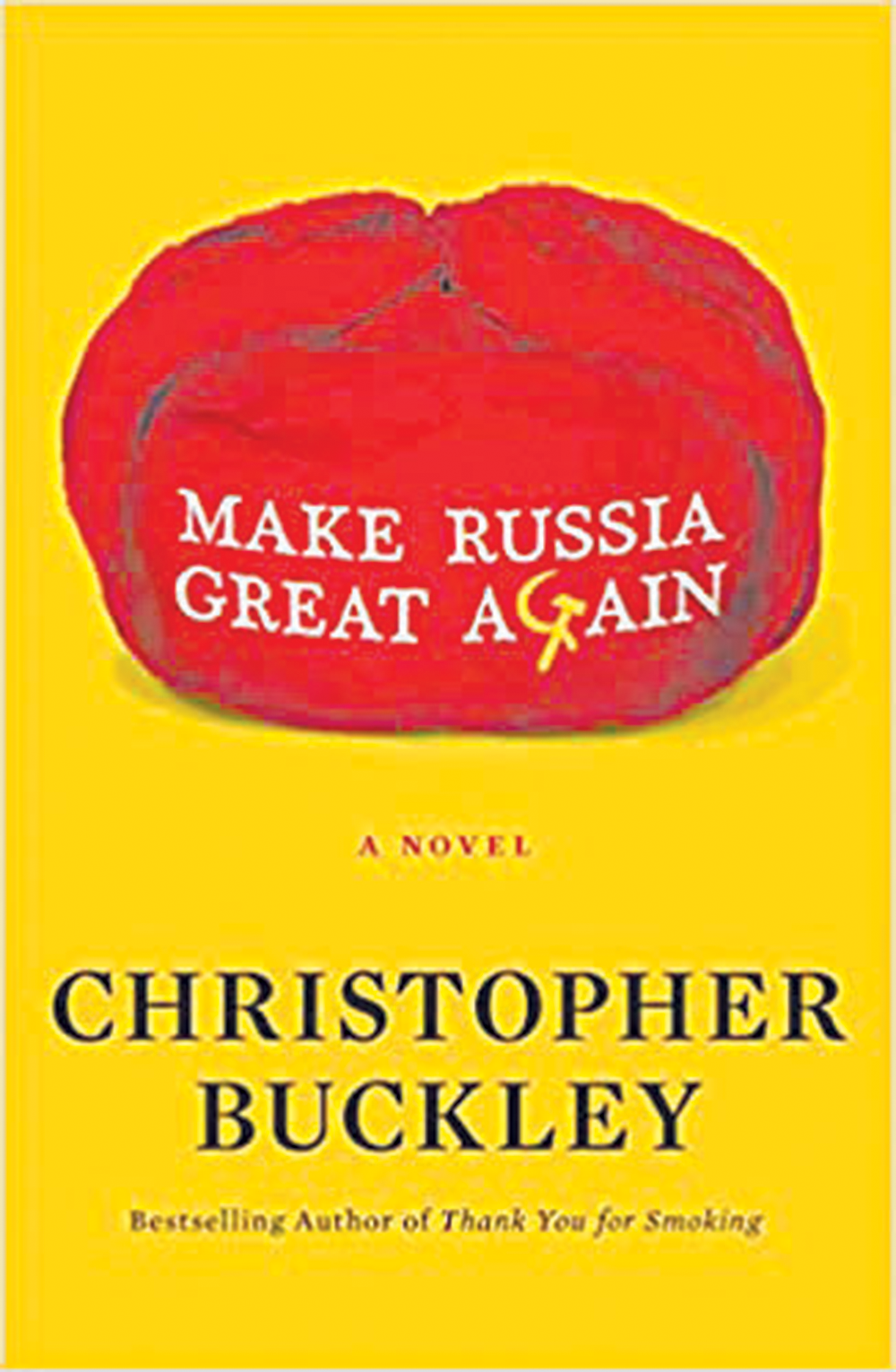
Make Russia Great Again, by Christopher Buckley (Simon & Schuster, 274 pages)

When word got out that Christopher Buckley had a new book, this one about the Trump administration, Buckley fans didn’t just salivate; they drooled.

Buckley, the son of conservative icon William F. Buckley Jr., made his own name writing satire, most notably 1994’s Thank You for Smoking, the story of three lobbyists who called themselves merchants of death because they represented tobacco, alcohol and firearms. It was later made into a movie; the book was 50 times better.

Now Buckley is back with a fictional memoir of the Trump years, told by his seventh chief of staff, now enjoying the amenities of federal prison. Herb K. Nutterman had retired after 27 years as the food-and-beverage manager at an assortment of Trump properties when the president summoned him to the White House. Despite the howling of his wife, Hetta, Nutterman reluctantly returned to his former boss’s employ, where he soon became part of a Russia scandal that may sound familiar, but not familiar enough to get Buckley sued for libel or defamation.

In this scandal, America has interfered in Russia’s election, inadvertently.

A computer program designed to retalilate automatically if a U.S. election has been hacked and the president is incapacitated goes into action, causing a communist trailing Vladimir Putin by 50 points to come in first, forcing a runoff election.

Meanwhile, a Russian oligarch known for manufacturing a chemical that is mysteriously involved in the deaths of people who run afoul of Putin and his cronies has surfaced and wants a favor from Trump.

It’s Nutterman’s job to solve these problems, quickly and quietly, before Putin finds out about America’s involvement and decides to retaliate by releasing some odious secret he is keeping about Trump.

Nutterman, ever loyal, is determined not to let that happen, but as he works to avert disaster, the scandals keep accumulating, somewhat as in real life.

As he reflects, “One minute you’re on the golf course minding your own business, thinking, Gosh, what a nice day. The next, the earth has gone out from under you and you’re in a conference room being deposed with three lawyers in attendance at a thousand dollars an hour each.”

Some real people in the real world have speculated that Putin, elected Russia’s president in 2000, has incriminating information on Trump that he withholds in exchange for presidential favor. In Buckley’s version of things, the purported blackmail has something to do with the Miss Universe Pageant, which was held in Moscow in 2013, and Trump’s enthusiasm for beautiful women.

If it’s hard to keep up with what is real and what is fiction, multiply that by 274 pages. As he has done in the past, Buckley combines actual people and events with fictionalized ones, although he puts as much effort into disguising them as a person who dresses for Halloween by putting on a hat.

Take, for example, the character of Seamus Colonnity, “Fox News’ number-one personality,” and a Trump confidante, who “truly enjoyed fawning over Mr. Trump, whereas others fawned out of fear.” Colonnity, of course, is Buckley’s version of Sean Hannity; I don’t know enough about Fox News to know who Corky Fartmartin is supposed to be. But you get the gist.

Buckley also thinly disguises a certain blond adviser to the president as Katie Borgia-O’Reilly, who is “sexy in a — I don’t want to say ‘creepy’ — certain kind of way, as if you might discover after sleeping with her that she was in fact an android or an Albanian assassin sent to murder your grandmother for no clear reason.”

South Carolina Senator Lindsey Graham is clearly Sen. Squigg Lee Biskitt, whose “folksy rhetoric earned him titles like ‘Li’l Cicero’ and ‘Tiny Titan of the Senate’.” Ivanka becomes Ivunka; Jared, Jored. And so on.

I suppose there’s a certain logic to this, imposed by those thousand-dollar-an-hour lawyers with which Buckley is seemingly familiar, but the juxtaposition of the real and satirized gets baffling after a while. Why, for example, are Newt Gingrich and his wife transformed into Mr. and Mrs. Neuderscreech while George Will and George Soros get to play themselves?

The bigger problem with Make Russia Great Again, at least for a general audience, is that it’s too much insider baseball. If you can laugh uproariously at something being described as “eerily Rumsfeldian,” or at least remember who Donald Rumsfeld is, you’ll find the book at least mildly amusing. If not, read Thank You for Smoking instead. Make Russia Great Again is a book-length stand-up act, with plenty of punchlines, the sort best served with cheap beer.

As someone raised on Firing Line, it pains me to say this; I want everything associated with the Buckley name to be accompanied by the Brandenburg Concerto No. 2. More fitting for this book is the Faber College Theme Song. (Then again, this is old material for Buckley. He first envisioned a Trump presidency in 1999, when he wrote an inaugural address for President Trump when the idea was simply a joke. In the last line, the president says he’s ordered the Treasury Department to issue “a couple billion extra in $100 chips.”

“Enjoy yourselves,” the fictional President Trump says. “It’s the dawn of a very great era.” Half the country still believes that. The other half waits impatiently for Christopher Buckley to be great again. B-

BOOK NOTES
Christopher Buckley (reviewed above) is a past winner of the Thurber Prize for American Humor, given annually in honor of James Thurber, the celebrated humorist and New Yorker cartoonist who died in 1961.
Buckley won in 2004 for No Way to Treat a First Lady.
Four months into a pandemic, we all could use some merriment, and there’s not a lot of humor to be had this month, in book form anyway. So here’s a look at the funniest books of the past decade, according to Thurber Prize judges.
All are available in paperback; your local bookseller would appreciate your business.

Hits and Misses, short stories by Simon Rich (Little, Brown & Co.)
Look Alive Out There (runner up), essays by Sloane Crosley (Picador)
Priestdaddy, memoir by Patricia Lockwood (Riverhead)
Born a Crime, memoir by Trevor Noah (One World)
The World’s Largest Man, memoir by by Harrison Scott Key (Harper Perennial)
Dear Committee Members, novel by Julie Schumacher (Anchor)
Truth in Advertising, novel by John Kenney (Touchstone)
Dan Gets a Minivan, memoir by Dan Zevin (Scribner)
Quite Enough of Calvin Trillin, collected works by Calvin Trillin (Random House)
Half Empty, essays by David Rakoff (Anchor)
The 2020 winner will be announced, pandemic willing, sometime in the fall.

Stay in the loop!

Get FREE weekly briefs on local food, music,

arts, and more across southern New Hampshire!