
Our reviewers read a lot of books this year; these are the ones they gave A grades to.
Fiction
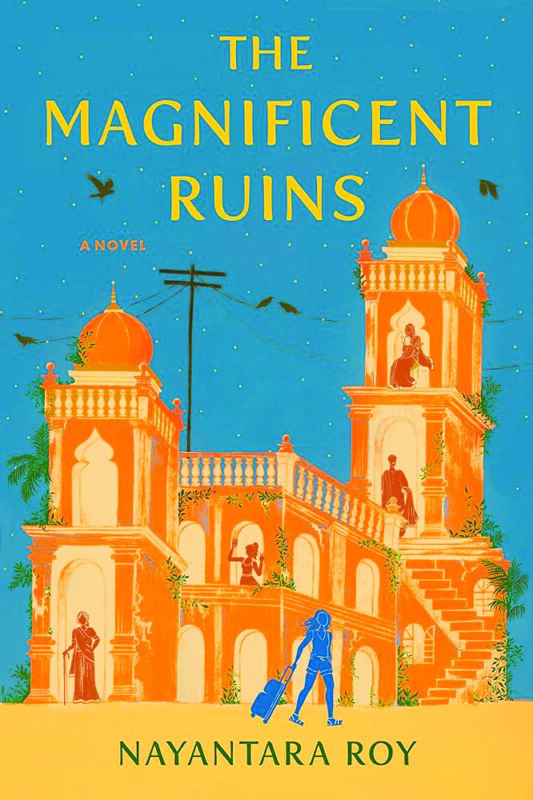
The Magnificent Ruins, by Nayantara Roy, is “a beautiful, messy journey as Lila searches for her identity among two very different cultures and within a family defined by each other in the best and worst of ways.” A- —Meghan Siegler
Run for the Hills, by Kevin Wilson, is “a genuinely fun novel that strikes the right balance between poignancy and comedy…. If Hollywood options this … I’ll be at the theater on opening day.” A- —Jennifer Graham
The Road to Tender Hearts, by Annie Hartnett: “…at the core of this novel, there is a warmth and genuineness that breaks through its comically dark outer layer.” A- —M.S.
Culpability, by Bruce Holsinger, has “a deeply intelligent storyline that blends technology, philosophy and ethics…. Culpability moves slowly at times … [but] Holsinger, as it turns out, knows exactly what he’s doing, and his ending is nothing short of genius. A —J.G.
We Do Not Part, by Han Kang, translated by E. Yaewon and Paige Aniyah Morris, is “an achingly beautiful story that will send readers to Kang’s previous novels, which include 2017’s Human Acts and The Vegetarian, published in the U.S. in 2016. Bring on the K-lit.” A —J.G.
Heartwood, by Amity Gaige: “In simple and sparse narration that blooms with lyrical descriptions of New England landscapes, Heartwood manages to be part mystery, part thriller, part how-to-hike-the-Appalachian-Trail guidebook — or it might convince you to never set foot in the woods again. Either way, start Heartwood and you’ll likely be a thru-reader, all the way to the end.” A —J.G.
Tilt, by Emma Pattee, “is a novel about the end of the world as we know it, a species of the so-called ‘apocalypse genre,’ [but] it’s also about coming to grips with your life when your life has not turned out as you planned, when you are so dissatisfied with your lot that even an earthquake doesn’t mess up your plans.” The book “thrums with tension and is gorgeously written, with scenes and phrases that will long remain with the reader. … Tilt is a remarkable literary debut.” A —J.G.
Nonfiction

The Ghost Lab, by Matthew Hongoltz-Hetling, resulted from “a years-long investigation into paranormal enthusiasts and their work” and is “a fascinating book …. Regardless of how you feel about the paranormal, Hongoltz-Hetling is a first-rate reporter and storyteller, and The Ghost Lab is easy to love — as long as you’re not one of its subjects.” A+ —J.G.
Waste Wars, by Alexander Clapp, is “a sobering story that’s being compared to Rachel Carson’s Silent Spring, which in 1962 launched the environmental movement with its examination of the devastating effects of pesticides. But Waste Wars is not so much about how America’s garbage is destroying us, but about how it’s trashing other countries. A —J.G.
Everything is Tuberculosis, by John Green: “We remember things not by memorizing facts but by hearing stories, and Green has amassed a medicine chest full of stories about tuberculosis, and about the evolution of medicine in general.” A —J.G.
All the Way to the River, by Elizabeth Gilbert, “is … a strange and often unsettling book that upends the myth of Elizabeth Gilbert given to us by Eat, Pray, Love.” A —J.G.
Aflame, by Pico Iyer: “In Aflame … Iyer writes lyrically and movingly about the gifts of solitude and quiet and why they matter, especially in a culture that seems determined to deprive us of them. And yes, he also writes about wildfires, inevitable because the setting is California, and death and suffering. But the title is a metaphor for burning in the heart, as well.” A —J.G.
Featured Photo: The Magnificent Ruins, by Nayantara Roy


