Tudor Convertible

So, here’s the thing – if you asked me to describe myself, I’d say I’m a fairly regular, run-of-the-mill guy. “High maintenance” is not a phrase that springs to mind. I’m a mushroom and jalapeño pizza with a Diet Sunkist kind of guy.

And yet, “regular” and “run-of-the-mill” are apparently terms that cover a wide spectrum of standards.

I was talking recipes with a work friend, as one does, and mentioned this Indian dish I was really grooving on at the moment.

“What’s in it?” she asked suspiciously. Apparently, I have a reputation.

“That’s the great thing about this,” I told her. “Aside from paneer, it’s all stuff you have around the house.”

“What’s paneer?” she asked.

“A type of Indian cheese,” I said.

“Could I use cheddar?” she asked.

“Um, not really. Anyway, you basically just need some cashews, and—”

“I’m going to stop you right there,” she interrupted. “When you say ‘cashews’, do you mean those nuts that fancy people serve at cocktail parties? Who keeps those in their house? I have seriously bought cashews maybe three times in my life.”

I assured her that they were easy to find, but completely flummoxed her when I mentioned cardamom.

“I’ve never even heard of that,” she informed me.

I’m not sure why I continued to describe the dish, because our communication gap just kept widening from there.

I mention this because I tried a new cocktail recipe this week. As I read over the ingredients, I was pleased to note with each one that I had it on hand:

“Pimm’s? Check. Elderflower liqueur? Also check. Gin? Very much, check.”

As I worked my way down the list, though, I realized that aside from lime juice and ice cubes, most people would not actually have any of these ingredients.

I wonder sometimes, if anybody actually makes any of the cocktails I develop, and I’m realistic enough to concede that the more exotic ingredients I call for, the less likely anyone is to actually try one of these drinks. I tried making the new cocktail with several shortcuts and substitutions that would bring it marginally more into the mainstream, and all of the variations were fine, but not as stunningly delicious as the exotic, labor-intensive version.

So, here’s what we’ll do — take out the best gin you have and make yourself a classic gin and tonic. Drink it while you make out your shopping list. You’ll feel braced and even a little sophisticated by the time you’re done.

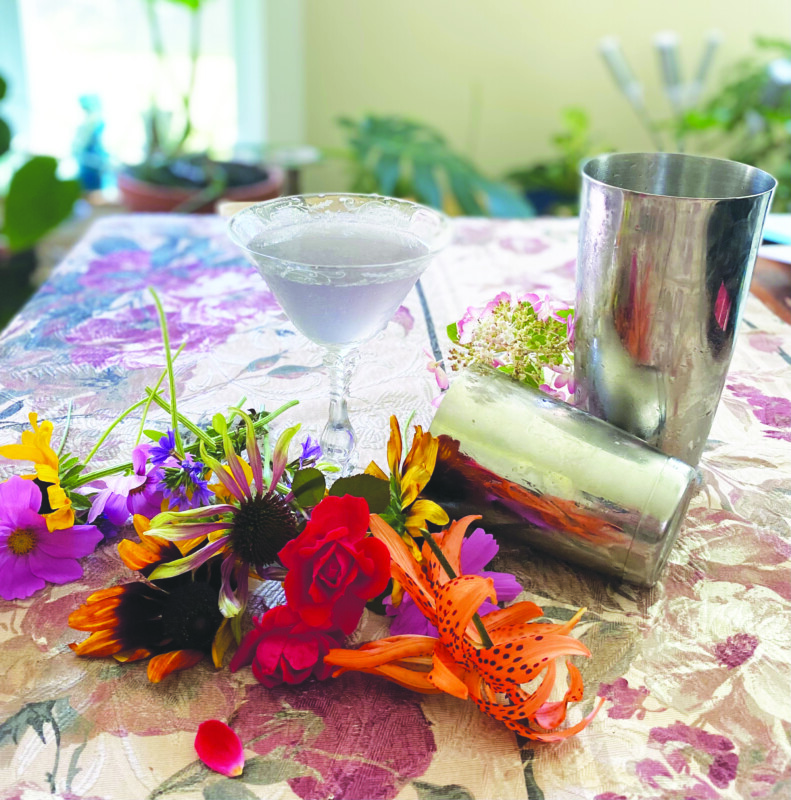
Our high-maintenance drink is a riff on a cocktail called War of the Roses. I’ve taken some liberties with it, so it needs a new name. Based on the emotional scars I still have from watching the 1989 Kathleen Turner/Michael Douglas movie of the same name, I thought about calling this a Kathleen Turner Overdrive, but then I found out that there is a heavy metal band by the same name, and that’s not really the vibe I’m going for. I ended up settling for a simple, classic name: a Tudor Cocktail. The actual War of the Roses is where Henry VII defeated Richard III and became the first Tudor king of England.

Tudor Cocktail

Ingredients

  • 1½ ounces Pimm’s No. 1, the liqueur usually used for making a Pimm’s Cup
  • ¾ ounce cucumber-infused gin (see below)
  • ¾ ounce St. Germain elderflower liqueur
  • ¾ ounce fresh-squeezed lime juice
  • ¼ ounce simple syrup
  • dash Peychaud’s Bitters
  • 0.4 grams fresh mint leaves
  • 4 ice cubes

Bruise the mint by rolling it around between the palms of your hands, until it looks like sad spinach. Drop it into a cocktail shaker.

Add the rest of the ingredients and shake vigorously for about a minute.

Strain into a chilled coupé glass.

Garnish it, if you feel the need, but be aware that this drink is very confident in its own deliciousness and will give you some serious side-eye if you do.

Every ingredient in this drink makes its presence known. Yes, you can absolutely make this with regular gin, but the cucumber gin raises the taste to another level. I tried muddling a couple of slices of cucumber instead, and it was fine, but not as good. I also tried using cucumber syrup instead of simple syrup and that was fine too, but not transcendent.

Gin & Tonic. Photo by John Fladd.

Is this drink a project? Inarguably.

The good news is that once you’ve bought all the specialty alcohols and made the cucumber gin, you will have everything you need to drink a seriously injudicious number of these cocktails and recover, for a brief moment, a sense of wonder and an open heart.

Cucumber gin

Wash but don’t peel some cucumbers. The little Persian ones are really nice, but don’t stress over not finding any. Add equal amounts — by weight — of cucumbers and gin to a blender. Blend them on your lowest speed. The idea here is to chop the cucumbers finely enough to expose a lot of surface area to the gin, to help the infusion process. Pour the mixture into a wide-mouthed jar. Store in a cool, dark place for seven days, shaking twice per day. Strain and filter the gin.

You will be glad you did.

Featured photo. Tudor. Photo by John Fladd.

A cocktail forged in the heart of a suburban kitchen

I blame Forged In Fire.

Granted, I’ve always had a weakness for television competition shows where people make things and are nice to each other — The Great British Bake-Off obviously, and its ceramic counterpart, The Great Pottery Throw-Down. And it goes without saying that I’m a fan of Making It, Amy Poehler and Nick Offerman’s crafting show.

OK, yes. Also, the glass-blowing one.

And the science fiction makeup one.

And — I think you get the idea.

Anyway Forged In Fire is sort of like Chopped for metal-smiths. Brawny men with hammers are given a ridiculous piece of metal — a box of random tools from a flea market, a cement mixer, half a bicycle — and a few hours to forge it into a knife, a sword, or maybe a ninja assassination weapon. The judges then put the weapons through insane challenges like hacking through a castle drawbridge, or elk antlers, or ballistic gel dummies, and everyone hopes they don’t shatter. It’s crazy.

A little like inventing new cocktails each week.

After I wrote a few weeks ago that I was out of bourbon, several very generous people have given me bottles of bourbon.

(I would like to take this opportunity to announce that I also do not have an apartment above a used book shop, around the corner from a Manhattan jazz club.) (As long as I’m wishing, Minnie Driver would be the bartender.)

Given my new wealth of bourbon, it made sense to find a recipe to use it in. I found a bourbon-based punch that I like the sound of, but it has two significant drawbacks: (1) It’s called a Tomahawk Punch, which seems problematic; and (2) I’m something of a connoisseur of bad decisions, and the idea of making a gallon of this stuff brings on a familiar and dangerously comfortable feeling.

This needs to be reconfigured, much like the engine block from a ’72 Matador that I’m supposed to turn into a set of X-Acto knives.

The original recipe calls for a fairly pricey ancho chile liqueur — which I’ve replaced with Fresno-infused rum — and sparkling cider, which I think would be a little more sweet than I’m looking for, so I’ve replaced it with an aggressively bubbly club soda.

Suburban Anvil

  • 2 ounces bourbon — Right now, I like Wiggly Bridge, a solidly dependable label. I’ve been a fan of their gin, and their bourbon has not let me down.
  • ¾ ounce Fresno-infused rum — see below
  • 1 ounce fresh-squeezed lime juice
  • 1 ounce honey syrup
  • 1½ ounce Topo Chico mineral water
  • Fresh grated nutmeg and cinnamon, for garnish

Shake bourbon, rum, lime juice and syrup over ice.

Pour mixture, with ice, into a Collins glass.

Top with mineral water and stir gently.

Garnish with a pinch each of fresh-grated nutmeg and cinnamon.

This punch is definitely bourbon-forward, but it is the lime juice that takes the starring role. This starts out tasting fruity, but the spices — the nutmeg especially — take things in an unexpected direction. The bubbles keep it light, and you are left with a hint of heat from the Fresno rum.

You can’t reliably count on porch weather quite yet, but if we have a sunny afternoon this week, you could do worse than knocking off work early and wrapping yourself around a couple of these.

Fresno-infused rum

I’ve gone on about this before, at length, but lacking a dependable supply of spicy, flavorful jalapeños, your best bet for a pepper to infuse into alcohol is bright red Fresno chiles.

Roughly chop three-four Fresno chiles and add them to a quart-sized jar.

Top the jar off, to an inch or two from the top, with a lower-shelf white or silver rum. The flavor of the Fresnos will blow out any delicate tasting notes from a more expensive rum.

Seal the jar and shake it. Store someplace cool and dark, shaking twice per day. Taste after four days, then every day thereafter, until it suits your taste. Strain and bottle.

Honey syrup

Bring equal amounts (by volume) of honey and water to a boil. Boil for 10 or 15 seconds to make sure that the honey is completely dissolved.

Cool and bottle. This will keep for about a month in your refrigerator.

Featured photo: Suburban Anvil. Photo by John Fladd.

Maple Daiquiri

We’ve reached the point where the nights are still cold but the days are warm — not Las Vegas warm, but warm enough for people like us, who have been looking at our own breath since Thanksgiving. In other words: maple sugaring season.

So let’s make something mapley. A quick internet search will turn up any number of cocktails that use maple syrup, but we’re smart.

Most of the time.

OK, some of the time.

Anyway, we can almost certainly come up with something delicious on our own, last week’s pasta experiment notwithstanding.

My first step in working up a recipe around a particular ingredient is The Flavor Bible, by Karen Page and Andrew Dornenburg.

This isn’t a cookbook as such. It’s a reference work that discusses which ingredients go well together. Karen Page has interviewed a large number of chefs and picked their brains for which flavors go well with which other ones, and annotated their suggestions so that the reader can tell which flavor combinations are classics, and which ones are outliers with one or two passionate chef-advocates.

In our particular case, let’s look up “maple syrup.”

OK, this is interesting — Jerusalem artichokes. That’s worth remembering for another time, but I don’t think any of us have the patience right now to figure out a Jerusalem artichoke cocktail.

Moving on.

Oh. Bananas. This seems to be a popular combination with chefs. And, as it turns out, I just made a bottle of banana-infused rum. Let’s make a little checkmark in pencil next to that. What else? **mumbling** “Buttermilk, figs, mascarpone, winter squash ….” Oh, hey — chiles. And, as it turns out, I’ve got a bottle of Fresno pepper-infused rum downstairs, too.

So it looks like we’re going with a rum drink.

I don’t know about you, but I think I’d like to go with something fairly simple and straightforward this time, something that will let the maple shine through but give it another flavor to play off.

Something like a daiquiri.

Daiquiris, margaritas, gimlets — these all use a similar set of recipes — a base alcohol (in this case rum), something sweet (the maple syrup) and lime juice. The Flavor Bible doesn’t list limes in maple’s complementary flavors, but at least one chef suggests lemons, which would give us the same acidity as the lime juice. I say we go for it.

So, let’s make two different versions of our Maple Daiquiri, one with the Fresno rum and one with banana rum.

Verdict: The Maple/Chili Daiquiri is sweet and spicy. The lemon juice was a good call; it adds the acidity we were looking for, without elbowing its way to the front of your palate and distracting from the maple. It might be just a little too spicy, though. The maple syrup definitely adds sweetness, but its specific flavor gets a little lost.

The Maple/Banana Daiquiri comes across as a bit sweeter, but the maple definitely shines through. The banana is the first flavor that hits you, but you are left with a mapley feeling that makes you 8 percent less likely to scream in traffic.

Wait a second. I wonder …

** Pours about ¼ of the chili daiquiri into the banana daiquiri glass, then swirls it around pretentiously.**

Yup. This:

March Maple Daiquiri

Ingredients

  • 1½ ounces banana rum – see below
  • ½ ounce Fresno rum – see also below
  • ¾ ounce fresh-squeezed lemon juice
  • ½ ounce amber maple syrup

Combine ingredients with ice in a cocktail shaker. Shake.

Strain into a martini glass.

Infused rums

Banana rum – Muddle one very ripe banana (the type you might use for banana bread) in the bottom of a large jar. Add two cups of white rum. Put the top on the jar, then shake well. Store in a cool, dark place for seven days, shaking once or twice per day. Strain, filter, and bottle.

Fresno rum – Roughly chop four fresh Fresno chilies and add them to the same type of large jar. Top the jar off with the same type of white rum. Store and shake, as above. Taste after four days, then every day thereafter, until it is spicy and flavorful enough for your taste. Strain and bottle.

Featured photo: Maple Daiquiri. Photo by John Fladd.

Lion with a straight face

It’s not spring yet.

Count on spring at this point, and you’ll only get your heart broken. There are at least two more blizzards and a lot of mud before spring gets here.

But there are hints. Whispers of hints. Whispers of innuendos of hints.

An afternoon where you can get the mail in shirtsleeves.

Old guys in the library parking lot talking about sugaring equipment.

Parts — only parts at this point, don’t get too excited — of your front steps are bare of snow and dry.

We’re still in the lion part of “In like a lion; out like a lamb.”

So I went looking for a lion-themed cocktail, and found something promising called a Lion’s Tail — a sort of a cross between a whiskey sour and a daiquiri, with front notes of bourbon and hope, and back notes of loneliness and bitter disappointment.

It’s good — very good — but with two small issues:

(1) It calls for bourbon, which is a good idea. Bourbon can be caramel-y and delicious and add a note of class to the proceedings. But I’m out of bourbon, and I can’t afford the good stuff, anyway. (You can fake your way through a lot of drinks with bottom-shelf rum or gin, but in my experience, most bourbon doesn’t get good until it is physically painful to pay for.)

(2) It calls for a specialty liqueur called allspice dram — a low-octane but very flavorful ingredient. As it turns out, I do have a bottle of it at the very back of my liquor cabinet — a relic of a short-lived but intense tiki phase I went through a year or so ago — but seriously, who else is going to have this kicking around?

So let’s see what we can do to replicate this with more proletarian ingredients:

Step 1 – Make the original cocktail with more-or-less original ingredients.

** Sound of clattering. “Mumble, mumble …” Measuring … **

“Google, how many dashes to fluid ounce?”

“Blah, blah … Was this answer helpful to you?”

“No! Not even a little bit! … Wait! I meant teaspoons….”

** More clattering, mumbling. Finally, the sound of a cocktail shaker, then pouring. **

Verdict: This is very good. The allspice is a big deal. Huh, go figure.

Step 2 – Replicating the recipe

Lion’s Butt Cocktail

Ingredients

  • Syrup – ¼ cup sugar, ¼ cup water, 20 allspice berries, cracked in a mortar and pestle
  • 2 ounces rye
  • ¾ ounce allspice syrup
  • ½ ounce fresh squeezed lime juice
  • ¼ tsp. angostura bitters

Combine sugar, water and allspice berries to a very small saucepan and stir, bring to a boil. Remove from heat and allow to steep for 30 minutes. Strain and set aside.

Combine rye, allspice syrup, lime juice and bitters with ice in a cocktail shaker.

Shake thoroughly, until you hear the ice splintering.

Strain into a coupé glass.

Verdict: Very nice, indeed.

The original cocktail was heavy on the allspice, which totally works — especially this time of year. For a tropical spice, it suits winter weather very well. This — I won’t say “knockoff” — er, tribute version is a little more lime-forward and a skosh less sweet. (I’ve grown to really like rye. I’m not sure why that’s surprising to me, but it is. But then again, almost-spring is a surprising time of year.) The rye works well with the lime, which works well with the slightly spicy syrup. Could this be slightly cloying and too sweet? Yes, but it is saved by the bitters swooping in, wearing a cape, and deflecting the sweetness.

If you find yourself with a warm afternoon, you might want to call in sick to that last video conference of the day, drag an easy chair out to the deck, and drink three of these while listening to songs you listened to while making questionable decisions in your youth.

The kids can eat cereal.

Featured photo: Photo by John Fladd.

The Amateur Actress

You know those people who look at an ultra-modern piece of art and get legitimately angry about it?

“That’s not Art! My 5-year-old could paint that!”

Aside from the implication that young children can’t produce real art, I’m always struck by the irony of the situation. Good art is supposed to elicit an emotional reaction. The rage those viewers express is a pretty good indication that the art they are looking at is working on some level.

“Amateur Opossum Actress” by Rebecca Kriz, Used with permission of the artist.

Consider the paintings in hotel rooms or bank lobbies. They are designed to be as inoffensive and unobtrusive as possible. Some of them are easy on the eyes, but how artistic are they?

Then, there’s something like “Amateur Opossum Actress” by Rebecca Kriz.

I contend — hear me out on this — that this painting ranks up there with a Norman Rockwell illustration in terms of striking an emotional chord of recognition. I suspect this opossum and my mother might have a long and fruitful exchange of ideas. Or, alternatively, a long, uncomfortable lunch, blanketed in sullen silence.

Imagine walking through a gallery, looking at impenetrable paintings of storm-wracked beaches or girls in black crying in the rain, and discussing ridiculous things like artists’ use of metaphor in a post-Marxist emotional landscape, then finding yourself in front of this opossum painting.

You would almost certainly laugh out loud.

Never mind the opossum; this painting expresses such a relatable human emotion that you’d have to be a very bitter person to not love it.

And what should you drink while you stand admiring it? Complimentary gallery chardonnay and cheese cubes don’t quite capture the spirit of this piece.

The title is “Amateur Opossum Actress,” which gives us a little bit of context. We want something that, while appealing, tries a little too hard. It should carry a little bit of the sweetness of a picture of an opossum, combined with a touch of the bracing experience of facing an actual opossum.

I suggest this:

The Amateur Actress

Ingredients

  • 2 ounces dry gin — I’m still enthusiastic about Death’s Door.
  • ½ ounce orange curaçao — Grand Marnier or Cointreau would work well here, too.
  • ½ ounce fresh squeezed lime juice
  • ¼ ounce grenadine (pomegranate syrup)

Shake all ingredients thoroughly.

Strain into a chilled cocktail glass.

The twin keys to this cocktail are the use of an overly fancy glass, and drinking it skull-shrinkingly cold. After testing several different methods of chilling glasses, my go-to is rinsing a glass, then putting it in the freezer for 20 minutes. This works especially well in the summer, when humid air will condense into a thin layer of frost on the outside of the glass.

This is a take on a classic drink called a Pink Palace, and the color is definitely part of its appeal. The lime juice provides a good sour bridge from the sweetness of the orange liqueur to the crispness of the gin.

Sweet, like an amateur actress.

Icy, like her rage with her pretty understudy. (A hamster.)

More of this artist’s work can be found on her website at rebeccakriz.com or at inprnt.com/gallery/rebecca_kriz/amateur-opossum-actress.

Featured photo: The Amateur Actress. John Fladd photo.

Greyhound leaving right about now

I know you’ve had a lot going on in your life lately — it’s the start of another pandemic year, your children are listening to strange music that references coconuts?, and there’s been that haunting, moaning sound coming from the basement — so it’s totally forgivable that it’s slipped your mind that February is National Grapefruit Month.

The good news is that you still have three weeks or so to put up the decorations and plan a Fresca™ party.

In the meantime, let’s make a grapefruit cocktail.

Citrus is a family.

Oranges are the mom — sweet, with the merest hint of bitterness, like a sigh of regret; the backbone of the family.

Lemons are the sexy aunt who makes a lot of important life decisions based on alcohol.

Limes are the workhorse of the family. They hold down 15 jobs and still manage to tackle the hard songs at karaoke.

Grapefruit is the cousin who, while having a very good heart deep down, is the one you call when you need something shady. Grapefruit knows a guy who knows a guy. He never hides in the background. Expect him at a wedding in a loud plaid suit and wingtips. He’ll tip the minister with a Benjamin in a handshake while telling an off-color joke.

When you make a cocktail with grapefruit, the bitterness isn’t a bug; it’s a feature. You have to embrace it. Even if, like me, you prefer cocktails a little on the sweet side, be aware that grapefruit will refuse to be covered up.

Perhaps the most classic grapefruit drink is a Greyhound, a spin on a Screwdriver; gin or vodka — sometimes rum — with the orange juice replaced with grapefruit juice. There are really only two ingredients, so the flavor tends to be very straightforward. I’ve tweaked this particular recipe to add a little more complexity.

Greyhound

(slightly modified)

Ingredients

2 2-inch slices of grapefruit rind (Just the thin outer layer. The grapefruit will bring enough bitterness without using any of the white pith under the surface.)

1½ ounces good gin — I like Death’s Door.

1 ounce St. Germain, an elderflower liqueur

2 ounces unsweetened ruby grapefruit juice

Muddle the grapefruit peel thoroughly in the bottom of a cocktail shaker. This will release citrus oil and add an extra layer of grapefruitiness to the finished drink. Feel free to really smash the peel.

Add the other ingredients and four or five ice cubes to the shaker, and shake thoroughly.

Strain over ice in a rocks glass.

Grapefruit is the dominant flavor in this cocktail. The St. Germain takes a tiny bit off the edge of the bitterness and adds a hint of — floralness? Florality? Gin has enough character to go head-to-head with the grapefruit. This is a classic drink that you’ve probably never taken for a test drive. I think this will be a bit of a revelation.

I remember hearing a country song when I was little. I was very young and I’ve never — then or since — been much of a country music fan, but you accept Art where you find it, and the lyrics have stayed with me for 50 years.

The singer — I think it was Roy Clark — sang about the sad realization that love has died between him and his woman. He watches her pack her bag with tears in his eyes, then drives her to the bus station. He watches her get on the bus, and then, in words that have haunted me for more than half a century:

Now we’re here at the station

And you’re getting on

And all I can think of is

Thank God and Greyhound you’re gone!

Featured photo: Greyhound. Photo by John Fladd.

Stay in the loop!

Get FREE weekly briefs on local food, music,

arts, and more across southern New Hampshire!