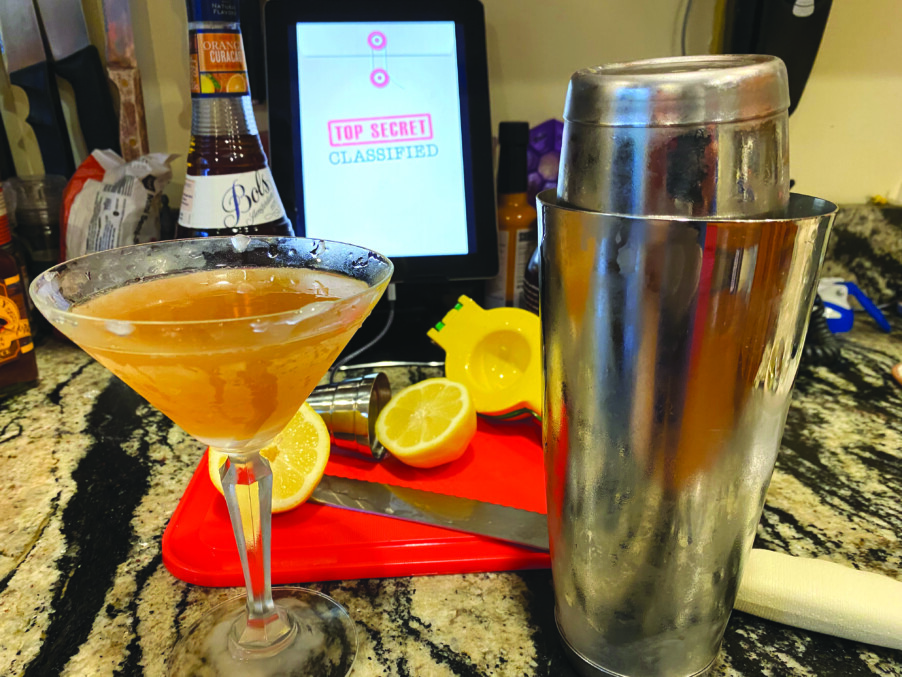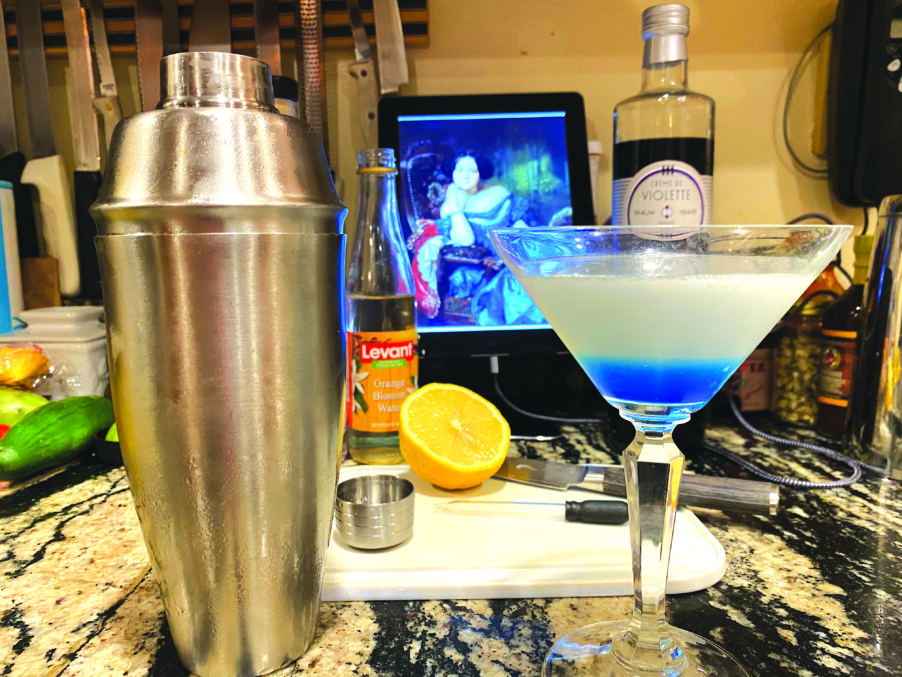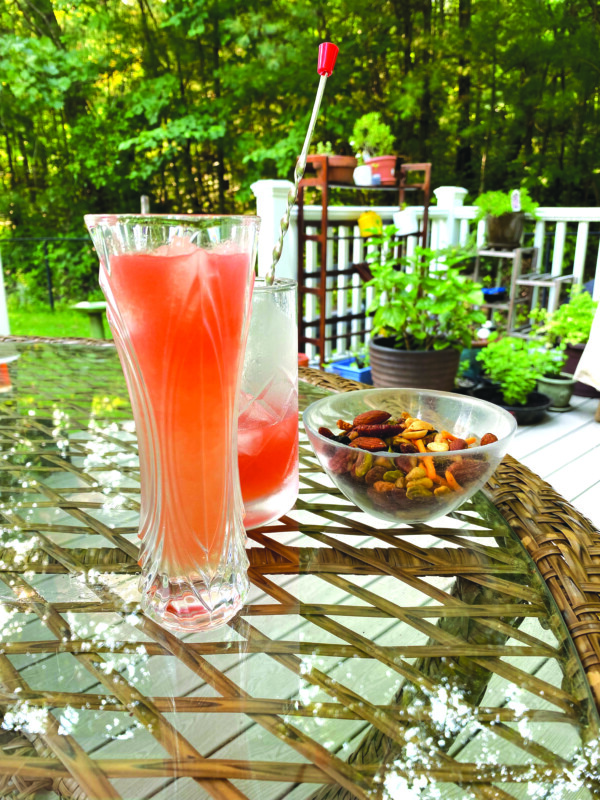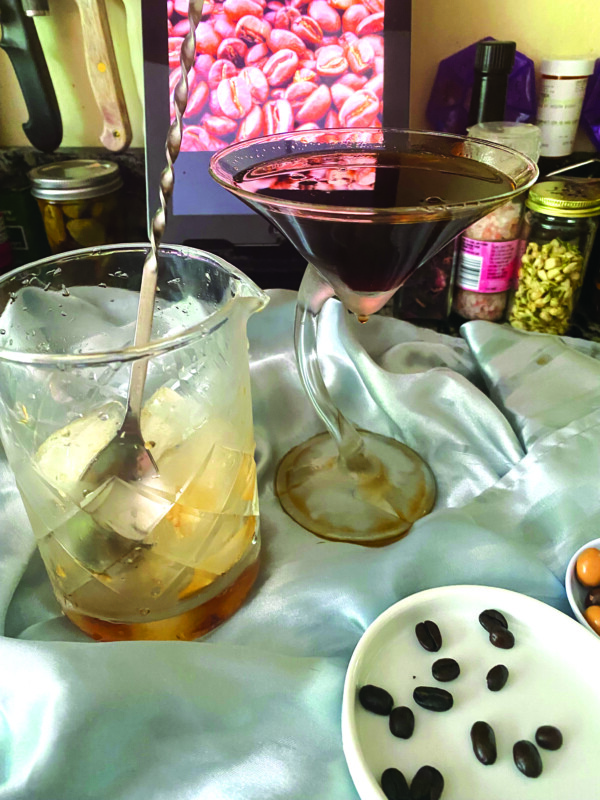
A drink named…

During the 1920s and 1930s, if you were young and had the means, Paris was the place to be.

The war had ended — at least everyone thought so. In the boom times of the Roaring Twenties the arts flourished like they never had before. The French embraced jazz, experimental art and edgy literature. Unencumbered by Prohibition, Parisians were extremely open-minded about cocktails (and indeed, many other fun things as well). American authors and artists moved there in droves.

They stayed through most of the ’30s. The Great Depression hit France as hard as anywhere, but things seemed just as bad at home, and again, there were cocktails. And if you were young, and beautiful, and American in Paris in the 1920s and ‘30s, the place to be was Harry’s New York Bar, on the Rue Daunou. Hemingway drank there. George Gershwin composed An American in Paris there.

And then there were the drinks. Harry’s claims to have invented the bloody mary. Also the Sidecar and the French 75. And this one.

What’s that? What’s it called? Um — er —

HEY! Look over there! Is that an oscelot?!

Anyway, the thing to keep in mind when you are making this particular drink — Excuse me? What’s it called? Darling, let’s keep this pure and special. Let’s not complicate things with too many questions.

As I was saying, the thing to keep in mind when making this particular drink is that while it is, at its core, a relatively straightforward cocktail, it lends itself to more and more elaborate ingredients and techniques. It is easy to slip down a rabbit hole of obsession. As I did.

The Recipe:

1 1/2 ounces mid-level gin (I’ve been drinking Death’s Door lately)

1 1/2 ounces fresh squeezed tangerine juice (OK, you’re going to use orange juice. You know it. I know it. All I’m saying is that I made this with tangerine juice and it is good that way.)

1/2 teaspoon absinthe (Seriously, no more. Absinthe is a very serious player and she is not here for your nonsense.)

1/3 ounce (2 teaspoons) Oleum Saccharum — see below. (Again, let’s face reality. You’re going to read about OS, nod, then probably not make it. Admittedly, it’s a bit of a project. You can replace this with the same amount of grenadine, which will also give your final drink a lovely color.)

1 ounce lime juice (This was not called for in the original recipe, but this drink benefits from extreme cold and a little extra acidity.)

1) Shake all ingredients over ice until skull-shrinkingly cold.

2) Strain into a chilled coupé glass.

3) If you insist on a garnish, then apply one high-octane cocktail cherry with stem. (I’ve been liking Luxardo lately).

This is a lovely cocktail that looks sophisticated and paces itself well. In spite of having just a few ingredients, its flavor is complex. It takes thought and reflection to sort out the fruitiness of the juice and the licorice notes from the absinthe. It lends itself to thoughtful consumption. Is it too sweet? Is it sweet enough? Seriously — licorice? Is the tangerine juice assertive enough? Should I have gone with the orange juice that Harry suggested? What if I played around with ruby grapefruit juice? These questions are to be expected if you’ve made this well. I like to think of it as an intellectual’s cocktail.

And that, my friend, that is how you make a Monkey Gland. Yeah, I know. Would you like another?

Oleum Saccharum
Oleum Saccharum is at its heart a homemade syrup of citrus oil and sugar. It requires you to use a technique called maceration, which is not as naughty as what you’re thinking, but in this case just as self-indulgent. It is the name for extracting juice or oil from fruit with sugar.
Using a vegetable peeler — the Y kind works better for me than the type that looks like a paring knife with a glandular condition — remove the outermost layer of rind from some well-scrubbed citrus fruit. In my case, I used a combination of tangerine and lime rind. (See above.) If you can, try not to get any of the white pith that is beneath the rind; it will add a bitter note to your syrup. (Unless you’ve gotten sucked down the rabbit hole and want to play around with bitterness. In that case, you’re on your own.)
The recipes I’ve found call for 200 grams of rind to 150 grams of sugar. I never have that much fruit rind available; just use a 4:3 ratio (that’s 1 to .75). Alternately, if you are the type of person who plans and thinks ahead, you could save rind in your freezer until you’re ready to make a batch of this.
Combine the rind with sugar and let it sit for about six hours, stirring or shaking occasionally.
After letting it macerate (stop giggling), use a small funnel to pour your oleum saccharum into a tiny bottle. If you leave the rinds in the funnel to drain for an hour or so, you can get a few more precious drops. Store it in your refrigerator until you’re ready to use it.

Featured photo: What’s in a name? Photo by John Fladd.

Zombies!

One fairly common New Year’s resolution is to read more classics of literature. I didn’t actually make that resolution this year, because I really don’t need any more sources of failure and self-recrimination. But that said, I’m probably ahead of the game and have read more classic literature during the first few weeks of this year than many people who did make that resolution.

To wit, 1951’s The Holiday Drink Book.

I did rather well for myself over the holidays and was given several antique cocktail books, this being easily the most festive.

Is it dated? Yes. Does it include dated references to ingredients — claret or sauterne, for example — that we don’t use anymore? Undoubtedly. Does it include unfortunate illustrations of leprechauns, cannibals and serving wenches? Um, yes. That, too.

That said, given the first few weeks of this new year, I think we could all use a stiff drink. And if you are looking for a stiff drink, I say, go to the source — the 1950s, the era of the Three-Martini Lunch. And, if you are looking for a stiff drink from the 1950s, you could do worse than go with the grandfather of all stiff drinks, a Zombie. The Holiday Drink Book puts it rather well: “In appearance and effectiveness the Zombie is the king of all table drinks.”

I’m a big believer in sticking strictly to a recipe the first time I make something. It drives me crazy when someone omits all the butter from a recipe and replaces half the flour with oat bran, then complains that their muffins taste cardboardy. It’s a good idea to cook what the recipe’s author had in mind before messing with it too much.

But you do need to draw the line somewhere.

Did I use four types of rum in my test Zombie, as specified? I did. Did I garnish it with fresh mint leaves and a dusting of powdered sugar? Yes.

But here’s where The Holiday Drink Book and I parted ways: Their recipe calls for papaya juice.

Now, I don’t want to hurt your feelings if you happen to be a papaya, but certain harsh truths need to be recognized. Papaya is a trash fruit. If fruit cocktail and oatmeal had a torrid half-hour in the alley behind a bar, the result would be something very much like papaya. So I had to play with the recipe a bit. Ultimately, this is what I came up with:

The Purple Zombie

The juice of one lime – approx. 2 oz.
1 oz. pineapple juice
1 oz. frozen grape juice concentrate – the deeply purple kind
1 oz. golden rum
2 oz. dark rum – I used Meyers’s
1 oz. white rum – I went with Mr. Boston
½ oz. apricot brandy

Enough over-proof rum to float on the surface of the cocktail – in my case, Gosling’s Black Seal 151-proof dark rum

4 up-market cocktail cherries – right now, I really like Luxardo.

Fresh mint leaves to garnish

1) Combine the first seven ingredients in a cocktail shaker with ice. Shake until very cold. I like to include one of the spent lime halves, as well. I don’t know for a fact that it improves the flavor, but I like to give limes the vote of confidence. They are the hardest-working members of the citrus family, and I like to make them feel needed.

2) Remove the lime half, then pour the contents of the shaker — ice and all — into the most garish tiki glass you own.

3) Float ½ an ounce or so of the 151 over the top of the drink. Pour it over the back of a spoon, much like you would the whiskey in an Irish Coffee, so it stays on the surface.

4) Garnish with snobby cocktail cherries and fresh mint. If your mint leaves are large, chiffonade them (cut them into ribbons).

Three important points about The Purple Zombie:

a) The mint leaves totally make this drink. Somehow the herbiness of the mint plays very well off the dominant taste of the cocktail, which is the rum. Don’t skip the mint.

b) Do skip the powdered sugar. I’m not entirely sure what they were thinking with that one.

c) “Wait a second. You got all snobby about papaya, then replaced it with frozen grape juice concentrate? What kind of beatnik hypocrite are you?” What can I say? It works. The drink needs some sweetness to balance the alcohol and the grape juice concentrate does that very well while adding to the fruitiness. Why not just grape juice? It isn’t quite sweet enough. You need to go with the hard stuff.

Plus, it turns your Zombie purple.

Am I saying that drinking a Zombie will remove any of the heavy weight that the past year has put on your shoulders? No. But I am saying that if you approach it right, a good Zombie might give you the emotional shoulder pads to allow you to claw your way through to February.

Featured photo: Photo by John Fladd.

Stay in the loop!

Get FREE weekly briefs on local food, music,

arts, and more across southern New Hampshire!