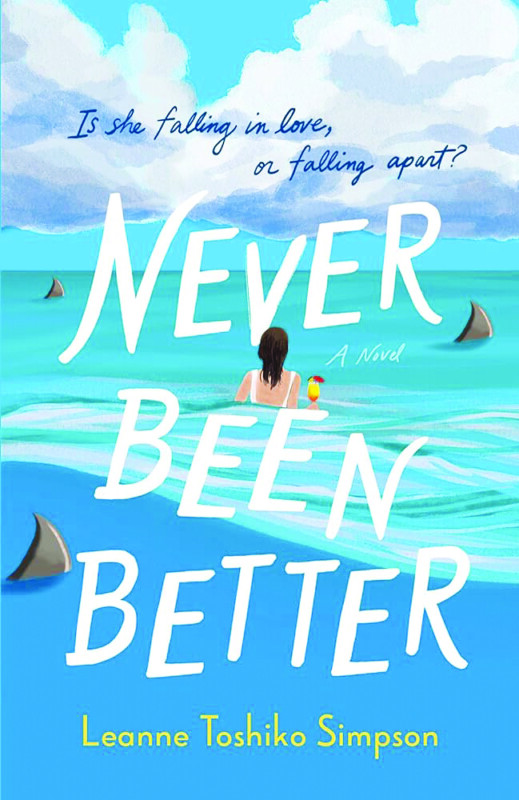
Never Been Better by Leanne Toshiko Simpson

Never Been Better by Leanne Toshiko Simpson (G.P. Putnam’s Sons, 288 pages)

If you don’t know what it’s like to struggle with mental illness, Never Been Better offers a fresh perspective with a fun plot and a good amount of humor — which, fair warning, veers toward the dark side at times. If you have experienced mental illness, or been close to someone who has, you’ll likely relate to many of the messages in this book.

The protagonist is Dee Foster, a woman with bipolar disorder who hesitantly agrees to travel to Turks and Caicos to attend the wedding of her best friends, Matt and Misa, then decides that as long as she’s there she might as well let Matt know she’s in love with him — and has been since the three of them met in a psychiatric ward.

I think it’s important to note that, although this is fiction, author Leanne Toshiko Simpson has bipolar disorder, so her characters are drawn in part from her own experiences — which, for me, was important to know, because some of the dark humor might have felt disingenuous, almost flippant, if it had been written by someone who hadn’t lived these thoughts and feelings. And using humor to cope is certainly not uncommon. (“I’m glad depression gives me the sex drive of a ham sandwich,” Dee replies when Tilley points out an attractive man and comments that she’s glad she wore her push-up bra.)

I should mention that I’m a (relatively new) therapist, so I read Never Been Better from that perspective, as well as the perspective of someone who has dealt with depression and anxiety. I respect that Toshiko Simpson doesn’t shy away from the very real challenges that mood disorders can present, even as life goes on and people plan weddings and love triangles ensue. The story somehow feels both deeply heavy and blissfully light.

Dee’s sister Tilley plays a solid part in that lightness; she’s wild, bold and fiercely dedicated to protecting Dee. She also embodies the challenges of loving someone with a mood disorder, navigating the slippery slope between emotional accommodations and tough love. In one scene, Dee is struggling hard to get up for an early-morning barre class at the resort they’re staying at, thanks in no small part to the side effects of her medications. But this is nothing new to her, or to Tilley.

“‘After this many years of living in the same house, I should have earned a damn black belt in helping you wake up,’ said Tilley. ‘Just today I’ve pulled all the sheets off your body, turned all the lights on, licked the side of your face…’ More footsteps, then Tilley dumped a full glass of water over my head.”

As Dee struggles openly and honestly, she feels some resentment toward Misa, whose wealthy family doesn’t know she met Dee and Matt in the psychiatric ward, because she never told them she was there as a patient and continues to conceal her mental illness from them, presumably because it doesn’t “fit” into their tidy, proper world.

“Misa went on to run an entire golf tournament dedicated to bipolar disorder without happening to mention her [own bipolar disorder]. … What I really wanted was for her to … be messy in her illness, like I was in mine.”

Good days for Dee are the ones where she doesn’t crave a depression nap, she can get across town on a bus without having a panic attack, or she can make it through a first date without the guy asking, before she’s about to spend the night, whether she’ll be the same person when she wakes up in the morning. So getting through this destination wedding is all kinds of hard, as she navigates her feelings about Matt (while also trying to figure out how to confront him after she finds out he’s stopped taking his meds) and her feelings about Misa, who she felt so close with when they were in the hospital but feels so distant from now.

Along with those considerable issues, Dee is fighting to keep up with the daily pre-wedding activities among Misa and Matt’s friends and family — a whole other fun cast of characters that bring levity to this book, from a kindhearted grandma to a spunky but wise cousin.

This is the debut novel for Toshiko Simpson, who, awesomely, also co-founded a reflective writing program at Canada’s largest mental health hospital. Though at times Never Been Better edges a little too close to the line between mirth and despair, in Toshiko Simpson’s understanding hands it comes together as a heartfelt story of persevering time and time again in the face of mental illness. A-

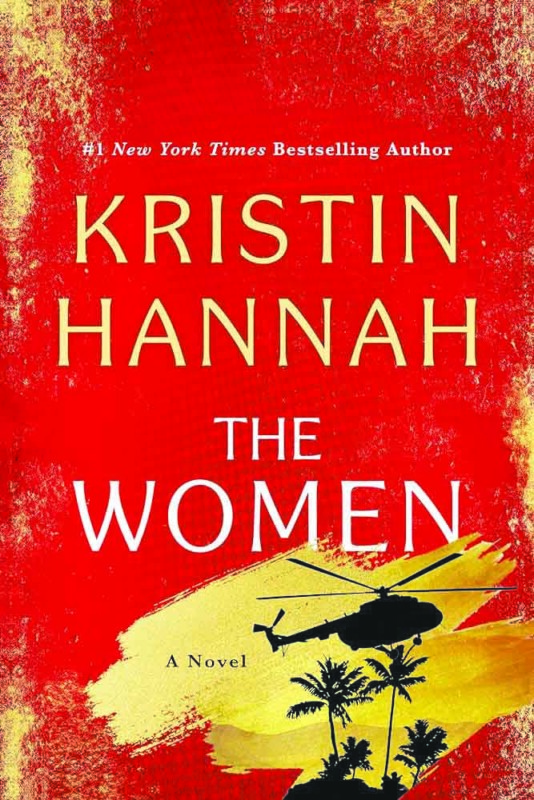
The Women by Kristen Hannah

The Women by Kristen Hannah (St. Martin’s Press, 480 pages)

I am not, generally speaking, a lover of historical fiction, but something about the way Kristen Hannah does it is so right: a rich blend of shocking truths, visceral emotions and captivating characters. She did it well with Four Winds and spectacularly with The Nightingale, and she does it again with her latest, The Women.

The Women is set in the era of the Vietnam War. I am not a history buff, which is probably why I don’t veer toward historical fiction often, so I’m not sure if I wasn’t paying attention when being taught about the Vietnam War in school, or if it was just never talked about in a way that made any kind of lasting impression. Or at all. In any case, it was news to me to read that veterans coming home were spit on and shunned, and that the government, for a long time, wasn’t sharing the depth of the devastation that was happening overseas.

Frances McGrath — Frankie — joins the Army as a combat nurse and heads off to war at the age of 21. She’s following in her brother’s footsteps and hopes — naively — to make a place for herself on her dad’s “heroes wall,” which features photographs of all the men in the family who have served their country.

But when she tells her parents that she’s signed up for a tour, they’re horrified.

“‘Take it back. Unvolunteer.’ Mom looked at Dad. She got to her feet slowly. ‘Good Lord, what will we tell people?’”

It wasn’t the future that her parents expected for her, or that society approved of.

“Frankie had been taught to believe that her job was to be a good housewife, to raise well-mannered children and keep a lovely home. In her Catholic high school, they’d spent days learning how to iron buttonholes to perfection, how to precisely fold a napkin, how to set an elegant table.”

Instead, amidst the backdrop of war, Frankie grows up. We watch her lose her innocence as she’s confronted with gruesome injuries and innumerable deaths at work, deplorable living conditions, oppressive weather in the form of heat and monsoons, and a social scene that includes a lot of drinking. She arrives as a young girl who doesn’t smoke, doesn’t drink and easily turns down propositions from married men. She’s not the same girl when she returns to Coronado.

Hannah splits the book into Frankie’s time at war and the years following her return. Both time periods are bleak for Frankie, for obvious reasons when she’s at war and for some pretty depressing reasons when she comes back home, including that the country seems to have turned on its veterans. On top of that, few people believe that women served in Vietnam. Her parents, whom she so badly wanted to impress, pretend she wasn’t there.

Through it all, fellow Vietnam nurses and “hooch” mates — bunkmates — Barb and Ethel are by Frankie’s side whenever she needs them. They show her the ropes when she arrives, and they show up at her door when she’s spiraling downward at home. The three women come from very different backgrounds, and despite the divergent paths they take when they return to the U.S., they never lose touch. More than once, Barb and Ethel prove to be Frankie’s lifeline. It’s a beautiful friendship, adding bursts of color to an intrinsically dark story.

And, of course, there are men, many of whom vie for Frankie’s attention. Love happens, in complicated and heartbreaking ways. But those are secondary stories, really; there is no doubt that Hannah’s intention is to give a voice to the women who served in Vietnam.

Although this is a work of fiction, Hannah makes it very clear in her author’s note and acknowledgments that she did a lot of research and talked to a lot of people who experienced the war, so I have to believe that most of Frankie’s experiences were not embellished or exaggerated. Hannah also notes that she originally used fictional names of places, but her Vietnam War readers felt strongly about keeping those details accurate, so the settings are all real.

There are a couple of moments toward the end of the book that seem somewhat contrived, but this is a small quibble, and honestly, the whole story might seem contrived if you didn’t know it was based in large part on real experiences.

Hannah superbly blends the heaviness of war with the frailty of humans at their most vulnerable — and often at their best. A

Meghan Siegler

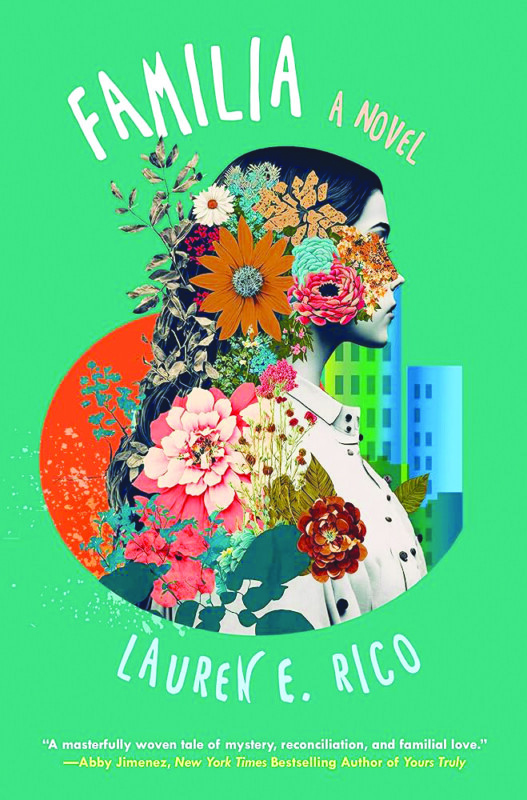
Familia, by Lauren E. Rico

Familia, by Lauren E. Rico (Kensington, 368 pages)

I started reading Familia in a hotel room while waiting for my daughter to get ready to go to dinner – and promptly lost all desire to go out to dinner. (I mean, we went — she wasn’t about to buy “but I really like this book” as a reason not to).

Lauren E. Rico’s novel is a fast-paced story that covers a lot of bases: family, obviously, but also different cultures and how they form us, a bit of a mysterious crime, and coming to terms with a life that can change in so many significant and unexpected ways.

A DNA test brings together Gabriella and Isabella, the former young woman fully believing the results were a mistake and the latter having no doubt that they weren’t. Isabella, who has lived her whole life in Puerto Rico, used to have a sister, Marianna, and she disappeared when she was seven months old while in the care of their extremely inebriated father. Gabby, a magazine fact-checker who lives in New York City and was raised by now-deceased parents whom she loved deeply, does not believe it’s possible that the parents who raised her — Mack and Lucy — were not, perhaps, her birth parents.

Gabby embarks on a trip to Puerto Rico, for the sole purpose of writing a magazine story about what happens when DNA test results are wrong. She thinks it’s the perfect way to show her boss that she has talents beyond fact-checking and deserves a staff position as a writer.

It seemed a little unbelievable that Gabby is a fact checker — her job is literally to dig in and find facts — and yet she doesn’t make much of an effort to dig into the facts about her family history despite the DNA test results. I guess there’s that emotional component that would make it difficult to believe that your history is anything other than what you remember and what you’ve been made to believe.

As Gabby explains to Isabella, “For what you’re saying to be true, I’d have to believe Mack and Lucy would have — could have — literally stolen a baby off the street. … This isn’t about not being able to believe that I’m your sister. It’s about being able to believe that I’m not their daughter. And I just … I can’t.”

The story mainly alternates between Gabby’s and Isabella’s points of view, but there’s a whole cast of interesting characters, and Rico gives most of them at least one chapter. This means the story is tied together from all sorts of perspectives, from Alberto’s — the book opens with him, coming to on a street, baby missing — to the detectives’ on the missing-baby case. It was a really fun way to see the mystery unravel, because, of course, nearly everyone has a secret. The narrative also switches between now and “that day,” the day the baby disappeared, offering another compelling angle.

There’s the mystery, and then there’s the juxtaposition of two young women who were raised very differently and have different kinds of intelligence; Gabby is more book smart while Isabella is more street smart. Rico shows this subtly but effectively, in scenes like this one, from Isabella’s point of view, as the women walk through one of the shabbier areas of Puerto Rico.

“When Gabby takes out her phone to snap a picture, all she can see is the mural — a spray-paint reproduction of the Mona Lisa draped in a Puerto Rican flag. All I can see are the two guys standing just out of the frame, conducting a little street-side retail.”

There’s definitely a “wealthy girl from NYC vs. poor girl from San Juan” piece of the narrative, and while I personally didn’t feel like it was overdone, I think someone who is of Puerto Rican descent or is more familiar with Latino culture would likely read the representations of Puerto Rico a lot differently than I did. A lot of the descriptions shine a negative light on the people and places of Puerto Rico, mainly San Juan and la Perla, and I can’t pretend to know how accurate they are. The author does include a note at the beginning of the novel explaining her own family history and that she is trying to honor her heritage and the stories she heard from her Cuban grandfather and Puerto Rican grandmother, along with her extensive DNA connections to the island and her own experiences visiting there (which she acknowledges were from a tourist point of view).

Familia is a quick read that manages to be both fun and a bit dark, but it’s also meaningful and has a lot of heart. A-

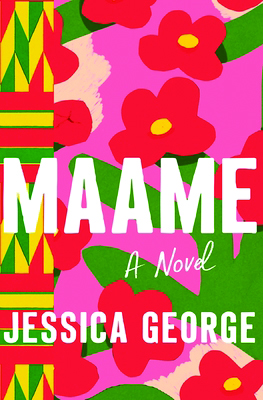
Maame, by Jessica George

Maame, by Jessica George (St. Martin’s Press, 320 pages)

There’s a lot to like about 25-year-old Maddie Wright, the main character in Jessica George’s debut novel. Born in Ghana and living in London, Maddie is navigating her unique brand of young adulthood struggles, from low-key workplace racism to familial responsibilities and expectations. She is sweet and kind and very innocent, at times frustratingly so. But watching Maddie grow up and figure out who she is and who she wants to be is what Maame is all about, and it’s a charming journey.

In some ways, Maddie is forced to be more of an adult than many 25-year-olds; she’s taking care of her dad, who has Parkinson’s disease, and her mom, though still married to her dad, spends most of her time in Ghana running a hostel while Maddie and her dad live in London. Her mom is critical of Maddie and the fact that she isn’t as engaged in her Ghanaian heritage and customs as her mother would like her to be — yet Maddie is the one paying all the bills at home and sending money to her mom in Ghana, while her brother does little to help.

In other ways, though, Maddie seems younger than most women her age, and she knows it. That’s why she sets a goal to transform herself into “The New Maddie.” She makes a list of who she wants to be, which includes “drinks alcohol when offered, always says yes to social events, tries weed or cigarettes at least once (but don’t get addicted!), goes on dates, is not a virgin,” and so on.

Maddie gets the chance to work on these goals when her mom returns to London for a year to take over the care of her husband. Maddie moves out and into a flatshare with two women her age, both very different and seemingly more worldly than she is, which gives her a whole new opportunity to live her own life. At the same time, she starts a new job at a publishing house, and, of course, there’s suddenly a new guy hanging around. (Happily, though, romance is not a central plotline but rather a nonintrusive piece of Maddie’s coming-of-age puzzle.)

George expertly depicts both Maddie’s Gen Z traits and her innocence through her frequent Google searches. She Googles random things like “back pain in your mid-twenties” and gets mostly-useless answers from random people: “CC: ‘It’s all linked to the Government. … From a young age we’re told office jobs are the goal. Then you sit at a desk hunched over 9-5, 5 days a week for most of your younger years.’ LG: ‘Why would the government want a nation suffering from back pain?’ CC: ‘So we don’t take over.’”

Many of her questions show her uncertainty and lack of confidence, particularly in the social domain. Waiting to hear back from a potential love interest, she Googles “How long do guys wait before asking a girl out on a date?” (Some very realistic Google answers range from: “I spent four months getting to know my now-girlfriend before I asked her out on a date” to “One hour.”) George incorporates these searches sparingly enough that they’re not annoying and they add some relatability to Maddie’s character no matter how different she is from the reader. We can all relate to the frustration of such drastically diverse search results with no definitive answer from a source — the almighty internet — that is supposed to have all the answers. (Honestly, who hasn’t Googled “weird rash” and been led to believe it’s either totally normal or a sign of impending death?)

Maame covers all the bases of growing up with cultural barriers, without being heavy-handed or preachy. Despite Maddie’s sometimes cringy naivete, I was rooting for her all along. Her story is often funny, and always heartfelt and engaging. A

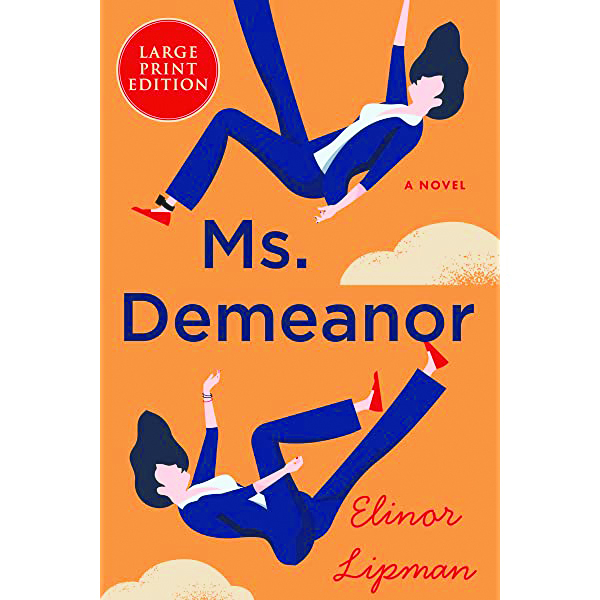
Ms. Demeanor, by Elinor Lipman

Ms. Demeanor, by Elinor Lipman (Harper, 304 pages)

I’ve never before finished a book and thought, “That was delightful,” but that’s the phrase that kept running through my mind as I transitioned from the fictional world of Ms. Demeanor to the bleak reality of New Hampshire in winter. It was a bright spot in a string of cold, gray days, and it’s a step up from the typical beach read romance, with a unique plot, witty writing and fun, well-developed characters.

Protagonist Jane Young, a spunky, sassy lawyer, is under house arrest for public indecency, having been caught on camera by her nosy neighbor as she was enjoying an intimate moment with a coworker on her semi-private rooftop.

This house arrest leads to Jane meeting an amusing cast of characters, including cute, age-appropriate Perry Salisbury, whom she learns from her doorman is also under house arrest, also for a white-collar crime. (I said it was a unique plot, not necessarily a believable one — regardless, a nice change from the average fictional meet-cute.) I like that Perry is just a normal dude. In many chick-lit-type novels, the male characters who end up with the female protagonist are often portrayed as pompous jerks who eventually show that they have a kinder, softer side worth loving, or as friendly next-door-neighbor types (as opposed to an actual neighbor, a la Perry, who is neither annoyingly friendly nor a pompous jerk). He’s a great foil to Jane, pretty chill and tolerant compared to her less relaxed, quicker-to-anger vibes.

Lipman’s minor characters are well-developed and quirky. There’s Mandy, another building dweller Jane introduces herself to, because why not, being stuck there for six months, and there are Dani and Krzysztof, whom Jane meets because of their relation to the old woman who called the cops on her. Even Perry’s parents are hilarious, his mom especially, being all posh and snotty but also likable somehow.

This book features a lot of relationships of convenience. Jane and Perry’s relationship is transactional at first, starting with food — Jane is trying her hand at making food from the 1800s and posting her cooking videos on TikTok, and she agrees to make meals for Perry as well, which gets her a bit of a paycheck and helps him curb his fast-food habit. That quickly transitions to a friends-with-benefits situation.

Dani and Krzysztof, meanwhile, are looking for green cards through any means necessary so they don’t get deported back to Poland. They ask Jane to hook Krzysztof up with anyone she knows who might want to get married, like perhaps her twin sister Jackleen, who is saved from the absurdity of even considering that plan because when Jane mentions it to Mandy — a quirky woman who apparently has no qualms with marrying someone, anyone, because her biological clock is ticking — Mandy jumps on the opportunity.

Some of Ms. Demeanor’s plot seems to go off the rails at times. For example, there’s a possible murder situation that isn’t really resolved — but that didn’t bother me at all because a resolution wasn’t really the point. The whole cooking on TikTok thing, which Jane is doing because for some unknown reason her sister has been asking her to for years, was kind of pointless. Jane cooking for Perry would have made just as much sense without that, though it may be more that I don’t understand how people use TikTok. Like, she’s making very old-school foods while complaining about her current house-arrest situation — why would anyone care? But my teenage kids tell me it’s normal to follow random people doing random things. My daughter was just watching a total stranger getting ready for a first date while talking about the guy’s red flags. So, there’s that.

The easy, witty writing made me want to keep reading no matter which storyline Lipman was on. Plus, it’s a quick read with those deliberately short chapters that make a book hard to put down (just one more chapter, I thought many times). I think the readability is one of the reasons it’s so delightful. Sure, there’s no going back to read over gems of sentences; this isn’t Shakespeare by any stretch of the imagination. It’s fast-paced and fun and at no point trying to be a contender for a Pulitzer Prize. So if you’re looking for serious, this isn’t it. B

Carrie Soto is Back by Taylor Jenkins Reid

Carrie Soto is Back by Taylor Jenkins Reid (Ballantine, 384 pages)

You know when a book’s protagonist is really hard to like but, for reasons that you can’t quite understand, you root for her anyway? That is Carrie Soto.
When we meet Carrie, she’s 37 and has been retired from professional tennis for six years. After watching Nicki Chan match her Grand Slam record, she decides to come out of retirement and win back her spot at the top of the tennis world.
Taylor Jenkins Reid has created a character in Carrie who is so real, I keep expecting her to show up in daily sports headlines. But her name appears in fictional media stories time and again, as Jenkins Reid uses sports commentary and news articles to help shed light on what the world thinks of Carrie. And the world sees her exactly as she is: supremely talented but ruthless. In fact, she was given the nickname of “the Battle-Axe” when she was in her prime.
We see some of that ruthlessness during a press conference that takes place during her first event back, the Australian Open. One of the reporters asks if there’s truth to her comeback being a stunt. Carrie responds, “I’ve proven so far that my game is outstanding. So everyone can whine and moan all they want about me being here, but I’ve earned the right.”
Another reporter asks about her upcoming match, to which she replies, “I’m gonna crush Carla Perez and anyone else I play on my way to the final. I’m going to hold their beating hearts in my hand.”
That’s Carrie, inside and out. She’s as abrasive internally as she is externally; it’s not just a show for the media. She’s hard on everyone else, and she’s equally hard on herself. We see this in the thoughts that permeate her mind during her games, including during a tight match against Natasha Antonovich, one of her more formidable rivals.
“I do not look at my father. I do not want to see the worry in his eyes. I tell myself: Do not let her win this set. You are either a champion or a ****up. There is no in-between.”
Rarely, we see Carrie’s vulnerability. She puts a hard wall up against Bowe Huntley, a fellow tennis pro with whom she’d gotten too close to in the past. She has the chance to train with him again, and she imagines a scenario in which she does let him back into her life.
“He’ll say something wonderful at some point, and I’ll start to believe he means it, despite all evidence to the contrary. And then I’ll start to like him or love him or feel something that I swear I’ve never felt before. And then one day, when I’m in too deep, he’ll stop liking or loving me, for one reason or another. And I’ll be left with a hole in my heart.”
Also softening the storyline is Carrie’s relationship with her dad and coach, Javier, a former pro himself. Their relationship, at first, seems all business; when Carrie trains with him as a child, Javi is demanding and has what some might see as unrealistically high expectations. But as the story goes on, we see how deeply he loves her and just wants her to be happy. And Carrie’s feelings for him change, seeming to soften over the years. She had fired him as her coach during her pre-retirement career, but she agrees to work with him for her comeback. Javi becomes a likable character, an endearing foil to Carrie’s hard-headedness.
Carrie Soto is Back is very much about tennis, but don’t let that stop you from picking it up, even if you care nothing about sports in general or tennis in particular. I’ve never played tennis, never watched more than a few minutes of tennis, and never really cared to. But Carrie is tennis, and who she is is expressed through her intense tennis practices, tennis games and tennis relationships.
It helps that Jenkins Reid has done her homework. According to an Aug. 29 interview on The Cut, Reid has played tennis for fun, but “I don’t think I’ve ever won a game, let alone a set or a match. … I had to learn it all for this book, and I’m very insecure about it. Did I learn it right? I don’t know, guys. I’m an imposter. I’m trying really hard. I’m trying to learn as much as I can so that I can give you a good time.”
Jenkins Reid has done just that. Carrie Soto is Back is a good time, not in spite of Carrie’s brashness — or the intense focus on tennis — but because of it. A-

Stay in the loop!

Get FREE weekly briefs on local food, music,

arts, and more across southern New Hampshire!