This year’s New Hampshire Jewish Film Festival, opening March 23 at the Rex Theatre in Manchester, offers a rich and varied slate of 15 movies. It’s also very much a statewide endeavor, with seven cities hosting screenings. In addition, more than half of the offerings will be available online.
The documentary Janis Ian: Breaking Silence will be both screened and streamed, followed by a Zoom discussion with director Varda Bar-Kar. Ian was a teenager in the mid-1960s when she released the controversial “Society’s Child,” and charted a decade later with “At Seventeen.” Along the way she worked with everyone from Jimi Hendrix to Dolly Parton.
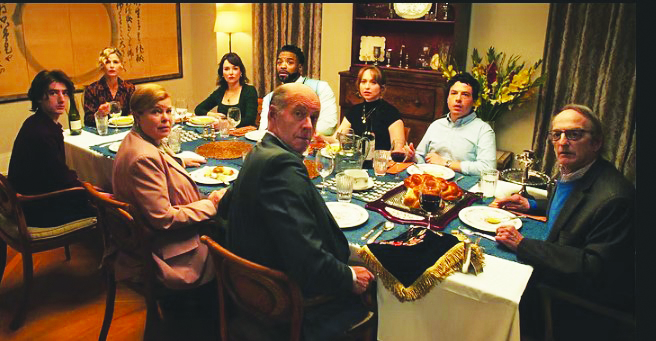
One of the most eagerly anticipated films is Bad Shabbos, a comedy about a newly engaged couple’s Jewish and Catholic parents meeting for the first time over a dinner gone terribly wrong. With a cast including Kyra Sedgwick, David Paymer and Cliff “Method Man” Smith, it won the Audience Award at last year’s Tribeca Film Festival.
“That’s definitely the one that people are going to leave talking about,” steering committee member Zachary Cemenker said in a joint interview with festival chair Pat Kalik, who added, “that’s why we’re closing the festival with that one; it’s our final film.”
Max Dagan, from Nashua director Terre Weisman, will be shown on Thursday, April 3, at Concord’s Red River Theatres, and Weisman will participate in a discussion after. The film is about a prison inmate who is dying of a brain tumor, his son’s efforts to free him with a compassionate release, and the past that’s revealed in the process.
“I explore themes of tragedy and loss, and how one’s natural talents and strengths can empower an individual toward healing and redemption,” Weisman wrote on the nofilmschool website when Max Dugan was screened as the prestigious Closing Night Film at last year’s Dances With Films festival.
Two films released just this year are also among the most hard-hitting.
October H8te, from executive producer Debra Messing, is a documentary about anti-Semitism in the wake of the October 7, 2023, Hamas attacks in Israel. Soda explores a relationship between a Jewish man and a woman suspected of being a capo for the Germans during the Holocaust, and its effect on a small village with war still a fresh memory.
With films about Beatles manager Brian Epstein (Midas Man), a former U.S. Senator (Centered: Joe Lieberman), and even an animated feature from the 1990s (Prince of Egypt, chosen to coincide with Passover), there’s a little bit of everything for everyone, with offerings coming from all across the world.
There’s an effort to draw from both U.S.-based and foreign distributors. “That way there’s a variety of films that aren’t all subtitled,” Cemenker said. Beyond that, “we try to balance where they’re from, and the content in them, so that they’re not all World War II or Holocaust-driven [and] they’re not all about Israel or the Middle East. We have a variety of criteria.”
One film that checks more than a few boxes is Running on Sand. It’s a comedy of mistaken identity that also deals with the hot-button issue of immigration. In it, a man about to be deported from Israel runs from officials at an airport, only to be mistaken for a star soccer player arriving to play for the local team.
The Joe Lieberman documentary will be shown on the festival’s final day of theater screenings, followed by a pre-recorded conversation with director Jonathan Gruber. It’s part of a dual program including Darren Garnick’s short film Righting A Wrong: The Bialystok Cemetery Restoration Project.
Garnick was a longtime festival volunteer who passed away last autumn. “We are showing that film in his memory and in his honor,” Kalik said. “We wanted to do it on the last day.”
The festival is a program of the Jewish Federation of New Hampshire and is also sponsored, in part, by the New Hampshire State Council on the Arts.
17th Annual New Hampshire Jewish Film Festival When: Sunday, March 23, through Sunday, April 6 (Streaming Bonus Week April 6-11) Where: Locations in Manchester, Concord, Merrimack, Hooksett, Portsmouth, Hanover and Keene More: Full schedule and tickets at nhjewishfilmfestival.com Opening reception Sunday, March 23, at noon, Spotlight Room at the Palace, 96 Hanover St., Manchester ($16) prior to the 2 p.m. screening of Shari & Lamb Chop at the Rex Theatre, 23 Amherst St., Manchester ($12).
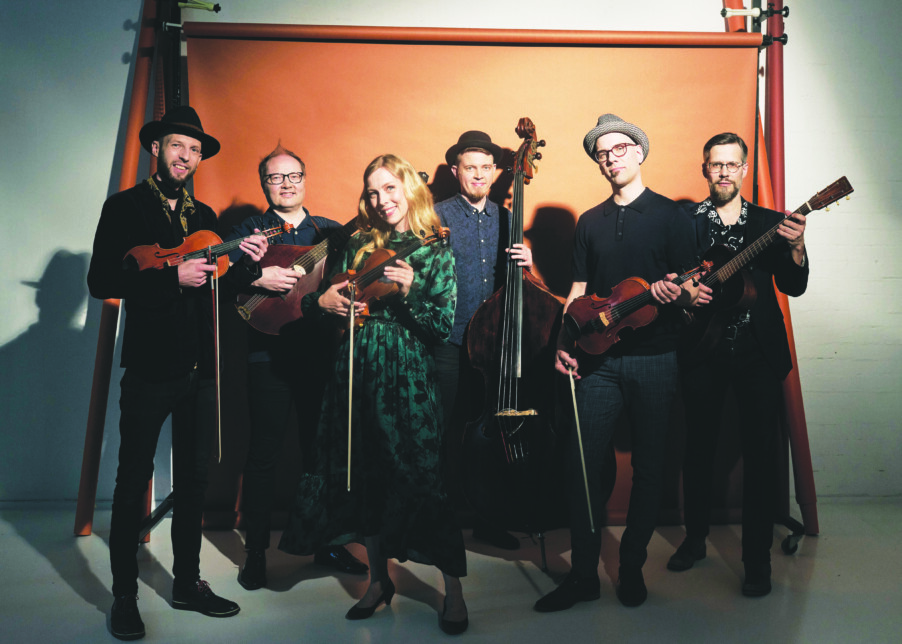
With a blend of Celtic, American bluegrass, and a Nordic fiddle tradition designated by the UN as an “intangible cultural heritage of humanity,” Frigg is truly a world music band. As St. Patrick’s Day approaches, a show in Manchester will dip into their Irish roots while showcasing the lively Nordgrass style that’s made their reputation.
Fans of Nickel Creek will enjoy Frigg’s lively all-instrumental sound. The band was founded in 2000 by sibling fiddlers Alina Kivivuori and Esko Jarvela and mandolin player Petri Prauda. The current lineup includes Juho Kivivuori on double bass, guitarist Topi Korhonen and fiddler Tero Hyväluoma, who played his first Frigg gig in 2005.
In a recent phone interview, Prauda, who along with mandolin also plays cittern and bagpipe, discussed the band’s swing through New England and their music.
“The sound of Frigg comes from a fusion of different musical cultures,” Prauda said, “but especially the Kaustinen fiddle tradition.”
That’s the style selected by UNESCO for its singularity, named after the village in Finland that both Kivivuori and Jarvala hail from; Hyväluoma grew up nearby. It originated in the 17th century and has been passed down for generations, music characterized by a rhythmic sound that’s driven by syncopated bowing.
Their latest album, Dreamscapes, released in February, finds Frigg delicately moving in a new direction. On “Västkusten Twist,” the mood is bouncy, atmospheric, rising symphonically, while “Valsette” has a contemporary flow influenced by the American bluegrass bands they’ve long admired. “Troll’s Twilight” offers chamber music elements.
Some of the change is due to a reconfiguration of the original four fiddle band, due to the departure of Tommi Asplund.
“It was a hard decision for him, and of course, hard for us to let go of him,” Prauda explained, “but we decided we try to continue with three fiddles now only…. There’s some arranging work to be done, but we have been touring every now and then a few times with just three fiddles previously.”
The work on the new record began a couple of years ago with informal composition camps.
“We were thinking, what can we do that we haven’t tried yet, so we tried this time a bit more experimental approach,” Prauda said, adding with a laugh that he felt, after a recent relisten, “it just sounded like Frigg to me. So maybe these experiments are quite subtle.”
The band’s name comes from the Nordic goddess of love and wisdom. “Which I think are really great values today … look at the news; it seems like we need more love and wisdom in the world,” Prauda observed. “But the name got picked out just simply. We were looking in a dictionary and it was one of the first names that somehow stuck out there for us.”
Initially they were unaware of how people in the U.S. use the word, but there’s a song on 2017’s Frost on Fiddles called “Friggin’ Polska,” and Prauda acknowledges “there are many things in the world connected to Frigg … yoga, hippie things or cafes, but we didn’t think of that at the time at all. We just thought it’s a cool name.”
Frigg has many Polska dance songs in its repertoire. The lively style had its heyday in the 18th and 19th centuries and is usually played in three-quarter time, “but there are many different kinds,” Prauda explained. “Slower and faster, and the rhythmic phrasing can be very different…. It became a very popular dance in Sweden, and Finland, especially.”
Though it’s true no one sings in Frigg, Prauda notes, “We have put a lot of effort in thinking and planning and practicing how the energy in the music flows in which direction, so that when you make purely instrumental music, it still has some kind of feeling, a storyline, mental landscapes, images. I think that is quite characteristic to Frigg’s music.”
Frigg
When: Friday, March 14, 7:30 p.m. Where: Dana Center (Saint Anselm College), 100 Saint Anselm Drive, Manchester Tickets: $45 at anselm.edu
Stories and dance: Michael Londra brings his PBS series Ireland With Michael to the stage. The show blends music, dance and stories, as the Emmy-nominated Voice of Riverdance shares his affinity with them, backed by a traditional Irish band and dancers. Thursday, March 13, 7 p.m., Stockbridge Theatre, 5 Pinkerton St., Derry, $35 and up at stockbridgetheatre.com.
• What’s up sweetcakes? Enjoy jazz inspired by a popular anime series at Cowboy Bebop Live. Japanese composer Yoko Kanno’s music helped drive the edgy Japanese series, from her earworm theme song “Ask DNA” to the jumping jazz number that opened the 2001 movie, “TANK!” An all-star 14-piece ensemble performs in support of the big-screen multimedia presentation Friday, March 14, 8 p.m., Nashua Center for the Arts, 201 Main St., Nashua, $39 at etix.com
• Long green weekend: Four days of St. Patrick’s fun commences with Shamrock & Roll-themed music bingo from DJ Paul Corwin on Friday night, with Celtic band Loch Mór and the Pogues-inspired Rebel Collective the next day. Sunday, it’s music from the Reel McCoys and a set from McGonagle School of Irish Dance. Dan Fallon performs on the big day. Friday, March 14, through Monday, March 17, Biergarten, 221 DW Highway, Merrimack; schedule at budweisertours.com.
• Canyon lady’s prime: Drawing primarily from her 1970s heyday, The Linda Ronstadt Experience is a stirring tribute. American Idol Season 15 contestant Tristan McIntosh is convincing on ballads like “Long Long Time” and “Blue Bayou,” the Roy Orbison song she made her own, and shines on the early hit “Different Drum.” She’s a believable doppelgänger for Ronstadt as well. Saturday, March 15, 7:30 p.m., Rex Theatre, 23 Amherst St., Manchester, $39 at palacetheatre.org.
• Cross-Canadian Celtic: Hailing from Ontario, The Glengarry Bhoys occupy a unique musical intersection, blending Highland Scots, Irish and French Canadian idioms for a thrilling and energetic performance. Given the Celtic flavor of the band’s sound, they’re an especially popular item around St. Patrick’s Day, where they perform plenty of traditional songs along with their original material. Sunday, March 16, 7 p.m., Tupelo Music Hall, 10 A St., Derry, $39 at tupelohall.com.
“Sean’s Red Scarf” is a playful story about a greedy man who lets a leprechaun fool him into opening an accessory shop. Simon Brooks has been spinning such tales for more than 30 years, and it may be among those he’ll tell after a dinner at a Nashua gastrobrewery hosting the latest in its Legends & Lore storytelling series.
Or maybe, Brooks said recently, it’ll be a darker yarn.
“A lot of people think that folk and fairy tales are mostly for kids, but when you actually listen to a lot of them they’re really deep.” he said. For example, “The Lonely Boat Man” is about using imagination as a defense against life’s hardships, with an ending that lands differently depending on the listener.
In it, a fisherman named Hagen runs from a socially awkward moment; all the guests at a public dinner have been asked to perform for their share, and his entertainment skills are nonexistent. Outside, he finds a beautiful woman in need of a boat ride to her home. He obliges, and falls in love along the way to the mysterious island where she lives.
In Brooks’ capable hands, the Scottish folk tale, also called “The Fairy Bride,” is magical, its denouement both beautiful and devastating. Hagen’s escape is redemptive and life-affirming, even after things change and he’s once again alone, with the memory of brief happiness the only salve for a solitary existence. However, he now has a story to tell.
Just the basic bones are provided here, so as not to spoil it for anyone who’d like to hear the whole tale on Brooks’ website (diamondscree.com).
Brooks has appeared frequently at the Nashua venue, and the upcoming St. Patrick’s Day event will be his third one there.
“It’s one that both Rambling House and I get very excited about,” he said. “I have Irish ancestry, and so I tell mostly Irish stories. There might be a Scottish or Welsh story thrown in because it’s Celtic.”
The evening will include a farm-to-table meal with an Emerald Isle feel — “the chef is absolutely incredible, it’s some of the best-tasting food I’ve ever had,” Brooks said — followed by dessert and, perhaps, a mug of their Oscar F.O.W. Wilde Nitro Stout. After the tables are cleared, tale-spinning begins.
Rambling House has designated Brooks as the evening’s Seanchaí (pronounced, shan-a-key), described as “a storyteller tasked with keeping alive the Irish myths, folklore and legends that inspire a people. In ancient Ireland, the seanchaí was held in high esteem and would regularly attract large crowds to hear the long-form poems and tales they had to tell.”
Opened in 2012, the Factory Street restaurant is named after the Coosane Rambling House, a rural family home in County Kerry, Ireland, that served as a gathering place for locals to gather and share conversation, song, dance and storytelling. It was a favorite spot of Maurice Gleeson, scion of the family that runs Rambling House and nearby TaleSpinner Brewery.
Born in England, Brooks is well-versed in many storytelling traditions and is vigilant about properly honoring all of them. As he’s keenly aware that his interpretation of a story may not hew exactly to its original telling, he’s careful to understand the cultural norms informing each one.
“I try to [tell a story] as authentically as I possibly can so that I’m not homogenizing it,” Brooks said. To that end, he spent years transforming the anglicized version of a Japanese folk story he’d found in a children’s book into something that felt genuine, even availing a fellow storyteller from Japan to translate websites he couldn’t read.
“She gave me insight into how to tell the story and not Europeanize it, but actually keep it in the way a Japanese storyteller might tell it,” he said. “Having done all this digging and delving, I was able to then tell that story properly, from a place of authenticity, rather than just taking a Japanese story and making it mine.”
Brooks has also written a book aimed at young readers that encourages both children and adults to “take these stories and make them your own … make them relevant to your life experiences and the life that you live. Because that makes it more personal. It makes it way more fun for both the teller and the listener.”
Legends & Lore Storytelling Series: Tales from the Seanchaí When: Sunday, March 16, 6 p.m. (dinner seatings begin at 4:15 p.m.) Where: Rambling House Food & Gathering, 57 Factory St., Suite A, Nashua Tickets: $20/person at ramblingtale.com. Ticket price includes entry to performance and does not include dinner, drinks, or gratuity. Adult content, not for children.
When you think of maple syrup, you are much more likely to think of pancakes or waffles than smoked fish, but Michael Williams would like the opportunity to change that.
“Maple-smoked fish is very, very good,” Williams said. “A maple-smoked sturgeon would be mind-blowing.”
Williams, who operates Eden’s Table Farm in Dunbarton, a farm and market dedicated to high-end, locally produced foods, with his wife, Pastry Chef Addie Leader-Zavos, believes that American eaters have always looked at maple products too narrowly, particularly in New England.
“New England has always been a step behind, culinarily speaking,” he said. “I think it stems from the Puritans’ distrust of any kind of pleasure.”
Northern New England leads the nation in maple syrup production — according to the United States Department of Agriculture (USDA.gov), New Hampshire produced 149,000 gallons of syrup last year. (An impressive achievement, considering what a rough production year it was, although it pales in comparison to Vermont’s 3.1 million gallons.) But, until relatively recently, the region has taken a conservative approach to how maple has been used in food and drink.
In recent years, however, chefs and brewers in New England, and especially New Hampshire, have become more adventurous in their uses of syrup and have found a demand for them.
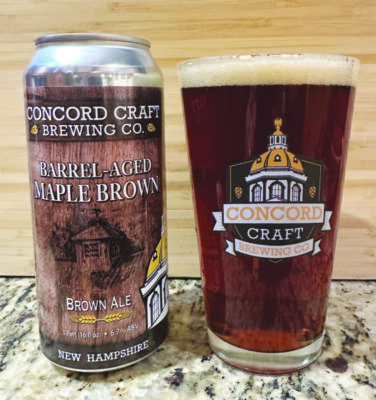
Photo courtesy of Concord Craft Brewing.
Dennis Molnar is the co-owner of Concord Craft Brewing in Concord. He said that in recent years maple-forward beers have become a regular part of his brewery’s seasonal rotation. This year he and his team have focused on Maple Bourbon Brown Ale, as opposed to last year’s Logger Lager.
“We kind of alternate,” Molnar said. “We did something a little bit different this year, but we also used maple. We [made] our brown ale and we aged it in maple bourbon barrels and added a little bit of maple syrup at the tail end to get just a touch of sweetness back into it.”
Molnar said that, compared to some other ingredients, maple syrup is fairly easy to work with. “We need to have it uncontaminated because any bacteria or wild yeast will change the character of the beer,” he said. But a simple heat-up of the syrup, or buying material that’s already pasteurized is the fix. The bourbon barrels that the beer is aged in come from a producer in Maine, he said. “Maple was already used in the bourbon,” he said, “[but it] doesn’t tend to impart much flavor to the barrel; we end up getting sort of the char and the burnt-y flavor, but it doesn’t change the alcohol content. There’s not sort of an alcohol shiver at the end or anything. So we get mostly bourbon [notes] from that, and then we add back a little bit of maple to sort of restore some of that sweetness.”
Sweetness, of course, is one of the primary characteristics of maple syrup, but Chef Keith Sarasin, chef/owner of The Farmer’s Dinner pop-up restaurant (thefarmersdinner.com) and of Aatma Curry House in Milford, says it’s maple’s musky, perfumy notes that make it such a versatile ingredient to pair with other strong flavors.
Maple Gastrique Recipe by Keith Sarasin Ingredients ½ cup maple syrup (preferably Grade B or dark amber for deeper flavor) ½ cup apple cider vinegar (or balsamic for a richer gastrique) 1 Tablespoon shallots, finely minced (optional, for added depth) ½ teaspoon black pepper (optional, for mild spice) ½ teaspoon salt 1 Tablespoon butter (optional, for a silky finish)
Instructions Reduce the Vinegar: In a small saucepan over medium heat, add the vinegar. Let it simmer until reduced by about half (5-7 minutes), concentrating the acidity.
Add the Maple Syrup: Stir in the maple syrup and bring the mixture to a gentle simmer. Allow it to reduce for another 5-8 minutes, stirring occasionally, until it thickens slightly. The consistency should be similar to a thin syrup—it will continue to thicken as it cools.
Season and Finish: Stir in the salt and black pepper. If using, whisk in the butter for a silkier texture. Remove from heat and let it cool slightly.
Strain (optional): If you used shallots, strain the gastrique through a fine-mesh sieve to achieve a smoother sauce.
“It’s funny,” Sarasin said. “At Curry House we use maple in two different dishes. We actually use it in our butter chicken, which is one of our secret ingredients. We use smoked maple syrup from Ben’s Sugar Shack. We add a little bit of that just as a quick touch, kind of our signature little special thing. Maple syrup works a lot like jaggery.” Jaggery, a raw sugar used in Indian cooking, has many similarities to maple syrup, he said.
“And since we study food from the subcontinent,” Sarasin continued, “we’ve learned that it’s a beautiful replacement for jaggery. Well, you know, jaggery’s got that little, that sourness to it, that kind of earthy quality.”
“That depends on where the jaggery comes from, too,” he said. “South Indian jaggery is a lot more like that. North Indian jaggery is floral, and so it reminded me of the different grades of maple syrup, like that dark amber kind of [syrup] mimics South Indian jaggery,” he said.
The theme of Sarasin’s pop-up restaurant The Farmer’s Dinner focuses on fine-dining applications of local and seasonal ingredients, so maple is prominent in many of his white-tablecloth dishes, he said.
“I think everyone thinks of maple syrup as this sweet dessert-based thing, but one of the things that we like to do is to use it in gastriques. A gastrique is basically a kind of a sauce or a glaze, with a soured, vinegar-like property. It’s like a reduction of a sauce. So I’ll do a maple gastrique with duck quite a bit because it works so darn well together. Anytime you have fat, you need to balance it with a high level of acidity.” And maple syrup helps round out that acidity, he said.
This is a use that Chef Chris Viauld of Greenleaf Restaurant in Milford puts maple to as well.
“I just did a maple-gochujang glazed duck breast for a dinner,” he wrote in an email. Gochujang is a traditional fermented salty chili paste from Korea. “And Emilee has a maple semifreddo on the current menu at Greenleaf and has done a maple creme brulee in menus past.”
Emilee is Viaud’s wife, Emilee Viaud, the pastry chef at his restaurants, and owner of Sweet Treats by Emilee (facebook.com/EmileesSweetTreats), a bespoke baking business. She said that maple syrup pairs well with the cream in a semifreddo. “It’s a frozen dessert,” she said. “It means semi-frozen. So really all it is is whipped cream and whipped cooked eggs and sugar. And then you can add really any flavoring to that, but I like adding maple because of the sweetness and how the richness of a dark maple complements that heavy cream.” She leans toward dark grades of maple syrup. “It’s got a more intense maple flavor. Yeah, and then really when you’re cooking with maple syrup, it is just so sweet. So you really want to try and find the balance, not make a dessert that ends up being overly sweet.”
Chef Viaud likes to pair maple with contrasting flavors. “One of the ingredients that I like to pair with maple is miso,” she said. Even though it’s a surprising combination, she said, “that’s actually probably my No. 1 thing I like to pair with maple. People always think of nuts, like a walnut or a pecan maple dessert, but with miso the fermentation and the saltiness really balances well with maple. If you just make a simple sugar cookie and want to put a maple glaze on it, you just add the miso. You can cook down miso to get it more flavorful — it’s very salty, where if you cook it down a little bit it actually gets more concentrated. You can add it to glazes. You can add it to fillings. It can go well in a caramel. You could also make a miso-maple ice cream.”
Miso Caramel by Emilee Viaud “This is good to have on hand to add to ice cream or as a glaze to pies, cookies, and with coffee.”
Ingredients 1 cup pure NH maple syrup 2 Tablespoons room-temperature unsalted butter 1/2 teaspoon miso paste (add more for more salty taste) 1/3 cup room-temperature heavy cream
Instructions Bring maple syrup in a medium-sized pot over medium heat to a boil. Simmer maple syrup until candy thermometer reaches 230°F. Turn heat down to low, add room-temp butter and whisk until incorporated. Add heavy cream and whisk until combined. Add miso and whisk in. Pour caramel through a fine mesh strainer and let cool at room temperature
Pastry Chef Addie Leader-Zavos of Eden’s Table Farm agrees that maple syrup’s sweetness makes it an obvious choice to use in sweet applications. She likes to use it in European dishes, where it is nontraditional and adds an unexpected complexity.
“I like to base caneles around it,” she said. “They’re a French custardy pastry made with beeswax. They aren’t very common here, but there was a war fought over them.”
The two other applications Leader-Zavos uses maple syrup for are a little more traditional. One is her Maple Sticky Buns.
“We also sell a Maple Nut Pie,” she said. “It’s like a pecan pie, but with walnuts.” Again, the earthy notes of dark maple pair well with the slightly bitter flavor of the walnuts, and the velvety texture of the syrup contrasts with the crunchiness of the nuts. “During the holidays,” she said, “I bake it as a hand pie.”
Emily Sliviak is the Marketing Manager for Ben’s Sugar Shack in Temple, one of the largest producers of maple syrup in New Hampshire. She said that while much of the maple syrup Ben’s sells is widely used in traditional ways she has seen it used more and more in recent years paired with savory dishes.
“We literally glaze all of our bacon, all of our sausage, all of that stuff with maple syrup,” Sliviak said. “So, as far as savory things go, salmon is great; we do an entree here with the maple glaze on it. And then we have rotisserie chickens here. We use a maple glaze and then we stuff the chicken with a bunch of fresh rosemary and it comes out really good. That’s one of my favorites.”
Maple’s affinity for smoke has become widely recognized in recent years by the grilling and barbecue communities. Steve Chase is the owner of Steve’s Original Sauces in Belmont. He said that while one of his sauces is spicy, with a maple background flavor, he wants to be very clear that he makes it with barbecuing in mind.
Crispy Maple Dijon Panko Crusted Salmon from Ben’s Sugar Shack Serves 4.
4 salmon fillets, skin on 1 cup panko bread crumbs ¼ cup Ben’s Maple Sugar 1 teaspoon salt ½ teaspoon garlic powder ½ teaspoon black pepper ⅓ cup butter, melted ⅓ cup mayonnaise 2 tablespoons of Dijon or whole-grain mustard
Preheat oven to 400°F. Line a baking sheet with parchment paper. Place salmon fillets on the prepared baking sheet, skin side down. Combine the mayonnaise and mustard in a small bowl. Combine the breadcrumbs, maple sugar, salt, garlic powder, black pepper, and melted butter in another bowl. Spread the mayo/Dijon mixture evenly on the tops of the salmon. Gently press the bread crumb mixture onto the top of the fillets, fully coating each one. Bake in a preheated oven for 12-15 minutes. The thickness of each fillet will determine cooking time, the crust should be golden brown and the salmon should flake easily with a fork. Serve immediately with your favorite sides.
“I’ve been teaching people for years that I’m not a hot sauce guy,” he said emphatically. “Because people come and they say, oh, they look at the name, you know, ‘SOS,’ and they think it’s hot. So I kind of just, over the years, I said, ‘OK, let me come up with something for these folks.’ So I took my sugar shack maple sauce as my base. I took that into the kitchen and redid it a little bit to make it hot for them. It created a little smoky maple. And because it’s maple, I added a little bit of cinnamon to it as well to go with it. Cinnamon is a spice that has some heat to it as well. I just used a cayenne pepper powder as my heat in that, and it just developed into just a really beautiful, like little sweet maple with the cinnamon, and then the back end gives you that nice heat hit that people love to have, and it’s just turned into just a wonderful flavor sauce that people love.”
For Chase, maple is a natural pairing for smoky flavors, which makes it well-suited for barbecued meats.
“[My sauces] have a very subtle smoky maple flavor,” he said. “It’s not overly sweet; the maple just enhances what is in the bottle. Some people really love the smoke. If you’re not able to do any smoking, you can marinate your meat, your chicken, your pork, your beef — you can marinate it in this sugar shack maple and it will give it a nice smoky flavor.”
That sounds fine for a home cook, but what about professionals? Do competition barbecuers look at maple sauces as a cheap trick and avoid it, or is it something you might actually see at a high level of smoking?
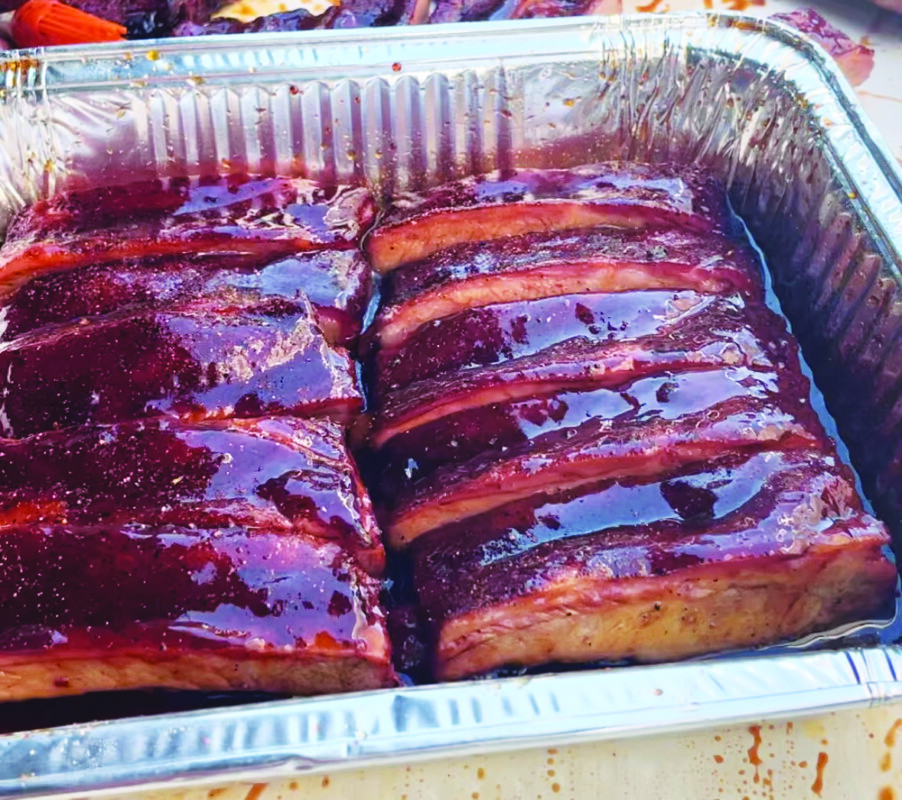
Maple Glazed Ribs from Dan DeCourcey, owner of Up in Your Grill Food Truck (493-3191, upinyourgrill.com)
Maple Glaze 1 cup NH maple syrup 2 Tablespoons apple cider vinegar 1 Tablespoon coarse salt 1 Tablespoon paprika 1 teaspoon granulated garlic 1 teaspoon granulated onion ½ Teaspoon of finely ground black pepper ½ Teaspoon of cayenne pepper (or more for extra kick)
Mix glaze ingredients in a saucepan. Bring to a boil over medium heat stirring frequently. Turn down heat to low and simmer for 5 minutes. Smoke ribs as you normally would. If you wrap the ribs during the smoking process add a half cup of glaze to the wrap as a braising liquid. Glaze unwrapped ribs during the last 20 minutes of your cook. Enjoy!
Jayna Todisco is the head cook of the championship barbecue team A Mazie Q. She is a World Barbecue Championship competitor and the Grand Champion of the Back to BAYsics (Ironman) BBQ Competition. She said maple is her go-to special ingredient.
“In a competition environment,” Todisco said, ”maple to me lends itself with so many benefits over other sweeteners, so I use it in my injections. I use it in my sauces. I use it as a finishing sauce. It does really well. I just, I can’t sing its praises too much because to me it’s probably the one finishing glaze on most of my meats. We compete majorly, and … of my four meats three have it. I have a world champion recipe because I did win a world championship on that one alone. And when people are asking, like, ‘What is that? What makes it so well? And I’m like, ‘It really is maple syrup. It really is. Like, that’s what it is. That’s all it is.’ I just literally take a paintbrush and I paint it with maple syrup and that is it.”
Todisco said maple often takes judges by surprise.
“No one is expecting it,” she said. “And when you put it on hot meat, the way it mixes with the juices, you really can’t identify it because during the cooking process somehow it executes such a different flavor than when it starts. You can still tell it’s maple if you’re looking for it, but for the most part everybody’s like, ‘What is that?’ Because when you do barbecue, people are looking for honey or brown sugar or something like that, but no one’s expecting maple. I love it.”
Ultimately, Michael Williams of Eden’s Table Farm said, the growing use of maple in different cuisines and applications is a reflection of a sea change in the way the public thinks about its food. “Slowly,” he said, “we’re moving toward an awareness of eating locally and being more aware of where our ingredients come from. Maple definitely has a part in that.”
Maple Margarita. Photo by John Fladd.
Maple Margarita by John Fladd 2 ounces jalapeño-infused blanco tequila – I like Tanteo 1 ounce fresh squeezed lime juice ½ ounce dark maple syrup
Pour the tequila, lime juice and maple syrup over ice in a cocktail shaker. Seal the shaker and shake it vigorously until you hear the ice start to break up. If you were to ask your digital assistant to play “Tequila” by The Champs, who could blame you? Strain over fresh ice in a rocks glass, and drink while considering that while the world is a messy and suboptimal place in many ways, there are compensations. Many bartenders will limit their use of maple syrup to a Maple Old-Fashioned, because its sweetness often overwhelms other ingredients. Tequila has enormous strength of personality, however, and is not easily overwhelmed. Maple goes exceptionally well with acidic fruits, and lime juice, as has been observed on many occasions, is everybody’s friend. This cocktail is juicy-tasting, with a residual jalapeño heat. It goes down very easily. It’s something of a constant in life that one margarita can easily become two, then a party. This margarita could usher in a relaxing weekend, or perhaps a lost one.
A year ago River Sang Wild played an apres-ski set at Pats Peak to a crowd that was so appreciative they’ve been asked to return for a two-day run beginning March 8. Typically, the power trio amps up places like Strange Brew and the Press Room with a big and boisterous sound, but these shows will be closer, sonically and spiritually, to Nirvana’s Unplugged.
“We do a more stripped down set there,” the band’s drummer Harrison Foti said in a recent phone interview. “Because our normal one is pretty high volume, high energy, that type of thing. We can’t really do that in the room they have us play in.”
The band formed during the pandemic, a few years after Danny McCarthy and Foti first connected at a North Shore open mic night hosted by Brian Maes of Barry Goudreau’s Engine Room. When Foti’s band Victim of Circumstance broke up, he began jamming in McCarthy’s basement, along with bass player Brad Hartwick from his old group.
As live music returned, the three began to play out. Concurrently, Foti and Hartwick were the rhythm section of Feverslip, led by ex-Red Sky Mary singer Sam Vlasich. In 2023, Hartwick left to devote his attention to that band. Rainor Vigneault took over on bass, completing River Sang Wild’s present lineup.
Heartbreak Recital, a five-song EP, was released in November 2023. It kicked off with “The River,” written by McCarthy, a bracing rocker that also included the band’s name in the chorus. “I’m actually the jerk that planted that lyric,” Foti said of making it a theme song. “I’ve heard some people do that and I’m like, why not? Personally, it’s one of my favorite songs.”
Other standouts in the collection include the jangly, fuzz toned “Love Train” and “Rewind,” another up-tempo bop with a radio-ready boogie feel. “Bloodlines” is another crunchy gem. The band’s influences include post-millennial rockers like Black Keys and Kings of Leon, but they also cover Cream, and play The Beatles’ “Don’t Let Me Down” with aplomb.
“We definitely thus far have had a classic rock influence upon our music,” Foti said, while adding, “I hope to stray away from that, because my musical tastes have certainly changed, even within rock. I feel a bit the same about the other guys too…. I think that they are very open to exploring other avenues.”
“Devil or Not,” released late last year, and another single in the works reflect new member Vigneault’s role.
“I feel that Rainor’s definitely been incorporating more into the songwriting,” Foti said, adding. “Danny’s really the one bringing forth the lyrics, the song ideas…. I partake in helping with arrangements and, of course, laying the drums down.”
Approaching its fifth anniversary as a band, River Sang Wild is upping its profile in a few ways. Christos Alamaniotis, a graphic artist who’s worked with The Misfits, Papa Roach and Car Seat Headrest, is doing their latest cover art, and the band is finalizing plans to record a live session with Philadelphia-based Cart Music soon.
“Essentially, they videotape a whole set [and] give you the audio and video,” he explained. “They reached out to us within the last week and we’re looking to set up a date with them along with a couple of Philly shows, and most likely New York, since it’s kind of right next door.”
Last summer they played a second stage set at Bank of NH Pavilion ahead of the Dave Matthews Band. Hopefully, they’ll be back on the venue’s Hazy Little Stage again next summer.
Beyond that, River Sang Wild is focused on creating new music and refining its sound. They are currently working on new songs, with hopes of recording more material in the coming months. They’re playing the new tracks at shows, Foti noted, but the studio sessions will begin a path to their official release.
Since forming his first band in 2017, Foti is partial to the power trio format, demanding though it may be. “It’s definitely a challenge because you can’t really hide a lot. Everything is out in the open, and everyone’s very much equally responsible for filling in the space when necessary — and knowing when not to fill in the space with a trio is also important.”
River Sang Wild
When: Saturday, March 8, 6 p.m. and Sunday, March 9, noon Where: Pats Peak, 686 Flanders Road, Henniker More: riversangwild.com