Apes together strong, sometimes, in Kingdom of the Planet of the Apes, the fourth movie in the reboot series that started with Rise of the Planet of the Apes in 2011.
A title card and a throwback scene to the funeral for Caesar, the Andy Serkis mo-capped chimp leader from the first three movies, reminds us that humans have been pandemic-ed into near oblivion, with most of the remaining people unable to speak and intellectually limited. Now, many (ape?) generations removed from that initial multi-decade struggle, apes live in all kinds of settlements, including, for the chimps we first encounter, as a clan in a small village where they smoke fish and raise eagles. Wikipedia and an appearance mid-movie by the Griffith Observatory suggest that this all takes place in Southern California. Noa (Owen Teague), a chimp who seems like an almost-but-not-quite adult, has to find an eagle egg for his special big boy ceremony the next day. When an encounter with a human stealing fish from the smokehouse leads to the breaking of the egg he had found, Noa sets off that night, in the dark, to find another one. Noa really needs that egg now because his dad, Koro (Neil Sandilands), is the head of the raptor raising operation and Noa doesn’t want to disappoint him.
The nighttime egg hunt leads Noa to cross paths with a raiding party from a different ape community. They don’t see Noa but they do find his horse and send it running so they can follow it and get to Noa’s village.
When Noa returns, the village is on fire, his buddies Anaya (Travis Jeffrey) and Soona (Lydia Peckham) and his mom, Dar (Sara Wiseman), are being herded together and tied up and his dad is trying to rescue the eagles from their nest-house atop a burning tower. Noa helps his dad but then they both have to fight Sylva (Eka Darville), the gorilla who is head of the raiders. This is all for Proximus Caesar, Sylva says before using his cattle prod-like weapon to cause Noa to fall from the tower. Noa wakes up the next morning, buries his father and sets off in search of his stolen clan.
Eventually Noa makes it to the “kingdom” of Proximus (Kevin Durand), who Wikipedia says is a bonobo. Proximus has a large work camp outside some kind of human-made bunker and is kidnapping clans to serve as a workforce to help him pull open the giant doors of the bunker, which he hopes is filled with treasures. Seeing as the bunker is in the cliff next to a beach and he’s had to build a sea wall to keep the beach from being flooded, his “kingdom” isn’t very big. But Proximus lives pretty large, spending most of his time in a ship beached on this part of the coast where he has a dining room, captured-ape servants and a pet human, Trevathan (William H. Macy), who, unlike the feral people we see by a watering hole out in the wild, can talk and read, specifically read Proximus stories about ancient Rome.
By the time Noa makes it to Proximus, he also has a human traveling companion. A woman he first calls Nova (Freya Allen) — a name bestowed by orangutan Raka (Peter Macon), a follower of a sort of religious sect based on the true stories of the original Caesar — began following him on the road. At first he thought she was just scavenging food but later he realizes there’s more to her than appears.
Trailers and the fact that she’s wearing a tank top on the movie poster suggest Nova has a whole deal independent of Noa’s “get the clan back” quest. I know this is exactly the wrong way to watch this movie, but I found myself wondering about the details — how many years are we post-pandemic? Are the humans we see in comical fur-bikini-type get-ups virus-impaired survivors from the before times or newly born-in-the-wild people? Do the apes in various colonies and villages and kingdoms have any communication with each other? Or trade?
I fully admit none of these things matter. But the movie left me wondering these things I think because the onscreen action was all very medium-at-most compelling. Where I found myself thinking “this might be one of the top five movies about war I’ve ever seen” during the War for the Planet of the Apes I didn’t feel as pulled in by this one. Were there no previous, very excellent trilogy, I might feel more excited by this movie. But it did not stand up to the comparison.
That said, Kingdom isn’t bad. It is fine, perfectly cromulent, a decent product. It has “blockbuster-flavored seasoning” sprinkled throughout, with references not just to its previous films but elements that call to mind other cinematic universe-type stories. It doesn’t wow, but it doesn’t offend. There are moments when interesting nuggets poke through. No particular performance stands out; no one gives the sort of startling humanity to their motion captured, CGI-ed characters that Serkis gave to Caesar. But then again, maybe it’s the comparison that makes the perfectly serviceable work of Teague, Macon and Durand seem totally acceptable but unremarkable. B
Rated PG-13 for intense sequences of sci-fi violence/action, according to the MPA on filmratings.com. Directed by Wes Ball and written by Josh Friedman, Kingdom of the Planet of the Apes is two hours and 25 minutes long and distributed in theaters by 20th Century Studios.
Education and fellowship at Iron Rose Women’s Shooting Club
By Zachary Lewis zlewis@hippopress.com
TerryAnn Bowen is the only female owner of a public and indoor gun range in New Hampshire. She has made it her mission to create a space for any woman to learn about firearm education, which is why she started the Iron Rose Women’s Shooting Club.
The Iron Rose moniker was a nickname given to TerryAnn by her employees. She has co-owned Manchester Firing Line (2540 Brown Ave. in Manchester) for the last eight years with her husband, Jake, a former Marine.
“They were saying that I’m kind but I’m not weak,” Bowen said. “My guns have that [Iron Rose] engraved in it, those words engraved in it.”
Knowledge about firearms is crucial to Bowen and she wants to share her knowledge with any woman willing to learn.
“Education about firearms is for everyone,” she said. “If you are remotely curious about firearms in any way, not to own one, but just to know they’re out there in the world. Women are afraid. They’re afraid for themselves, they’re afraid for their children, they’re afraid for their families…. Education is the answer. Whether or not you decide they’re for you, the important thing is to go find out what are they, what do they mean and what do they mean to you. … Maybe the Club is not for you, but at least go to the seminar and get the information on what firearms are. … It’s not about selling guns, it’s about women finding out what firearms are for,” Bowen said.
She did not always feel this way about firearms.
“I grew up with no guns, like guns were bad … to me, guns were danger.” Bowen said. “I needed education.” TerryAnn and her husband helped each other to gain an understanding on a potentially volatile topic within a couple and were able to see where they both were coming from, and now they own a range together.
“It took me 15 years before I would even touch a gun,” Bowen said.
Iron Rose is structured into three sections. The first is the women’s seminar, which is free and occurs once a month.
“It’s my female perspective of owning a range and it’s the female experience of owning a gun. It’s what pertains to us as women and that’s for people who have never shot before,” she said. The first five seminars Bowen gave were all registered to full capacity in under an hour. There are no trips to the range during the seminar.
Club Nights are the next step. “The Club is being designed by women, for women, and it’s just been awesome. That’s pretty much it in a nutshell,” she said. The twice-monthly event costs $40 to register for. Bowen and her daughter-in-law have designed the itinerary. “It’s kind of like paint night, but with shooting,” Bowen said. “We decorated the shots that we made and made it look like a bouquet … shooting and crafts all at once.” Participants also receive a real iron rose each Club Night they attend. “If they keep coming they can potentially have a bouquet of roses in their home … tangible evidence of their growth in firearms and training.”
Course nights are once a month “for people who really are into shooting, if you want to get really good at it,” Bowen said. These nights are for women who have shot before. “Whether it’s for fun or whether it’s for self-defense, the course night is going to bring them to the next level.” Twice a year the course night will be open to women who have not shot before and will go over fundamentals. TerryAnn is the lead instructor for club nights and is the assistant instructor for course nights. The master instructor on course nights is a man, but there are female instructors, Bowen included.
Manchester Firing Line also holds charity events for breast cancer awareness, veterans, and even local schools, such as their Cruise Night, which is a car show every Monday, starting on Memorial Day, with the first event hosting the Manchester Mounted Police, Fisher Cats mascots, face painting by Miss Teen New England, and cool cars, all for a good cause.
“I’m trying to help people understand the things they don’t understand,” Bowen said. “I think it’s scary to ask when you’re so afraid of it and the only place you hear about it is on TV and you’re getting conflicting information.” Iron Rose Women’s Shooting Club is a venue to get real subject-matter knowledge. “You do what you want with the information, but let me show you how to get the right info. … If you’re intimidated, this is the place to come.”
Iron Rose Women’s Shooting Club Where: Manchester Firing Line, 2540 Brown Ave., Manchester Info: gunsnh.com Women’s Seminar Sunday, May 19, from 4 to 7 p.m., and Saturday, June 1, at 10 a.m. free Club Night Monday, May 20, from 6 to 8 p.m., $40 Course Night Thursday, June 13, $100
Wine and chocolate will flow amidst paintings, photography and piano music at an upcoming event in New London to showcase the Lake Sunapee Region Center for the Arts. The Raise a Glass to the Arts! reception will serve as a reminder of the Center’s many efforts to support expression throughout the area, which include micro-galleries in local businesses, festivals, seminars, concerts and youth programs.
“We wanted to create a wonderful evening to celebrate with our donors and members, our artists and our community, what the arts are all about when it comes to the Center,” CFA Executive Director Dina Stahlheber said by phone recently. “It’s a moment to step back and think about the wonderful talent here, and all the different things that are able to come together.”
The Center’s mission encompasses visual, performing and literary arts, Stahlheber said.
“They’re very closely intertwined, yet each one of themselves are quite vast,” she said. “Many of our painters are poets and many of our poets are performers or musicians. We have singer-songwriters that dip their toes into both writing and music. We have quite a variety here.”
She envisions the event, happening at Colby-Sawyer College’s Wheeler Hall, as a way to “celebrate these three different key aspects of what the organization does, as well as its love and focus on youth. We also offer some great scholarships, school grant programs, and activities for our youth and families.” To underscore this cross-pollination, ticket holders will be entered to win a pair of seats to the New London Barn Playhouse’s June production of Joseph & the Amazing Technicolor Dreamcoat.
Stahlheber added that a past scholarship winner will perform at the gathering, along with veteran pianist and composer Will Ogmundson. This and other CFA endeavors serve to highlight the importance of human expression, something that’s particularly critical in an age that sees it threatened by machine learning.
The latter is a topic that Stahlheber spoke eloquently about in a press release last March.
“In a landscape increasingly shaped by artificial intelligence and algorithms, the essence of human experience embedded within artistic expression becomes ever more poignant,” she said. “While technology can assemble stories and generate visually stunning images, it cannot convey the personal journey behind the creation of art.”
During the interview, Stahlheber was quick to point out that she’s no Luddite.
“I appreciate technology,” she said. “I just want to be sure that we don’t forget or lose sight of the fact that artificial intelligence still cannot communicate the human essence of the arts as humans can.”
She continued, “AI can replicate stories and even make them very moving, but at the end of the day, there’s something about someone having lived … when they share their story, the pain and glory of overcoming a situation, that is what’s authentic, powerful and meaningful.”
Stahlheber took over the reins at CFA just over a year ago and has focused many of her efforts on messaging. “I wanted to be more intentional about what we’re doing, why are we doing it, and how it fits into our mission,” she explained. “Not everyone in the community realizes how much we’ve done and the large role it plays, the many places and connections the Center for the Arts has in this region.”
To that end, an event later this summer will shine a light not only on the CFA’s work but also on the region it serves.
“I am so excited for our July Arts Week in Sunapee Harbor,” Stahlheber said. “It has been a year-long planning session with a group of wonderful organizations, [and] we have been trying to put together a really special weekend. But also, to promote Sunapee Harbor. It is super-beloved, but not everyone, even in the surrounding area, remembers it’s here.”
Raise a Glass to the Arts! When: Saturday, May 18, 7 p.m. Where: Wheeler Hall, 541 Main St., New London Tickets: $55 members, $65 non-members at centerfortheartsnh.org
Fans of muscle cars, British cars and rat rods prepare for another season on the road
By Zachary Lewis zlewis@hippopress.com
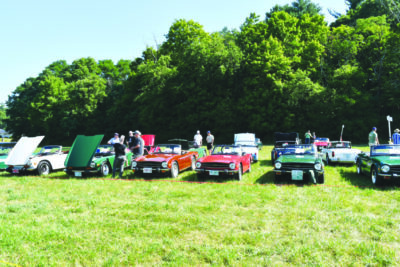
Although metal, iron, copper, gasoline, asphalt, rubber, leather, fire and smoke are common elements in the world of muscle and sports car, American or import, the real fuel for these mechanized combustion wonders is the living, breathing community that supports and maintains these movable pieces of art, which will be on grand display at the Granite State Season Opener put on by New Hampshire Muscle Cars on Saturday, May 18, at the Deerfield fairgrounds.
This is a car club that unites thousands car enthusiasts alongside the other car clubs in the state such as British Cars of New Hampshire. Horsepower Farm and AK Rods and Customs are just a sample of the great crews and shops that craft and maintain the metal beasts. So this is a small selection of the large car world inside New Hampshire.
New Hampshire Muscle Cars club
The New Hampshire Muscle Cars car club was formed in December 2018 by muscle car enthusiast Phil Manro, and this is the club’s sixth show season. The club holds member events in the winter and summer. Exclusive to the summer and fall months are three car shows that are open to the public and for anyone to bring in their cars. These are the Season Opener on Saturday, May 18, the Midsummer Sizzler in July, and the Season Closer in October.
There are more than 11,000 members, making it the largest car club in New England.
New Hampshire Muscle Cars is a nonprofit organization. Money that is made goes back into the club to put on shows, to the infrastructure for the shows and club (a 24-foot club trailer, a couple of golf carts, scooters, lots of tents, a sound system, etc.) or to charities. Each event typically has a specific charity fundraising element. Working Dog Foundation, a group that trains police dogs, is the charity for the Season Opener and will be holding a demonstration of a police puppy taking down a perp.
“What we have tried to build and done so successfully is a nice community of car enthusiasts where we’re bringing together the vendors that support us with our member community,” Manro said. They have a core crew of around 30 volunteers who help put on these events, he said.
Muscle car ownership is not a prerequisite but if that prospect sounds like a nice future, this is the club to join. Shop owners around the state who work on such vehicles are in support and enjoy the connections made through membership. Keith Lefebvre, owner of AK Rods and Customs and a sponsor, said that the club “brings a great community together to learn from, to talk to, it gives you more of a diverse type of environment … one of the bigger things that makes a difference between what Phil does with the New Hampshire Muscle Car club and other events.”
Member-only events, although each is different, are held at sponsors’ sites. In April the event was at Horsepower Farm. It was a sort of open house where there was a shop tour and dyno tuning, which tests the horsepower of a car. (“Very loud,” Manro said.) Other locales have included places such as restoration shops.
Their biggest car show is typically the Season Opener. Their biggest year had around 1,113 show cars drive up and around 2,500 people. “We try to make it very affordable,” Manro said.
There’s a big grass field for parking and the first three gates are for the cars, while the fourth is where the humans enter.
The main fields, along with the gates, are devoted to cars with the fourth allotted for foot traffic and more than 40 vendors lining all the way up to the middle of the fairgrounds, where the food court will be along with, this year, live music blasted out by Southern Breeze.
Past this, there are two barns with car museum experiences: the indoor concourse showcase exhibit “Patina & Rat Rods” or their Barn of Rust, and the Race Car Barn. Behind the building is where the Working Dog Foundation will hold a demonstration.
Rat rods are typically older vehicles that are hodgepodged into functionality.
“In the movie Cars, Mater the tow truck there was all rusty and had a lot of different parts put on him. That’s kind of what a rat rod looks like,” Manro said. Now add a souped up engine that’s super loud. “They might look like something out of the junkyard but when you look real close you’ll see there’s actually a lot of craftsmanship that goes into making them. … They’re very eclectic.”
This year there will be 16 vehicles in competition in Barn 1 in battle for the Concourse Cup and the trophy that accompanies it.
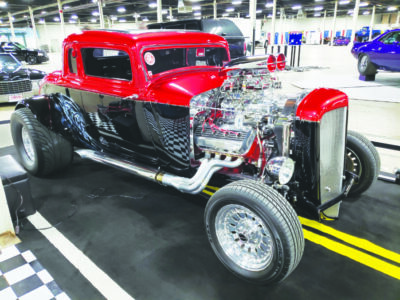
Horsepower Farm owner Rick Soreno will have a rat rod competing in Barn 1. The 1930 Ford “was a parade car I bought in Belmont, New Hampshire,” Soreno said. “I took the body off it and sold everything else. Then we constructed a custom tube chassis for it. I had a Chrysler 300 SRT8 vehicle that got into an accident so I took all of the drivetrain out of that and put that into the chassis we built. We put it on ‘air ride’ [a type of suspension] and some big wheels and tires. It’s got the Gen III Hemi motor in it. A lot of custom fabrication work to it,” Soreno said.
A hemi is a car engine with a hemispherical combustion chamber, which is essentially a cylinder and piston top molded into the shape of a dome and typically refers to the V8 engine first designed by Chrysler in the 1950s and modified over time.
There are 30 different show car trophies up for grabs as well.
In the Race Car Barn there will be a 1960s front-engine dragster; these are unique in having the engine placed in front of the driver instead of behind as they are now. There will be road course cars, drag race cars and some others for a total of 10 very fast vehicles.
The what and why of muscle cars
According to Manro, a muscle car is “traditionally considered a car from the early ’60s to the very early ’70s, maybe ’71, ’72, with American-made V8 engine rear-wheel drive.”
The Pontiac GTO is considered one of the first.
There are Trans Ams, Firebirds, GTOs, Camaros, Mustangs, Challengers. Manufacturers include General Motors (Chevy, Pontiac and Oldsmobile). Then there are Dodge, Chrysler and Ford. The nuance of company ownership and titles is vast but these big names are good for an overview of the subject.
Now, there are “modern muscle vehicles, so you have modern Camaros that are kind of created in the likeness of their predecessors from the ’60s and ’70s,” Manro said. “It looks like an older Camaro, it looks like an older Challenger, or it looks like an older Mustang.” Around a third of the attendees have these, he said. “It’s a field of both classic and modern muscle cars.”
Manro grew up within walking distance of a race track, Oswego Speedway, and would head there on Saturday nights with his neighbors.
“That was what really got me into a little bit of the racing side of things,” he said. His father had muscle cars and imports. “He had a Jaguar in the ’60s that he worked on and restored, and that kind of got me into it.”
Manro’s first car was a ’77 Camaro he acquired in the mid-’80s when he was in high school. “Back then it was just a used car,” he said. Working on that car, and its history, cemented his love for the machine. When he was older he built his first kit car, a Factory Five Racing Shelby Cobra. “I had a lot of fun building that car,” Manro said. “Built probably a handful over the years.”
The suggestion to start the club was from his wife, Virginia. “She said to me, ‘Why don’t you start a Facebook group?’” he recalled.
The original intent was to find a handful of like-minded enthusiasts to go to shows and talk shop, but this vehicle shows no signs of stopping with over 11,000 members.
Soreno, the owner of Horsepower Farm, has been with Manro since the inception.
“I think I was the 20th member of the club. I’ve been with Phil since Day 1. It’s a good collaboration between the club and what we do for the members’ vehicles,” Soreno said.
This community spirit will be on display on Saturday, May 18, at the Season Opener. “I think it’s the camaraderie and the family aspect,” Phil Manro said. “We get a lot of families … people walking around having a lot of fun. … [It’s] a nice, inexpensive way to spend your day.”
New Hampshire Muscle Cars Info: nhmusclecars.com; Cost of entrance is collected at the gates the day of the show for show cars and spectators. No online sales.
Granite State Season Opener When: Saturday, May 18, from 9 a.m. to 3 p.m.; gates open for show cars at 8 a.m. Rain date May 19. Where: Deerfield Fairgrounds Admission: $15 per show car, includes driver. $5 per passenger or spectator. Free for kids 12 and under.
The Midsummer Sizzler When: Sunday, July 21, from 10 a.m. to 3 p.m. Star Speedway Where: 176 Exeter Road, Epping Admission: $15 per show car, includes driver. $5 per passenger or spectator. Free for kids 12 and under. This event will contain a burnout and a slalom competition between traffic cones.
Granite State Season Closer When: Saturday, Oct. 12, from 10 a.m. to 3 p.m. Where: Hopkinton Fairgrounds, 392 Kearsarge Ave., Contoocook Admission: $15 per show car, includes driver. $5 per passenger or spectator. Free for kids 12 and under. Free apple cider and doughnuts; trunk-or-treat
The New Hampshire Muscle Cars car club will also take part in the 23rd Annual Cruising Downtown display of vintage cars, trucks, and motorcycles Saturday, Aug. 31, in Manchester; cruisingdowntownmanchester.com.
Horsepower Farm
The sounds of revved engines replace the rooster call at Horsepower Farm. When the sun is up, they do a lot of dyno tuning, car building, restomods (restoration and modification of vehicles) and LS swaps (an LS is a series of engines manufactured by General Motors).
“We do exhaust systems, suspension systems, braking systems, wheels, tires, just about everything but paint right now,” said Rick Soreno, the owner of Horsepower Farms.
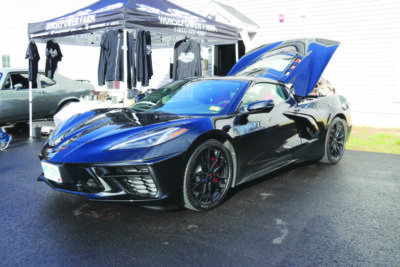
Photo courtesy of Horsepower Farm.
Dyno tuning involves a dynamometer and is a helpful tool in measuring the performance of any given car. At Horsepower Farm it is a big machine inside a drum built into the floor, where “we strap the car down to the ground and then we can run the car stationary — it’s kind of like a treadmill for a car,” Soreno said. Unlike what happened to Cameron in Ferris Bueller’s Day Off, miles are not being ‘reversed’ off his dad’s shiny red 1961 Ferrari 250 GT California Spyder and the vehicle will not ultimately go crashing out of a glass garage.
Sensors are placed inside the tailpipe and as the vehicle is run, and Soreno is able to garner from the readings how to maximize output and see how different modifications performed on a car have enhanced its power. It’s a way to “get the most horsepower out of a vehicle without racing up and down the street,” he said.
This knowledge and subsequent modification and tuning can be applied to most vehicles.
“Any car could benefit from a tune. They all come from the factory a little bit de-tuned. You can always add a little bit of timing, get a little more snap out of it, get a little more response,” Soreno said.
The LS engine family, which started in 1997 with the release of the Chevrolet Corvette (C5), the fifth generation of Corvettes, is popular because of the price for the small-block engine that holds anywhere from 300 to 400 from the factory but can reach well over a thousand with modifications.
“Parts are easy to find,” Soreno said. “They tend to go in cars easy, a good swap for old muscle cars. … Any GM car that has a V8 in it is probably an LS motor that can be put into a muscle car. … If you boost them, and when I say boost them, put a supercharger or a turbo on it, they’ll pretty much double the output power. … Everybody wants more power,” Soreno said. These engines are a newer generation of the hemi engines created in the 1950s.
Apart from using the tools to create the equivalent of the Christopher Nolan-era batmobiles, Soreno and his shop delve in the metal arts. Depending on what he is working on, he uses scrap metal, pistons, rods, and pretty much any type of metal he can get his hands on.
One such project involves beautifying a restaurant at the Riverwalk Resort at Loon Mountain.
“A focal-point artisan metal tree in the middle of the restaurant, it’s pretty cool, and we’re building them a big sign for the wall,” he said.
Soreno and his crew are proficient.
“I’ve got four guys working for me. We crank out some work. We get a lot of our work from the New Hampshire Muscle Car club,” he said. Soreno had some advice for those interested in securing a muscle car for themselves.
“Call around and visit some good shops and see what they’re doing and see what they have parked out front. Talk to the business owners. They can steer you in the right direction. I do that with a lot of my clients before they buy a vehicle. I tell them to come get me and let me go with them. Especially if you don’t know what you’re doing yet, ’cause you can buy a headache,” Soreno said.
And Soreno knows what he is talking about as a lifelong innovator of all things connectable.
“I would not read the directions and I would just take all the parts and I would make stuff. Erector sets, Legos, various other things, and stick them together with the motors that I’d get for the electronic cars, just play with things … just gravitated toward it.” He bought his first car at 14 and worked on it until he could legally drive it out of his driveway. His number of cars has since increased. “Yeah, they’re fun, I’ve got a few of them.”
Soreno feels right at home in this world: “It’s a great big family actually, everybody is pretty nice in the club, we’re all here to help each other….”
Horsepower Farm 22 Shaker Brook park in Loudon horsepowerfarmllc.com 572-4267
AK Rods and Customs
“We do classic American street rods, muscle cars, restorations and custom builds for customers throughout New England,” said Keith Lefebvre, owner of AK Rods and Customs, who was inspired to the trade by his father, who always included him in the action.
They have been a part of the New Hampshire Muscle Cars club since the beginning. Keith had done business with Phil and was one of the first sponsors of the club and their events. “When he reached out to me about the idea of the club, it sounded great,” Lefebvre said.
Keith graduated with a Bachelor of Fine Arts but left before receiving a master’s in education from Montserrat College of Art in Beverly, Massachusetts, to move to Laramie, Wyoming. He enrolled in Wyoming Technical Institute, placed in the top 10 percent of his class, and now has a waiting list that stretches over a year long.
Photo courtesy of AK Rods and Customs.
His five full-time employees and his mother, who works part-time, like to cater to the antique and classic car world.
“We’re a family-run shop, so we take a lot of pride in our name, reputation, and the quality of work that leaves here,” he said. They even work on British imports like the MG, Jaguar, as well as German imports and others.
“Being a part of the club with Phil, kind of helping him create a club that’s in a similar fashion, where people look up to it and hold it to a high standard — I typically wouldn’t put ourselves out there to be part of something like that unless it was run by people that are of an upstanding stature for our community,” Lefebvre said.
“Phil and Virginia are good people to work with,” he said. Keith does not advertise except through events and word of mouth.
They’ll have a tent at the Club’s Season Opener where they’ll show off striping and custom colors and graphics. They will also be bringing in four vehicles: a 1956 Chevy Suburban; his father’s 1933 Plymouth Coupe, which his father’s started to work on when Keith was 4 and finished when he was 11; a 1978 Trans Am Firebird, and a 1932 Ford that has “a blown hemi in it, a pretty cool-looking vehicle but it’s not quite finished, but it will allow customers to see some of the fabrication work, some of our welding work, some of our wiring work, and some of the things in the raw before it gets covered up.” Customers who have had their vehicles worked on by AK Rods and Customs will make a showing as well.
Lefebvre’s shop is more focused on high-end models.
“I don’t mess much with drag cars or race cars. I started the business focused on the indoor show car crowd,” he said. “We definitely are like the guys that build the cars with the white gloves and they push the cars on and off the carpet to some of these indoor arenas and things like that. Some of our vehicles are in that stature.” He also works for ‘daily drivers’ or those who are looking to restore a muscle car, but typically “all of our work typically leaves here finished, painted, pretty, and all ready for a concourse-style show.”
A customer can give Keith a shell of a vehicle and he and his crew can custom build a whole new car within that shell with new technology and parts.
“Hide all those modern amenities within the old facade of the original vehicle itself to kind of create a blend of new and old,” he said. It is like an individualized car factory with a keen eye to “coach-build our customers a custom whatever year, make, model vehicle, it is that they had envisioned. That’s really our corner of speciality in the market here in the New England area.” They will make the dream a reality.
Some jobs can take up to 18 months and possibly more. Keith and the crew from AK Rods spent sleepless nights to ready “Roxane,” a 1969 Dodge Charger with a 1,000-horsepower blown hemi priming the mechanical marvel. They built the fire walls, floors, frame rails, front and rear suspension and actually drove it to the Detroit Autorama in 2013. It won Best Pro Street Unlimited and Best Paint. “Which was a real big feather in the cap for some random New Hampshire boys to show up and do in the big arena,” Lefebvre said.
They even modified a ’69 Camaro for a customer in a wheelchair with an added hand-brake option to allow him the use of the brake system.
They only typically work on vehicles from 1984 or older, but will make exceptions for museum exhibitions or other special cases.
“Being a family-run shop, I’ve got some great guys that have worked for me for many years now. It’s nice to have a family-like community to work within and grow with,” he said.
All this hard work is worth it to Keith and the team at AK Rods and Customs to realize the vision of his customers and they’re overjoyed with the outcome. Some are impressed because customers will say, “that was my dad’s car and I never even got to see it on the road and we’re making grown, big burly construction men cry because we got their vehicles all done and they’re so happy that it finally looks the way they never thought they’d see it. It drives in such a way they never thought they’d be able to enjoy it. It’s a very appreciative line of work….”
AK Rods and Customs 1 Independence Drive in Londonderry 818-8264, akrodsncustoms.com
British Cars of New Hampshire
2022 Show of Dreams. Photo courtesy of British Cars of New Hampshire.
British Cars of New Hampshire operates with four councils throughout the state, holding monthly meetings in Manchester, Bristol, Portsmouth and Jaffrey.
The club was established in 1991 by six couples in the Manchester and Concord area led by the driving force of Mike Sweet. A similar club they had been part of in Massachusetts was too far south to attend regularly.
“It’s not just driving cool cars around, it’s giving back to the community, that’s our main focus,” said Sweet, who is also Prime Minister of British Cars of New Hampshire.
Their big charity fundraising car show is called Show of Dreams and will be held this year on Saturday, July 27, at the Alvirne Hills House in Hudson, with all proceeds to go to the New Hampshire Food Bank. Last year’s show earned over $20,000 for the Food Bank, amounting to around 40,000 meals that the organization was able to supply. This year’s Show of Dreams will be the club’s 27th with multiple trophies up for grabs.
Aston Martins are certainly allowed in the club, but James Bond cars are not necessary. Jaguar E types, Triumphs, MGs, Lotus, Morgan, pretty much any British ‘marque’ is included in the club. “These cars are the precursor to everything we drive today,” said Diana Stanley, who is a member along with her husband. They have a 1974 Triumph TR6, a 1980 Triumph TR8, a 1983 Jaguar XJ6 and a 2008 Jaguar XK. As with children, it is hard to pick a favorite.
“The problem is we love them all and we try to drive all of them,” she said. Their ’74 TR6 was purchased at a large British car show up in Stowe, Vermont, called The British Invasion that happens the third weekend in September and garners more than 700 cars from across the pond.
“They were the original sports cars. Most British cars were brought over after World War II, in particular the MG TD TC and TF, they were brought over by the soldiers….” These are the old-timey yet sleekly modern cars you see in a lot of BBC miniseries since their line was first produced in 1936. Soon they were being imported to the United States, and in Connecticut, where Diana Stanley and her husband are originally from, was a Triumph dealership.
Sweet first got interested in Matchbox cars and then James Bond.
“I fell in love with England and it was just a natural progression. My first car when I got my license was a 1972 MGB. That’s the way it worked out,” Sweet said. Along with the two-door sports car, Sweet has three Triumphs: a ’79 Spitfire, a ’76 TR 6 and a ’62 TR 3B. “It’s like therapy on wheels. If you’re having a bad day, all you’ve got to do is take the top down and take a drive,” he said. “There’s really nothing like being 4 inches off the ground and having the wind go through your hair and hearing a nicely tuned engine. It’s a lot of fun.”
Unfortunately, the driving season in New Hampshire is not the longest. The beginning of May is a typical starting point.
“As soon as the snow goes away and most of the salt is off the roads,” Stanley said, is when one is able to hop in the Jaguar for a ride. Depending on the weather outlook for snow the season can last until November. “The club is a very fun club,” she said. “We have a lot of activities.”
The drive on Saturday, May 18, starts at the Prime Minister’s residence in Weare; they will drive out to the western region of the state and return back, totalling about two hours.
Each of the four council groups will host rides to allow members to cruise around their region. Some drives feature different themes, such as waterfalls or covered bridges, but as long as the road is paved they’re good to go. A lunch or dinner is an aspect of the journey.
Although Aston Martins, MGs and Jaguars are high-performance cars, “they really wouldn’t be classified as muscle cars,” Stanley said.
“They’re fun roadsters but they’re not rocket ships,” Sweet said.
British cars definitely played a huge part in sports car crazes.
“The British held the market from the early ’50s right up until the late ’70s. … I’ve got old magazines here from 1952, 1953. People were just in love with these things. They’re racing them and it was just a way of life,” Sweet said.
British Cars of New Hampshire will have its Show of Dreams car show fundraiser at the Alvirne Hills House Field in Hudson, now the home of the Hudson Historical Society. New Hampshire Food Bank will provide volunteers to help park cars, sell raffle tickets and greet spectators.
The show’s “Piccadilly Square” area will hold vendors along with a food truck from the New Hampshire Food Bank and Lick’s Ice Cream from Litchfield, and there will be a DJ playing live music as well as emceeing the event. British car part suppliers in the state help with the show via donations, items for give-away, or items for the raffle at the event or at the silent auction. Car admission is $30, two cars makes that total $40, but if registration is day-of, registration is $40 for one vehicle.
Spectator entry is free and there is a Mini Cooper with an open moonroof with a sign that reads, “Throw the money in the Mini” as a suggested donation.
“We prefer to have families come and we want kids to see these cars, we even allow children to sit in our cars. It’s a fun day for everybody,” Stanley said. Participants will also be allowed to tour the historic home.
“We don’t really own them,” she said of the cars. “We steward them, because somewhere along the way it’s going to get sold to somebody else who is going to take care of it and then hopefully it’s preserved and people won’t forget where their cars that we drive now came from.”
British Cars of New Hampshire 27th Annual Show of Dreams When: Saturday, July 27, from 10 a.m. to 3 p.m. Where: Alvirne Hill House Field, 211 Derry Road, Hudson Info: bcnh.org
Working Dog Foundation
Photo courtesy of Working Dog Foundation.
A police academy for man’s best friend helps keep the career open for dogs by training them for police departments across New Hampshire and in Maine. Working Dog Foundation will be holding a demonstration at the New Hampshire Muscle Cars Season Opener at Deerfield Fairgrounds on May 18 and will be the charity that the event is fundraising for. More events can be found on their website.
Jeremy Wirths, chairman of the board of the Working Dog Foundation, said the organization was started by a small number of dog handlers in 1995 to assist police departments in and around the Granite State whose budgets were too small for a K9 program. It is also attached to the larger police dog training unit that is the New Hampshire Police K9 Academy.
At one point the Foundation supported close to 60 police departments. It is currently working with Milford, Alton, Bristol, Rochester, Barrington, Keene, and Wells, Maine.
“A dog’s nose is incredibly powerful,” Wirths said. “Working K9’s are … a less lethal option for the police officers to use for apprehension and as well as presence detection…. When they are on duty but not actively working in one of their disciplines they are comforting as well.”
“The work the dogs do is amazing. They’re keeping our communities safer. It’s just great to see the demonstration,” said Jamie Rich, Development and Outreach Manager of the Foundation.
A crowd favorite is the ‘controlled aggression’ part of the demonstration, where the police K9 takes down the fake perp in the bite suit. “It’s a pretty cool thing to see,” Wirths said. “Or using a small piece of clothing to be able to go track down and find somebody is always impressive to see as well.”
Wirths has played the decoy before. “Every time I get into it, it’s a bit of an adrenaline rush. I know that the dogs are highly skilled and good at what they do but it’s always still an adrenaline rush knowing that there’s an animal chasing after you to bite you. And as far as the actual bite itself, it’s a lot of pressure.”
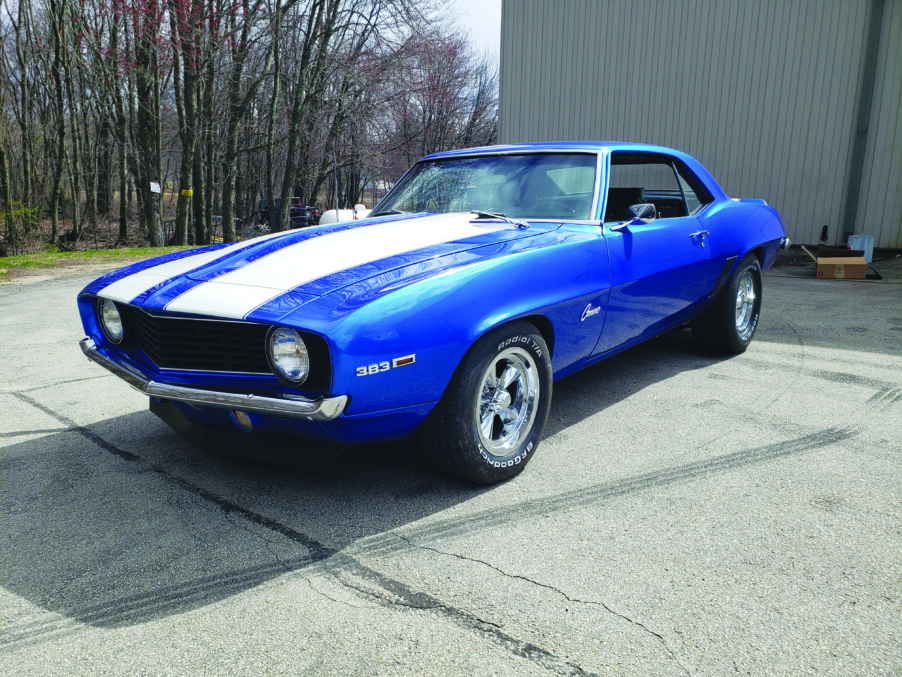
Featured photo: Featured car is a ‘69 Camaro. Photo courtesy of AK Rods and Customs.
According to a press release, New Hampshire homeowners may have the opportunity to receive property tax relief through the New Hampshire Department of Revenue Administration’s (NHDRA) Low and Moderate Income Homeowners Property Tax Relief program, which distributed over $900,000 in tax relief to New Hampshire homeowners last year through the Low and Moderate Income Homeowners Property Tax Relief program and has distributed more than $48 million since the program was established in 2002.
Those eligible are single homeowners making up to $37,000 per year and married homeowners making up to $47,000 per year. The maximum homestead value qualifying for an award is $220,000 and the deadline to apply for relief from the state is Sunday, June 30, according to the press release.
In a statement, NHDRA Commissioner Lindsey Stepp said, “The Low and Moderate Income Homeowners Property Tax Relief program is a significant resource for qualified New Hampshire taxpayers statewide and we are working to make sure eligible homeowners are aware of this critical tax relief program.”
Other stipulations include owning a homestead subject to the State Education Property Tax and having resided in that homestead since April 1, 2023, according to the press release.
The NHDRA asks applicants to file claims using the NHDRA’s Granite Tax Connect (GTC) online portal at revenue.nh.gov/gtc. Paper applications are available for download at revenue.nh.gov/forms/low-moderate.htm. Older versions of the form will not be accepted, and applicants will be required to submit their individual income tax returns and final property tax bill for 2023 with the application. For specific tax-related questions residents can call Taxpayer Services at 230-5920 and residents who do not have internet access may request forms by calling NHDRA’s Forms Line at 230-5001 or by sending an email to forms@dra.nh.gov, according to the same release.
Leave baby deer alone
According to a press release from New Hampshire Fish and Game, it is important for New Hampshire residents who see young deer by themselves and fear the worst to remember that the doe is usually not too far off and will most likely return to feed her newborn. The majority of deer fawns are born in May and June. Adult deer are easily detected by predators due to their scent and large size, and for that reason the doe will spend extended periods away from her fawns to disassociate her scent from the fawns to help keep them safe from predators. During the first month of their life, she will only visit the fawn a few times a day to nurse quickly before leaving again, although typically not going too far away, according to the same release.
The best chance a young wild animal has to survive is in its natural environment under the care of its mother, so if you do encounter baby animals out in the wild, leave them there. If you suspect a fawn or other young wildlife has been abandoned or orphaned, contact the New Hampshire Fish and Game Department by emailing wildlife@wildlife.nh.gov or calling 271-2461 to initiate a report. Professionals can evaluate the situation.
If you do encounter animals on the trail, do not approach, pet or feed wildlife, and never remove any animal from its habitat, the release said. Only qualified people with special rehabilitator permits issued through the New Hampshire Fish and Game Department may take in and care for injured or orphaned wildlife. Improper care of injured or orphaned wildlife frequently leads to sickness or death and often the animals cannot be returned to the wild, according to the press release. A complete list of licensed wildlife rehabilitators can be found at wildlife.nh.gov/wildlife-and-habitat/rehabilitators.
Summer school
According to a press release, the Community College System of New Hampshire (CCSNH) will be offering two free classes this summer at any of New Hampshire’s seven community colleges with their new “Summer’s on Us” program, which covers tuition and academic fees for students who meet financial eligibility requirements and are registered for fall classes.
In a statement, Charles Lloyd, Vice Chancellor of CCSNH, said that “college is a personal investment of time and resources that can be very rewarding both personally and professionally … [and] through ‘Summer’s on Us’, we are making our own investment in New Hampshire students. Students juggle a lot these days between work, family and other commitments and a program like this helps to make college more affordable and attainable.”
To receive free classes, students must enroll for the fall at any of the seven community colleges for at least nine credits, which is about three classes, or use the two classes to complete an academic degree or certificate program in which they are currently enrolled, according to the same release.
Students will need to complete the 2024-2025 Free Application for Federal Student Aid (FAFSA) and demonstrate financial need. Specific requirements of financial need will be determined by the colleges, and students are encouraged to reach out directly to the community college they plan to attend, according to the release.
Summer classes have multiple start dates between mid-May and August. Classes are available on site and online as well as hybrid, according to the release. More information can be found at CCSNH.edu/SummerOnUs.
The Concord Farmers Market held at the New Hampshire Statehouse (107 N. Main St.) on Saturday, May 18, starts at 8:30 a.m. and ends at noon with more than 40 vendors selling an array of fresh and local goods, according to the website. Visit concordfarmersmarket.com.
Manchester City Library (405 Pine St., 624-6550, manchester.lib.nh.us) will hold a book sale on Saturday, May 18, from 10 a.m. to 1 p.m. An average-sized grocery bag filled with materials will be $10, according to their website. They ask that participants bring their own bag, or they can provide a paper grocery bag if needed. Hardcover books are also available for $1.50 each, and most other materials are $1.
The Merrimack Valley Flute Choir will perform at Nashua Public Library (2 Court St.) on Thursday, May 16, at 7 p.m. The concert is “Fantastic Journey,” featuring original works with instruments that span the range of the flute family, from piccolos to bass flutes, according to the website. Visit nashualibrary.libcal.com/event/10830672.
There’s a line in Joni Mitchell’s song “For the Roses” about a moment when “the lights go down and it’s just you up there, getting them to feel like that.” That’s the challenge for anyone bold enough to launch a tribute act to her. It’s better to try and convey the singular singer-songwriter’s essence. Replication is a fool’s errand; there’s only one Joni.
Further, she’s a moving target. From the spare acoustic era of “Both Sides Now” and “Circle Game” to the ethereal jazz in Hejira and Mingus, Joni Mitchell was and is always moving forward. Yet Big Yellow Taxi, a six-piece group led by singer Teresa Lorenço as Mitchell, accomplishes the not-small miracle of capturing her.
For a show in Dover on May 10, they’ll perform Mitchell’s breakthrough Court and Spark from start to finish. The 1973 album has many moods but contains a common thread, Lorenço said by phone recently: “There’s real, profound honesty and vulnerability to whatever she’s doing …. Hooking into that is what helped me make the whole thing cohesive.”
Lorenço never planned on dedicating herself to performing Mitchell’s music; she arrived by acclimation.
“I’d been singing a little bit of her songs in a duo that I was in, and people kept saying, wow, you can really do her,” she recalled. “I thought, OK, then let’s do it.”
The first iteration of Big Yellow Taxi formed in late 2019 but dissipated as the pandemic took hold. When it got safer to book shows again, she sought out new musicians and hit the jackpot. The current band convincingly channels Tom Scott & the LA Express, who Mitchell worked with on Miles of Aisles, considered by many her best live album, as well as her ethereal late ’70s band featuring Pat Metheny on guitar and bassist Jaco Pastorius.
Guitarist John Cabán has played with many musicians, from Bo Diddley to Gloria Gaynor; Robert Sherwood’s keyboard credits include beloved mid-2000s band Ware River Club. On drums is Joe Fitzpatrick, a veteran of many stage musicals, and backing singer Annie Patterson conveys the multi-tracked vocals on Mitchell’s studio albums. Finally, there’s electric bass player Rich Cahillane, who also accompanies Lorenço on acoustic songs.
Cahillane, who was also at the interview, noted a split between audience members who lean toward early Mitchell albums like Ladies of the Canyon and Blue (a favorite of Lorenço’s) versus later songs.
“Folky fans want to hear Teresa and I play acoustic guitar or dulcimer,” he said. “Then we get those wanting to hear Jaco and the jazz…. It’s hard to satisfy all her fans.”
However, accomplishing that “definitely is our goal,” Lorenço interjected. “We want to have this ability to showcase any of her stuff from any time that she was writing. We don’t really want to focus on one style or the other. It keeps it fresh for us even, because we’re consistently looking at new things.”
One of the most difficult numbers from Court and Spark is “Down To You,” she continued. “We had to make up our own way to do this fully orchestrated part in the middle, and we definitely thought of some new swear words during that time,” she said, adding with a laugh, “If Joni ever calls and needs a backup band, we want to be prepared. Only about a hundred songs more to go.”
Taking on the catalog of an icon, Lorenço understands her primary task.
“Everyone really gets the emotionality of the music, and I think that’s the most important piece, that is what I focus on,” she said. “I’m no trained musician compared to these incredible people that bless me by working with me. They talk about music theory, and I sit there with static in my mind. All I know for sure is the way she’s expressing her emotions in song. That’s what I get; that’s what I feel in me.
Big Yellow Taxi – The Music of Joni Mitchell When: Friday, May 10, 8 p.m. Where: The Strand, 20 Third St., Dover Tickets: $22 and up at eventbrite.com