It was the summer of women! — so declared the discourse, thanks largely to the excellent box office of Greta Gerwig’s Barbie movie and the success of Beyonce and Taylor Swift tours. With a film version of Taylor Swift’s The Eras Tour hitting theaters Oct. 13, it’s likely going to be the fall of women too, at least box-office-wise. But these aren’t the only lady-led summer/fall movies. Here are a few more female-forward films from recent months worth catching up with.
Bottoms (R) Released on VOD last week, this high school sex comedy didn’t do Barbie box office numbers but it won a lot of praise — released in theaters on Sept. 1, it currently has a 93 percent on Rotten Tomatoes (for whatever that’s worth). Bottoms stars Rachel Sennott (who co-wrote it with director Emma Seligman, who also wrote and directed 2020’s Shiva Baby, in which Sennott starred) and Ayo Edebiri (best-known for the TV show The Bear). The movie has almost a throwback quality for its strict social division of “populars” and everybody else — PJ (Sennott) and Josie (Edebiri) are best friends and fellow awkward nerds waiting it out for college, where they feel like they’ll have a better shot at coolness and having sex. But then they accidentally find themselves in a position to help cheerleader Isabel (Havana Rose Liu), the girl Josie is crushing on, get away from her meatheaded football player boyfriend Jeff (Nicholas Galitzine). PJ and Josie sort of stumble into the idea that presenting themselves as tough badasses (which they are extremely not) will win over not just Isabel but also Brittany (Kaia Gerber), the girl PJ is lusting over. Thus do they start a girls’ fight club, nominally a means of teaching self-defense, but soon, inadvertently, a way of pulling attention and power away from the football-player-dominated school. The movie is sweet for how it walks its familiar movie high schooler-types through familiar lessons about friendship, honesty and finding genuine intimacy versus just trying for random hook-ups. Even when the comedy feels a bit not-fully-baked, Sennott and Edebiri make it work. B
Golda(PG-13) Another late-summer release (Golda hit theaters on Aug. 25, VOD in recent weeks) is this Helen Mirren biopic about Golda Meir, Israel’s prime minister from 1969 through 1974. The movie gives us a “newspaper clippings and characters introduced with identifying chyrons” play-by-play of Meir during the Yom Kippur War in 1973. It’s all fine in the same way that having Helen Mirren read the Wikipedia entries about this point in history would probably be fine but the movie doesn’t have much to say about Meir as a person or this slice of history. I feel like we’re more watching the “Mirren does Golda, Liev Schreiber does Kissinger” makeup and costuming of it all than getting some new window onto the people or the times. B-
Polite Society(PG-13) Technically this movie got its U.S. release in late April, but I saw it on Peacock (where it still lives) in the summer. It’s written and directed by Nida Manzoor, creator of the excellent TV show We Are Lady Parts, also on Peacock (watch it!). This action comedy has a slight Jane Austen-y quality but a modern setting: Two British-Pakistani sisters, the college-age Lena (Ritu Arya) and the teenage Ria (Priya Kansara), have big dreams. Ria wants to be a stunt woman and practices martial arts so she can make videos where she says “I AM the Fury” before delivering a spinning jump kick. Lena recently left art school and spends her days being discouraged — though Ria is determined to get her back making art. The girls’ mother, Fatima (Shobu Kapoor), scores the family, including dad Rafe (Jeff Mirza), an invitation to a party held by community fancy person Raheela (Nimra Bucha). The true purpose of the party is for Raheela to find a wife for her handsome, dopey son Salim (Akshay Khanna), giving off some Mr. Bingley vibes. When he and Lena appear to hit it off, Ria is certain there’s something more sinister about him. She ropes her high school mates into various schemes to try to expose Salim as unfit for her beloved sister, but meanwhile her parents and Salim’s mother continue to push the couple together. This movie is a top to bottom delight, from the sisterly relationship which occasionally devolves into martial arts fights to Ria’s friendships, one of which is borne out of a school-time battle. By the time Ria finds herself fighting a true villain — a marvelous villain — we can believe this girl has taught herself to be “the Fury” even if the movie is also letting her do some slightly superhuman moves. A+
Nimona (PG) Any list of my favorite movies of the summer will surely include this animated film, which appeared on Netflix at the end of June. Based on a graphic novel, this movie features Nimona (voice of Chloë Grace Moretz), a shape-shifting girl of undetermined age, befriending Ballister Boldhart (voice of Riz Ahmed), a fallen knight in a futuristic-medieval-y world whom everyone thinks has killed the queen he was sworn to protect. Ballister came from the commoner class, not the nobility like other knights and his friend/comrade-in-arms/sweetheart Ambrosius Goldenloin (voice of Eugene Lee Yang), a descendant of a legendary hero. Ballister is trying to prove his innocence and find the real queen assassin, but Nimona is in this partnership for his general troublemakerness, which she regularly tells him is “metal.” As a kid movie (older kids, for some of the scarier battle scenes and violence; Common Sense Media labeled it 11 and up), this is a plucky adventure with good lessons about friendship and not prejudging people. For the grown-ups in the audience, there’s plenty of humor, smart visuals and general sweetness to enjoy. A
Theater Camp (PG-13 ) A July release that stretches the brief just a little in the sense that it’s more an ensemble than woman-character-led, the movie’s action kicks off with Joan Rubinsky (Amy Sedaris) having a stroke during a kids’ production of Bye Bye Birdie. The longtime owner and director of a theater camp, Joan lands in a coma for the summer, leaving her goofy, would-be influencer son Troy (Jimmy Tatro), who knows very little about theater, to run the camp. While he weighs whether or not to sell it, the staff struggles to put together the summer’s productions, including an original piece about Joan’s life. Longtime friends Rebecca-Diane (Molly Gordon, also from Shiva Baby) and Amos (Ben Platt) are particularly in the spotlight in this part of the tale. Bottoms’ Ayo Edebiri also appears here as a new counselor who knows nothing about theater — at one point she literally asks the kids to explain what her class is supposed to be about. This movie works best as a fun collection of scenes — Edebiri’s character asking the kids to explain stage combat, Amos’ self-serious criticisms of the desperately eager campers, the very jazz-hands Still Joan production — but can be a little pokey as a narrative. Available on Hulu, it’s a solid low-effort comedy to watch that doesn’t require 100 percent of your constant attention. B
Love at First Sight (PG-13) This very straight down the middle Netflix rom-com about two attractive young adult people — American Hadley Sullivan (Haley Lu Richardson) and Brit Oliver Jones (Ben Hardy) — meeting cute and then slowly falling in happily-ever-after draws most of its charm from Richardson, who brings the same real-person energy to this as she does to better movies like Support the Girls or The Edge of Seventeen. This movie also gets some solid help from a supporting cast that includes Rob Delaney playing Hadley’s dad, Sally Phillips as Oliver’s mom and Jameela Jamil, who doesn’t annoy me like she does The Internet, as a kind of Greek chorus narrator type. Acceptable “whilst doing other things” watching with moments of genuine charm. B-
Have a taste of what New Hampshire has to offer with vendors like Alan’s of Boscawen and Flannel Tavern at the 18th annual Taste of New Hampshire event benefiting the Boys & Girls Clubs of Central New Hampshire at the McAuliffe-Shepard Discovery Center in Concord on Tuesday, Oct. 3, from 5:30 to 8:30 p.m.
“It started out as The Taste of Concord at the Capitol Center for the Arts and a few years later it got bigger and outgrew that space … and became the Taste and New Hampshire,” said Tanya Frost, Development Manager at the Boys & Girls Clubs of Central New Hampshire.
Since then, the event has expanded to include 25 to 35 restaurants and vendors like Granite State Candy Shop, M.S. Walker, Constantly Pizza, 70 North Kitchen out of Laconia, New Hampshire Distributors offering beer samples, and a few wine vendors.
“The funds from the event benefit the Boys & Girls Clubs of Central New Hampshire and the greater Concord area,” Frost said. “It can go toward programming, scholarships, whatever we can do to help keep our sites active and growing so we can keep a safe place for our members.”
According to their website, the nonprofit organization in New Hampshire started as a group exclusively for boys called the Addison Martin Boys Club in Concord, and the name later changed to the Concord Patrolman’s Association Boys Club. After catching on to the national Boys Club movement, it became the Concord Boys Club, which was one of the first groups in the nation to include girls in the program in 1983. The organization continued to grow and expand into surrounding towns, becoming the Boys & Girls Club of Greater Concord, which merged with the Lakes Region branch in 2015, officially becoming what is now The Boys & Girls Clubs of Central New Hampshire with more than 25 centers and 1,000 members.
“Our mission is to inspire and enable all young people, especially those who need us the most, to reach their full potential as productive, caring and responsible citizens,” Frost said.
Members of the Club will also be at the event selling baked goods. In addition to the food and drinks, there will be a raffle with prizes like golf passes, gift baskets, restaurant gift cards, brewery tours and art made by Club members.
“All of these restaurants that we have in our sponsors of the club as well, so it’s really great community engagement,” Frost said. “[We hope] to get as many people in and just enjoy a great night, mingle, have some great food … and just to have a really good time.”
Taste of New Hampshire When: Tuesday, Oct. 3, 5:30 to 8:30 p.m. Where: McAuliffe-Shepard Discovery Center, 2 Institute Drive, Concord Cost: $40, 10 tickets for $350, visit tasteofnh.com
Shopping for your new favorite flavors at local international food markets
OK, this looked easy enough on TV…
“Heat a saucepan over medium heat” — That seems pretty straightforward; a saucepan actually means a pot — I won’t make THAT mistake again — and medium heat means, um, turn the knob halfway between 2 and 9?
“Heat oil until it shimmers.” I think I’ve got that; I’ll remember to pour it out of the bottle this time. Aaaaand — Hey! It IS shimmering! I might be able to do this.
“Add mustard seeds to the hot oil, and wait for them to pop like popcorn.” There are seeds that do that other than popcorn? And what ARE mustard seeds, anyway?
“HONEY? DO WE HAVE ANY MUSTARD SEEDS?!”
“I DON’T KNOW! WHAT ARE THEY!?”
“I DON’T KNOW!”
“THEN PROBABLY NOT!”
Ugh, that shimmering oil is starting to smoke; I’d better take it off the heat. I don’t want a repeat of Arlene’s baby shower.
Mustard seeds? I really should have read through these ingredients before I started.
Salt — we’ve got that. White pepper — wow! We’ve actually got that. Fenugreek leaves — I thought fenugreek was a seed! And what the heck are cardamom pods?
“What are cardamom pods, please?”
“HERE’S WHAT I FOUND ON WHATTHEHECKISTHISSPICE.COM: Cardamom is a spice made from the seed pods of the cardamom plant, a close relative to ginger and turmeric, that is native to South India—”
“OK, stop. Thank you.”
“IT IS ALWAYS MY PLEASURE TO TELL YOU WHAT YOU COULD EASILY LOOK UP YOURSELF.”
Rude.
OK, what am I supposed to do now? I could probably order this stuff online, but I need this for the Piñata Festival tomorrow, and I’m not paying for overnight shipping. Where would somebody even go to find this stuff?
I’m glad you asked.
According to the 2020 Federal Census on census.gov, 3,600 of the people living in Concord were born outside of the United States. Nashua is home to another 13,000, and in Manchester, 16,000 people — about 14 percent of the population — are immigrants.
What does that have to do with cardamom pods?
It’s foolish to say “all” of any group of people, but the vast majority of those 32,800, while happy to call this area home, want to eat the food they grew up with. (I lived overseas for a couple of years in my youth, and I cannot describe the sheer sense of elation I felt when I stumbled across a six-pack of root beer one time.)
There are a surprising number of small international grocery stores in the area, catering to people from all over the world. You’ve seen them, but not noticed them. Thirty-seven percent of urban shopping centers in the state — a figure I just made up — have small, inconspicuous markets in them that specialize in West African or Mexican or Pakistani foods. If you need cardamom pods, you’ll be able to find them in most of these stores. Or fermented tofu. Or dried West African river fish.
Obviously, some of this can be a bit overwhelming. Even if you are from another country — India, for example — it doesn’t naturally follow that you will necessarily know anything about Mexican food.
So here’s what we’ll do: Let’s take a look at a few international markets, and pick an ingredient — something with a low barrier to appreciation by a beginner. Let’s figure out what you can do with that ingredient, and then look at a cookbook to help you learn more about cooking the sorts of groceries you might find at that store.
Spice Center
245 Maple St. in Manchester (across from Yankee Lanes on Valley Street), 626-7290. Open Tuesday through Sunday, 10 a.m. to 8 p.m.
So where would you go to find cardamom pods?
The Spice Center on Maple Street would be a good bet.
This is a small, family-owned, Middle Eastern market. If you are cooking something Mediterranean, this is a good place to find ingredients — olives, flatbreads, Lebanese pickles and of course spices. If you want to grind whole spices yourself — which you should try; it will change how you feel about them — this is the place to find them. The staff is extremely nice and likes to help you find what you’re looking for. They also like to talk about cooking.
This is the one place I can reliably find Turkish delight — a shockingly good hybrid of gummi bears, fudge and a bouquet of roses.
“I’m trusting you on this. I’m nervous about trying new foods. What should I buy here?” you say.
Let’s ease into this. Aside from Turkish delight, I’d recommend picking up the ingredients for a hummus plate: fresh flatbread, pickled turnips and a couple types of olives.
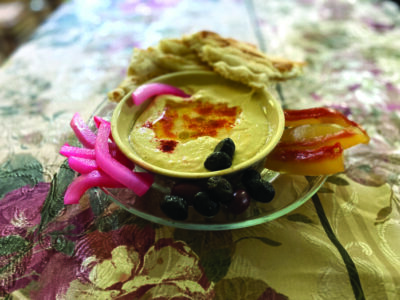
Homemade Hummus 2 15.5-ounce cans of chickpeas, sometimes labeled as garbanzo beans 1 teaspoon kosher salt 1 clove fresh garlic ½ cup (117 grams) tahini, sort of like a peanut butter made from sesame seeds 1 lemon, squeezed olive oil and paprika to garnish (optional) Using a colander, drain and rinse the chickpeas to wash away any metallic taste from the cans. In a blender or food processor, combine the chickpeas, salt, garlic and a generous cup of water. Blend or process on low speed for two minutes or so. The mixture will be a tan color and look a little grainy. Add the tahini and lemon juice, then blend or process again for three to four minutes. Pour into a serving dish. Garnish with a splash of olive oil and a sprinkling of paprika, then surround the bowl with olives, pickled turnips and torn or sliced pieces of flatbread.
Homemade hummus. Photo by John Fladd.
We’ve all had hummus before. It generally ranges from “meh” to “pretty good.” Making it yourself is a bit of a revelation; it is nutty and rich and slightly warm from the blender. It goes surprisingly well with salty, oily things like olives or pickled turnips. Pickled turnips come in a jar. They are about the size and shape of thick-cut french fries, and they are an electric pink color. They are crunchy and salty and can be your adventure of the week, your doorway into a new type of eating.
“Is there a cookbook that would teach me more about Middle Eastern food?” you ask.
The Cooking of the Eastern Mediterranean: 215 Healthy, Vibrant, and Inspired Recipes by Paula Wolfert (Ecco, 1994) is an excellent overview of some of the key ingredients that are used in the area we loosely call the “Middle East,” from Georgia and Armenia through to Lebanon and Israel. Paula Wolfert is a veteran food writer, and her recipes are extremely reliable.
Two Guys Food Market
414 Union St. in Manchester, 627-7099. Open Monday through Saturday from 9 a.m. to 8 p.m., Sunday 9 a.m. to 6 p.m.
So you’re a big fan of Mexican food. Your delivery guy knows to expect your taco order every Friday. Your dream job in high school was working the counter at Taco Bell.
But for years you’ve heard whispers that most “Mexican” food doesn’t actually have a lot to do with food that actual Mexicans eat. A Spanish-speaking friend took you to a little out-of-the-way place that her family likes, and the food blew your mind. You decide to look up some more authentic Central American recipes, but you’re confused by some of the ingredients.
What’s the difference between Mexican oregano and regular oregano? Isn’t hibiscus a flower? What the heck is Achiote?
One of the best places to start to figure all this out is Two Guys Market on Union Street in Manchester. It is a classic bodega; it specializes in fast, spur-of-the-moment purchases — suitcases of beer, cold soda, lottery tickets, that sort of thing. Think of it as a superette with better music. But what Two Guys has that a random convenience store doesn’t is a wall display of dozens of Central American specialty spices, the ones that will give you confidence in your cooking and open your mind to trying new foods that aren’t covered with neon-orange queso.
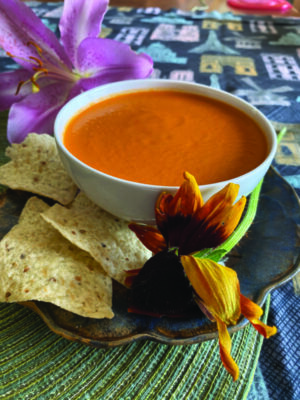
Salsa de Chipotle. Photo by John Fladd.
“What should I buy?” you ask.
Spices and canned chipotle peppers.
You: “I like the idea of learning more about this, but my eyes glaze over when I try to read a cookbook.”
Try Food from My Heart: Cuisines of Mexico Remembered and Reimagined by Zarela Martinez (CreateSpace Independent Publishing, 368 pages). Zarela Martinez is a well-known chef and restaurateur — and mother of celebrity chef Aarón Sánchez — who was born and lived in several different regions of Mexico and the Southwest U.S. Food from My Heart is half memoir and half cookbook. She describes what it was like to live in each of these areas, what the food culture is like in each, and how each place changed her life. By the time she gets to recipes from an area, a reader can wrap their head around a dish and not be intimidated by it.
“OK, can you recommend a super-easy recipe from this book that won’t scare me?” you ask.
Yes, I can.
Salsa de Chipotle 2 Tablespoons melted lard or vegetable oil. If you are the type of person that saves it, bacon grease would work very well, too. 2 large garlic cloves, minced 1 medium-sized onion, chopped, about 1 cup 3 pounds very ripe tomatoes, chopped 2-3 canned chipotle chiles in adobo sauce — These are spicy smoked jalapeños. Use these to adjust the heat level to your taste. 1½ teaspoons Mexican oregano ½ teaspoon kosher salt Sauté the garlic and onion in oil until they are soft and translucent. Add the other ingredients, stir to combine and simmer uncovered over low heat for 15-20 minutes, stirring often. Use your blender or an immersion blender to puree the sauce. Strain through a fine-meshed strainer.
Although a lot of Americans use the word “salsa” to refer to a particular scoopable condiment, it actually means “sauce” in Spanish. You can definitely use this sauce for chips, but it is an outstanding cooking sauce. It is smoky, spicy and slightly sweet. As you become more confident in your cooking, this will become your standby base for a large number of dishes.
Saigon Asian Market
476 Union St. in Manchester, 935-9597. Open daily from 8:30 a.m. to 7 p.m. Union Street in Manchester is a really good food street; in addition to multiple bodegas and small restaurants, it also has one of the best Asian markets in the state.
As its name suggests, Saigon is a Vietnamese market, but it also carries a large stock of Chinese ingredients as well. It is an excellent place to find fresh Asian produce and cuts of meat that you won’t find in a regular supermarket, and rumor has it that a lot of local chefs buy their seafood here to cook on their days off. It has a really impressive amount of dried and canned East Asian ingredients.
“What should I buy here?” you ask.
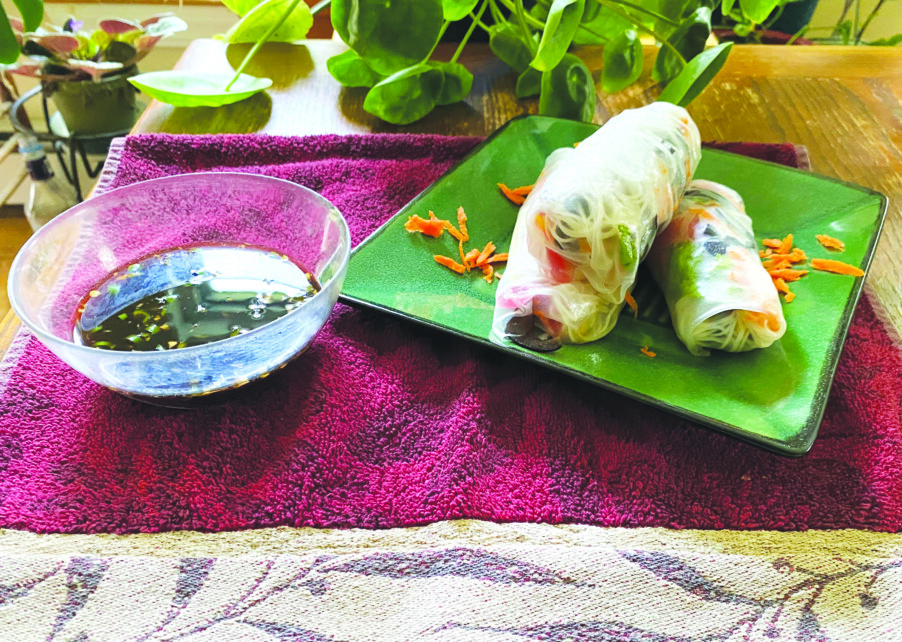
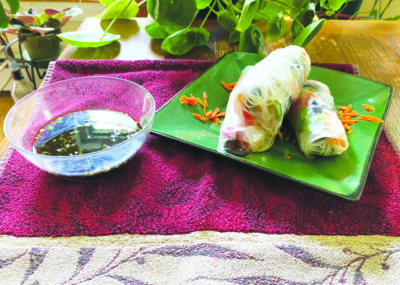
Vegetarian Crystal Summer Rolls (Cuðn Chay Viét Nam). Photo by John Fladd.
So very many things, but the number of bottled Asian sauces, especially hot sauces, is a little mind-numbing.
“I was starting to feel more confident, but now I’m a little intimidated. Is there a book that will help me sort all these ingredients out?”
Two of them, actually. The Asian Grocery Store Demystified by Linda Bladholm (Renaissance Books, 240 pages) is a pocket-sized reference book to carry around with you when you are trying to get a handle on the thousands of bewildering and intriguing foods around you. Vietnamese Cooking by Paulette Do Van (Quantum Books) is a well-indexed cookbook with a good description of ingredients and techniques in the first few chapters. The recipes are clear and to the point.
“I’m not saying I will, but if I decided to cook something a little bit fancier — something that doesn’t involve my blender — what would you recommend?” you ask.
Vegetarian Crystal Summer Rolls (Cuðn Chay Viét Nam) From Vietnamese Cooking, by Paulette Do Van
Do not be intimidated by the number of ingredients. The secret to most Asian cooking — and cooking in general — is to measure and prepare all the ingredients ahead of time.
1 8-ounce (225-gram) box of rice vermicelli, often labeled as “rice sticks.” These are very thin rice noodles, about the thickness of angel hair pasta. 4-5 dried Chinese mushrooms. I use sliced dried shiitakes. 2 large dried black wood ear fungus. Don’t panic; these are just another type of dried mushroom. 1 packet dried Vietnamese rice paper. These look like plastic tortillas. They will soften up in warm water. ½ jar pickled red onions 2-3 crispy dill pickles, cut into matchsticks ½ can sliced bamboo shoots 1 medium carrot, grated ½ can pineapple rings, drained and sliced 1 small bunch cilantro, rinsed and chopped
Dipping Sauce 4 ounces (100 ml) Maggi Liquid Seasoning 1 Tablespoon lemon juice 1 clove garlic, crushed ½ serrano pepper, seeded and finely minced
Whisk the dipping sauce ingredients together, then set aside. Soak the dried mushrooms in very hot water for half an hour or so, or until they have softened. Drain them, then slice them thinly. Soak the rice noodles until soft, then drain them. Prepare all the other ingredients and lay them out in separate bowls. Don’t let yourself get intimidated by all the ingredients; you’ve already done the hard work. In a large bowl, or the bottom of a frying pan, soak one of the rice paper rounds until it is soft, but not falling apart, about 45 seconds. Lay the rice paper out on a piece of parchment paper or a silicon mat, then place some of each of the ingredients in the center of the rice paper. You will have to experiment, but you will use less of each ingredient than you anticipate — 1 to 2 tablespoons of each. Fold the sides of the rice paper in ¼ of the way toward the center, then roll up your ingredients, starting from the bottom. Repeat this until you have run out of one or more of the ingredients. Your first couple of summer rolls will be a little wonky, but you will quickly get very good at this.
These summer rolls are delicious and refreshing, simultaneously soft and crunchy, sweet and savory. The rice noodles have a different crunchy texture than the vegetables. The rice paper wrapper is tender but chewy.
I have a friend who swears by making extra summer rolls, then crisping up leftovers in his air fryer.
Indian cuisine
If you are interested in learning about Indian cooking, there several South Asian markets in the area, but two stand out:
Himalayas General Store
359 Elm St. in Manchester (next to Van Otis Chocolates, across the street from the downtown Market Basket), 222-2366. Open daily, 9 a.m. to 8 p.m.
This is a small family-owned store specializing in Indian and Nepalese staples — lentils, grains, flours, cooking oils, and spices. The staff is extremely friendly and will cheerfully answer any questions you have, or make suggestions about what to cook.
Patel Brothers
Willow Springs Plaza, 292 Daniel Webster Hwy. in Nashua (next to the Home Depot, near the mall), 888-8009. Open daily 10 a.m. to 8 p.m.
This is an Indian supermarket, easily as big as any supermarket you care to name. Patel Brothers carries an almost unimaginable variety of staples, fresh produce and Indian baked goods made in-house. Because India has dozens of languages and hundreds of cultures, even Indian shoppers are frequently surprised by unfamiliar foods. This is where most South Asian families in the area do their weekly or monthly shopping.
“This sounds intimidating. Can you suggest something to help me figure out Indian cooking?” you ask.
There really isn’t one type of Indian cooking. The food in most American Indian restaurants is dishes from one area of the country, but there are many other cooking traditions. Here are two cookbooks that are good starting places: 660 Curries (Kindle Edition) by Raghavan Iyer (Workman Publishing Company, 832 pages) and Dakshin: Vegetarian Cuisine from South India by Chandra Padmanabhan (Periplus Editions, 176 pages).
I judge a cookbook by how beaten up it is. If it has stains, notes in the margins, dog-eared pages and a broken binding, I find that a very good sign — it means that a cook has really used it. That’s what my copy of 660 Curries looks like. 660 Curries is currently out of print in hardcover or paperback, so your best bet is to buy it used, or as an eBook.
The phrase “curry” can be deceiving. For someone who doesn’t eat much Indian food, it means the smell and taste of dry curry powder from the spice section of a supermarket. When it’s used to describe actual South Asian food, it means a huge variety of dishes, usually with the consistency of a stew, but almost never tasting like commercial curry powder. The recipes are solid, and varied enough that almost any cook will be able to find a dish they love.
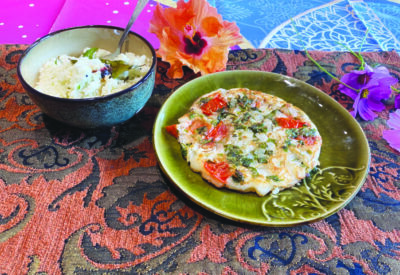
Uthappams with Coconut Chutney. Photo by John Fladd.
There are dozens of different Indian cuisines, but they break down into two main categories — Northern and Southern dishes. The vast majority of Indian restaurants in the U.S. serve Northern Indian foods. Dakshin is a collection of Southern recipes. The dishes are solid, and this book is worth buying for the photographs alone.
You ask: “What should I buy?”
Fresh curry leaves. These are not what curry powder is made of; they are leaves that are often used to make a curry. Smell them — take a deep whiff — and your eyes will open very wide.
“What should I cook?”
Uthappams with Coconut Chutney (Southern Indian Rice Pancakes with Coconut Relish)
Coconut Chutney 1 cup (115 grams) grated unsweetened coconut ½ cup (85 grams) finely chopped onion 1 teaspoon minced ginger ½ serrano pepper, seeded and minced ¼ cup (60 ml) plain yogurt ½ teaspoon fresh squeezed lemon juice ¾ teaspoon kosher salt ½ cup (120 ml) water – more if necessary to thin out the mixture ½ teaspoon black or yellow mustard seeds 2 small dried chiles – arbol chiles are good for this. 8-10 curry leaves 2 Tablespoons vegetable oil Blitz the first eight ingredients in a food processor or blender to make a thick paste. Heat the oil in a large frying pan or skillet, and have a lid ready. Add the dried chilies, curry leaves and mustard seeds to the hot oil, stir once, then cover the pan. In a few seconds the mustard seeds will pop against the lid like popcorn. After a few seconds, add the coconut paste to the pan, and stir to combine. Cook for 20-30 seconds, then remove from heat, and transfer to a serving bowl.
Uthappams Uthappams — delicious, savory rice pancakes — are an easy and painless introduction to South Indian cooking. Unfortunately, every uthappam recipe I have looked at involves very complicated instructions for making the batter. I was almost ready to give up and find another dish to make, when I was struck by a thought: “I wonder….” And yes, Patel Brothers does carry premade uthappam batter. 1 quart container pre-made uthappam batter 1 onion, finely chopped (about 200 grams) 1 tomato, finely chopped (about 150 grams) 1-2 serrano chiles, seeded and finely chopped 1 small bunch cilantro (about 45 grams), finely chopped vegetable oil for shallow frying Heat oil in a deep frying pan. Use a little more than you would for regular pancakes. Pour a ladleful of batter into the hot oil to make an 8-inch pancake. Sprinkle the other ingredients on top of the batter. Cook until it is crispy around the edges and some bubbles have made little holes in the top. Because this batter is so thick, you can carefully lift up an edge with a spatula and look underneath to see if it is ready to flip yet or not. Flip, and cook for another minute or two. Remove to a warm plate, then make more, until you run out of batter. Eat with coconut chutney.
This is delicious and savory. The outside of each uthappam is crispy, with a toasted rice flavor, but it’s moist and chewy inside. One of the great things about Indian cooking is that it will constantly surprise you. In this case, the flavor is very nice, but it is the texture that will make you want to make this frequently.
Siberia Food Market
50 S. Willow St. in Manchester, 621-0017. Open Monday through Friday from 11 a.m. to 7 p.m.; Saturday, 11 a.m. to 5 p.m.
Выпей чайку – забудешь тоску. Have a cup of tea and you will forget longing. —Russian proverb
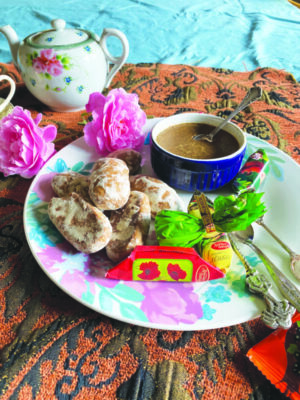
Afternoon tea. Photo by John Fladd.
Siberia, on South Willow Street in Manchester, carries Russian, Polish and Eastern European groceries, from Russian candies to frozen pierogis to many, many types of sausage. There is a deli case with a generous variety of meats and cheeses. The most interesting aisle displays several types of Russian teas, and the honey to sweeten them. Americans often think of Tea with a capital “T” as a Chinese or British staple, but there is a long, deep tea tradition in Eastern Europe. This is an excellent place to get everything you need for a proper Russian High Tea.
“What should I buy here?” you ask.
Tea, jam and cookies for a Russian High Tea.
“That sounds really good. What should I serve?”
Several sources describe the Russian spirit of hospitality, and mention sandwiches, cakes, blinis with caviar, and several types of flavored vodka as part of a traditional Russian Tea. On its website, the Russian Tea Room in New York City says: “Afternoon Tea is traditionally composed of sandwiches (usually cut delicately into ‘fingers’), scones with clotted cream and jam, sweet pastries and cakes.” — which sounds really good but also costs $95 a person, plus $30 for a glass of champagne.
I think most of us would be fine with tea, cookies, sweets and maybe toast with jam, so long as it was offered with an open heart. While optional, very cold vodka would make a very good impression.
“What if I’d like to cook something?” you ask.
The cookbook I always fall back on for Eastern European cooking in spite of its intimidatingly long title is Russian, German & Polish Food & Cooking: With Over 185 Traditional Recipes From The Baltic To The Black Sea, Shown Step By Step In Over 750 Clear And Tempting Photographs, by Lesley Chamberlain (Hermes House, 256 pages). While not exhaustive in any way, this is a good introduction to three styles of European cooking. The recipes go step by step and are easy to follow. Most include photos of one of the steps and of the final dish. Very few of them call for exotic ingredients, and — very gratifying to me, personally — they are listed in cups, ounces and grams.
Maddy’s African Market
121 Loudon Road, Unit 1, in Concord, 545-9478. Open Monday through Saturday, 9 a.m. to 7:30 p.m., and Sunday, 11:30 a.m. to 5 p.m.
While most of us have thought about learning more about French or Chinese cooking, unless we have a personal connection with Africa it rarely occurs to us what a rich cooking tradition sub-Saharan Africa — particularly Western Africa — has. Maddy’s is small, but stuffed with ingredients for African cooking. The staff is very friendly and happy to answer questions, even ones like, “What is this and what do you do with it?” I’m glad I asked that particular question, because it turns out that the strips of tree bark that I was about to buy to use in a stew would have tasted terrible, but would have helped if I was running a fever.
You ask, “What should I buy?”
It might be easy to be intimidated by some of the less familiar foods at Maddy’s, but my recommendation is to buy a strip of jollof rice spice packets.
Jollof rice is a spicy rice dish that everyone in West Africa grows up eating. Somewhat as with Southern biscuits, each country, village or even household has its own take on it that they argue endlessly over. It can range from very spicy but not too hot to incandescent. This particular spice mix doesn’t pack any heat but helps provide a spice base to build from.
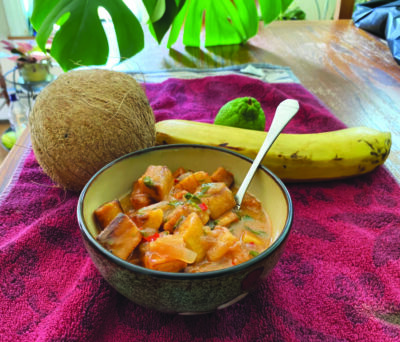
Plantain-Coconut Stew 1 medium Spanish onion, roughly chopped 2 Fresno peppers, seeded and finely chopped 1 cup coconut milk juice of 2 limes, about 3 ounces or 1/3 cup ½ cup vegetable oil 2 yellow plantains (about 1 lb.), peeled, quartered, and cut into 1-inch pieces. Plantains, which look like very large bananas, are next to the bananas in the produce section at most supermarkets. They are in the same family of bananas, but while bananas are sweet, plantains are starchy. They are very much like tropical potatoes. Do not fear them. Small handful of cilantro, rinsed and chopped ½ teaspoon ground ginger ½ teaspoon kosher salt black pepper to taste 1 teaspoon Jollof Rice Spice (see above) Simmer the onion, peppers, coconut milk, and lime juice in a medium saucepan for ten minutes, then remove from heat and set aside. Heat the oil in a deep frying pan, and shallow-fry the plantain pieces until they are golden brown on all sides, like home fries. Add the cooked plantains to the stew base, and bring to a boil. Remove from heat and serve.
Plantain-Coconut Stew. Photo by John Fladd.
This is a classic sweet-sour dish. The sweetness of the coconut milk is set off by the acidity of the lime juice. The Fresno peppers carry a little heat, but more flavor. The Jollof Rice Spice deepens the flavor and gives a gentle red color to the stew. In West Africa, you would probably eat this with fufu (steamed cassava paste) or ugali (cornmeal porridge). I would serve it with couscous and a cold beer.
“I think I could cook that! Where did you get the recipe?”
The Soul of a New Cuisine: A Discovery of the Foods and Flavors of Africa by Marcus Samuelsson (Harvest Publishers, 368 pages). Many cookbooks written by celebrity chefs don’t work well for home cooks. Used to working behind the line in restaurants, the chefs don’t always think about what ingredients and equipment are available to the rest of us. Samuelsson has written a very thoughtful book that describes the food traditions of different regions of Africa and gives the dishes some context. He is aware of which ingredients most Americans can easily get their hands on, and has adapted the recipes to make them more accessible to people who haven’t grown up eating these dishes. It is beautifully illustrated; it’s as much a coffee table book as a cookbook.
Manchester shop brings Grecian goods to the Granite State
During a summer vacation in Greece, an American adolescent meets a Greek teen, creating a bond that will last a lifetime. It sounds like a movie, but it is in fact the true origin story of Taste and Art of Greece, an online shop that brings products made by small-scale Greek artisans to the Granite State with a new brick and mortar location on Hanover Street in Manchester, which was slated to open Sept. 27.
“Growing up Greek, we often went [to Greece] as children and I made some wonderful connections over the years, one particular person, Strati Vougiouka, who lives in the village where my father was born,” said Elaine Setas, who owns the shop along with Vougiouka.
After losing touch, the two reconnected as adults when Setas started regularly visiting Lesbos again with her husband.
“Strati started talking about a dream and a vision to open a traditional Greek store,” she said. “We did research for about a year and half, two years and what we saw were a lot of Greek shops … but they weren’t talking about what products meant, who is making the product or the meanings and traditions,” Setas said “So I said, ‘I don’t want to make a store that’s just selling products — let’s make something that tells a story.’”
At the time, Setas was working as an office assistant and thought this would be a great hobby to take on. The pair opened their online store, Setas handling the marketing and attending local Greek festivals, and Vougiouka working behind the scenes in Greece, dealing with the artists and organizing shipments. After a while, the business proved to be so much more than a side hustle, so when Setas was laid off from her office job, she jumped fully in and never looked back.
“We hear a lot at these festivals and things that we go to that we definitely stand out,” she said. “We’re not your typical Greek shop.”
The duo’s initial plan was to sell more food than they currently do, but they had to be selective with what they brought in due to the complicated nature of importing food into the States. As a result, they expanded the art side of things with blankets, clothing, jewelry, handbags and ceramics while also carrying pantry items like spices, infused honey and olive oil as well as chocolate.
“One of the biggest items with a story that resonates with many people [are the ceramic] pomegranates,” Setas said. “Pomegranates mean luck and prosperity in the home and at midnight on New Year’s Eve in Greece they step over the threshold of their door and smash a real pomegranate and the amount of seeds that scatter means the abundance of luck you’ll have.”
In addition, the shop also sells ceramic boats that symbolize charting a new path and honor the fishermen of the Greek islands, as well as hand painted, traditional sheep bells that Setas says carry a sense of nostalgia for summers spent in Greece. Each item comes with a card that explains its meaning.
“We have something for every person, every culture, every nationality,” Setas said. “Greeks are known in the world for their hospitality and our art and our culture and … our whole mission [is] to share that with the world.”
Taste and Art of Greece Where: 32 Hanover St., Manchester When: Wednesday through Saturday, 11 a.m. to 6 p.m. (Additional special hours will be posted on their website and social media pages.) Visit: tasteandartofgreece.com
DJ Bettencourt has been confirmed as the Commissioner of the New Hampshire Insurance Department, following his nomination by Gov. Chris Sununu and subsequent approval by the Executive Council, according to a press release. Prior to this role, Bettencourt had been serving as the Deputy Commissioner since January 2021. In his new capacity, Bettencourt has outlined several key priorities, including achieving mental health parity, ensuring affordable coverage for small businesses, and supporting nonprofits in obtaining essential insurance coverage. He has emphasized his commitment to reinforcing operational efficiency within the department and maintaining a consumer-centric and competitive insurance marketplace in alignment with the department’s mission to uphold public interest through diligent enforcement of state insurance laws.
Grant for UNH
The University of New Hampshire (UNH) and the National Oceanic and Atmospheric Administration (NOAA) are expanding their long-standing partnership with the creation of a new Center of Excellence for Operational Ocean and Great Lakes Mapping, according to a press release. U.S. Sens. Jeanne Shaheen and Maggie Hassan, along with Reps. Annie Kuster and Chris Pappas, announced the initiative, which builds on a 24-year collaboration in ocean and Great Lakes mapping. Funded by an $8 million NOAA grant, the new center, on UNH’s campus, aims to fortify advancements in ocean mapping, facilitating safe marine transportation and enhanced understanding of coastal hazards. It will act as a nexus for academia, industry and government and will feature state-of-the-art facilities, including specialized spaces for storing and managing equipment and vessels. The center will focus on practical hydrographic training, providing technical expertise and fostering partnerships to transition ocean mapping research to operations, aiding in a range of applications from environmental management to emergency response.
Trees for Manchester
U.S. Sens. Jeanne Shaheen and Maggie Hassan, along with Reps. Annie Kuster and Chris Pappas, have unveiled a $2.5 million federal grant through the U.S. Forest Service’s Urban and Community Forestry Program for Manchester and Lebanon, stemming from the Inflation Reduction Act. The grant prioritizes environmental conservation with a spotlight on tree planting and maintenance to address climate change and intense heat. Manchester, partnering with Conservation Law Foundation (CLF) and The Nature Conservancy in New Hampshire (TNC), will benefit from $2.2 million toward its Urban Forest Equity Planning and Implementation project. This project emphasizes equitable tree planting, particularly in underserved neighborhoods, urban forest resilience, workforce expansion in urban forestry, community participation in forestry decisions, and methods to alleviate severe urban heat. Concurrently, Lebanon’s Green Streets Initiative will be granted $244,275.
STEM in schools
The New Hampshire Department of Education is investing in the future of STEM, allocating a total of $713,601 in grants to 77 schools for the development of robotics programs, according to a press release. Commissioner Frank Edelblut is optimistic that these programs will not only spark interest in STEM careers among students in public and charter schools but also foster essential life- and work-related skills. Schools will use these funds to expand current programs or create new ones, covering costs associated with robotics kits, competition fees, transportation and other related expenses. Grants for each school vary, ranging from $2,000 to $14,850, tailored to meet individual school needs. Beyond robotics, some schools, like the Cooperative Middle School in Stratham, are diversifying into drone programs, enriching students’ learning experiences in robotics, coding and technology.
Historical marker
A lawsuit has been launched against New Hampshire state officials over the removal of a historical marker dedicated to Elizabeth Gurley Flynn, a feminist, labor activist and former leader of the U.S. Communist Party, the AP reported. The marker was removed due to its depiction of Flynn’s Communist involvement following criticisms from Republican members of the Executive Council and Gov. Chris Sununu. The plaintiffs, an American history teacher and an activist, argue that the removal was illegal, violated administrative procedures and was ideologically driven, contrary to the historical marker program’s purpose. They allege interference with their rights to petition for the erection of a historical marker, and the case is currently under review by the Attorney General’s office, according to the article.
More Medicaid
The New Hampshire Department of Health and Human Services has reinstated Medicaid for more than 3,100 individuals, including around 1,350 children, aligning with new federal eligibility guidance, NHPR reported. This reinstatement was prompted by a directive from the Center for Medicaid and CHIP Services to review and rectify any inadvertent terminations and align state processes with federal guidelines. This initiative will cover any eligible medical bills incurred during the period of disenrollment and will also help individuals understand if they can retain their coverage without going through a complex eligibility redetermination process. The state is launching further efforts to ensure access to Medicaid services and is exploring more opportunities to expand access to Medicaid-funded health services in schools, according to the article.
New Hampshire Audubon has announced the establishment of the Ines and Frederick Yeatts Wildlife Sanctuary in Warren, its 40th sanctuary, according to a press release. The 545-acre property, a gift from the Yeattses, abuts the White Mountain National Forest and is home to diverse wildlife, including some in decline. Plans include the development of access trails and a parking area. Visit nhaudubon.org to learn more.
The New Boston Fire Department is set to receive more than $9 million in federal funding from the Department of Defense’s Defense Community Infrastructure Program (DCIP) to construct a new, modern fire station. According to a press release, the facility will offer advanced fire, emergency and hazmat services and will support the New Boston Space Force Station. The grant is part of an initiative to bolster infrastructure and safety in communities harboring crucial defense installations.
A new Cathedral Gift Shop has opened at Saint Joseph Cathedral at 145 Lowell St. in Manchester, according to a press release. The shop was established following the closure of the privately owned Cathedral Church Goods and will feature a range of religious items, including books, gifts, devotionals and home décor. It will be open Monday through Saturday from 9 a.m. to 2 p.m., with extended hours on Wednesdays until 5:30 p.m. and Saturdays until 3:30 p.m.
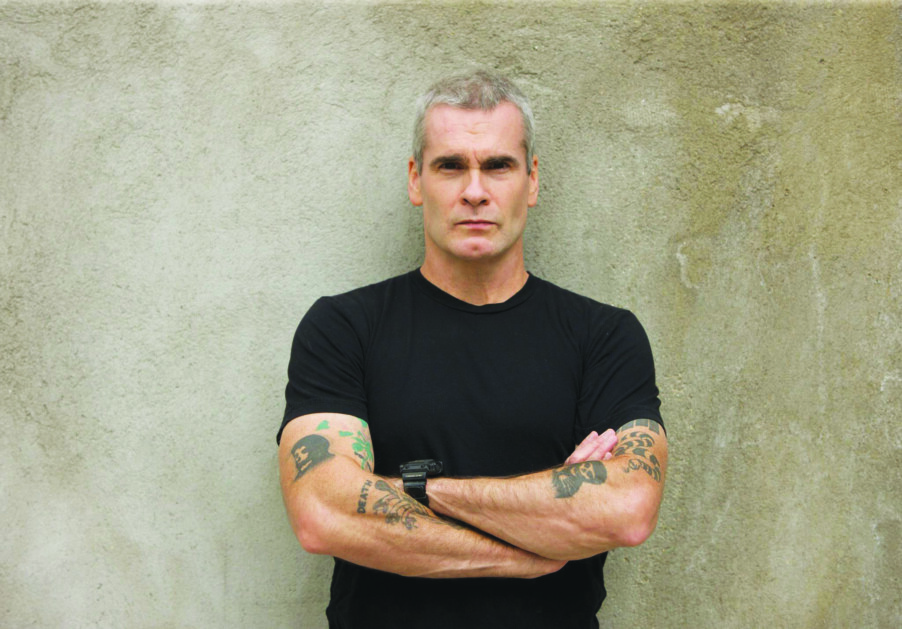
As a teenager Henry Rollins would show up with his pal Ian MacKaye on Sunday mornings at Yesterday & Today Records in Rockville, Maryland, ready to buy singles by The Buzzcocks, Stiff Little Fingers, The Adverts and other punk bands. Rollins always bought two to MacKaye’s one, having earned more money in his after-school job every week.
“Ian might do five hours of part-time minimum wage work, and I would do 20, just because I’m that guy,” Rollins said in a recent phone interview. “It was cool, the pain of having to do something dull and repetitive to hear seven minutes of freedom.”
His work ethic continues; Rollins often jokes about “putting the ‘punk’ in punctuality.” Though he’s stopped doing music, his schedule as a professional raconteur is packed and is surrounded by a myriad of other projects. During the pandemic, he wrote — his most recent book, Sic, came out in December — hosted an NPR radio show and did voice work for Netflix and Nickelodeon.
“It was challenging, but in a way, not a place I had not been to before,” he said. “Instead of getting all down in the mouth about it, I choose to approach all these things with a sense of humor and let’s see what happens…. I’d rather be the first in line for the new thing rather than dragging my feet.”
Rollins finally got back on the road. His current tour, dubbed Good to See You, is well into its second year. Usually his shows have a recent travel story as the centerpiece, but lockdown prevented that.
“Luckily or unluckily enough, crazy stuff happened in that time, where I was able to get interesting material,” he said, including a mentally unstable stalker from Finland, and the death of his divorced parents.
The show “is pretty well dialed into the front of my brain pan, but a lot of new stuff, as usually is the case, comes in,” Rollins continued. “It’s just basically a big stew pot, and as things develop, or people I know die, I can throw more things in…. By the end of the tour, the material is not necessarily nearly the same as what I started with.”
One constant, though, is an unwavering faith in America’s youth.
“A whole generation will eventually go to rest peacefully, and a younger one will come in its place,” he said. “Keep eating your Wheaties, you might live long enough to see someone like AOC become president…. I’ve never felt more confident or at least more ruggedly optimistic about the future and young people doing the right thing than I am right now.”
For one thing, the old order — “people like me, Joe Biden and Dick Cheney” — is rapidly fading away. “I’m not trying to hasten anyone’s demise, but physiological limits are what they are,” he said. “When the bug is dying, the most furious seconds are right before death. The legs are kicking frantically towards the sky; that’s the white power structure in the United States.”
Moreover, the futility of trying to change a red-hat-wearing senior citizen’s mind runs both ways.
“You’d be hard pressed to convince a 17-year-old who will be of voting age when the next presidential election rolls around that homophobia is a thing they want to accept and use in their lives,” he said. “Racism? There’s no such thing. One more George Floyd, and there’ll be some parts that will be very hard to put back together again. I don’t think the infrastructure is built for too much more turbulence.”
That said, Rollins is quick to point out that his show isn’t some scary TED talk.
“It’s my job to artfully connect some dots and make it kind of funny,” he said. “I make a point of not ending on a bummer, or if I do, offer five ways out of it. I learned that from, of all people, President Clinton. The Dimbleby speech is a great example; he goes, ‘climate change is bad, but here’s how you can start attacking it.’ Here’s the problem and five ways to innovate out of it.”
Hard times like the present require hard lessons, but Rollins tries to avoid pedantry.
“I used to go to this Quaker summer camp where they didn’t teach you not to steal, they just told you the story about when Timmy stole a quarter from his friend’s mom’s house and bought candy with it and the candy didn’t taste good,” he said. “I’d rather point at things rather than point them out.” He also has no stomach for reliving his punk rock youth.
Rollins leaves no doubt that he’ll keep sharing his own point of view, night after night, for as long as he’s able.
“I’m not one of those who takes to the streets, because the people who are going to meet you have their opinion. They’re going to knock you out; it’s not for me,” he said. Instead, he tries to find common ground, while acknowledging that it’s often elusive. “I think if you can try to get an understanding of where someone’s coming from, you cannot be so immobilized by someone else’s opinion.”
“My job is to sling hash every night,” he said, “but it has to be of the highest nutritional quotient I can generate. I mean well, and I want to do good. I’m at least on second base, and maybe I can steal third and get lucky. This sounds like, ‘Oh, he’s such a nice guy,’ but I’m not all that nice all the time. I’m mainly angry and awake.”
Henry Rollins When: Friday, Sept. 22, 8 p.m. Where: Bank of NH Stage, 16 S. Main St., Concord Tickets: ccanh.com