When Fody’s Tavern acquired a 40-by-60-foot tent in January 2020 for its inaugural winter festival in Derry, co-owner Maria Foden could not have imagined just how critical that investment would be. “I mean, we’ve probably used that thing a thousand times now,” Foden said. “It was just good fortune … because when everybody else was shut down because of Covid and we were trying to scramble to get outdoor seating ready and everything, we already had the tent. So we were very lucky, because we were able to have so many seats outside early on.” After skipping a year in 2021 due to pandemic concerns, the winter festival returned for a second year the following January. Now, a new similar event is building on its success — the first Fody’s Fall Festival is happening on Saturday, Oct. 22, and will include all kinds of locally sourced food and beer samples, Foden said, along with live music, a stein hoisting competition, children’s games, giveaways and more. “We’re essentially mirroring our winter festival, so it’s going to be literally 10 hours of just fun entertainment, [with] great music and food, all outdoors,” she said. “We’ll have all sorts of fall goodies … for people to buy, and samples, too.” From noon to 4 p.m., the festival will be open to attendees of all ages, with pony rides, face-painting and other activities and games available for the younger crowd. Then, beginning at 4 p.m., the event will transition into a 21+ outing. In addition to beers from several local breweries — Rockingham Brewing Co. of Derry; and Long Blue Cat Brewing Co. and Pipe Dream Brewing, both of Londonderry, to name a few — the Boston-based Ghost Tequila, a chief sponsor of the festival, will offer samples of its own. Food samples will be provided by some local vendors as well. Fabrizia Spirits of Salem, for instance, will have some of their own limoncello-infused desserts in addition to some of their liqueurs, while Theresa Zwart of 603 Charcuterie is providing several types of locally made cheeses and other products commonly found at her wildly popular charcuterie classes. Additionally, Foden said that the tavern will likely offer a special menu of seasonal options. “We’ll probably just do easy things that, when people are out there enjoying themselves, they can just grab a snack,” she said. “The whole restaurant will be open for full dinner and lunch service as well, so if people want to go in and sit down and get a meal during the festival, they can.” A full schedule of live local music is also planned, with each act broken out into two- to three-hour performing increments. From 6 to 8 p.m., there will be a stein hoisting competition, a tradition at many Oktoberfest celebrations that originated in Germany and is now a competitive sport. Participants are given a stein filled to the top with beer that they must hold by the handle out in front of their bodies with one hand for as long as possible. The person who can hold it for the longest time without breaking form or spilling their stein is declared the winner. Once night falls, Foden said, attendees can gather around a fire pit, and there will also be a special LED light dance show.
Fody’s Fall Festival When: Saturday, Oct. 22, noon to 10 p.m. (kids’ activities will be available from noon to 4 p.m.; after 4 p.m., the event is 21+ only) Where: Fody’s Tavern, 187½ Rockingham Road, Derry Cost: $10 general admission; additional charges apply for food, drinks and pony rides More info: Visit fodystavern.com or see “Fody’s Fall Festival” on Eventbrite to purchase tickets Event is held outdoors, so be sure to dress appropriately. A potential rain date is scheduled for Saturday, Oct. 29.
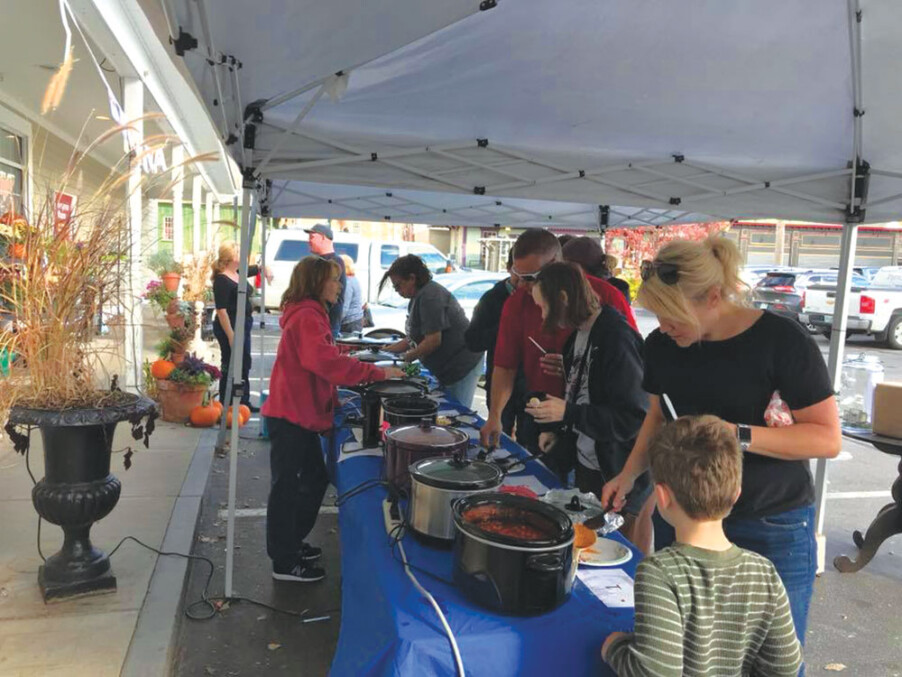
If you think you make the best bowl of chili around, here’s your chance to show it off — the Great Bowls of Fire Chili Cook-off, returning to Goffstown Ace Hardware on Saturday, Oct. 22, is a friendly competition and fundraiser that will feature a variety of homemade chilis available to taste from local community members and restaurateurs. Chili entrants are welcome to bring a slow cooker of their best batches by 10:30 a.m., with sampling beginning at 11 a.m. No pre-registration is required for entrants, nor for tasters who just want to come and vote. Prizes in the form of Goffstown Ace Hardware gift cards — $100 for first place, $75 for second place and $50 for third place — will be awarded to the winners. “We started doing it … just sort of casually, and now people are really excited about it, and so we keep doing it in October,” said event coordinator Pat Barss of Goffstown Ace Hardware, who herself took home second place in last year’s cook-off, her first year participating as an entrant. The cook-off was introduced in 2018 as one of several fundraising events sponsoring Goffstown Ace Hardware owner Karen Henderson’s annual running of the Boston Marathon. While they did have to skip a year in 2020 due to the pandemic, Barss said they experienced a great turnout at last year’s cook-off, with around 15 chilis for attendees to sample. “There are chili competitions all over … and I guess the word gets out,” she said. But part of the draw of this cook-off is that you’ll never know what’s in store to taste until the day of. In the past, Barss said the event has been known to feature all varieties of chili, from traditional beef chili to some white chilis, vegan or vegetarian chilis and even a venison chili. While any individual can enter, the cook-off in the past has garnered participation from local agencies like the Goffstown Fire Department, as well as The Village Trestle and some other restaurants in the area. All of the slow cookers are placed under tented tables out in front of the store. Each entrant is assigned a number that’s displayed in front of the chilis, enabling attendees to blind taste each one and vote for their favorite. Some people, Barss said, have even turned the cook-off into their own lunch outing. “We have little sampling cups … and once it’s gone, it’s gone,” she said. “If most people are there to sample early, then … some of the [slow cookers] are cleaned right out.” Vote counting will take place at the conclusion of the cook-off around 1 p.m. Donations will also be accepted during the event, with proceeds benefiting Boston Children’s Hospital.
Great Bowls of Fire Chili Cook-off When: Saturday, Oct. 22, 11 a.m. to 1 p.m. Where: Goffstown Ace Hardware, 5 Depot St., Goffstown Cost: Free to enter in your chili or attend as a taster; no pre-registration required Visit: goffstownhardware.com Entrants are asked to bring their chilis to Goffstown Ace Hardware by 10:30 a.m. First, second and third place prizes — Goffstown Ace Hardware gift cards of $100, $75 and $50 — will be awarded. Proceeds from gathered donations will benefit Boston Children’s Hospital.
Featured photo: Scene from the Great Bowls of Fire Chili Cook-off.
Great New England Fine Craft and Artisan Show is back for the seventh year
By Katelyn Sahagian ksahagian@hippopress.com
For the seventh year, the Great New England Fall Fine Craft and Artisan Show will bring juried and expert artisans and crafters to sell their creations. The event returns to the Hampshire Dome in Milford over two days on Saturday, Oct. 22, and Sunday, Oct. 23. While there are plenty of craft fairs to attend in New Hampshire, Jody Donohue, the creator and organizer, prefers to call what she does a show. She said that while craft and artisan fairs are a lot of fun, she tries to elevate what happens to a higher level. “The booths are just beautiful to look at,” Donohue said. The sellers decorate them, and she’ll provide linen tablecloths and other presentation assistance. “We keep it professional because that’s more of a reflection of the products offered.” When the event was started seven years ago, the Hampshire Dome had asked Donohue to run a small fair selling different products like Tupperware or Avon, and she reached out to a few crafters to see if there was any interest. Not long after, she was officially running events for the Hampshire Dome. Donohue said that the running joke from everyone was that she would fill the 94,000-square-foot sports arena to the brim with crafters. Though she doesn’t do that, Donohue said that between the 14 events she now runs, she’s received thousands of requests from crafters and artisans to be included in the show. The first year was a little different. “I hit pavement and went to 16 craft fairs,” Donohue said. “I interviewed all the artisans and ran my first fair as this fall show. It’s been taking off since then.” This year the fair will have 150 vendors spaced out across the Hampshire Dome. Within that selection of artisans will be a wide range of handmade goods. Some of the items are juried, meaning that they are submitted to see if they meet quality standards, while others are from longtime sellers at the show. In the past there have even been high school students selling things they excel at making. Donohue said the main reason she likes to be selective about who sells at her show is that she doesn’t want to flood the market. While she’ll have eight or nine artisans selling similar products, everything will be unique. Some of the wares being sold include handmade truffles, old-fashioned wooden toys carved from different wood, lanterns with stained glass panes, wines with edible shimmers, and nature-inspired watercolors. While people shop, they’ll be treated to live music from the stage at the center of the dome. There will be craft cocktails and wine and beer at a bar for shoppers of age to sip on while they browse, and food trucks outside selling meals beyond the specialty foods at the different stalls. Donohue said that, to her, the effort she puts into making this show is worth it when she sees people happy after selling out of their items. “These people work so hard to create those products,” Donohue said. “I’m so proud of them and I just love doing what I love doing.”
Great New England Fall Fine Craft and Artisan Show Where: Hampshire Dome, 34 Emerson Road, Milford When: Saturday, Oct. 22, from 10 a.m. to 4 p.m., and Sunday, Oct. 23, from 10 a.m. to 3 p.m. Price: $5 for entry, children 14 and younger are free Visit: gnecraftartisanshows.com
Halloween events for everyone from the littlest trick-or-treaters to the oldest Rocky Horror fans
A tale of two haunts
To scare or to be scared — that is the question
By Katelyn Sahagian ksahagian@hippopress.com
Nothing is more in line with spooky season fun than a haunted house. That being said, I’m a huge chicken. I usually opt to read the synopsis of horror movies on websites, and my hands shake so badly playing the Resident Evil video games that I’m forced to take turns with someone else. I can’t even watch American Horror Story with the lights out. While I’ve always known how much I hate getting scared, I recently learned how much I adore being the one that gets to do the scaring.
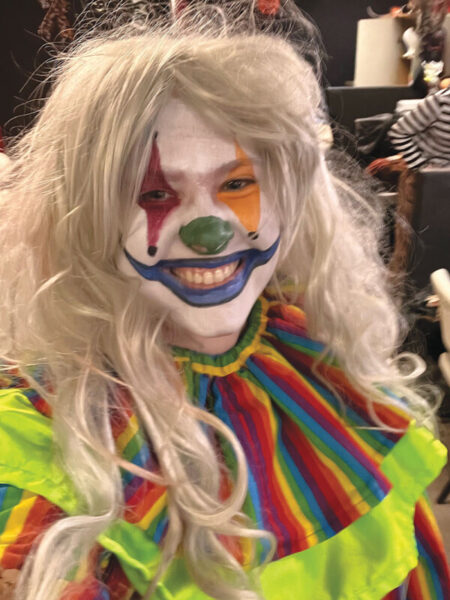
Earlier this year, I was invited to Spooky World presents Nightmare New England by the haunt’s owner, Michael Accomando, to get dressed up in costume and scare people. I decided to take him up on his offer. So, if anyone was at Spooky World on Monday, Oct. 10, and saw a clown with white hair roaming the midway, that was me. There was something about getting into costume and scaring people that was extremely tempting. Accomando said that he himself doesn’t dress up that often — not unless his son wants to — but it doesn’t change the fact that he adores hearing the stories the actors tell about their recent “spook” victories. “A look … is sometimes enough to freak people out,” Accomando said, adding that spooking people is therapeutic. “You take … all your aggression out on everyone else and they’re paying you to do that.” Accomando said he knew he wanted to bring a haunted attraction to Mel’s Funway Park in Litchfield as soon as he purchased it in 2007. He wanted something seasonal to keep people coming back for more fun, as opposed to just hosting a summertime crowd. He said that something about the land and layout of Mel’s was begging for some scary fun times. The woods and land stretch on far enough that Accomando thought it made sense to have some indoors and outside scares. In 2008, he saved a well-loved Massachusetts haunt that was closing for good and moved it across the border to New Hampshire, turning it into what is now Spooky World. At first, Accomando said, he thought it would be easy to do a haunt. He thought it was just throwing up a few buildings, putting together a light show and hiring some actors. Now he knows better. Accomando said that he and Chase DeNamur, Spooky World’s director of operations, will spend all year long coming up with new ideas, visiting haunted attractions across the country and going to national trade expos, like TransWorld’s Halloween & Attractions Show in St. Louis. “The next [haunt] we go to will be the day after the show ends,” DeNamur said. “The planning never stops.” While walking through haunts, Accomando said, the team will see what they might want to change or expand on. Layering, or putting many elements in a scene, is something Accomando said he is always thinking about. Whether this means adding a new animatronic doing something an actor can’t — like bashing their head into a wall over and over again — or getting a new prop or adding a gross smell, Accomando said that new layers are implemented every year. This year the hayride received a lot of attention, DeNamur said. He said that new lights and screens were added to parts of the haunt to further achieve a larger-than-life experience. In addition to the layering and the props, there are professional makeup artists and costume designers making sure that everyone looks terrifying. The three artists dress people up for the hayride, getting about a dozen actors ready in an hour — they do everything from muscle structures to spider faces, creepy clowns and “cannibal” hunters. After the attraction opened, it took no time at all for me to be taken over to the costume designers and put in a costume by one of the crew members. I was dressed up in a rainbow-striped onesie and matching ruff that I wore over my jeans and shirt. Brittany Champagne, a longtime scarer at Spooky World, painted my face with a white base, red and orange diamonds over my eyes, a green nose and an eerie blue smile. The makeup went on cold and wet, but very quickly. When it dried it felt like regular face paint, slightly sticky and tight on my skin. A white wig and small “blood”-covered horn completed my ensemble. While the wig itched and fell in my eyes and my fingers and toes burned due to the cold weather, the night was ripe for us to get scaring. Champagne told me performers end up walking so much that the night air soon no longer even feels cold to them anymore. Champagne and Jillian Labonte, another long-time Spooky World scarer dressed as a bloodthirsty escaped prisoner, showed me around the midway, the area outside the haunts where experienced actors get to improvise and sneak up on customers when they think they are safe. This whole feeling is a stark change from the Friday before, when I was a guest at Fright Kingdom in Nashua. The anticipation walking up to Fright Kingdom was like nothing else. Whereas at Spooky World, it was still Mel’s Funway Park on the outside, Fright Kingdom was a short walk through an empty parking lot, where an 18-wheeler was parked at a loading dock. Once I rounded that corner, I saw a giant, shadowy clown towering over the rest of the guests. Fright Kingdom owner and founder Tim Dunne greeted me outside by the loading truck bed, smiling widely as he watched people get scared by his creation. “It’s about the art of horror, Halloween and all things creepy,” Dunne said. “It’s a celebration of all of that.” Dunne, who grew up in Florida, was originally drawn to The Haunted Mansion ride at Disney World whenever he would take trips there. To this day, after making many different haunts, he said his favorite is still Bloodmare Manor, the Victorian haunted house that this year is filled with “cannibals” looking for their next meal. While Dunne had high hopes that I would walk through the whole interior, the second he said he was going to leave me to do the amusement alone — immediately after an actor scared me, I might add — I lost my cool. I promised that I would come back next year with my sister (who loves scary things) and maybe a group of people to push me through. Being scared isn’t my thing, but scaring others seems to be right up my alley.
Haunted houses, outdoor trails and more: The Dark Woods at Trombly Gardens 150 N. River Road, Milford, 465-DARK (3275), thedarkwoodsnh.com Hours: Friday, Oct. 21, Saturday, Oct. 22, Friday, Oct. 28, Saturday, Oct. 29, and Sunday, Oct. 30; the gate opens at 6:30 p.m. and the last ticket is sold at 10:30 p.m. A walkthrough without actors, called a “trauma-free experience,” is also available on Sunday, Oct. 23, with ticket times at 7 and 8 p.m. Cost: $23 for the traditional scares, $13 for the trauma-free experience
Fright Kingdom 12 Simon St., Nashua, 809-1173, frightkingdom.com Hours: Fridays, Saturdays and Sundays; 7 to 10 p.m. or 7 to 10:30 p.m., depending on the day of the week; see website for details. Haunts are available through Saturday, Nov. 5. Cost: $29 for a traditional haumt and in-the-dark haunt, $10 for hardly haunted
Haunted Overload DeMerritt Hill Farm, 20 Orchard Way, Lee, 868-2111, hauntedoverload.com Hours: Thursdays, Fridays, Saturdays and Sundays, now through Oct. 30, as well as on Monday, Oct. 31; most haunts start at 6:30 or 7 p.m. and last through 8 or 9 p.m., depending on the day of the week. Cost: Main event tickets are $31, “Fright Night Lite” tickets are $17.50, Blackout Night tickets on Halloween are $20, and tickets for a day walk are $11
The Salisbury Woods 19 Franklin Road, Salisbury, 496-2334, app.hauntpay.com/events/salisbury-woods Hours: Fridays and Saturdays throughout October; opens at 7 p.m. Cost: $15
Screeemfest 85 N. Policy St., Salem, 893-3506, canobie.com/screeemfest Hours: Fridays 9 to 11 p.m., Saturdays 3 to 11 p.m., and Sundays 1 to 9 p.m. Cost: Date-specific tickets range from $32 to $59 for adults, and from $32 to $35 for visitors under 4 feet tall and for seniors ages 60 and over. There are also add-ons available to purchase, like a “screeem express haunt line cut pass” for $25 or a “Monster B’Gone” light-up necklace that tells actors to avoid the wearer.
Spooky World Presents Nightmare New England 454 Charles Bancroft Hwy., Litchfield, 424-7999, nightmarenewengland.com Hours: Fridays and Saturdays, 7 to 11 p.m., and Sundays, 6:30 to 10 p.m. Cost: $49.51 general admission and $74.53 VIP admission
Little spookies
Events for kids that are more treat than trick
Compiled by Angie Sykeny asykeny@hippopress.com
The next two weekends are packed with happenings particularly geared toward kids.
• Derry’s Downtown Trick or Treat event will take place on Saturday, Oct. 22, beginning with a costume parade and contest at Hood Park (4 Rollins St.) at 11:30 a.m., followed by trick-or-treating at downtown businesses from noon to 3 p.m. Visit derrynh.org/parks-recreation or call 432-6136.
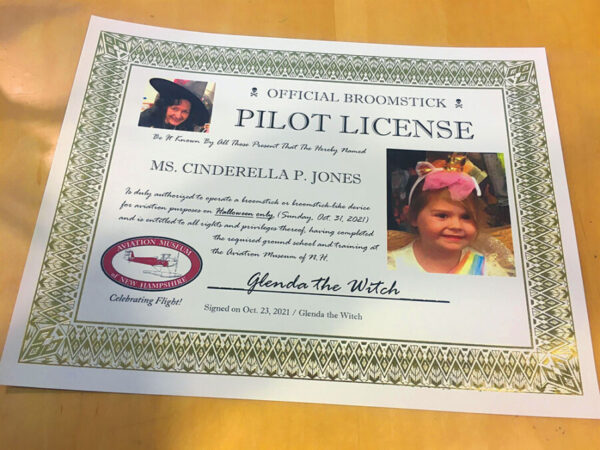
• Kids age 12 and under are invited to the Aviation Museum of New Hampshire (27 Navigator Road, Londonderry) on Saturday, Oct. 22, between 10 a.m. and 2 p.m., when they can meet the ghosts of aviation past, enjoy Halloween treats and receive their “Broomstick Pilot License.” The experience is free with admission to the museum; admission costs $10 for visitors age 13 and up. Visit aviationmuseumofnh.org or call 669-4820. • Franklin’s Halloween Extravaganza is on Saturday, Oct. 22, starting with a party at Bessie Rowell Community Center (12 Rowell Drive) from 2 to 3 p.m., followed by a costume parade heading into downtown at 3 p.m. and a trunk-or-treat at Marceau Park on Central Street from 3:15 to 5 p.m. Visit franklinnh.org. • The Educational Farm at Joppa Hill (174 Joppa Hill Road, Bedford) is having a family trick or treat on Saturday, Oct. 22, from noon to 4 p.m. Families are invited to wear their costumes and hunt for treats around the farm. The cost is $15 per family, and registration is required. Visit theeducationalfarm.org. • Visit the Chester Public Library (3 Chester St.) on Saturday, Oct. 22, at 11 a.m. for a Halloween costume party with music, games and sugar cookie decorating. Visit chesterlibrary.com or call 887-3404. • Island Pond Baptist Church (26 N. Salem Road, Hampstead) will host a Trunk or Treat event on Saturday, Oct. 22, from 1 to 3 p.m. in its parking lot, where there will be candy, games, costumes, animal balloons, a bouncy house slide and food trucks. Admission is free. Visit islandpondbc.com or call 329-5959. • Sanbornton will have a Halloween costume party for kids in grades 4 and under on Saturday, Oct. 22, from 2:30 to 4:30 p.m. in the Sanbornton Central School gym (16 Hunkins Pond Road). There will be food, games, crafts and surprises. The town will also have a trunk or treat in the school’s parking lot on Sunday, Oct. 30, from 2 to 4 p.m. Park at the Sanbornton Public Library (27 Meeting House Hill Road) and enjoy a spooky story walk and decorated path that leads to the event. Visit sanborntonnh.org. • Charmingfare Farm (774 High St., Candia) will offer its Children’s Trick-or-Treat experience on Saturdays, Oct. 22 and Oct. 29, and Sundays, Oct. 23 and Oct. 30, with start times available on the hour between 10 a.m. and 2 p.m. (a 3 p.m. start time is also available on Saturday, Oct. 22 only). In addition to trick-or-treating, families can meet a friendly witch, see wildlife exhibits and barnyard animals, take a horse-drawn wagon ride, decorate pumpkins, ride a pony and watch a juggling show. Tickets cost $22 per person — admission is free for children under age 2 — and must be purchased online in advance. Visit visitthefarm.com. • Children ages 3 through 6 are invited for some pumpkin fun in Merrimack, including a pumpkin science program on Monday, Oct. 24, at 10 a.m. and a pumpkin decorating and crafting program on Thursday, Oct. 27, at 4 p.m. Both events will take place at the Function Hall (116 Naticook Road) and each costs $15. Register online at merrimack.recdesk.com. • The Brickyard Scare in Epping’s Brickyard Square takes place on Thursday, Oct. 27, from 4 to 7 p.m. There will be trick-or-treating and other Halloween activities for kids of all ages. Visit brickyardsquarenh.com. • Salem’s annual town Halloween event and costume contest is on Friday, Oct. 28, from 5:30 to 8 p.m. at the Ingram Senior Center parking lot (1 Sally Sweet’s Way). Resident families with children ages 12 and under are invited to enjoy a trunk-or-treat, a haunted forest, pizza, games, music and dance performances, in addition to the costume contest. RSVP to dcole@salemnh.gov by Monday, Oct. 24. • Join the Nesmith Library (8 Fellows Road, Windham) for a Halloween party on Friday, Oct. 28, at 10:30 a.m. Kids of all ages and their caregivers are invited for a morning of stories, singing and dancing, a costume parade and trick-or-treating around the library. Admission is free, and there’s no registration required. Visit nesmithlibrary.org or call 432-7154. • Milford’s Trick or Treat on the Oval returns to the Oval Gazebo area on Friday, Oct. 28, from 3 to 4:30 p.m. Downtown businesses and nonprofits will hand out candy to trick-or-treaters as supplies last. Visit milfordrec.com. • The Bookery (844 Elm St., Manchester) will host a kids’ Halloween party on Friday, Oct. 28, featuring a storytime and interactive sing-along with illustrator Julieann Hartley at 5:30 p.m., followed by a book signing, costume parade and prizes starting at 6:15 p.m. Visit bookerymht.com. • The Spooktacular Downtown Manchester Fall Festival takes place on Friday, Oct. 28, from 3 to 6:30 p.m. Families can enjoy trick-or-treating at downtown businesses, a photo booth, games and activities, pumpkin carving, a coloring contest, a decoration station for a lighted display and more. Costumes are encouraged. Visit manchesternh.gov. • Hudson’s Best Trunk or Treat will take place Saturday, Oct. 29, from 10 a.m. to noon at the Hudson Mall (77 Derry Road in Hudson) with a costume contest, raffles, a haunted house and more, according to hudsonnhsbest.com, where you reserve a timeslot in advance. • The New Hampshire Fisher Cats will host a Trick-or-Treat at the Ballpark event at Northeast Delta Dental Stadium (1 Line Drive, Manchester) on Saturday, Oct. 29, from 1:30 to 3:30 p.m. All festivities are free and include a kids’ dance party, a costume contest and more. Visit nhfishercats.com or call 641-2005. • Exeter’s annual Halloween parade and costume contest will take place at Swasey Parkway (316 Water St., Exeter) on Saturday, Oct. 29, with costume judging at 10:30 a.m. and the parade at 11 a.m., followed by trick-or-treating downtown. Visit exeternh.gov. • Raymond’s Trunk or Treat returns to the Raymond Shopping Center (15 Freetown Road) on Saturday, Oct. 29, from 5 to 7:30 p.m. Vehicles will be adorned with Halloween decorations and stations filled with candy to trick-or-treat. Visit raymondareanews.com. • Join the Children’s Museum of New Hampshire (6 Washington St., Dover) for its annual Not So Spooky Halloween Spectacular on Saturday, Oct. 29, from 9 a.m. to noon or 1 to 4 p.m. The event features a costume parade, science experiments, take-home crafts, photos with props and a pumpkin scavenger hunt. All activities are included with the cost of admission to the museum, which is $12.50 for adults and children over age 1 and $10.50 for seniors age 65 and up. Register in advance online at childrens-museum.org. • Bow will have a trunk or treat in the Bow High School parking lot (55 Falcon Way) on Sunday, Oct. 30, from 2 to 3:30 p.m. Visit bownh.gov. • Merrimack Public Library (470 Daniel Webster Hwy., Merrimack) hosts a trunk or treat in the parking lot on Sunday, Oct. 30, from 1 to 3 p.m. There will be decorated vehicles with candy, crafts, stickers and more for trick-or-treaters. Park at the Town Hall across the street. Visit merrimacklibrary.org. • Local children’s musicians Mr. Aaron will host his annual Halloween Bash at the Bank of NH Stage (16 S. Main St., Concord) on Sunday, Oct. 30, at 11 a.m. The event features Halloween arts and crafts, a costume contest with prizes and a special spooky musical performance by the Mr. Aaron Band. General admission tickets cost $10 per person. Visit ccanh.com/show/mr-aarons-halloween-bash. • The Palace Teen Apprentice Company presents Zombie Prom: Atomic Edition on Wednesday, Nov. 2, and Thursday, Nov. 3, at 7 p.m., at the Palace Theatre (80 Hanover St., Manchester). Tickets cost $15 for adults and $12 for children. Visit palacetheatre.org.
Neighborhood trick-or-treat times:
Tuesday, Oct. 25 Antrim: 6 to 7 p.m. (Trunk or Treat in the parking lot of the James A. Tuttle Library, 45 Main St.) Friday, Oct. 28 Milford: 3 to 4:30 p.m. (Trick or Treat on the Milford Oval) Saturday, Oct. 29 Brookline: 2:30 to 4 p.m. (Trunk or Treat in the parking lot of Richard Maghakian Middle School, 22 Milford St.) Canterbury: 5:30 to 7:30 p.m. (Trick or Treat in the town center, Hackleboro Road) Greenland: 4 to 6 p.m. Washington: noon to 3 p.m. (Trunk or Treat on town common, Halfmoon Pond Road) Sunday, Oct. 30 Barrington: 5 to 7 p.m. Boscawen: 5 to 8 p.m. Bow: 2 to 3:30 p.m. (Bow Parks & Recreation Trunk or Treat event in the parking lot of Bow High School, 55 Falcon Way) Dover: 5 to 8 p.m. Durham: 5 to 7:30 p.m. Fremont: 5 to 8 p.m. Hampton Falls: 5 to 7 p.m. Kensington: 5 to 7 p.m. Lee: 5 to 7 p.m. New Castle: 5 to 7 p.m. New London: 5 to 8 p.m.
Newmarket: 5 to 7 p.m. Portsmouth: 4 to 7 p.m. Rochester: 4 to 7 p.m. Rollinsford: 5 to 7 p.m. Rye: 5 to 7 p.m. Seabrook: 5:30 to 7:30 p.m. Somersworth: 5:30 to 7:30 p.m. Strafford: 5 to 8 p.m. Monday, Oct. 31 Amherst: 6 to 8 p.m. Atkinson: 5:30 to 7:30 p.m. Bedford: 6 to 8 p.m. Belmont: 5 to 8 p.m. Bennington: 5 to 7 p.m. Brentwood: 6 to 8 p.m. Candia: 5 to 8 p.m. Chester: 6 to 8 p.m. Concord: 5 to 8 p.m. Danville: 6 to 8 p.m. Deerfield: 4 to 7 p.m. (on Sunday, Oct. 30, at 1 p.m., the town Parks & Rec department will host a tailgate trick-or-treat at the Deerfield Fairgrounds, 34 Stage Road) Deering: 5 to 8 p.m. Derry: 6 to 7:30 p.m. Dunbarton: 4 to 7 p.m. Epping: 5 to 7 p.m. Epsom: 5 to 8 p.m. Exeter: 4 to 7 p.m. Franklin: 4 to 7 p.m. Gilmanton: 5 to 8 p.m. Goffstown: 6 to 8 p.m. Hampstead: 6 to 8 p.m.
Henniker: 5:30 to 7:30 p.m. Hill: 6 to 8 p.m. Hillsborough: 5 to 8 p.m. Hollis: 6 to 8 p.m. Hooksett: 6 to 8 p.m. Hopkinton: 5 to 7 p.m. Jaffrey: 6 to 8 p.m. Kingston: 5 to 8 p.m. Litchfield: 6 to 8 p.m. Londonderry: 6 to 8 p.m. Manchester: 6 to 8 p.m. Merrimack: 6 to 8 p.m. Mont Vernon: 6 to 8 p.m. Moultonborough: 5 to 8 p.m. Nashua: 6 to 8 p.m. Newport: 5 to 8 p.m. Northwood: 5 to 7 p.m. Nottingham: 5 to 7 p.m. Pelham: 5 to 8 p.m. Pembroke: 5 to 7 p.m. Pittsfield: 5:30 to 7:30 p.m. Plaistow: 5 to 7 p.m. Raymond: 5 to 7 p.m. Rindge: 5 to 8 p.m. Rumney: 5 to 7 p.m. Salem: 6 to 8 p.m. Salisbury: 5 to 7:30 p.m. Sandown: 6 to 8 p.m. Stratham: 5 to 7:30 p.m. Sunapee: 5 to 7 p.m. Warner: 5 to 8 p.m. Weare: 6 to 8 p.m. Wilton: 6 to 8 p.m. Windham: 5 to 8 p.m. Wolfeboro: 5 to 7 p.m.
Halloween treats for everyone
Events for the spooky-season fan in all of us
Compiled by Amy Diaz Adiaz@hippopress.com
You don’t have to be a trick-or-treater to get excited about Halloween. Here are events for Halloween lovers of a variety of ages.
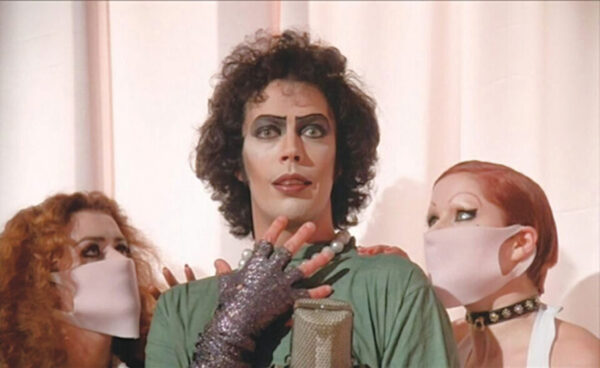
• The Concord Public Library (45 Green St. in Concord; concordpubliclibrary.net) is holding a Halloween Photo Scavenger Hunt throughout the month. Pick up a scorecard at the library and return the completed form for a sweet reward between Oct. 24 and Oct. 31, according to the website. • J&F Farms (124 Chester Road in Derry; jandffarmsnh.com) has a Halloween-themed corn maze through October. The maze is open Monday through Friday, 9 a.m. to 6 p.m., and Saturday and Sunday, 9 a.m. to 5 p.m. The cost is $8 per person. • Allenstown is holding its Halloween Lighting Contest now. Go to.allenstownnh.gov for a list of participating homes. Between now and Thursday, Oct. 27, at 5 p.m. vote on the website for the best decorations. At the Halloween Lighting awards ceremony on the Town Hall lawn on Saturday, Oct. 29, at 4 p.m., a first, second and third place winner will be announced, according to the website. • Root Up & More (Concord, rootupconcord.com) is holding Ghost Tour Stories in downtown Concord on Friday, Oct. 21; Saturday, Oct. 22, and Saturday, Oct. 29, with short tours at 6 p.m. (30 minutes) and hour-long tours at 8 p.m. The cost is $10 per person for the short tours, $20 for the long tours; see forms.gle/9SssGtuxdpAkCSpD7 to RSVP. • Before there was Andrew Lloyd Webber’s Phantom of the Opera there was Lon Chaney’s take on the classic horror character. Chaney starred in the 1925 silent big screen adaptation of The Phantom of the Opera, which will screen Friday, Oct. 21, at 7 p.m. at the Derry Public Library (64 East Broadway in Derry; 432-6140) featuring live musical accompaniment by Jeff Rapsis. The event is free and open to the public. • Chunky’s Cinema Pub (707 Huse Road, Manchester; 151 Coliseum Ave., Nashua; 150 Bridge St., Pelham, chunkys.com) will hold a “props allowed” screening of The Rocky Horror Picture Show (R, 1975) on Friday, Oct. 21, at 9 p.m. at Chunky’s in Manchester, Nashua and Pelham. Costumes are encouraged. Tickets are $10. • As advertised, the Pumpkin Smash at the Portsmouth Farmers Market (City Hall, 1 Junkins Ave. in Portsmouth) will offer you the opportunity to smash a pumpkin from 8 a.m. to noon on Saturday, Oct. 22, to raise money for the Portsmouth Halloween Parade. Pick your pumpkin to smash and use available mallets and other implements, according to portsmouthhalloweenparade.org. • Get Halloween Photos with your dogs on Saturday, Oct. 22, from 9 a.m. to noon at Trombly Gardens (150 N. River Road in Milford; tromblygardens.net). The event is held by Sato Heart Rescue of Milford, which is suggesting a minimum donation of $10, according to the rescue group’s Facebook page. • The Harvest Festival at Applecrest Farm (133 Exeter Road, Hampton Falls) is going on every Saturday and Sunday in October, from 11 a.m. to 5 p.m., with pick-your-own opportunities, a corn maze, live music, tractor rides, barnyard animals and more. Admission is free. On Sunday, Oct. 23, to see the Great Pumpkin Carve, where a master carver will take on an 800-pound jack-o’-lantern. The musical lineup for the upcoming weekends is Unsung Heroes on Saturday, Oct. 22; Bolt Hill Band on Sunday, Oct. 23, and Taylor River Band on Saturday, Oct. 29, according to applecrest.com. • Saturday, Oct. 22, from 6:30 to 9 p.m. is Flashlight Night Maze at the corn maze at Coppal House Farm (118 N. River Road in Lee; nhcornmaze.com). The cost is $12 for ages 5+ (buy tickets online). Daytime hours for the maze are Monday, Thursday and Fridays from noon to 5 p.m. and Saturdays and Sundays from 10 a.m. to 5 p.m. Admission for daytime costs $9 for 13+, $7 for kids ages 5 to 12 and seniors, military and college students (kids ages 4 and under get in for free). • The Deerfield Police Department will hold its 6th Annual Haunted Stables event — “a night of terror and fright” according to the Department’s Facebook post — on Saturday, Oct. 22, from 7 to 10 p.m. Free to all town residents, the event takes place at the horse barns, Gate B at the Deerfield Fairgrounds, the post said. Food will be available for purchase at the event. • Join To Share Brewing Co. (720 Union St., Manchester) for Pints and Pumpkins on Sunday, Oct. 23, from 1 to 3 p.m., featuring pumpkin painting with all the necessary supplies (and a pint of beer) for $12 per person. Visit tosharebrewing.com. • O’neil Cinemas at Brickyard Square (24 Calef Hwy. in Epping; 679-3529, oneilcinemas. com) has some spooky films on the schedule. Bram Stoker’s Dracula (R, 1992) will show on Sunday, Oct. 23, and Thursday, Oct. 27, at 7 p.m. On Saturday, Oct. 29, get a double feature with Creature from the Black Lagoon (1954) and Phantom of the Opera (1943), which starts at 1 p.m. • Director Jordan Peele’s Get Out (R, 2017) will finish up Red River Theatres’ (11 S. Main St. in Concord; 224-4600, redrivertheatres.org) October Scary Film series on Wednesday, Oct. 26, at 6 p.m. A discussion will follow the film. • The Cat and the Canary (1927), a silent horror film presented with live musical accompaniment by Jeff Rapsis, will screen on Wednesday, Oct. 26, at 7 p.m. at Rex Theatre (23 Amherst St. in Manchester; palacetheatre.org). Tickets cost $10. • Author Alice Hoffman will head to the Music Hall Lounge (131 Congress St. in Portsmouth; themusichall.org) on Wednesday, Oct. 26, at 7 p.m. to discuss her work including The Book of Magic, which is now in paperback and is the final installment in the Practical Magic Series. Tickets cost $35 and include a book. • The Witch of Weston Tower will haunt McIntyre Ski Area (50 Chalet Court in Manchester; mcintyreskiarea.com, 622-6159) Thursday, Oct. 27 through Sunday, Oct. 30, according to a press release. Take a scenic chairlift ride to the summit of McIntyre Ski Area and travel the treacherous trail to the Witch of Weston Tower to see “the most spooktacular views of Manchester,” the release said. On Saturday, the event will include a Trunk-Or-Treat, costume contest and more, the release said. The cost is $20 for ages 13 and up for lift ride and the witch ($10 for ages 6 to 12 and free for kids 5 and under), the release said. Bring money for food trucks, face and pumpkin painting, live music and more. • Manchester will hold its Spooktacular Downtown Manchester Fall Festival from 3 to 6:30 p.m. on Friday, Oct. 28, with downtown trick-or-treating, a photo booth, kids’ games and activities, limited pumpkins available for carving and more. See manchesternh.gov. • Intown Concord will cap off a month of Halloween-themed events with its Halloween Howl on Friday, Oct. 28, from 5:30 to 7:30 p.m. on Main Street in downtown Concord. The evening will feature community trick-or-treating along Main Street with a “Not so Scary” dance party with Nazzy, costume contests, games and family activities as well as a Trunk or Treat on North Main Street, according to intownconcord.org. There will also be a carved pumpkin contest at the Concord Co-op (drop off pumpkins Oct. 24 through Oct. 28, when pumpkins will be on display and people can vote), the website said. • Park Theatre (19 Main St. in Jaffrey; theparktheatre.org) has some spooky films on the schedule. On Friday, Oct. 28, at 7 p.m. catch the 1959 film House on Haunted Hill, starring Vincent Price. On Saturday, Oct. 29, at 2 p.m., Jeff Rapsis will play the organ to accompany a screening of Nosferatu (1922), the silent horror film from director F.W. Murnau starring Max Schreck. At 6:15 p.m. on Oct. 29, catch the 1988 horror comedy from director Tim Burton Beetlejuice (PG), which starts Winona Ryder, Geena Davis, Alec Baldwin and of course Michael Keaton. George A. Romero’s Night of the Living Dead will screen at 8:15 p.m. on Oct. 29. On Sunday, Oct. 30, the theater will screen director Ed Wood’s Plan 9 From Outer Space (1959) at 7 p.m. • The Rocky Horror Picture Show (R, 1975) will screen at the Red River Theatres (11 S. Main St. in Concord; 224-4600, redrivertheatres.org) on Friday, Oct. 28, and Saturday, Oct. 29, at 9:30 p.m. Costumes are encouraged at this 18+ event but props will be provided by the theater only. Tickets cost $20. • Goffstown Ace Hardware (5 Depot St. in Goffstown) will hold its Spooktacular Dog Costume Contest on Saturday, Oct. 29, from 9 a.m. to 5 p.m. with treats, toys and photo ops for dogs, according to a post on the store’s Facebook page. • Exeter will hold its Halloween Parade & Costume Contest followed by a downtown trick-or-treat on Saturday, Oct. 29, according to exeternh.gov. The costume contest in Swasey Parkway will be at 10:30 a.m., followed by the parade at 11 a.m. Downtown trick-or-treating will run from noon to 3 p.m., the website said. • Hocus Pocus on Hanover will take place at the Spotlight Room (96 Hanover St. in Manchester) on Saturday, Oct. 29, from 11 a.m. to 5 p.m. Admission costs $5 online, $6 at the door. Described as a “spiritual fair featuring readers, healers, artists and metaphysical goods,” the event is presented by Soul and Shadow Emporium (22 Hanover St. in Manchester). See shadowandsoulemporium.com. • The Wilton Main Street Association will hold its The Haunting of Wilton on Saturday, Oct. 29, with scary stories at the Wilton Library at 11 a.m., a costume parade down Main Street at noon, trick-or-treating with downtown merchants from 1 to 2 p.m., a murder mystery clue game with downtown merchants from 2 to 3 p.m. and a costume dance in Main Street park with a DJ, according to the schedule at visitwilton.com. Get the spooky weekend going with the haunted trail behind the Wilton police department, running Thursday, Oct. 27, and Friday, Oct. 28, from 6 to 9 p.m. Admission costs $5. • The Bizarre Bazaar at Prayers of Nature Studio (33 Howard St. in Wilton) will run Saturday, Oct. 29, from noon to 7 p.m. and will feature a “bootique” filled with art, gemstones, decor, artisan jewelry and apparel, according to a press release. The day will also feature divination readers and Laurie from the Eclectic Green Witchery. See prayersofnature.com. • Merrimack will hold its 30th annual Halloween Party in Wasserman Park on Saturday, Oct. 29, from noon to 3 p.m. The event will include games, crafts, face painting, food for sale, a scavenger hunt, a costume contest and more, according to merrimackparksandrec.org. • The Dover Zombie Walk & Evening Movie will be held Saturday, Oct. 29. The Zombie Walk will start at 2 p.m. and head down Central Avenue from the Dover Chamber of Commerce parking lot to the Rotary Arts Pavilion, according to Dover Main Street’s Facebook page. Wear zombie outfits or other Halloween costumes. Participants get a grab bag of goodies and the day will include games and a costume contest, the post said. The Woodman Institute Museum will also have a Victorian exhibit about mourning, according to the post. At 7:30 p.m. at the pavilion stage, Ghostbusters (PG, 1984) will screen; bring lawn chairs and blankets, the post said. • Beaver Brook Association (Maple Hill Farm, 117 Ridge Road in Hollis; beaverbrook.org) will hold its Enchanted Forest Family Halloween Event on Saturday, Oct. 29, with arrival times starting at 4 p.m. Tickets cost $12. The event will feature “stars, stories, songs and s’mores,” according to the website, which bills the event as “non-spooky fun” with a wildflower trail featuring pumpkins, learning about New England wildlife and more. • Nashua will hold its Halloween Boo Bash on Saturday, Oct. 29, from 4:30 to 7 p.m. at the Bandshell in Greeley Park. The evening will feature a haunted house, hay ride, bonfire and, at 6 p.m., a silly scary movie, according to the Nashua Parks and Recreation Department. See nashuanh.gov. • The Concord Parks & Recreation Department will hold an adult Halloween Dodgeball Tournament on Saturday, Oct. 29, from 6 to 9 p.m. at the Citywide Community Center. The cost to register is $50 per team of six players who must be dressed in themed or matching Halloween costumes, according to concordparksandrec.com where you can register. • The Amherst Orthodontics Trick or Trot 3K will be held on Sunday, Oct. 30, in Arms Park in Manchester. A kids’ Halloween Festival starts at 9:30 a.m. and Stonyfield Lil’ Pumpkin Fun Runs start at 10:30 a.m. The 3K begins at 11 a.m. Registration costs $25 in advance, $30 on race day for adults; $20 in advance, $25 on race day for ages 12 to 20; $15 in advance and on race day for kids ages 9 to 11 and $10 for kids 8 and under in the Lil Pumpkin Runs, according to millenniumrunning.com. • See Rocky Horror Show Live at the Seacoast Repertory Theatre (125 Bow St. in Portsmouth; seacoastrep.org) on the evening of Sunday, Oct. 30 (the show begins at 11:59 p.m.) and at 9 p.m. on Monday, Oct. 31, after the Halloween Parade. This is an encore performance of the theater’s summer production of Rocky Horror. Tickets cost $27 to $54. See the website for rules about what not to bring. • Portsmouth Halloween Parade steps off on Halloween, Monday, Oct. 31, at 7 p.m. with community members who want to march in costume gathering at Peirce Island by Prescott Park (no sign-up is required), according to portsmouthhalloweenparade.org, where you can find the rules of what to wear if you want to be in the parade and the route if you’d like to go watch.
Eat, drink and be scary
Costume parties, drink specials and more grown-up Halloween fun
By Matt Ingersoll mingersoll@hippopress.com
No kids? No problem — local restaurants, bars, breweries and other venues have you covered this Halloween season with costume contests, dance parties, comedy shows and other 21+ events. Know of a party not listed here? Let us know at music@hippopress.com.
• The fifth annual Boos and Booze event will kick off at Bonfire Country Bar (950 Elm St., Manchester) on Wednesday, Oct. 26, at 5:45 p.m. Costumes are encouraged during this run or walk cemetery tour from Bonfire to Valley Street Cemetery. The cost is $10 per person, and attendees 21 and up will receive a ticket for one complimentary brew. Visit bonfiremanch.com. • From Thursday, Oct. 27, through Sunday, Oct. 30, To Share Brewing Co. (720 Union St., Manchester) will host beer and Halloween candy pairings while supplies last. Visit tosharebrewing.com. • Enjoy an Undead Beat Night at Portsmouth Book & Bar (40 Pleasant St.) on Thursday, Oct. 27, from 7 to 9 p.m. In addition to an open mic of “poetic ramblings,” according to the Portsmouth Halloween Parade’s website, there will be raffle prizes, beverages, special costumes and more. Visit portsmouthhalloweenparade.org. • Join LaBelle Winery Derry (14 Route 111) for an adults-only Spooktacular Halloween party on Friday, Oct. 28 — the festivities begin at 7:30 p.m. and go until 11 p.m. inside the Vineyard Ballroom, featuring a local DJ, appetizers, snacks and desserts included for late-night munching. Costumes are encouraged (although not required), with prizes being awarded for the best Halloween costume. The bar will also be open all night, featuring themed cocktails available for purchase, as well as wine, beer and mixed drinks. Tickets are $35 per person (18+ attendees only). Visit labellewinery.com. • Eleganza Dance Co. will hold the second annual Halloween Spooktacular at XO Bistro (827 Elm St., Manchester) on Friday, Oct. 28, from 9 p.m. to 12:30 a.m. Drinks and food will be available for purchase, and there will be a photo booth set up for pictures. Costumes are encouraged, with a contest and the chance to win prizes. Salsa lessons, dancing and music will be featured, courtesy of DJ Jersey. The cover charge is $15. Visit eleganzadance.com. • Diz’s Cafe (860 Elm St., Manchester) will host its annual Nightmare on Elm Street crawl on Friday, Oct. 28, beginning at 5 p.m. with food and drink specials, prizes, a zombie parade downtown and more. Visit dizscafe.com. • Join Angel City Music Hall (179 Elm St., Manchester) for a Halloween show with Cat 5 on Friday, Oct. 28, at 9 p.m., followed by its second annual Halloween party on Saturday, Oct. 29, at 8 p.m., featuring a performance by DJ Sam Smoove. Visit angelcitymusichall.com. • Greg & The Morning Buzz presents a Brews & Boos Halloween party at The Hill Bar & Grille (50 Chalet Way, Manchester) on Saturday, Oct. 29, from 8 to 11 p.m. Costumes are encouraged at this 21+ event, which will also feature specialty appetizers and brews. Tickets are $25 per person, granting you entry into a costume contest. Visit mcintyreskiarea.com. • An Interactive Nightlife Halloween Party will take place on Saturday, Oct. 29, at the Bank of NH Stage (16 S. Main St., Concord), from 8 p.m. to midnight. The night will include a costume contest, aerialist, drag performers, karaoke with DJ George Cox, burlesque performances and more, according to the website. Tickets are $39.75 general admission, $68.75 for VIP in advance; $50 general admission and $90 VIP at the door, plus fees. Visit ccanh.com. • The Shaskeen Pub and Restaurant (909 Elm St., Manchester) holds its 16th annual Halloween Bash on Saturday, Oct. 29, from 9:30 p.m. to 12:30 a.m., featuring a night of costumes, drinks, dancing and live music from DJ Myth. Prizes will be awarded for the best costumes. Visit theshaskeenpub.com. • Join The Farm Bar & Grille (1181 Elm St., Manchester) for its annual Get Haunted Costume Party on Saturday, Oct. 29, at 9 p.m., featuring costume contests, giveaways, live entertainment and half price drink specials. Visit farmbargrille.com. • Join Chunky’s Cinema Pub in Manchester (707 Huse Road) for its annual live “Ghouling” Pianos event on Saturday, Oct. 29, at 9 p.m. A special Halloween edition of Dueling Pianos, the event features the professional piano players positioned on stage in front of the theater and decked out in costume. Tickets are $20 per person. Visit chunkys.com. • See a live witches dance on Saturday, Oct. 29, at 3 p.m. outside The Hop Knot (1000 Elm St., Manchester) which will also offer drink specials. Visit hocuspocusonhanover.com. • Pipe Dream Brewing (49 Harvey Road, Londonderry) will hold a Halloween party on Saturday, Oct. 29, from 6 to 10 p.m., featuring a live performance from DJ Ache, as well as a full food menu and more than 28 taps of beer available. Costumes are encouraged. Visit pipedreambrewingnh.com. • Averill House Vineyard (21 Averill Road, Brookline) is hosting a Spooktacular Halloween Comedy Show on Saturday, Oct. 29, from 5:30 to 7 p.m., to be held outside, with headliner comedian Bill Simas and a few other guest comedians. The wine bar will be open with more than 15 wines to choose from, and charcuterie boards and wine cream ice cream will be available for purchase. Tickets are $5 per person (event will be held rain or shine). Visit averillhousevineyard.com. • Join The Chop Shop Pub (920 Lafayette Road, Seabrook) for a Halloween Bash on Saturday, Oct. 29, at 6:30 p.m., featuring costumed contests, cash prizes, spooky drink specials and a live performance by Casual Gravity. Tickets are $25. Visit chopshoppub.com. • Fody’s Tavern in Derry (187½ Rockingham Road) has a Halloween party on the schedule for Saturday, Oct. 29, at 8 p.m., featuring music by Brian House. Visit fodystavern.com. • Saddle Up Saloon (92 Route 125, Kingston) will hold a Halloween party on Saturday, Oct. 29, at 8 p.m., featuring costume contests, spooky drink specials, giveaways and a live performance from Bite the Bullet. Visit saddleupsaloonnh.com. • Enjoy a Halloween party and costume fest at Area 23 (254 N. State St., Concord) on Saturday, Oct. 29, from 8 to 11 p.m., with music from the Dalton Gang. Visit thearea23.com. • Tandy’s Pub & Grille (1 Eagle Square, Concord) will hold its 13th annual Halloween Bash on Saturday, Oct. 29, at 9 p.m., with cash prizes awarded to the three best costumes, along with Jack Daniel’s and Deep Eddy drink specials, and music from DJ Lance. Visit tandyspub.com. • Makris Lobster & Steak House (354 Sheep Davis Road, Concord) is planning a Lobster Mash Halloween party on Saturday, Oct. 29, from 7 to 11 p.m., featuring a costume contest with first, second and third place winners, a 50/50 raffle benefiting the Make-A-Wish Foundation, a Sam Adams Oktoberfest stein hoisting competition, giveaways, food and drink specials, live music and more. Visit eatalobster.com. • Red’s Kitchen + Tavern (530 Lafayette Road, Seabrook) will hold a Halloween party on Saturday, Oct. 29, featuring a spooky night of live music, food and drink specials, dancing and prizes awarded for the best costumes. Visit redskitchenandtavern.com. • Join The Wild Rover Pub (21 Kosciuszko St., Manchester) for its annual Halloween costume party on Saturday, Oct. 29, at 10 p.m. Cash prizes will be awarded for the best costumes. Visit wildroverpub.com. • Don’t miss the annual Halloween Monster Bash happening at Derryfield Country Club (625 Mammoth Road, Manchester) on Saturday, Oct. 29, at 8 p.m. Cash prizes will be awarded for the best costumes, and there will also be live performances from Mugsy and D-Comp. Tickets are $25 per person. See “2022 Halloween Monster Bash” on Eventbrite to purchase them. • Block Party Social (51 Zapora Drive, Hooksett) is holding a Sam Adams Halloween Bash on Saturday, Oct. 29, at 8 p.m., featuring an adult costume contest with prizes awarded for the best costumes, along with sampling, drink specials, prizes and giveaways. Visit blockpartysocial.com. • Wally’s (144 Ashworth Ave., Hampton) hosts its 13th annual Halloween Bash on Saturday, Oct. 29, at 8 p.m., featuring national recording and touring act Prospect Hill. Prizes will be awarded for the best costume. Tickets are $20 in advance and $25 at the door. Visit wallysnh.com. • Join Feathered Friend Brewing Co. (231 S. Main St., Concord) for a Halloween party on Saturday, Oct. 29, which will include live music with Andrew North & The Rangers from 5 to 8 p.m. Visit featheredfriendbrewing.com. • It will be time for Halloween Scaryoke at AJ’s Sports Bar & Grill (11 Tracy Lane, Hudson) on Saturday, Oct. 29, at 8 p.m. Prizes will be awarded for the best and scariest costumes, and there will be Ice Pik vodka and Rocky Peak whiskey tastings. Visit ajs-sportsbar.com. • Join 603 Bar & Grill (1087 Elm St., Manchester) for a Hip-Hop Halloween Bash on Sunday, Oct. 30, at 8 p.m., which will include a full lineup of live local hip-hop performances, along with prizes awarded for the best costumes. Tickets are $10 in advance online and $15 at the door. See “Hip Hop Halloween Bash” on Eventbrite or visit 603barandgrill.com. • Catch a special Halloween drag brunch and costume contest at The Big House Nightclub (322 Lakeside Ave., Laconia) on Sunday, Oct. 30, at 9:30 a.m. Tickets start at $40 general admission and are available at the door or via Eventbrite. Visit bighousenightclub.com. • There will be a Halloween brewery crawl in Derry on Sunday, Oct. 30, kicking off at Daydreaming Brewing Co. (1½ E. Broadway) at noon before going to Kelsen Brewing Co., From the Barrel Brewing Co. and Rockingham Brewing Co. Costumes are encouraged. Visit daydreaming.beer.
Biofabrication celebrated The Manchester NextGen Resiliency Council will hold a Build Back Better Community Celebration at Arms Park in Manchester on Friday, Oct. 21, from noon to 2 p.m., to celebrate the group’s reception of the Build Back Better Regional Challenge grant to support its Southern New Hampshire BioFabrication Cluster proposal. According to a press release, the Council — a partnership between the City of Manchester, Advanced Regenerative Manufacturing Institute, the University of New Hampshire Manchester, Southern New Hampshire University, Southern New Hampshire Planning Commission, Manchester Transit Authority and Manchester-Boston Regional Airport — was selected from more than 500 applicants and 60 finalists to receive the award, which amounts to nearly $44 million in federal funds from the Economic Development Administration. The proposal aims to make Manchester the epicenter of the biofabrication industry, which would create an estimated 7,000 direct jobs and approximately 37,250 total jobs across southern New Hampshire over the next seven years, including a significant number of jobs for non-degreed, biofabrication and quality technicians. The celebration is free and open to the public, and Manchester Mayor Joyce Craig will be in attendance, according to her public schedule.
Adult drug court U.S. Sen. Jeanne Shaheen, joined by Nashua Mayor Jim Donchess, Chief Justice Tina Nadeau, Justice Jacalyn Colburn and representatives from the New England Association of Recovery Court Professionals and the Drug Court Steering Committee, attended the Hillsborough County South Adult Drug Court Graduation Ceremony on Oct. 13, honoring 11 graduates who completed the program. According to a press release, the program — established in 2014 as a multidisciplinary effort between the criminal justice system, local police departments and Greater Nashua Mental Health — provides intensive treatment and community-based supervision to individuals in the justice system who are dealing with severe substance use disorder and are deemed to be at high risk of engaging in repeat criminal activity, aiming to reduce recidivism and promote long-term recovery. “Today, we see how our communities have turned a corner through the remarkable progress reflected in the success of today’s graduates,” Shaheen said in the release. “Drug courts like the one here in Nashua are saving lives by focusing on treatment, recovery and rehabilitation. I’m optimistic that this approach will help end the substance use disorder crisis and move our communities toward a brighter, safer and healthier future for New Hampshire families.”
EV charging The first of multiple grant contracts to establish publicly accessible electric vehicle charging infrastructure to promote and enable electric vehicle travel to and within New Hampshire will come before the Executive Council next week. According to a press release, the contracts total approximately $4.6 million in grant awards, with funds from a 2017 Volkswagen legal settlement, which have been held in an Environmental Mitigation Trust reserved for environmental mitigation projects. The first contract will establish electric vehicle charging infrastructure at the Errol General Store in Errol, serving the New Hampshire Route 16 corridor. “In developing our state’s plan for the use of these trust funds, I authorized the maximum allowed funding to be utilized to jump-start the installation of public charging sites statewide and help create a robust, cost-effective access to this clean energy source,” Gov. Chris Sununu said in the release. “Almost every vehicle manufacturer today offers EV options, and it is important for New Hampshire to be a leader in supporting these vehicles while providing economic stimulus to our businesses through these public-private partnerships.” The New Hampshire Department of Environmental Services has proposed electric vehicle charging infrastructure at 35 locations across 25 New Hampshire towns and cities. Contracts for additional charging sites will come before the Executive Council over the coming months, according to the release.
Violence prevention The Department of Justice has awarded $88,528 in grants to the Project Safe Neighborhoods Program in the District of New Hampshire to support community efforts to address gun crime and violence. According to a press release, Project Safe Neighborhoods is an evidence-based, community-oriented response to gun crime that is a key component of the Justice Department’s Comprehensive Strategy for Reducing Violent Crime drawn up in May 2021. Its tenants include fostering trust and legitimacy in communities, supporting community-based violence prevention organizations and prioritizing strategic enforcement policies, with a mission focused more on reducing the amount of violent crime that occurs than on increasing the number of arrests and prosecutions for violent crime. “Today’s grant award will hopefully be a step toward preventing violence from occurring in the future,” U.S. Attorney Jane E. Young said in the release. “It is only by a dedicated and sustained collaboration between law enforcement and community partners that we can truly address gun violence that strikes every corner of our communities.”
The City of Manchester Fire Department celebrated the groundbreaking of its new Station 9 at 575 Calef Road on Oct. 17. The 60-plus-year-old station as it currently stands has been officially closed, according to a press release, and will be replaced with an updated, modernized station that can better meet the city’s needs. In the interim, Station 9 personnel will be housed at Station 7, at 679 Somerville St.
U.S. Sen. Jeanne Shaheen, who serves as co-chair of the Senate Navy Caucus, was awarded the John Paul Jones Award for Leadership in Military or Civic Affairs at the New Hampshire Navy Ball hosted by the U.S. Navy League and the Navy veterans-focused nonprofit Swim With A Mission at the Wentworth by the Sea Hotel in New Castle on Oct. 13.
The Greater Nashua Area CROP Hunger Walk will take place on Sunday, Oct. 30, beginning and ending at Temple Beth Abraham, located at 4 Raymond St. in Nashua. Now in its 38th year, the walk has raised more than $1 million to fight hunger and poverty locally and around the world and to provide refugee and disaster relief, according to a press release. Registration is open the day of the event from noon to 1 p.m. Opening ceremonies start at 1 p.m., followed by the walk, stepping off at 1:30 p.m. Visit events.crophungerwalk.org/2022/event/nashuanh.
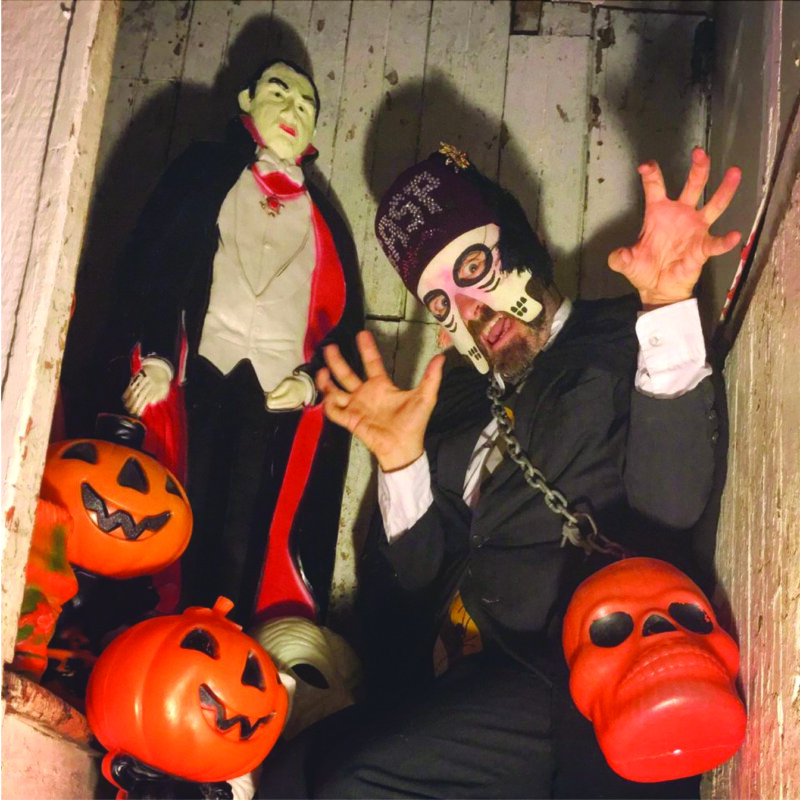
In October 2001, inspired by being a moaning cowboy ghost in a haunted house, Dan Blakeslee wrote his own Halloween song and performed it a few nights later at the Press Room in Portsmouth. The moment he finished, Blakeslee apologized and promised the crowd he’d never attempt anything like it again.
The audience, however, had other ideas.
“I wrote one song, and I didn’t like it, but everyone there said, ‘man, you gotta do more of this stuff,’” Blakeslee recalled in a recent phone interview. The next year, he began a tradition that’s lasted for two decades, appearing as his spooky alter ego Doctor Gasp, with his band The Eeks — Mike Effenberger on keys, bassist Nick Phaneuf and drummer Jim Rudolf.
Blakeslee even managed to perform 10 frosty shows outdoors during the pandemic year.
“I love doing this stuff so much, it really feeds my soul,” he said. “It’s my favorite holiday, since I was a kid.”
Eighteen dates are booked for the 20th anniversary, including the first in Manchester since an early 2010s appearance at Jewell & the Beanstalk, a now-shuttered restaurant. The free show on Oct. 13 at the Currier Museum is part of the weekly Art After Work series. It will feature selections from the two Doctor Gasp & The Eeks albums, 2003’s Vampire Fish and 2013’s Vampire Fish For Two.
Setlists always include Blakeslee’s bang-up version of Bobby Boris Pickett’s “Monster Mash” and “Witchtrot Road,” the song that started it all in 2001. Always a highlight, “Teeth of Candycorn” should be a seasonal standard. It’s a hurdy gurdy howler with a haunting and addictive chorus, based on a real person.
“I wrote that about a friend of mine who I call the King of Halloween,” Blakeslee said. “Go into his place, and it’s literally Halloween year-round in there. It’s crazy, it’s awesome. Early on, when we were first starting to get to know each other, he told me he was born with teeth of candy corn. I’m like, ‘OK, I have got to write a song about this.’”
In 2012 the band mapped out a tour itinerary in the shape of a pumpkin, an effort that found him playing in a few strange places simply to connect the dots. This time around, “it looks more like a scribble” according to Blakeslee. But he did do something special for the two-decade landmark, illustrating a novella written by friend and fellow musician Brian Serven called Lore of the Jack-O’-Lantern.
Blakeslee’s reputation as an artist almost overshadows his music. He’s drawn posters for Newport Folk Festival, the iconic Hearts For Boston riff on Zakim Bridge, created in response to the Marathon Bombing in 2013, and Alchemist Brewing’s Heady Topper label, voted the industry’s best in a craft beer poll.
His pen and ink talents were a natural for the task, but it took a while to happen.
“Brian asked me if I would illustrate the book, and at the time things were just too hectic,” he recalled. “I was going on my first cross-country tour and there was a lot of activity that year, so he kind of put the book on the back burner. In 2021, he asked again if I could do it, so I carved out a good chunk of this year to make it happen, and I’m so glad I did. The book is so beautifully written, it’s super intriguing and it’s a great read for all ages.”
A first printing sold out at a Sept. 30 book release show, but Blakeslee held out hope that there may be a few copies at his Currier appearance. Barring that, the singer always has plenty of his own works of art on the merch table — lithographs, posters and other collectibles.
The tour will again end on Halloween night at the Press Room, where Blakeslee will share the stage with Soggy Po’ Boys front man Stu Dias’s band Cirque Desolate. As winter approaches, the Doctor Gasp persona will give way to Christmas — Blakeslee released an album in 2020 to honor his second-favorite holiday.
He’d like to blend both into a single show one day, sometime during the sweet spot between pumpkin spice latte and mistletoe seasons. “I did that during the pandemic, set up my kitchen with Halloween décor and then turned the camera to my living room, which is decorated completely for Christmas. We changed costumes and everything; it was pretty wild.”
Doctor Gasp’s 20th Annual Halloween Special When: Thursday, Oct. 13, 5:30 p.m. Where: Currier Museum of Art, 150 Ash St., Manchester Tickets: doctorgasp.com and currier.org