Summer of Music
A look at the bands coming to big venues this concert season
There are two kinds of music fans in the world: those who’ve been fooled by Google when searching for concert tickets, and everyone who’s lying about being duped. The search engine’s algorithm groups third-party resellers at the top of search results, with at least one Page Down keystroke needed to get an official venue link.
Even then, there’s no guarantee of finding face value ducats. At BankNH Pavilion in Gilford, now a LiveNation property, “Verified Resale” tickets are built into the site, and for some summer shows, they’re the only seats available. Ticketmaster double dips — after collecting a face value service charge, it pockets a piece of every resale transaction.
An official site scalping its own tickets — what can a poor fan do? It’s the sort of thing that drives Scott Hayward, owner of Tupelo Music Hall, absolutely bonkers. He’s written many emails warning patrons of his Derry listening room about the dangers of going anywhere but tupelomusichall.com for tickets.
“Tupelo Music Hall does not release tickets to third-party ticketing vendors,” a note on the website reads, “and does not guarantee the validity or authenticity of any website, person, or business that claims to be selling tickets to our shows. In other words, if you are not buying your tickets directly from us, you could be purchasing tickets that are not valid.”
Despite such clear guidelines, fans still go to sketchy sites, then blame Tupelo when things go awry. Customers call to say tickets never arrived, only to learn a reference number was bogus and seats weren’t purchased from Tupelo. Fans fork over $100 for $30 seats and “get super pissed” when they realize the venue has nothing to do with the price they paid.
The core injury for an acoustically perfect paradise with the words “It’s All About the Music” written in giant letters above the snack bar is the idea of fans priced out of shows by performers they love, and those fans then blaming the venue for inflated costs it never set and doesn’t profit from.
Even someone as savvy as Hayward can fall for the Google ruse.
“We decided to go to a boat show in Rhode Island, and I almost bought tickets for three times the cost,” he said by phone recently. “I really thought I was on the event website, and I’m in the ticketing business! It’s really difficult sometimes.”
Accordingly, the following list of summer concerts is grouped by venue, and ticket buyers should always go to the website listed to begin the process. For Ticketmaster shows, options exist to filter out resale seats, but don’t be surprised if clicking on that box results in a blank page. Also, though infrequently, third-party seats are sometimes sold below face value.
With that in mind, enjoy the shows!
BankNH Pavilion
72 Meadowbrook Lane, Gilford, banknhpavilion.com
The former Meadowbrook is New Hampshire’s al fresco go-to venue for arena-sized acts. It’s now run by Live Nation, with food and merch sold in a carnival-themed midway, tailgate-ready parking lots, and plenty of rustic charm.
Hot Pick: Dierks Bentley, Thursday, July 9 – When he was starting out, Bentley opened for Brad Paisley at Meadowbrook. Now he’s atop the bill, joined by bluegrass legend Ricky Skaggs and newcomer Kaitlin Butts. The show spans country’s spectrum, from Skaggs’s well-honed mastery to the headliner’s road-tested arena sound and Butts’s emerging songwriting voice — a crowd-pleasing gathering that builds toward a rousing finish.
Upcoming Shows:
- Hardy with Muscadine Bloodline – Thursday, June 25
- TobyMac with Zach Williams – Saturday, June 27
- Paul Simon – Tuesday, June 30
- Lil Wayne with 2 Chainz – Friday, July 3
- The Guess Who with Don Felder – Wednesday, July 8
- Dierks Bentley with Ricky Skaggs & Kaitlin Butts – Thursday, July 9
- Sarah McLachlan with Allison Russell – Sunday, July 12
- Dave Matthews Band (also 7/15) – Tuesday, July 14
- Motionless In White with Lorna Shore & Fit for a King – Thursday, July 16
- Thomas Rhett with Kashus Culpepper – Friday, July 17
- Bob Dylan – Saturday, July 18
- Train with Barenaked Ladies & Matt Nathanson – Monday, July 20
- “Weird Al” Yankovic with Puddles Pity Party – Wednesday, July 22
- Mötley Crüe with Tesla & Extreme – Friday, July 24
- Chicago with Styx – Saturday, July 25
- Five Finger Death Punch with Cody Jinks – Tuesday, July 28
- Ella Langley with Kameron Marlowe – Thursday, July 30
- Hank Williams Jr. with Joe Nichols – Friday, July 31
- Joe Bonamassa with Gov’t Mule – Saturday, Aug. 1
- Jimmy Buffett’s Coral Reefer Band – Friday, Aug. 7
- Koe Wetzel with Shane Smith and the Saints – Friday, Aug. 14
- Mumford & Sons with Medium Build – Saturday, Aug. 15
- Billy Idol – Tuesday, Aug. 18
- The Fray with Dashboard Confessional & Colony House – Thursday, Aug. 20
- Zach Top with Marcus King – Friday, Aug. 28
- Parker McCollum with Vincent Mason – Friday, Sept. 4
- ZZ Top with George Thorogood & The Destroyers – Saturday, Sept. 5
- Tedeschi Trucks Band with Lukas Nelson – Sunday, Sept. 6
BNH Stage
16 S. Main St., Concord, ccanh.com
The sleek multipurpose listening room, part of Concord’s Capitol Center for the Arts, offers great sound to enjoy eclectic performers, local favorites, a wide array of tribute acts, and up and coming performers.
Hot Pick: Opiate: The Tool Tribute, Saturday, Aug. 8 – This Rhode Island-based tribute act is known for recreating Tool’s intricate, immersive sound and elaborate musicianship in faithful detail. Tool’s meticulous songscapes aren’t easy to replicate live, making this band a worthy stand-in for fans who’ve never caught the notoriously infrequent touring originals, with an intense show calibrated to match Tool’s hypnotic concerts.
Upcoming Shows:
- Martin Toe, B. Snair & Vincent Tesoro, Marxo Phenix – Saturday, June 27
- Stewart Copeland: Have I Said Too Much? – Saturday, July 11
- April Cushman & Shelly Fairchild (Cantin Room) – Thursday, July 16
- Kevin Horan and The Whole Loaf – Thursday, July 30
- Opiate: The Tool Tribute – Saturday, Aug. 8
- Dueling Pianos – Friday, Aug. 14
- Slipbizkit: A Tribute to Nu Metal – Saturday, Aug. 15
- The Hot Sardines – Thursday, Aug. 27
- Tom DiMenna – Thursday, Sept. 10
- Pete Yorn: 25th Anniversary of musicforthemorningafter – Saturday, Sept. 12
- Also this summer, at Chubb Theatre 44 S. Main St., Concord, ccanh.com, catch Home Free on Sunday, Aug. 16
Casino Ballroom
169 Ocean Blvd., Hampton Beach, casinoballroom.com
Perched on Hampton Beach’s main drag, this spot pairs live music with an oceanfront atmosphere. Originally built in 1927, the historic 2,200-seat venue will be torn down and rebuilt after its centennial season next year.
Hot Pick: Badfish, Friday, July 3 – The regular Fourth of July weekend beach stop for this Sublime tribute act, which also has its own original music, with reggae-rock, ska-tinged energy evoking the Long Beach stalwarts. The band built a solid following faithfully recreating Sublime’s loose, sun-soaked sound, later branching out to its own songs. Their return has become one of the Ballroom’s most anticipated annual concerts.
Upcoming Shows:
- Little River Band – Friday, June 26
- Voyage – Celebrating the Music of Journey – Saturday, June 27
- Badfish – A Tribute to Sublime – Friday, July 3
- Stephen Marley – Friday, July 10
- Gimme Gimme Disco – Saturday, July 11
- The Elovaters with John Brown’s Body – Thursday, July 16
- The Elovaters with Surfer Girl – Friday, July 17
- Aaron Lewis & The Stateliners – Saturday, July 18
- Kip Moore – Thursday, July 23
- The Fab Four – Ultimate Beatles Tribute – Friday, July 24
- Lauren Alaina – Sunday, July 26
- Dave Matthews Tribute Band w/ Joshua Tree – Friday, July 31
- 12/OC – Saturday, Aug. 1
- Happy Together Tour – Sunday, Aug. 2
- Brit Floyd (also 8/5) – Tuesday, Aug. 4
- Pure Prairie League w/ Atlanta Rhythm Section, Orleans & Firefall – Thursday, Aug. 6
- The String Cheese Incident (also 8/8) – Friday, Aug. 7
- Brett Young – Sunday, Aug. 9
- KC & The Sunshine Band – Thursday, Aug. 13
- Carly Pearce – Friday, Aug. 14
- Face 2 Face – Elton John/Billy Joel Tribute – Saturday, Aug. 15
- Yacht Rock Revue (also 8/20) – Wednesday, Aug. 19
- Get The Led Out – Friday, Aug. 21
- Dirty Deeds AC/DC Experience – Saturday, Aug. 22
- Air Supply – Wednesday, Aug. 26
- Sevendust / Theory of a Deadman (Also 8/28) – Thursday, Aug. 27
- Chris Janson – Saturday, Aug. 29
- One Night of Queen – Sunday, Aug. 30
Colonial Theatre
609 Main St., Laconia, colonialtheatrelaconia.org
Built in 1914 and carefully restored to its original Venetian grandeur via a $14.4 million, five-year renovation effort completed in 2021, Laconia’s 761-seat Main Street jewel now welcomes a wide range of touring talent.
Hot Pick: Tab Benoit, Thursday, July 2 – Benoit brings his Soul of the Swamp tour to the Lakes Region with guests The Cold Stares. Benoit’s Louisiana roots fuel fiery, authentic guitar work steeped in bayou tradition, an emotionally direct style that’s earned him respect throughout the blues world. With the Cold Stares’ gritty, stripped-down sound, it will be a night of no-nonsense, deep and real blues-rock in a historic venue.
- Tab Benoit Soul of the Swamp Tour w/ The Cold Stares – Thursday, July 2
- So Good! The Neil Diamond Experience Starring Robert Neary – Sunday, July 12
- JUMP – America’s Van Halen Tribute – Sunday, July 26
- EagleMania – Eagles Tribute Band – Thursday, July 30
- An Evening With Joanne Shaw Taylor – Sunday, Aug. 16
- Boat House Row – Wednesday, Aug. 19
- An Evening with Emerson, Lake & Palmer – Sunday, Sept. 13
The Flying Monkey
39 Main St., Plymouth flyingmonkeynh.com
A restored 1920s theater in the heart of downtown Plymouth since the Common Man family revived it in 2010, The Flying Monkey was recently donated to Pemi-Valley Habitat for Humanity. The new owners will continue hosting commercial acts as well as new community-focused events in the 450 seats space.
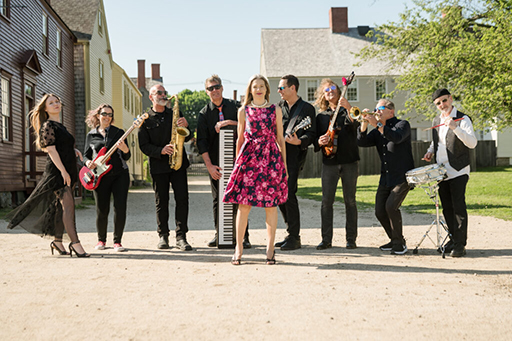
Hot Pick: YellowHouse Blues Band, Saturday, Aug. 15 – High-energy nine piece Seacoast band with a wide-ranging setlist spanning foundational blues artists like Howlin’ Wolf and Freddie King, Motown icons such as Aretha Franklin and Stevie Wonder, and modern acts including Tedeschi Trucks Band and Larkin Poe. Their LIVE from Jimmy’s! LP, recorded in Portsmouth, dropped last year. They’re also at Concord’s Market Days June 27.
Upcoming Shows:
- The Wire Jays – Thursday, July 23
- Classic Stones Live – Friday, July 24
- CJ Solar & The Old Souls Featuring Rick Huckaby – Saturday, July 25
- Blue Collar Men – The Music of Styx – Friday, July 31
- Emanuel Casablanca with Special Guest Lee & Dr. G – Thursday, Aug. 06
- The Music of the Beach Boys By Pet Sounds LIVE – Sunday, Aug. 9
- YellowHouse Blues Band – Saturday, Aug. 15
- RDMTION Roots. Rock. Reggae. – Thursday, Aug. 20
- Ghosts of Jupiter & Caylin Costello Band – Friday, Aug. 28
- The Weight Band Featuring Former Members of The Band & The Levon Helm Band – Saturday, Aug. 29
- Skerryvore – Friday, Sept. 4
- Chris Knight Featuring Chance Stanley – Saturday, Sept. 12
- Draw the Line The Ultimate Aerosmith Tribute – Friday, Sept. 18
Jimmy’s Jazz & Blues Club
135 Congress St., Portsmouth jimmysoncongress.com
An upscale, supper-club-style space that began drawing world-class musical talent into its intimate listening room from the moment it opened in 2021. Van Morrison did two shows there, and Chris Botti headlines often. A restored 1905 YMCA building, it offers art, food and craft cocktails along with music.
Hot Pick: Marc Cohn & Shawn Colvin, Thursday, July 16 – Two acclaimed singer-songwriters share a stage for an evening billed as Together in Concert, a song swap built around decades of celebrated work. Cohn and Colvin share a lot of history, including Grammy-winning debut albums produced by John Leventhal. Each is known for performances that favor intimacy and narrative depth over spectacle.
Upcoming Shows:
- Victor Wooten & The Wooten Brothers – Thursday, June 25
- Eddie 9V – Friday, June 26
- Ana Popovic – Sunday, June 28
- Local Artist Series: Tim Theriault – Monday, June 29
- Kamasi Washington – Tuesday, June 30
- Eric Johanson – Thursday, July 2
- Alex Minasian Trio – Friday, July 3
- Billy Childs Trio – Sunday, July 5
- Local Artist Series: Captain Fantastic – Monday, July 6
- I Am In Love: Jane Monheit Sings Cole Porter – Wednesday, July 8
- Yonder Mountain String Band – Thursday, July 9
- An Evening With Alejandro Escovedo – Friday, July 10
- Parker Barrow – Sunday, July 12
- Local Artist Series: The Blues Express – Monday, July 13
- Hejira: Celebrating Joni Mitchell – Wednesday, July 15
- An Evening with Marc Cohn & Shawn Colvin: Together in Concert – Thursday, July 16
- Masters of the Telecaster – Friday, July 17
- Local Artist Series: Jen Kearney – Monday, July 20
- Jimmy Carpenter – Wednesday, July 22
- The Brothers Comatose – Thursday, July 23
- A Band of Brothers – Friday, July 24
- Gunhild Carling – Sunday, July 26
- Mohini Dey – Saturday, Aug. 1
- Grenadier & Kweku Sumbry – Sunday, Aug. 2
- Charles Lloyd Sky Quartet: Jason Moran, Larry Grenadier & Kweku Sumbry – Sunday, Aug. 2
- Local Artist Series: Mica’s Groove Train – Monday, Aug. 3
- Chris Botti (also 8/7) – Thursday, Aug. 6
- Larry McCray – Sunday, Aug. 9
- Local Artist Series: Sharon Jones – Monday, Aug. 10
- James Hunter Six – Tuesday, Aug. 11
- Matteo Mancuso – Wednesday, Aug. 12
- Jon Cleary & the Absolute Monster Gentlemen – Sunday, Aug. 16
- Rick Estrin & the Nightcats – Friday, Aug. 21
- Dream Horizon: Jeff Coffin, Nir Felder, James Genus – Sunday, Aug. 23
- Thurston Howell – A Premier Yacht Rock Spectacular! – Wednesday, Aug. 26
- Bria Skonberg – Thursday, Aug. 27
- Mike Zito – Friday, Aug. 28
- Benny Green – Sunday, Aug. 30
- Local Artist Series: YellowHouse Blues Band – Monday, Aug. 31
- Jackie Greene – Wednesday, Sept. 2
Music Hall
28 Chestnut St., Portsmouth themusichall.org
Portsmouth’s grand, beautifully preserved 1878 vaudeville theater is the Seacoast’s premier listening room for top-tier touring artists. In the 1990s it came close to demolition, but a community campaign saved it, and the 900-seat venue’s restoration helped cement Portsmouth as a cultural hub.
Hot Pick: Gillian Welch & David Rawlings, Thursday, July 23 – This acclaimed Americana duo brings spare, haunting harmonies and deep folk roots to this fine acoustic space. Few rooms suit their hushed, exacting sound better than the Music Hall’s wood and plaster; every note and vocal nuance carries cleanly. Welch and Rawlings have spent decades refining a stripped-down sound that rewards reverent attention.
Upcoming Shows:
- Fitz and The Tantrums – Saturday, June 27
- Béla Fleck with Edmar Castañeda & Antonio Sánchez – Sunday, June 28
- OK Go – Friday, July 10
- Alison Krauss & Union Station with Jerry Douglas – Sunday, July 12
- John Waite – Friday, July 17
- Gillian Welch & David Rawlings – Thursday, July 23
- Mike Campbell & The Dirty Knobs – Friday, July 24
- Cat Power – Sunday, July 26
- Richard Marx – Wednesday, Aug. 5
- I’m With Her – Friday, Aug. 14
- Whole Lotta Heart (Music of Heart & Led Zeppelin) – Saturday, Aug. 15
- Big Bad Voodoo Daddy – Sunday, Sept. 6
- Here Come The Mummies – Friday, Sept. 18
- Also this summer, the Music Hall Presents at Whittemore Center Arena (128 Main St., Durham, NH) will feature Men At Work w/ Toad The Wet Sprocket on Tuesday, July 28
Music Hall Lounge
131 Congress St., Portsmouth, themusichall.org
A cozy, club-style annex to its grander sibling and built for up-close, intimate shows. Accommodating up to 100 audience members, the former Music Hall Loft re-opened in 2022 after a complete renovation. It offers cabaret seating along with a big focus on emerging and niche performers.
Hot Pick: Haley Reinhart, Monday, Aug. 3 – The American Idol alum brings smoky, soulful vocals to a room where every seat feels close to the stage. Since her 2011 breakout, Reinhart has carved out a genre-spanning career rooted in jazz and blues influences, moving well beyond her beginnings. The room’s clubby footprint suits her sultry delivery perfectly, turning a stadium-scale voice into something intimate and immediate.
Upcoming Shows:
- Peter Mulvey and Jenna Nicholls – Friday, June 26
- KB Whirly – Sunday, June 28
- Scott Kirby & Noah Robertson – Monday, June 29
- Eric Hutchinson – Wednesday, July 15
- Naturally 7 – Thursday, July 16
- Dwayne Haggins – Saturday, July 18
- Certainly So – Monday, July 20
- Caroline Cotter – Friday, July 24
- Maia Sharp – Saturday, Aug. 1
- Haley Reinhart – Monday, Aug. 3
- Mary Fahl (October Project) – Friday, Aug. 7
- Tano Jones Revelry – Saturday, Aug. 15
- Connor Garvey – Friday, Aug. 21
- Tim Easton & Alice Peacock – Wednesday, Aug. 26
- Aldous Collins Band – Saturday, Aug. 29
- Brendan Cleary (also 9/11) – Thursday, Sept. 10
Nashua Center for the Arts
201 Main St., Nashua, nashuacenterforthearts.com
Continuing the success of midsized rooms like BNH Stage and the Rex, this downtown Nashua venue opened in 2023 and draws a broad mix of acclaimed touring musicians and tribute acts. Seating capacity is 750, with a standing room layout increasing that to 1,000. Their state-of-the-art sound is among the best in the region.
Hot Pick: Oteil & Friends, Friday, Aug. 7 – The longtime Allman Brothers Band and Dead & Company bassist is joined by a band that includes Melvin Seals, Steve Kimock, Jason Crosby, Johnny Kimock, Lamar Williams, Jr. and Tom Guarna. The rhythm king’s “& Friends” billing hints at loose, exploratory sets built around chemistry rather than a fixed setlist, so expect a lot of surprises.
Upcoming Shows:
- So Good! The Neil Diamond Experience – Friday, July 10
- The High Kings – Friday, July 11
- Marc Cohn & Shawn Colvin: Together in Concert – Sunday, July 12
- JUMP – America’s Van Halen Tribute – Thursday, July 23
- EagleMania – Eagles Tribute – Friday, July 31
- Oteil Burbridge & Friends – Friday, Aug 7
- Noam Pikelny & Stuart Duncan – Sunday, Aug. 9
- BoDeans w/s/g Ari Hest – Sunday, Aug 16
- Tuba Skinny – Sunday, Aug 30
- An Evening with Kenny G – Wednesday, Sep 16
Palace Theatre
80 Hanover St., Manchester, palacetheatre.org
Listed in the National Registry of Historic Places, this charming 111-year-old theater anchors Manchester’s arts district. Most of the summer events at the 834-seat venue are tribute acts, great for escaping to the classic rock era, locking in a beach vibe or finding a “Rocky Mountain High.”
Hot Pick: NH Irish Festival, Saturday, Aug. 22 – Now in its fourth year, this annual celebration fills the historic space with traditional music, dance and a festive tribute to Irish heritage. The 2026 lineup includes County Donegal, Ireland’s Screaming Orphans, The Spain Brothers (Liam Spain organizes the show), local treasures the Jordan Tirrell-Wysocki Trio, and Rory Makem of the storied Makem Brothers.
Upcoming Shows:
- Tribute to Queen: Somebody to Love (also 6/28) – Saturday, June 27
- Beatlemania Again: The Beatles Experience Live on Stage! – Saturday, July 11
- Music of the Beach Boys – Saturday, Aug. 8
- Changes in Latitudes (Jimmy Buffet tribute) – Saturday, Aug. 15
- NH Irish Festival – Saturday, Aug. 22
- Remembering John Denver feat. Ted Vigil – Thursday, Sept. 17
Prescott Park Arts Festival
105 Marcy St., Portsmouth, prescottpark.org
This community-supported summer series is held on a scenic waterfront location. There are no tickets, and anyone can walk in, though don’t be gauche — a $10 donation is recommended, and collected at the gate. BYO chair and a blanket; Adirondack chairs and VIP tables can also be rented.
Hot Pick: Patty Griffin & Kathleen Edwards, Monday, July 20 – These two acclaimed singer-songwriters co-headline, each bringing a catalog full of lyrical depth befitting the intimate, open-air feel. Griffin’s haunting, soul-inflected songcraft and Edwards’s wry, incisive storytelling make for a complementary double bill. With a Piscataqua River and lush garden backdrop, it promises to be a lovely night of outdoor listening.
Upcoming Shows:
- An Evening of Beatles Music with The Walrus – Monday, June 29
- The Dip with Tre. Charles – Wednesday, July 1
- Infinity Song – Monday, July 6
- Kashus Culpepper – Wednesday, July 15
- Patty Griffin & Kathleen Edwards – Monday, July 20
- Tiny Habits – Thursday, July 23
- The Lone Bellow – Wednesday, July 29
- Josh Ritter – Monday, Aug. 3
- Devon Gilfillian – Wednesday, Aug. 5
- Maggie Rose – Thursday, Aug. 6
- Ryan Montbleau Band – Wednesday, Aug. 12
- Allen Stone – Thursday, Aug. 13
- Caiola – Saturday, Aug. 15
- Madi Diaz – Wednesday, Aug. 19
- Fantastic Cat – Friday, Aug. 21
- Seacoast Jazz Festival – Saturday, Aug. 22
- Langhorne Slim – Friday, Aug. 28
- The Devil Makes Three – Saturday, Aug. 29
Rex Theatre
23 Amherst St., Manchester, palacetheatre.org
This 300-seat listening room began as a mid-1800s print shop, then a movie house, and later became a nightclub, then sat in disrepair until a grassroots effort led to a takeover by the Palace Theatre Trust, which revived and reopened it in 2019. It’s become an anchor to Manchester’s local arts scene.
Hot Pick: Traveling Wilburys Revue, Saturday, July 11 – This tribute act honors the Dylan, Harrison, Orbison, Petty and Lynne supergroup, who never toured, with conviction. Celebrating the loose, ego-free joie de vivre that made the musical Mount Rushmore seem disarming, they collaboratively capture the easy camaraderie that defined the band.’s two brilliant albums.
Upcoming Shows:
- Traveller: A Chris Stapleton Tribute – Friday, June 26
- Yacht Rock with a Twist (Scott Spradling Band) – Saturday, June 27
- Traveling Wilburys Revue – Saturday, July 11
- Whammer Jammer (J. Geils tribute) – Saturday, July 18
- Roomful of Blues – Saturday, July 25
- Silver Springs (Fleetwood Mac tribute) – Friday, July 31
- Crossfire Hurricane (Stones tribute) – Saturday, Aug. 1
- The Rush Experience – Saturday, Aug. 22
- Evening With John Gorka – Saturday, Aug. 29
- Seconds Out (Genesis Tribute) – Saturday, Sept. 19
- Panorama (Cars Tribute) – Saturday, Sept. 26
Rochester Opera House
31 Wakefield St., Rochester, rochesteroperahouse.com
This lovely opera house has dodged a few bullets in its history, including almost becoming office space in the 1940s. Built in 1908 and restored in 1998 following a 24-year closure, it gives touring rock and pop acts an unusually ornate backdrop.
Hot Pick: Everclear, Sunday, July 26 – Enjoy the ’90s alt-rock staples “Santa Monica” and “Wonderful,” along with newer songs like “Sing Away,” which addresses the issue of teenage bullying. With frontman Art Alexakis the band’s sole constant, Everclear continues touring strong, despite Alexakis being diagnosed with MS a few years ago. Its setlist is built around radio favorites that fans still know by heart.
Upcoming Shows:
- Are You Ready For It? A Taylor Experience – Friday, June 26
- Last Child NYC – A Tribute to the Music of Aerosmith – Saturday, June 27
- Everclear – Sunday, July 26
- Seven Wonders – Fleetwood Mac Tribute – Thursday, July 30
- Kanin Wren’s Pop Girl Summer Tour – Friday, Aug. 7
- Pet Sounds LIVE! – Friday, Aug. 14
- Noise Pollution – The AC/DC Experience – Friday, Aug. 21
- Hey Nineteen – A Tribute to Steely Dan – Friday, Aug. 28
- Whitesnake Experience w/ ZeppHalen – Tuesday, Sept. 1
- Reverend Horton Heat w/ Messer Chups – Monday, Sept. 7
The Range
96 Old Turnpike Road, Mason, therangemason.com
A family business that ventured into live music with a one-off Roots of Creation show in 2011, this Mason driving range has grown into a much beloved outdoor venue. It offers an eclectic mix of jam-band and roots music, cool tribute acts and regional favorites in a relaxed, communal setting.
Hot Pick: Leftover Salmon and Toubab Krewe, Saturday, July 11 – Rootsy jamming and an instrumental “sonic Pangaea” combine for this double bill. Leftover Salmon pioneered “slamgrass,” fusing traditional bluegrass, rock, country and zydeco, while Toubab Krewe layers in kora, djembe and other African instruments. The two promise genuinely unpredictable, boundary-crossing sets.
Upcoming Shows:
- G. Love & Special Sauce w/ Moon Taxi & Donavon Frankenreiter – Friday, June 26
- The Breakers – Tom Petty Tribute – Saturday, June 27
- Brother Seamus 3rd of July Picnic – Friday, July 3
- Leftover Salmon with Toubab Krewe – Saturday, July 11
- Hearts & Bones – Paul Simon Tribute – Saturday, July 18
- Granite Lion Presents Algorhythm – Friday, July 24
- Range Full of Blues feat. Jeff Pitchell and the Texas Flood – Saturday, July 25
- Almost Queen + Elton vs. Billy – Friday, Aug. 7
- Max Creek – Saturday, Aug. 8
- The Wallflowers (30th Anniversary Tour) – Friday, Aug. 14
- The Mountain Grass Unit – Saturday, Aug. 15
- Parmalee – Saturday, Aug. 29
- The Machine (Pink Floyd Tribute) – Friday, Sept. 18
- Town Meeting – Saturday, Sept. 19
SNHU Arena
555 Elm St., Manchester, snhuarena.com
Manchester’s arena will have one concert this summer: Shinedown with Coheed & Cambria and From Ashes to New on Monday, July 20.
Tupelo Music Hall
10 A St., Derry, tupelomusichall.com
Named after Elvis’s birthplace, the region’s gold standard for listening rooms has a strict no-talking policy to focus the concert experience. Originally opened in 2004 in a repurposed Londonderry farmhouse with seating for 200, it moved to Derry in 2017 and more than tripled in capacity.
Hot Pick: Spyro Gyra, Thursday, Aug. 13 – Jazz fusion leaders marking five decades of smooth, genre-crossing instrumentals. Formed in the late 1970s, the band built a devoted following on melodic, accessible compositions bridging jazz, funk, and pop without sacrificing musicianship. The band’s classic tracks include “Summer Strut,” a perfect August banger.
Upcoming Shows:
- Dio Rules – Tribute to Rainbow, Black Sabbath, and Dio – Friday, July 10
- Beginnings (Chicago tribute) – Saturday, July 11
- Howie Day – Thursday, July 16
- Metal Church – Friday, July 17
- YellowHouse Blues Band – Saturday, July 18
- Direct From Sweden (ABBA tribute) also 7/22 – Tuesday, July 21
- Dwight + Nicole and Friends Celebrate Our Musical Kings & Queens – Friday, July 24
- Harvest & Rust (Neil Young Tribute) – Saturday, July 25
- Dokken – Sunday, July 26
- The Broken Hearts – Friday, July 31
- Sister Hazel – Wednesday, Aug. 5
- Stanley Jordan plays Jimi – Friday, Aug. 7
- Vandenberg “My Whitesnake Years” w/ co-headliners Marco Mendoza & Vinnie Moore – Saturday, Aug. 8
- Cherry Cherry (Neil Diamond tribute) – Sunday, Aug. 9
- Spyro Gyra 50th Anniversary Tour – Thursday, Aug. 13
- Bostyx – Saturday, Aug. 15
- Revisiting Creedence – Friday, Aug. 21
- Ugly Kid Joe – Saturday, Aug. 22
- Collective Soul – Tuesday, Aug. 25
- Start Making Sense (Talking Heads tribute) – Friday, Aug. 28
- John Violinist – Saturday, Aug. 29
- An Evening with Emerson, Lake & Palmer – Thursday, Sept. 10
- Matthew & Gunnar Nelson – Thursday, Sept. 17
- Hammerfall w/ Evergrey and Elvenking – Friday, Sept. 18
Tupelo is all about the music
Scott Hayward talks about upcoming shows
Tupelo Music Hall owner Scott Hayward says this summer’s lineup is one of the strongest he can remember, even as the venue’s schedule of roughly 150 to 160 shows a year leans more into tribute acts than in the past.
“Definitely a part of the game nowadays,” Hayward said. “If you want a full schedule, you have to do tributes.”
Among his personal favorites this July are Beginnings, a Chicago tribute Hayward praises for its horn section, and ABBA Direct from Sweden, which performs at Tupelo twice a year. On the original side, he’s looking forward to two hard rock acts, Metal Church and Dokken.
The latter is part of a broader push into heavier music for an audience that Hayward believes craves the energy but not the chaos.
“A lot of it is of an era where people our age are like, ‘Oh, I kind of want to go see them, I want to get up and down a little bit, but I don’t want to have to deal with crowd surfing,’” he noted.
Other summer highlights include Stanley Jordan’s tribute to Jimi Hendrix, the return of jazz veterans Spyro Gyra for their 50th anniversary tour, and Revisiting Creedence, a quasi-tribute act that includes the original CCR rhythm section, drummer Doug “Cosmo” Clifford and bass player Stu Cook.
Sister Hazel and a nearly sold-out Collective Soul round out the season’s bigger draws. In September, Tupelo will host a just booked triple bill with 1980s rockers The Fixx, Colin Blunstone of the Zombies and the Peter Asher Band. Hayward says the bill surprised him. “When the agent first presented that to me, I was kind of like, are you trolling me?” he recalled.
Not everything is nostalgia-driven. Dwight and Nicole, a local soul and R&B act with a stack of regional award wins, are performing a show celebrating the artists who’ve inspired them.
“These guys are real musicians. They’ve got good vocals,” Hayward said. “It’s nice to have regional people in the room once in a while.”
Asked how the season compares to past years, Hayward said Tupelo’s numbers are holding strong relative to the rest of the industry.
“I think our shows are really good, and I think our schedule’s strong,” he said, crediting affordable pricing and a loyal, older crowd for keeping seats filled even as national ticket sales soften.
Changes coming
Casino Ballroom nears centennial eyeing rebirth
Two months into his new role as marketing and sales director at Hampton Beach Casino Ballroom, Freddy Schaake is juggling a packed summer concert calendar with the weight of a century of family history, as well as a redevelopment plan that will ultimately reshape the venue entirely.
Schaake succeeded longtime director Andrew Herrick after his 22-year tenure ended. In a recent phone interview, he said the season’s lineup speaks for itself. There are two nights with The Elovators in July (one already a sellout), a Yacht Rock celebration, reggae legacy act Stephen Marley, and a heavy August bill pairing Sevendust with Theory of a Deadman.
But the bigger story is what comes after the venue celebrates its centennial next year.
The Casino Ballroom is a family business. Schaake’s grandfather worked there in the 1930s and ’40s, followed by his father and aunt. But the wooden structure is coming down, to be replaced by a 4,000-person-capacity performance space — more than doubling the existing room — and extending operations year-round.
“It’s really cool to see how much the business has sustained success over the years,” Schaake marveled, calling his recent elevation in the family business “kind of a full circle moment.”
The redevelopment timeline is fluid, though published reports have pointed to a start date when the 2027 season ends.
“We have a great team that is going to make this project the best it possibly can be,” Schaake said. “With this scope and size, it could be at the end of 2027 … we don’t really know yet.”
He’s also hesitant to predict exactly how a larger venue might change the talent the Ballroom attracts, citing his short time in the role. However, year-round programming is a clear priority. Schaake pointed to a November Mitchell Tenpenny show that sold out six months in advance as proof that a bigger, longer season could open doors for many acts.
Schaake admits the old building’s quirks — the floor rumbling underfoot as a metal band plays, or side doors thrown open to let in ocean air on a sweaty summer night — are part of what makes the place special.
“There’s something about a live show when it’s 80 degrees in July and there’s no AC,” he said. “That really encapsulates some of the best nights at the Casino.”
When the wrecking ball eventually comes, he expects to feel “bittersweet” but optimistic about changes that will improve nightmarish beach parking, add new apartment housing and open up possibilities for new retail businesses and dining.
“I also think,” he said finally, “that the future is bright, too.”
Featured photo: YellowHouse Blues Band, which you can catch this weekend at Market Days in Concord on Saturday, June 27, on the main stage from 6 to 8 p.m. Courtesy photo by Chris Cote Photography.