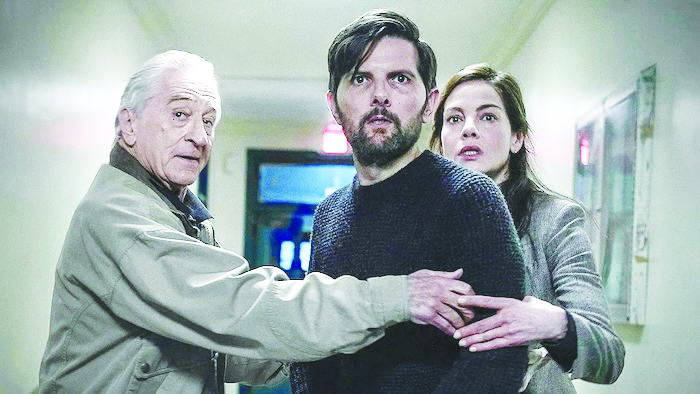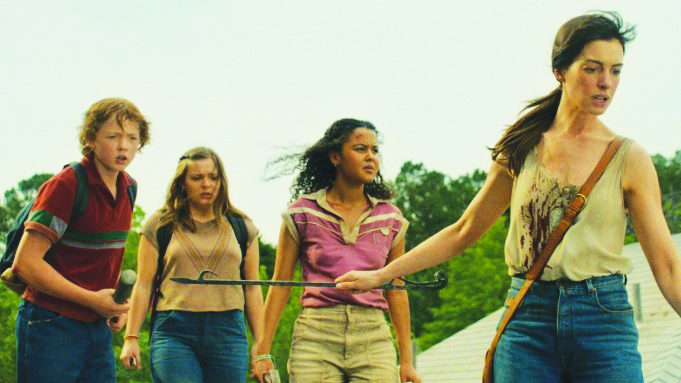
The friendly neighborhood MCU

Spider-Man helps keep the Marvel universe grounded

Neighborhood Spider-Man is the best kind of Spider-Man.

Peter Parker (Tom Holland) returns in Spider-Man: Brand New Day, where he has over some four years established a life of solitude and dedication to crime fighting. Not the big intergalactic crime of Infinity War and Endgame but New York City street crime where the baddies he catches are arrested, often by police detective Jean DeWolf (Liza Colón-Zayas), who likes talking over criminal networks and crime patterns with Spider-Man. But only on the phone — since the Dr. Strange everybody-forgets-Peter-Parker spell, Peter has kept his Spidey strictly profesh, no one knows his identity or sees him with the mask off, even to drink coffee, which sometimes-colleague Frank “The Punisher” Castle (Jon Bernthal) thinks is so dorky.

In the four years since the spell, Peter has watched from afar (i.e. social media) as former best friend Ned (Jacob Batalon) and former girlfriend MJ (Zendaya) went to MIT and lived their lives without him. It makes him sad, he wants to tell them who he is but also wants to keep them safe. He’s shocked when Ned suddenly walks into a local shop where Peter is hanging out. Peter follows Ned to his new apartment, where Peter sees MJ hanging out with her boyfriend. Perhaps the stress of watching the girl he still loves kiss another dude is what causes the strange headaches he’s been having to go from annoyance to a full-on blackout, from which he awakes to find himself covered in webbing that, in a change of pace for this Peter, didn’t come out of a web shooter but came out of his own person. He also realizes that his Spidey sense is getting much stronger, stronger to the degree that the ambient noise of New York is too much to take.

These changes seem to also be getting in the way of chasing down an elusive baddie (Sadie Sink) who seems to jump from body to body and is targeting the Department of Damage Control, the shady organization that Spider-Man has primarily dealt with in their rehabilitating villains capacity. Spider-Man can, at first at least, track this person throughout their jumps from body to body. But as he finds his abilities going highwire, the shadowy-jumper seems to be a step ahead of him.

This particular baddie’s whole deal is pretty good and I’ll admit, as a person who doesn’t seek out Marvel movie spoilers, I was pleasantly surprised with the reveal. I also liked how the baddie’s designs are specific and limited in scope — this is, for the most part, not a skybeam world-in-peril situation. And even when we rub up against bigger parts of the Marvel Cinematic Universe — Peter asks professor Bruce Banner (Mark Ruffalo) for some sciencey advice and asks Yelena (Florence Pugh) for information on the baddie’s Damage Control aims — it’s narrowly focused on these circumstances.

This movie manages to be about Peter growing and changing and dealing with life’s complexity without being too soggy about it and while still keeping it grounded in the emotions of the characters and a kind of streets-of-New-York sense of reality. And it’s funny in moments, not perhaps as gleeful as earlier Spider-Man outings but still managing lightness and ending with a note of extremely sweet joy.

Featured photo: Spider-Man: Brand New Day

Sofaplex viewing

New comedies and other home movie watching fun

I often wonder if a movie I watch at home has to clear a lower bar than a movie I see at the theater.

72 Hours, a new Netflix comedy starring Kevin Hart, feels like it might have been excruciating to watch in a theater. Viewed at home, where I can pause to get a popcorn refill, it is merely very bad — so, evidence of lower bar? Or did I just suffer less?

Hart, who is 47 in real life, plays 40-year-old Joe, a marketing executive gunning for a promotion but failing to wow the room with his latest vodka commercial, which has “how do you do, fellow kids” stink lines wafting off it. How do I pitch to Gen Z? thinks this millennial. Coincidentally, that very day he was also accidentally included in a group chat of 20something dudes headed to Miami for a bachelor party. Because he Venmoed them some drinking money after making fun of their posts, they off-handedly invited him to come along. Failing at work and in a dumb fight with his girlfriend (Teyana Taylor, who I hope was paid really well), Joe decides that he will indeed show up for this stranger’s party weekend, offering to upgrade their rental house and overall experience in exchange for their including him. The bros — groom-to-be Mason (Mason Gooding), his “this is all he’s got in his life right now” buddy Nick (Marcello Hernández), the mourning-a-breakup Hunter (Ben Marshall) and good-natured dummy Freshman (Kam Patterson) — think it’s all very weird but they decide to go with it to have someone pay for a limo.

The movie also piles on gangsters, a subplot where Joe is forced to do cocaine and turns into a Scarface knock-off and a gang of girl criminals posing as a bachelorette party. It feels like someone felt the core comedy situation here wasn’t working so they added on a dozen other things. Which also don’t work.

Here are the “at home” points that I might have been too annoyed to award at a theater: Marcello Hernández is inherently funny and even though this movie doesn’t give him much of a character, he does get a few good lines in. Fun line readings, limited though they are, are doled out to most of the group of bros. Also, maybe one in 10 of the “Millennials versus Zoomers” jokes is a “ha, cute” level of funny.

I feel like the vanity of Kevin Hart — or maybe the writers’ desires to keep him a hero — gets in the way. Born in 1979, real life Hart is a younger Gen X person. Why not have him play his actual age, or older even, to widen the cultural divide? Or why not have him play a younger millennial, experiencing that first existentially painful taste of not being on trend? Why not make him more desperate — the movie doesn’t really go as hard as it could on the weirdness of Joe and his situation. I don’t know that weirding up the movie would have fixed all its problems but it probably couldn’t have made it worse.

For an example of what the tartness of an unself-aware weirdo can bring to a comedy, check out The Dink, on Apple TV, which stars Jake Johnson playing the New Girl’s Nick Miller variant that he does so well.

Here, he is Dusty Boyd, a one-time tennis star whose career ended in his teens after an injury. Now working as a pro at the tennis club his father Chuck (Ed Harris) manages, Dusty is still trying to dine out on his old glories, with fellow employee PJ (Aaron Chen) serving as just enough of a hype man to keep his delusion going. But then Dusty reinjures his wrist and is sent to a doctor (Ben Stiller in a fun cameo part) who suggests Dusty play pickleball to help recover. Dusty, like his father, thinks pickleball is a dorky, not-a-sport endeavor — even though the pickleball crowd (led by Patton Oswalt) is demanding more court space at the club. Dusty plays his first doubles game against retired ladies Gail (Cleo King, who puts extra mustard on her part) and Judy (Lynne Marie Stewart) with his partner Candace (Mary Steenburgen), a woman he first met when he kicked her out of the club for hitting her pickleball into the tennis courts. He hates the game and thinks it’s stupid and, of course, jumps at the chance for a rematch. He also strikes up a friendship with Candace, who is recently divorced and trying to figure things out and is willing to meet him for late night pickleball when he needs some mind-clearing competition.

Even Candace, who admits that, post-divorce, she bought a snake and unsuccessfully attempted pottery, gets to be weird here and I think that helps with this pretty standard sports story that leads up to a big game and a sort of redemption. This movie is lightweight and not terribly taxing but enjoyable enough.

April release The Devil Wears Prada 2 (rent or purchase and as of July 29 streaming on Hulu and Disney+) is a meatier watch. Andy Sacks (Anne Hathaway) did in fact become the important serious journalist she wanted to be back in the 2006 original. And, like so many important serious journalists these days, she gets laid off from her newspaper, in her case via text while accepting a journalism award, giving her an opportunity to go viral tearfully proclaiming that journalism still matters. Meanwhile, Runway magazine, the Vogue-stand-in where she worked her first post-college job, is dealing with a scandal related to a recent story about a fashion brand that turned out to be running a sweatshop. Needing some of Andy’s integrity shine, Runway’s parent company boss, still Irv (Tibor Feldman) from the last movie, hires her to be the features editor — a fact Runway editor Miranda Priestly (Meryl Streep) learns on Andy’s first day of work.

The Devil Wears Prada 2 is a delightfully catty, well-attended, beautiful-to-look-at funeral for a beloved friend, is how I felt watching it. Stanley Tucci and Emily Blunt return (as does Tracie Thoms as Andy’s freebie-bag loving friend) and we get newcomers Justin Theroux and B.J. Novak as two different flavors of modern monsters; Lucy Liu and Kenneth Branagh as two different flavors of decency, and Simone Ashley, Caleb Hearon and Helen J. Shen as Kids Today. And everybody is great and fun to watch and does just enough without doing too much. There are some lovely clothes and some good jokes and a nice visual gag about the two belts that looked so different. But throughout I felt an ache at the passing of magazines and newspapers and the desperate condition of those who are left. The constant attempts to save Runway are aimed at saving something that several characters say is a shell of itself — in the real world it would probably be some kind of bi-monthly-ish affair that might still have a September issue but also put out issues labeled just “Winter.”

There is a nice Hollywood spin on this story that, like a lottery ticket and its “maybe it will be me,” feels both fantastical and just plausible enough that, you know, it could happen. And it feels nice watching a fairy tale ending that is actually more about the joys of a career making a print product and female friendship than a romance. On one level, I enjoyed this movie and had a good time watching it. On another level, sniff.

Remarkably Bright Creatures is another movie I avoided seeing when it came out on Netflix in May, largely because My Octopus Teacher and its Oscar win over better documentaries had me wary of schmoopy octopus movies. And, make no mistake, this is a schmoopy octopus movie, but I rather enjoyed its gentle weepy drama and the performances by Sally Field and Lewis Pullman — and Alfred Molina, voicing the octopus Marcellus, who isn’t particularly impressed with his human captors. He does have some fondness for Tova (Field), the woman who works nights cleaning the aquarium where he lives, giving a proper shine to his tank and talking to him all the while. When she injures her ankle putting Marcellus back in his tank — he likes to squidge out of his tank and wander around, eating some of the other exhibited marine life — the aquarium hires Cameron (Pullman) to fill in. Cameron is passing through town looking for the father he never met. When his van, where he is also sleeping, breaks down, he’s eager for the temp work to pay the repair bill. Tova is at first not impressed with Cameron’s mediocre cleaning skills but she teaches him the “right way” to do the job and introduces him to Marcellus, who also begins to have an irritated fondness for Cameron. Humans with their clumsy interpersonal skills are, Marcellus tells us, rather a dense bunch.

This movie is very pleasant, which I know sounds like faint praise but when paired with the lovely Pacific Northwest scenery and the very beautiful cabin-like home Tova lives in makes for a nice relaxing bit of chillout.

After many weeks in theaters, May release Backrooms is nearing $400 million in worldwide box office and is now available for rent or purchase. This A24 horror-I-guess movie has many claims to fame including its less than $10 million reported production cost and its director, Kane Parsons, who was 20 at the time of its release, according to Wikipedia. And all of that is great, sincerely, both for film now, with this summer’s hopeful box office and the constant need for some non-IP wins, and for the future, since it will encourage production companies and studios to keep taking the occasional chance on weird stuff. About the movie itself, my feelings are more complicated.

Clark (Chiwetel Ejiofor), the depressed owner of a furniture store who is drinking his way through a divorce, finds a portal to somewhere one night in his store in the 1990s. When he walks through a particular spot in his store’s seemingly solid wall, he finds himself in another room, a mostly empty room with a pile of furniture at its center. That room leads to other rooms, all mostly empty, like a hastily abandoned office space that might still have a desk or a sofa or a stop sign or a cardboard cutout of a caveman that seems to be playing a recording of people speaking multiple languages — you know, normal stuff. The rooms are all lit by fluorescent lights giving off a kind of depressing brightness but that also flicker as he walks through hallways and into new rooms, some of which have tiny doors or slanted floors that at first seem like tricks of perspective. When he hears and almost sees what seems to be another being, he runs back to his store and apparently returns often enough that he is able to draw a map of this new space.

When he tells his therapist Mary (Renate Reinsve) about all this, her unbelieving reaction spurs Clark to bring his employee Kat (Lukita Maxwell) and her boyfriend, Bobby (Finn Bennett), who has a video camera, to the store to witness and record what he is seeing.

This movie’s real talent is creating mood, putting you in a place not unlike a nightmare, where spatial relationships don’t always make sense and people and objects don’t look correct. In some rooms, furniture doesn’t sit on the floor but more looks like, Star Trek-style, it has transported into it. Half a sofa sticks out of the floor as parts of a chair stick out of the wall. The emptiness and the room-into-room is disconcerting, the furniture is unsettling but then the sense that a not-fully-seen thing might be lurking is terrifying at a core level. It’s a really well constructed, layered kind of terror that this movie sets up. I feel like the movie sort of stops with the set-up; the resolution, such as it is, feels kind of floppy comparatively. But that quiet, slow-motion panic created by wandering through rooms and halls into doors, that’s pretty impressive.

Another vibes-forward movie capturing more of a sense of the world than its literal reality is I Love Boosters, written and directed by Boots Riley and available for rent or purchase after a May theatrical release (that seems tiny, based on its Wikipedia description). Buddies Corvette (Keke Palmer), Sade (Naomi Ackie) and Mariah (Taylour Paige) are the leaders of a crew of boosters called the Velvet Gang — along with a few other members providing distractions and get-away driving, the ladies steal clothes from a medium high-end chain run by designer Christie Smith (Demi Moore). When selling these clothes at pop-up sales in their neighborhood, the women seem to both be eager to turn a reasonable profit and feel like they’re offering access to fashion to a community that needs it. If Corvette seems a little mopey about the whole thing, perhaps it’s because she also wants to design clothes and Christie isn’t just a mark but also an idol to her. Or she is until Corvette learns some things about Christie, including that, according to Jianhu (Poppy Liu), another woman doing some boosting, the Chinese factory where Christie’s clothes are made treats the workers terribly, constantly increasing the speeds at which they’re expected to work and getting workers sick due to the “sand-basted denim” process. Jianhu is in the booster game for a little righteous revenge and while she doesn’t have a crew she does have a device that can transport all of the items out of the store in seconds.

There is also a supernaturally hot and intense LaKeith Stanfield and a Ponzi-scheme operator played by Don Cheadle and Eiza Gonzalez as a labor organizer, radicalized when her boss (Will Poulter) explains that she must wear Christie Smith clothes for work and their cost will be taken out of her salary.

Its bendy approach to reality and unrestrained use of color make I Love Boosters a treat to watch and also help deliver a rather warm and fuzzy message about people coming together to support friends, coworkers and a wider community to make change. It’s heartwarming, which is unexpected for a movie with a goofy, very R-rated subplot about Stanfield’s character and a delightful spikey performance from Moore.

Female friendship is also at the core of Ride or Die, an eight-episode series released on Prime Video in July and starring Octavia Spencer and Hannah Waddingham. Debbie (Spencer) is the American wife of a British politician who has long put her own career on hold. Her best friend is Judith (Waddingham), a forensic accountant — so she says. Actually, Judith is an assassin trained to have no emotional attachments but who has long nurtured and protected her friendship with Debbie, the one “real” thing in her life. When Judith’s new assignment turns out to involve Debbie’s terrible husband (Jamie Parker), Judith and Debbie soon find themselves on the run from assorted intelligence agencies and the mob, with their friendship on the ropes as Debbie is horrified to learn what Judith actually does.

Waddingham and Spencer have nice long-time friend chemistry — you buy that they can love each other, be mad at each other and work together all at the same time. Debbie might be a civilian but she has useful skills of her own and their work to find their way out of their potentially deadly situation truly is a buddy endeavor. This maybe didn’t need to be a series, might have been more energetic as a movie, but it makes for a nice watch nonetheless.

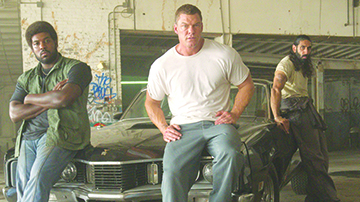
Released on Prime Video in January, The Wrecking Crew is perfect for when you just need two hours of dumb goofery to cradle you in its beefy tattooed arms. Navy super soldier James (Dave Bautista) and his half-brother cop Jonny (Jason Momoa) annoyedly reunite in Hawaii after years of estrangement when their father, a private detective, dies in suspicious circumstances. Through their bickering and with the help of their cousin Nani (Frankie Adams), James’ wife Leila (Roimata Fox), Jonny’s ex Valentina (Morena Baccarin) and their father’s assistant Pika (Jacob Batalon), the two anger various mobs to uncover a skeevy plan involving business man Marcus Robichaux (Claes Bang). Explosions, fist fights, shootouts and car smash-ups are sewn together by insults and visual comedy about the size of Momoa and Bautista — and it’s all great. I mean, dumb but great. Momoa is quite skilled at being this kind of a character, mixing in the right bit of silliness with his whole “Hulk smash” deal. He and Bautista, here playing the straight man, work well together, with their “muscle vs. muscle”-ness creating something much lighter and sillier than when they play the muscle men individually.

Featured photo: 72 Hours.

Never going home?

The Odyssey takes you on a journey with its nearly three-hour run time

Step 1 with watching Christopher Nolan’s The Odyssey is to forget.

Like a lotus eater, forget stuff that came before — the barfy discourse around casting, what you think you remember from when you read (or skimmed or got someone to tell you the gist of) The Odyssey in school, what you think you remember about Greek myths in general (the movie explains whatever god or famous Greek-mythology human is at the core of a scene well enough for the purposes of watching the movie). And forget about the runtime, because yes, it’s long but the movie mostly uses those two hours and 50-some minutes pretty well and the pacing picks up right when it needs to. Also probably forget whatever your opinion is of Matt Damon, because the persona of Matt Damon is just going to get in the way of the performance the actor Matt Damon is giving. Ditto Anne Hathaway.

Just focus your viewing experience on the movie itself: the story of the nearly 20 years it takes Odysseus (Damon), king of Ithaca, to get back home to his wife, Penelope (Hathaway), and son Telemachus (Tom Holland), after having left for the Trojan War. We see different parts of this tale, from the beginning when Odysseus is explaining to Penelope why he has to participate in this sure-to-be quagmire-y endeavor and how much the war is going to suck, to the “guys in a horse” part to all the coming home stuff.

Though it’s not told linearly, the main action is roughly this: After 10 years, Agamemnon’s (Benny Safdie) dumb war is over and Odysseus decides instead of looting more from Troy and sailing straight back to Ithaca, they’ll pick up snacks along the way and “see a bit of the world,” a real “three-hour tour” plan that turns into a nearly decade-long trip. Along the way, Odysseus’ army and fleet of three ships meet a Cyclops (Bill Irwin); a witch named Circe (Samantha Morton); some sirens; some zombie soldiers; some armored giants and some supernaturally terrible weather. Each adventure takes a big bite out of the surviving number of Odysseus’s men and makes them both more desperate and less likely to ever reach their homes.

Meanwhile, back home, Penelope is trying to queen the country together but finds tensions high and civility fraying due in part to the many many suitors who have shown up at her castle to try to marry her. She has footed the bill for their years of feasting and drinking while they wait for her to decide to get married again. Telemachus suggests that he could be king, but Penelope points out that he can’t just say he’s the king, he needs everyone to buy in to the idea, which they aren’t right now without a definitive declaration of Odysseus’ death or proof that Telemachus is, essentially, grown up enough to hold the job.

That’s basically the action of the movie. The emotional “what it’s all about,” which becomes clearer as Odysseus works to remember, after years of living in a pleasant lotus buzz on an island with Calypso (Charlize Theron), who he is and what he needs to do, made me think of Nolan’s Oppenheimer. In some ways this movie feels like it is an expansion and examination of the philosophical question that ended that movie, with Oppenheimer worried that he had destroyed the world with the creation he spearheaded. When you’re stuck on a beach for 10 years trying to fight your way into a walled city or rushing to build a catastrophic weapon before a genocidal dictator can, you don’t always think about the long-term repercussions, if you are breaking something that can never be fixed, something that doesn’t just fight this fight but that, as Odyssesu puts it, wages war with civilization itself. That is Odysseus’ struggle, what he doesn’t know how to come back from.

This core struggle allows you to stay rooted in the story of this one family even when the movie brings in a massive cast of characters that range from a goddess (Zendaya) to the weaseliest of the suitors (Robert Pattinson). I never felt like I was getting lost in the spectacle of it all, though the spectacle of it all was mostly enjoyable to watch and I warmed to it over the course of the movie. The razzmatazz of angry Poseidon storms and huge armies on the march augments, not overwhelms, the human story.

The performances are all very good, even Hathaway’s, once I got over some “this is too thin for the Oscar nomination I’ll bet it earns” annoyance. And even Damon, once you let go of the fact that this guy just does not have a “king from antiquity” look or vibe about him, though I think that works for what the movie is trying to do. Everybody — every John Leguizamo and Lupita Nyong’o and Jon Bernthal body — adds a little something, pulls the overall narrative in an interesting little side direction. You could let that pull you out of the tale, but it could also put the story in its rightful place as something that is timeless, as in out-of-a-specific-time and more about the nature of humans than the historical events of the Bronze Age. This is not a history class; it’s a story, literal or metaphorical or somewhere in between, about a guy dealing with the world. And if you want to let your mind wander to the elements about our modern world that the movie seems to be commenting on, there are plenty of places where you can do that too.

(Extra credit; Before you see the movie, amp yourself up with The Odyssey: The Making of an Epic, a 22-minute docummercial on Peacock about the movie which delightfully nerds out about elements such as the on-location sets and the score.After, check out Vulture.com’s story “Christopher Nolan Explains the ‘Key’ to The Odyssey’s Ending,” in which they ask him more about the Oppenheimer-y nature of the movie — though when I thought about the Oppenheimer connection as I was leaving the movie, I didn’t particularly see it as a big reveal for either movie.)

I used Nolan’s The Odyssey as an excuse to check out The Return (streaming on Paramount+ and available for rent or purchase), a 2024 movie more tightly focused, as the title suggests, on Odysseus’ return to Ithaca. Here, broken down old man Odysseus (Ralph Fiennes) is fished out of the water near Ithaca only to be tossed back by some of Penelope’s (Juliette Binoche) suitors, who say there’s already enough of them and they hope he’ll just drown. Instead, he washes up naked on the shore and is tended to by Eumaeus (Claudio Santamaria), who explains how lousy things are on the island with remaining inhabitants at the mercy of the terrible suitors. They steal the livestock, they prey on the women and just generally they’re leading the island to ruin. Up at the castle, Odysseus’ son Telemachus (Charlie Plummer) is trying to keep from getting killed by the suitors and is almost convinced that his mom should just marry Antinous (Marwan Kenzari), the maybe least-awful of the bunch. As with Tom Holland’s Telemachus, Plummer’s Telemachus, as the movie begins, does not quite have the gravitas to take the throne for himself.

The Return is all scorched earth, all people trying to figure out if they can claw their way back from despair and violence. But quietly, without the spectacle of The Odyssey, The Return does its grief and frustration slower and at a lower volume. Which isn’t always to the movie’s benefit in terms of keeping this from being a downbeat slog. But Fiennes gives a solid performance and highlights the emotional struggles of Odysseus.

And speaking of stuff we read (or were at least assigned) in school, I also gave a watch to the 2026 Hamlet, which had a theatrical release in spring and is now available for rent or purchase. This adaptation stars Riz Ahmed as Hamlet, Morfydd Clark as Ophelia, Timothy Spall as Polonius, Sheeba Chaddha (maybe the MVP for me here?) as Gertrude, Joe Alwyn as Laertes and Art Malik as Claudius. Here, Elsinore is the big company that has made Hamlet’s family rich in present-day London. This is a fun adaptation, if “fun adaptation” is a thing you can say about a play soaked in grief and that notoriously features the deaths of pretty much every major character. This isn’t the Baz Luhrmann Romeo + Juliet approach; it’s just a really solid retelling done in a way that, as with The Odyssey, highlights the timelessness of the story.

Riz Ahmed is fully believable as someone who is in the “still figuring it out” phase of his life and doesn’t quite have the maturity at first to know what to do with the information that his uncle was the one who killed his father before nearly immediately marrying his mother. Ahmed also does a good job of making the “whether tis nobler in the mind” of it all feel like natural dialogue and thought, especially for someone addled with grief and anger. Chaddha is equally skilled at delivering Gertrude’s lines in a way that suggests layers of meaning. Gertrude gives Hamlet a look when Claudius is explaining that they are getting married that seems to convey a whole backstory about what is happening and about what she hopes Hamlet understands.

Featured photo: The Odyssey.

Catching up with Kara

Checking in on Supergirl and other sisterly stories

Superman is compelled to protect Earth and do good. Supergirl would like to stay out of it and get her buzz on.

Supergirl(PG-13, in theaters) builds on Milly Alcock’s cameo at the end of last year’s Superman (streaming on Prime Video and HBO Max and available for purchase or rent). After partying on planets whose red sun doesn’t prevent her from getting a little tipsy the way Earth’s yellow sun does, Alcock’s Kara Zor-El came back to her cousin Superman/Clark/Kal-El’s (David Corenswet) Fortress of Solitude to pick up her energetic good boy dog Krypto.

While Clark lives in Metropolis, fighting bad guys and, as Kara says, seeing the best in everyone, Kara just sort of dirtbags around in her RV-esque spaceship, partying on dirtbag-y planets and keeping company primarily with Krypto. She is not looking to save the day — but she can’t quite just live with bullying either. When 13-ish-year-old Ruthye (Eve Ridley) shows up at the bar where Kara is slumming it, Kara seems compelled to fight the patron who tries to steal Ruthye’s sword. Impressed with Kara’s fighting skills even in her low-power red-sun state, Ruthye tries to get Kara to join her on her quest to find and kill Krem (Matthias Schoenaerts), the girl-trafficking villain who killed Ruthye’s family. Kara is all “no thanks, kid” but then Krem and his ruffians steal Kara’s ship, in the process poisoning Krypto. A healer tells Kara that she has three days to get the antidote from Krem or Krypto will die. She still isn’t interested in helping a little girl do revenge but now Kara has no choice but to search for Krem, and Ruthye tags along.

Somewhere along the way, they run into and then keep running into Lobo (Jason Momoa), a bounty hunter with some super strength and costuming that suggests off-brand KISS.

Jason Momoa here is a bit like the cinematic equivalent of what happens when you get a bottle of hot honey — it’s such a fun flavor pick-me-up that you just start randomly putting it on things. It’s not unpleasant, per se, but it doesn’t always feel necessary. Jason Momoa knows how to be in this kind of movie and has good enough chemistry with Alcock but, like, I’m not sure why we’re drizzling him on everything.

Kara’s relationship with Ruthye is nice — big sister-y at times with Kara genuinely interested in keeping young Ruthye from sliding into the same grief and loneliness pit that she has been living in since she left behind the people of Krypton. The flashbacks explain how Kara has a working memory of Krypton culture and her father Zor-El (David Krumholtz), brother of Superman’s dad Jor-El, and yet is younger than Superman. It’s all basically fine, as exposition goes. More than we get from the brief glimpse at Krypton via the Superman parents’ video message in Superman, not quite the dazzling world building that you might want for someone so tied to that part of her life.

I think this movie wants — while still being in the 2025 Superman universe, with cartoony bad guys and Superman’s grounded earnestness — to be about the same sense of hope but from shadows. Kara hasn’t had Clark’s Kansas upbringing, she doesn’t have a found family. She feels alone and adrift in a universe that is mostly crappy, full of pirates and ruined worlds and individuals picking on the weak. Caring, for her, is a road to more grief. But, as her mother told her, she may be tough and not always nice but she is inherently good. So how do you be good in a crappy world? It’s not the shock of “this is different” that I think gave Superman its sparkle but Supergirl is full of interesting ideas, with more smart or funny or thoughtful moments than weak ones. I liked it more than I didn’t and — especially with its under-two-hour run time — had fun without too much checking my watch.

Another movie with a female duo at its otherwise tonally wildly different center is Ready or Not 2: Here I Come (R, streaming on Hulu and available for purchase). Picking up pretty much exactly where 2019’s Ready or Not ended, this gooshy dark-comedy horror starts with bride Grace (Samara Weaving) smoking on the steps of her in-laws’ in-flames mansion, having survived/killed her way out of a Satan-mandated game of hide and seek on her wedding night. She is taken to the hospital, where she wakes up to find herself handcuffed to a gurney — a lot of people died, after all — and trying to explain the situation she’s in to her estranged sister Faith (Kathryn Newton), who is still her emergency contact. Before Grace can do much recuperating or explaining, someone shows up to try to kill her and she learns what we already know, which is that the previous night’s game has leveled up. The death of her in-laws has left a hole in Mr. Le Bail’s, aka the Devil, High Council. As Satan’s lawyer (Elijah Wood) explains, now the remaining High Council families will hunt Grace until sunrise with the family that dispatches her getting to sit at the head of the High Council and basically rule the world. The local family hosting the hunt is the Danforth family, represented by twins Titus (Shawn Hatosy) and Ursula (Sarah Michelle Gellar, who wonderfully understands the assignment). Thus a new group of rich wieners attempt to kill Grace and, because she’s there, Faith, while Grace, outfitted once again in her blood-soaked wedding dress, attempts to fight them off. Fight them off and not get too much goo on herself when the council members explode for having broken a rule, which seems to happen a lot.

This movie, like its predecessor (which is also on Hulu, if you’re looking for a double feature), is giddy and goofy and a real good time. The addition of a sister, and thus a team member, for Grace adds a nice element. The sisters have spikey chemistry but Grace still feels responsible for Faith even if Faith is still nursing her hurt at Grace’s long ago disappearance. Weaving and Newton are also both just well suited for these kinds of characters. They are being chased and threatened and they are scared but they’re not victims.

The sister relationship is the most interesting part of Voicemails for Isabelle, a June-release Netflix rom-com movie. Jill (Zoey Deutch) is trying to figure out who she is and what to do with the rest of her life since the death of her sister Isabelle (Ciara Bravo) from cystic fibrosis. Because of Isabelle’s long history of being in hospitals and, as Jill describes it, stuck at home, their sisterhood was particularly central to their lives. Even when Jill moved out to San Francisco from their hometown of Austin to pursue her career dreams of being a baker, Jill and Isabelle constantly checked in with each other, something Jill continues even after Isabelle has died, listening to Izzy’s old voicemails and leaving new messages at Izzy’s phone number. What Jill doesn’t know is that Wes (Nick Robinson), a real estate broker or something in Austin, has inherited Izzy’s number and is getting Jill’s messages. He’s charmed by Jill and starts to follow aspects of her life like it’s his new soap opera. He hears about her difficulties with her pretentious “yes chef” boss Chef Bastien (Nick Offerman, having great fun) and her attempts at dating. And when he gets a chance, he heads to San Francisco to meet her.

The boy-meets-girl of this movie is very Amazon Essentials Rom Com. It hits all the beats but nothing about the Jill-Wes relationship is particularly exciting or memorable. Jill’s relationship with her sister on the other hand is a nice look at close sisterly bonds (a relationship somewhat mirrored in relationships Wes has with found-family-type people he calls cousins) and how the loss of someone so close is not only the cause of great grief but can change how the remaining person thinks about her whole self. Jill finding her way back to her life, and deciding if the chef-y nonsense of Bastian’s kitchen is as important to her as it once would have been, is watchable, made more-so by Deutch, who is pretty good at adding a little something extra to light lifts like this.

The sisters at the core of Netflix’s recently released Little House on the Prairie series also have a compelling relationship, though one that seems to be more built on struggling with their forced proximity than embracing it. (The eight-episode first season of the show, released in early July, has already won a second season.) Laura Ingalls (Alice Halsey) and her older sister Mary (Skywalker Hughes) have been dragged to the Kansas prairie by their father, Charles (Luke Bracey), in search of new opportunities and open land. That the land is open to settlement is news to the Osage, still hoping to prevent the settlers (and the federal government that would enforce those settlers’ claims) from taking their land. The tension between the newcomers and the land’s inhabitants is one of the interesting points of friction in this new adaptation of the classic novels. Unlike the saintly parents of the 1970s TV show, Charles and his wife Caroline (Crosby Fitzgerald) here start the show at a mom-and-dad-are-fighting simmer. Caroline seems to be all in on Charles’ plan for the family — or at least 70 percent in — but this big move to the new place with no extended family or community amenities (no church, no school, no post office for the first episode) is terrifying to her, as are the wolves that roam the area, the assorted drifter types and, at first, her Osage neighbors, whose claim on the land Caroline doesn’t know about. We see the Osage side of the tensions from neighbors White Sun (Alyssa Wapanatâhk) and William Mitchell (Meegwun Fairbrother), whose daughter Good Eagle (Wren Zhawenim Gotts) becomes fast besties with Laura.

Around the edges, the show also touches on the Civil War and its effects on the men who fought in it and, ever so lightly, on issues of race. We also get more of the frustrations of the female characters about the special restrictions and hardships of places like this for women. Caroline has to put up with a snotty neighbor, Jemma James (Mary Holland, a first-rank “hey it’s that guy” who needs to be in more things), if she wants any female friendship at all. Or at least, she does until she makes better friends with the significantly cooler Emily Henderson (Barrett Doss), the Black owner of the town’s general store, and Lacey Aubert (Rebecca Amzallag), the pants-wearing French lady whose relationship with Mr. Edwards (Warren Christie) is always discussed with raised eyebrows.

I like how show tells the story of Laura and her family with a sympathetic eye to them, particularly to the curious, open-hearted, school-averse Laura, while still being realistic about the injustice-filled situation they’ve rather naively wedged themselves into.

In tone, the show reminded me of the bits I’ve seen of Anne with an E, the Anne of Green Gables adaption from the late 2010s whose three seasons are still available on Netflix. (Little House inspired me to watch or possibly rewatch a few episodes.) There, like here, we get the familiar story but more rooted in the history of the time and reality of the characters. Amybeth McNulty’s Anne is a plucky story-teller with a big imagination but she’s also suffering from the effects of abuse she suffered as the ill-used, unpaid servant to several large families. That show, like the new Little House, isn’t quite a gritty update, it’s more a reconsideration that has you thinking about what the familiar story beats (tweenage orphan or family on the prairie) would actually mean and feel like. The Little House adaptation does have a bit more heft (both in its story and in the strength of its performances) and it seems to be working with a bigger budget, with that money well spent when it comes to setting and overall production.

If you’re looking for more sister-ish relationships on TV, check out the recently canceled Ponies(on Peacock) while it’s still accessible. Even though news came out in June that it would not get a second season, the one-season, eight-episode show, which came out back in January, tells a good, relatively complete story and is worth watching. Mother of Dragons Emilia Clarke plays Bea and Haley Lu Richardson is Twila, both women living with their husbands at the U.S. embassy in Moscow in the late 1970s. They both learn that their CIA husbands have died on assignment and are offered the choice to work in Moscow as embassy secretaries while secretly working for the CIA in hopes of learning more about their husbands’ deaths. Bea has the advantage of being a somewhat native Russian speaker, having learned the language from her Jewish grandmother (Harriet Walter) who lived in the USSR before and during World War II. Twila is a wonderfully plucky, seemingly bumbling American whose mix of street smarts and smart smarts (and curly hair) gives her a somewhat Natasha Lyonne-in-Poker Face vibe. (Poker Face is also a delightful watch, also on Peacock and also, sadly, canceled. But even if the second season doesn’t quite reach the heights of the first season, I also recommend watching all 22 episodes while you can.)

I’m a sucker for some high-quality late 1970s production design and costuming, and this definitely has that as well as some Cold War trade craft and fun character beats, particularly in the growing friendship between Twila and Bea as they work together and separately on increasingly dangerous assignments.

Featured photo: Supergirl.

Minions & monsters & sheep

Movies for family viewing

If you have kids, you will probably have contact with the newest entry in the Minionsverse, Minions & Monsters (PG, in theaters), and that is fine. I kind of view all Minions-related content as not-quite-as-clever Looney Tunes, which is I think a completely acceptable form of entertainment. No, nobody is learning or growing or imparting any life lessons, but also you don’t have to sit through any learning or growing or poorly conveyed life lessons. The Minion-speak means you don’t even really have to listen to all that much dialogue — all the better to avoid quippiness or writers’ attempts at sounding “of the youth.” It’s kinda great.

Here, the movie piles up a bunch of riffs, mostly visual, on the early years of Hollywood — you get some Roaring 20s, silent film, introduction of sound, suffragettes and Prohibition thrown at you along with some nods to 1920s, 1930s and 1940s films and also Jaws and The Day the Earth Stood Still and the existence of George Lucas. Historical inaccuracies, you ask? “Poop” the Minions would say, and I probably agree because these little touches are nice treats for the adults in the audience — probably watching this movie because it is a family outing in the air conditioning.

The Minions (all voiced by Pierre Coffin) wind up in Hollywood after their attempts at finding an evil “Big Boss” to serve fail, usually because the Minions accidentally do in the Big Boss. In 1920s-or-something Hollywood, they stumble through an elaborate action sequence in a movie being shot by director Max (voice of Christoph Waltz). You ruined everything, get out of here!, he tells them. But then the heads of his studio, the Bright Brothers (both voiced by Jeff Bridges), tell him that the Minions sequence is brilliant. You’re my best friends, come make more films with me!, Max says to the Minions after he rushes to find them. The movie focuses primarily on Minions Henry and James and their buddy Edward. Henry and James have long been amusing themselves with outlandish stories and now find in Hollywood the perfect outlet for their imaginings. When the advent of sound ends the Minions’ serious career in Citizen Kane-ish and Maltese Falcon-y films, the trio attempt to make a monster movie by conjuring a real monster, Goomi (voice of Trey Parker). Perhaps they should have paid attention when he said his full monster name, which included “the Deceiver.” (Also adding their vocals to the movie are Allison Janney, Jesse Eisenberg and Zoey Deutch.)

The monsters are fun, the Minions are fun, the callback to Harold Lloyd hanging from a clock and a building falling around Buster Keaton are fun nerdy tidbits. Minions & Monsters is a jolly entry in kid-focused entertainment that offers just enough to the adults who are also in the room.

Of course, learning doesn’t have to be a drag to a kid movie — for example, see the recent The Sheep Detectives (PG, 2026), which was released in May and is now on Amazon Prime Video. This movie, which really feels more straight down the middle all-ages fare rather than just kid-specific, contains a complex examination of grief and what it means to belong and also talking sheep solve a murder.

The sheep here — some kind of computer-generated creatures based on real sheep or something, according to some light Googling — are of the “live-action animation” variety living in an otherwise human live-action world. There is a bit of an uncanny sheep valley you have to walk through and acclimate yourself to but then you can — or at least I could — basically live with what you’re watching, because the sheep are so sweet and so cute and have such a lovely life on their English countryside farm with their shepherd George (Hugh Jackman), who only raises sheep for wool. What would another reason to raise sheep be, wonders Lily (voice of Julia Louis-Dreyfus), displaying that though she is a very clever sheep, she has been protected from some of life’s harsh realities. Well, except for the harsh reality of Murder!, due to George’s nightly reading of mystery and detective novels to the sheep. When George is found dead, Lily and her buddy Mopple (voice of Chris Dowd) and flock loner Sebastian (voice of Bryan Cranston) begin to investigate his murder, trying to nudge village police officer Tim (Nicholas Braun) in his investigation of suspects, principally the people named in George’s will. The chief suspect appears to be American Rebecca (Molly Gordon), George’s long lost daughter. But there’s also the neighboring shepherd (Tosin Cole) who is interested in George’s flock, the local butcher (Conleth Hill) and an out-of-town lawyer (a glammed up Emma Thompson, having such fun).

In addition to sheep being sheep — a Brett Goldstein-voiced pair of rams always looking for something to smash with their horns — we get a very touching and straightforward consideration of grief and how the pain of loss might be worth it to keep the memories of our loved ones. Louis-Dreyfus in particular does a beautiful job at conveying her character’s feelings with her vocal delivery, really helping to bring life to these digital creatures. The movie does a good job of bringing this serious, weighty stuff to the story without weighing it down and still giving us a very solid and fun “English village murder” murder mystery.

If your family movie nights largely involve older middle schoolers and up, Netflix’s recently released Enola Holmes 3(PG-13) is an enjoyable option, if not quite as crackling as its previous entries. Millie Bobby Brown returns as Enola, younger sister of Sherlock Holmes (Henry Cavill), who has been making quite a name for herself as a detective in her own right. And as the movie opens, she’s worried about that name because the wedding dress-wearing Enola is about to become Lady Tewkesbury as the wife of her longtime friend and sort of boyfriend Lord Tewkesbury (Louis Partridge). After some debating whether she actually wants to go through with the marriage, she heads to the church only to be waylaid by Dr. Watson (Himesh Patel), who has come to tell her that Sherlock, who had also come to Malta for her destination wedding, has disappeared, possibly been kidnapped.

Of course this case quickly spreads, with another kidnapping and other nefarious events and Enola desperate to solve the mystery and also figure out how exactly to get the life she wants with Tewkesbury.

There is less Sherlock/Enola teamwork than in previous outings, perhaps one of the reasons the movie doesn’t quite have the same bouncy feel as the others. But the movie still presents its Sherlock riff with adventure and good humor.

Featured photo: Minions & Monsters.

Robins Hood

A look at some of the tales of Sherwood Forest

The newest Robin Hood is a vibe.

In The Death of Robin Hood (rated R, in theaters now), Hugh Jackman takes the broken-down old Wolverine of Logan and goes like a hundred times more grizzled and dark with the outlaw Robin. Now an old old man with hair and beard that are completely out of control (his kingdom for a headband and some conditioner), Robin is, as he explains in the movie’s opening moments, not the heroic rob-from-the-rich economic equalizer of legend. There was no great love Maid Marian, there was no giving to the poor, and if he fought a sheriff or a bad guy here and there it was incidental because he fought, and killed, a lot of people — to include the person he soliloquies all this to, one of the many relatives of someone he once murdered who has come for vengeance.

But he does have one buddy, the equally bad Little John (Bill Skarsgård), who seeks him out to help with his own vengeance situation. Seems that years earlier, John killed a man and b asically stole his identity and his farm. Since then, Little John has been Edward, married to a good woman named Margaret and father to little Margaret (Faith Delaney). Except now the real Edward’s family has kidnapped his family and wants to take back his/their land. He asks Robin to help him get it back, which he does, with exactly the bloody results predicted.

Because he is super old, Robin is severely injured during the battle and John takes him to recover at an island priory, run by Sister Brigid (Jodie Comer). In his weakened state, Robin is quiet and still enough to find himself comforted by Brigid’s care and the safe haven she has created on the island.

But like, kind of a bleak safe haven because everything about this movie is pretty bleak. (Also bleak but pretty. Props to the cinematographer, Pat Scola, according to IMDb.) And bleak is the vibe this Robin Hood is all about — bleak like the unforgiving winter wilderness, bleak like the idea that people will always prefer a legend to the truth, bleak like a church farm run by a prioress with a superbleak past, bleak like a very grizzled old man vacillating between feeling the awful weight of his crimes and having no problem committing more of them. That that guy is Robin Hood is fine, whatever, but I don’t know that it necessarily adds anything to the story it’s telling. And it’s telling that story kinda slowly — the runtime is listed as two hours and three minutes but it feels longer than that.

The performances here are great — Hugh Jackman as a man who can’t really deal with the things he’s done in his life, Jodie Comer as someone determined to create a peaceful life from a horror-filled past. And the movie looks amazing. Just don’t go in expecting a lot of merry swashbuckling.

The lack of classic Robin Hood-ing in this latest Robin Hood movie had me seeking out other Robin Hood content.

MGM+’s Robin Hood series premiered its first season of 10 episodes in November 2025 and it’s been renewed for a second season, according to Wikipedia. I’ve seen the first four episodes and I do like that this one orients itself not around the Crusades but around the tensions between the Norman invaders who have taken positions and land from the Saxon colonized. I don’t know how historically accurate all this is, timewise, but whatever, I appreciate the new take.

We meet Rob Locksley (Jack Patten as an adult) when he is a boy and his dad, Hugh (Tom Mison), is still angry at having his family’s lands and mansion taken away by Normans. Hugh is strongarmed by the Sheriff of Nottingham (Sean Bean) into taking the job as the, like, hall monitor for the forests, keeping poachers from taking the “King’s deer.” As the years go by, Hugh puts effort into being kinda bad at his job so he doesn’t have to go around arresting his Saxon neighbors. But, by the time Robin is all grown up, Hugh’s permissive approach to poachers and the grudge he still holds toward the Norman Lord Huntington (Steven Waddington) who took Hugh’s house leads the Sheriff to go along with plans to arrest Hugh for treason. Robin’s grief quickly leads to some outlaw behavior that has him hiding in the woods with Little John (Marcus Fraser), Friar Tuck (Angus Castle-Doughty) and other only mildly merry men.

Meanwhile, in London, Huntington’s daughter Marian (Lauren McQueen) is in the court of Eleanor of Aquitaine (Connie Nielsen) and is pining for Rob, who she spent some time with before troubles flared up. The core cast also includes Priscilla (Lydia Peckham), the daughter of Nottingham, who is the frequent star of the episodes’ comically unsexy sex scenes. They feel very “check out our sex scene, we’re prestige!” without feeling particularly necessary or fun.

This whole show feels expensive-cheap. Like, this isn’t made on a dime — the actors’ costumes fit and the sets are good enough. But there is an inch-thick feel to the world and to the characters. It reminds me a bit of the 1990s and early aughts syndicated shows of the Xena Warrior Princess ilk, but grayer lighting and none of those shows’ lack of self-seriousness.

The June 15 episode of the This Had Oscar Buzz podcast reminded me of the existence of the 2010 Ridley Scott-directed Robin Hood(on HBO Max, and available for rent or purchase). Rereading my review from the time, I liked it fine then and — like hosts Joe Reid and Chris Feil on the podcast — I might like it even more now. Russell Crowe plays Robin Longstride, the character who eventually becomes Robin Hood, and Cate Blanchett is Marian. They have nice chemistry and have some genuinely funny scenes together. There are some very Ridley Scott battle scenes, some nice business with Robin and all the guys who become his Merry Men and excellent villains in Mark Strong and Oscar Isaac, who at moments almost seemed to be mixing in a little Sir Hiss from the 1973 animated Robin Hood (Disney+, as well as rent or purchase). Fun is being had while a story is being told and I can totally forgive whatever bits of Gladiator it seems to be mixing in.

Over on Prime Video, you can find 2018’s Robin Hood starring Taron Egerton in the title role, Jamie Fox as a sort of Little John-esque character and Eve Hewson (who showed up in the recent Disclosure Day) as Marian. While 2010’s movie, like 1991’s Robin Hood: Prince of Thieves, goes for some sense of historical realism, 2018’s movie is set in a kind of alternate medieval era where armor looks more like bulletproof vest and there are touches of steampunk and, I don’t know, Megalopolis? This movie more than others really goes for the “Robin Hood equals Batman” comparison with some very Bruce Wayne and Batman universe story beats. Ben Mendelsohn plays the villain Sheriff of Nottingham/personification of the U.S. War on Terror — this also feels like an Iraq war movie, weirdly. It is sometimes surprisingly dark and sometimes a “good entertainment while you fold your laundry” level of fun.

While you’re over at Prime Video, check out 2022’s British production The Adventures of Maid Marian, which has real scrappy student film energy, with some Party City-looking costumes and “the glue is not quite dry on that” sets and a few “we cast this guy because he owned one of the cameras” casting choices. That said, I kind of had fun watching it? Marian (Sophie Craig) has spent the last three years hiding out at a nunnery, pretending to be a novitiate, while waiting for Robin (Dominic Anderson) to return from the crusades. When he does come back, they quickly learn that the former Sheriff of Nottingham (Bob Cryer) has returned, with a plan to kill Robin Hood and take back his office. Craig doesn’t have much to work with but she does a watchable job with what she’s got. This is a light B movie for when you are in a light B movie mood.

Speaking of Robin Hood: Prince of Thieves (rent or purchase), that movie kind of rides the line between B movie touches and big blockbuster production. Kevin Costner’s performance is exactly as remembered — he remains a weird choice for the style of playfulness and charm the role seems to need. The appearance of Christian Slater certainly takes you back to the early 1990s but Alan Rickman’s performance remains a mustache-twirling bit of goofy fun.

Featured photo: The Death of Robin Hood.

Stay in the loop!

Get FREE weekly briefs on local food, music,

arts, and more across southern New Hampshire!