That boom you heard Sunday might have been a meteor, scientists are saying. According to a report from WMUR on Oct. 11, the loud boom followed by a slight rumble that Granite Staters reported hearing and feeling around 11:30 a.m. on Oct. 10 was not an earthquake or military activity; the U.S. Geological Survey said there were no earthquakes in New England on Sunday, and the Federal Aviation Administration said there was no military plane activity over the state, either. People from more than 40 cities and towns in southern and central New Hampshire, and from northern Massachusetts and eastern Maine, reported hearing the noise, which scientists told WMUR was likely a sonic boom caused by a meteor that entered the atmosphere at supersonic speed and then quickly burned up.
Score: -1 (because, according to WMUR, the cloudy weather Sunday meant it’s likely nobody actually saw it and the mystery might not definitively be solved)
Comment:“The Earth is always passing through this sort of dust of sporadic meteoroids,” Ryan Volz of the Massachusetts Institute of Technology said in the WMUR report. “And mostly, they’re very small, dust-sized particles, and they’re creating meteor events that no one notices. … But sometimes, you get these bigger meteoroids, and they create something that everybody notices.”
Too many bullies
New Hampshire ranks 8th in the nation for 2021’s States with the Biggest Bullying Problems, according to a recent report from personal-finance website WalletHub, which compared 47 states and the District of Columbia in areas like “bullying-incident rate” and “percentage of high school students bullied online.” For the latter, the Granite State came in at No. 1 — not a top slot to be proud of. The state ranked 9th for bullying prevalence and 8th for anti-bullying laws (meaning we don’t have nearly as many as most other states).
Score: -2
Comment:On the bright side, New Hampshire placed 40th for bullying impact and treatment, meaning we’re not doing so bad in terms of how bullying is negatively affecting kids and in the way we’re helping victims, through things like school counselor-to-student ratios.
Skateboarding, knitting and more for mental health
More than 1,000 participants on 123 teams participated in NAMIWalks NH, the Granite State’s largest mental health awareness and suicide prevention event, on Oct. 9. According to a press release, the virtual event had participants kayaking, hiking, horseback riding, skateboarding, knitting, drawing and more to raise awareness and inspire hope. More than $180,000 has been raised for NAMIWalks NH Your Way 2021, and fundraising remains open through Nov. 30 at NAMIWalksNH.org.
Score: +1
Comment:You can see what local participants did to raise awareness for mental health during this event on NAMI New Hampshire’s Facebook page.
Trick or treat?
With outdoor trick-or-treating being encouraged by Dr. Anthony Fauci, health experts are saying that this year’s Halloween activities should look more normal, according to a report from WMUR. Yet while cases in New Hampshire have started to come down from their mid-September high, the numbers were much lower last year (685 active cases compared to nearly 4,000 as of Oct. 11, according to the NH Department of Health and Human Services).
Score: 0 (+1 for an OK to trick-or-treating but -1 because of those persistent high numbers)
Comment:QOL hopes to see more trick-or-treaters this year but will still be following Covid safety precautions when handing out candy; that increase in active cases compared to last year is scary!
QOL score: 80
Net change: -2
QOL this week: 78
What’s affecting your Quality of Life here in New Hampshire? Let us know at news@hippopress.com.
The baseball playoffs are underway, having gotten started nicely when the Sox croaked the Yanks 6-2 in the play-in game. More interesting, at least to me, is what we can learn about team-building from watching Tampa Bay, even if I don’t care for what their robotic stat geek approach is doing to the game. They have athletic talent and pitching depth used in a different relay-race way than the olden days, and they have figured out how to win cost-effectively. I’d say maybe there’s something there for the Sox brass to learn from, but that’s why they hired TB alum Chaim Bloom in the first place.
Now for some more thoughts.
I don’t know if TB stumbled on it just trying to save money, but they show that the most cost-effective way per out is to load up on six or seven hard-throwing relievers whom they usually turn the game over to after five innings. That’s because if those guys pitch four innings per game every game and are even making $3 million per (which they’re not) that’s 648 innings for a paltry $21 million. As opposed to the Yanks getting 181 innings from Gerrit Cole for $32 million per year. That’s $10,802 per out for TB vs. $60K for NY and since most of those D-Rays are under 3.00 in ERA they’re competitive to Cole’s 3.23. So tell me which way is better. So the trick is to draft and develop guys to be one-inning power pitchers who are interchangeable and not married to a specific role, including closer. Since the Red Sox have not developed a starter to win 10 games or more since Clay Buchholz came up in 2007 they should try that instead of what they’ve been so unsuccessfully doing for 20 years.
One final note on Cole: When he refused to talk about the Astros moments after he and they won the 2017 World Series because he was now a free agent and didn’t work for them any longer, he went on my sports hate list instantaneously. So it was great to see him spit the bit (as the Boss used to say) in the big moments. Well-spent $324 million I’d say.
In case you’re wondering, the 106 games won by the 2021 Dodgers are the most ever by a team finishing in second place. Even more amazing is that even though the 107-win Giants seemingly clinched a playoff spot in July they didn’t clinch the NL West until the final day of the regular season.
Incidentally, a big payoff could be coming for those who bet on them to win the World Series before the year in Vegas, where they were a 100-1 shot.
Since no one was in the stands to do it last year during the playoffs, expect the booing of the Astros for their cheating scandal to continue until their final playoff out.
I count 11 ex-Red Sox in the playoffs, including Jackie Bradley, who hit a microscopic .163 for Milwaukee this year; TB’s Manuel Margot, who was traded for White Sox reliever Craig Kimbrel (5.09 in 24 appearances after being traded to Chi in late July) when Kimbrel came to Boston from San Diego; Chicago’s Michael Kopech (44 games in relief with a 3.50) and Yoan Moncada, who were the big chips in the Chris Sale trade; Marwin Gonzalez, who hooked on with Houston on the Jamie Collins plan after being DFA by the Sox in August to hit below the Mendozza line for both teams; Pablo Sandoval, still somehow in the majors with Atlanta, and Yaz’s grandson Mike, a key player for SF.
Then there’s the L.A. contingent managed by 2004 Game 4 hero Dave Roberts. Injury-riddled Mookie Betts didn’t have one of his better years while hitting .258 with 23 homers and 58 RBI. Meanwhile only 11 of David Price’s 39 appearances were starts when he pitched just 74 innings and had an ERA of 4.04, and 2018 postseason stalwart Joe Kelly was 2-0 and 2.85 in 44 games.
Between the injured Clayton Kershaw and suspended Trevor Bauer L.A. has $71 million in starting pitching sitting not available in the playoffs. That’s more than the D-Rays’ entire payroll.
The Giants did what they did with their leading homer guy Brandon Belt (29) and the only guy who could hit for TB in the early days, Evan Longoria, only playing 97 and 81 games respectively
Thanks to a .306 lifetime batting average and winning two batting titles while mostly playing the game’s most physically demanding position, many see ex-Twins catcher Joe Mauer as a likely Hall of Famer. If that’s the case, does the same go for Giants catcher Buster Posey? He’s a .302 lifetime hitter, with one batting title and more homers already than Mauer, while being the linchpin of three World Series winners to none by Joe. And No. 4 could be in progress as we speak.
The evening Massachusetts daily lotto numbers on the day before the Yankees-Red Sox playoff game on Tuesday were 1-9-7-8. That was the year of the last one-game playoff between the Sox and Yanks, otherwise known as the Bucky bleeping Dent game won by NY.
The omen didn’t work this time. Though I must say, good strategy by Alex Cora to pull the in-total-control Nathan Eovaldi after just 5.1 innings so they could lure Aaron Judge into barely being thrown out at the plate after a difficult double relay by bringing in Ryan Brasier so Giancarlo Stanton could hit another one of the wall to start the play in motion. Worked perfect. What a strategist.
Finally, Giancarlo, are you kidding me? Posing on a ball you think is going out instead of hustling to first in a winner-take-all playoff game? Really? Where do they find clueless meatballs like that?
Jonathan Weinberg, a Concord resident and student at Southern New Hampshire University, will be presented with the Civic Leader of the Year award at the 2021 Rising Stars Awards on Thursday, Oct. 21, at the Currier Museum of Art in Manchester. The awards, an initiative of New Hampshire Public Radio and Stay Work Play, recognize New Hampshire young people who are working to make a positive impact in their communities. The ceremony starts at 5:30 p.m. and will be held in person with a limited capacity and broadcast live online; visit 2021rsa.eventbrite.
What does the Civic Leader of the Year award recognize?
It recognizes any type of political involvement or civic engagement [that is] helping to better one’s community or trying to get more people civically engaged, whether that’s in an elected position, or working with advocacy committees or groups that are trying to promote positive changes in the community.
What kinds of civic engagement have you been involved in?
Last year I decided to run for the school board in the Concord area. … I was involved with the gun violence prevention movement, helping to organize various marches. I helped with some Black Lives Matter protests. … I also have experience working in environmental advocacy, immigration, child care and affordable wages.
Are there any causes you’d like to get more involved in?
I’d love to expand my horizons. Mental health advocacy is something that’s been a growing passion of mine. As we saw during the past year, there were not enough beds available [at mental health facilities] for people who were waiting in the emergency room. … I’d love to get more involved in that, working to bring further investment to an underfunded system. … I’d also like to be more involved in reproductive rights advocacy.
Are any of these issues personal for you?
Immigration has some personal [significance] for me. As a Jewish person I’ve experienced anti-semitism. I’ve seen the kind of iniquitous, abhorrent behavior that people can show toward someone just because they’re from somewhere else, or because they look different. It motivates me to make sure that other people don’t have to feel the way that I have felt when I’ve [experienced] anti-semitic slurs. That’s also why I’ve been involved in advocating with equity and helping to promote Black Lives Matter protests. … I also have a personal connection with mental health. I’ve struggled with anxiety and depression for years but haven’t been very vocal about it. I want to make sure that we’re destigmatizing and raising awareness of mental health [issues] so that people feel safe in their communities to express what they’re going through.
How do you take care of yourself?
I use a lot of coping mechanisms. I try to run. I play piano. I try to do things that help me [maintain] a sense of equilibrium. When you’re dealing with all of these really challenging issues and something doesn’t go the way you hoped, you have to remind yourself that at least you’re doing something about it; don’t give up.
What is the biggest change you’d like to see in New Hampshire?
I think we need more investment in social programs, whether it’s [addressing] the opioid epidemic, homelessness, the mental health crisis, child care or the minimum wage. If we tackle one of those issues, it can help with the other issues as well, because they’re very interconnected. We also need to create programming that is more accessible, that [doesn’t require] filling out so much paperwork or going out of your way in order to receive [assistance].
What do you want to do after graduating from college?
I’ve thought about attending law school. I’d love to work … representing individuals who cannot afford representation or don’t have representation that’s adequate … and also work on immigration reformation.
What advice would you give to other young people looking to get more involved in their communities?
Sometimes, people are afraid to get involved because they don’t know what they’re going to do [to help], or they don’t feel like they have the right experience to speak on the matter. But there’s something powerful about getting involved in something just because you have that gut feeling that you should. Don’t let a lack of experience or a fear that you don’t know enough stop you from getting involved. Once you take that leap, you can learn more about it, and sometimes being new to something [allows you to] build a better foundation, which can be the most powerful agent of change in action.
Featured photo: Jonathan Weinberg. Courtesy photo.
Information from the New Hampshire Department of Health and Human Services
Covid-19 news
As of Oct. 11 there were 3,941 active infections of Covid-19 statewide and 142 current hospitalizations. Two additional deaths were announced on Oct. 11, bringing the total to 1,499.
On Oct. 8, following the postponement of an Executive Council meeting the previous week regarding federal grants for vaccine funding, New Hampshire Attorney General John M. Formella issued a memo to Gov. Chris Sununu saying that the state is able to accept the money without being locked into any future federal mandates. Anti-vaccine protests had forced the postponement of the Sept. 29 meeting, according to a report from WMUR. “I appreciate that the Attorney General has been very clear in his determination that these contracts do not bind the New Hampshire state government to any sweeping federal mandates, ensuring our state’s sovereignty in how we manage the Covid pandemic,” Sununu said in an Oct. 8 statement.
HealthCost
Last week the New Hampshire Department of Insurance launched the state’s new HealthCost website (nhhealthcost.nh.gov), which helps people compare prices across health care facilities with additional medical procedures and new information on hospital quality measures. According to a press release, the site also includes information on health insurance and an interactive tool to compare hospitals’ quality of care, cleanliness and customer satisfaction.
Spirit at MHT
Manchester-Boston Regional Airport has expanded its services. On Oct. 7 the airport celebrated the first flight of Spirit Airlines, which provided transportation between Manchester and several Florida locations. In the security area at Spirit’s gate, Manchester Mayor Joyce Craig, Spirit’s Vice President of Guest Experience & Brand Lania Rittenhouse, and Airport Director Ted Kitchens gave their remarks on the expansion. According to a press release, Spirit is the first new passenger airline that Manchester-Boston Regional Airport has welcomed in 17 years.
Juvenile justice
Last week Gov. Chris Sununu signed an order establishing the formation of the Juvenile Justice Reform Commission, an advisory group to update and replace the State Advisory Group for Juvenile Justice. According to a press release, the New Hampshire Juvenile Justice Reform Commission will “assist the state in aligning New Hampshire’s juvenile justice system with advances in scientific understanding of adolescent development and youth offenders.” The group’s primary role is to advise the state on its use of federal juvenile justice grants and supporting compliance with federal juvenile justice requirements. The original advisory group had been in place for more than 20 years, created by Gov. Jeanne Shaheen, and the formation of this new group is an effort to bring in fresh perspectives and ideas, the release said. “I would like to thank all new members for agreeing to serve the state in this incredibly important mission, and I have full confidence they will meet the challenges and opportunities facing the state as we create a juvenile justice system designed to meet the needs of the individuals, families, and communities in a safe, data-driven, and evidence-based manner,” Sununu said in a statement.
Organic certification
The state has terminated the Northeast Organic Farming Association of New Hampshire’s certification program for organic processor/handle and livestock operations, according to a press release from NOFA-NH, which noted that the decision could impact as many as 45 state-certified organic farms, processors and handlers as well as farms that were in the process of transitioning to and becoming certified organic. An “adequate transition plan” was not put in place, the release said, and the farms affected will have to contract with a new certifier in the coming year.
Career schools
Smaller career schools in New Hampshire will no longer need to be regulated or licensed by the New Hampshire Department of Education’s Office of Career School Licensing, or pay licensing and licensing renewal fees. According to a press release, career schools are defined as post-secondary institutions that provide training in trades and vocational skills that expand students’ employment opportunities. The Senate Bill 148, signed into law by Gov. Chris Sununu in August, applies to private career schools with an adjusted gross income of less than $100,000 per year, of which there are 41 existing in the state. Newly established career schools meeting those criteria will not need to apply for a license from the state. “This change will make it easier for smaller career schools to operate and promote the creation of new vocational schools in New Hampshire with minimal risk to participating students,” Stephen Appleby, Director of Educator Support and Higher Education with NH-DOE, said in the release. Career schools may still opt to remain licensed or apply for licensure if they want to participate in federal programs that require it. Any schools affected by the law that grow to exceed an AGI of $100,000 in the future will at that point be required to go back and receive regulation and licensing by the state again.
Choose Love
The New Hampshire Department of Corrections has joined with the Jesse Lewis Choose Love Movement to provide its programming to incarcerated residents. According to a press release, the Corrections Choose Love Program will include daily activities that will reinforce and support social and emotional learning skills, to improve the residents’ relationships and interactions with their families and communities. Funding for the program was awarded to NHDOC’s Family Connections Center from the state Department of Health and Human Services’ Community Collaborations to Strengthen and Preserve Families. Choose Love has been incorporated into schools, state and local departments and various organizations across New Hampshire, the release said.
Last week Gov. Chris Sununu visited Jeremiah and Jamie Crosby’s home in Springfield to highlight the state’s investment in broadband upgrades, after allocating short-term CARES Act funds to broadband expansion. According to a press release, $13 million went to 16 projects that benefitted over 4,500 households, and the state is expected to receive an additional $122 million in one-time federal funds to provide broadband access to every household in the state.
To commemorate the founding of Daughters of the American Revolution, on Oct. 11, 1890, 10 members of the local Buntin-Rumford-Webster chapter gathered at the Old Fort Cemetery in East Concord on Oct. 8 to clean and reset gravestones. According to a press release, two of the stones that were cleaned belonged to American Revolutionary War patriot Moses Eastman and his wife, Elizabeth.
UpReach Therapeutic Equestrian Center will host volunteer trainings at its facility in Goffstown on Saturday, Oct. 16, from 9 a.m. to noon and Tuesday, Oct. 26, from 1 to 4 p.m. According to a press release, volunteers must be at least 14 and be physically able to lead a horse at the walk and provide support as needed to mounted participants. Supplemental trainings are required for volunteers who want to handle or lead a horse, on Saturday, Oct. 16, from 1 to 2:30 p.m. and Wednesday, Oct. 27, from 1:30 to 3 p.m. Email kathryn@upreachtec.org or call 497-2343.
Southern New Hampshire University in Manchester officially opened its new Esports Arena with a ribbon-cutting ceremony on Oct. 8. According to a press release, the arena is equipped with live broadcasting and streaming capabilities and 18 high-end gaming PCs, giving SNHU esports players a place to practice their gaming skills and compete against varsity opponents across the U.S. and Canada.
The Milford Pumpkin Festival has all kinds of gourd-ertainment planned (see the story about the event on page 10) including live music. Tonight, catch Shawna Deeley, Kayla Helmig, Tony Patterson, Macy Rae, Nick Zumbo and Drewosity all on the Oval Stage starting at 5 p.m. followed by Murphy Clark Band at 7:15 p.m. On the Community House Lawn Stage, catch 13 Steps (5:30 p.m) and Up Chuck Kreek (7:30 p.m.). On Saturday, 14 acts are scheduled to play on two stages from 10 a.m. to 9 p.m. including Swipe Left (5:30 p.m.) and Tumbletoads (7:30 p.m.) on the Community House Lawn Stage and Russell Hill (5:30 p.m.) and Ballou Brothers (7:30 p.m.) on the Oval Stage. On Sunday, the music runs from around 11 a.m. to 3 p.m. on both stages. Also on the schedule is Justin Cohn, slated to play Saturday at 10 a.m. on the Oval Stage. Justin was one of the artists featured in Michael Witthaus’s Sept. 30 story rounding up New Hampshire artists nominated for a New England Music Award. Cohn is nominated in the “Best in State” category (find the e-edition at hippopress.com; the story starts on page 32)
Saturday, Oct. 9
Oktoberfest celebrations continue this weekend with Bektash Shriners of New Hampshire’s Oktoberfest today from 5 to 9 p.m. at the Bektash Shrine Center (189 Pembroke Road in Concord; bektashshriners.org). The event will feature bratwurst, pretzels and more; call 225-5372 to RSVP. Find more Oktoberfest fun in Matt Ingersoll’s story about the celebration of German beer and eats in the Sept. 23 issue of the Hippo (find the e-edition at hippopress.com; the story starts on page 18).
Saturday, Oct. 9
Work up an appetite for the brews and eats at the Oktoberfest 5K beginning and ending at the Backyard Brewery & Kitchen in Manchester today at 9 a.m. Onsite, same-day registration starts at 7:30 a.m. or register in advance at millenniumrunning.com/oktoberfest. The fees are $30 for racers age 21 and over; $20 for racers 20 and younger.
Saturday, Oct. 9
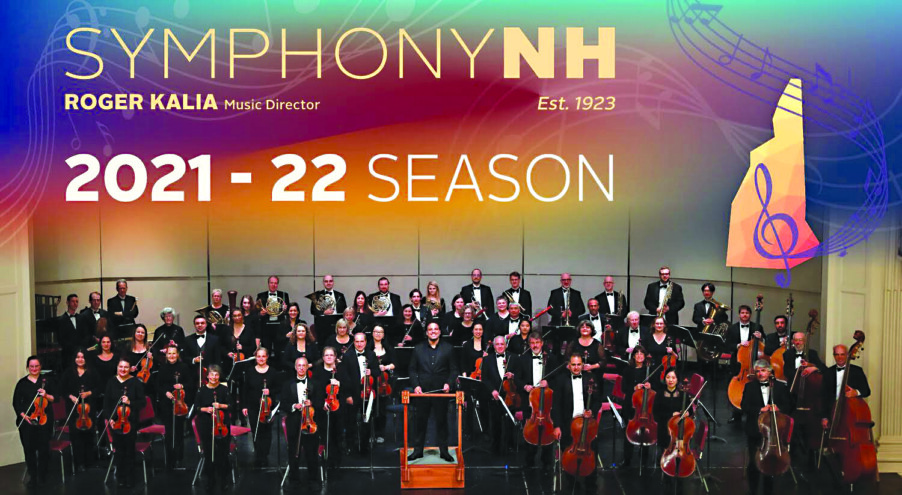
Symphony New Hampshire kicks off its 2021-2022 season with a concert tonight at 7:30 p.m. at the Keefe Center for the Arts (117 Elm St. in Nashua). See symphonynh.org for tickets and for safety rules. The evening will feature Frank Ticheli’s “Rest,” Mozart’s “Sinfonia Concertante for Four Winds” and the concert chamber orchestra suite of Gershwin’s Porgy and Bess. Roger Kalia will conduct.
Wednesday, Oct. 13
If the snap of fall weather and the return of the The Great British Baking Show has inspired you to hold your own Bread Week, check out the Decorative Focaccia Bread cooking class tonight at 6 p.m. at LaBelle Winery (14 Route 111 in Derry; labellewinery.com, 672-9898). The class costs $49.05; reserve a spot in advance online.
Save the Date! Oct. 15
Mamma Mia!, the joyful ABBA jukebox musical, will kick off a multi-week run at the Palace Theatre (80 Hanover St. in Manchester; palacetheatre.org, 668-5588) on Friday, Oct. 15, with opening night show at 7:30 p.m. The show will run Fridays (7:30 p.m.), Saturdays (2 and 7:30 p.m.) and Sundays (noon and 5 p.m., most weeks) through Sunday, Nov. 14, with Thursday shows on Oct. 28 and Nov. 11. Tickets run $25 to $46.
Featured photo: Symphony New Hampshire. Courtesy photo.
According to the Back to School Stress Index created by online learning platform Brainly, New Hampshire was the third most stressed out state when it came to going back to school this year, after Montana and Pennsylvania. The study was conducted between Sept. 18 and Sept. 25 and measured stress indicators on Google Trends relative to geographical location, with search queries related to the reopening of schools, Covid-19 prevention, school guidelines and homeschooling requirements.
Score: -1
Comment: To put a more positive spin on it, the number of Granite Staters’ school-related Google searches could just as easily mean that we like to be prepared and are invested in our kids’ health and education.
…and school event success
The first CelebratED MHT! was held Sept. 18 at Veterans Park to celebrate Manchester’s students, families and staff, with more than 30 city departments and local organizations coming together to offer free fun for the community. Free books, food and drinks, entertainment and family activities were part of the fun, but the point of the event was to recognize all the good that’s happening in the Queen City’s schools.
Score: +1
Comment:Organizers are starting to plan for next year’s event. Send an email to outreach@manchesterproud.org if you’re interested in being part of the volunteer team.
A’s for two NH liberal arts colleges
The nonprofit American Council of Trustees and Alumni recently released its annual “What Will They Learn? 2021–22 report,” which gave A’s to two New Hampshire liberal arts colleges: Magdalen College of the Liberal Arts in Warner and Thomas More College of Liberal Arts in Merrimack. According to a press release, 1,110 U.S. colleges and universities were graded on their core curriculum requirements, and only 24 received As. The survey examines course requirements in seven foundational subject areas: Composition, Literature, intermediate-level Foreign Language, U.S. Government or History, Economics, Mathematics and Natural Science. To earn an “A,” a school must require all students to study at least six of these subjects, the release said.
Score: +1
Comment: New Hampshire has some big, and big-name, colleges (Dartmouth, UNH, SNHU), but this report is a good reminder that there are smaller, less well-known academic gems here too.
Hundreds of fires
So far this year in New Hampshire 628 people have received assistance from the American Red Cross of Northern New England in the wake of 278 home fires, according to a press release. There is typically a spike in home fires in the winter months, the release said, so those numbers will likely go up.
Score: -1
Comment:To combat the anticipated increase in fires as the cold weather arrives, the state Department of Safety and the Red Cross are stepping up efforts this Fire Prevention Week (now through Oct. 9) to encourage people to test smoke alarms and make an escape plan.
QOL score: 80
Net change: 0
QOL this week: 80
What’s affecting your Quality of Life here in New Hampshire? Let us know at news@hippopress.com.