Power trio

River Sang Wild plays a ski resort weekend

By Michael Witthaus

mwitthaus@hippopress.com

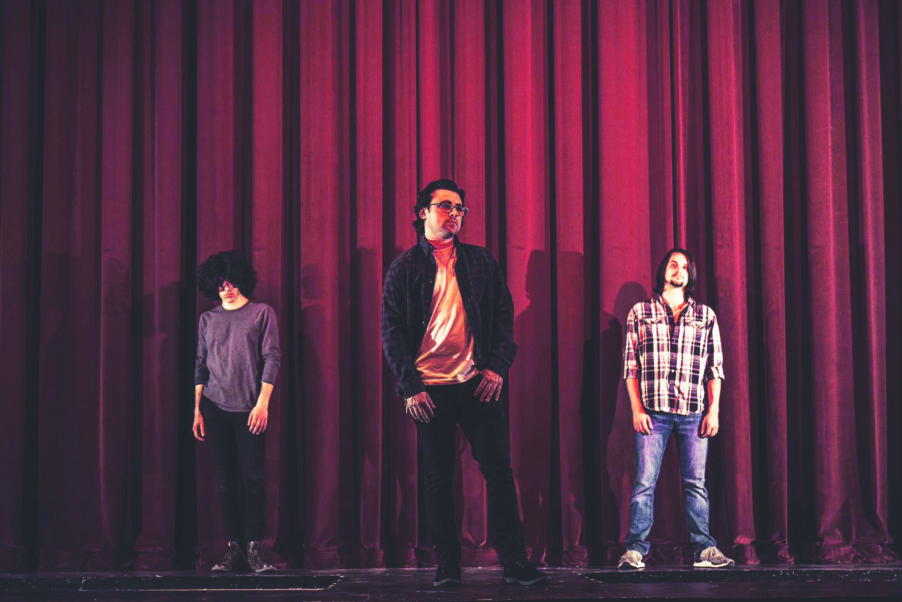
A year ago River Sang Wild played an apres-ski set at Pats Peak to a crowd that was so appreciative they’ve been asked to return for a two-day run beginning March 8. Typically, the power trio amps up places like Strange Brew and the Press Room with a big and boisterous sound, but these shows will be closer, sonically and spiritually, to Nirvana’s Unplugged.

“We do a more stripped down set there,” the band’s drummer Harrison Foti said in a recent phone interview. “Because our normal one is pretty high volume, high energy, that type of thing. We can’t really do that in the room they have us play in.”

The band formed during the pandemic, a few years after Danny McCarthy and Foti first connected at a North Shore open mic night hosted by Brian Maes of Barry Goudreau’s Engine Room. When Foti’s band Victim of Circumstance broke up, he began jamming in McCarthy’s basement, along with bass player Brad Hartwick from his old group.

As live music returned, the three began to play out. Concurrently, Foti and Hartwick were the rhythm section of Feverslip, led by ex-Red Sky Mary singer Sam Vlasich. In 2023, Hartwick left to devote his attention to that band. Rainor Vigneault took over on bass, completing River Sang Wild’s present lineup.

Heartbreak Recital, a five-song EP, was released in November 2023. It kicked off with “The River,” written by McCarthy, a bracing rocker that also included the band’s name in the chorus. “I’m actually the jerk that planted that lyric,” Foti said of making it a theme song. “I’ve heard some people do that and I’m like, why not? Personally, it’s one of my favorite songs.”

Other standouts in the collection include the jangly, fuzz toned “Love Train” and “Rewind,” another up-tempo bop with a radio-ready boogie feel. “Bloodlines” is another crunchy gem. The band’s influences include post-millennial rockers like Black Keys and Kings of Leon, but they also cover Cream, and play The Beatles’ “Don’t Let Me Down” with aplomb.

“We definitely thus far have had a classic rock influence upon our music,” Foti said, while adding, “I hope to stray away from that, because my musical tastes have certainly changed, even within rock. I feel a bit the same about the other guys too…. I think that they are very open to exploring other avenues.”

“Devil or Not,” released late last year, and another single in the works reflect new member Vigneault’s role.

“I feel that Rainor’s definitely been incorporating more into the songwriting,” Foti said, adding. “Danny’s really the one bringing forth the lyrics, the song ideas…. I partake in helping with arrangements and, of course, laying the drums down.”

Approaching its fifth anniversary as a band, River Sang Wild is upping its profile in a few ways. Christos Alamaniotis, a graphic artist who’s worked with The Misfits, Papa Roach and Car Seat Headrest, is doing their latest cover art, and the band is finalizing plans to record a live session with Philadelphia-based Cart Music soon.

“Essentially, they videotape a whole set [and] give you the audio and video,” he explained. “They reached out to us within the last week and we’re looking to set up a date with them along with a couple of Philly shows, and most likely New York, since it’s kind of right next door.”

Last summer they played a second stage set at Bank of NH Pavilion ahead of the Dave Matthews Band. Hopefully, they’ll be back on the venue’s Hazy Little Stage again next summer.

Beyond that, River Sang Wild is focused on creating new music and refining its sound. They are currently working on new songs, with hopes of recording more material in the coming months. They’re playing the new tracks at shows, Foti noted, but the studio sessions will begin a path to their official release.

Since forming his first band in 2017, Foti is partial to the power trio format, demanding though it may be. “It’s definitely a challenge because you can’t really hide a lot. Everything is out in the open, and everyone’s very much equally responsible for filling in the space when necessary — and knowing when not to fill in the space with a trio is also important.”

River Sang Wild

When: Saturday, March 8, 6 p.m. and Sunday, March 9, noon
Where: Pats Peak, 686 Flanders Road, Henniker
More: riversangwild.com

Featured Photo: Courtesy photo.
Still the ones

Orleans comes to Concord

By Michael Witthaus

mwitthaus@hippopress.com

Orleans’ story is one of hurdles faced and cleared, including one so monumental it’s a miracle they’re still making music.

The first challenge came two years after the band formed in 1972, when the record label didn’t hear a hit on their second album and dropped them. They bounced back after the A&R head at Asylum listened to “Dance With Me” and “Let There Be Music” from the rejected LP. He caught something, and bought the re-recording rights.

Lance Hoppen made the trio his brother Larry co-founded a quartet 10 months after forming. In a recent phone interview, he explained why two enduring hits were non-starters until they landed on the ears of Asylum’s Chuck Plotnick. “With his input, they were re-sculpted,” he said. The first “opened the door at radio, and ‘Dance With Me’ basically went top five.”

The latter, he continued, “was now a hit record, as well as a hit song.”

Now a wedding standard, the ballad began as a riff that guitarist John Hall played at rehearsal.

“Larry said, ‘That’s a good one, you should finish that,’” Hoppen recalled. The song was atypical of a band that got its name from the Allan Toussaint and Meters covers it favored. Hall’s co-writer wife Johanna, who’d later pen the smash “Still The One,” wrote the lyrics.

“John said to her, ‘Is that it? Is that all it is?’ and she said, ‘Yeah, that’s what it is’ — look what happened to that,” Hoppen continued. “Some things just come out of the blue; no way could we have predicted it would be a hit, especially in light of the mainstream of our material.”

Orleans’ biggest hit came two years later, when a neighbor of John and Johanna Hall who was splitting with her husband asked if they could write a song about relationships that didn’t end in breakup. Joanna jotted the words to “Still the One” on the back of an envelope and gave it to John, who said in a 2021 interview that he wrote the music in 15 minutes.

Hall departed for a solo career in 1977, and the band’s final charting single, “Love Takes Time,” came two years later. But label problems of a different kind choked their momentum. Infinity Records made a big bet on an album of live recordings from Pope John Paul II that flopped. MCA took it over, and let Orleans’ 1980 follow-up record wither on the vine.

In July 2012, Larry Hoppen died by suicide. Reeling from tragedy, Lance was at the same time mindful of the band’s many business commitments.

“I just changed the question; it was not, are we going to continue, it was how,” he said. “So I called John.” Hall had wanted back into the band after serving two terms in Congress, and now he was needed, if only to fulfill obligations.

With the help of various alumni, they continued through November, concluding with a memorial concert in Nashville.

“I raised some money for his kids, that’s what that was for,” Lance said. “I was sure we were done, forty years, this must be it … then I got a phone call.”

A promoter putting together a Sail Rock Tour asked Orleans to be the house band for Christopher Cross, Robbie Dupree, Gary Wright and others.

“We were resurrected in that manner, and the years kept flowing,” Lance said. “It was a really high hurdle, under duress, and we made it.”

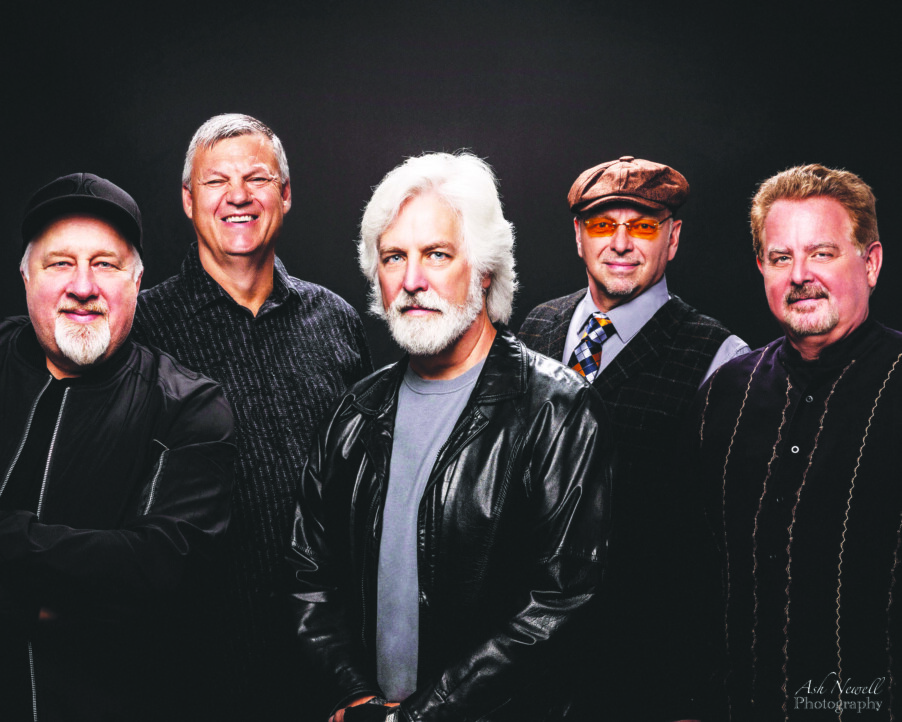
More than a dozen years later the band soldiers on. The current lineup includes Lance Hoppen and his brother Lane, Brady Spencer, Tom Lane, and Tony Hooper. Hall retired from touring due to health concerns but still joins on occasion. Lance hopes he and his longtime band mate will return to the studio one more time before calling it a career.

“We have … a retrospective collection and some new cuts,” he said. “John and I are kind of like, ‘Well, it’s come up again, are we going to finish this thing or what?’ There are a couple of tracks that … have been there for a long time. If we just finish them, we’ll have something to put out, and it’ll probably be the last thing we do.”

Orleans
When: Thursday, Feb. 27, 7:30 p.m.
Where: BNH Stage, 16 S. Main St.,
Concord
Tickets: $69 and up at ccanh.com

Featured Photo: Courtesy photo.

Here’s Johnny

The Man In Black is a convincing Cash

By Michael Witthaus

mwitthaus@hippopress.com

Shawn Barker walked into auditions for the rock ’n’ roll origin musical Million Dollar Quartet sporting a rockabilly haircut with his eyes on the Elvis Presley role. The show’s director had a different idea, however, and his decision pointed Barker down a new path, and a multi-decade career starring in his tribute act, The Man In Black.

“There’s a million guys that audition for doing Elvis for this play, and we can pick any of them,” Barker, in a recent phone interview, recalled being told. “There’s nobody that we can pick that would do Johnny Cash except for you. You’re the one guy that we found that was like, this is the guy.”

Once that was settled, the musical’s producers encouraged Barker to take an immersive approach for his role.

“I went to where he was buried, to his house — anything I could do to associate myself with Cash,” he said. His efforts ultimately benefited The Man In Black. “It ended up getting so popular that I never took stage with the Million Dollar Quartet; I got too busy and I had to drop out of the Broadway production.”

Barker’s show begins in the Sun Records studio where Cash cut his first songs, and continues chronologically through the ups and downs of a career that found him at one point banned from the Grand Ole Opry for kicking out stage lights in an intoxicated rage, and welcomed back a few years later to host a weekly television show from the Ryman Auditorium stage.

The Johnny Cash Show, which ran for two seasons from 1969 to 1971, was an incubator for the crossover genre of music now called Americana, and Barker takes time to focus on it during his show.

“We talk about how groundbreaking it was,” he said. “He had people like Bob Dylan, Louis Armstrong, Ray Charles, Linda Ronstadt … it was a very eclectic group he brought to his show. And he was doing the folk festivals and stuff like that at the time when the whole hippie movement was going on. He was a pretty diverse cat, man.”

It concludes with the series of American Recordings albums that Rick Rubin began producing in 1994. Covers of songs like Nine Inch Nails’ “Hurt” and “Rusty Cage” from Soundgarden helped bring Cash to a new, younger audience, driven by his music and stark, moving videos played on MTV and VH1.

“He’s one of the only stars that I can think of that had that far-reaching of a fan base,” Barker said, adding he sees evidence of this whenever he performs. “We get little kids at the show sometimes and then we’ll get the people that were there when he was at Sun Records. Eight to 80 years old is our crowd age;it’s pretty wild.”

Barker took a winding road to becoming a convincing doppelgänger for the country legend. Growing up in Missouri, he sang in the church choir and joined school band in fifth grade. When he started playing with friends in the basement, it was lots of rock music, from Skid Row and other popular groups.

After high school, he was in a working band called Nothing Yet, doing everything from early Stones to Rage Against the Machine — not exactly Pentecostal fare.

“Oh, yeah, it was a total departure,” he said. “Church was one of the things I grew up in as a kid, and probably went about as far from as you can, and then came back to as an adult.”

To hear Barker tell it, becoming Johnny Cash was bound to happen.

“My dad and his family are all from Arkansas like Cash, and grew up doing the same things,” he said. “Even as a kid, my dad worked on a cotton farm and pulled the big sacks. He’d talk about how his hands would be cut up from reaching in and popping the cotton off the plants.”

The Cash look was a gift from above, but the rest came naturally, and since launching the act in 2003, Barker’s come to see it as his destiny. Fans clearly love it. “The accent was something I already had in genetic makeup,” he said. “I didn’t really think it was going to be that long-lasting … but it turns out that this is probably what I’m going to do until I die.”

The Man In Black: A Tribute to Johnny Cash
When: Sunday, Feb. 23, 7 p.m.
Where: Nashua Center for the Arts, 201 Main St., Nashua
Tickets: $29 and up at etix.com

Featured Photo: Shawn Barker. Courtesy photo.

History and song

Guy Davis returns to Flying Goose

By Michael Witthaus

mwitthaus@hippopress.com

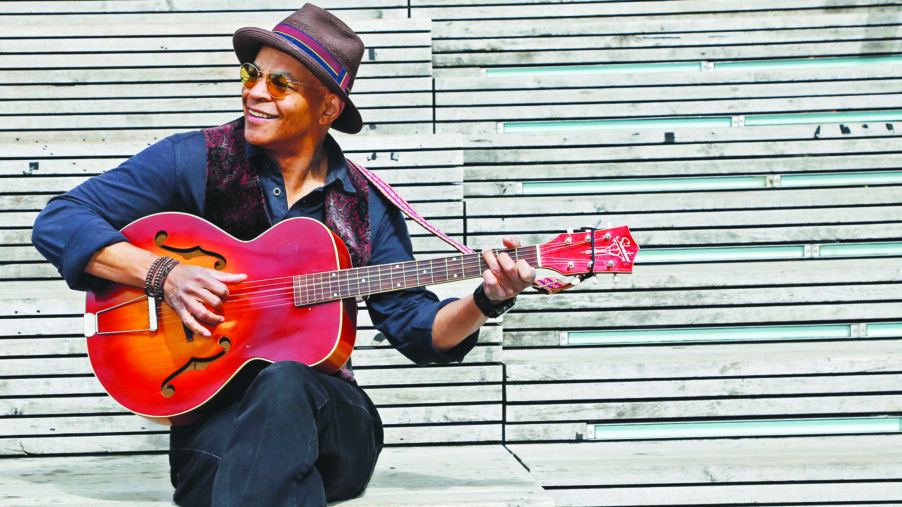
History through song and storytelling imbues the performance of Guy Davis. His 2024 album, The Legend of Sugarbelly, was inspired by a woman murdered in Georgia during the early 20th century, a tale Davis’s uncle would share every time he visited. Though the victim’s name was a mystery, everyone was aware of her killer’s identity.

“I knew the story by heart, it was like a ceremony between my uncle and I,” Davis said by phone recently. “Not only did my whole family know this man, that same man at one point was assigned by the Ku Klux Klan to kill my grandfather, because he was a Black man. I’ll just say that my grandfather’s death at his hands never did take place; a lot of mitigating circumstances that had to do with family looking out for each other, that kind of thing.”

The Legend of Sugarbelly began as a song and later became a play that debuted at Crossroads Theatre in New Brunswick, N.J., in 2022. Davis will draw from the work at an upcoming New London show, and do a monologue from the theatrical version.

“That uncle who used to tell me the story, he died the day I finished writing the play,” Davis noted poignantly.

The son of actors and civil rights leaders Ossie Davis and Ruby Dee, Davis grew up with people like Harry Belafonte and Sidney Pointier stopping by his home.

“I remember my dad introducing me to Malcolm X and having to reach way up and him having to reach way down to shake my hand,” he said. Meeting boxer Joe Louis at a Harlem fair housing protest was another favorite memory.

Davis found music at a Vermont summer camp run by John Seeger, Pete’s brother, where he learned banjo, later adding six- and 12-string guitar to his repertoire. He grew so dedicated to banjo that one day on a hike that stopped at an estate auction, he bid all his money on an armless rocking chair. “I was 25 cents short, but then the guy running the auction looked at me and said, ‘Here, I’ll give you the quarter.’”

It was perfect for practicing, which the camp counselors let him do during rest time.

“They allowed me to take my rocking chair, sit it outside the cabin with my banjo, and just sit, rock and play,” he said. “I wasn’t any good … but I was trying to learn that basic baton stroke that Pete does.”

He’d meet the legendary folksinger a few years later, after seeing him in concert on a camp day trip. “I came home and I found Pete Seeger standing in my living room,” Davis recalled. “I didn’t know he knew my folks. He asked me a couple of questions, and then over the years, I got to go up to his cabin and meet his daughters…. His door always seemed to be open for the rest of his life to me. I was very grateful.”

In his 20s, Davis began playing with Seeger. “Pete made the mistake of never chasing anyone off the stage who came up to sing with him,” he said. “A bunch of us would just follow him around, and when he went on stage, we’d … back him up. If his guitar or banjo was on the floor of the stage while we sang, he seemed to not mind if I picked one of them up.”

Seeger figured prominently in the recent Bob Dylan biopic A Complete Unknown, and Davis was asked to comment on Edward Norton’s Oscar-nominated portrayal of the man he’d grown to call “Uncle Pete” — along with his wife, “Aunt Toshi” — as the interview wound down.

He enjoyed it, Davis began. “He captured something of Pete, and I can’t quite explain what it was, but there’s a sense of humility, a sense of decency, a sense of being a helping hand,” he said, then added his take on the film’s subject. “As far as Timothee Chalamet is concerned; after seeing the movie, I think I knew less about Bob Dylan after than I did before.”

Guy Davis

When: Thursday, Feb. 13, 7:30 p.m.
Where: Flying Goose Pub, 40 Andover Road, New London
Tickets: $30, call 526-6899 to reserve

Featured Photo: Guy Davis. Courtesy photo.

Double Rush

Lotus Land plays twice at Tupelo

By Michael Witthaus

mwitthaus@hippopress.com

A good tribute act walks a tightrope, capturing a sound without trying to fully reproduce it. It’s something that bassist Chris Nelson thinks about frequently. His band Lotus Land plays the challenging catalog of Rock & Roll Hall of Fame trio Rush, and Nelson knows that convincing proximity, not perfection, is a sane performer’s best target.

“It’s not like we’re trying to repaint the Mona Lisa, that’s almost a thankless task,” he said by phone recently. “We’ve gelled into performing this stuff with a certain degree of our personalities. Tone comes from the hands of the musician; you can’t help but sound a bit like yourself … you’re not trying to just be a robot.”

Fortunately, Nelson’s voice has a natural pitch that’s similar to that of Rush’s lead singer. Comments about the vocal resemblance have followed him for years. “I’d sing a Zeppelin tune and without fail people would say, ‘You sound so much like Geddy Lee,’” he said. “Here I thought I was doing a pretty good Robert Plant! But anyway, I’m a crazy Rush fan.”

His bandmates, guitarist Bob Chartrand and drummer Mark Dalton, started Lotus Land as a four-piece, parting ways with the original bass and keyboard players when they met Nelson and became a trio. Before playing out, they watched videos and practiced hard, aware that Rush’s fans would “be as understandably critical of us as they are loyal to the real thing.”

They approached their first gig fretting about the formula, prepared to bail if it failed. “I’m not going to put myself and my bandmates through the embarrassment — if it doesn’t work, that’s going to be it, because I know it’s a tall order,” Nelson recalled thinking at the time. “But it was well-received … and it kept snowballing.”

The band took its name from a line in “Freewill,” a song from Rush’s breakthrough 1980 album Permanent Waves. The late Neal Peart was inspired by Homer’s The Odyssey when he wrote it, according to interpretations. In the book Merely Players, Peart said the “Lotus-land” was “a metaphor for an idealized background, a land of milk and honey.”

Their website describes “an obsessive approach … that inevitably compels us to incorporate every authentic Rush nuance into whatever amazing tune of theirs we may be playing,” and on songs like “Spirit of the Radio” and “Tom Sawyer” they deliver on the promise with masterful musicianship that honors the original songs.

Nelson’s bonafides as a fan are undeniable — he’s seen them live almost 20 times, and Lotus Land performed at the 2012 RushCon in Toronto. The latter was a life-changing event for him — he met his future wife there. She was there from L.A., along with thousands of others who’d traveled there.

The meeting only sparked a friendship; both were with other partners at the time. “Two years later, our situations changed, and here we are married; so I can credit the band for that,” he said. “What’s cool is I got to tell Geddy Lee that, very briefly at a book signing, I had my 60 seconds like everybody else, and I got to tell him that.”

Asked to name his most enjoyable moments during Lotus Land’s set, Nelson responded, “I love that question. People have their favorite areas of the band and mine happens to be from Permanent Waves through Grace Under Pressure, so that’s also Moving Pictures and Signals. For my natural register as a vocalist, that feels right in my pocket, so that’s the kind of stuff I love to do.”

That said, there’s another song he loves not on any of those albums.

“I love playing ‘The Path,’” he said, adding a side note. “I never try to change my voice to sound like him at all. I hear some other tribute acts do, but I’ve got a higher, and similar register as Geddy, so I’m just going to sing in my natural voice. If it sounds like him at the end of the day, great. If not, it shouldn’t be too painful on people’s ears because I’m going for the right pitch … it should be close.”

Lotus Land

When: Friday, Feb. 7, and Saturday, Feb. 8, 8 p.m.
Where: Tupelo Music Hall, 10 A St., Derry
Tickets: $42 and up at tupelohall.com

Featured Photo: Courtesy Photo.

Stones’ fab four

Paying tribute to a hot streak of albums

By Michael Witthaus

mwitthaus@hippopress.com

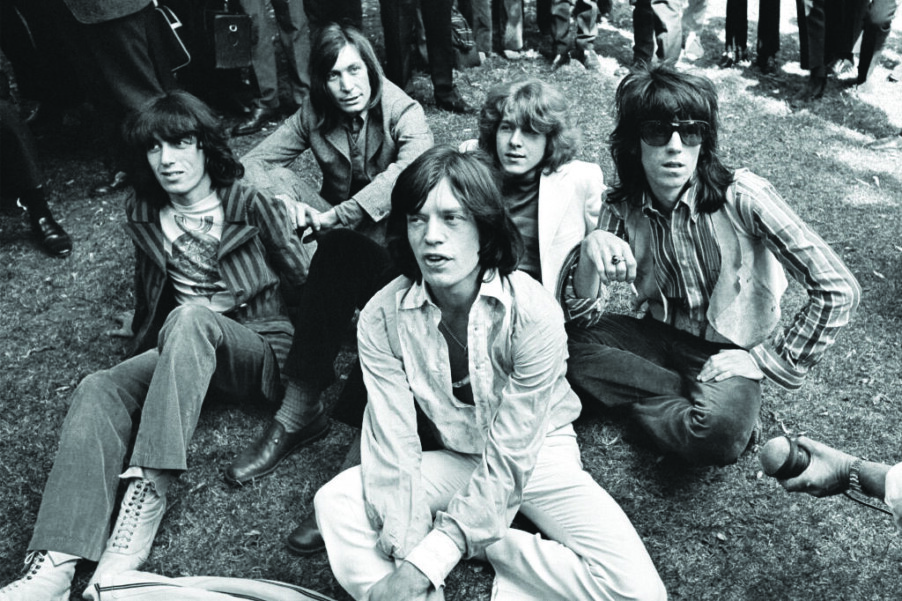
Beginning with Beggars Banquet in 1968, the Rolling Stones made four records in a row that are all among the greatest to come from the classic rock era — and the last one, 1972’s Exile on Main Street, was a double album. The other two were, of course, 1969’s Let It Bleed and Sticky Fingers, released in 1971.

Here’s the thing, though. It was an iconic streak, but the band’s true achievement was surviving it. Most of them, anyway; co-founder Brian Jones barely made it through the first two LPs before his death. Arrests, bad business deals, a disastrous free concert and a midnight run from England to France all happened, while the music just got better.

A show on Feb. 1 at Pembroke City Limits will feature four songs from each album, along with a look at the times that produced them. A house band led by John Zevos of Lichen will recreate “Sympathy for the Devil,” “Midnight Rambler,” “Dead Flowers,” “Tumbling Dice” and a dozen others.

“I was peeling through some of the Stones’ essential works of the late ’60s and ’70s and I just could not get past these four records,” PCL owner Rob Azevedo, who organized the show, said recently. “Mick’s potent lyrics, Keith’s blazing riffs and the magnitude of these incredible creations…. I thought, we need to pay tribute to these songs, and soon!”

Hosting and providing historical context for the event will be me, Michael Witthaus. I watched a lot of it unfold as a teenager in Northern California, like the horrific Altamont show that summarily ended the ’60s idealism once rising at Woodstock. When the Stones returned to San Francisco in 1972 and played Winterland, I was there.

Since then, I’ve learned a lot more from books and podcasts about the decade’s music. I’ll talk about living in that era, and tell stories about the Greatest Rock & Roll Band in the World, like the one about how the organ player on Dylan’s “Like a Rolling Stone” later joined The Stones and helped shape the opening bars of “You Can’t Always Get What You Want.”

A seasoned group of Stones-loving musicians is promised, which will include a horn section for a few songs consisting of sax players Brian Booth, Dani Sven and Jason Reichelson, along with John Spring on trumpet. Zevos wrote the horn charts, something he’s done for Azevedo-organized tribute shows in the past. The band, he said in an email interview, consists of “people I’ve played with a lot over the years that I knew would be great playing Stones tunes.”

On keyboards and singing is his wife Diane Zevos. She’s also a member of Lichen, a band nearly as durable as the Stones, having marked 43 years together last August. “Di loves rock ’n’ roll, and adds so much to any band she plays in,” Zevos said. “We love playing together.”

Playing guitar and vocals is Wayne Hughes, a longtime collaborator of Zevos’. “We play together all the time in various situations, and he knows more about the Stones than anyone I know,” he explained. “As soon as Rob asked me to do this I said to myself, ‘I have to get Wayne,’ and he was eager to jump in.

Steve Forgione, though best known for his guitar work in local band Who Knows What, will move to drums for the show. “He grew up drumming in drum corps, and he is also a fantastic drummer,” Zevos said, adding, “Steve knows this material really well and I think because he is a guitar player he is a very musical drummer.”

On bass and vocals is a newer friend of Zevos, Peter Borden. “I met Peter while playing with him in another band and we found that we have the same taste in music,” he said. ‘Even more than that, we hit it off musically. When I found out he was into the Stones, he seemed like the logical choice, and it is working out really well.”

Zevos will handle the “Keef” parts on guitar. “A lot of them are in the open tunings that Keith Richards uses,” he said. “You can play all of the songs in standard tuning, but to get the same sound as Keith, on some songs you need to use the tunings. I like it, it’s really fun. I’ll need to bring four guitars.”

Rolling Stones Tribute Show

When: Saturday, Feb. 1, 2 p.m.
Where: Pembroke City Limits, 134 Main St., Suncook
More: pembrokecitylimits.com

Featured Photo: Rolling Stones, 1969 (Courtesy Photo).

Stay in the loop!

Get FREE weekly briefs on local food, music,

arts, and more across southern New Hampshire!