New Hampshire goes plastic-free for July
The Plastics Working Group, one of the specialized action groups in the New Hampshire Environment, Energy and Climate Network, has challenged New Hampshire to take part in the international Plastic Free July initiative this month. Cindy Heath, the original convener of the Plastics Working Group, talked about how people can take the pledge and why it’s so important.
What is Plastic Free July?
Plastic Free July was an international campaign founded in Australia. It is a pledge format where individuals and businesses and organizations can pledge to strive for a plastic-free July. The intention is to raise awareness and help discover alternatives to using plastic in our everyday lives … and we also want to help build momentum for future legislation that supports plastic waste reduction. … You can join us as an individual or as part of an organization, business or community, and you can take one action or more than one.
What are some actions that communities can take to engage with the initiative?
They should start by going to the Plastic Free July website, plasticfreejuly.org, which has many, many pages of resources. A proclamation with their town select board is a possibility, just declaring the importance of plastic waste reduction and the commitment to try to have a plastic-free July. There are opportunities to do things like picnics, library displays … showing what alternatives there are to using plastics in your everyday life. I already know that the communities in Hopkinton and Dover are going to be doing some library displays with education around plastic waste, and we’re going to be hosting a plastic-free picnic in Cornish on July 16, so communities are engaging in different ways.
What are some things that individuals can do to go plastic-free in their day-to-day lives?
Individuals can take the pledge and learn about how to do things like bring a cloth bag to the grocery store instead of using the plastic bags that are provided; refuse to purchase vegetables that are being sold packaged in plastic clamshell containers; refuse to buy beverages in plastic bottles; refuse plastic [utensils] and Styrofoam takeout containers when they go out to eat, or request alternatives. … Before plastic was invented, we all found ways to have a picnic, order takeout food from a restaurant and not use plastic bags.
In what ways are plastics harmful?
The concern that we’re trying to raise awareness about is not only the environmental impacts of plastic production; it’s also the human health and animal health impacts of plastic waste. The Plastic Free July website has a number of facts around the volume of plastics that goes into our oceans and how microplastics end up in our food through the food chain, because marine animals eat plastic thinking it’s food, and then the food chain progresses and it ends up in our food. Plastic particles have even been discovered in human placenta. It’s a human health concern as well as an environmental concern, and we’re just hoping that people will understand the health and environmental impacts of plastic.
What kinds of progress has New Hampshire made with reducing plastics so far?
We’ve had several communities host a screening of a film called Microplastic Madness, which is about fifth-graders in New York who are able to, over a two-year period, help New York City, and then New York State, ban Styrofoam use in schools and in restaurants for takeout. We have community members who are working with local restaurants to try to develop an ocean-friendly designation through Surfrider, which is another organization … working specifically on helping restaurants choose alternatives to plastic and styrofoam takeout [materials]. Then, in the infrastructure realm, there are changes that a number of our communities have initiated, things like recycling systems and doing waste audits at schools. In Bristol, they held a sustainability fair in May to raise awareness about plastic film recycling. In Claremont, they’re working on collecting styrofoam for recycling. In Gilford, they’ve just taken delivery of the first Styrofoam densifier in New Hampshire and will begin accepting Styrofoam for recycling shortly.
How can individuals get their cities and towns to commit to more plastic-free practices?
They can go to our Ten Towns Actions Toolkit website, 10towns.org. On the homepage, there’s a box at the top that says “Join Us and Take Action,” which will lead people to a form to complete. Then, one of our members will get in touch with them to help them get started.
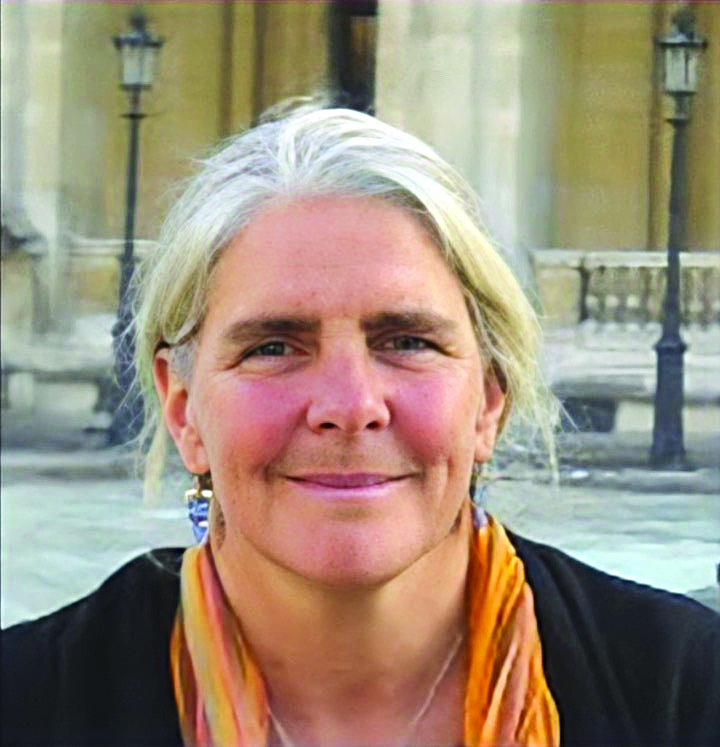
Featured photo: Cindy Heath. Courtesy photo.