Connecting writers and publishers

Derry Author Fest takes on a practical theme

Elizabeth Ives was a long-time supporter and trustee of the Derry Public Library, and she had a dream, said Erin Robinson, Reference Librarian and coordinator of the Derry Author Fest.

“She was great. She’s since passed away, but she wanted to have an Author Fest that would have MFA-style classes and would be beneficial for people who want to become writers and authors and illustrators. The idea was that they wouldn’t have to jump through a lot of hoops or pay to go to a conference. She wanted it to be free and open to the public.”

“So,” Robinson continued, “year after year we’ve held the Author Fest here at the Library. It was a little messy at first — you know, everything takes a little fine-tuning — but now we have it down to what we really want it to be, which is focused on writing and publication and a very straightforward one-day series of lectures. Each year we have a different theme, and this year’s Fest is Pathway to Publication.”

This year’s presentations will be geared toward the practical steps of producing a book, Robinson said.

“We’re going to have a publishing panel that tells us what happens behind the scenes,” she said. “We have an executive editor from Harper Collins and an agent from Calligraph [literary agency]. We’ll have someone from the Public Relations and Marketing department at Penguin Random House, specializing in young readers. They’re going to demystify the process of publishing for us. We also have a creative panel where people are going to talk a little bit more about just being creative, but also what that entails, how they carve out structure in their day, do they have a day job? That sort of thing. We’ll have an illustrator, a picture book writer, and a YA writer on that panel. We’ll also be talking about niche publishing — what is it like to work with small presses as opposed to going for a big, traditional press? What’s the difference? Finally, Rebecca Allen is going to talk to us about finding a community that can help you succeed, finding critique partners, and how you can encourage each other to make your work better,”

“It’s going to be a full day,” she said.

The keynote speakers will be mother and daughter New Hampshire writers Rebecca and Adi Rule.

“They both have very interesting backgrounds because they write very different things,” Robinson said. “Becky’s writing is very regional. Adi writes children’s, middle-grade and YA fiction. They are going to talk about publishing over decades and generations. That should be a really interesting conversation to kick off the day.”

Robinson said that in past years the people attending Author Fest have been writers in a wide variety of genres.

“It’s hard for us [when we plan the conference], because we have to decide, ‘Do we want to lean more into the adult writers and do we want to get more for the kids? We have a sprinkling of nonfiction writers. We try to even the day out — some people write for adults and some for kids. People don’t have to stay all day, so some people will come and they will stay all day because they are going to gather something from every lecture regardless and they’re happy to be here and learning, but some will pick and choose. During lunchtime we try to split up the groups. If people want to stay and hang out during that block, we have tables where people can gather together by genre or subject or interest, so we have like our nonfiction writers table, or our children’s book writers, and they can all group together and connect. It depends on the year,” Robinson said.

In addition to the day of speakers and panels, the library will host a book sale throughout the day provided by Gibson’s Bookstore, according to derryauthorfest.wordpress.com where you can see the full schedule and links to register.

2026 Derry Author Fest: Pathways to Publication
When: Saturday, April 18, from 10 a.m. to 4 p.m.
Where: Derry Public Library, 64 E. Broadway, Derry, 432-6140, derrypl.org
More: derryauthorfest.wordpress.com

Featured photo: Courtesy photo.

Frozen Peanut Butter Salad

From the 1933 recipe booklet Cooking with Cold by the Kelvinator Refrigerator Co.:

  • 1 8-ounce package cream cheese
  • 1/3 cup (90 g) peanut butter — I’m not sure what the peanut butter was like in the 1930s, but I used a mainstream, brand-name, lots-of-sugar-salt-and-stabilizers peanut butter. The kind your kids like.
  • 2 medium-sized jalapeño peppers — the original recipe calls for half a cup of diced green pepper, but this gives it a bit of flavor. Check out the heat level before you use them, but given how mild the jalapeños in New Hampshire supermarkets are you are unlikely to do yourself an injury.
  • ½ cup chopped pimento — this isn’t something you run across every day. I roasted and chopped a red bell pepper instead (see below).
  • ½ cup (about 40 g) chopped celery
  • ½ teaspoon paprika
  • ½ teaspoon salt
  • 1 Tablespoon fresh squeezed lemon juice
  • ¼ cup mayonnaise
  • ¼ cup whipping cream

Roast a red bell pepper.

Place a bell pepper — it can be any color, but red is the most dramatic — on a baking sheet with a piece of parchment paper or a silicone mat. (The pepper will release some liquid as it roasts, and this will help prevent a mess in the stove.)

Move one of the racks in your oven to its highest position and set the oven to a low broil. Leave the pepper to completely char, then turn it with a pair of tongs to char the other side. When the entire surface of the pepper has burned to a papery consistency, take it out of the oven and place it in a sealed container — a bowl with a fitted lid will work well for this, or even a regular bowl, with a plate on top.

Now walk away. Leave the pepper to steam for 20 minutes or so. The hot pepper juices — some of which have leaked out onto the baking sheet you were prepared enough to lay down — will loosen up that papery, charred skin. Now you can wipe it away from the body of the pepper with your fingers — which will get sticky and gross. And the actual pepper will fall apart in your hand. You will have to wipe the seeds away, and flick them into the sink — also a little gross. (This is why TV chefs don’t do this on camera.) But you will be left with a beautiful, perfectly roasted pepper that you can chop up for this recipe.

Putting together the rest of this “salad”:

Cream the cream cheese and peanut butter together until they are light and fluffy, then mix in the peppers, celery, seasonings, and lemon juice. Set aside briefly.

Whip the heavy cream and mayo together until fluffy, then fold it into the rest of the mixture. Spoon it into a lidded container, and freeze for several hours, then cut it into cubes and serve it to a confused but impressed dinner date.

Looking at the list of ingredients, at this point, you are probably saying to yourself, “There’s no way.” This seems like a very odd dish. And I have to confess that I have no idea how or why anyone came up with it, but it is — hold on to your hat — very tasty. It’s just very unexpected. If you find that you’ve become jaded and your palate has become numb to caviar, truffles and wagyu beef tartare, this might be a dish that jolts you back to your senses and braces you to soldier on for another day.

Which is not to say that this wouldn’t go super-well with a glass of Champagne.

Featured photo: Frozen Peanut Butter Salad. Photo by John Fladd.

Ready, set … daiq!

Daiquiri contest continues for a third year

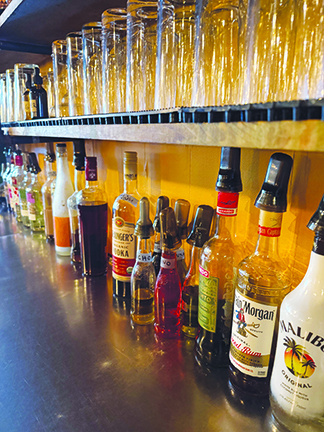
One of Manchester’s most recent traditions is built on a foundation of rum and lime juice. The Third Annual Manchester Daiq-Off, a daiquiri-making competition hosted by 815 Cocktails & Provisions, will pit some of Manchester’s best bartenders against each other to make the best, fastest and most original daiquiris this Sunday, April 12.

“This is a competition to make one of the most simple classic cocktails,” said Sarah Maillet, co-owner of 815, “which is the daiquiri. So you’ve got lime, simple syrup and rum.” Because it is such a simple cocktail, it is a good indicator of a bartender’s skill, she said. There’s nowhere to hide.

“This competition is [between] local bartenders who come together and it’s based on speed, accuracy and taste,” Maillet said. “The first round is about making the fastest, cleanest daiquiri possible. And then from there the competition narrows until the finalists, the last two, face off head to head. But as much as this is about our industry, the public is obviously welcome. It encourages the public to participate because It’s really cool to see a showcase of talent like this. It reminds people that the bar and restaurant industry is at its best when it’s a little bit competitive, maybe chaotic at times, but a whole lot of fun.”

The Daiq-Off is a bit of a metaphor for that industry, Maillet said, observing that there has been a change in attitude among the area’s bars and restaurants over the past few years.

“When my business partner Ryan and I opened 815 11 years ago, we didn’t get much of a welcome,” she said. The things that we heard were like, ‘I’ll give them a year.’ Over the past few years though, you’ve seen more of a banded community coming together.” An increasing number of bars have embraced craft cocktails, she said, and the owners and bartenders of most of them have known each other for years. “So it’s just like the camaraderie was instilled in friends already before it was implemented into the [bar] community, and I feel like it’s just had a ripple effect through the greater Manchester community over the years.” Perhaps symbolic of that spirit, restaurateur Nick Carnes from Shopper’s Pub and Eatery will be the announcer and emcee of this year’s Daiq-Off.

The competition will consist of three rounds, Maillet said.

“The first two rounds are all about speed, accuracy and taste. And then the wild card at the end, where [the competitors] have the ability to bring an ingredient, like a simple syrup or some sort of thing, to add in to the wild cards at the last round. They have a little bit more time, but the judging is based more on the creativity side of daiquiris.” Last year’s overall winner was Marissa Chick, at the time the bar manager of the Birch on Elm, with a bubble-gum daiquiri that included a handcrafted tincture that took more than a week to prepare.

Maillet said there will be 15 competitors this year, all but one of whom are Manchester bartenders.

“We will have one home bartender who came the first year,” she said. “So in my opinion, he’s grandfathered in. So he’s coming back this year. He wasn’t here last year. I’m pretty excited about that. Then as far as the breakdown goes, we didn’t limit the number of bartenders per establishment this year. We want this to be a snapshot of the industry itself. So for the places with several entrants, they’re going to go head against each other. For example, there will be four bartenders from the [Wild] Rover. They’ll all go head-to-head with each other, and then one Rover bartender will move on into the rest of the competition.”

The Third Annual Daiq-Off
When: Sunday, April 12, from 3 to 7 p.m.
Where: 815 Cocktails & Provisions, 815 Elm St., Manchester, 782-8086, 815nh.com
Spectators and competitors are encouraged to dress in festive tropical attire. Tickets are $28.52 through eventbrite.com.

Featured photo: A classic daiquiri by Joshua Silva, a bartender from 815 Cocktails and Provisions, who will compete in Saturday’s Daiq-Off.

Bespoke beans

Kawa roasts custom coffee blends

It was late at night on a Wednesday and everyone was asleep except Jeff Wilkins, who, ironically, was roasting coffee.

Wilkins is the owner and roaster of Kawa (pronounced “Kah-Vah”) Roasters, a small-batch coffee roasting company in Manchester. He was roasting batches of three pounds of coffee each.

“I ordered this machine brand new,” he said, laying his hand on a large, stainless steel appliance with a window showing roasting coffee beans being tossed and circulated. “This does a maximum of three pounds at a roast at a time,” he said. “I can buy a machine in this same design that will do up to 18 pounds, and that’s what I’m hoping to grow into, but at the moment this is where I’m at. I do multiple roasts a night, and then I blend them all together because it’s all manual. I don’t have any automation on this, so it’s all by sight, smell, time and temperature. Sometimes I’ll get there and that’s the whole point that I mix it. If one roast is a little too dark, I blend it with one that’s lighter.”

Wilkins said coffee roasting started out as a hobby for him.

“About three and a half, almost four years ago,” he said, “I decided that it was time to quit drinking alcohol and needed something to stay busy at night. My wife and I love coffee. So I said, hey, let’s learn how to make it. So I bought a roaster. It’s a little tabletop, you know, $500 job. I set it up in my garage and started playing around with it. I started watching videos, I read articles, and I did whatever I needed to do to try and figure out how to do this process. I made a lot of bad roasts and I burnt a lot of things. I found some things that worked, and eventually I kind of settled in on a, I’ll call it a recipe, that worked for the tastes that we like to come out of the beans.”

This led to gifts of home-roasted coffee to family and friends, who eventually convinced Wilkins to start roasting coffee professionally. Although he sells his coffee at a number of farmers markets and other events, most of his focus is on custom-roasting coffee beans for individuals and small businesses.

“I can do customized roasts for those that want to do their own unique blends,” he said. “I can do [bespoke] roasting where if you’re a cafe or a baker that’s doing, you know, 20, 30, 40 pounds a week and you want to private-label it, I’ll roast them and put them in your bags. Or I can do wholesale. So I can pretty much do whatever somebody wants.”

Wilkins said a lot of the variety in the flavor of coffee comes from how dark it has been roasted, but also from where it has been grown.

“There are so many different varieties of coffee,” he said, “ just like there’s so many different varieties of wine. But you can grow a chardonnay grape in California, and it’s going to taste completely different than a chardonnay grape coming from Europe. It’s because of the terroir, the conditions specific to where it was grown — it’s the nutrients, it’s the water, it’s the temperature, all plays a part in it. The same thing is true about coffee.”

This means coffee grown in different parts of the world, Wilkins said, often needs to be roasted differently.

“On my website I sell coffee beans from Costa Rica, Brazil, El Salvador, Vietnam, Thailand, and Sumatra. The Vietnamese coffee is unbelievable. I [roast] that one to a medium dark roast. It brings out a nice, almost like a Baker’s chocolate flavor to it at the end of the sip. I have tried the Sumatra as a light roast and it’s like drinking tree bark, it’s just terrible, but you take it to the darker levels and you get some really nice flavors coming out of it. Same thing with the Costa Rica. That bean lends itself to a lighter roast to pick up those nuances.”

Kawa Roasters
Fresh roasted and custom whole-bean Kawa coffee is available at kawaroasters.com, as is grinding and brewing equipment. Visit kawaroasters.com/our-retailers.

Featured photo: Coffee beans at Kawa. Photo by John Fladd.

The Weekly Dish 26/04/09

Diner social: The Rose and Rye Diner at Arts Alley (20 S. Main St., Concord, 406-5666, artsalleyconcordnh.com) will host a Diner Social on Friday, April 10, beginning at 5 p.m., featuring selections from Concord Craft Brewing (117 Storrs St., Concord, 856-7625, concordcraftbrewing.com). Expect a relaxed, social atmosphere with cocktails, beer and wine in a classic diner setting. This event is free to attend. No tickets are required.

Pasta bar dinner: The Tuscan Market (Tuscan Village, 9 Via Toscana, Salem, 912-5467, tuscanbrands.com) will host an Italian Pasta Dinner, Friday, April 10, from 6 to 8 p.m. Dishes will include spaghetti alla Bottarga, lorighittas with frutti di mare, and wild boar with truffle and ricotta gnudi, all of which will be paired with a matching wine.Tickets are $126.48 through the Tuscan Market website.

A barrel event at Averill House Vineyard: The New Hampshire Artisan Winery Collective will present a barrel tasting on Saturday, April 11, at Averill House Vineyard (21 Averill Road, Brookline, 244-3165, averillhousevineyard.com) from 11 a.m. to 4 p.m. Three New Hampshire wineries will each present four very special still-in-the-barrel wines. Ticket holders will be able to sample all 12 wines. Taste wines from Appolo Vineyards, NOK Vino, and AverillHouse Vineyard. This will be a relaxed, welcoming atmosphere perfect for wine lovers and the wine curious alike. Tickets are $30 each, through the NH Artisan Winery Collective website at nhwinerycollective.com.

Beginning Butchery: There will be a cooking workshop at the Cooking School at Hedera Farm (200 Mountain Road, Francistown, 487-7898, hederafarm.com) Saturday, April 11, at noon. The lesson will be Beginning Butchery. Learn what to look for on poultry labeling (additives, processing methods, size-grading, etc.), which is best for different cooking methods, proper sanitation, and cooking temperatures. Then practice the basics of breaking down poultry. In addition to cooking poultry, each participant will break down (and take home) their own chicken. This three-hour workshop costs $80. Register through the Farm’s webpage.

Bites and Barks: There will be lunch and brunch bites, wine and mimosas at an inaugural silent/live auction at LaBelle Winery Amherst (345 Route 101, Amherst, 672-9898, labellewinery.com) Sunday, April 12, from 1 to 4 p.m. to benefit Second Chance Ranch Rescue (135 McCollum Road, New Boston, 854-1690, secondchanceranchrescue.com). Ambassador dogs will be on hand. Tickets are $40 through zeffy.com.

Corks and Queens: Big Gay Events (facebook.com/biggayevents) and Unwined Wine Bar (1 Nashua St., Milford, 213-6703, unwinednh.com) will host a Corks and Queens Drag Brunch, Sunday, April 12, beginning at 11 a.m. at Unwined. Tickets are $28.52 through eventbrite.com.

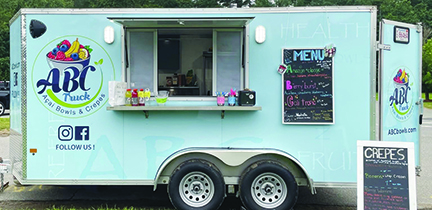
Food pop-ups have moved outside: In an April 1 press release the United Way of Greater Nashua (20 Broad St., Nashua, 882-4011, unitedwaynashua.org) announced, “beginning the week of April 13, the Pop-Up Pantries organized by the United Way of Greater Nashua will transition back to outdoor locations for the warm months. This move allows the vital food distribution program to continue serving local residents in accessible neighborhood locations as warmer weather returns.” Pop-Up Pantries run from 11 a.m. to noon — Mondays at Harbor Care, 45 High St.; Tuesdays at River Pines Mobile Home Park, 34 Birch Ridge Trail; Wednesdays at Lamprey Health Care, 22 Prospect St.; Thursdays at Nashua Community Music School, 2 Lock St.; Fridays at Crossway Christian Church, 33 Pine St.

An unnamed character archetype

This is a drink inspired by a short story I am writing. All the characters are unnamed characters that you see at the very end of the cast credits of a television show or a movie — Bartender, or Jukebox Girl, or Nosy Neighbor. (In case you ever wondered, they have pretty fascinating backstories.)

The hero — actually the heroine — of the piece is a woman with the not very promising name of Hot Girl #2. There is no Hot Girl #1. She turns out to be much more complex and formidable than whoever named her would have ever guessed.

Her cocktail should reflect some of that complexity.

There is sweetness from an Italian liqueur. There is a not-really-in-the-mood-for-your-nonsense kick from brandy. There is lemon juice because — well, reasons. And, much like Hot Girl #2 herself, a couple of surprises.

Hot Girl #2

  • 2 ounces Pommeau – an apple brandy
  • 1 ounce Galliano – an Italian vanilla-scented liqueur in a seriously tall, skinny bottle
  • 1 ounce fresh squeezed lemon juice
  • ½ ounce grenadine
  • 3 drops rose water

Have your digital assistant play “That Girl” by Maxi Priest and Shaggy. This is a very quick cocktail to make, and this song will set a proper mood for this particular drink.

Wiggle your fingers and get to business.

Add the apple brandy, Galliano and lemon juice to several cubes of ice in a cocktail shaker. Shake thoroughly.

Strain over fresh ice in a rocks glass.

Carefully pour the grenadine over one of the ice cubes. Because it is denser than the rest of the drink, it will sink to the bottom and create a layer of red, which will fade into orange, then to the yellow color of the base cocktail.

Using a medicine dropper, add three drops of rose water to the surface of the cocktail, where it will dissipate into the air as you drink, giving the impression that you just missed a beautiful woman disappearing into a crowd.

At its heart, this is a basic utility cocktail — a base spirit, something sweet, and some sort of citrus juice. It is not unlike a brandy sour. The lemon is the dominant flavor at first taste, but the others sneak into your awareness as you sip over the course of 20 minutes or so.

Like our protagonist, the cocktail has hidden depths.

Featured photo: Hot Girl #2. Photo by John Fladd.

Stay in the loop!

Get FREE weekly briefs on local food, music,

arts, and more across southern New Hampshire!