Scotland lies about 3,050 miles to the slight northeast of New Hampshire, as the crow flies if crows fly across the Atlantic. A shorter trip is to the 21st Annual New Hampshire Indoor Scottish Festival on Saturday, April 20, at Salem High School, where you will feel as if you had made that trans-Atlantic journey.
The New England Scottish Arts Centre, the organization behind the event, was founded in 1984 and this is their festival where they showcase the cultural history of Scotland. Traditional Scottish dance, pipe and drum music, and representatives from various clans will fill the area with the sights and sounds of the Scottish Highlands, minus the sheep and caber-tossing, for this massive competition.
Scottish Arts also holds classes year-round on Highland dance, piping and fiddle, and even hosts a kilt-making workshop in the winter months as well as other events and festivals.
“It’s the largest indoor contest in North America,” said Lezlie Webster, founder and director of Scottish Arts. Webster is the head piping instructor as well as a Highland dance instructor.
“A lot of people from all over New England, including New Jersey and Pennsylvania, are coming up, and New York. It’s a huge competition … 14 pipe bands from New York all the way through to Maine. Highland dancers, same thing,” Webster said. More than 100 soloists for piping and drumming are competing as well.
The festival starts with dance.
“The dancing is in the morning only and that’s … on the main stage in the big theater…,” Webster said. “Solo piping and drumming are down the hall, around the corner, and they are starting at 8 a.m. … because there are so many of them and they go through till about 1.”
“In the middle of that,” Webster said, “the pipe bands start arriving around 10, 10:30, and they go upstairs to classrooms and they start warming up there and in hallways, and every nook and cranny, so the building is alive by noon hour just with so much stuff going on … and it’s free. Very free.” Brave participants will even get a chance to try the Highland Fling themselves.
As the dancing dwindles, the music heads to the forefront. “The pipe band competitions will take over the stage [at] about 1:30 and they’ll go till 4. The end is a little recital by a couple of our piping judges that are world famous, some of the top in the world.” These include Bruce Gandy, Derek Midgley and Andrew Douglas.
Claire MacPherson, president and coordinator of clans and societies for Scottish Arts, who is originally from Grantown-on-Spey in the Highlands of Scotland, expands on the activities of the day and advises participants to “start with the clans because … everything in the games will make sense if you go to the clans and particularly if you are looking to trace your Scottish heritage, your clan might not be there, but these people are so incredibly knowledgeable, they’ve been doing it for decades.”
Food trucks will be outside as Celtic clothing, artwork, jewelry and face painting will be available on top of learning about Scottish heritage from the various clans, clan associations and societies.
One such society is the Scots’ Charitable Society — “they were formed in 1657 by former Scots prisoners of war,” MacPherson said. Those prisoners are highlighted in John D. Demos’ workshop called “The Seventeenth Century Scottish Prisoners of War in New Hampshire and Maine.” Demos, former archivist for Old Berwick Historical Society in Maine, will go over in precise historical detail their odyssey of capture in 1650 by Oliver Cromwell during the English civil war.
Demos said, “Cromwell and the English decided they were going to try to get rid of the rest and send them away where they couldn’t cause anymore trouble and they ended up packing off 150 to New England who came into Boston…. Many of those ended up at the Saugus Iron Works.”
These historical roots established a Scottish heritage in the Granite State. “I discovered my culture,” MacPherson said, “I think, from the descendants of Highlanders who are here in New England, and that’s really amazing, I think, personally. It’s very touching, it’s very humbling.”
Rain or shine, The Scottish Highlands will be alive in Salem on Saturday, April 20.
“The weather can do what it likes,” MacPherson said, “but people can be comfortable in a nice seat in this building that was purpose-built for the sound and just enjoy a big pipe band. It’s a really lovely treat.
21st Annual Indoor Scottish Festival When: Saturday, April 20, 9 a.m. to 4 p.m. Where: Salem High School (44 Geremonty Drive in Salem) Admission: free More: nhssa.org
Few experiences are more soothing than listening to Gregorian chant, a form of liturgical plainchant dating back to the ninth century. It originated in European churches and is most often performed a capella, though sometimes there’s spare instrumental accompaniment. It’s spiritual music, with songs like “Jesus, Joy of Man’s Desire” in most programs.
Taking this idiom into the modern world is Gregorian: Pure Chants in Concert, which stops in Concord on April 20, part of the German company’s first American tour. First of all, there are way more lasers and dry ice smoke than any medieval monk dreamed up, and though sacred songs dominate the show’s first half, the second is filled with today’s hits.
Songs like Seal’s “Kiss from a Rose” and Simon & Garfunkel’s “The Sound of Silence” are perfectly suited for the ethereal chorale. Gregorian, founded by Frank Peterson 25 years ago, has adapted hundreds of contemporary songs, even covering R.E.M.’s “Losing My Religion.” The first was Eric Clapton’s “Tears In Heaven.”
In a recent phone interview, Peterson was asked to name his favorite.
“That’s a hard question,” he said. “One is ‘Chasing Cars’ and another is ‘Bravado’ by Rush, I think that came out great … but it’s hard to say. There are a couple of Pink Floyd tracks we covered that were perfect; it’s almost like they were written for Gregorian chants.”
An easier question is whether there are any that couldn’t be transformed.
“One of the first songs that we tried was ‘Human Behavior’ by Bjork and that’s just undoable,” he said, “Until this day, we haven’t managed to get our heads around it…. To give it a twist is not always that easy.”
The idea of updating Gregorian chants for modern audiences came to Peterson in the late 1980s, when he visited a famous monastery outside Madrid. At the same time the monastery’s monks were singing Gregorian chants, he heard a drumbeat in the distance. The synchronicity gave him pause.
“I thought, ‘This is an amazing combination,’” he said. In a nearby record shop, he found a few albums. “They were dusty because nobody buys Gregorian chant records, really. I took them home, sampled them, and put them together with loops. That resulted in this project called Enigma.”
Amazingly, the world was waiting for souped-up ancient music, and Enigma ended up spending six years on the Billboard charts.
“That was the first time that we combined drum loops, modern music with a chant, and we did original songs,” he said. “Ten years later I started Gregorian, which was the other way around.”
Along the way, they’ve made an album a year; the latest is Pure Chants II.
“It’s a classical crossover record,” Peterson said of the new disc. “We do a very stripped-down version of Leonard Cohen’s ‘Hallelujah,’ for example, and a really thrilling version of ‘O Fortuna,’ which is obviously classical, but … it’s quite massive and sinister as well.”
Gregorian plays arenas in Europe, but growth was gradual. First, they performed in churches, later moving to theaters. Peterson was ambitious from the outset.
“I wanted to do a show that I would like to see,” he said, “I don’t want to see eight guys standing there singing songs, [so] we did special effects, great lighting and so on. Obviously, people liked it.”
The current tour kicked off to a full house in South Carolina. Accompanying the eight-voice choir is Anita Brightman, sister of famous singer Sarah Brightman, and two supporting musicians. Peterson is happy to finally play America.
“Some of the singers have never been to the States at all, not even as tourists,” he said. “So they’re really excited about exploring your country on the tour bus and doing concerts every night. It’s wonderful for us.”
Peterson thinks Gregorian’s success reflects the times. “It has a very calming effect, and people use it for meditation,” he said, “I just like to take this vibe of the calmness and the soothing aspect of this choir sound and turn it into something that’s familiar. I think that really is ringing a nerve with a lot of people.”
Gregorian: Pure Chants in Concert When: Saturday, April 20, 7 p.m. Location: Capitol Center for the Arts, 44 S. Main St., Concord Tickets: $46.75 and up at ccanh.com
“OK, these ones are great,” said Keith Sarasin, pulling a bag of Indian snack mix down from a shelf. “They’re made with black salt, which isn’t something that most Americans are really familiar with. It’s got sulphury back-notes that are a little freaky at first, but after they’ve tried it, most people get addicted to it.”
Chef Sarasin is the chef and owner of Aatma, an Indian-themed popup restaurant. He describes himself as “Indian-food obsessed.” We were at Patel Brothers, an Indian supermarket in Nashua, looking over an aisle of dozens of varieties of snack mixes. He explains that people in South Asia — India, Pakistan, Sri Lanka and Bangladesh — are passionate about snack foods. As if to illustrate his point, for every aisle of produce or staple ingredients at Patel Brothers, there is another one devoted to a different type of snack food.
“These,” he said, pointing to a package of biscuits (cookies), “are what you would have with tea. If you’re Indian, you keep some of these around all the time to serve to guests. There is a saying in Hindi that translates to ‘The guest is a god.’” That’s how seriously they take their snacks.
Almost every culture around the world has snacks that the people eat on the street, or sitting with friends, drinking tea, beer, coffee, or tequila, gossiping and arguing about sports. More and more of these snacks are making their way to New Hampshire — in supermarkets, superettes or convenience stores.
So, let’s do some exploring.
The following snack foods represent a small fraction of what is available at four local international markets — one Indian, one Filipino, one Mexican and one East Asian. These stores, in turn, are a fraction of the international snack landscape around us. There are Bosnian, African, Middle Eastern, and Greek markets that we haven’t had the opportunity to get to.
The snacks have been sorted by the stores where they were purchased (with tasting notes provided by snackers at the Hippo office). Because these are all ready-to-eat snacks, each section of regional snacks is followed by a recipe for a traditional snack from that culture that you probably won’t find on a grocery store shelf.
Patel Brothers. Photo by John Fladd.
Patel Brothers:
Masala mix & West Indies potato chips
Patel Brothers (292 Daniel Webster Highway, Unit 8, Nashua, patelbros.com, 888-8009) is a large supermarket that is part of a national chain of more than 50 stores, according to the website. This one sits in Willow Springs Plaza in Nashua, next to Home Depot. It is a full-service supermarket with produce, groceries and products from all areas of South Asia and it features an in-store bakery.
Gharana brand Chakri (Muruku)
Where it’s from: Indian snack, made in New Jersey Description: A dry, crunchy churro-shaped cookie or cracker, wrapped in a spiral. Tasting notes: “A deep-fried flavor with a spicy back-end.” “Unexpectedly spicy”
Lay’s West Indies Hot & Sweet Potato Chips
Where it’s from: Lay’s, the PepsiCo-produced chips you’re familiar with, has produced flavors for the Caribbean and South Asian market Description: A ruffled potato chip with Caribbean flavors Tasting notes: “I taste paprika; the heat grows as you eat.” “Very reminiscent of Old Bay Seasoning.” “Wow, this excites my taste buds with the sweet, then the spice!”
Swad brand Mamra Laddoo
Where it’s from: Indian snack, manufactured in New Jersey Description: Hard, crunchy caramelized puffed rice balls Tasting notes: “Very crunchy.” “A second cousin to caramel corn.”
Where it’s from: South India Description: Nuggets of dried bananas covered with sugar and spices Tasting notes: “This would be good with tea.” “Slight banana flavor — mostly hidden under the jaggery and cardamom. I like this.” “It tastes a little like garam masala.”
Bombay Kitchen Mumbai Masala snack mix
Where it’s from: Central Indian snack, made in New York Description: A snack mix made of chickpea crackers, peanuts, raisins, rice flakes, lentils, green peas and spices. Tasting notes: “There is a wide variety of textures. The flavor is subtle at first, with an aftertaste of garam masala.” “There is a variety of very crunchy and not-so-crunchy textures, with a nice amount of spice.” “I was much softer than I had thought. Not bad, but you need a decent handful to get the true flavor.”
Haldiram’s Khatta Meetha snack mix
Where it’s from: India Description: A snack mix made of chickpea crackers, peanuts, mango powder, lentils and spices Tasting notes: “Sweet tasting, with many spices. It isn’t hot.” “It starts out kind of bland, but quickly becomes addictive, with a sweet, mild heat and a soft crunch.”
Snack to make at home: Slacker Vada
Slacker Vada. Photo by John Fladd.
Vada, a fried fritter-like food, are popular street snacks in Southern India. Passengers on trains will reach out the windows of their carriages at stops along their journey and buy them from vendors at each train station. They are a perfect on-the-go street food — crunchy outside, comfort-foody inside, and easily eaten on the go.
Let’s be clear about this: This recipe is not authentic vada. An Indian auntie would have a lot to say about how not-authentic they are. A vada wallah (a vada aficionado) on the streets of Mangaluru would take a bite of one, then shake his head at the state of this weary world. But, these vada are tasty, deep-fried and easy to make at home. Once you have a vague idea of how good a vada is, you will want to seek out one that is more authentic and involves intimidating ingredients like asafetida (a spice that requires a whole other conversation).
1 15-ounce can of lentils – I like Goya
½ 15-ounce can of chickpeas (sometimes labeled as garbanzo beans)
2 Tablespoon finely chopped cashews
½ cup unsweetened shredded coconut
2 teaspoons finely minced fresh ginger
⅓ cup finely chopped fresh cilantro
2 hot green chiles, finely chopped – New Hampshire chiles are notoriously unreliable; your best bet is probably serrano or Fresno chiles, which have a good flavor and a reliably moderate level of heat
2 Tablespoon rice flour, possibly more
½ teaspoon salt
vegetable oil for frying
Your best tip for Indian cooking — or any cooking — is to prepare all your ingredients and lay them out so you know where they are when you need them and don’t need to rummage through your cabinets or refrigerator looking for something that you forgot you were out of. Professionals call this mise en place; it’s just another phrase for being properly prepared. Do that with your vada ingredients.
Rinse the chickpeas and lentils in a strainer until they stop being foamy.
Blend the lentils and chickpeas in your blender until they look like peanut butter and smell like refried beans. If the mixture is too thick, add water, a spoonful at a time, until it gets to where you want it to be.
Transfer the puree to a bowl, and mix in the other ingredients. It should be just stiff enough to work with your hands. If it’s too sticky, add more rice flour, again a spoonful at a time, until you can hold it and shape it with your fingers.
Take enough of the mixture to roll into a ball about the size of a golf ball. Roll it, then poke your finger through the middle of it, and shape it into a miniature doughnut. Vada are doughnut-shaped for the same reason doughnuts are: to allow them to cook completely in hot oil before they get greasy. It also allows you to get a deep-fried crispiness on the increased surface area of the vada. Make two or three while your oil heats up.
Heat 4 to 6 inches of oil in a pot to 350°F. If you choose a small pot, the oil will come to temperature quickly and you won’t need as much of it. You will only be able to fry one or two vada at a time, though, and the temperature of the oil will drop more easily when you add the room-temperature vada to the pan. If you use a bigger pot you will have more oil, can fry more vada at a time, and will retain a good frying temperature.
Fry the vada like you would doughnuts — 2 or 3 minutes on each side — until they are crispy and the color of brown car upholstery. Drain them on paper towels.
Because these are doughnut-shaped, part of your brain expects them to be sweet, but they are entirely savory. There are bits of chewy coconut, but also brightness from the chilies, ginger and cilantro. The background flavor is undefinably savory but supports its co-stars. These are excellent hot from the fryer, or at room temperature, although they are at their crispiest while they are still hot. They go very well with chai or coffee, and with a chutney, preferably coconut chutney.
Make these, grow to love them, and then we’ll talk about asafetida.
Saigon Asian Market:
sweets and seaweed
Saigon Asian Market (476 Union St., Manchester, 935-9597) is a medium-sized supermarket with groceries and products from Vietnam, China, Taiwan and Thailand. It offers fresh produce and excellent fresh seafood.
Kaoriya Mochi Peanut Flavor
Where it’s from: Traditional Japanese snack, made in Thailand Description: Soft pillowy rice mochi, with a sweet, peanut filling Tasting notes: “Two distinct textures; it tastes like a peanut butter bun.” “Very chewy; peanut flavor is very prominent, but not like peanut butter.”
Ricky joy brand Strawberry Mellow Cone
Where it’s from: China Description: Brightly colored, ice cream cone-shaped candy. Tasting notes: “Fun filling inside.”
Mag Mag brand Thai Hote Madame Plum
Where it’s from: Thailand Description: Spiced dry plum Tasting notes: “Madame is beautifully sweet and sour.” “Not too spicy — a nice balance of sweet plum and heat. I’m voting this my favorite.”
Tao Kae Noi: Mala Flavor seaweed snack
Where it’s from: Thailand Description: Dried, seasoned strips of seaweed. Tasting notes: “It has some heat.” “The spice builds as you eat it. It’s very fishy.”
Koe-Kae Sriracha Chilli Sauce Flavour Coated Green Peas
Where it’s from: Thailand Description: Freeze-dried peas, coated with a sweet sriracha flavoring Tasting notes: “It has a good crunch and good heat in small doses.” “Excellent crunch! The heat builds then recedes nicely.” “Great crunch! Perfect amount of spice for a snack food.”
Teddy Bear Sweet & Sour Spicy Tamarind
Where it’s from: Thailand Description: Dried tamarind fruit with added spice Tasting notes: “This has a delicious sour tamarind flavor. There are large seeds.” “Interesting combination — I got the sweet, the sour, and the spicy (in that order), with a nice gummy texture.” “I was not prepared for the seeds, but otherwise, I loved it. Sweet and sour with an earthy taste.”
Snack to make at home: Kluay Thod
Kluay Thod. Photo by John Fladd.
These fried bananas are a specialty in Bangkok, where street cooks use small, finger-sized bananas. Those totally work in this recipe but can sometimes be a little hard to find. Half-inch rounds of a regular Cavendish banana will work just as well, as long as it’s properly ripe — yellow, with a lot of brown spots on it. If the convenience store you buy your morning coffee from has bananas up by the register, they will be just about perfect for this recipe, especially later in the week, when the bananas have seen too much of life and have given up hope. Think of this as helping them fulfill their destiny.
10-12 finger-sized bananas, cut in half, or ½-inch rounds of 3 large, ripe ones
1¼ cups (200 g) rice flour, plus more for dredging
1½ cups (200 g) all purpose flour
1½ teaspoons baking soda
1 cup (200 ml) water
1 cup (200 ml) coconut milk
½ teaspoon salt – I like to use coarse sea salt
½ cup (50 g) sesame seeds
3 Tablespoons brown sugar
½ cup (50 g) finely minced coconut
vegetable oil for frying
Fill a pot with 4 to 6 inches of vegetable oil and set it to heating over medium heat. Keep an eye on it; you want it to eventually reach 350°F.
Meanwhile, mix the rest of the ingredients, aside from the bananas, in a large bowl. It will make a thick batter.
Pour a smallish amount, maybe half a cup, of rice flour into a small bowl. This is for dredging. When you’re deep-frying something, wet batter doesn’t like to stick to wet or damp ingredients, so it’s a good idea to cover whatever you’re frying with something dry and powdery — fried chicken often calls for seasoned flour or cornstarch, for example. In this case, you’ve already got rice flour on the counter, so we’ll use that.
When your oil has come to temperature, dredge several pieces of banana in rice flour, then dunk them in batter. Even with the rice flour, the banana might balk at being completely covered; you’ll have to convince it.
Carefully drop the battered banana pieces into the oil and cook them until they are a rich brown color. You’ll know when they’re ready; their beauty will stagger you. Fry a few banana pieces at a time to keep the oil at a consistent temperature.
Drain them on several layers of paper towels.
You owe it to yourself to eat at least a couple of these hot and crispy right from the fryer. They are lightly sweet, with banana notes in the background, and a savory, sesame-forward flavor from the batter. There’s a comforting contrast between the soft banana and the crispy/chewy texture of the sesame coating.
True to their street food origins, you and whoever else is in the house with you will probably eat this standing in the kitchen. If there are any left, they will still be good for several hours, especially with a glass of Thai iced tea.
GFM Pinoy Food Mart:
ube and adobo
GFM Pinoy Food Mart (224 North Broadway, Salem, gfmpinoyfoods.com, 458-1957) is a very small, snack-heavy Filipino grocery store. There are some refrigerated and frozen foods from the Philippines, but most of the stock is dry goods.
Fritzie’s Ube Cheese Pandesal
Where it’s from: Filipino pastry, made in New Jersey Description: A purple bun (ube is an Asian purple yam) with a mild cheese filling Tasting notes: “This tastes a lot like a croissant.” “It reminds me of pan dulce slightly. I can’t really taste the cheese.” “It … has a nice taste, like a sweet bread.”
Jack ’n’ Jill brand Chicharron ni Mang Juan (vegetarian pork rinds), Sukang Paombong flavored
Where it’s from: Philippines Description: Light golden-brown fried snack that is curled to look like pork rinds Tasting notes: “Salty and savory with more depth of flavor than I was expecting.” “Mild and crunchy; they would be excellent with three or four beers.”
Boy Bawang Cornick: Adobo Flavor
Where it’s from: Philippines Description: “Marinated Meat-Flavored Fried Corn” Tasting notes: “Chickeny-tasting corn nuts.” “Crunchy puffed corn with a mild flavor.” “Fave! I love these. They are like Corn Nuts, but not tooth-breaky.”
Jack ’n’ Jill brand Chippy Barbecue Flavored Corn Chips
Where it’s from: The Philippines Description: Barbecue-flavored corn chips the size and shape of Fritos Tasting notes: “The taste is a mix between a Bugle and a Frito.” “It’s light on the barbecue flavor, but I love the corn chip for a nice change-up.” “Savory, meaty taste at the end.”
Jack ’n’ Jill brand V-Cut Potato Chips
Where it’s from: The Philippines Description: Lightly smoky rippled potato chips Tasting notes: “It reminds me of a barbecue sandwich in a chip form.” “I really enjoyed the barbecue flavor of this one. Not too strong; just perfect.”
Snack to make at home: Tambo-Tambo
Tambo-Tambo. Photo by John Fladd.
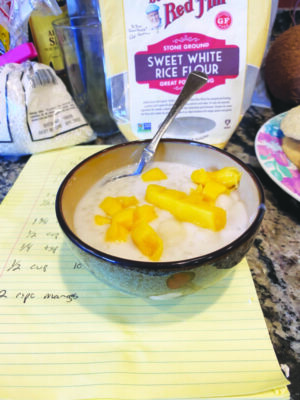
Tambo-Tambo is a coconut pudding with tapioca pearls and rice balls from the Philippines. Because the Philippines is made up of more than 7,000 islands, each with its own culture, and because it is in the middle of several major trade routes, you never know what you’re going to get in a Filipino snack. The food culture of the Philippines has been impacted by East Asian, Indonesian, Spanish and even American influences. This particular snack leans heavily into three ingredients deeply rooted in the Filipino landscape: coconut, cassava (which tapioca is made from) and rice.
½ cup (75 g) small tapioca pearls
1 cup (250 ml) water
1 cup (150 g) glutinous rice flour – it will probably be called Sweet White Rice Flour in your supermarket, but it’s the same thing
another ½ cup (125 ml) water
1¾ cup (400 ml) unsweetened coconut milk
another ½ cup (125 ml) water
¼ teaspoon salt
½ cup (100 g) sugar
diced fresh fruit – mangos are traditional, but I think fresh cherries would be fantastic
Soak the tapioca in a cup of water for half an hour, then rinse thoroughly.
Meanwhile, mix the rice flour with half a cup of water, then roll it into half-inch balls with wet fingers. (Your fingers should be wet. Giving the rice balls fingers would be disconcerting.) Cover them with a damp cloth until Game Time.
Mix the coconut milk, salt, sugar, and the last half cup of water in a small saucepan, then bring to a boil over high heat, stirring frequently.
Crash the heat to low, then stir in the rice balls. Cook them for about 4 minutes, until they are cooked through and chewy. Stir pretty much continuously, to keep the rice balls from sticking to each other.
Bring the heat back up to high, then stir in the rinsed tapioca, and stir until the tapioca has been cooked, another 3 or 4 minutes. The tapioca will thicken the mixture noticeably.
Remove from heat, and let the pudding cool, maybe 20 minutes. Serve, garnished with fresh fruit.
This snack is full of contrasts — the coconut pudding is creamy, the rice balls are chewy and the tapioca is, err, tapioca-y. The coconut is sweet — perhaps even a little too sweet on its own — but it is balanced out by the mildness of the rice balls. This snack is great warm, but even better cold and refreshing. I can imagine standing in a market in Manila, desperately hot and completely overwhelmed, then grounding myself with a dish of tambo-tambo.
La Michoacana Market:
Takis and Zambos
La Michoacana Market (112 Pine St., Nashua, 882-0271) is a small neighborhood market with Mexican snacks and products. It serves a small selection of American-style hot food, some with a Mexican twist.
Bimbo brand Nito snack cakes
Where it’s from: Mexico Description: Dry, chocolate-frosted and -filled snack cake Tasting notes: “A strong cocoa flavor.” “The sweet bread enhances the sweetness of the chocolate icing; it isn’t too sweet.” “Nice and chocolatey.”
Takis Hot Nuts Fuego
Where it’s from: Mexico Description: Peanuts with a spicy/sour coating Tasting notes:“The spiciness is all in the electric red dust.” “Very acidic.” “All the spice of a Takis with a peanut finish.” “Shockingly spicy at first, but ends nicely. It makes you want more!”
Yummies brand Ceviche Flavored Zambos
Where it’s from: Honduras Description: Ceviche-flavored plantain chips Tasting notes: “Outstanding lime and salt flavors; the fishy background is distracting.” “This tastes sort of like a seaweed chip; it’s pretty good.”
Diana Brand Jalapeňos tortilla chip
Where it’s from: El Salvador Description: Seasoned tortilla chips Tasting notes: “Tiny triangles. Delicate corn flavor with mild heat.” “not as hot as I expected but tasty and easy going with a great touch of spice.” “I’m obsessed with these! They are perfect, and almost no flavoring sticks to your fingers.”
Bimbo brand Choco Bimbuňuelos
Where it’s from: Mexico Description: The packaging describes it as “Sweet Crispy Wheels with Chocolate Flavored Coating” Tasting notes: “Extra crunchy. The chocolate is very melty.” “These are very dangerous! You could eat a whole package if you weren’t careful. The chocolate is so creamy and the crisp is light.”
Snack to make at home: Pemoles
Tambo-Tambo. Photo by John Fladd.
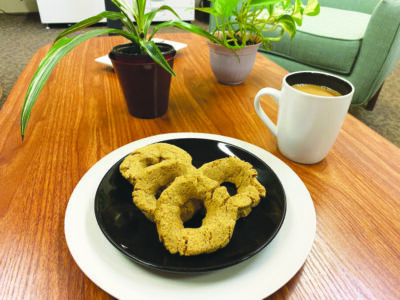
Mexico is another country that has had its food shaped by a huge number of influences — indigenous, Spanish and even French. Mexico has a complex and sophisticated baking tradition. There are Mexican cookies that would blow your mind. Pemoles are wreath-shaped cookies made with masa harina (corn flour) instead of wheat flour, and are flavored with coffee.
2 cups (250 g) masa harina (corn flour)
¼ teaspoon salt – again, I like to use coarse sea salt; it plants little salt bombs in the finished cookie
1 Tablespoon finely ground coffee
1¼ sticks (125 g) butter — authentic pemoles are made with lard, which tastes fantastic in baked goods but can be intimidating, so we’ll use butter instead; feel free to use the full-octane fat, though; you will not regret it
½ cup (125 g) sugar
1 egg
¼ cup (2 ounces) coffee liqueur
Toast the masa harina in a dry skillet, stirring constantly, until it darkens to a golden-brown color — about the same color as a lion. Transfer it to a bowl to cool.
Add the salt and coffee to the roasted masa harina. Stir to combine.
Using your electric mixer, cream the butter and sugar until they are pale yellow, light and fluffy.
Beat in the egg and then, once the egg is incorporated, the coffee liqueur.
Gradually mix in the dry ingredients.
When the dough has come together, refrigerate it for half an hour.
OK, this is where things get a little weird. Every recipe for pemoles says that you should knead the dough until it is smooth before chilling it. This seems impossible. The pre-chilled mixture is much too soft to work with your hands. Additionally, because there isn’t any wheat in this recipe, there is no flour to produce gluten, the stuff that makes bread and other baked goods pliable. I’m sure that the Mexican nuns who invented pemoles could do it; I haven’t worked out a way to.
Preheat your oven to 350°F.
Line a baking sheet with a silicone mat or parchment paper.
Pinch off a tablespoonful of the chilled dough and form it into a 6-inch-long snake. Apparently, rolling it is recommended — and that would probably work if you could manage to knead the dough — but I’ve found that squeezing it in my palms works better. Put your snake on the baking sheet and form it into a circle. You should be able to form about a dozen cookies.
Bake for 30 to 35 minutes. You won’t be able to tell by the color when they are done, but if you poke a pemole and it feels like a cookie that hasn’t firmed up yet, they are ready to take out of the oven.
Let the pemoles cool, then eat them.
These have a crumbly, sandy texture, much like a really good shortbread. This is something bakers call sablé. The roasted corn flavor is deeply satisfying — a little like a good cornbread — and the not-over-the-top coffee flavor gives you an emotional anchor to hang the “Ooh-I-like-this” part of your brain on. It goes without saying that these are a natural to have with coffee.
The Manchester Urban Ponds Restoration program kicks off the 25th year of cleanups with a cleanup of Nutts Pond and Precourt Park on Saturday, April 20, from 9 to 11 a.m., rain or shine. Volunteers can meet at the kiosk at Driving Park Road (off South Willow Street). The spring schedule then includes Stevens Pond/Stevens Park on Saturday, April 27; Black Brook/Blodget Park on May 4, and McQuesten Brook/Wolfe Park on May 11, with all cleanups to run from 9 to 11 a.m. “Trash bags, latex gloves, and a handful of trash pickers will be available. Please wear rubber boots if you have them,” said the group’s newsletter. See manchesternh.gov/urbanponds for details and for summaries of past cleanups, or call 624-6527.
Smokey Bear says
An April 10 press release from the New Hampshire Department of Natural & Cultural Resources announced that the New Hampshire Forest Protection Bureau has designated April 14 through April 20 “Wildfire Awareness Week,” citing rising temperatures, low relative humidity and gusty winds combined with over-wintered dry grasses and leaves, all of which contribute to elevate wildfire risk statewide. The bureau is joining U.S. and Canadian partners in the Northeast Forest Fire Protection Commission in a coordinated effort to educate the public about how people can lessen the occurrences of wildfire across the region, according to the same release.
Forest Ranger Nathan Blanchard said in a statement that “it’s important to recognize that, unlike other regions of the United States, wildfire season in New Hampshire can begin early in the spring.” Blanchard noted that “yard cleanup, spring cookouts and even things like the improper disposal of wood stove ash can create embers, sparks or other forms of heat that can easily ignite dry materials around them, causing a wildfire that can quickly run and turn into a big problem.”
In the last two decades the state has experienced an average of 285 wildfires per year impacting 221 acres annually on average, the release said. Wildfires pose a threat to forest-based recreational activities and forest product industries, which contribute around $4.6 billion dollars every year according to the New Hampshire Forest Action Plan from 2020, according to the same release.
Fire permits need to be obtained for any outdoor fires and can be acquired from your local fire department or nhfirepermit.com.
The Forest Protection Bureau has also announced it is planning to implement a prescribed burn at Blue Job State Forest in Farmington this year, depending on weather conditions, any time from April through October, according to an earlier press release, where approximately 20 acres will be burned by trained resource managers and wildfire personnel in order to improve blueberry habitat, improve conditions for birds and other wildlife that rely on blueberries for food and shelter, and reduce forest fuels like shrubs and grasses that could contribute to a wildfire.
For more information about the Division of Forests and Lands and the work of its Forest Protection Bureau, visit nhdfl.dncr.nh.gov or call 271-2214.
Relapse prevention
The New Hampshire Department of Corrections announced in an April 8 press release the launch of a new Relapse Prevention Program at the New Hampshire State Prison for Men in Concord designed for individuals returning to incarceration as the result of a parole violation.
The Relapse Prevention Program joins several other therapeutic communities within the department’s facilities, including its Wellness Units, the Residential Treatment Unit, the Pathways Program, and the Focus Program where New Hampshire Department of Corrections licensed mental health professionals use industry standard assessment tools to make recommendations for treatment including but not limited to the American Society of Addiction Medicine’s ASAM criteria, to determine placement, continued service, and transfer of patients with addiction and co-occurring conditions, according to the press release.
Repeat substance misuse is the second-highest contributor to parole violation, although the percentage of those who violate their parole is only 2 percent of the overall parole caseload, according to the release.
Commissioner Helen Hanks said in a statement that “the introduction of the Relapse Prevention Program underscores the department’s continued commitment to expanding our range of treatment offerings, recognizing that a one size fits all model is not the right approach.” Visit corrections.nh.gov for more information.
Helping the kids
The Queen City Rotary Club is accepting applications for grants for youth-centered nonprofit organizations — an “Impact Grant” for organizations that serve underprivileged youth in the greater Manchester area and “Youth Serves Grant” for organizations that have a youth-related focus, according to a press release. Grant applications are due by Friday, April 26. See queencityrotary.org.
On Monday, April 22, Concord Public Library (45 Green St.) is hosting a DIY button-making drop-in for all ages where participants can craft an Earth Day lapel button from 9 a.m. to 7 p.m. Materials and instruction will be provided, according to the library website. Visit concordnh.gov.
On Saturday, April 20, and Sunday April 21, Charmingfare Farm in Candia (774 High St.) will host their first “Barnyard Babies & Beyond” family-friendly adventure between 11 a.m. and 1 p.m., according to their website. Tickets are $29, free for children 23 months and younger. Visit visitthefarm.com.
Catch bands Jamdemic and The Mighty Colors on Saturday, April 20, from 6 to 9 p.m, at an Earth Day Benefit Concert at the welcome center of the Andres Institute of Art in Brookline. The concert benefits the institute and the Beaver Brook Association in Hollis. Tickets cost $25; see andresinstitute.org,
Jokes can be made about anything, Daniel Sloss believes; nothing is off-limits. Among the topics the Scottish comedian has tackled are his sister’s death from cerebral palsy, toxic masculinity and a close friend being raped by a man they both knew. What’s most remarkable is that his act comes off as a TED Talk with punchlines — pain that’s very, very funny.
Speaking via Zoom recently, Sloss said he strives for balance on stage.
“I think you can and should make jokes about anything, but just because you’re making fun of something … doesn’t mean you have to be disrespectful or disparaging,” he said. “You can be provocative and empathetic at the same time; I think there’s a responsibility on the comedian to do both.”
In 2018’s Jigsaw, he mocked relationships with brutal efficiency. “We have romanticized the idea of romance, and it is cancerous,” he snarled. “People are more in love with the idea of love than the person they are with.” Acknowledging this would lead most to break up with their partners, he said, and asked for anyone who decoupled to let him know.
Hundreds of thousands of replies arrived, among them requests to autograph divorce papers. Sloss celebrated this outcome when he taped his Socio special in 2019. Since then, however, he’s married and welcomed a son. As he prepared to launch an American tour of his latest show Can’t, he sounded almost sheepish.
Jigsaw was, he said, “a very angry show [written] after a particularly bad breakup. I didn’t know it was going to have the effect it did, but I’m very glad it did. It does mean that whenever I talk about my wife on stage, people are like, ‘Oh, you’re a hypocrite’ and I’m like, ‘I can’t believe I have to explain this again.’ But … that’s the job.”
It’s work Sloss began doing at a young age, achieving quick success early on. He was 17 when he did his first sets; two years later, in 2009, his Teenage Kicks show made him the youngest comic to have a solo run in London’s West End. So his rant on modern love may just have been a twentysomething’s passion talking, though he claims data proves him right.
In Socio he turned his knives on woker-than-thou leftism, noting that the right doesn’t mandate a check in every box on their list. “You don’t hate gay people? That’s OK, you’ll learn,” he quipped. “Welcome aboard.” In the new show, Sloss expands on that, going after cancel culture, or more to the point, disassembling the popular notion of getting canceled.
“People lose bits of work because of things that they’ve said in the past due to some people going on the internet to dig up all their old dirty history, and I acknowledge that,” he said. “I do think there’s a lot of false flags. I think a lot of comedians claim they’re being canceled when they’re not. They’re just getting online feedback to a degree we’ve never had before.”
Having just returned from a tour of India, where people are arrested for criticizing the government, it’s clear Sloss finds the many snowflakes on this side of the world a bit daft. “We met a guy in Turkey who made a joke about some ancient prophet, and it wasn’t even particularly offensive, but one person took umbrage, and he spent 10 days in jail. I’ve seen the cost and the consequences of real cancel culture.”
That said, Sloss loves coming Stateside, and looks forward to traveling by bus with his family as his tour kicks off April 11 in Laconia.
“In America, I can make fun of any president that’s ever been,” he said. “I can say really awful things about them.” But he especially enjoys the many contrarians who attend his shows.
“As much as people feel like people are more sensitive than they’ve ever been, I’m also finding that because of that, there is the other side of the spectrum where people are like, ‘You can say whatever you want, we don’t care,’” Sloss said. “They want me to know that they’re not all soft and easily offended. Those are the people I try to make laugh.”
Daniel Sloss When: Thursday, April 11, 8 p.m. Where: Colonial Theatre, 609 Main St., Laconia Tickets: $39 and up at etix.com
How much do you know about the French-speaking world other than France or Quebec and could you express that knowledge in a cake?
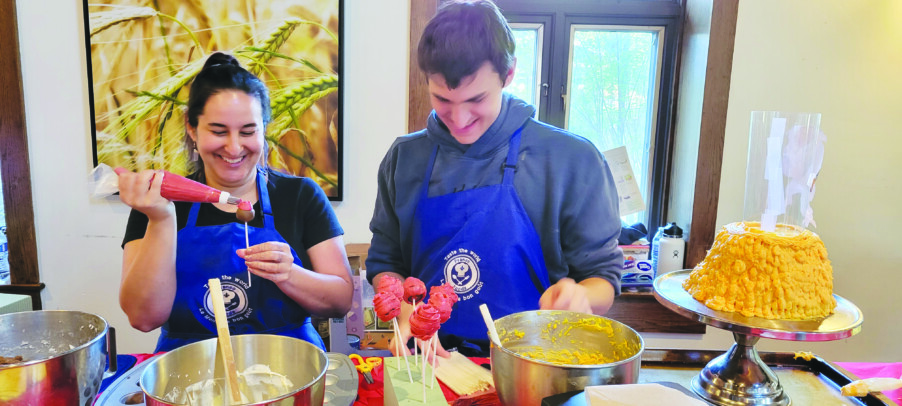
On May 18, 10 teams of amateur bakers will have an opportunity to do just that at the Franco-American Centre’s Third Annual Fleur Délices, a cake-decorating competition dedicated to spreading knowledge about the Francophone world. Teams will bring everything they need to build elaborately decorated cakes with a French or French-influenced theme.
“This goes hand-in-hand with our mission at the Franco-American Centre,” said Nathalie Hirte, the event’s organizer, “to introduce people to the world outside the France/Quebec box.”
For the event’s first year the Fleur Délices’ theme was French-speaking countries around the world, Hirte said.
“Last year, it was fairy tales; this year our theme is Plays and Musicals of the French-Speaking World,” she said. “What’s happened in the past is the contestants have looked at our suggestion list, then gone and picked something else completely. As long as their cakes meet our criteria, they’re good.”
Fleur Délices — the name, which indicates “delicate and delicious,” is a pun; it sounds like “Fleur de Lis,” the symbol of France — is inspired by The Great British Baking Show, a television baking competition known for its creativity and kindness. Like its inspiration, Fleur Délices will require competitors to make and present cakes, but unlike the television show, there will be no baking on site.
“None of the venues we’ve held the event at have ovens,” Hirte said. Competitors will bake their cakes at home, then bring them to the event along with frosting and any edible elements they need to put their finished cakes together. Teams can have one or two participants. Single-person teams will have an hour to decorate their cakes; pairs will have 45 minutes.
Each cake must have a minimum of two tiers, and one of them must be a sponge. (“That’s another influence from the British Baking Show,” Hirte said.) The icing must include at least one buttercream. All cakes must have a 3D element that is made from an edible material. Other than that, the organizers have not been overly specific about their requirements.
“We didn’t want to limit the bakers’ creativity,” Hirte said. “We just want them all on a level playing field.”
Two or three judges will walk around during the competition, visiting teams at their stations and asking questions. They will judge individual cakes on taste, texture, overall appearance, creativity and their representation of the theme. The overall winner of the competition will be chosen from an average of the judges’ scores and will be presented with an engraved cake platter.
A People’s Choice winner will be chosen by the spectators. Because it will not be possible for every spectator to taste each cake, the People’s Choice winner will be based almost entirely on appearance.
“We guarantee that everyone will get two to three samples,” she said. “The last two years, nobody has left hungry. We always get positive feedback on the event.” The People’s Choice winner will be presented with a charcuterie board.
Fleur Délices is open to bakers 16 and older.
“The past couple of years we’ve had some French teachers and their students compete,” Hirte says. “That’s been fun.”
Registration for competitors is $20 per team and is open until Friday, April 26, on the Franco-American Centre’s website. Tickets for spectators will go on sale within the next week or so through the same website.
Featured Photo: Teacher and student team. Courtesy photo.