We all know the old koan: If a tree falls in the forest and no one is around to hear it, does it make a sound? The question is said to be an exercise in perception and observation.
My friend Chris is no tree, but there is a certain parallel between him and the timeless question. You see, he is a 39-year veteran high school teacher in a rural and very economically distressed part of northern New England and he is retiring. Considering the demographic of the teaching profession these days, Chris could be described as part of the old growth, as the number of colleagues whose time teaching goes back to the early 1980s is increasingly rare.
Like a long-standing tree, Chris has been a stalwart at his school and in his community. Since his first day in the classroom, he has dressed in a suit and tie. That is something of a rarity in schools today. When asked why he has done so, he offers modestly, “It sets an example to the students that what we are doing together is important business and that I should dress to show that.”
While formal in dress, Chris is compassionate and deeply solicitous for his students. The door to his classroom has a sign: “You are most welcome here” in German and French, the languages he teaches. As a result, his classroom is a sanctuary, especially for those who sometimes just need a break from the tensions and challenges of high school daily life. He has been a counselor, cheerleader, and ever faithful confidant for nearly three generations of students.
Knowing how important dress and appearance are, not only for social events, job interviews or just self-esteem, each year Chris sets up a rack of his suits, shirts and ties in his classroom so that students can choose items that their modest financial resources could not stretch to buy.
Annually, Chris has taken 20 to 30 of the students at his school on a two-week study trip to Germany and France. For virtually all of them, this is their first trip abroad, and for some, even out of state. He has photographs of students’ faces as they get their first glimpse of the Eiffel Tower or Notre Dame. For many, the trip under his tutelage is the spark that generates a career trajectory, whether to travel or, for some, to follow Chris in his profession.
Alums of his classes are now published writers, teachers, entrepreneurs and civic leaders. News of his impending retirement has triggered a flood of emails and calls.
Yes, when a great tree falls, there should be a sound, a very loud and appreciative one. Thank you, Chris.
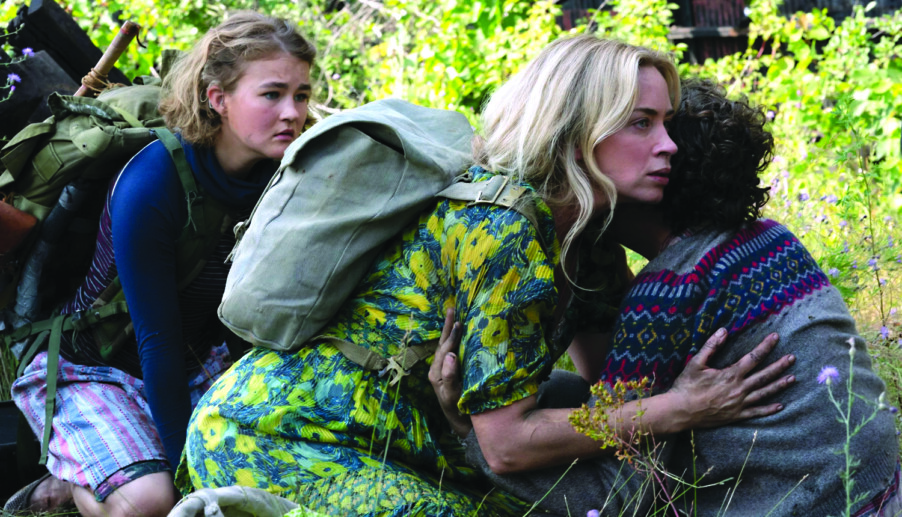
The soft-steps-and-muffled-screams family from the first movie must seek a new safe haven in A Quiet Place Part II, the sequel to the 2018 horror sci-fi which is screening only in theaters.
After looking back at Day 1 of the invasion of the sound-sensitive giant-stick-insect-y aliens, the movie picks up right where the first one left off, with father Lee (John Krasinski, also the movie’s director) dead, and recently postpartum mother Evelyn (Emily Blunt) caring for her newborn and fleeing their burning home with her tween-maybe son Marcus (Noah Jupe) and oldest (I think) child, teen Regan (Millicent Simmonds). Regan holds the key to the discovery made at the end of the last movie, which is that her hearing aid, when put next to a microphone, creates a feedback noise that incapacitates the aliens (who hunt humans using sound, thus the constant need for quiet) and leaves them vulnerable to being shot or otherwise destroyed.
The family heads out, eventually meeting up with Emmett (Cillian Murphy), a friend from before (whom we see in the Day 1 scenes) at a factory that offers some protection in various underground soundproof-ish rooms. He is grizzled and broken and not eager for houseguests, but he takes pity on the whole new baby situation and lets them stay. To distract an injured Marcus, Regan fiddles with a radio lying around Emmett’s lodgings and happens upon a frequency playing “Beyond the Sea” in a loop. Excited about the possibility of other people somewhere in the world and a means of broadcasting the alien-defeating sound, Regan starts to form a plan about how to find the radio station. Meanwhile, Evelyn is busy tending to Marcus and trying to figure out how to keep her baby alive with the small oxygen tank and soundproof bassinet that the family constructed.
Eventually, we get two and sometimes three groupings of characters, facing various dangers on their assorted missions. Even more than in the last movie, Regan becomes the core of the movie here — she is the one thinking of the future when the adults around her are just surviving in the moment.
Part II does many of the same things the first movie did in terms of building suspense, creating terror in small moments and making the emotions of family and parenting part of the fabric of what’s happening. It is, like, 80, maybe 85 percent as successful as the first movie at doing all of this in a way that grabs you and keeps you locked in to the action. I think. I’ll admit that (based on a reread of my review of the first movie) I didn’t find this movie as thoroughly engrossing and entertaining as the last one, but then context is everything. Are the little imperfections here (there is some pretty heavy underlining of plot points; I found myself wondering more about the rules of these aliens than I did in the last movie) more apparent than in the last movie, or am I just in a place where a family surviving worldwide catastrophe is not as much of a fun time at the movies?
All that said, the performances are solid all around. Blunt is really skilled at being this kind of action hero, at blending the emotion of the story with the physicality of whatever struggle her character is dealing with. It gives heft to the role. Simmonds and Murphy do good work, having good fatherly-daughterly chemistry in the part of the story line that puts them together.
I think even if A Quiet Place Part II doesn’t sound like it’s for you right now, it’s worth catching up with at some point if you enjoyed the first movie. B
Rated PG-13 for terror, violence and bloody/disturbing images, according to the MPA on filmratings.com. Directed by John Krasinski with a screenplay by Krasinski, A Quiet Place Part II is an hour and 37 minutes long and distributed by Paramount Pictures.
Cruella (PG-13)
Emma Thompson is having a blast, so that’s at least something, in Cruella, the more than two-hour-long Cruella de Vil origin story newly out in theaters and on Disney+.
As a child, little Estella (Tipper Seifert-Cleveland) already had that black-and-white-cookie hairstyle and a feisty nature that made her a fighter when bullies inevitably picked on her. But she had a strong sense of self, a good friend in a young girl named Anita (Florisa Kamara) and a staunchly supportive mother (Emily Beecham).
Tragedy landed Estella alone in London, where she met the young grifters Jasper (Ziggy Gardner) and Horace (Joseph MacDonald). Together with their dogs Buddy and Wink, they create a sort of found family that continues to work together, picking pockets and committing petty thefts, until Estella is Emma Stone aged. But grown-up Jasper (Joel Fry) and Horace (Paul Walter Hauser) can see that Estella still dreams of something more for her life, something of the glamour and fashion she loved so much in her youth. They finagle a spot for her at a posh department store, which helps her get a job for the respected and feared fashion designer The Baroness (Emma Thompson). The Baroness is the top of the heap of the London fashion scene and Estella is at first delighted to work for her. But the more she learns about the Baroness, the more she finds herself harboring thoughts of domination and revenge.
Enter Cruella.
Cruella is what Estella’s mother called her naughtier impulses during her childhood and, after trying so hard to keep a rein on her love of mayhem (most visible in her dying of her hair one solid color), Estella decides to let her hair return to its natural state and let Cruella take the wheel.
With the general meanness of Cruella (saying genuinely mean things to her found family, for example) and all the talk of murder, this is not a kid-friendly movie, in the elementary-school sense of kid. And that’s fine —not everything has to be for everybody. But I did find myself wondering who this movie is for. (I mean, who are any of these live-action Disney movies for other than the studio executives who hope that the combination of known intellectual property and bankable stars equals money and just keep tossing the dice on these things no matter how much they seem like “meh” ideas from the get-go.)
Even so, 90 minutes of this movie, 90 minutes that leaned into the movie’s best elements, would be fine. Thompson is snarling and hissing and just having a great time being a baddie, and that by itself can be a joy to behold. The costumes are awesome — I love the Baroness’s classy looks and Cruella’s punk-er takes. The soundtrack uses some of the best 1960s and 1970s music that money can buy the rights to. That’s all fun. Throw in some heisting and some good business from Stone (she has her moments here, even if it feels like the costumes are frequently driving her performance) and you’ve got a fun if forgettable movie.
But Cruella feels like it goes on forever, without adding much to whatever this movie is trying to do with the character (Maleficent her, I’d imagine, so they can wring a Part II out of this story). She’s not the Disney Harley Quinn (which is how it sometimes feels like she’s being positioned), spunky even in her villainy. She’s not really misunderstood —she’s a jerk, on purpose, because she likes it for a lot of the movie, which doesn’t make her the wronged anti-hero I feel like the movie sometimes wants to paint her as. She’s just, well, a cartoon villain, who, like many a Disney villain, is most interesting in her wardrobe and one-liners, but that doesn’t feel like enough to sustain two hours and 14 minutes. C+
Rated PG-13 for some violence and thematic elements, according to the MPA on filmratings.com. Directed by Craig Gillespie with a screenplay by Dana Fox and Tony McNamara, Cruella is two hours and 14 minutes long and is distributed by Walt Disney via Disney+ (for $29.99) and in theaters.
Plan B (TV-MA)
High school best friends hit the road in search of the morning-after pill in Plan B, a movie directed by Natalie Morales.
Diligent student Sunny (Kuhoo Verma) is supposed to spend the weekend studying, but when her mom Rosie (Jolly Abraham) goes out of town, Sunny’s best friend, Lupe (Victoria Moroles), convinces her to throw a party. The party is your standard high school movie, spur-of-the-moment scheme to allow Sunny to hang out with Hunter (Michael Provost), her longtime crush.
The party does not go as planned — Hunter leaves with another girl, Lupe’s crush Logan never shows and Sunny, sad and tipsy from a horrible punch bowl concoction of wines, pickle juice and cough syrup, ends up having quick, awkward sex with Kyle (Mason Cook), a boy she isn’t really interested in. The next morning she realizes that there was a problem with the condom and is panicked that she’ll get pregnant and prove correct her mother’s assessment that one mistake can destroy your whole life. Don’t worry, Lupe reassures her, you can get the Plan B pill.
As is apparently true in real life South Dakota, where this movie takes place, Sunny can’t get the Plan B pill because the pharmacist at the drugstore declines to give it to her under the “conscience clause.” To the Planned Parenthood!, Sunny decides, except it is three hours away in Rapid City and she technically doesn’t have a car. Thus begins a chain of events — taking her mother’s car, getting lost, a pit stop so Lupe can see Logan — that leads to Sunny deciding whether to take a random pill sold by a random dude who says it’s probably Plan B, maybe speed but almost certainly not PCP.
Not unlike Unpregnant from last year, Plan B mixes comic riffs on road movie and teen movie cliches with sobering moments that make the movie’s point without turning it into an op-ed. And, also as with Unpregnant, the girls’ relationship — its strengths, its weaknesses, what they mean to each other — is the heart of the story. I like the way it shows Sunny and Lupe as close and able to be more than their parents’ expectations or their school selves with each other and yet they still wrestle with things they can’t tell each other. The movie — and the charming performances by Verma and Moroles — makes these two girls full multilayered people, with more to them than just a teen-movie type. B+
Rated TV-MA, according to Hulu. Directed by Natalie Morales with a screenplay by Joshua Levy and Prathiksha Srinivasan, Plan B is an hour and 47 minutes long and is available on Hulu.
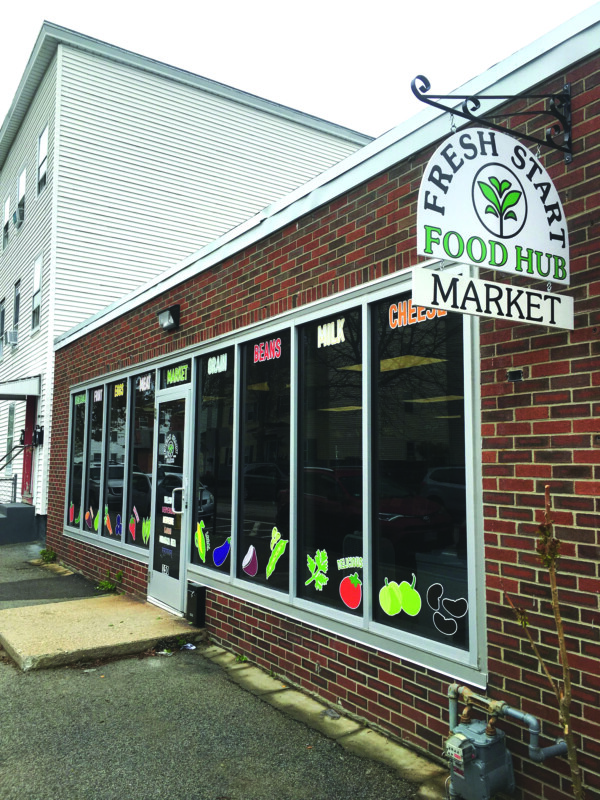
Fresh Start Farms to open centralized “food hub” and market
A new store set to open in the heart of Manchester this weekend will be a one-stop shopping spot for locally sourced produce, meats, dairy products and various non-perishables — and it’s also going to serve as a centralized “food hub” and production area for Fresh Start Farms, a collective of more than 20 immigrant and refugee farmers in New Hampshire.
Fresh Start Market, a year-round retail space due to hold its grand opening on Saturday, June 5, was born out of a partnership between NeighborWorks Southern New Hampshire and the Organization for Refugee & Immigrant Success. According to Fresh Start Farms program director Jameson Small, the market has been more than a year in the making.
“NeighborWorks had bought the building at an auction, and they started finding out from people what they wanted in the community. The idea of a grocery store kept popping up,” Small said. “So they had approached us, and at the time, we were just farming in Dunbarton and Concord. We had no storefront, we had no refrigeration and no real wash stations.”
According to Small, the pandemic caused Fresh Start Farms to pivot its CSA model to mostly home deliveries. The kitchen side of the market was finished first to meet that demand.
The grand opening of Fresh Start Market’s retail space coincides with NeighborWorks Southern New Hampshire’s Wellness Weekend. But in the weeks to follow, Small said, it will be open only on Wednesday and Thursday afternoons to start, with the goal to expand later this year.
The market features a wide range of items from Fresh Start Farms farmers and around 85 other food producers across mostly New Hampshire and Vermont, from fruits and vegetables to milk, eggs, cheeses, maple syrups, cooking oils, grain products and more. A grab-and-go model is expected too, including a small offering of fresh fruit smoothies.
Small also noted that Fresh Start Market is the first and only Double Up Food Bucks location in the city of Manchester for low-income shoppers.
“Part of our total mission is food access,” he said, “so if you have a SNAP or EBT card, you can get any fresh fruit and vegetable here for half the price. … So we’re even able to compete with some of the larger entities on specific items.”
Fresh Start Farms, meanwhile, will continue to sell its produce at several farmers markets throughout New Hampshire, while a mobile market will also make weekly stops this summer.
Fresh Start Market Grand opening is Saturday, June 5, from 10 a.m. to 2 p.m. Where: 150 Spruce St., Manchester Hours: After June 5, hours will be Wednesday and Thursday from 2 to 6 p.m., and will likely expand into the summer and fall months More info: Visit freshstartfarmsnh.com, follow them on Facebook and Instagram @freshstartfarmsnh or call 606-2663
Missy Gaffney is an esthetician and owner of three health and beauty businesses — The Skin & Body Spa, The Hair Company and The Medical Skin Clinic — all located in Nashua.
Explain your job.
It’s different every day. I could be interviewing [potential employees], proofing or brainstorming marketing plans, ordering [products] or meeting with the managers and delegating [tasks]. … I constantly have my face around at all the different businesses, interacting with all of our employees and making sure everything is perfect for the clients.
How long have you had this job?
We’ve had The Skin & Body Spa for almost 14 years, The Hair Company for almost six years, and The Medical Skin Clinic for almost two years.
What led you to this career field and your current job?
I struggled with acne myself as a kid, so my mom would bring me to get facials and get good skin care products to help my skin, and I really noticed such a huge difference. I always had the dream of one day being an esthetician and helping people like myself [improve] their skin and boost their confidence. I worked as an esthetician for other [businesses] for years, but I always had a vision of opening my own, and that I could [run] it really well.
What kind of education or training did you need?
I have a bachelor of science degree, and then I went to esthetics school for 450 hours. … I was constantly going to continuing education classes after that, and still go to a lot of conferences on spa management and business management.
What is your typical at-work uniform or attire?
Business-casual.
How has your job changed over the last year?
We’ve had to really home in on what we need to do to create a safe and comfortable environment for our clients as well as our team members, without getting too overwhelmed. It has taken a lot of patience and research and being proactive to make sure that we always have all the right policies and the proper PPE.
What do you wish you’d known at the beginning of your career?
To not get worked up over every little thing that goes wrong. There are always going to be problems, and there are always going to be solutions. Think, ‘How am I going to solve this?’ instead of stressing out about it.
What do you wish other people knew about your job?
Some people are scared [to go to a spa] because they think it’s going to be a snobby environment, but I would want them to know that they never have to worry; we’re very non-judgmental, and very good at putting people at ease and making them feel very welcome.
What was the first job you ever had?
Working in a clothing store, folding clothes.
What’s the best piece of work-related advice you’ve ever received?
When you’re stressing about something, ask yourself, ‘Is this really going to matter in five years?’ If it’s not, it’s easier to let it go.
Five favorites Favorite book: Tuesdays with Morrie Favorite movie: The Sound of Music Favorite music: Folk Favorite food: Japanese Favorite thing about NH: All the options; I can get to a little historic town, skiing [destination], Boston or the beach without a lot of [travel] time.
Two new sculptures to be installed in downtown Concord
Downtown Concord becomes an open-air art gallery through Art on Main, an initiative by the Greater Concord Chamber of Commerce’s Creative Concord committee to commission public outdoor sculptures by professional sculptors from around New England for installation along Main Street.
Now in its fourth year, Art on Main is bringing in two new sculptures to be installed this month.
Both were created by Chris Plaisted, a Connecticut-based artist who was born and raised in Alstead, New Hampshire.
“This will sort of be a homecoming for me,” Plaisted said. “I still have many friends and family in the area, so part of the intent in participating was the hope that they will get to see my work.”
Plaisted’s large-scale, welded steel sculptures have appeared in dozens of outdoor art exhibits across the country. He described his work as being “primarily abstract, but often with figurative elements.”
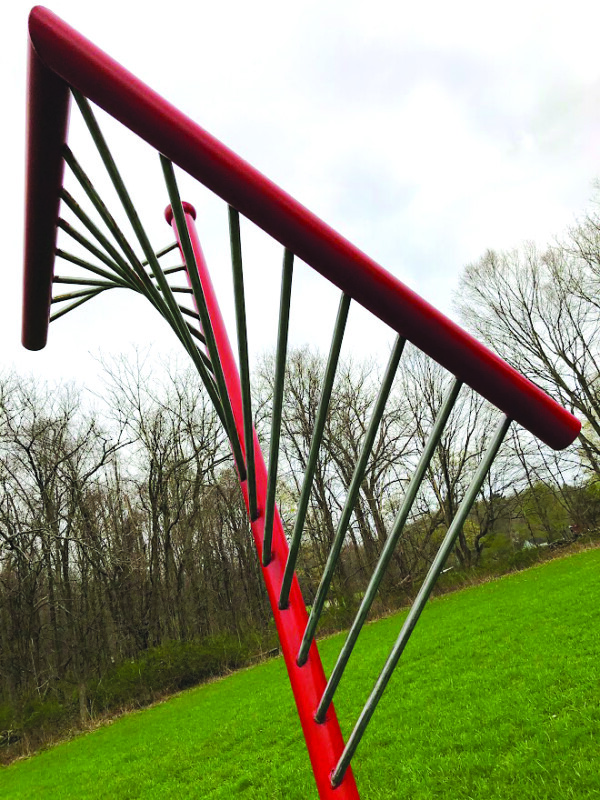
His Concord-bound piece “Into the Wind” is a 12-foot-tall, 5-foot-wide and 5-foot-deep red steel sculpture that was prompted, Plaisted said, by a conversation he had with his friend about their shared sailing hobby and summer plans.
“I got to thinking about making a piece inspired by our boats, so this piece is an abstract of a sail cutting the wind,” he said.
At 9 feet tall, 32 inches wide and 32 inches deep, “Sunflower from Mars” is also red steel and was born out of Plaisted’s interest in the 1938 radio broadcast The War of the Worlds.
“The piece was then inspired by the idea that, what if Martians had actually landed in the U.S. and planted a seed? What would they have left behind?” he said.
The sculptures installed through Art on Main remain in Concord for one to two years, at the discretion of the Creative Concord committee. Plaisted’s piece will join several pieces that have been renewed for a second year. All are available to purchase, with 30 percent of the proceeds to be placed in a dedicated fund for Concord to acquire more permanent public art.
“The idea is that we’re bringing in new pieces on a fairly regular basis to keep sort of a fresh appearance of new art coming into the downtown,” Concord Chamber President Tim Sink said.
Sculptors are found through a call for art put out by Creative Concord in the winter. By the end of April, the committee makes its decision.
“We’re not looking for statues of George Washington,” Sink said. “We’re looking for [pieces] that are more non-traditional; that are large and capture your eye as you’re walking or driving down Main Street; and that are rugged and durable — something that kids could climb on.”
The best way to experience the art, Sink said, is to park on South Main Street and walk, starting in the area of the Capitol Center for the Arts, up to the New Hampshire Statehouse on North Main Street.
“It’s a very pedestrian-friendly atmosphere with lots of outdoor dining and shops, and you’ll pass these pieces along the way,” he said.
You can engage more with the pieces on Creative Concord’s website, which features professionally shot videos of the artists introducing themselves and discussing their sculptures. Sink said Creative Concord is looking to expand the Art on Main initiative to have a new mural created in downtown every year. They’re on track to have one completed by the end of the summer, though they haven’t chosen a location yet.
“We have plenty of canvases,” Sink said. “If you walk through downtown, you’ll see there are probably 14 or so sides of buildings that are highly visible and would be great for a mural.”
Visit concordnhchamber.com/creativeconcord and visitconcord-nh.com/art-in-concord, or call the Chamber at 224-2508.
Featured photo: “Into the Wind” by Chris Plaisted. Courtesy photo.
Why you might want to add a companionable kid, some laid-back alpacas and other animals to your family
Maybe you’ve dreamed of owning goats that could mow your lawn, a donkey for companionship, or snails that will suck the algae off your fish tank. New Hampshire animal owners and caretakers shared their expertise on nine non-traditional “pets” and what it takes to give them a proper home. Note that zoning laws and rules about keeping nontraditional animals may vary by community, so be sure to check with your town or city hall before purchasing a new animal or altering your property.
Alpacas
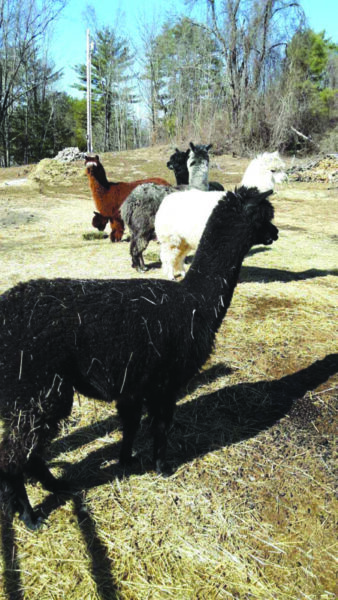
Alpacas from Someday Farm in Canterbury. Courtesy photo.
Why you might want them: Not to be confused with llamas, alpacas are much smaller animals that were bred specifically for their fiber rather than for packing.
“Llamas have fiber, but mostly only around their mid-waist. Alpacas are strictly fiber animals,” said Barbie Tilton of Someday Farm in Canterbury, which is currently home to six alpacas.
According to Sandy Warner of Granite State Alpacas, based in Hampton Falls, alpacas are considered the easiest large livestock animal to care for because they require the least input from owners.
“[They] are hypoallergenic animals and their fiber and finished products are ideal for anyone who has wool allergies,” Warner said in an email. “Their coats are also naturally wicking, odor-resistant, and anti-static.”
There are two fleece types, according to Wendy Lundquist of Snow Pond Farm in Windham — Suri, which is characterized by its dreadlock-like fibers, and Huacaya, which look more like fluffy teddy bears.
What they do most of the time: According to Megan Long, whose family owns Nodrog Farms in Barrington, alpacas are very laid back animals that mostly eat, sleep or sunbathe in warm weather.
“Occasionally you will see them pronking around the yard, but mostly they are an easygoing animal,” Long said.
Ideal amount of space: Like with any other herd animals, Warner said the more space the better. Multiple pastures are ideal, with separate pastures to keep males and females apart.
“I’d say two [alpacas] are good, but three is company. The more the merrier,” Tilton said. “They like to be in a herd with a whole bunch of other alpacas.”
Smallest possible amount of space: Warner said she recommends at least one acre per two to three alpacas.
Their needs: Alpacas need shelter from wind and the elements, with at least a run-in shelter if not also a barn.
“They need to be shorn once a year, or they can be overheated in the summer wearing their winter wool,” Warner said.
Tilton said her alpacas also get ivermectin shots at least every 30 days, to protect them from a deadly parasite known as the meningeal worm that passes through feces in deer.
What you need to do for them: Alpacas should always have fresh hay, fresh water, grain, mineral supplements, toenail trimming and annual shearing. Similar to cats, Warner said, they can be aloof by nature.
“The more time you spend with them the more social they become,” she said.
Cost (of animal and upkeep): Long said that, on average, it costs about $500 per year for each individual animal.
Lifespan: Alpacas can live up to 20 years or longer, according to Warner.
Occasional animal: You can also contact a local alpaca farm or animal shelter to see if they have any alpacas that may need to be fostered, Long said.
Just looking: Some farms, including both Someday Farm, Snow Pond Farm and Nodrog Farms, welcome visitors if you contact them ahead of time. Others have also visited local farmers markets in the past — Everything Alpaca of Milford, for example, has brought its alpacas to the Milford Farmers Market.
Chickens
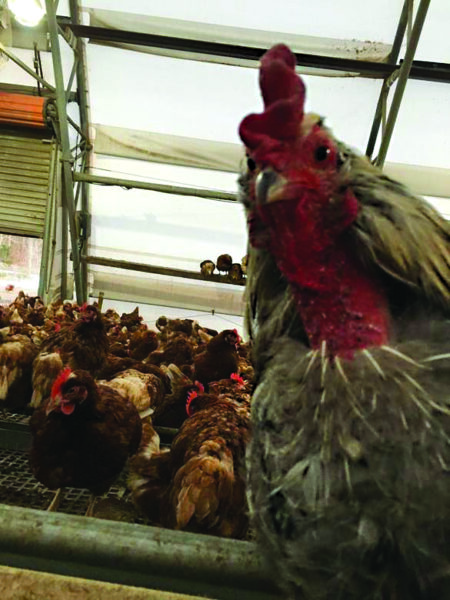
Why you might want them: Matt Gelbwaks of Julie’s Happy Hens in Mont Vernon said the benefits of chickens are that the hens will give you an egg a day, year-round; they produce high-quality fertilizer; they will remove bugs and grubs from around your garden and outdoor plants; and they are “mostly docile and pleasant … and Instagram-ready.”
What they do most of the time: Gelbwaks said chickens mostly wander around, investigating their surroundings, occasionally stopping to “dust bathe,” a form of self-cleaning in which they roll around in the dirt, then vigorously shake the dirt off. This helps them to remove any harmful bugs or parasites, keep their feathers clean by removing excess oil and shed old feathers.
Their needs: The ideal amount of space for chickens is 3 square feet per bird, or letting them free range on your whole yard.
“The more space they have, the less harsh they will be on their space,” Gelbwaks said. “If you give them the minimum, they will eat everything and reduce it to a dust bowl within a month or two.”
You could manage with as little as 1 to 2 square feet per bird, but only if you’re prepared to give them lots of attention.
“If you talk to them every day and remind them that you are taking care of their every need, they will be happy [with less space],” Gelbwaks said. “The less you actively engage with them, the more space they will need.”
Because chickens are prey animals, they need some kind of draft-free shelter in their space where they can hang out and sleep safely, out of reach of predators.
“They need a place to hide and feel secure,” Gelbwaks said. “Lots of things scare them.”
Their food and water should be in close proximity to the shelter. They need about one-third to one-half a pound of chicken feed a day, with some additives, such as oyster shell, for the aging chickens. As for their water, a simple dish is fine, but expect to have to “change it constantly,” Gelbwaks said, as chickens tend to dirty water very quickly.
What they cost: You can buy a baby chick for just a couple of bucks, though the price goes up if you’re looking into “rare, fancy ones,” Gelbwaks said. Hens range from $10 to $30, depending on their age; pullets — hens that are just about to hit egg-laying age — are on the higher end, while older hens are on the lower end. The initial setup could be as inexpensive as $50, depending on what kind of space you’re working with, but, Gelbwaks said, the sky’s the limit on how elaborate you want to get.
“Many people pay way too much and get ultra-fancy coops that rival their kids’ playhouses,” he said.
Their lifespan: Three to five years, depending on the breed.
If you aren’t ready to commit: You can rent chickens, Gelbwaks said, but once they’ve lived on a private property it’s nearly impossible to reintegrate them into a commercial flock, so they’ll most likely get culled. If you just want to see some chickens, most local farms are happy to accommodate, Gelbwaks said.
Goats
Chickens at Julie’s Happy Hens. Courtesy photo
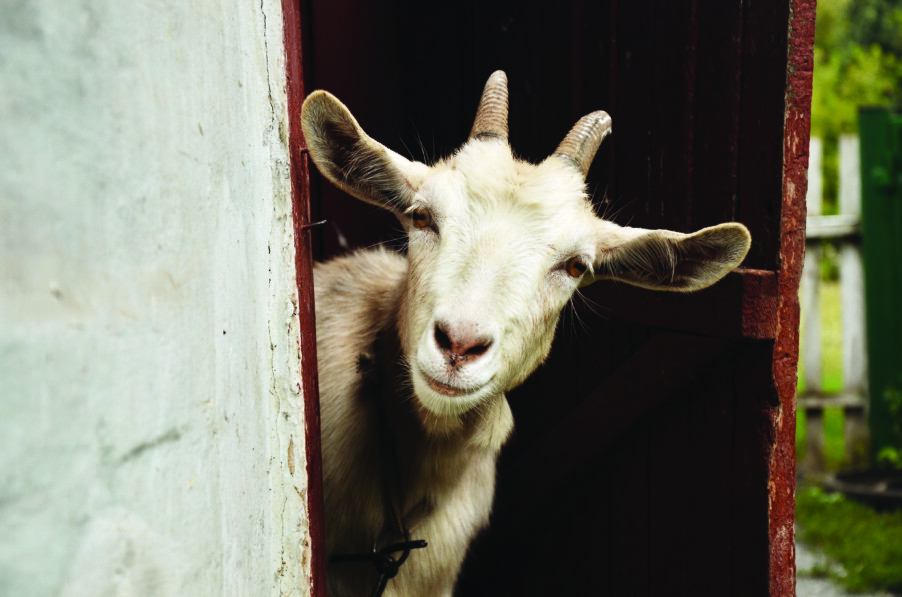
Why you might want them: Goats can be fun companion animals that are easy to care for, just as long as you have a good fence to keep them in, said Teresa Paradis, founder and executive director of Live & Let Live Farm in Chichester. Goats can also be kept for a variety of reasons, from their milk to their meat or fiber.
What they do most of the time: Goats love hiking and spending time with their human companions, Paradis said. They love eating brush, poison ivy, unwanted thorn bushes and other problem growth you’d like to get rid of naturally without the use of pesticides.
Ideal amount of space: The more space you have the better. Noreen Rollins of Tilton Hill Goat Farm in Danbury said it’s best to have at least 5 acres of space available for goats.
According to Briana Desfosses of Fox’s Pride Dairy Goats in Mont Vernon, goats tend to prefer wooded areas or areas with brush.
“They don’t need nearly the [same] amount of space as sheep or other larger animals like horses or cows,” she said. “Many people keep a small handful of pet goats in their backyard.”
Smallest possible amount of space: Paradis said because goats are herding animals, it’s ideal to house at least between two to three of them together.
“You could house several goats on less than 2 acres of land and a proper enclosure [or] barn as long as they are allowed … in your city or town,” she said.
Their needs: A goat’s main source of food is shrubbery and hay. Paradis said they should also be checked for parasites and treated with an ivermectin injection yearly. Hoof trimming care can be done every few months, depending on the space they have to move around in that would wear their hooves down.
What you need to do for them: Rollins said goats require sufficient feed and shelter, and their fibers should be removed at least once a year.
Cost (of animal and upkeep): Depending on the natural food sources you have available, Paradis said the average goat may cost approximately $40 to $50 per month.
For goats that are producing milk, Desfosses said you’ll likely be spending a lot more on grain, as well as all sorts of supplements and veterinary care.
Lifespan: Goats typically live anywhere from 12 to 20 years, according to Paradis.
Occasional animal: Some local shelters, like Live & Let Live Farm and the New Hampshire SPCA, may have opportunities to adopt or foster farm animals, including goats. A few spots, like Gap Mountain Goats of Marlborough, have even offered their goats up for rent to eat your poison ivy, weeds or other unwanted vegetation, while at Jenness Farm in Nottingham there are baby goat yoga classes available for adults. Desfosses said some herds may lease their animals to partake in 4-H youth shows.
Just looking: Sunday guided tours at Live & Let Live Farm were temporarily suspended due to the pandemic, but according to Paradis, they will likely start back up in mid-June. Other spots, like Tilton Hill Goat Farm, may open to visitors with prior notice.
Guineafowl
Why you might want them: Guineafowl lay eggs seasonally, from May through September, Gelbwaks said, and the eggs are made up of a different protein than chicken eggs, making them safe for most people with regular egg allergies to eat. They eat ticks, and they are usually the first to alert you if there is something amiss on your property. That being said, they are also “loud, noisy and obnoxious,” Gelbwaski said.
“It takes a particular seriousness to want to keep guineas,” he said, adding that they can also be a bit dimwitted. “They run around and often forget they have wings and need to be let into a gate they just flew over.”
What they do most of the time: Run around, “looking for things to bark at,” Gelbwaski said, and digging around for bugs and seeds to eat.
Their needs: Guineas hate being contained and need to be able to roam free, Gelbwaks said. “They go where they want, and once they pattern on your roosting space, they come back,” he said. “Some hang out on our property while others range a mile or so.”
You still need to provide a draft-free shelter for the guineas to find refuge from predators and to roost. Give them water, and supplement their foraging with some feed.
What they cost: They only cost a few bucks, but it’s essential that you buy them as keets (babies) if you want them to stay on your property, Gelbwaks said.
“It’s really hard to repattern adult guineas,” he said. “If you want to start a flock, get keets and rear them in the location you want them to pattern to.”
Their lifespan: About five years, assuming they don’t get snatched up by a predator, which they often do, Gelbwaks said.
If you aren’t ready to commit: “Again, you can’t repattern adults, so once you get them you’re kind of stuck with them,” Gelbwaks said. If you want to see what guineas are like, your best bet is to visit a local farm that has them.
Horses, ponies and donkeys
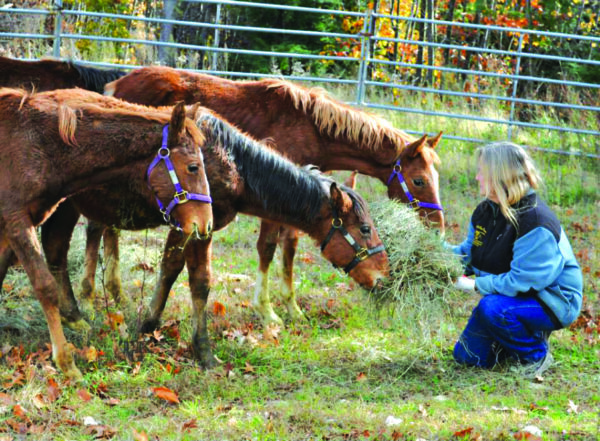
Teresa Paradis with horses at Live & Let Live Farm in Chichester. Courtesy photo.
Why you might want them: Horses and ponies may be among the more costly animals to own but are also among the most spiritual and intelligent, according to Paradis. Ponies should not be confused with mini horses, which have been bred down to size through the years to produce smaller breeds.
Donkeys are also highly intelligent and have a strong sense of self-preservation, said Ann Firestone, president and co-founder of Save Your Ass Long Ear Rescue in South Acworth.
“As a rule, they are very friendly, people-oriented animals that have often been described as therapeutic due to their gentle, patient nature,” she said.
What they do most of the time: Horses and donkeys like to spend their time grazing — in the natural world, Paradis said, horses move around and graze for about 20 hours a day, sleeping for about three to four hours in 15- to 20-minute increments during the day.
Ideal amount of space: The average stall for horses and donkeys is 10 by 10 feet. Ideally, they should have at least one acre of space.
Smallest possible amount of space: At a minimum, Paradis said horses should have a sturdy three-sided shelter with a roof that they can freely move in and out of at will, or even a barn with an outside door that can lead into the pasture. The outside space, similarly, should be at least large enough for them to get into a good run to stretch, roll and play in.
“A dry lot area with a nice pasture to go out in is ideal,” she said.
Their needs: Paradis said you need to have a good source of hay. An average-sized horse eats an average-sized bale of hay, around 40 to 45 pounds, every two days, with ponies and mini horses eating much less. Donkeys, according to Firestone, have a diet of hay, barley straw and a vitamin-mineral supplement.
What you need to do for them: Jade Place of Weare, who adopted her pet horse from Live & Let Live Farm in 2001, said regular upkeep includes hoof trimming every six to eight weeks, as well as ongoing monitoring for parasites and yearly dental checks. Horses and ponies also need to be kept dry during inclement weather to prevent fungal infections such as rain rot.
Generally, if there are no emergencies, a horse is seen by its equine veterinarian about once a year. They should be checked over daily for things like cuts and ticks.
Cost (of animal and upkeep): For donkeys, Firestone said annual vaccinations will run you about $200 and dental visits at $100 or more. The cost of feed will depend on the size of your animal.
Lifespan: Donkeys live for about 30 years on average, Firestone said. Paradis said horses can live 30 to 40 years or more.
Occasional animal: Live & Let Live Farm offers horse fostering, which includes inspections for appropriate homes and facilities. Many other local farms and ranches offer horse or pony rides and lessons.
Just looking: Firestone said Save Your Ass Long Ear Rescue allows visitors by appointment only — appointments can be made by calling, emailing or sending a message on social media. Live & Let Live Farm is also expected to resume its weekly guided tours later this month.
Peafowl
Why you might want them: Gelbwaks said peafowl such as peacocks are “an acquired taste and a commitment.”
“They have very individual personalities but don’t often really like to socialize,” he said. “They are, however, quite striking to look at.”
What they do most of the time: Male peafowl are very vain, Gelbwaks said, and spend most of their time preening and trying to look good, while the female peafowl are very dismissive and spend most of their time playing hard-to-get with the male peafowl.
Their needs: Peafowl like to travel and need to be able to free range.
“You can keep a pea in a large cage, but they do not flourish, and they tend to mope and be unhappy all of the time,” Gelbwaks said.
They need food, water and a draft-free shelter where they can keep their feet out of the snow, since they are very susceptible to frostbite.
If you’re looking to spoil them, Gelbwaks said, feed them cheese.
“No one knows why, but peas seem to love cheese,” he said. “It’s the only thing they’ll eat out of our hands, and when they see us with some, they’ll come running from wherever they are.”
Peas also have a strong need for attention and adoration, “even if it’s just the occasional encouragement on their fanned tails or nicely groomed feathers,” Gelbwaks said.
“Don’t expect anything in return,” he said. “Secretly, they always harbor the desire to come and nuzzle, but peer pressure won’t allow them to do so.”
What they cost: Peafowl eggs can cost $10 to $30 per egg and are “notoriously hard to hatch” and keep alive during the first week, Gelbwaks said. Chicks can cost $25 to $50 each. Adults may cost $100 to $500, depending on their coloring.
Their lifespan: 25 to 40 years in the wild, but may be shorter when domesticated.
If you aren’t ready to commit: “Many zoos and parks have them in residence,” Gelbwaks said. “It’s best to go visit them there.”
Pigs
Teresa Paradis with horses at Live & Let Live Farm in Chichester. Courtesy photo.
Why you might want them: Pigs are one of the smartest animals you can own as a pet and, contrary to the stereotype of a pig pen being messy, are actually very clean animals, said Holly Kimball of Beech Hill Farm in Hopkinton.
What they do most of the time: According to Kimball, many hours of a pig’s day are spent resting or sunbathing. A layer of mud or dirt that a pig may roll around in actually acts as a form of sunscreen, she said, because their skin sunburns very easily.
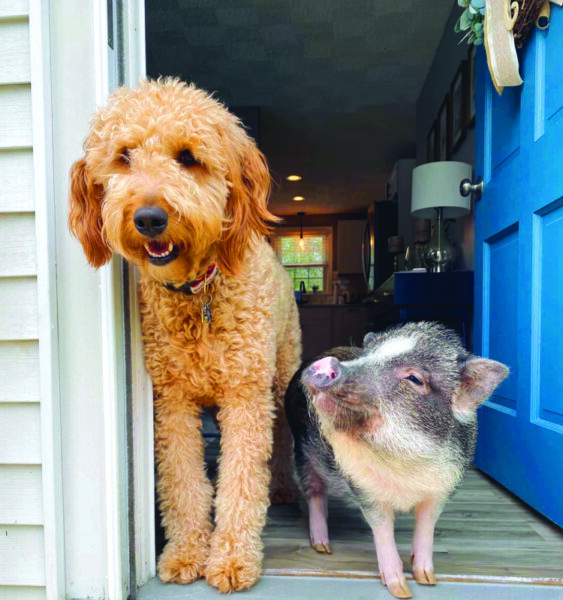
Rachel Savoie and her husband Kyle of Nashua adopted a pet pig named Cindy Lou from the New Hampshire SPCA two years ago. She said Cindy Lou, who is estimated to be about 3 years old, will sleep for a majority of the day and will often burrow underneath blankets.
“She has a whole bedroom, and at night she likes to roam around,” she said.
Ideal amount of space: Kimball said pigs require enough space to exercise, and they also need a designated bathroom area that is well apart from their eating and sleeping areas.
Their needs: Because of their skin pigmentation, pigs must always have protection from the sun.
What you need to do for them: Kimball said it’s important for piglets to be wormed and receive certain shots according to veterinarian recommendations. They also need clean bedding, ample grain, fresh water and shelter.
Savoie said her pet pig’s diet includes pig pellets, a large serving of fruits and vegetables, like tomatoes, cucumbers and carrots, and candied peppermints as treats.
“Her hooves are trimmed twice a year, and she goes to the vet once a year for a regular visit,” she said.
Cost (of animal and upkeep): Between the food and medical care, Savoie estimated the overall upkeep of a pet pig to be more than that of a dog each year. Kimball said it can be even more expensive if you’re raising pigs for the purpose of meat.
Lifespan: Savoie said a pig’s lifespan is between 15 and 20 years, depending on the breed type.
Occasional animal: You can contact a local farm or animal shelter to see if they have any pigs that may need to be fostered.
Just looking: During Beech Hill Farm’s summer season, which began May 1 and runs through Oct. 31, visitors are welcome to come see and learn about each of the farm animals. Other local farms with pigs may welcome visitors if you contact them ahead of time.
Rabbit snails
Why you might want them: “Some people like collecting different snails and critters,” said Michael Gioia, owner of Fish Mike Aquatics in Manchester. “Others may use them inside aquariums as a cleanup crew to eat algae and uneaten fish food.”
What they do most of the time: Crawl around, sometimes burrowing into the sand.
Their needs: These freshwater aquatic snails need a 10- to 20-gallon tank, Gioia said, with specific water temperatures and pH levels, depending on the species.
“An owner would require a cycled aquarium, as well as basic aquarium care knowledge to keep them healthy,” he said.
You can feed them regular commercial food used for fish and snails.
What they cost: A 20-gallon aquarium setup starts at around $100, which includes a filter, heater, tank, some gravel and a cheap light, Gioia said, but more elaborate setups can get expensive. The ongoing cost is minimal — just enough to cover food, replacement filters and water additives.
Their lifespan: 1 to 3 years.
If you aren’t ready to commit: You can go check them out at a public aquarium or local pet store that sells aquariums, Gioia said.
Worms
Why you might want them: Certain types of worms, like red wigglers, can be used for composting.
Joan O’Connor, a worm composter in Henniker, said you can feed worms non-citrus fruits, vegetables, eggshells, coffee grounds, tea bags, paper products and other organic waste that would otherwise get thrown in the trash.
“They could eat and process a pound of garbage in a week or so,” she said. “They’re your workers.”
Not only are you doing something good for the environment, O’Connor said, but you’re also rewarded with a rich, natural fertilizer for your personal use.
“You can take handfuls of this stuff and add it to your houseplants, your tomato plants, your gardens, your rhododendron bush outside,” she said.
What they do most of the time: “They just sit there, hang out, and eat your garbage … and if you keep them happy, they’ll reproduce,” O’Connor said.
Their needs: For your initial setup, O’Connor said, get a large plastic storage container that’s a couple of feet deep and drill some holes in the bottom for excess moisture to drain. Fill it with alternating layers of shredded newspaper and peat moss. Lay a window screen, mesh or thin fabric over the top of the container and wrap a bungee cord around it to keep the worms from escaping.
The key to keeping your worms alive, O’Connor said, is maintaining a temperature between 60 and 80 degrees.
“They’re very low-maintenance, but you’ve got to watch that temperature,” she said. “If they get too cold or too hot they’ll start to slow down.”
You don’t have to think too hard about how much you feed them, O’Connor said; worms don’t need to eat as much as they like to eat.
“If anything, overfeed them,” she said. “It makes them happy, and it makes them step up and keep [composting] for you.”
What they cost: A pound of worms, which is a good starting amount, O’Connor said, ranges from $20 to $50 online.
Their lifespan: An individual worm lives for weeks to months but will reproduce, so you’ll always have worms.
If you aren’t ready to commit: Try them out, and if it’s not for you, you should have no difficulty finding someone to take your worms off your hands, O’Connor said.
“Give them to a science teacher, a garden club, your neighbor, anyone with a green thumb,” she said.