What to start growing this spring so you can feast this summer
If you want to enjoy garden-fresh fruits and veggies from your own backyard, now is the time to plant them. Local horticulture experts shared some tips on how to get your plants in the ground, care for them while they grow and harvest them when the time is right. And, if you need some inspiration for how to use your homegrown bounty in the kitchen, there’s some cooking tips and recipes to get you started.
Beets
Plant now: “Beets are a hardy crop and easy to plant,” Erler said. They can be sown from seed outside, even before the last frost. Plant the seeds around an inch deep, allowing for at least a couple of inches between each plant and around a foot between each row.
Watch them grow: Beets like a well-draining, sandy soil, Erler said, and a minimum of six hours of direct sunlight. Water the plant lightly, keeping the top inch of soil evenly and consistently moist.
Out to harvest: Beets can be harvested after six to eight weeks, ideally no later than June as they don’t grow as well in the summer heat. Use your best judgment, Erler said, and when in doubt, it’s better to harvest them too early than too late. “There’s a point where it will have gotten as big as it’s going to get, and if it sits in the ground too long, [the beets] get kind of tough on the inside,” she said.
Eat later: Beet smoothie
Recipe by Sara Oberle, Nutrition Connections Teacher, and courtesy of UNH Cooperative Extension.
Serving size 1½ cups. Serves two.
1 cup plain yogurt
1 frozen banana, peeled
1/2 medium beet
1 teaspoon fresh ginger
1/2 cup frozen mango
1/2 cup frozen mixed berries (strawberries, blueberries, raspberries and blackberries)
1 cup ice cubes
1 cup water
Place all of the ingredients in the order given into a blender and blend until smooth. Pour into a glass and enjoy.
Bell peppers
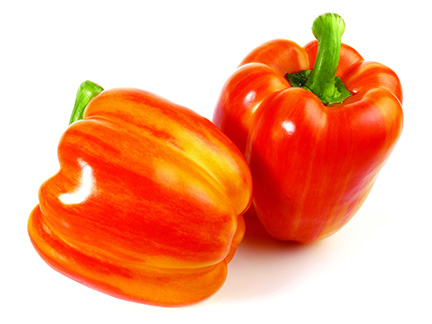
Plant now: As with tomatoes, you should plant bell peppers indoors if you want to start growing them now.
“Bell peppers take a little bit longer, probably about eight to 10 weeks, to go from seed to transplant,” Bernitz said. “They like very warm soil and warm weather.”
Watch them grow: As long as you give them the light and temperatures they need, Bernitz said peppers are a relatively easy vegetable to grow. As with peas, peppers should not be overfertilized.
“Some varieties of peppers benefit from staking,” he said. “Certain varieties are going to mature quicker than others. … A more advanced technique would be using black plastic mulch, like you might see on a farm. It helps to warm the soil.”
Out to harvest: According to Bernitz, peppers can be picked green and immature as long as they are full-sized and firm. They can be cut from the plant using clippers, scissors, pruners or a sharp knife and will have a short storage life of only one to two weeks.
Eat later: Peppers that are allowed to ripen on the plant, Bernitz said, will be sweeter and more nutritious. You can use them as ingredients in sandwiches or soups, or dice and combine them with tomatoes and other ingredients like garlic, onions and cilantro to create a dipping salsa for tortilla chips.
Carrots
Plant now: Carrots can be sown from seed directly outside. Since carrot seeds are so tiny, it’s easier to just sprinkle the seeds in a row rather than planting individual seeds; you can space them out as they grow, Erler said. “You pull out some of the little baby carrots in between [plants] to make sure they’re properly spaced,” she said. “You’re sacrificing a few, but you’re going to get nice, full-sized carrots.”
Watch them grow: Carrots like a soil that is rich, yet well-draining, such as a loamy soil, Erler said. They need at least six hours of direct sunlight and at least an inch of water per week.
Out to harvest: Carrots can be harvested after eight to 10 weeks, depending on how the tops look. “If that much time has elapsed and the top is really large, it’s probably done all it’s going to do,” Erler said. “You’ll just get diminishing returns if you leave it in longer, like the carrots will get hard and woody.” Ideally, you should be able to pull the carrots out of the soil by hand with little resistance, but you can loosen the surrounding soil with a garden fork if necessary. “Worst-case scenario, the top breaks off when you try to pull it out, and then you’ll just need to grab a tool to dig it out of the ground,” Erler said.
Eat later: Carrot dip
Recipe by Lisa Richards and courtesy of UNH Cooperative Extension.
Serves 6
6 carrots, shredded
1 1/2 cups nonfat yogurt, plain
1 clove of garlic, mashed
1 tablespoon olive oil
Juice from 1/2 a lemon
1/2 teaspoon salt
18 4-inch celery strips
24 cherry tomatoes
Wash, peel and grate carrots. Add garlic, olive oil, lemon juice and salt to yogurt. Stir. Add carrots to yogurt mixture. Mix well. Serve with celery, tomatoes and other vegetables, if desired.
Herbs
Plant now: Some culinary herbs can be planted outdoors now or in the next one to two weeks, while for others you’ll need to wait until steadier warm weather arrives, according to Maria Noel Groves, owner of Wintergreen Botanicals in Allenstown and author of the book Grow Your Own Herbal Remedies. If you’re starting from seeds, you can usually find information on the seed packet on how long it will take the crop to germinate (when the seedling pops out of the soil) and mature (when it’s ready to be harvested). This can take a few weeks to a month, depending on the plant.
Watch them grow: Culinary herbs can be grown and harvested on their own, while some can thrive when paired up with others. Local experts say it all comes down to the ecosystem each one prefers.
“If you’ve got Mediterranean herbs like rosemary and thyme that like lots of sunlight, then they would be OK to go together,” said Jessica LaBrie, owner of Blackbird’s Daughter Botanicals in Barrington and a past president of the New Hampshire Herbal Network. “You might keep herbs that like a lot more watering together, like parsley and dill.”
Thyme and mint, Groves said, are among some of the herbs that can handle a bit of colder temperatures. Others prefer warmer or drier conditions.
“Mediterranean herbs are not going to survive outside right now,” she said. “Rosemary is definitely one of the ones that likes it more dry. Basil likes a hot, rich soil and lots of sun.”
Out to harvest: LaBrie said it’s a good idea to let your plants get established before you begin regularly harvesting — you can usually tell by their smell or their feel.
“With a lot of herbs, if you pinch off the new growth it will grow back even bushier,” she said. “It’s like giving them a little haircut every couple of days.”
Eat later: Groves said she likes to use her herbs in all kinds of ways in the kitchen, from simply adding them to a glass of seltzer water to using them as ingredients in a variety of dishes.
“If I’m making a nice savory breakfast, maybe with eggs, I could have them with basil or sage,” she said. “If we’re making Mexican food, like tacos, then I’ll use a lot of cilantro, oregano and parsley. I also like to do some Korean and Thai-inspired meals like bowls or stir-frys with herbs.”
Kale
Plant now: Kale can be sown from seed outdoors, or it can be started inside and transplanted outdoors after around four weeks, when it gets its first sets of leaves. “Both [ways to plant] are options, but if you plant them directly in the garden they probably aren’t going to get quite as big and are going to take a little longer before you can harvest them [than if you start them indoors],” Earler said.
Watch them grow: Kale “isn’t too fussy” with its growing requirements, Erler said. Just give it a well-draining, sandy soil, at least six hours full sun, and water whenever the soil feels dry. The biggest concern with growing kale, Erler said, is pests, such as cabbage worms, aphids and certain kinds of moths. “You want to make sure you’re looking closely at the plants and scouting for insects often, at least a couple times a week, to make sure that nothing is getting out of hand,” she said. If you do find yourself with an insect problem, she said, consult your local garden store about an insecticide or a row cover.
Out to harvest: “Kale is nice because you can harvest it as you go along,” Erler said. Simply remove the leaves as desired, using a pair of gardening scissors or by twisting them off by hand. Always pick the oldest leaves first, growing from the base of the plant.
Eat later: Kale chips
Recipe by Caitlin Porter and courtesy of UNH Cooperative Extension.
Serves 4.
1 bunch kale, red or curly
1 Tablespoon olive oil
1/4 teaspoon salt
2 Tablespoons Parmesan cheese
1/4 teaspoon paprika
1/2 teaspoon garlic powder
Preheat oven to 300 degrees. Wash and completely dry kale leaves, remove stems. Tear into medium to large size pieces, place in a medium to large bowl. Add all the other ingredients and toss until kale is coated. Line a baking sheet with foil, coat with non-stick cooking spray. Spread kale onto baking sheet in a single layer. It might take two baking sheets. If using two baking sheets, make sure to rotate them halfway through the cooking time. Cook for 20 to 25 minutes. Store any leftovers in an airtight container.
Lettuce
Plant now: Any type of lettuce you can buy at the grocery store is one you can also grow yourself — the easiest to grow is loose leaf lettuce, as it is the quickest to mature at about four weeks.
“Lettuce … can withstand light to moderate frost and will tolerate some shade, but it really prefers a lot of sun,” Bernitz said. “Loose leaf lettuce is really good for planting in the spring, for both containers and raised beds. … You’re planting in early to mid-April, and harvesting all May and June long if you’re planting it successionally.”
Watch them grow: Depending on your variety of choice, from smaller loose leaf lettuce to larger heads, Bernitz you might need a little extra space between each for them to grow.
“Lettuce is something you don’t want to plant too deeply. The seeds should be just below the surface of the soil,” he said.
Out to harvest: Most varieties of lettuce take about 40 to 50 days and then can be harvested over and over throughout the season, according to Munroe. Like spinach, Bernitz said, lettuce is best harvested at cooler temperatures. You can harvest individual leaves or alternatively cut the entire plant at or just above the surface of your soil.
Eat later: Most lettuces can go great in salads, sandwiches or wraps. Romaine lettuce, according to information from the New Hampshire Farm to School’s Harvest of the Month program, is typically viewed as the most nutrient-rich.
Onions
Plant now: If you’re looking for a “big, supermarket size” onion, Erler said, there are two ways to plant them: You can start them from seed in a container indoors, then transport them outside after several weeks when they’ve sprouted, or you can grow them from an onion set, a tiny, immature onion bulb, which can be planted outside. Plant the seeds or sets no deeper than an inch, allowing several inches of space between each plant.
Watch them grow: Onions grow well in a rich, loamy soil, with a full day of direct sunlight. They like having plenty of water, Erler said, so make sure the soil stays consistently moist.
Out to harvest: The growing time for onions is longer than that for most other vegetables, Erler said. Expect to harvest at the end of the summer, around three to four months after planting. You’ll know they’re ready once their tops start to yellow and fall over.
Eat later: Onion casserole
Recipe by Sara Oberle, Nutrition Connections Teacher, and courtesy of UNH Cooperative Extension.
4 large onions, diced
1 Tablespoon olive oil
1 cup long grain rice, cooked according to package directions
⅔ cup milk
¼ teaspoon black pepper
¼ teaspoon salt
⅛ teaspoon ground allspice
½ cup cheddar cheese, grated
Cook rice according to package directions and set aside. Preheat oven to 325 degrees. In a skillet add olive oil and diced onions. Sauté for 5 minutes or until soft and translucent. In a large bowl add the sautéed onions, cooked rice, milk, black pepper, salt, and ground allspice; stir until blended. Pour into a lightly oiled casserole dish. Sprinkle the grated cheddar cheese on top. Cover and bake for 40 minutes. Remove cover and bake for 5 more minutes until cheese begins to brown.
Peas
Plant now: Peas are considered cool-season veggies that should be planted now, according to Nate Bernitz, home horticulture outreach program manager for the UNH Cooperative Extension.
“In order to get a good crop of peas, you’d want to plant them early in the spring, to give them time to mature before it gets too hot out,” Bernitz said. “Their ideal temperatures are between 60 and 75 degrees. … I’d also recommend planting peas successionally, which means making additional plantings every week or couple of weeks rather than all at once. It guarantees you a good continuous harvest, because peas are veggies you want to eat soon after they’re ready.”
Watch them grow: Bernitz said peas do best when growing on something they can climb on — you can use some kind of trellis, or make your own using chicken wire, sticks or other materials. Peas shouldn’t be overfertilized, either.
“They really thrive when given that space,” he said. “I would also say that peas … do really well when grown with other crops. So peas and spinach, for example, go really well together. Peas are kind of slow growing, whereas spinach grows quickly.”
Out to harvest: Peas will flower and produce pods that can be picked when ready to be harvested. Depending on the variety, this can take around 50 to 60 days from when you plant it, although some may produce pods sooner than others, according to Justin Munroe, founder and executive director of the nonprofit Grow Nashua.
Eat later: According to Bernitz, peas will taste sweet, tender and non-starchy when ready to be harvested. Peas or pea pods can be enjoyed as a side vegetable to a protein, while pea shoots can be added in dishes like pastas or potato salads.
Radishes
Plant now: Radishes can be sown by seed outside in the spring. Plant the seeds about 1/4 inch deep in the soil, spaced a couple of inches apart and in rows about a foot apart. “They need space,” Erler said. “If you aren’t really careful in the way that you space them, you may need to thin them out a bit [as they grow].”
Watch them grow: Radishes prefer a well-draining, sandy soil and at least six hours of full sun each day. It’s very important that radishes get enough water, Erler said, as that can directly affect how the radishes come out. “They tend to have a milder flavor and be more tender when they’ve had plenty of water,” she said. “[If they haven’t] they can end up pithy or woody and really spicy.” Give them at least an inch of water a week, more if conditions are hot or dry.
Out to harvest: Radishes have a quicker turn-around than most vegetables, Erler said, reaching maturity in as little as two to three weeks. Simply pull them out of the soil by hand.
Eat later: Radish stir-fry with sugar snap peas
Recipe by Shirley Clark of Nutrition Connections and courtesy of UNH Cooperative Extension.
Serving size ¾ cup. Serves 8.
1 tablespoon. oil
1/2 cup shallots, diced
3 cups sugar snap peas, chopped
2 cups radishes, sliced
1/4 cup orange juice
2 tablespoons fresh dill, chopped
salt and pepper to taste
Wash your hands and fresh ingredients. Heat oil in large pan over medium heat. Add shallots and cook until soft, about 3 minutes. Add snap peas and cook 3 minutes. Add radishes and cook 3 more minutes. Stir. Add orange juice and dill. Add salt and pepper to taste. Mix well. Serve and enjoy. Refrigerate leftovers and use within 2 to 3 days.
Spinach
Plant now: Like peas, spinach is another cool-season vegetable you’d want to start planting now, according to Bernitz, and is another one he recommends planting successionally.
“Spinach is a great one to plant not only in the spring but also in the fall as well. Peas tend not to be great for the fall because they are a little slower to mature,” he said.
Watch them grow: Spinach will prefer shade over full sun and cooler temperatures over warm. In fact, Bernitz said spinach that has been exposed to a little bit of frost will change its overall taste.
“It tastes somewhat sweeter when exposed to some light frost and harvested in cooler temperatures,” Bernitz said.
Out to harvest: According to Bernitz, single leaves of spinach should be harvested as soon as they reach a usable size, at cool temperatures if possible. Spinach has a short shelf life, lasting just a few days in the refrigerator. It should be run under cold water and immediately refrigerated after harvest, he said.
Eat later: Spinach cooks very quickly and can go great when sauteed with other greens like collards and Swiss chard, on its own or added to dishes like scrambled eggs or soups.
Tomatoes
Plant now: If you have the space indoors, you can start planting tomatoes now. Otherwise, if you’re looking to plant seeds directly into the ground, those will need to wait a little bit longer.
“Tomatoes you don’t want to plant or transplant outdoors until the danger of frost has passed, because they will not tolerate frost,” Bernitz said. “They are veggies that people typically start growing indoors. … We recommend starting them from seed indoors under grow lights for about six to eight weeks before you transplant them out.”
Watch them grow: Tomatoes need a lot of room for their roots to grow, so if you are starting them indoors, Bernitz said, they need pots or containers at least five gallons in size.
Varieties of tomatoes are either determinate or indeterminate — indeterminate varieties will continue producing new tomatoes throughout harvest season and until the threat of frost, which is normally around October but could return earlier or later than that, depending on the year and what part of the state you live in, according to Bernitz.
“Indeterminate tomatoes are common,” he said. “Determinate tomatoes are much shorter and bushier, and they produce all of their tomatoes at once, which is not really what some people like if they want to be enjoying fresh tomatoes off the vine all summer.”
Out to harvest: In general, Munroe said tomatoes can take around 60 to 75 days to be ready depending on their size, and there may be additional harvesting time depending on when the first fall frost occurs. Tomatoes should then be stored at room temperature, out of direct sunlight.
“Our seasons have been getting longer and longer,” he said. “We’ve been growing strong through the end of September, and even this past year we were a week or two into October.”
Bernitz said some tomato varieties will drop when ripe, whereas others will cling to the plant. Most will come off the plant easily when they are ripe or close to ripe.
Eat later: A fresh homegrown tomato can be eaten by itself, Bernitz said, or cooked alongside some homegrown basil or made into a sauce for meals like pastas. Frozen tomatoes will keep for about eight to 12 months.
Tree fruits
Apples, pears, plums, cherries and certain varieties of peaches grow well in southern New Hampshire.
Plant now: Fruit trees can be planted in the spring once the snow has completely melted and the soil is thoroughly dried and workable. The best way to start growing a fruit tree, according to Emma Erler, Commercial Horticulture Field Specialist for UNH Cooperative Extension, is to plant a “grafted” tree, a branch that’s taken from a parent plant and attached to its own root system. “You could certainly try to grow [a fruit tree] from seed, but you’re probably not going to end up with a very delicious fruit,” she said. To plant the grafted tree, dig a hole that is deep enough to accommodate the full height of the root system and wide enough to spread the roots out. “Ideally, the part of the stem that’s just above the roots will be sitting just above soil level,” Erler said. “You don’t want [the stem] of the plant to be covered by soil at all.”
Watch them grow: Fruit trees need direct sunlight — around six to eight hours of it a day — and a well-drained soil to thrive. “A shaded area or low-lying area where water tends to pool and form puddles is not the spot for them,” Erler said. “You want a nice, open, sunny spot where the soil can dry fairly quickly.” The young tree needs water — by rain, sprinkler or watering can — at least a couple times a week. Each watering should be enough to soak at least 8 to 12 inches down into the soil. “You want to make sure you aren’t just flooding the upper inch or so of soil,” Erler said. “You want to water enough so that if you were to dig into the soil near the plant you’d see the water.”
Out to harvest: The yield from fruit trees takes some patience, Erler said; you probably won’t see any quality fruit until the tree is at least 3 to 5 years old. “The tree needs to be structurally strong first, so it’s not likely to break under the weight of the fruit or from snow or ice,” she said. One of the biggest mistakes people make when planting fruit trees, Erler said, is trying to harvest the fruit prematurely. “It’s tough to do, but you should actually be removing any fruits that start growing during the first couple of years,” she said. “When the tree is producing fruit, it’s taking energy away from the growth of the roots and the tree.”
Eat later: Fruit crisp
Recipe by Christine Parshall, Nutrition Connections Teacher, and courtesy of UNH Cooperative Extension.
Serving size 1/2 cup. Serves 6.
4 cups fruit, like blueberries, pears, apples, peaches (frozen, canned or fresh)
2 tablespoons. white or whole wheat flour
1/3 cup packed brown sugar
1/2 cup whole wheat flour
1/2 cup oats
1/2 stick softened margarine or butter
3/4 teaspoon cinnamon
3/4 teaspoon nutmeg
Heat oven to 375 degrees. Wash hands with soap and water. Grease an 8 x 8 x 2-inch pan. If using canned fruit, drain juices and rinse. If using frozen fruit, thaw and drain. Scrub firm produce like apples and pears with a clean vegetable brush under running water. Gently rub tender produce, like peaches, under running water. Rinse fresh berries under running water. Slice fruit, if needed, and put in the pan. Add 2 tablespoons flour to fruit and stir in. Spread fruit evenly in pan. In a bowl, mix remaining ingredients together with a fork or hands until crumbly. Sprinkle over fruit evenly. Bake 30 to 40 minutes, or until topping is golden brown and fruit is tender when pierced with a fork. Serve warm.