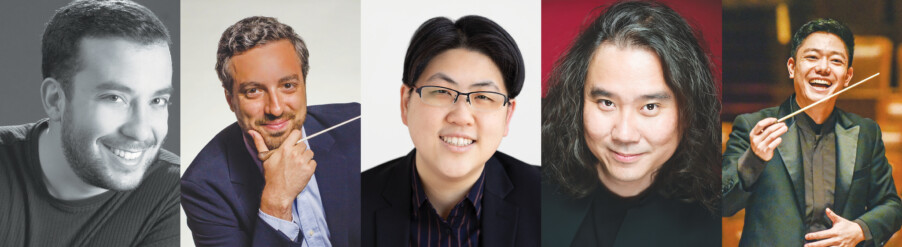
The search for Symphony New Hampshire’s next Music Director, reported in a March 6 Hippo cover story, has led to the selection of five finalists, each of whom will present their vision for the state’s premier orchestra over the course of next season.
Over the 2025-26 season, each finalist will curate and conduct a concert. In addition, finalists will engage with the public at meet-and-greet events across the state. Audience members will provide feedback through post-concert surveys.
The search was driven by a desire to select a Music Director who was already a New Englander, and all of the candidates live at least a reasonable drive from the New Hampshire border. One, Filippo Ciabatti, is a resident of the Upper Valley.
“We believe having an artistic leader embedded in New Hampshire’s cultural fabric will shape our programming and community engagement,” SNH Executive Director said in a recent press release announcing the candidates.
Here’s a look at the conductors vying for the job of Symphony New Hampshire’s Music Director.
Adam Kerry Boyles holds three current positions: Assistant Conductor of the Hartford Symphony, Director of Orchestras at MIT, and the Brookline Symphony Orchestra’s Music Director Emeritus. Last year, he stepped in for Keith Lockhart at the Boston Pops, after several years as cover conductor.
Boyles has worked with other artists across multiple genres, including James Taylor and Doc Severinsen, as well as groups like Cirque de la Symphonie and Aardvark Jazz Ensemble. He’s also a singer who’s performed in operas and had leading roles in musical theater productions like Little Shop of Horrors.
Taiwanese-American conductor Tiffany Chang’s credits include nine years as Music Director of Boston’s NEMPAC Opera Project. She’s been engaged as a conductor by the Washington National Opera, Lyric Opera of Chicago, Portland Opera, and Minnesota Opera.
Chang is the author of Conductor as CEO, a blog aimed at facilitating growth for conductors, arts leaders and musicians. “My mission,” she writes, “is to help musicians feel more valued, seen, and fulfilled.” Since 2013 she’s served as an Associate Professor at Berklee College of Music.
Filippo Ciabatti currently leads the Dartmouth Symphony Orchestra. The Florence, Italy, native was named Assistant Conductor of Boston Baroque in 2023, the first such appointment in their 50-year history. He also founded Upper Valley Baroque, a professional orchestral and choral ensemble.
The well-rounded Ciabatti is also the Music Director of the Opera Company of Middlebury, where he debuted in June 2023, leading a production of Fidelio. He’s also conducted productions with Opera North in Lebanon, and the Lyric Theatre at Illinois.
Jotaro Nakano conducts the Longwood Symphony Orchestra in Boston, which serves the city’s health care and medical communities. As part of his association with Longwood, he also leads the Healing Art of Music Program, which assists with fundraising for local nonprofit organizations.
Nakano, a Japanese-American, has shared the stage with musicians in Mexico — he’s Musical Director of the SA’Oaxaca Strings International Music Festival Orchestra, a tuition-free chamber string music festival. He’s also toured in the Czech Republic, in Romania and all across the United States.
Tianhui Ng has been called “one of the most sought-after interpreters of new music in the United States.” As Music Director of the Massachusetts International Festival of the Arts’ Victory Players, Ng has led performances on public radio and television and toured in Puerto Rico and Illinois.
Ng is Music Director of White Snake Projects, when’s he’s led more than 50 premieres, including Jacobs and Sosa’s Alice in the Pandemic, a production selected by the Library of Congress for their special collection of the most significant works of art during the pandemic.
SNH’s Executive Director Hoying expressed her approval of the selection committee, led by search professional (and former SNH Operations Director) Nick Adams. It began with 30 applications that were narrowed to 20 semi-finalists; 10 advanced to the interview stage.
“Each of these conductors brings remarkable expertise and vision,” Hoying said of the five in the March 19 press release. “Now, it’s about how they engage with our musicians, audience, and the broader community.”
A look at the growing scene of indie music, art and style
By Michael Witthaus
mwitthaus@hippopress.com
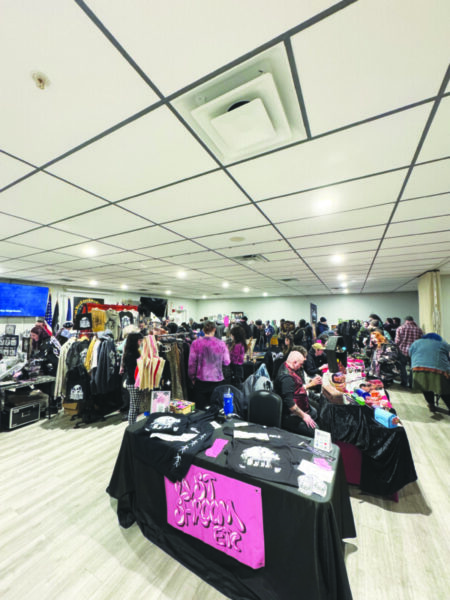
On the first day of February, a packed gathering of the goth-clad, pierced and tattooed felt the rumblings of a revolution. To the untrained eye, it was a modest milieu, a back room of a Manchester American Legion Post lined with rows of booths, each offering everything from taxidermy to tarot card readings, art and apparel.
For Janelle Havens, however, the Queen City Black Market was a dream come to life.
The New Hampshire native had experienced similar events below the border in Massachusetts and at tattoo conventions. Along the way she was inspired to open a platform shoe store in Manchester, Lustshroom, Etc. She wondered why there weren’t similar efforts in her home state, and decided to launch one of her own.
Hoping for the best, Havens had scheduled an afterparty at the nearby Shaskeen Pub. The market’s success made the three-band show, organized by Aaron Shelton, that much more momentous. Shelton’s Kinetic City Events books regularly at the Shaskeen, helping to boost bands like Cytokine, who headlined the afterparty.
A slashing heavy metal band, Cytokine’s lineup includes guitarist Rob Kulingoski, another thread of the many moving this community forward. Along with Shelton, who spent a lot of time in punk and metal bands before focusing on being a promoter in the early 2010s, Kulingoski kept the fire burning after many venues closed mid-decade.
With nowhere else to go, Kulingoski repurposed the basement of his home in Litchfield for shows, and lived the metaphor for five years until the town shut him down.
“I’ve been a part of the underground hardcore and metal scene probably since I was 16, and I’m 39 now,” he said recently.
Kulingoski and many others are buoyant these days. The New Hampshire alternative scene is by all accounts thriving. Along with Kinetic City at the Shaskeen, BAD BRGR in Manchester has been open over a year and is, Kulingoski said, “a breath of fresh air for us” as it showcases original music. Over on Canal Street, Jewel Music Venue continues to host EDM, punk and other fringe events.
To illustrate the interwoven nature of the scene, Havens will be at Jewel’s Goth & Industrial Night in May, she and Shelton are at work on new projects, and Kulingoski’s Five/Nine Printcore makes T-shirts for bands and businesses like Fishtoes, a new vintage clothing store in Manchester where many scenesters shop.
Terminus Underground. Photo by Eleanor Luna.
“Underground” may not be the best word for this bustling community. “It’s almost misleading … it makes it sound secretive,” Aaron Shelton said by phone recently. “It’s just a broad term for things that aren’t quite in the mainstream. I mean, a band that claims to be underground could be mainstream the next day, if they get signed to a record label.”
Once upon a time, Metallica was underground. Now their logo is on premium whiskey bottles.
Shelton does allow, “it’s a term that people are comfortable with that adds a sense of belonging; this is ours, it’s not the mainstream. This doesn’t belong to Spotify, or MTV, or major record labels, this is our scene, we control it. It’s our community. We decide the successful bands, not the radio.”
It’s also not synonymous with an oath of poverty. This philosophy drives a Nashua-based organization that works with creative independents looking to make a career of their art. Clients include musicians, like Whole Loaf and 6 Minds Combined, along with graphic artist Keegan Fitzgerald’sMyArtbyKF and author Ellie Beach.
New Hampshire Underground is a micro entertainment complex that serves as a comprehensive resource for artists, musicians and writers. Founded by music business maven Eleanor Luna, it offers business guidance to creative professionals to assist with branding, marketing and financial management.
How to turn art into enterprise can get lost in the act of creation, Luna explained in a recent phone interview.
“When you’re really talented and focused on your particular passion, you might not know how to get yourself out there like a business would,” she said. “That’s what I do. I guide people.”
It’s modeled after a fitness center; Luna has also worked in that world. She acts as personal business trainer for her customers. Services are membership-based; VIP “Rockstar” level members have weekly meetings to go over topics like how to optimize an online presence and effectively reach out to industry insiders.
“These are the paths that you can go down,” she tells them. “This is the avenue that I recommend, these are the people that I would talk to. This is what I would do for your social media or your personal brand presence on the Internet.”
Like a lot of efforts to boost the independent creative scene, Luna’s started when the world started to emerge from the pandemic. Everyone was still unsure what that meant for the music business, and she saw a chance to finally use her Berklee MBA and multiple decades in marketing to make a difference.
“I sat on it for a number of years kind of wanting to do something like this, but not really knowing if there was a market,” she said. “But then I started to see lots of people asking questions. How do I copyright? How do I sign up for MusicPro? How do I navigate social media? How do I become a brand? I’m thinking, I know the answers … I literally could start a business.”
Luna picked a price point reasonable enough for the scrappy artists she hoped to mentor.
“I wanted to make it accessible to people but still be able to give them good value, and I knew a membership model would work better than an a la carte or hourly rate,” she said. “It’s more comfortable for people to say, ‘I’m going to have a commitment, and this person will provide what I can’t get on my own on the art side of it.’”
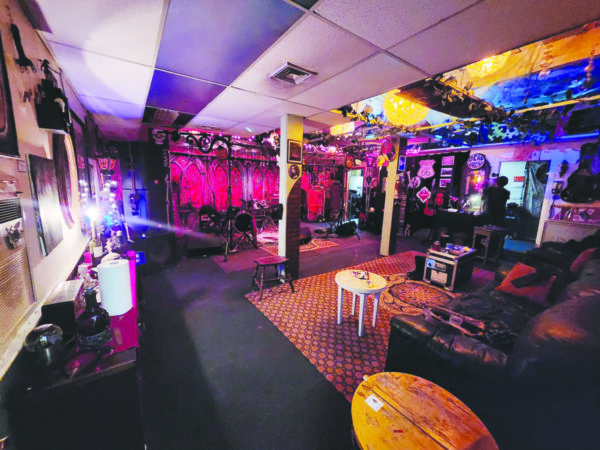
There’s also an entry-level Community Member tier that offers access to the Musician and Artist Lounge, a networking hub best described as Panera Bread for cooler people. It has a wi-fi-equipped co-working space, along with couches and other amenities. The lounge is open Tuesday through Thursday from 7 to 11 p.m. and access can also be booked for an hourly rate.
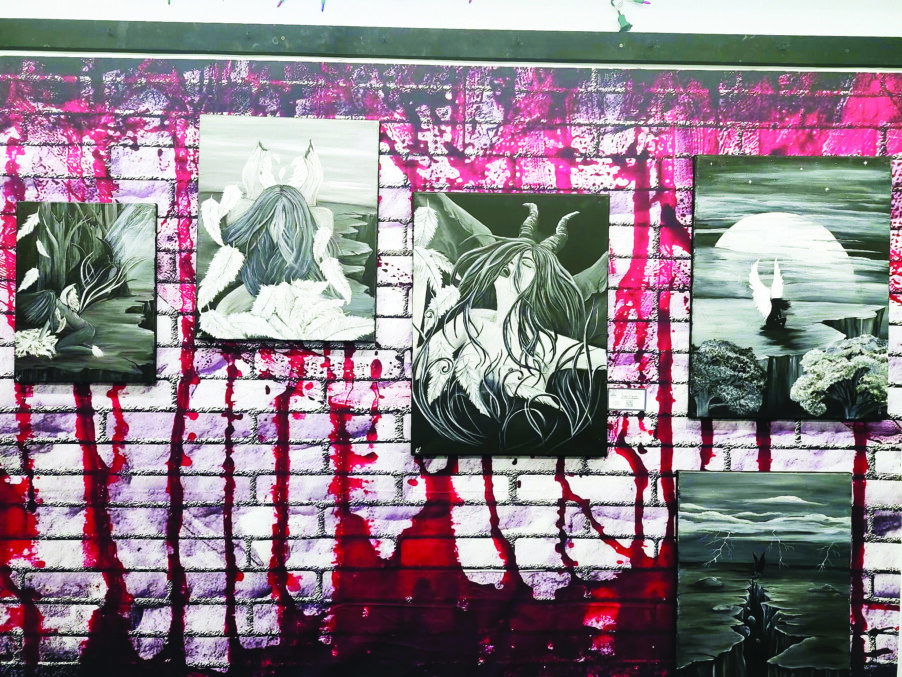
Other on-premise perks include a podcast studio, a backline-equipped community jam space, and an art gallery. Finally, there’s Terminus Underground, a performance space that serves as NHU’s public hub. It hosts regular events — the next is Night of the Fools, with Sunset Electric, Dog 8 Dog, and Questing Beast.
Queen City Black Market. Courtesy photo.
The NHU complex is on the second floor of a suburban warehouse in Nashua. For several years it has served as a rehearsal space for Dead Harrison, the doom rock band Luna manages that’s led by her partner Andre Dumont. It grew into its present configuration when more room opened up and Dumont, experienced in construction, built out an expansion.
Its efforts to foster the underground scene extend to the Nashua arts community. NHU collaborates closely with the city, including participating in last year’s Fourth of July River Fest. They provided live music at the event and helped raise enough funds to feed 40 veterans, while drawing a crowd of 150 attendees.
Luna also serves on the Nashua Arts Commission, which meets monthly to facilitate, advocate, coordinate and educate on behalf of the city’s arts and cultural assets.
“A voice for underground or alternative music wasn’t there previously,” she said. “Now we’re bringing it to light, which is really exciting.”
All this supports NHU’s role as a one-stop shop for music professionals, Luna continued.
“People get advice on how to run their band as a business, how to do their taxes, how to market themselves, strategies for selling their products and merch branding. Anything you can think of that you can use to create a regular business, the same strategies can be used to create your music business.”
When asked to define “underground,” Eleanor Luna’s answer was as much about what it wasn’t. “Unsigned bands, independent artists, indie music, writers, anything independently driven … any genre really,” align with the term, she said. Ultimately, though, “Underground to me means anything that’s not of the mainstream.”
For the live music scene, mainstream was exemplified by venues who primarily book “cover artists that could make your club money,” she said. “Not that we’re not trying to make money … but it’s not the priority now. The priority really is to support the musicians. It’s almost like a labor of love.”
To that end, the majority of NHU shows are held at Terminus Underground, although they do promote some events below the border. The next one happens April 11, a Beats & Bridges hip-hop concert starring 6 Minds Combined at Koto Underground in Lowell.
Film from the underground
Johna Jo Toomey is a videographer, and her youtube.com/@johnajomedia archive is a treasure trove of punk and metal music, including full sets from many local shows. Toomey’s story reflects the scene’s tight knit community and the support it provides to its own.
“I got into punk rock as a teenager. I was drawn to the subversive lyrics, chaotic energy, and working-class ethos. It was also this mystical thing that I never got to experience in person because I grew up in a small farm town with no shows nearby. After high school, I moved to NorCal and earned my B.A. in photojournalism and cultural anthropology, so documenting (sub)cultures for posterity is really ingrained in me. It’s so important to have these archives to look back on, on both individual and collective levels. While living in San Francisco, I covered shows for local print media, and got to shoot some of my early favorites such as Social Distortion and Dropkick Murphys. Eventually I moved back to New England, and in 2017 I started photographing metal and hardcore shows near Boston. As a woman in a male-dominated space, I felt proud to be an active contributor instead of a passive observer (not that there’s anything wrong with that). When I started to focus more on hardcore instead of metal, I made the switch to videography, because everybody wanted to see the mosh pit, but nobody wanted to stand near it. Then in 2019 while filming a basement show in Lowell, Mass., I got punched by a crowdkiller and broke my nose and eye socket. What happened next was eye-opening (no pun intended). New England hardcore friends showed me love and support, and took care of me when I needed four surgeries in 13 months. Meanwhile, my other friends and family victim-blamed me and said, “you shouldn’t have been there, you should find better friends.” So then I doubled down and started a YouTube channel … I’ve been filming hardcore shows around the country ever since. My style is always evolving, but I’ve always been heavily inspired by gonzo journalism.
For Aaron Shelton, his business is a way to support the community he loves, not the other way around. When he began doing the emo-centric Live Free or Cry nights at Shaskeen Pub, his primary objective was to provide a gathering place for people who missed a bygone time the same way he did.
“I grew up in that community, I was in metal bands and post-hardcore bands and emo bands, so that’s where it comes from,” he said. “It’s not a cash grab for me, it is a revitalization of one of my most informative eras…. I think that for so many people, it is that same thing.”
In Shelton’s case, his evening of bands playing Get Up Kids, Taking Back Sunday and My Chemical Romance songs would turn Luna’s mainstream analogy upside down.
“A lot of these bands that play cover sets are original bands,” he said. “I’ve had bands tell me, ‘This has given us the opportunity to make extra money to pay for our recordings or meet bands that we’re playing original gigs with now.’ It still gives to the underground scene, and I think that’s one of the best parts about it.”
It’s also created a ripple effect. Down the street, smashburger restaurant BAD BRGR is offering live original music on multiple nights. Rob Kulingoski called the venue “the new saving grace for extreme music in New Hampshire.”
BAD BRGR owner Ian Tufts moved to Manchester a few years after opening in Hampton Beach just as Covid-19 upended everyone’s life. A musician himself, he held an all-ages hip-hop show in mid-2020 that ran afoul of social distancing requirements and nearly shut down his business.
His vision for the new location always included live original music.
“From the onset, we’ve totally been about embracing artistry,” he said by phone recently. “There’s such an energy that comes from original music, art, creativity. Harnessing that and allowing that to thrive, it’s so powerful.”
Tufts found help from a few area musician/promoters with shows there. Joe Chubbuck, who plays in both Ratblood and Bleach Temple, has been instrumental with booking. “He’s the most significant metal and hardcore promoter,” Tufts said, noting that he has help from his partner, photographer Ashley Seiferheld.
“I love the direction the scene is going in and love everything that Ian and BAD BRGR is doing,” Seiferheld said in a recent text exchange. She also co-hosts a podcast with Death’s Hand guitarist Ed Hamaty called Angry Advocate. “It’s about local artists and musicians, anything to bring more awareness to our scene.”
Others helping to fill the BAD BRGR calendar are Irongate lead singer Jeff Higgins, who’s booked some metal shows. On the indie/alternative side, Cade Earick, a prolific recording artist who’s also a producer and audio engineer, is doing promotion.
For many if not most, the underground scene goes beyond music and art; it’s a tool for survival.
Videographer Johna Jo Toomey, who frequently films Shaskeen shows, said that after a mosh pit injury in 2019, “New England hardcore friends showed me love and support, and took care of me. Meanwhile, my other friends and family victim-blamed me.”
Kulingoski credits the scene for helping his mental health. During his days running basement shows, he organized awareness days to support others in need.
“We would all come together and just talk about our problems and how much the scene has helped us, how much of a positive impact it’s had,” he said. “It’s so much more than just music. It’s art, it’s friendship, it’s small businesses. It really is a welcoming community that I think some people don’t know about, but it’s not hard to find out about.”
Upcoming events from the up-and-coming
New Hampshire Underground Terminus Underground, 134 Haines St., Nashua. Tickets: newhampshireunderground.org/shows. All shows 21+, BYOB, $15 general admission, $20 VIPizza tickets
• Night of the Fools, Sunday, March 30, 6 p.m. – Sunset Electric (punk-flavored alt rock), Dog 8 Dog (dual female fronted indie/alt rock) and Questing Beast (concept-driven metal) • Punk Rock Masquerade Ball , Saturday, April 12, 8 p.m. – Ragz to Stitchez (NH), Vallory Falls (Vermont), Marianne Toilet and the Runs (Mass.) and Lobotomobile (NH) • Requiem for the Apocalypse: A Death/Doom Metal Explosion, Friday, April 25, 7 p.m. – Dead Harrison, Oxblood Forge, A World Worth Burning and Swarm of Eye • Lily Angelique Desrochers (LAD) art exhibit, Saturday, April 26, 6 p.m. free • Music Industry Networking Night, Wednesday, May 7, 7 p.m. free
Kinetic City at Shaskeen Pub 909 Elm St., Manchester, facebook.com/KineticCityEvents
• Saturday, April 12, 9 p.m. — Gina Fritz w/ Anaria, Proelium and Arcantica, $10 at the door • Thursday, April 17, 8 p.m. — Showcase 603 w/ Black Hatch, 2000s, Cellar Door and Dead Time, $5 at the door • Friday, April 18, 9 p.m. — Candy Striper Death Orgy, Psycho and Summoning Hate, $10 at the door • Saturday, April 19, 8 p.m. — The Doldrums, Still Sleeping, Regals and Birds, In Theory, $10 at the door • Saturday, April 26, 9 p.m. — Live Free or Cry Emo Night w/ Heely & the Moon Shoes and A Blockbuster Summer, $10 at the door
BAD BRGR 1015 Elm St., Manchester; schedule at instagram.com/bad_brgr
• Friday, March 28, 9 p.m. — Street Trash, Wrought Iron Hex, Joe Grizzly and Abel Blood, $15 at the door • Saturday, March 29, 9 p.m. — Donaher w/ Better Sense and New Norde, $10 at the door • Friday, April 11, 9 p.m. — Guns of Brighton (punk), Sotah and Glue, $10 at the door • Friday, May 16, 9 p.m. — The Whole Loaf w/ Alana Corvette and Vale’s End . $10/door
Jewel Music Venue Canal Street, Manchester; find them on Facebook
• Saturday, March 29, 7:30 p.m. — A Night of Black & Death Metal with Angel Morgue (NH), Shitangel (Vermont), Infernal Occult (RI), Commuted (Maine) and Respiratory Secretion (Mass./NH), 18+, $15 at dice.fm • Wednesday, April 23, 7 p.m. — The Planet Smashers, PWRUP, Threat Level Burgundy, $20.77 at dice.fm
The Greater Manchester Chamber is holding a Taco Tour Manchester proposal contest for someone willing to propose at the Thursday, May 8, Taco Tour, which runs from 4 to 8 p.m. in downtown Manchester. The winner will receive an engagement ring from Day’s Jewelers (valued at $7,000) and professional photography to document the moment at the tour, the release said. Enter the contest at tacotourmanchester.com/proposal by April 30.
Egg!
The peregrine falcons at Brady Sullivan Tower in downtown Manchester welcomed their first egg of the season on the morning of March 22, according to the daily log. You can watch the couple and their progress at the Peregrine cam at nhaudubon.org/education/birds-and-birding/peregrine-cam, where the New Hampshire Audubon offers three live views of the nest with support of Peregrine Networks and Brady Sullivan Properties, the website said. The log also has a link to a document with basic information about the nest and a look back at previous seasons of peregrine falcons who have occupied it and the chicks that hatched there.
RIP to a K-9
The New Hampshire State Police Canine Unit announced the death of K-9 Wyatt, a Plott Hound who worked with the state police since 2015, according to a press release. Wyatt and handler Trooper First Class Kevin Devlin specialized in search and rescue as well as detection of human remains, the release said. “Wyatt passed away … after being diagnosed with an aggressive form of cancer that had spread throughout his chest and lungs,” the release said. “K-9 Wyatt was a cherished member of the New Hampshire State Police family, an essential part of the Canine Unit,” said Colonel Mark B. Hall in the release. “Today we mourn his passing and remember his years of exemplary service. Trooper First Class Devlin and K-9 Wyatt were instrumental in bringing closure to families throughout New Hampshire and beyond.”
Gardening & climate
The Atkinson Garden Club will host a presentation by UNH Master Gardeners Betsy Coes and Mike Koutelis on “Gardening in a Changing Climate” on Wednesday, April 2, at 6 p.m. at Kimball Library, 5 Academy Ave. in Atkinson, according to a club email. The event is free.
Sustainability
The Boys & Girls Club of Souhegan Valley (56 Mont Vernon St. in Milford) will hold the 2025 Souhegan Sustainability Fair on Saturday, April 5, from 9 a.m. to 1 p.m. Bring a non-perishable food item to donate to the local food pantry SHARE, according to a press release. The fair will feature live music, food, a guided hike, a story walk, kids crafts, 34 exhibits, presentations and more, according to the release. Admission is free.
The Bach’s Lunch on Thursday, April 3, 12:10 to 12:50, at the Concord Community Music School, 23 Wall St. in Concord, will feature a lecture on “Raga Music Composition.” “Hari Maya Adhikari and David Nugent will present a lecture on traditional Indian string instruments and their use in the creation and performance of Raga music,” according to a press release. The event is free; see ccmusicschool.org.
Keep those St. Patrick’s Day celebrations going: Manchester St. Patrick’s Parade steps off at noon on Sunday, March 30, running down Elm Street from Salmon to Central. Join in the fun by running in the Shamrock Shuffle at 11 a.m. (a kids’ fun run starts at 10:30 a.m.). See millenniumrunning.com/shamrock for details on the 2-mile run/walk and visit saintpatsnh.com for more on the parade.
The Southern NH Skating Club will hold its “All the Best” 60th annual ice revue on Saturday, March 29, at 1 and 7 p.m. at JFK Coliseum (303 Beech St. in Manchester). Tickets cost $10 for adults, $6 for children and seniors. See snhsc.com.
The Nashua Garden Club will hold a workshop on figs on Wednesday, April 2, at 7 p.m. at the First Baptist Church, 121 Manchester St. in Nashua, with Jay Guarneri, who will discuss growing figs in cold climates, the different flavor classes of figs and more, according to a club email. Admission is free; see nashuanhgardenclub.org.
For over a decade, Zane Lamprey traveled the world and drank for a living.
His pub crawl series Three Sheets ran for four seasons starting in 2006. In 2010, Drinking Made Easy launched on Mark Cuban’s HDNet, followed by the crowd-funded Chug. Lamprey’s most recent series, Four Sheets, aired its final episode in early 2020.
Since then Lamprey has done a lot of standup comedy, primarily at places like Henniker Brewery, where his Another Round tour stops on March 22. He began playing the craft beer circuit out of necessity; clubs and theatres were slow to open after the pandemic, and he needed work. He’s now done more than 500 brewery gigs, with 10 in New England on the current run.
“I have a lot of great relationships at breweries because of the shows I’ve done, and I reached out to them,” Lamprey said by phone recently. “They loved the idea of having me come in and bring attention to their brewery, fill it with people, do a night of comedy, and so it was a very synergistic kind of thing.”
Unlike many who use stand-up to launch a television career, Lamprey took an inverse route, and after he finishes writing a memoir in progress he’ll begin a book about becoming a comedian at age 49. He says it’s all a natural progression: “I’ve always been someone, in all the shows that I’ve done, who needs to understand comedic timing and how to tell a joke.”
Through his years of imbibing across the planet, Lamprey has gathered more than enough material for multiple comedy specials. His latest, The Medium Club, premiered in January. “I’ve made a lot of poor decisions that have led to some great stories,” he said.
He’s also drunk many strange concoctions in his years, like rum aged in a bottle with a drowned snake. He once knocked back 23 shots, each containing a preserved scorpion. Later he realized that “your body is not designed to digest exoskeletons.” The shoot-and-chew experience led to an excruciating, barrel-full-of-monkeys situation.
But Lamprey has never declined a proffered glass, because entertainment.
“I always said that my job in any of the shows I’ve done was creating a water cooler moment,” he said. “Doing those shots are what people talk about. For that reason, I’m happy to do it … to take one for the team.”
Non-liquid challenges can be different, and Lamprey recalled one time he did draw the line.
“The only thing that I said no to is balut.” The popular Philippines snack is a two-thirds gestated duck egg hard boiled and served with salt and vinegar. “Basically a baby duck sitting on the yolk or the amniotic sack…. I was like, absolutely not. I tried drinking enough beers to bring myself to do it, and I couldn’t get to that place. It was too vile.”
Lamprey prefers to remember beautiful moments, like the time he rented out the Eiffel Tower for a Champagne party that wrapped as the sun was rising, or filming in Croatia a decade after their civil war. “It was very eye-opening,” he recalled. “These people weren’t war-torn and bitter because of what they went through, they were … embracing life and moving on — without forgetting about the past.”
While there, he ran into a restaurant owner singing with his friends in the street, and went in for a drink.
“We weren’t even going to shoot there … and it was one of the best experiences of my life,” Lamprey said. “But you could name any episode, and I would tell you about a moment in it that I was so grateful to be doing what I was doing.”
When Lamprey is asked why he left television, his response is that it left him.
“People every night are just like, ‘Please go back and do one of those shows again.’ I would love to.” Networks that ran his shows, like Spike, Fine Living and HDNet, are long gone, supplanted by YouTube and TikTok.
“I’ve had the privilege of being able to go and do some of the coolest things ever and be followed by a camera crew,” he said. “But the landscape of television has changed. Places where Three Sheets would have fit perfectly … no longer exist. They drop the vowels in their name, and all they do is paranormal shows.”
That said, Lamprey’s not about to stop telling jokes to crowds.
“I would actually choose the stand-up over those shows,” he said. “Which is probably why now discussions to do another TV show have resurfaced; but it would have to be perfect for me to do it.”
Zane Lamprey
When: Saturday, March 22, 8 p.m. Where: Henniker Brewing Co., 129 Centervale Road, Henniker Tickets: $25 and up at eventbrite.com
We Do Not Part, by Han Kang, translated by E. Yaewon and Paige Aniyah Morris (Hogarth, 256 pages)
It was inevitable that after K-pop, or Korean pop music, conquered America, K-lit would soon follow, with a suitable time for translation. But one of these things is not like the other. Unlike the frothy music genre, the latest Korean novel to be published in the U.S. is a serious work that challenges readers to confront evil and pain, while not closing our eyes to love and beauty.
At the center of Han Kang’s We Do Not Part are two friends who had fallen out of touch, an urgent request and a small white bird.
The events of a short but precarious journey are woven into a larger tapestry of a horrifying period in the history of South Korea, in which an estimated 10 percent of the population of Jeju Island were murdered in a violent campaign in 1948 that, like 9/11, came to be known by its date: Jeju 4.3.
The story begins with the nightmare of the narrator, Kyjunga, who repeatedly dreams that she is seeing a graveyard about to be overtaken by water. In her dream she is desperate to save the remains. She is unsure whether the nightmare — a “black-blue sea billowing in to dredge the bones away beneath the mounds” — is her mind processing a book she had written in the past, or an omen of horrors to come.
Kyjunga once had a family — people to cook for and dine with — but now lives alone in Seoul in poor health and suffering from insomnia and migraines. She is spending her days writing, and perpetually rewriting, a will and letters to be sent after her death. It is all she can do to summon the energy to leave her home and get a meal every now and then. It is all she can do to go on living.
One day, however, she gets a text from a friend she has not communicated with in a while, asking her to come to a hospital and bring an ID. Kyjunga leaves immediately and goes to her friend, who is being treated after a horrific accident. The friend, named Inseon, asks Kyjunga to travel to her home in Jeju to feed her bird, a white budgie (or parakeet) that has now been alone for several days and is likely near death without food or water.
It is an enormous ask. A fierce snowstorm is moving in, Inseon’s home is not easily accessible, and she wants Kyjunga to not just check on the bird but to stay with her for several months, until her treatment is complete. But Kyjunga cannot say no, not only out of pity for her friend and the bird, but also because she is, in a convoluted way, partly responsible for the accident her friend suffered.
And so she sets out in a snowstorm that is rapidly shutting down public transportation, leaving her friend to endure an agonizing treatment alone, and hoping she can find the house, which she has not visited in some time, and that the bird will still be alive.
Along the way, we learn more about the two women’s lives — how they met on a work assignment (Kyjunga is a writer, Inseon a photographer and filmmaker) and supported each other over the years. Kyjunga knows a little about Inseon’s complicated relationship with her mother, whose immediate family members perished in the JeJu Massacre. She had met her mother, at a time when the mother was descending into dementia. But neither woman had a complete understanding of what Inseon’s mother had suffered as a child, a story that is revealed in slow-motion over the course of the novel.
Snow is a secondary character in this novel — coating the faces of the dead, clinging “desolately” to Insenon’s hair as the friends walk together, and providing an eerie and tangible link from the present to the past. At one point Kyjunga reflects on how the snow falling around her is the recycled water from decades past and might well have fallen on the mounds of bodies bloodying the ground in 1948: “Who’s to say the snow dusting my hands now isn’t the same snow that had gathered on their faces?”
Kang, the first Asian woman to win the Nobel Prize for Literature, was honored in 2024 for her “intense poetic prose that confronts historical traumas and exposes the fragility of human life.” Kang has said that she herself had the dream that haunts Kyjunga, and that We Do Not Part came from it. She wrote the novel over two years while living in a rented room on Jeju Island. The questions the novel is probing, she said in her Nobel speech, are “To what extent can we love? Where is our limit? To what degree must we love in order to remain human to the end?”
We Do Not Part arrives in the U.S. four years after it was first published in Korea — late, perhaps, but exceedingly welcome. Kang and her translators have crafted an achingly beautiful story that will send readers to her previous novels, which include 2017’s Human Acts and The Vegetarian, published in the U.S. in 2016. Bring on the K-lit. A
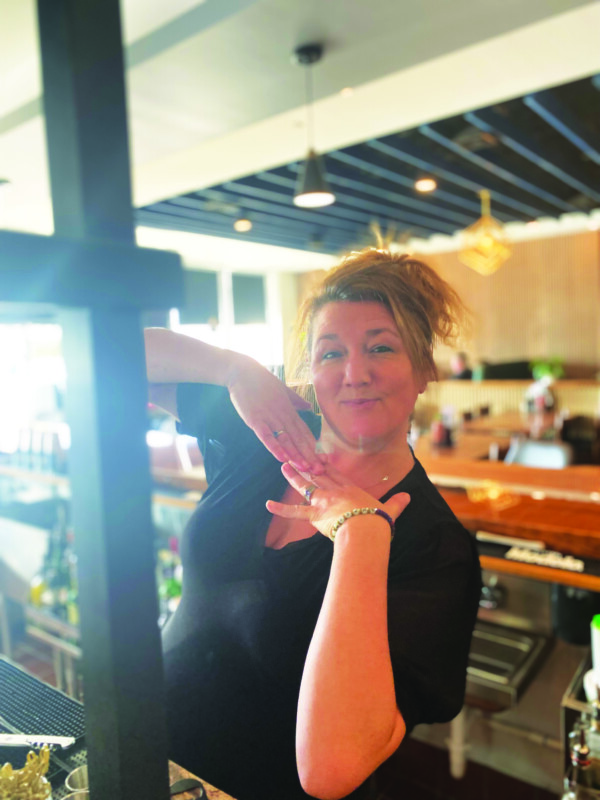
Carolyn Trepanier has put more thought into cocktails than most people have into their retirement plans.
“Spice is the spice of life,” she said. “But spice doesn’t mean spicy,” she clarified. “Spice means flavorful; it doesn’t mean hot, necessarily. I pride myself in creating craft cocktails. I make drinks that are drinkable but also give you that little relaxation that you want. We are like chemists.”
Trepanier is the bartender at The Spice Restaurant & Bar, one of Nashua’s newest restaurants. According to owner Hanh Nguyen, one of the primary goals of the restaurant is to give customers an adventure.
“We love to play with the food a little bit,” she said, “but also keep the culture, the flavors. Our food is a combination of Asian fusion, so we serve Thai, Vietnamese and Japanese. We include a hot pot room too, with more Chinese and Vietnamese food.”
This sense of adventure touches on several different senses, Nguyen said. “That’s why we have a spice for every single plate,” she said. “For example, Vietnamese. Vietnamese is really popular with pho, noodle soup. If the broth looks light, it looks very simple, but actually we cook bones for 24 hours with at least seven different spices like star [anise], cloves and herbs until you can smell the broth when you eat it.”
And, of course, that same sense of adventure extends to the bar.
“I’ve been given the go-ahead and the engine to just make whatever works,” Bar Manager Trepanier said. “I’ve incorporated a lot of syrups here. For example, he” — she pointed to a customer at the end of the bar drinking a cocktail in a rocks glass — “just got a maple old-fashioned, so that’s a maple simple syrup. We do everything; if I can get my hands on anise or coriander out of the kitchen, I’ll amplify it a little bit. So, we have lemon simple syrup, maple, brown sugar, jalapeno brine, olive brine…. I do a lot of hot and dirty [martinis]. I stuff my own blue cheese olives. I made a spiced mango margarita last week. [The customers] loved it. I can do a salty tahini rim. I can do a sugar rim, or no rim.”
The idea, Ngyuen said, is to present guests with a combination of familiar dishes to make them comfortable, with just enough new elements to add to make every meal an experience. She pointed to the short ribs as another case in point. That is a cut of beef that can be very tough, “but we cook it until it rips off the bone, and you can bite into it easily.” From that base the dish takes a surprising, pan-Asian turn. “We try to get people excited, with basil and bean sprouts, and lime. And also in the broth we have greens, like scallions, onions and cilantro. [Then] the customer can see this new thing come out with a short rib.”
Nguyen said that so far it seems like customers have enjoyed Spice’s take on food and drink. “We’ve had good crowds for the first couple of weeks,” she said, “and then everybody has loved the food. They keep returning to try different items on the menu.” At this point the menu hasn’t been set in stone.
“We haven’t gone with our final menu just yet,” she said. “We want to see what the customers here want, and make [the menu] a little smaller, easier for people to come and enjoy.”
At the bar, Trepanier makes a point of making drinks that are a little bit exotic but not complicated.
“Something I’ve come up with on my own,” she said, “is called a Spicy Bloody-Tini. A lot of Bloody Marys come with way too much. I make my own mix. I muddle jalapenos with the seeds, and cucumber, which is European. That gets muddled in, we do the Tabasco, all that, but the garnish on that is a small angled cut of celery, instead of this big stick in your drink. The garnish goes: three olives, celery, cucumber, lemon and lime. I put a jalapeno ring dead in the center, and then I crack black pepper over it. That’s it. [Our customers] are already buying a meal; they don’t need a meal as a garnish on their drink.”
The Spice Restaurant & Bar 300 Main St., Nashua. 417-7972, thespicenashua.com Open for lunch and dinner seven days a week: Sunday through Thursday, 11 a.m. to 9:30 p.m., Saturday and Sunday, 11 a.m. to 10 p.m.
Featured photo: Carolyn Trepanier, bar manager. Photo by John Fladd.