On The Job – Elaine Setas

Owner of Taste & Art of Greece

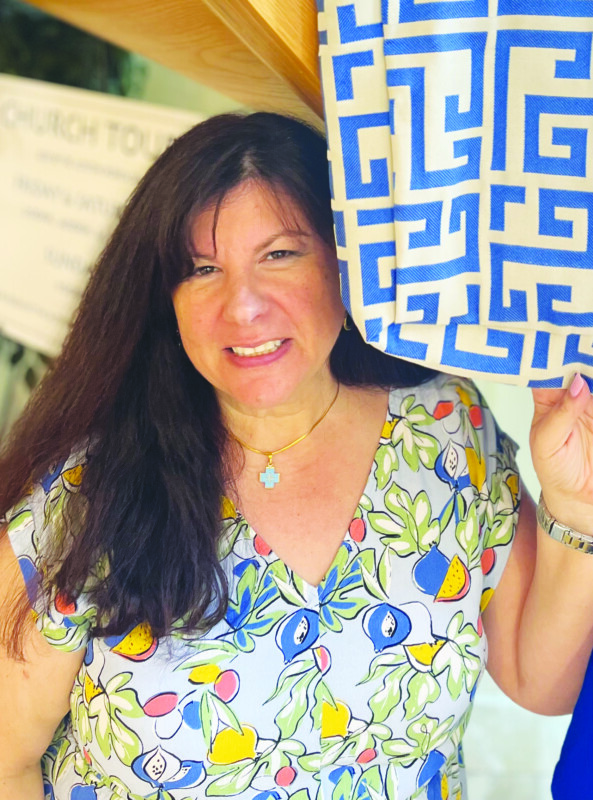
Elaine Setas is the owner of Taste and Art of Greece at 32 Hanover St. in Manchester.

Explain your job and what it entails.

I am the owner of Taste and Art of Greece. We are a Greek import business supporting small-batch artists and designers of Greece… .

How long have you had this job?

I started in 2018, with launching a website, TasteandArtofGreece.com. Since 2021 we have had some pop-up boutiques that were temporary around Manchester. [The Hanover Street location opened in 2023.]

What led you to this career field and your current job?

…A friend of mine in Greece who lives on the island of Lesbos who is my business partner, he had the idea to bring a traditional store but didn’t know how to launch it. I… I ended up getting laid off from my office job right before Covid in 2019 and decided to give this 100 percent of my energy, and it has become a labor of love for me.

What kind of education or training did you need?

Everything I have done has led up to this point. I was an English major, I was in theater, but I was an office assistant. What helped me with what I took in school: I was well-spoken, well-read, I could write well. I wasn’t shy in front of people because of my theater training. I learned a lot from my various office jobs over the years. Especially my last job I was at, 11 years working for CEOs and presidents. … They showed me a lot of the marketing that you need for this kind of job, because I am not just selling product. We are sharing stories about the artists, about who made the product… .

What is your typical at-work uniform or attire?

Well, right now, I try to wear Mediterranean-inspired clothes, but on occasion you will see me in leggings and a sweatshirt.

What is the most challenging thing about your work, and how do you deal with it?

I want to say sometimes people don’t understand what goes into the price of something. Or they don’t understand that a handmade item that’s being shipped from Greece might be at a certain price point … we are not buying our things mass-produced. Then we’re paying for customs, we are paying for shipping, we are paying the artist to support their work.

What do you wish you had known at the beginning of your career?

Learning how to bring things in through customs was not easy. We wanted to have more food coming from Greece and we realized we had to deal with FDA regulations. … I wish I knew more Greek. … I can answer in English, I can understand [Greek] but I speak in English.

What do you wish other people knew about your job?

I don’t take the fact lightly that I am representing special artists and designers.

What was your first job?

The first job I ever had was working for my dad at Dunkin’ Donuts. As a waitress.

Zachary Lewis

This interview was condensed.

Five favorites
Favorite book: short stories and short story anthologies
Favorite movie: A Room with a View
Favorite music: U2. ’80’s music. Anything with George Michael.
Favorite food: Chinese
Favorite thing about NH: I love that it’s got mountains and lakes, and you can feel like you are in another world in some parts of the state.

Featured photo: Elaine Setas. Courtesy Photo.

New spot at the U.S. Attorney office

New attorney will focus on civil rights cases

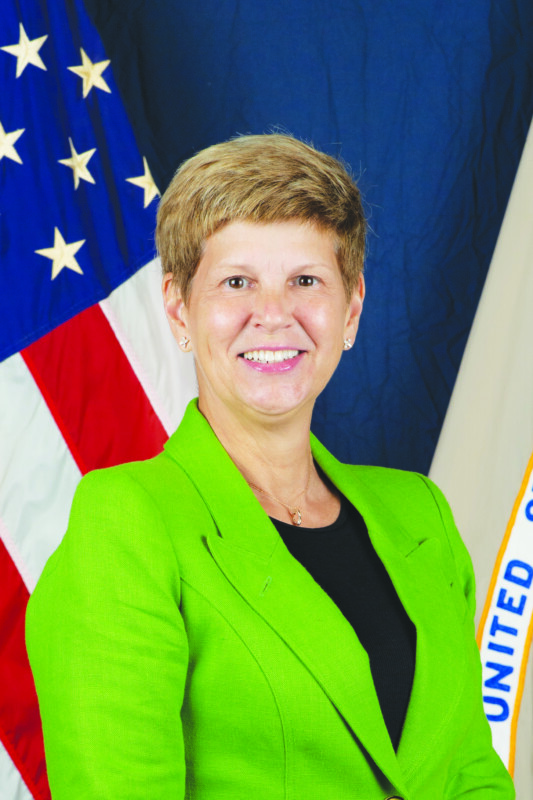
Jane Young, U.S. Attorney for the District of New Hampshire, recently announced the appointment of Matthew Vicinanzo as Assistant U.S. Attorney. Vicinanzo will specifically handle civil and criminal civil rights cases, according to a press release.

What led you into the legal profession and what does the U.S. Attorney’s office do?

U.S. Attorney Young: The U.S. Attorney’s Office is the highest federal law enforcement officer in the district. So New Hampshire only has one district. There are 94 U.S Attorneys across the country. In this office we enforce criminal laws. We represent the state in civil matters, and we do civil enforcement as well.

AUSA Vicinanzo: For me, I have family members who are lawyers. So I learned from them, saw them as examples, role models. Based on observing and learning from my family members who are attorneys, there are two main reasons why I chose to be a lawyer. One was it was a challenging career. One where you are always taking new cases and the law is always changing so you always have to keep learning and have to keep thinking creatively. And then the second reason was it presented an opportunity to help others. I figured when I was going to law school no matter what happened in my career I would be able to use my skills and training to try to obtain something meaningful for somebody. Particularly somebody who was vulnerable.

Young: So, it is a noble profession. When I was done with college. I knew I wanted to advance my career, and law school seemed like the logical choice. I like to read, I like to write. I will tell you that I didn’t know what kind of lawyer I wanted to be. After my first year of law school, I was lucky enough to be hired as an intern at a county attorney’s office. It was something that I really enjoyed, where you can make a difference. It’s problem-solving; so to see investigations, to ask questions, to be able to put the facts together to determine if you had a case and then to be able to get up in a courtroom and present the facts and really make a difference for the community.

Can you expand on how this newly created position will further support the civil and constitutional rights of Granite Staters?

Young: So when I first assumed this role in May of ’22 it became clear to me that we were in need of somebody who could address civil rights issues. In this office there were people who did civil rights matters but they did them in addition to other jobs that they had, and when an opportunity came to make a presentation for the job I thought, we have nothing to lose. We are a small state. We don’t, on the federal level, have a dedicated civil rights unit. I had come from the Attorney General’s office where there was a creation of a civil rights unit and I saw the difference that it made. First, just in outreach to be able to go into communities to talk about the issues in communities to listen to individuals and to tell them there are avenues that they could pursue. That they had rights and that they should stand up for those rights. We applied for the position. … Within a year of requesting the position we were allotted the position, we advertised for the position and now we have an attorney, although he’s new in the door I will say he is up to his eyeballs somewhat in alligators because there are a number of issues and when there is somebody who can address those issues, people come.

Vicinanzo: Just to add to what the role brings, in addition to enforcement and outreach from our office my position can be a vehicle for collaboration with other state and local entities. With the state civil rights unit with local governments and with non-government organizations that represent individuals who can bring their needs to us.

What is an example of a type of civil or criminal matter that would be handled by the civil rights Assistant U.S. Attorney?

Young: I am going to answer that somewhat broadly. Again, new in this position, we would go out and meet with individuals, religious groups, and we would ask them what are their concerns, and they would tell us, so we would come back and do some trainings or some outreach. Then we would hear about things that are going on, right, the war in Israel, and we would reach out to out community members and they would say ‘No, we think we’re OK, but thank you for reaching out,’ and within a couple of weeks they would call and they would say, ‘We really need you to come and talk to us. What are ways that we can address the issues, deal with our safety concerns?’ I will tell you that when we sit in rooms with individuals across religious communities, the fear and concern is palpable. So we met with the Chief of Manchester who is currently the head of the chiefs association and we said law enforcement needs to know the houses of worship in their communities. They need to know their concerns so, God forbid the day that something really bad happens you’re not in their trying to introduce yourselves. We sent a letter out to the law enforcement community with the state police, the FBI, the Attorney General’s office standing together saying that we will have zero tolerance for civil and criminal violations of the Civil Rights Act. I also, then, was asked to go to a police department, maybe two weeks ago. I went on a Monday morning and in that police department were the local leaders of houses of worship. Whether they be a priest, a rabbi, or security officer, just to have them come together and know that they all have the same safety concerns and that there are avenues for them to pursue as far as training, what they can do, having a police officer drive by. That’s remarkable that could happen and the only reason that that happens is because people have dialogue, people have relationships, and people have trust.

Vicinanzo: That’s a great example of something that is going on now that we feel in our community. In general, from this position we will enforce the federal civil rights statutes as they apply to the citizens of New Hampshire. It could be enforcement of the ADA, Americans with Disabilities Act, protecting their rights and accommodation. It could be protecting service members and veterans to make sure their housing and employment rights aren’t violated. Ensuring that students have equal access to education. That all of our citizens have equal protection under the law. On the criminal side, as Jane mentioned, we look at crimes that target individuals on the basis of protected status like religion, race or gender or disability or perhaps their political beliefs. We look into that from this office as well.

Young: I think people should see us as a resource. Whether it’s community members, whether it is law enforcement. We are here. We are a 24-hour-a-day operation. We answer our phones, we look at cases to determine if there is a federal violation. If not, perhaps a state partner can help. We did a public service announcement last month highlighting human trafficking. Now that we have an attorney dedicated to this we are going to start to look at human trafficking that is occurring in this state as well as other forms of violations to people’s fundamental rights.

Attorney Young, what qualities led to Vicinanzo’s being chosen for this position?

Young: His intellect, his demeanor, his commitment to New Hampshire, and his willingness to do this job to make this a better state. To protect people’s rights. To protect the downtrodden, people who have not had a voice before. They certainly will have a champion. That shone through as we met Matt through the different layers of this hiring process. He was the ideal candidate. To have somebody like Matt, who was in private practice, to be able to make the sacrifice to come here I just think speaks volumes of his character and his ability to do this job skillfully.

Zachary Lewis

Featured image: U.S. Attorney Jane Young. Courtesy photo.

On The Job – Rachel Mack

Co-Owner of Loon Chocolate

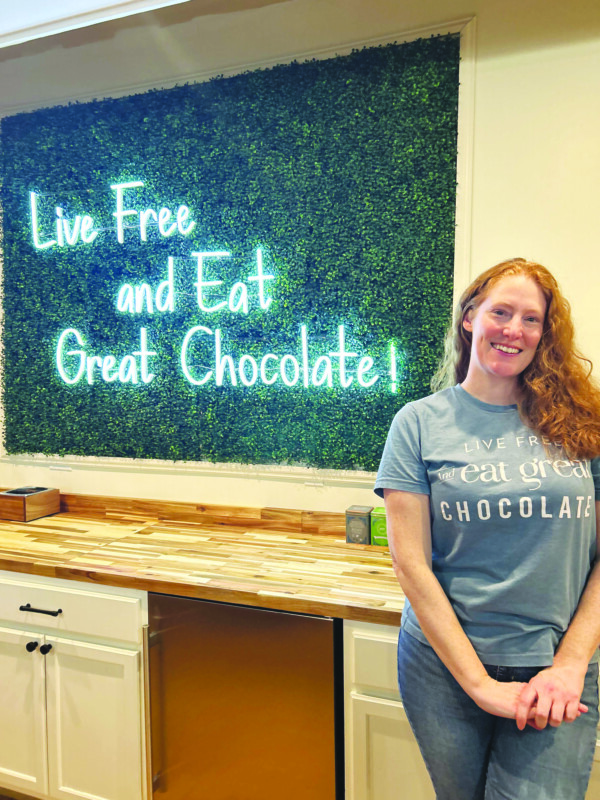
Rachel Mack is the co-owner of Loon Chocolate along with her sister, Sara Steffensmeier, in Manchester. (This interview has been condensed.)

Explain your job and what it entails.

We have two great chocolate makers who help us make the chocolate. … I do most of the work setting up the shop here in the front, getting things ready on the operation and production side of things.

How long have you had this job?

Myself and my sister had bought Laurel Hill Jams and Jellies in February of this past year, but buying Loon Chocolate in June was really when everything changed and it became this full-time job.

What led you to this career field and your current job?

I had worked in finance for years and years, enjoyed the work … but I wanted something different. … Once we had gotten through [Covid, 2020 and homeschooling] I was looking at what was next — was I going to go back to a corporate job or was I going to do something else? — and that’s why we started with the jams and jellies as something on the side to fill the time while my daughter was at school and to keep me busy and mentally challenged. … It worked so well, that’s why we moved so quickly into taking over the chocolate as well. The chocolate is the majority of our time.

What is your typical at-work uniform or attire?

Our merch that we proudly wear that has our logo of ‘Live free and eat great chocolate.’

What is the most challenging thing about your work, and how do you deal with it?

We had a big shipment we had to send out in the fall leading up till Christmas and it was to a customer who wanted things a very particular way. If you are in a large business you can send that off to the shipping department and they can deal with it. … When you are a small-business owner you have to do it all. … but it really is fun to have each one of these challenges that you are faced with. That really is the hardest thing. Every day you walk in you don’t know what new thing you are learning that day.

What do you wish you had known at the beginning of your career?

There is a quote I heard recently, and I know I am going to screw it up, so I apologize, but it was, ‘don’t worry about the right decision, make your decision right.’

What do you wish other people knew about your job?

I wish I could just magically let everyone know … every detail about where the chocolate comes from because I think it is fascinating,

What was your first job?

My first real job, I was 16 years old … I worked for … Suncoast Motion Picture Company.

What is the best piece of work-related advice you’ve ever received?

I was so stressed at the beginning of starting all this … and my husband really helped me and he was like, ‘Just say yes. Say yes to the challenges that come to you. … Do the scary thing and great things are going to happen.’ It was absolutely true.

Zachary Lewis

Favorite book: I love a journey. I loved The Hobbit.
Favorite movie: I know people don’t like Return of the Jedi, but I am going to say Return of the Jedi.
Favorite music: U2.
Favorite food: Any sort of Mexican food.
Favorite thing about NH: I just love the personality. The general vibe. People in New Hampshire are kind, and they don’t stress too much.

Featured photo: Rachel Mack. Courtesy Photo.

On The Job – Deanna R. Hoying

Executive Director of Symphony New Hampshire

Deanna R. Hoying leads Symphony New Hampshire, the state’s oldest professional orchestra, known for its blend of classical and modern music and community engagement through music education.

Explain your job and what it entails. 

I am involved in all areas of running the organization. This includes interfacing with the public at concerts, working with our board of trustees, strategizing with marketing about our message and our reach, working with our collaborative partners around the state, all development areas … working with our musicians and working in partnership with our music director to create each season of concerts.

 How long have you had this job? 

I began this position in August 2021, but I have been with Symphony NH since April 2019.

What led you to this career field and your current job? 

I have been in music since I was 7. It began with piano lessons, then studying French horn. I have a music performance degree in French horn from the Cleveland Institute of Music. Then I attended Temple University in Philadelphia to do graduate work in music education. I have been in the world of arts administration since 1996. … I have been the director of education for three opera companies — Cincinnati, Arizona and Kentucky — and the director of education and community engagement for the Louisville Orchestra from 2014 to 2018 before moving to Manchester in 2018.

What kind of education or training did you need?

When I began work in arts administration in 1996, it was on-the-job training. I was originally hired at Cincinnati Opera because I had a background as a musician and music educator and could write curriculum. That honed my writing skills to create grant narratives for development departments.

What is your typical at-work uniform or attire? 

Daytime at work is very relaxed. We are on a hybrid schedule with typically one day per week in the office. Concert attire is different with a more dressed-up vibe.

What is the most challenging thing about your work, and how do you deal with it?

There are a lot of puzzle pieces in putting together a season. Working with the music director to create concert programs, then finding venues to be able to perform, making sure our librarian/personnel manager has all the information needed to hire musicians, … I try to be very organized and methodical … I do take time for exercise and meditation; that helps me focus on the challenges at hand.

What do you wish other people knew about your job? 

Building partnerships and relationships takes time. Rebuilding an audience after Covid has taken time and effort, but we are finally seeing the results of the hard work.

Angie Sykeny

What’s the best piece of work-related advice you’ve ever received? 

It’s important that the community feels a sense of ownership in the organization — it’s their orchestra.

Five favorites
Favorite book: The Night Circus by Erin Morgenstern
Favorite movie: The Lord of the Rings: The Fellowship of the Ring
Favorite music: Rush. Favorite songs: “Tom Sawyer,” “Subdivisions” and “Red Barchetta”
Favorite food: Sushi
Favorite thing about NH: The sense of community

Featured photo: Deanna R. Hoying. Photo credit Sid Ceaser.

Very short movies

Nashua holds its annual Tiny Film Festival

The Nashua Public Library’s 2nd Annual Tiny Film Festival is now accepting 60-second film submissions in all genres until March 6, with a screening and awards ceremony on Saturday, March 9, at 3 p.m. Pamela Baker, programming and marketing librarian, discussed the festival’s inspiration, its focus on fostering creativity across all ages and how it serves as a platform for community engagement and storytelling.

What was the inspiration behind starting the Tiny Film Festival, and why focus on 60-second films?

The film festival idea grew out of two things we noticed here at the library. One, we’ve met so many creative customers through our programs, especially our craft programs and writing workshops. Part of our mission is to support this kind of lifelong learning; the festival is an opportunity for people of all ages to step out of their comfort zones and challenge themselves. … As the quality of filming on phones gets better and more and more people of all ages get comfortable using their phones, this also seemed like an opportunity that most people could take advantage of. And for anyone who doesn’t have access to a phone, the library offers free computers where people could create a film. Our Teen Room specifically offers free stop-motion cameras and other technology that teens could use as well. Second, we’re very lucky to have a movie theater space here in Nashua. We have many older adults who come to our free movie series — we show classic films every Sunday afternoon and new releases on Tuesdays — and reminisce about the time that Nashua had several movie theaters. The festival is a great way to remind the community that every week there is a space you can go to relax and watch free films with other people, which is still a special part of going to the movies. … And, because the films are only 60 seconds, we were able to screen all the entries at last year’s festival.

How has the festival evolved since its inaugural event last year?

During last year’s festival, so many people remarked that they loved how connected they all felt watching these stories from their friends, family or even neighbors. In response, this year we’re focusing on enhancing those connections by creating more time to “party.” We’re opening the doors early for our red carpet photo booth and offering free popcorn. We hope people stay after the awards to meet the creators and talk about the films over light refreshments.

Can you describe the judging process and how the Nashua Public Library staff determines the winners?

Our staff love watching these films but hate having to pick just three for awards. We have three age groups for the festival: kids, teens and adults. Our Youth Services team judges the kids and teen entries, and the rest of the staff judge the adult films. Everyone votes through an anonymous form for their top three picks.

What do you look for in a winning submission, and do the criteria differ between age groups?

We judge the films on the same criteria for each age group. We evaluate based on originality, creativity, plot, pacing and structure, characters, cinematography, sound quality and music score.

With the festival open to all genres, have you noticed any trends in the types of films submitted by different age groups?

We’ve noticed that the kids’ age group is excellent at using toys as props in their stories and seem so comfortable in using different technology like stop-motion cameras. Their films are so fun to watch. We were blown away at the artistry of the teen films, especially the technology students at Nashua High South. The teens weren’t afraid to tackle big themes and really captured their perspectives on life well. Those were actually the types of films we expected to see from adults, not teens.

After the festival, how does the Nashua Public Library plan to showcase the winning films and engage with the participants and audience?

We launched a new website in the fall, so while we weren’t able to host the videos for everyone to watch on our old website, this year we’ll have a page dedicated to the festival where everyone can watch the winners and get inspired to make their own films for next year’s festival.

Featured image: Courtesy photo.

On The Job – LeeAnn Fay-Ellis

Owner of Smittens

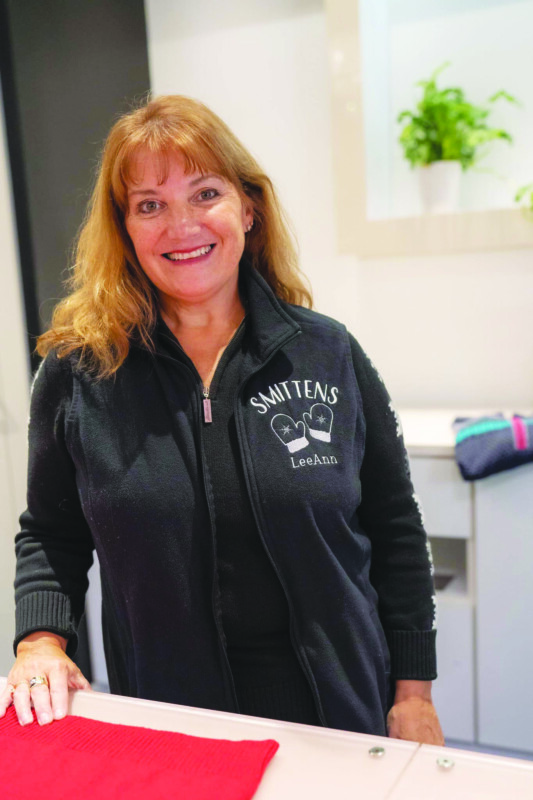
LeeAnn Fay-Ellis is the owner of Smittens, a family-run business in Gilford that specializes in crafting mittens from upcycled and repurposed sweaters.

Explain your job and what it entails.

As a small business, so much of the job is staying organized. Scheduling events, accounting, ordering enough fleece for the liners, inventorying the stores we sell in and being sure we have enough product for each event. … Searching and thrifting for good sweaters can be fun, especially when I get to shop with my daughter. My husband does all of the cutting and matching of patterns and colors before sending them to me to be sewn. This starts our assembly line process.

How long have you had this job?

Smittens was started in 2011.

What led you to this career field and your current job?

In 2011 I saw a vendor selling sweater mittens at a craft fair that our 10-year-old daughter was selling at. She did a trade with her for a pair of sweater mittens for me. When we got home and I tried them on again I realized they didn’t fit well. I commented to my husband, David, that they felt more like an oven mitt and not very comfortable. He replied, ‘Why don’t you make your own?’ So we did. We went to our local thrift store to stock up on sweaters, found a pattern online, which I modified to tailor our mittens to fit better.

What kind of education or training did you need?

I have been a crafter for as long as I can remember. Both my mother and grandmother sewed and taught me the basics. I also took quilting classes. But as far as the modification of the sweater mittens, it was trial and error to get them to fit properly.

What is your typical at-work uniform or attire?

The majority of our work is done at home … so I am fortunate to wear sweatpants or yoga pants and be as comfortable as possible. [For] during the selling season … we had fleece vests made with our names by another local artisan (Forever Memories in the Mall of New Hampshire.)

What is the most challenging thing about your work, and how do you deal with it?

Finding good wool sweaters. … Another challenge is making enough to supply for the multiple stores we are in and events we do.

What do you wish you’d known at the beginning of your career?

When we first started, we would only make two or three pairs at a time. We now focus on making 50 at a time and have more of an assembly line process.

What do you wish other people knew about your job?

We, like many artisans, create year-round and have a very limited selling time, especially with mittens. The unknown expenses can be great and what we sell each pair for is not what we actually make.

Five favorites
Favorite book: No More Excuses by Sam Silverstein and Don’t Bullsh*t Yourself! – Crush the Excuses by Jon Taffer of Bar Rescue
Favorite movie: August Rush
Favorite music: My daughter’s Spotify account! Music from the ’70s to today.
Favorite food: Blackened Mahi Mahi
Favorite thing about NH: I love the beauty of the seasons. I was fortunate to grow up in the Lakes Region with the lakes and mountains as our backyard.

Featured photo: LeeAnn Fay-Ellis. Courtesy photo.

Stay in the loop!

Get FREE weekly briefs on local food, music,

arts, and more across southern New Hampshire!