St. Nicholas Church has added an extra day to its Food Festival
Traditions can carry a lot of cultural inertia; food traditions especially so. So it is a big deal when a church changes the structure of a long-running event.
Nobody knows this more than Amy Valkanos, one of the organizers of St. Nicholas Orthodox Church’s Annual Lamb Barbecue, which is in its 77th year.
“We have homemade recipes,” she said, “that have been passed down from the generation that started [it] originally. That’s what we use to make our meals. The big draw is the lamb barbecue, of course, which, man, when that starts cooking, throughout the whole neighborhood the smell of it will just penetrate your nostrils and you’ve just got to go follow that smell and find out where it is coming from. It’s just so good.”
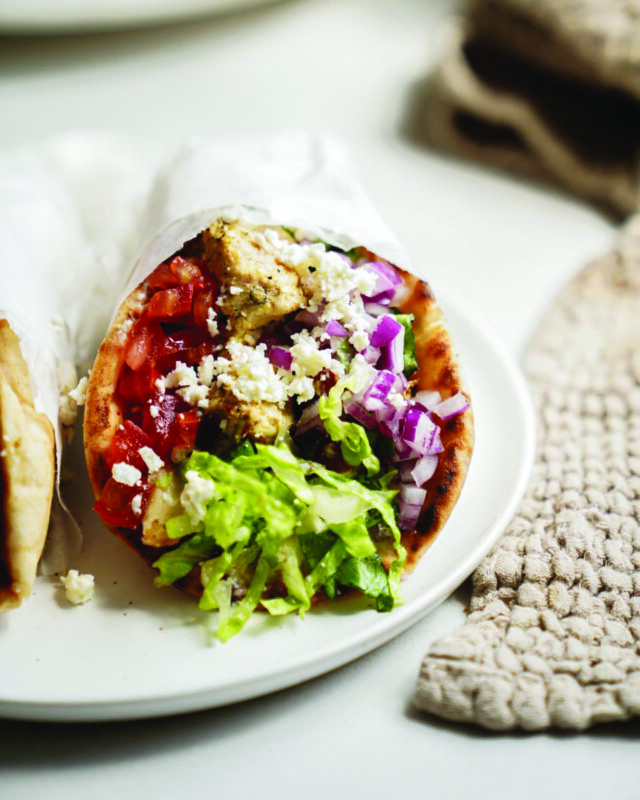
But this year, the festival has been expanded by a day. In addition to the 400 pounds of lamb that will be cooked on Saturday, Greek food enthusiasts will have an extra day devoted to gyros. A gyro is a mixture of grilled meats and tzatziki sauce served on fluffy pita bread.
“Adding a Gyro Day,” Valkanos said, “was a decision made because we know that our community and parishioners love gyros. But, given the fact that we are a small church and with a small volunteer staff, or smaller let’s say in comparison to other churches in the area, we knew that to actually include gyros on that same day would really be a huge undertaking for us. But to meet the demand and to also stick to a different palate, we decided, ‘Well, yeah, you know what? Let’s just do a Gyro Day.’ So on Sunday, that’s what we’re having. We’re cooking the gyro meat, and we’ll serve gyro sandwiches, with a bag of chips and a drink. It’s a different interest for people who want to try a different type of food and another opportunity for our community neighbors to come see us.”
The gyro meat — a combination of lamb and beef, Valkanos said — will not be cooked on traditional upright spits, but in the St. Nicholas parish hall, then sliced thin for the sandwiches served outside.
The goal, according to Valkanos, is to serve dedicated gyro fans gyros as close as possible to a perfect gyro. And that starts with the individual ingredients. The bread, for instance, is not like the flat pocket bread that you usually find in a supermarket.
“It is not the kind you would buy that opens up and you fill it up,” she said. “Rather, this is a soft and fluffy pita that acts as a plate and you wrap around the meat.”
For Valkanos, one of the things that make a gyro so special is the combination of complementary textures that goes into it.
“It’s just a combination of all the ingredients,” she said. “You’ve got great seasoned meat and then you add the tzatziki sauce to it, which is very cool on your palate. And then you add the tomatoes and a little bit of lettuce and a little onion in it, and then the soft bread to wrap it up and eat it. It’s a really good all-around, whole food sandwich.”
Regardless of whether people attend the Lamb Barbecue, Gyro Day, or both, Valkonos said, St. Nicholas’ weekend of food is an expression of an important Greek value: hospitality.
“Our festival is unique,” she said, “in that it really is reminiscent of Old World Greece, where there is this little church in the landscape in the countryside somewhere in Greece and people just come together and have a very homegrown organic experience. It feels very much like that.”
Annual Lamb Barbecue
When: Traditional Greek food and pastries Saturday, June 21, from 11:30 a.m. to 3 p.m. Sunday, June 22, will be Gyro Day — fresh gyro, a bag of chips and a drink will cost $13; gyros will be served from 11:30 a.m. to 2 p.m.
Where: St. Nicholas Orthodox Church’s, 1160 Bridge St., Manchester, 625-6115, stnicholasgreekchurch.com
Featured photo: A St. Nicholas Gyro. Courtesy photo.