Take a mini day trip and discover new flavors at New Hampshire wineries
Whether you know (or think you know) everything there is to know about wine, or your wine experience is limited to the glass of Champagne you had at your cousin’s wedding, tastings are a great way to experience local wines, learn about how they’re made and the best foods to pair them with, and explore the vineyards that are occupying more and more New Hampshire real estate.
“People come for a tasting for something [fun] to do,” said Al Fulchino, owner and winemaker at Fulchino Vineyard in Hollis. “When they find out they like the wine, they think, how [is that made] in New Hampshire?”
Local winemakers and vineyard staff answer our questions about their wineries, their tasting experiences and the wines they think you should try.
Appolo Vineyards
49 Lawrence Road, Derry
421-4675, appolovineyards.com
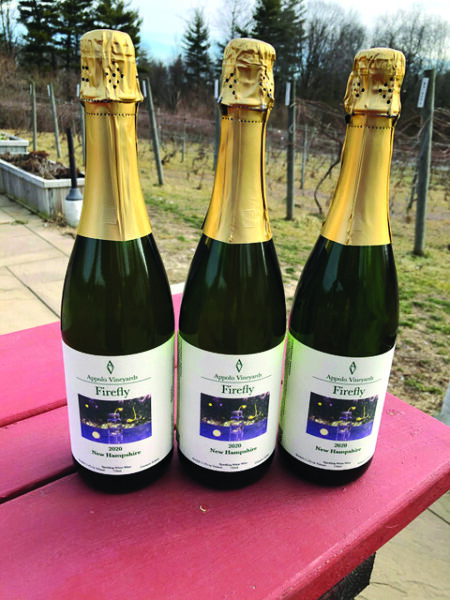
Mike Appolo, owner and winegrower, talks about his vineyard, the outdoor tasting room known as #thecrushpad, and Firefly 2020.
From fruit to wine: We make only grape wines. We are focused on food-friendly wines, so you will not find anything overly sweet here — well, except for our port-style wine, and that has some special pairing recommendations. We have a small vineyard [with 1,500 vines] in Derry with nearly a dozen named varieties of grapes. We also source grapes from all over New Hampshire, New York and other places. We make a variety of wines from dry to sweet, red, white and rosé. We have still and sparkling wines, including a brand new naturally fermented pet-nat [called Wild Eyes] and a red pinot noir bubbly [called Barchetta]. Many of our fermentations are done using native yeasts that bring out the best of the varietal character of the grapes we choose. We were one of the first in New England to grow the grape Brianna, which is now grown extensively in Vermont and in vineyards across the region. We offer still and sparkling versions of this wine. We are constantly experimenting with new grape varieties and trying new styles of wine.
What makes us unique: We have an outside tasting room, #thecrushpad, a patio in the middle of our sustainably grown vineyard. We have fire pits groups can reserve in spring and summer. Dogs are welcome on our patio as well. As one of the closest vineyards to Boston and Interstate 93, we see many visitors getting away for the weekend.
The tasting experience: Our staff will guide you through a tasting of anything from our menu of [often 15] wines, including both sparkling and still wines. The staff is well-versed in how each wine is made. When the winemaking staff is available, we will meet with customers to talk about the process.
Popular pours: Firefly 2020 is our newest sparkling Brianna white wine and is quickly gaining ground as our most popular at the winery. The sparkling Bee Wild 2019 white blend is right up there with it. Blue Eyes [sauvignon blanc] is our best selling wine in the New Hampshire Liquor and Wine Outlets. Red One [a sweet sangria-like New Hampshire red blend] is our most popular wine in Market Basket stores throughout the state.
Personal favorite: Firefly is my new favorite. I love the way the Brianna vines and grapes grow here — expressing the minerality of the granite-filled soils. We don’t spray this grape or use pesticides anywhere near it. I have had Brianna wine grown in at least five states and at various places across this state. The grapes here are very different, and my preference.
Appolo opened on March 13 for the new season. Current hours are Fridays from 2 to 8 p.m. and Saturdays and Sundays from 11 a.m. to 5 p.m., by reservation only (visit the website to book online or call for same-day reservations). The winery is also in the approval process for a new outdoor covered tasting space and an indoor tasting room that Appolo says he hopes to start building in late spring, with expanded hours upon its completion.
Copper Beech Winery
146 Londonderry Turnpike, Building 3, Unit 23, Hooksett
400-2595, copperbeechwinery.com
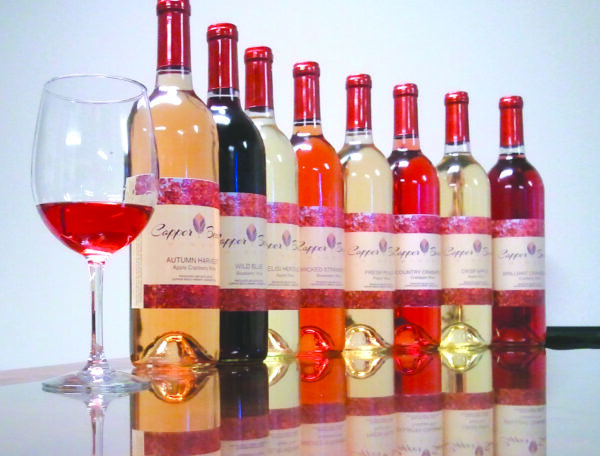
Lin L’Heureux owns and runs Copper Beech Winery on her own, which means she’s also the chief fruit selector, winemaker, lab chemist, taste tester, director of bottling, web designer, social media manager, photographer, advertising manager, hostess, server, groundskeeper, gardener and more.
From fruit to wine: Copper Beech Winery is a small batch woman-owned boutique winery. … We make … wines from fresh fruit and grapes that are grown as locally as possible and choose organic fruits whenever we can. Each small batch is hand crafted with patience and attention to detail. … We opened our tasting room in March 2014.
What makes us unique: While many fruit wines are sweet, ours are on the dry side, with just enough residual sweetness to showcase the fruit character without overwhelming it. Yes, dry fruit wines, a pleasant surprise for many of our customers. In 2021 we’ll be adding some well-aged grape wines as well. Our wines are fermented in the traditional style and most are aged at least a year before bottling.
The tasting experience: Normally we have about 14 types of wines available, which vary throughout the year. When a local farmer has a smaller supply of fruit available due to a bad winter, lack of rain, etc., we may run out of that wine earlier in the year. … We appreciate the local fruit when it’s available to us, and because I grew up on a farm, I really like the opportunity to help support local farmers. Our tasting room is small and cozy. … I love talking to people about how the wine is made, where the fruit comes from and what’s new in the tanks. This year, we’re working on approvals for an outside tasting and seating area and hope to open it later in the spring.
Popular pours: These tend to sell out early every year: Autumn Harvest [a blend of New Hampshire apples with tart red cranberries]; Brilliant Cranberry; Country Crabapple [a limited-edition wine crafted from New Hampshire crabapples]; Massabesic Rose [made with locally grown strawberries and fresh rhubarb]; and Wild Blue [a dry oak-aged red wine made with low-bush blueberries from New Hampshire and Maine].
Personal favorite: I honestly don’t have a favorite, but in the cooler seasons I tend to gravitate toward the reds, like Wild Blue or Regatta Red. In warmer seasons, I like a chilled white wine, like Fresh Peach or Country Crabapple.
Copper Beech Winery is opening later this spring; visit its website for details and hours for wine tastings and tours.
Crazy Cat Winery
365 Lake St., Bristol
217-0192, crazycatwinery.com
What can you expect from a wine tasting experience with Crazy Cat owner Claudette Smith and winemaker Tim Smith? Five pours, a souvenir tasting glass and stories about winemaking and “the Haunted House of Bristol.”
From fruit to wine: Our wines are made from wine grape juices shipped in from California, Washington and Oregon, as well as from Chile, Argentina, South Africa, Italy, Australia, etc. and fresh fruit from New Hampshire. All of our wines are produced here on site. We have planted a small vineyard on site that we hope will produce wine-quality fruit in a few years.
What makes us unique: One of the factors that makes us unique is our rather large selection of wines and varied styles. We produce reds, whites, semi-sweet summer wines, fruit wines and several dessert wines. Our proximity to Newfound Lake makes us an especially convenient and fun location for visitors to the Lakes Region. This building was built in 1880 and the tasting room is in the original carriage house.
The tasting experience: Our tasting experience consists of five pours from our collection and includes a logo souvenir tasting glass. Tastings are done in our Tuscan-themed tasting room. During the summer months, we also offer outdoor seating and service. One of our favorite things to do is to meet and talk to our customers, talk about the wines and winemaking. We also love to tell our story and tell tales about the building. It has been described by many locals as “the Haunted House of Bristol.” On many occasions, we love to sit with customers talking about our unique and weird experiences since moving into this building. Lots of unexplained happenings!
Popular pours: Popular pours would be our Reserve Merlot, juice sourced from Washington State; Whisker White, our special blend of three whites; Beach Peach semi-sweet summer wine and the Chocolate Espresso dessert wine.
Personal favorite: Tim’s new personal favorite is our Grenache Rose — light, clean with a distinct flavor of fresh strawberry. Claudette’s favorite is the cabernet sauvignon.
During the cooler off season months, Crazy Cat is open Friday through Sunday from noon to 5 p.m. In warmer months it is open Thursday to Saturday from noon to 7 p.m. and Sundays from noon to 4 p.m. Visit the website for current hours.
Flag Hill Distillery and Winery
297 N. River Road, Lee
flaghill.com
Cassey Nickerson, brand ambassador for Flag Hill, talks about what the largest vineyard in the state has to offer.
From fruit to wine: Flag Hill sits on a 110-acre conservation easement, which preserves the property to remain in agriculture forever. The vineyard itself comprises two areas on the property totaling 14 acres, making Flag Hill the largest vineyard in the state of New Hampshire. We focus primarily on cold-tolerant white grapes, though we grow a total of six hybrid grapes, which consist of both whites and reds. The types of grapes are Minnesota hybrids and French-American hybrids, and varieties are Cayuga, vignoles, la crescent, Niagara, de Chaunac and Marechal Foch. While we do grow all of our grapes for our grape wines, and the corn and rye for whiskey, we do not grow our own fruits for our fruit wines, though we source these from within New Hampshire and the surrounding New England states as best we can.
What makes us unique: We are a true farm winery and farm distillery. Growing the grapes and grains here at Flag Hill means that we have control over everything, from the compost that goes into our soil, to the temperature at the time of harvest.
The tasting experience: We offer a guided public tour every weekend at noon with one of our staff. If you … miss the scheduled tour, we encourage you to explore the grounds via our self-guided walking tour, which has 18 stations to visit. Our tastings are $5 for five tastes, where you get to choose which wines, spirits or combination of those you would like to try. Small snack boards are available, as well as glasses of wine, … wine smoothies and other seasonal offerings. … We are looking forward to when we can return, safely, to bar service in the Tasting Room, where guests get a one-on-one with our staff. … We are [also] looking forward to the summer of 2021 with the addition of an outdoor patio [where] guests can grab a flight, a glass and a friend and enjoy the day under the pergola.
Popular pours: Aromatic white wines are certainly what we do best at Flag Hill, so our visitors gravitate toward those. Our most popular pour within this would have to be our Cayuga white. It is our fan favorite that pops with flavors of green apple, peach and pear, very similar to a Germanic-style riesling. If you are more of a bubbly wine drinker, give the sparkling Cayuga white a try! Add a dash of one of our fruit liqueurs and your day is made.
Personal favorite: La crescent. This is hands down our winemaker’s favorite. La crescent is intensely aromatic with notes of honeydew, pineapple and orange blossom; it is the perfect marriage of sweetness versus acidity at the first sip.
The Tasting Room & Gift Store is open from 11 a.m. to 5 p.m., seven days a week, year round, with the exception of Easter, Thanksgiving, Christmas Day and New Year’s Day.
Fulchino Vineyard
187 Pine Hill Road, Hollis
438-5984, fulchinovineyard.com
For owner and winemaker Al Fulchino, winemaking has been part of his family’s history for nearly two centuries — so it only makes sense that he now has vineyards of his own.
From fruit to wine: We believe in simplicity. We have four vineyards within two miles. … We like to source what we use. Eighty-five to 88 percent comes from our property. We plant, pick, prune, we bottle, we label … we do all that. We believe in letting the wine speak for itself by staying out of the way. [We have] good vineyard sites to warm up and ripen the grapes. … We bought the land in 1991 and in 2007 planted the first vineyard. It’s a very successful piece of land for growing wine grapes. … Everything on this property, we built it.
What makes us unique: What makes us different, I don’t even want to know. All we can do is what we do. I think we make people happy.
The tasting experience: We cater to people who like wine, want to like wine or are curious about wine. We expect to exceed expectations with the wine person [and we] want to show people how to appreciate wine in a non-snobby way. I talk to everybody I can talk to, [and] we try to impart our knowledge on our staff. … [Tasters can try] five or six wines. … We try to give people information about the wine and what pairs well with it. [We want to] show people where the wine shines. … We try to have 18 to 22 [wines] on the table, but if we’re hit really hard there may only be 10 to 12 wines on the table. Right now there are 15 wines on today’s table. Things come and go.
Popular pours: Mirabella is our signature proprietary blend. It is a very full-bodied robust red that is meant to savor … with stone fruit notes, notes of chocolate, orange peel. It’s a crowd favorite, our No. 2 wine. No. 1 is a sister wine to Mirabella [where we] alter the aging process and we oak it differently: Cenare. It’s a French oak.
Personal favorite: If I just want a sip I like to go to my Mirabella. If I’m eating a certain type of dish, I might need my pinot or my chardonnay.
Hours now through March are Saturday and Sunday from 11 a.m. to 5 p.m., opening daily from 11 a.m. to 5 p.m. starting in April.
Gilmanton Winery & Vineyard
528 Meadow Pond Road, Gilmanton
267-8251, gilmantonwinery.com
Owners Sunny and Marshall Bishop offer tastings in the former home of a local legend.
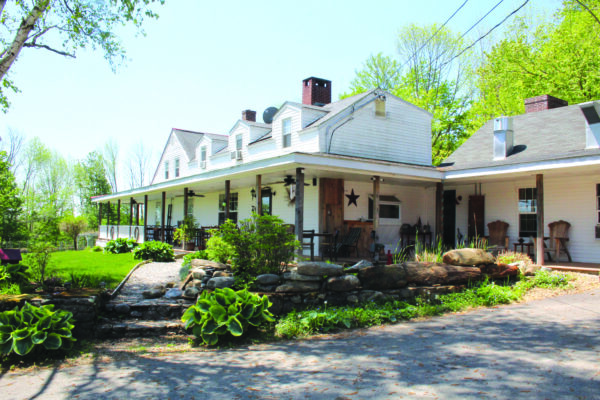
From fruit to wine: We have roughly 4 acres and six different kinds of vines: seyval, reliance, Concord, Marechal Foch, Marquette and aurore. We also make some of our wines from grapes that have already been pressed.
What makes us unique: Our property is just under 9 acres, and the house, which is attached to the business, was once owned by Grace Metalious, the author of Peyton Place. My husband, the winemaker, is a retired Marine and I’m a retired flight attendant, [so] we have a bit of memorabilia here.
The tasting experience: You get to taste at your own table, whether inside or outside, and we bring the flights of wine to you. We also serve [light bites, like cheese and crackers] and we do as much local as we can. My husband also loves to walk around and chat with everyone. … We also serve brunches every Sunday morning. We’re planning on doing picnics this summer.
Popular pours: Our most popular wines are Jack the Ripper, Green Apple Riesling and Blueberry Surprise.
Personal favorite: My favorite is Jack the Ripper. It’s from the carmenere grape and is a dry red wine.
Gilmanton Winery is open Thursday through Saturday from 11 a.m. to 6 p.m. and Sunday from 1:30 to 5 p.m. for wine tastings.
Hermit Woods Winery
72 Main St., Meredith
253-7968, hermitwoods.com
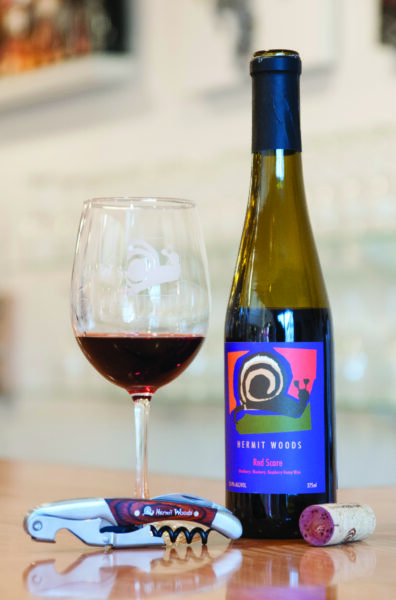
Owner Bob Manley talks about the highly interactive experience you’ll have at a wine tasting at Hermit Woods.
From fruit to wine: Each of our … handcrafted wines is made from a unique combination of locally sourced fruit, honey and flowers, in some cases wild-foraged. Our process is … hands-on from vine to bottle, using old-world techniques. … The result is a wine with rich, complex flavors. All of our wines are vegan, with the exception of honey wines, gluten-free, raw and mostly organic to best management practices. … We get our fruit from farmers all over New England, and on occasion outside of New England when supplies are short
What makes us unique: Hermit Woods is crafting dry, barrel-aged, European-style wines, many of which can be laid down for years in your cellar, from fruit other than grapes. We are the only winery I am aware of with this focus anywhere. We also offer a farm-to-table restaurant at the winery and sell local cheeses, meats and other locally crafted food items at the winery. We will soon be offering a listening room, called The Loft at Hermit Woods, where we will be showcasing music from around the country and possibly the world.
Our tasting experience: Our tasting experience is highly interactive, providing guests with an in-depth knowledge of our wine, wine in general, and wine application. We do offer tours, [but] they won’t resume until we are 100 percent past Covid. We will also be offering a wide variety of advanced tasting programs. … A typical tasting lasts about 30 minutes and is one-on-one with our team. Our premium tasting experience will be a 45-minute presentation by the owners and management only.
Popular pours: Our most popular wine is Petite Blue and Petite Blue Reserve. [Petite Blue] is bursting with fresh blueberry aromas and flavors. An entire pound of wild low-bush blueberries is in each and every bottle of wine. Unlike many available blueberry wines, this dry blueberry wine embodies the characteristics of a more traditional dry red wine. We enjoy it slightly chilled. Petite Blue Reserve, a specially crafted vintage of our … Petite Blue, is fuller in body and finishes long and dry like so many fine Burgundies we have come to love. Like our Petite Blue, there is over an entire pound of wild low-bush blueberries in every bottle. Also very popular is our Winnipesaukee Rosé. … Cranberries and apples are blended together in this rich, sweet, and tangy wine.
Personal favorite: Our personal favorite is our Red Scare, a multi-berry melomel. Whole wild blueberries, organic blackberries and raspberries, and local, raw, unfiltered honey providing balance, structure, and long-deep flavors. This wine was aged in a French oak barrel for many months. A complex, dry wine with great aging potential.
Hermit Woods is open seven days a week, year round. Wine tastings are available at any time during operating hours, which are Sunday through Thursday from 11 a.m. to 5 p.m. and Friday and Saturday from 11 a.m. to 6 p.m. in the winter. It stays open an hour later in the summer.
LaBelle Winery
345 Route 101, Amherst; 104 Congress St., Portsmouth; and coming in May, 14 Route 111, Derry, labellewinery.com
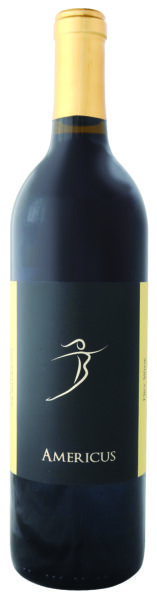
Michelle Thornton, director of marketing and business development, explains the winemaking process that happens on the grounds of LaBelle’s Amherst property and describes the winery’s most popular pours.
From fruit to wine: LaBelle Winery Amherst has seven different grape varieties planted on about 2 acres of land. … Varieties of grapes are chancellor, noiret, petit amie, seyval blanc, petit pearl and Brianna, and are all cold-hardy to withstand New England winters. The vines will be hand-harvested in the fall when the grapes reach the optimal sugar and acidity and will immediately be transported to the crush pad behind the winery. … LaBelle also sources grapes from the Finger Lakes region of New York, California, and Washington State to supplement our volume. Our fruit wine is produced using farm fruits from all over New England. … Ripe red grapes are crushed in a crusher/destemmer. Must [a juice containing the skin, seeds and vines] is placed in a container and a selected strain of yeast is added. In the fermentation process, yeast added to the grape or fruit juice converts sugar into both carbon dioxide, which is released into the air, and alcohol. … After being filtered from the other organic material, most red wines undergo a second, malolactic fermentation, in which sharp malic acids are converted to softer lactic acids. Racking and filtering follow when the wine is separated from any remaining solids. Clarified wine is placed in bottles and sealed. For white grape processing, instead of being crushed, white grapes are gently pressed to avoid juice contact with the skins or broken seeds and vines that give red wines that sharp, tannic taste. The juice is collected in a fermentation tank [either stainless steel or oak] and may be clarified once before a yeast variety is selected and added. Fermentation of white wines usually occurs at cooler temperatures and for more time than reds to maintain crisp, fruity aromas and flavors. Barrel aging and malolactic fermentation may occur for some wines [like chardonnay], followed by clarification and bottling.
What makes us unique: Amy LaBelle is the winemaker, founder and owner of the business, along with her husband, Cesar Arboleda. LaBelle processes over 40 tons of grapes a year, which will be doubling in 2021 with the Derry property’s addition. LaBelle is known for its friendly and inviting staff and incredible dining, shopping options and educational and fun events that complement the award-winning wine. LaBelle also hosts hundreds of private events a year, such as weddings, corporate and nonprofit events.
The tasting experience: Our expert tasting room representatives guide guests by sampling our wines, all produced in our … winemaking facility in Amherst. During a wine tasting, a guest can select from over 35 of our different wines to taste. … Tastings are first-come, first-served, and do not require a reservation. Our guided tours, which are approximately 20 to 30 minutes, provide an overview of the building architecture, vineyards and winemaking production cellar within our Amherst facility. Additionally, guests are welcome to follow our self-guided tour brochure at any time during operating hours. We also offer private tasting and tours, which require a reservation. Tour and tastings are highly interactive and educational. The LaBelle Winery Derry property will have a new structure built, named LaBelle Winery, home to a tasting room and a space where a new line of sparkling wines will be produced. The tasting room will wrap around the production and aging experience and will require additional equipment and riddling racks that we don’t have space for in our Amherst location. The new red, white and rosé sparkling wines will be made using the French Methode Champenoise, making the Champagne house at LaBelle Winery Derry the only one of its kind in New England.
Popular pours: Rose, a dry, classic blend of the red grapes grenache and syrah, with aromas of watermelon, florals and strawberries; Americus, with a rich tannin structure and loads of pepper on the palate; petit verdot, a bold red wine with strong floral and fruit tones and a deep tannin structure; seyval blanc, a delicate wine with citrus tones and a crisp, clean finish; and malbec, a deep red rich wine that’s spicy and bold on the palate with a lush and balanced finish.
Personal favorite: Americus
LaBelle’s hours are changing soon; visit the website for the most up-to-date information.
Sweet Baby Vineyard
260 Stage Road, Hampstead
347-1738, sweetbabyvineyard.com
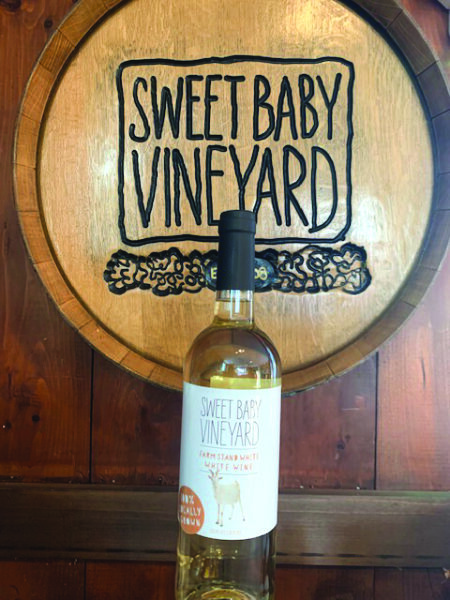
Owners Lewis and Stacey Eaton live and work on their farm, where they offer a relaxed wine-tasting experience and a chance to walk around the vineyard. Lewis Eaton shared more about what you’ll find at Sweet Baby Vineyard.
From fruit to wine: We are a small family-owned vineyard and winery that grows six different cold-hardy grape varieties. Each year we expand our vineyard, with plenty of room to grow for the future. Our … fruit wines are all made with locally grown New Hampshire fruits. We source them directly from single source farms. … Our winemaking process is simple and natural with all-natural ingredients letting the wine express its own unique character.
What makes us unique: What makes us stand out is that we offer locally grown fruit, we are agriculturally driven and are very approachable. We live and work on the farm and love what we do. Coming to our farm is very relaxed and easy.
The tasting experience: Our tasting experience is super-relaxed and guided by our incredible tasting staff. Our winery sits in the middle of our 8-acre farm. We offer 25 different wines — fruit, grape, sparkling and fortified — [and] our tasting staff and winemaker will explain everything from where the fruit is from, how it is made and usually what their favorites are. Though there isn’t a formal tour, our grounds are open to everyone and we allow folks to roam through the vines and enjoy the beauty we offer. … We have both indoor and outdoor — in warmer weather — seating.
Popular pours: Some of our most popular wines are our blueberry wines — sparkling, port-style and still — and our varietals, like Niagara and Marechal Foch, that we grow on the property. The blueberry wines are produced semi-sweet and are made with locally grown low bush wild blueberries from Alton, New Hampshire. We do three versions of Niagara: sweet, sparkling and dry. These are grown on our farm. Marechal Foch is a dry red grown on our property and aged in American oak barrels for two years and is a dry medium-bodied table wine.
Personal favorite: My favorite is our Farm Stand White. It is a blend of la crescent, petite amie and aromella. Two of the grape varieties are grown here and the other we buy from [Flag Hill Distillery and Winery]. It is an off-dry aromatic white perfectly balanced acidity with melon and citric notes. This wine is incredible.
Sweet Baby Vineyard is open year-round from noon to 4 p.m. Thursday and noon to 5 p.m. Friday through Sunday.
Winnipesaukee Winery
458 Center St., Wolfeboro
455-0182, winniwinery.com
Heidi von Goetz Cogean, owner and winemaker, looks toward the future at her vineyard.
From fruit to wine: We are a New Hampshire farm winery, woman-owned and family-operated. We grow cold-hardy white grapes in our vineyard, [which] operated as a dairy farm from 1810 to 1942. … The vineyard was planted in 2018 [and] we expect a harvest in 2023. We source our cabernet sauvignon and merlot red grapes from the Lanza family vineyard in Sonoma County, California, and our award-winning carmenere from the Central Valley of Chile. Wild blueberries are purchased locally and rhubarb comes from Tuftonboro, New Hampshire, [and we make] both sweet and dry wine from these fruits.
What makes us unique: All of our red wines are classic European-style fully dry reds, aged in French oak barrels. We are currently selling vintage 2016 dry reds, [and] we are the only New Hampshire winery selling oak barrel-aged wine that is over four years old. We are [also] New Hampshire’s only winery and bed and breakfast. … We also have a huge barn full of antiques for sale … from April to mid October.
The tasting experience: We conduct a four-wine tasting, with [an] option to enjoy prepackaged snacks procured from Black- and woman-owned companies. [Visitors can] enjoy a glass of wine on the patio [or] a bottle of wine in our vineyard. Frozen wine slushies [and] wine cocktails with real fruit are … popular. … Most days the winemaker is serving customers. … Private tastings with [a] charcuterie board can be arranged after hours.
Popular pours: Wicked Good Red, [which is] 50 percent cabernet and 50 percent merlot, [is] our most popular wine. [It] pairs well with heartier fare [and has] balanced tannins and superb mouthfeel. [We are] selling vintage 2016 right now.
Personal favorite: Whatever I am currently bottling!
Winnipesaukee Winery is open May through October, Thursday through Sunday from noon to 5 p.m.
Zorvino Vineyards
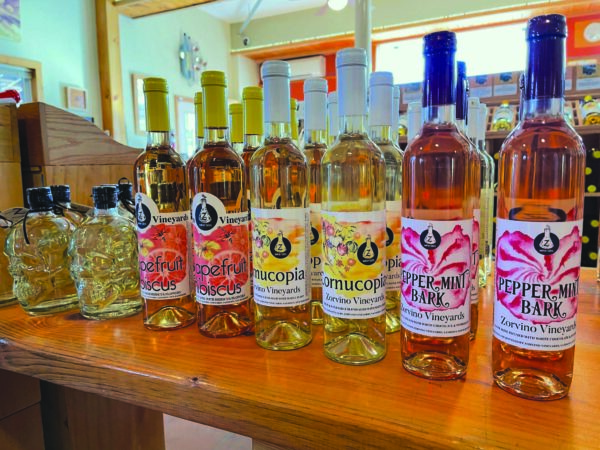
226 Main St., Sandown
info@zorvino.com, zorvino.com
Tom Zack, wine director, talks about the wines, the food and the woodwork you can find at Zorvino Vineyards.
From fruit to wine: Zorvino Vineyards is an 80-acre property in the middle of a Northern hardwood forest, which is composed of vines, fields, woodlands with trails, a pond and a beautiful post and beam manor house. … Our actual vineyard is now home to 1,000 vines, including la crescent, Marquette, petite pearl, St. Croix, Itasca, Valiant, Frontenac, Frontenac Gris and Niagara. Most of these are known as Minnesota hybrids. We have extensive gardens where we grow vegetables for our restaurant plus for winemaking and fruit trees that bear fruit for wine also. We source premium grapes from wine regions all over the world including California, Italy, South America and South Africa. Additionally, we start with local fruit from New Hampshire and then branch out to other areas of America depending upon production needs. Our wine is initially made in stainless steel drums and then the premium wines are transferred to American Oak barrels for aging and refining.
What makes us unique: We are one of the largest and busiest wineries in New Hampshire, especially during the summer months when our outdoor patio is open. … Our kitchen puts together a menu that includes creative sandwiches and flatbreads to pair with our options of six different flights where the wines rotate from week to week. The patio can seat up to 80 people but we allow guests to bring blankets and chairs and enjoy our beautiful property. We have our own sawmill and you can often see Jim Zanello, our owner, working on our own hardwoods to create tables, chairs and … whimsical items of all shapes and sizes.
The tasting experience: Our typical offering consists of six different wine flight options, where each flight includes four rotating wines of 3 ounces each. All our outdoor tables are reservation only, made through our website, and reservations are for an hour and a half each. During Covid we have suspended tours, but guests are welcome to wander the property and enjoy the scenery. We also have first-come first-served tables and benches near the pond and throughout the property if the patio is full. When you purchase your flight samples, our winery staff will fill you in on which wines you’ll be trying. Our … staff is always glad to take the time to answer any questions you may have about our wines or our history.
Popular pours: We make more different varietals than any winery in New Hampshire: white, red or fruit wines totaling over 40 this past year. … We are also known for our Z Wine Labs offerings, which are short-run wines that are released every two weeks and include … Peanut Butter & Jelly, Blackberry Bourbon Smash, Chocolate Hazelnut, Key Lime Pie, Field Day (watermelon) and many, many more. We also offer a new product that is quickly gaining in popularity. It’s called Good Boy Sparkling Seltzer. It’s unique in that it’s wine based and comes in at 7 percent alcohol. This means lower-calorie too because [there’s] less sugar.
Personal favorite: My current favorites are the Tempranillo Barbera Blend, zinfandel and tempranillo that are sourced from the Lanza Vineyard in the Suisun Valley of California. These are aged in American white oak for six months to a year or more and are our top reds. These continue to get better and better.
Zorvino is open daily year round, from 11 a.m. to 5 p.m., with extended hours in the summer, usually until 8 p.m. There is indoor seating and a seasonal patio, which sometimes closes early for weddings and other functions.
Featured photo: Photo courtesy of Flag Hill Distillery and Winery.