A season of festivals, theater, concerts, movies and more family fun
School’s Out! For! Summer! School’s! Out! For— wait, for how long?
In this year’s kid’s guide to summer we offer a rundown of events and attractions for kids and families in the forthcoming school-free weeks. Got a kid-friendly event not mentioned here? Let us know at adiaz@hippopress.com.
Events
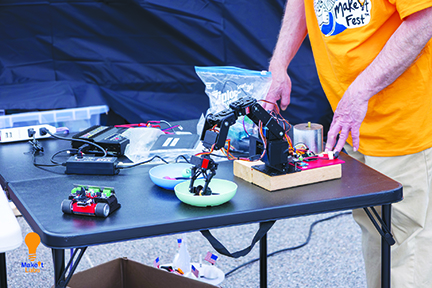
• The Make It Fest!, a “gathering of makers, doers, DIYers, crafters, tinkerers, self-proclaimed engineers and aspiring mad-scientists!” according to makeitfest.com, will take place Saturday, June 13, from noon to 4 p.m. at Make It Labs, 25 Crown St. in Nashua. The event will feature demonstrations, exhibits, workshops, a sumo robot competition, vendor sales and more, according to the website, where you can register to attend.
• Applecrest Farm Orchards, 133 Exeter Road in Hampton Falls, has a series of festivals throughout the summer and into the fall on select weekends, starting with a Strawberry Festival on Saturdays, June 13 and June 20, and Sundays, June 14 and June 21, according to applecrest.com. Other festivals include a Blueberry Celebration July 12, a Blueberry Festival July 25-26, Blueberry & Peach Celebration Aug. 2, Peach Festival Aug. 15-16, Fall Harvest Kick-Off Aug. 29-30 and Labor Day weekend Sept. 5-7.
• The Seacoast LitFest will take place Thursday, June 11, through Sunday, June 14, at the Music Hall in Portsmouth, according to a press release. Young readers may enjoy the Book Fair and Free Kids Book Giveaway slated for Sunday, June 14, from 10 a.m. to 2 p.m. at 28 Chestnut St. in Portsmouth. It will be “a lively book fair with local vendors and authors, featuring live music and poetry readings, free book swap and free children’s books for young readers,” according to themusichall.org, where you can find the LitFest’s complete schedule.
• Nashua kicks off its SummerFun program with Superheroes in the Park at Greeley Park on Saturday, June 13, from 10 a.m. to 1 p.m. featuring trucks to explore, vendors, games, Jedi training, a superhero show and giveaways, including free superhero capes, masks and light sabers to the first 250 kids, according to Nashuanh.gov/546/SummerFun.
• Golden: A K-Pop Kids’ Party, an all-ages family dance party (kids must be accompanied by an adult), will be held by The Kawaii Rave and VNK Entertainment on Sunday, June 14, at 1 p.m. at the BNH Stage, 16 S. Main St. in Concord, according to ccanh.com, where you can purchase tickets.
• Joppa Hill Educational Farm, 174 Joppa Hill Road in Bedford, is holding weekly animal storytimes on Tuesdays (June 16 is the third in the series) through Aug. 11 at 10:15 a.m. “Listen to a short story about farms and animals and then visit with one of the farm residents,” according to jhef.org, where you can purchase tickets.
• The 26th Annual Hampton Beach Master Sand Sculpting Classic runs Thursday, June 18, through Saturday, June 20, with the illuminated sculptures on display through June 28, according to hamptonbeach.org/events/sand-sculpture-event. A group carve takes place Wednesday, June 17, according to the website, where you can find a schedule of events and a look at this year’s contributors.
• SEE Science Center (200 Bedford St. in Manchester) will hold its Kick Off to Summer Saturday, June 20, through Friday, June 26, “featuring activities using LEGO® Bricks and celebrating the 20th anniversary of the completion of our LEGO® Millyard Project,” according to see-sciencecenter.org, where you can find admission prices and pre-purchase admission. Through Labor Day, the Center is open Monday through Friday, 10 a.m. to 4 p.m., and Saturday and Sunday, 10 a.m. to 5 p.m., the website said.
• The New London Parks and Recreation Department will hold its ninth annual Strawberry Fest on Saturday, June 20, from 10 a.m. to 2 p.m. in the town green, featuring strawberries and strawberry shortcake for sale (cash or check only) as well as other food and vendors and entertainment, according to newlondon.nh.gov/recreation and a post on the department’s Facebook page.
• St. Nicholas Greek Orthodox Church, 1160 Bridge St. in Manchester, will hold its Lamb BBQ and Food Festival on Saturday, June 20, from 11:30 a.m. to 3 p.m. and Sunday, June 21, from 11:30 a.m. to 2 p.m., according to a church email. Check back on the church’s socials or at stnicholasgreekchurch.com for updates.
• The Aviation Museum of New Hampshire will hold its annual Father’s Day Weekend Fly-In BBQ at Boire Field in Nashua on Saturday, June 20, 10 a.m. to 2 p.m., according to aviationmuseumofnh.org, where you can check back for details.
• The Wilton NH Main Street Association’s SummerFest will be held Saturday, June 20, according to facebook.com/wiltonmainstreetnh. “Main Street will be closed to traffic and full of vendors from 10 a.m. to 4 p.m.. We have live music on two stages during that entire time. The Lions will also have their annual Duck Drop fundraiser in the afternoon,” according to an email from organizers. “Activities move up to Carnival Hill in the evening from 6 to 10 p.m. That will include music provided by a DJ, kids’ games, a pie-eating contest and an amazing fireworks display by JPI Pyrotechnics, enhanced this year for the 250th birthday of America,” the email said.
• The Seacoast Science Center in Rye will celebrate World Ocean Celebration Day on Saturday, June 20, from 10 a.m. to 2 p.m. featuring games, educational activities, tide pool sessions, food trucks and more, according to seacoastsciencecenter.org, where you can purchase tickets.
• The 44th Somersworth International Children’s Festival will take place Saturday, June 20, from 10 a.m. to 3 p.m. at Noble Pines Park and on Main Street and feature activities for kids, food vendors, craft vendors, a World Cultures Passport Center, a kids’ play area, Wildlife Encounters, roaming entertainers, a petting zoo and more, according to nhfestivals.org.
• The Second Annual Audubon Nature Challenge will run Sunday, June 21, through Saturday, June 27, according to nhaudubon.org. “Join people all over New Hampshire documenting birds, mammals, insects, reptiles, amphibians, flowers, trees, mosses, mushrooms, and everything else during this weeklong conservation event. There is at least one location in every county and three that meet ADA accessibility guidelines,” according to the website. Participants can explore on their own or join a guided tour in locations listed on the website, where you can register to participate in the challenge.
• Concord’s Market Days Festival will run Thursday, June 25, through Saturday, June 27, from 10 a.m. to 10 p.m. daily, according to marketdaysfestival.com. Each day features music and performances on three stages, food trucks and food vendors, vendors selling other goods and more, the website said.
• Dartmouth Health Children’s NH East-West All Star Football Game featuring “the state’s best graduating high school football players together” will take place Friday, June 26, at 6 p.m. at the Grappone Stadium at Saint Anselm College in Manchester, according to childrens.dartmouth-health.org/events, where you can purchase tickets.
• The next New England Reptile Expo is Sunday, June 28, from 9 a.m. to 4 p.m., at DoubleTree by Hilton Manchester Downtown, 700 Elm St. in Manchester, featuring more than 200 vendor tables, according to reptileexpo.com/all-shows/newhampshire.
• The Strawberry Festival held by the Hollis Town Band and Congregational Church of Hollis will be held Sunday, June 28, from 2 to 4 p.m. at Monument Square in Hollis featuring strawberry shortcake for purchase with locally sourced strawberries as well as a concert by the Hollis Town Band, according to hollistownband.info.
• Merrimack’s Independence Day celebrations begin with a concert on Friday, July 3, at 6:30 p.m. featuring the Merrimack Concert Association (which will be performing and selling root beer floats) at Abbie Griffin Park behind the Merrimack Town Hall, according to merrimackparksandrec.org. A parade will take place Saturday, July 4, at 1 p.m. and fireworks at Kollsman Athletic Fields around 9:15 p.m., with music and food trucks from 5 to 9 p.m., the website said.
• Go to nashua.gov now to reserve tickets for the Fourth of July Fireworks and Baseball Game on Saturday, July 4 — tickets to the Silver Knights Game are free for the first 500 adults and children under 13, according to the city’s website. Tickets must be reserved in advance. The game, which starts at 10:30 a.m., will feature an expanded kids’ zone and on-field activities, the website said. That evening the program starts with a performance by the band The Slakas at 6 p.m., Nashua Hall of Fame inductions at 8 p.m., the Spartans Drum & Bugle Corps at 8:30 p.m. and a fireworks show at dusk, the website said.
• Concord’s July Fourth Celebration will take place Saturday, July 4, starting at 6 p.m. in Memorial Field with food vendors and music, with fireworks at 9:20 p.m., according to the Concord Parks & Rec Summer and Fall guide at concordnh.gov.
• The Hillsboro Summerfest will run Thursday, July 9, through Sunday, July 12, at 29 Preston St. in Hillsborough, featuring carnival rides and midway games, live entertainment, a 5K on July 10, a town parade, a women’s skillet toss, fireworks on Saturday evening and more, according to hillsborosummerfest.com.
• The Raymond Town Fair will be held Friday, July 10, through Sunday, July 12, featuring “live music, fireworks, children’s activities, educational exhibitions, games & vendors,” according to facebook.com/RaymondTownFair, where you can check for schedule updates.
• The American Independence Center will hold the American Independence Festival in downtown Exeter on Saturday, July 11, from 10 a.m. to 4 p.m. featuring a live reading of the Declaration of Independence, demonstrations of historic 18th-century trades, reenactment groups, colonial games and music and more, according to aicnh.org/american-independence-festival.
• The 10th annual Fairy and Hobbit House Festival will take place at Bedrock Gardens, 19 High Road in Lee, on Friday, July 17, through Sunday, July 19, from 10 a.m. to 4 p.m. daily, according to bedrockgardens.org. Come in costume to compete in the Designer Fairy and Hobbit House Competition (see the website for details), vote in the competition, take part in fairy and gnome-related activities and more, according to the website, where you can purchase tickets and reserve parking.
• Stratham Summerfest 2026 will take place Saturday, July 18, from 9 a.m. to 3 p.m. at Stratham Hill Park and feature 4-H animal barns, exhibits and more; magic shows, live music, kids’ activities, helicopter exhibits weather permitting, a pie-eating contest and more, according to strathamnh.gov.
• The Second Congregational Church, 25 Gregg St. in Wilton, will hold their annual Summer Fair on Saturday, July 18, from 9 a.m. to 2 p.m. featuring crafts, food, music, kids’ activities, plant sales, book sales, a food auction at 1 p.m. and more, according to an email from the church. See 2ccwilton.org.
• The Nashua Fairytale Festival will take place Saturday, July 18, from 10 a.m. to 1 p.m. in Greeley Park in Nashua featuring stage acts, fairytale characters, character meet and greets and “over 30 community vendors with activities, caricaturists, games, books, and more for the whole family,” according tonashuanh.gov/546/SummerFun.
• The Canterbury Fair is, as always, the last Saturday in July — Saturday, July 25, starting at 9 a.m. with a 5K at Canterbury Center, according to canterburyfair.com. The fair, which runs until 4 p.m., in Center Canterbury will also include children’s games, a used book sale, live music including from Mr. Aaron and The Ragged Mountain Band, demonstrations of handicrafts, a “whatnot” tag sale, a barbecue and more, the website said.
• The Downtown Nashua Association will present the Summer Stroll on Saturday, July 25, on Main Street in Nashua, according to downtownnashua.org, where you can check for updates on the event. “This event turns Main Street into a pedestrian-only festival of food, art, music and kids’ activities, featuring dozens of vendor tents and local makers,” the website said.
• The Coppal House Farm in Lee will hold its annual Sunflower Festival Saturday, July 25, through Aug. 2, open daily with food vendors and special events on the weekend including children’s storytimes, music and a craft fair, according to nhsunflower.com, where you can find daily times and admission prices, purchase admission and find tickets to special events.
• The Suncook Valley Rotary 44th Hot Air Ballroom Rotary will run Friday, July 31, through Sunday, Aug. 2, at Drake Field on Barnstead Road in Pittsfield, featuring daily night glow displays of the balloons and flights (weather permitting) as well as touch-a-truck, a 5K, a regatta and more, according to nhballoonrally.org.
• The Belknap County Fair will run Saturday, Aug. 1, from 9 a.m. to 6 p.m., and Sunday, Aug. 2, from 9 a.m. to 5 p.m. at 174 Mile Hill Road in Belmont, according to bcfairnh.org.
• Pizzastock 10, a fundraiser put on by the Jason R Flood Memorial featuring 12 bands on two stages, will take place Saturday, Aug. 1, from noon to 6 p.m., according to a post on the Jason R Flood Memorial Facebook page. The event is geared toward all ages with games including wiffleball and cornhole, activities for little kids, community organizations with information available, pizza slices from Kendall Pond Pizza as well as other food vendors, raffles and merch, the post said. See pizzastock.org for more on the event and organization.
• Friends of Aine will hold its annual Kids Try-athlon on Sunday, Aug. 2, starting at 8 a.m. at Bedford High School and the Bedford Town Pool. The event is a swim, bike, run race for kids grouped by age — 4- to 10-year-olds and 11- to 15-year-olds, according to friendsofaine.com. The event is open to kids regardless of athletic ability and features a post-race festival, according to the website, where you can register to participate.
• Tuesday, Aug. 4, is the National Night Out, when many first responder departments hold outreach events, such as fairs and touch-a-truck events. Brentwood’s Police Department, for example, will hold an event from 5 to 8 p.m. at the Brentwood Recreation Department featuring food, a K-9 demonstration, touch a truck, face painting and more, according to a post on its Facebook page.
• Hudson Old Home Days are Thursday, Aug. 6, through Sunday, Aug. 9, according to hudsonoldhomedays.com, where you can check for updates for this year’s events. Last year’s events and activities included carnival rides, food trucks and other vendors, live music, midway games, a craft fair and more, the website said.
• Sunfox Farm in Concord presents its annual Sunflower Bloom Festival Saturday, Aug. 8, through Sunday, Aug. 16, from 10 a.m. to 6 p.m., featuring live music, food trucks and other vendors, according to sunfoxfarm.org/sunflowerfestival, where you can find details on pricing, parking and more.
• The Children’s Museum of New Hampshire, 6 Washington St. in Dover, will hold its annual Teddy Bear Clinic on Friday, Aug. 8, from 9 to 11 a.m. Kids can bring stuffed animals in for a checkup and learn more about what happens at the doctor’s office, according to a press release. See childrens-museum.org.
• Londonderry Old Home Day includes a day-long event Saturday, Aug. 15, from 9 a.m. to 3 p.m. with a parade as well as, at the Town of Londonderry Historical Society, colonial crafts, music, cannon and musket firing and more, according to londonderryhistory.org. See facebook.com/TownofLondonderryOldHomeDay for more events and updates.
• History Alive 2026 in Hillsborough on Jones Road will feature historical reenactments of famous battles as well as daily village life (from Viking and medieval demonstrations to World War II) on Saturday, Aug. 15, and Sunday, Aug. 16. See historyalivenh.org for a schedule.
• The Concord Model Railroad Show, sponsored by the Concord Model Railroad Club, will take place Sunday, Aug. 16, from 10 a.m. to 3 p.m. at Everett Arena in Concord, according to a flyer from the club. Admission costs $2 for adults, free for kids under 15 with an adult, the flyer said. The day will feature more than 20 dealers, a food stand, raffles and more, the flyer said. See trainweb.org/cmrc.
• The Annual Hampton Beach Children’s Festival will run Monday, Aug. 17, through Friday, Aug. 21, with a lineup of performances and events each day leading up to a giant costume parade on Aug. 21, according to hamptonbeach.org/events/childrens-events.
• CelebratEd welcomes Manchester students back to school with an event on Thursday, Aug. 20, from 4 to 7 p.m. in Victory Park in Manchester offering backpacks and school supplies, haircuts and clothing support, a family resource fair and school registration assistance, according to manchesterproud.org/celebrated.
• Candia Old Home Day starts on Saturday, Aug. 22, at 11 a.m. with a parade, followed by a celebration featuring a dunk tank, food vendors, music and more, according to candiaoldhomeday.com.
• The 8th Annual Family Fun Day at Field of Dreams in Salem will take place Saturday, Aug. 22, from 11 a.m. to 4 p.m., according to fieldofdreamsnh.org.
• Dog Friendly NH will host Bark in the Park: Wag Around the World Festival on Saturday, Aug 22, from 11 a.m. to 4 p.m. in Rollins Park in Concord, according to a post on the Dog Friendly NH Facebook page. “Come wander through country and region themed areas, [and] enjoy international food trucks, live music, vendors, and a park full of fun and discovery” according to the post, which said the event would also feature a Kids Zone, shopping and more. The event is open to dogs who are “vaccinated, healthy, well-behaved with people and dogs, and comfortable on a leash,” the post said.
• Pembroke and Allenstown’s Old Home Day returns on Saturday, Aug. 22, with homemade crafts, merchants, information booths and more, according to pembrokeallenstownoldhomeday.org, where you can check for updates on this year’s events.
• Greekfest, a celebration of Greek food and culture, will take place at Assumption Greek Orthodox Church, 111 Island Pond Road in Manchester, on Saturday, Aug. 29, from 11 a.m. to 9 p.m. and Sunday, Aug. 30, from 11 a.m. to 7 p.m., according to an email from the church. The event, held underneath a tent rain or shine, will feature Greek food and pastries, raffles, kids activities and vendors, the email said. See assumptionnh.org.
• The Hopkinton State Fair bills itself as a Labor Day weekend tradition happening this year from Thursday, Sept. 3, to Monday, Sept. 7, at the fairgrounds (392 Kearsarge Ave., Contoocook). There will be livestock shows, a demolition derby, carnival rides, monster trucks, live entertainment, food and more. The fair hours are 5 to 10 p.m. on Thursday; 8 a.m. to 11 p.m. on Saturday and Sunday, and 8 a.m. to 5 p.m. on Monday, according to hsfair.org.
• The 2026 Exeter UFO Festival will take place Saturday, Sept. 5, and Sunday, Sept. 6, with a lineup of speakers as well as family-friendly festival activities (costume contests for people and pets, a parade, a dance party and more), according toexeterufofestival.org.
Live performances
• Nashua’s Summer Fun program has a series of Tuesday summer concerts running through Aug. 25 at 7 p.m. at the Greeley Park Bandshell, 100 Concord St., according to nashuanh.gov/546/SummerFun. Next week, Tuesday, June 16, catch North River Music Band, playing music “from the Eagles and Dylan to the Indigo Girls and Grateful Dead,” the website said. Tuesdays, July 7 through Aug. 25, Nashua Community Music School will hold a musical playgroup from 10 a.m. to 10:30 a.m. in Greeley Park, the website said.
• The Concord City Auditorium, 2 Prince St. in Concord, will feature several dance schools’ recitals and showcases in the coming weeks, according to theaudi.org, which explains where to find tickets for each event. On Saturday, June 13, at 2 p.m., Turning Pointe Center of Dance presents Mary Poppins, as its annual recital, the website said. On Saturday, June 20, at 10 a.m. Dance Inspirations presents 27th annual dance recital for dancers ages 2 to adult, the website said.
• The Martin School of Dance will present its Enchanted Forest school show on Sunday, June 14, at 4 p.m. as well as a Minis show featuring twirl and tap, tumbling and petite ballet students, at 10:30 a.m. at the Chubb Theatre at the Capitol Center for the Arts in Concord, according to ccanh.com, where you can purchase tickets to either show.
• Nice Work If You Can Get It Teen Edition, a musical featuring the music of George and Ira Gershwin, will be presented by the Palace Teen Company (featuring actors ages 12 to 18) at the Palace Theatre, 80 Hanover St. in Manchester, on Tuesday, June 16, and Wednesday, June 17, at 7 p.m., according to the palacetheatre.org, where you can purchase tickets.
• Children’s musical performer Mr. Aaron has several performances slated for the summer, according to mraaronmusic.com. Upcoming dates include Friday, June 19, at 6:30 p.m. at Riverfront Park in Northfield; Saturday, June 20, at noon at the Seacoast Science Center in Rye for World Ocean Day; Friday, June 26, at 11 a.m. for Market Days in downtown Concord; Wednesday, July 15, at 10:30 a.m. at the band stand at the Dunbarton Public Library; Wednesday, July 22, at 10:30 a.m. at the Nesmith Library in Windham; Saturday, July 25, at 11 a.m. at the Canterbury Fair; and Mr. Aaron Band on Thursday, July 30, at 4 p.m.in Prescott Park in Portsmouth, according to mraaronmusic.com/calendar.
• The Prescott Park Arts Festival’s outdoor production in Portsmouth this summer is Rodgers & Hammerstein’s Cinderella, which will run June 19 through Aug. 9, with performances most Thursdays through Sundays at 7 p.m., with some matinee performances, according to prescottpark.org, where you can reserve blanket or table space.
• The Palace Academy’s Spring 2026 Dance Showcase featuring dancers ages 3 to adult will take place Sunday, June 21, at 10 a.m., according to palacetheatre.org, where you can purchase tickets.
• The Somersworth Festival Association will hold Celebration Night Friday, June 26, from 5:30 to 9:30 p.m. at Somersworth High School, 11 Memorial Drive in Somersworth, featuring entertainment such as “Lightheaded Collective (featuring members of the Somersworth Student Jazz Ensemble), Tricky Dick’s Magic Show and Bad Breath Microphone,” according to nhfestivals.org. The evening will also offer food, kids’ activities and fireworks, the website said.
• Andy’s Summer Playhouse, 582 Isaac Frye Highway in Wilton, features productions and workshops for kid and teen performers, according to andyssummerplayhouse.org, where you can find the schedule of productions to which audiences can purchase tickets. First up is Welcome to the Hilltop, a night of plays by young artists on Saturday, June 27, at 7 p.m., followed by A Staged Reading Through the Greenhouse Initiative: The Murder of Roger Ackroyd on Friday, July 3, at 7 p.m., the website said.
• NH School of Ballet presents Snow White and The Wizard of Oz, the themes of its year-end dance celebration, Saturday, June 20, at 11 a.m. at the Dance Center at Saint Anselm College in Manchester, according to tickets.anselm.edu, where you can purchase tickets.
• School of Rock, a teen Actorsingers production of the stage musical, will take place Friday, June 26, and Saturday, June 27, at 7:30 p.m. and Sunday, June 28, at 2 p.m. at the Janice B. Streeter Theater, 14 Court St. in Nashua, according to actorsingers.org, where you can purchase tickets.
• The Palace Youth Theatre Summer Camp, featuring performers in grades 2 through 12, will present productions throughout the summer at the Palace Theatre, 80 Hanover St. in Manchester, according to palacetheatre.org, where you can purchase tickets. Performances include Diary of a Wimpy Kid (July 2-3, 7 p.m.); The Music Man Kids (July 10, 7 p.m.); The SpongeBob Musical Youth Edition (July 24, 7 p.m., and July 25, 11 a.m.); Miss Nelson Is Missing The Musical (July 31, 7 p.m.); Madagascar Jr. (Aug. 14, 7 p.m., and Aug. 15, 11 a.m.) and Shrek The Musical Kids (Aug. 21, 7 p.m.).
• The Palace Theatre’s 2026 Bank of New Hampshire Children’s Summer Series runs July 7 through Aug. 27, with a new show each week and showtimes Tuesday through Thursdays at 10 a.m. and 6:30 p.m. and Fridays at 10 a.m., all at the Palace Theatre, 80 Hanover St. in Manchester, according to palacetheatre.org, where you can purchase tickets. This season’s shows include Peter Pan Jr. (July 7-10); Willy Wonka Jr. (July 14-17); The Wizard of Oz Youth Edition (July 21-24); How To Train Your Dragon Jr. (July 28-31); Madagascar Jr. (Aug. 4-7); Shrek Jr. (Aug. 11-14); Disney’s The Little Mermaid Jr. (Aug. 18-21), and magician BJ Hickman (Aug. 25-27).
• The Somersworth Festival Association will offer Kid Concerts at the Pavilion at Somersworth High School on Wednesdays, July 8 through Aug. 12, at 6 p.m., according to nhfestivals.org. The show schedule includes Wildlife Encounters (July 8), Miss Julian (July 15), Mr. Aaron (July 22), Philip Alexander (July 29), Rockin’ Ron the Friendly Pirate (Aug. 5) and Tricky Dick’s Magic Show (Aug. 12), the website said.
• The Secret Garden, based on Frances Hodgson Burnett’s novel, will be presented by Majestic Productions at the Derry Opera House, 29 W Broadway in Derry, on Friday, July 10, and Saturday, July 11, at 7 p.m. and Sunday, July 12, at 2 p.m., according to majestictheatre.net, where you can purchase tickets.
• RB Productions, which is a “non-profit community theatre organization founded in 2003 by Ryan Brown to provide experiential and educationl theatre opportunities for youth and young theatre professionals throughout greater Concord and the state of New Hampshire,” will present several shows via the Capitol Center of the Arts throughout the summer, according to ccanh.com. At the Chubb Theatre, shows include Footloose Youth Edition (Friday, July 10, and Saturday, July 11, at 7 p.m.); Disney’s Frozen Jr. (Friday, July 17, and Saturday, July 18, at 7 p.m.); Disney’s The Lion King Jr. (Friday, July 24, and Saturday, July 25, at 7 p.m.), and 13 Jr.(Friday, July 31, and Saturday, Aug. 1, at 7 p.m.) . At the BNH Stage, shows include Seussical Kids (Saturday, July 18, 11 a.m. and 1 p.m.) and Shrek The Musical Kids (Saturday, Aug. 1, at 11 a.m. and 1 p.m.).
• Disney’s Frozen will be presented Friday, July 17, through Sunday, July 19, by the Windham Actors Guild at Windham High School, according to windhamactorsguild.com, where you can purchase tickets.
• Children’s musician Judy Pancoast celebrates 30 years of performing with a show at the Goffstown Public Library on Monday, July 27, at 11:30 a.m., according to a press release. Find more summer dates at judypancoast.com.
• The Prescott Park Arts Festival’s Camp Encore student performers will present Mean Girls Jr. Saturday, Aug. 1, and Sunday, Aug. 2, at 1 p.m. and Willy Wonka Kids on Saturday, Aug. 8, and Sunday, Aug. 9, at 11 a.m. and 1 p.m., according to prescottpark.org, where you can reserve blanket or table space.
• Seussical will be presented by the child and young adult performers of Peacock Players on Friday, Aug. 7, at 7 p.m.; Saturday, Aug. 8, at 2 & 7 p.m., and Sunday, Aug. 9, at 2 p.m., according to peacockplayers.org, where you can purchase tickets.
• Shrek the Musical, presented by the Powerhouse Theatre Collaborative, will be on stage at the Colonial Theatre, 609 Main St. in Laconia, on Friday, Aug. 7, through Sunday, Aug. 9, with shows at 7:30 p.m. on Friday and Saturday and 2 p.m. on Sunday, according to powerhousenh.org, where you can purchase tickets.
• Willy Wonka Kids will be presented by The Prescott Park Arts Festival’s Camp Encore student performers on Saturday, Aug. 8, and Sunday, Aug. 9, at 11 a.m. and 1 p.m., according to prescottpark.org, where you can reserve blanket or table space.
Movie time
• The Summer Movie Clubhouse, a lineup of kid-friendly films running Wednesday and Thursday mornings (with a start time usually around 10:30 to 11 a.m.) at Cinemark Rockingham Park (15 Mall Road in Salem; cinemark. com/theatres/nh-salem/cinemark-rockingham-park-and-xd), began the first week of June. Upcoming screenings include Sonic the Hedgehog (June 10-11); K-Pop Demon Hunters Sing Along (June 17-18); Shrek Forever After (June 24-25); The SpongeBob Movie: Search for Squarepants (July 1-2); A Minecraft Movie (July 8-9); Dog Man (July 15-16); How to Train Your Dragon (July 22-23); The Bad Guys 2 (July 29-30) and Gabby’s Dollhouse: The Movie (Aug. 5-6), according to the website.
• The Milford Drive-In Theater (531 Elm St., Milford; milforddrivein.com) has two screens for movie screenings, each mostly offering double features, Fridays through Sundays. The box office opens at 7 p.m. on Friday and Saturday and 7:15 p.m. on Sunday.
• Fathom Entertainment (fathomentertainment.com) features specialty screenings of live events as well as anniversary screenings at area theaters including the Apple Cinemas in Merrimack and Hooksett, Cinemark Rockingham Park and Regal Fox Run in Newington. Upcoming kid-friendly screenings include the 55th anniversary screening of Willy Wonka starring Gene Wilder on Sunday, Aug. 2, and Wednesday Aug. 5; see the website for times and locations.
• Studio Ghibli Fest 2026 screenings via Fathom include Ponyo (June 13-17); My Neighbor Totoro (July 11-15); Tales from EarthSea (Aug. 8 and Aug. 10); Only Yesterday (Aug. 9 and Aug. 11) and Castle in the Sky (Aug. 22-26). See the website for times, locations and which screenings are subtitled versus dubbed.
• Red River Theatres (11 S. Main St. in Concord, redrivetheatres.org) screens kid- and family-friendly first run movies among its offerings — Toy Story 5 is slated to start screening on Thursday, June 18. The theater also has an outdoor movie scheduled in partnership with Intown Concord at the August Friday Friday event on Aug. 7, according to an email from Red River.
• Movies in the Park takes place in Riverfront Park in Tilton, hosted by the Hall Memorial Library (hallmemoriallibrary. org), on Fridays throughout the summer, with the park opening at 6 p.m. and the movie starting at dusk. According to the website, the upcoming schedule is Soul (June 19); 2025’s Lilo & Stitch (July 31); Road to El Dorado (Aug. 28) and Hercules (Sept. 25).
• Chunky’s, 707 Huse Road in Manchester, has Sensory Friendly Screenings, when theater lights are up and the sound is down, and Little Lunch Date screenings, also with lights slightly dimmed, according to chunkys.com. Coming up: Toy Story 5 will be screened in a Sensory Friendly Screening on Tuesday, June 23, at 11:30 a.m., 2:45 and 6 p.m. and then at a Little Lunch Date on Tuesday, June 30, at 11:30 a.m., according to the website, where you can pick seats and purchase tickets.
• O’Neil Cinemas, 16 Orchard View Drive in Londonderry, will hold a Summer Kid’s Series of screenings of kid-friendly movies on Mondays and Wednesdays at 11 a.m., according to oneilcinemas.com. Screenings on the schedule include The Bad Guys 2 (July 6 & 8); Dog Man (July 13 & 15); How To Train Your Dragon (July 20 & 22); The Wild Robot (July 27 & 29); Kung Fu Panda (Aug. 3 & 5) and Despicable Me 4 (Aug. 10 & 12).
Attractions
Find more local museums in our May 14 issue in the story “Granite State Curiosities.” The issue is in our digital library at hippopress.com; the story starts on page 8.
• Andres Institute of Art (106 Route 13, Brookline, andresinstitute.org) has a network of trails featuring sculptures including pieces created during the annual International Bridges and Connections, according to the website. Find printable trail maps as well as a gallery of the sculptures online.
• The Aviation Museum of New Hampshire (27 Navigator Road, Londonderry, 669-4820, aviationmuseumofnh.org) offers exhibits related to the aviation history of the state — as well as a cockpit kids can get inside of, featuring real audio from traffic control at neighboring Manchester Boston Regional Airport. The museum is open Wednesdays through Saturdays, 10 a.m. to 4 p.m. and Sundays from 1 to 4 p.m. See the website for admission prices.
• Beaver Brook (117 Ridge Road in Hollis, beaverbrook.org) offers camps, regular walks and hikes and other programs as well as trails and gardens that are open daily. Maps for the trails are available on the website.
• Canobie Lake Park (85 N. Policy St., Salem, canobie.com), an amusement park with rides and water attractions, is, in summer, open daily with tickets sold in advance only via the website. Prices vary by day. After-5 p.m. tickets are available Friday through Sunday nights.
• Charmingfare Farm (774 High St., Candia, 483-5623, visitthefarm.com) is a working farm with wildlife exhibits featuring animals such as black bears, coyotes and more. Charmingfare is currently open Thursdays through Sundays, 10 a.m. to 4 p.m. Reptile Day is slated for Saturday, July 18, with a reptile show scheduled for 1 p.m.
• The Children’s Museum of New Hampshire (6 Washington St., Dover, 742-2002, childrens-museum.org) is a family museum featuring interactive exhibits with a focus on art, science and culture. It is open for morning (9 a.m. to noon) and afternoon (1 to 4 p.m.) play sessions Wednesdays through Saturdays and for morning sessions only on Tuesdays and Sundays. See the website for special programming, such as Toddler Tinker Time on Tuesdays, Wacky Art Wednesdays, Cultural Crafts on Thursdays and Science Fridays. New at the museum: the Kids Cafe is being transformed into a pretend pizzeria, and later in the summer the museum will reveal a “Calling All Superheroes!” exhibit “featuring capes, accessories, and green-screen superpowers,” according to a press release.
• Chuckster’s Family Fun Park (Route 4, Chichester, chuckstersnh.com) is open daily, hours vary by day (and weather). This year a new zipline is slated to open; the park also features minigolf, batting cages, bumper boats, a climbing wall, go karts and more. Admission varies based on attraction packages. Chuckster’s also has a minigolf-only location at 53 Hackett Hill Road in Hooksett.
• The Currier Museum of Art (150 Ash St., Manchester, currier.org) is open Wednesdays through Sundays, 10 a.m. to 5 p.m., and admission costs $20 for regular admission, $15 for 65+ and students (with ID) and $5 for ages 13 to 17, according to the website. The museum also offers free admission for New Hampshire residents on the second Saturday of each month.
• Funspot (579 Endicott Lane, Laconia, funspotnh.com) bills itself as the largest arcade in the world, including classic arcade games, and also offers bowling, indoor minigolf, on-site eateries and more. Open daily, Funspot’s hours starting June 22 will be 10 a.m. to 10 p.m. (11 p.m. on Saturdays).
• Joppa Hill Educational Farm (174 Joppa Hill Road, Bedford, jhef.org) is open daily, dawn to dusk, with a suggested donation of $5 per family. Visit the animals or check out the hiking trails, maps for which are on the farm’s website.
• The McAuliffe-Shepard Discovery Center (2 Institute Drive, Concord, starhop.com), a celebration of space, science, engineering and aviation, is open daily, 10:30 a.m. to 4 p.m. Wednesdays through Sundays. The outdoor Jeanne Gerulskis Science Playground is open when the center is open, weather permitting. Purchase admission to the center and extra tickets to see planetarium shows. See the website for the current line-up of planetarium films.
• Mel’s Funway Park (454 Charles Bancroft Highway, Litchfield, melsfunwaypark.com) offers minigolf, go karts, laser tag, arcade, batting cages, bumper boats, bounce houses and more. The park is open daily, with hours varying by day and attraction.
• New Hampshire Audubon (nhaudubon.org) has two nearby centers — Massabesic Center (26 Audubon Way in Auburn) and McLane Center (84 Silk Farm Road in Concord). Both centers are open to visitors Wednesday through Saturday, 11 a.m. to 5 p.m. Trails near the centers and in the Audubon’s 40 wildlife sanctuaries throughout the state are open daily, free of charge (though donations are welcome), the website said. Find maps and other information about the trails on the website, as well as a calendar of events.
• The New Hampshire Fisher Cats at Delta Dental Stadium in downtown Manchester play their next home games Tuesday, June 23, through Sunday, June 28, with games at 6:03 p.m. (except Sunday, when game time is 1:05 p.m.) against the Somerset Patriots. Regular season games continue through Sunday, Sept. 13. See milb.com/new-hampshire for tickets.
• The Nashua Silver Knights, members of the Futures Collegiate Baseball League, will next play at Holman Stadium (67 Amherst St., Nashua) on Monday, June 15, at 6:03 p.m. against the Worcester Bravehearts. Their last home game of the regular season will be on Friday, Aug. 7, at 6:03 p.m. against the Norwich Sea Unicorns. See nashuasilverknights.com.
• SEE Science Center (200 Bedford St., Manchester; see-sciencecenter.org) is open daily at 10 a.m. — until 4 p.m. on weekdays and 5 p.m. on weekends. This hands-on science center offers exhibits on a variety of subjects. Admission is recommended to be purchased in advance via the website.
Your town
Libraries have reading programs and town gazebos have music — at least, that is the schedule you’ll find in many area towns and cities. Some town and city events are meant just for residents and others don’t specify. Your location’s library and parks and recreation department will have the most up to date information about summer happenings; registration is often required. Here are some of the family-friendly highlights.
• Allenstown: At the Allenstown Public Library, the summer reading program, with the theme “Unleash a Story,” began in June, according to allenstownlibrary.org.
• Amherst: The Amherst Town Library (amherstlibrary.org) is kicking off its summer reading program with a concert featuring Steve Blunt Tuesday, June 16, at 6 p.m. (registration required). On Wednesday, June 24, there will be a Live Pet Show from 10 to 11 a.m. on the library front lawn (bring your pet or just come to see other’s pets), according to the website. Mondays throughout the summer are “Chalk the Walk” days, when chalk will be provided to draw on the sidewalk outside.
The Amherst Recreation department (amherstnh.gov) will offer Summer Concerts on the Green on Tuesdays, June 23 through Aug. 11, 6:30 to 8 p.m., starting with Amherst Town Band.
• Auburn: The Griffin Free Public Library (griffinfree.org) will hold a Build a Gnome Home event on Thursday, July 9, at 1 p.m. (register online). The summer reading program — “Plant a Seed, Read” — starts June 17. The library will hold its annual book sale at the Auburn Village School gym on Saturday, July 25, from 8 a.m. to 3 p.m. and Sunday, July 26, from 11 a.m. to 3 p.m., according to the library’s Facebook page.
Auburn’s Parks and Recreation department will hold a Summer Concert Series at Circle of Fun Playground, 5 Bunker Hill Road in Auburn, monthly on Thursdays at 6 p.m.: Off Duty Angels (June 18); Emily’s Garage Band (July 16), and Gary Mav & His Ad Hoc Rock Band (Aug. 20), according to auburnnh.gov.
• Bedford: The Bedford Public Library (bedfordnhlibrary.org) holds its Summer Reading Kickoff Concert with Ben Rudnick and Friends on Monday, June 15, at 6:30 p.m. (register online). A Wildlife Encounters event for ages 7 to 12 will take place Monday, July 20 (two sessions, register online).
The Bedford Parks & Recreation department will host its Family Concerts in the Park on Wednesdays, June 24 through July 29, at 6 p.m. at the Bedford Village Common Park Gazebo, according to.bedfordnh.gov.
• Bow: At the Baker Free Library (bowbakerfreelibrary.org) the “Plant a Seed, Read” Summer Reading Kickoff Party & Farm Animal Petting Zoo is Friday, June 19, at 4 p.m. The library also hosts a magic show with Magician Mike Bent on Thursday, July 23, at 4 p.m.; a live reptile show on Thursday, July 2, at 10:30 a.m.; an outdoor concert with NH Scot on Monday, June 29, at 6 p.m., and Mr Aaron at the Town Gazebo as part of the Bow Rotary Summer Concert Series on Thursday, July 16, at 6:30 p.m.
The concert series runs through Aug. 13, according to the summer program brochure at bownh.myrec.com, which lists a variety of camps and kids’ programs.
• Boscawen: The Boscawen Public Library (boscawenpubliclibrary.org) kicks off its “Unearth a Story” Summer Reading program on Monday, June 22, with a program at 6 p.m.
• Brookline: The Brookline Public Library (brooklinelibrarynh.org) will hold its Summer Reading Kick-Off Party on Tuesday, June 23, at 4 p.m. featuring “ lawn games, crafts, bubbles, and freeze pops,” according to the website. The library will also host a Dinosaur Safari Magic Show at the Brookline Community Church Tuesday, July 28, at 4 p.m., the website said.
• Canterbury: The Elkins Public Library (elkinspubliclibrary.org) offers storytimes and other activities for kids.
• Chichester: The Chichester Town Library (chichesternh.org) will hold a book sale on Saturday, June 13, from 9 a.m. to 1 p.m., according to its Facebook page, where you can also find the summer storytime schedule. There will be a summer reading kickoff party with a Musical Puppet Show by Tom Knight on Friday, June 26, at 11 a.m. at the Chichester Grange Hall, according to a post.
• Concord: The Concord Public Library (concordpubliclibrary.net) will hold storytimes in the park on Wednesdays at 9:30 a.m. June through August; see the website for a schedule. The library will hold its summer reading kickoff on Saturday, June 20, at 9:30 a.m.
The Concord Parks & Rec lists a variety of summer kids’ programs in its summer and fall brochure, available via concordnh.gov. The city holds multiple concert series including Tuesdays featuring the Nevers Band at a variety of city parks and other locations at 7 p.m. (starting June 17); Thursdays at Eagle Square at 7:30 p.m. (July 2-Aug. 13); Wednesdays at Canal Street at 6:30 p.m. (July 15, July 29, Aug. 12 and Aug. 26), and a White Park Sunday Concert series many Sundays into September at 10 a.m., the website said.
• Derry: The Derry Public Library (derrypl.org) will hold its “Plant a Seed, Read” Kick Off Dance Party on Thursday, June 18, at 1:30 p.m. Let’s Play Music will offer a musical petting zoo on Wednesday, July 8, at 10 a.m.; the Children’s Museum of NH will present Dinosaur Detectives on Thursday, July 16, at 2 p.m. and there will be family storytimes many Friday mornings on the patio, according to the website, where you can register for these and other events.
The Derry Parks & Recreation Concert Series runs Tuesdays, June 16 through Aug. 18, at 7 p.m. in Macgregor Park, according to a post on the department’s Facebook page.
• Dunbarton: The Dunbarton Public Library (dunbartonnh.org/dunbarton-public-library) will kick off its “Unearth a Story” summer reading program on Tuesday, June 23, with a make a library fairy garden program at 1 p.m., according to the website, which also lists programs such as a reptile show on Thursday, June 25, at 1 p.m.; a touch a truck on Saturday, July 11, at 10 a.m., and several storytimes.
Dunbarton’s Old Home Day is slated for Saturday, Aug. 15, according to dunbartonnh.org, where you can find a schedule of the day’s events such as a 10 a.m. parade, vendors and exhibitors from 10 a.m. to 3 p.m. and ice cream at 2 p.m.
• Goffstown: The Goffstown Public Library (goffstownlibrary.com) is also theming its summer reading program “Plant a Seed, Read” and kicks it off June 20. See the website for the line-up of storytimes and other activities. Judy Pancoast will perform at the library’s Picnic on the Lawn on Friday, July 24, at 11:30 a.m.
• Hollis: Hollis Social Library (hollislibrary.org) will kick off its summer reading program with a Touch-a-Truck on Tuesday, June 23, at 2 p.m. at Lawrence Barn, 28 Depot Road in Hollis, according to the website. The library also has craft programs and storytimes for a variety of ages. Mr. Aaron is slated to perform on Thursday, July 23, at 3:30 p.m. and Lindsay and her Puppet Pals are slated to perform on Tuesday, July 28, at 3 p.m.
Hollis Recreation will hold a playground pop-up this summer on Tuesdays, 2 to 4 p.m., with activities at the Little Nichols Playground behind the library, according to the department’s Facebook page.
• Hooksett: The Hooksett Public Library (hooksettlibrary.org) will hold a touch-a-truck event to kick off the summer reading program on Saturday, June 20, at 10 a.m. and a Magic Fred Show on Monday, July 13, at 10:30 a.m., according to the website, where you can find other kids’ activities.
• Hopkinton: The Hopkinton Town Library (hopkintontownlibrary.org) starts its “Plant a Seed, Read” summer reading on Monday, June 22, with activities including Music With Meghan on Friday, June 26, at 10:30 a.m., storytimes with Miss Grammy Pat and Ice Pops with Super Cool Cops on Wednesday, July 29, at 3 p.m.
Hopkinton Recreation Committee hosts the July Fourth Parade and Family Fun in Riverway Park in Contoocook with a farmers market, the Brad Myrick Band, the kids’ parade at 11 a.m. followed by the Independence Parade at 11:30 a.m. and family fun activities, according to hopkintonnh.myrec.com.
• Hudson: The George H. and Ella M. Rodgers Memorial Library (rodgerslibrary.org) will offer summer events including storytimes in Benson Park; a performance by Magic Fred on Tuesday, June 23, at 1:30 p.m.; a Teddy Bear Garden Party on Friday, July 10, at 10 a.m.; Wildlife Encounters on Wednesday, Aug. 12, at 1:30 p.m. and more.
• Litchfield: At the Aaron Cutler Memorial Library (litchfieldnh.gov/222/Aaron-Cutler-Memorial-Library), the “Plant a Seed, Read” summer reading program starts Tuesday, June 23, with weekly themes, activities for kids, teens and tweens and more according to the newsletter on the library’s website.
• Londonderry: The Leach Library (londonderrynh.gov/371/Leach-Library), which continues to operate from the Community Room of the Londonderry Police Department while work is done on the building, will hold a visit from the Lorax on Tuesday, June 16, at 4 p.m. and Thursday, June 18, at 11 a.m. at Moose Hill Council Chambers in Town Hall as well as other storytimes and activities. The Leach Library will team up with the Londonderry Arts Council for a Concert on the Common for Kids on Saturday, July 11, at 1:30 p.m. featuring Matt Heaton and the Outside Toys at the Londonderry Town Common, according to the May newsletter.
The Londonderry Arts Council’s Concerts on the Common program began in early June and runs through Aug. 12 on Wednesdays at 7 p.m. at the Common, 265 Mammoth Road in Londonderry, according to londonderryartscouncil.org.
• Loudon: The Maxfield Public Library (maxfieldlibrary.org) will host Alejandro’s Olde Tyme Magik Showe at Charlie’s Barn on Thursday, June 11, at 6 p.m., according to the website. The library will start its summer reading with a magic show featuring Jason Purdy at Charlie’s Barn on Saturday, June 20, at 11 a.m., where you can also register for summer reading, the website said. Find more storytimes and events, including a Dinosaur Tea Party on Wednesday, Aug. 5, at 11 a.m., on the website.
• Manchester: Manchester City Library (manchesterlibrary.org) will offer Family Movie Afternoons on Mondays at 2 p.m. starting Monday, June 22, according to a post on the library’s Facebook page. The library will also host a Dino Party on June 22 at 10 a.m., on theme with the summer reading program, “Unearth a Story,” which also begins June 22, according to the website. Other summer events include Slime of the Month club, escape rooms, multiple storytimes, Teen Thursdays and more, the website said.
• Merrimack: At the Merrimack Public Library (merrimack.aspendiscovery.org), the summer reading program begins with a performance by musical performer Tom Knight on Thursday, June 25, at 6 p.m. in Abbie Griffin Park, according to the website (where you can register). In addition to a line-up of storytimes and craft events, the library will have a Dino Tea Party on Tuesday, July 14, at 11:30 a.m. (register online) and more.
The Merrimack Parks & Recreation Department will host a Summer Concerts in the Park series on Thursday nights at 6 p.m. in Abbie Griffin Park starting June 25 with the Tom Knight performance, according to merrimackparksandrec.org. The series runs through Aug. 13.
• Milford: At the Wadleigh Memorial Library (wadleighlibrary.org), summer kicks off on Friday, June 12, at 6 p.m. with a community picnic. Along with crafts, storytimes and teen-specific programing, the library will feature a vegetable derby for grades 2 to 5 on Wednesday, July 8, at 2 p.m. and Miss Lindsay and Her Puppet Pals on Wednesday, July 29, at 11 a.m., according to the website.
The Milford Recreation Department’s summer offerings include the Keyes Summer Bash 2026 in Keyes Memorial Park from noon to 3 p.m. featuring a bike parade, touch a truck, local vendors, games, a reading of the Declaration of Independence and a live concert, according to a post on the recreation department’s Facebook page.
• Mont Vernon: The Daland Memorial Library (dalandlibrary.com) runs its summer reading program Tuesday, June 16, through Friday, Aug. 7, according to the website.
• Nashua: The Nashua Public Library (nashualibrary.org) will hold is Summer Reading Kick-Off Party on Friday, June 12, from 6 to 8 p.m. in the Library Plaza and feature a bounce house, an inflatable corn maze, ice cream and popcorn, live music from Straightjacket (’90s cover band), crafts, an herb garden activity, a plant clipping swap, lawn games and more, according to the website. In addition to storytimes and other kids’ activities, the library offers a variety of programming (including a Teen Rock Show on Tuesday, June 23, at 7 p.m. featuring Fates Collide from Nashua Community Music School), the website said.
Nashua’s extensive SummerFun programming (nashuanh.gov/546/SummerFun) includes special events such as the Fairytale Festival and Superheroes in the Park as well as weekly Tuesday night concerts at the Bandshell in Greeley Park at 7 p.m.; the Nashua Community Music School playgroup in Greeley on Tuesdays at 10 a.m. starting June 30 as well as Thursdays starting July 9, and more. See the city’s website for the complete summer schedule.
• New Boston: Whipple Free Library (whipplefreelibrary.org) will offer storytimes and other events attached to its summer reading program — see the website for upcoming events and to sign up.
The New Boston Recreation department will host Concerts on the Common on Tuesdays, July 7, through Aug. 11, at 6 p.m. with live music and food concessions, according to the department’s Facebook page. The series starts with The Bel Airs, playing the oldies, the post said. See newbostonnh.gov/recreation for updates.
• Pembroke: The Pembroke Library (pembroke-library.org) will hold a Summer Reading Kickoff on Wednesday, June 24, from 4:30 to 8:30 p.m. with a fun walk, a children’s performance by Miss Julieann and a musical performance for teens and adults by Oliva Conway, according to the website, where you can sign up and find the schedule of storytimes and drop-in play times.
• Salem: The Kelley Library (kelleylibrary.org) offers programming for kids and teens, according to the website’s calendar.
See the Salem Community Services Department Facebook page for upcoming events this summer.
• Windham: Nesmith Library (nesmithlibrary.org) will hold its Summer Reading Program Kickoff on Tuesday, June 23, from 4 to 7 p.m. with lawn games, the Walking Gourmet Food Truck and Bryson Lang juggling at 6 p.m., according to the website. See the website for storytimes, crafts for kids and teens, Wildlife Encounters on Wednesday, July 8; Lindsay and Her Puppet Pals on Wednesday, July 15, at 10:30 a.m.; Mr. Aaron on Wednesday, July 22, at 10:30 a.m. and a “Meet the Town Vehicles” on Thursday, July 30, at 10:30 a.m.
The Windham Recreation Department will hold the town’s Fireworks display on Wednesday, June 24, at the high school, where the parking lot opens at 5:30 p.m., according to windham.recdesk.com. The department also offers a summer concert series, starting Sunday, June 14, at 2 p.m. with Nicole Knox Murphy playing on the Windham Town Common — see the website for the full schedule of seven shows, running through September.
• Wilton: The Wilton Public & Gregg Free Library (wiltonlibrarynh.org) will hold its summer reading Kick-Off Party on Friday, June 26, at 2 p.m.: “Join us for a summertime treat, make a craft, show off your artistic skill with some sidewalk chalk (weather permitting), take a walk along our story-trail at the front entrance, take some pictures at our photo-booth designed by Iggy, and welcome in the summer!”