Information from the New Hampshire Department of Health and Human Services
Covid-19 news
During the state’s weekly public health update on April 22, state epidemiologist Dr. Benjamin Chan reported that New Hampshire has averaged about 350 new infections of Covid-19 per day, while the test-positivity rate was at 4.5 percent.
Over the last several weeks, the number of active infections in the state has hovered around either side of 3,000, while the total number of positive cases since the start of the pandemic last year is creeping toward 100,000.
According to Dr. Beth Daly, Chief of the Bureau of Infectious Disease Control of the New Hampshire Department of Health & Human Services, roughly 47 percent of the state’s population (about 637,000 people) have received at least their first shot as of April 22, while 28 percent of the population (about 387,000 people) has been fully vaccinated. “We continue to receive around 50,000 first doses of vaccine each week, between the doses that are allocated to us at the state, as well as our pharmacy partners,” she said. “We still have thousands of open appointments available … at over 200 different locations where you can get vaccinated.”
Thousands more people received their shot at a mass vaccination site at New Hampshire Motor Speedway in Loudon on April 24. Unlike previous sites at the Speedway, this one was only held by appointment for people to receive their second shot.
Later during the press conference, Gov. Chris Sununu said that the state would likely resume administration of the single-dose Johnson & Johnson vaccine “in a matter of days.”
The following day, April 23, the Centers for Disease Control and Prevention and the Food & Drug Administration issued a joint statement lifting the recommended pause of the vaccine, saying that its “known and potential benefits outweigh its known and potential risks in individuals 18 years of age and older.” Federal health officials had recommended a pause of states’ usage of the vaccine on April 13 following six reports of a rare blood clot disorder, a condition the CDC is now calling “thrombosis involving the cerebral venous sinuses, or CVST (large blood vessels in the brain).”
Re-election campaign
On April 27, Mayor Joyce Craig announced that she will be running for re-election for mayor of Manchester. She is currently serving in her second term and is the first woman to serve as mayor in the Queen City, according to a press release. “Manchester is a city on the rise. When the pandemic hit, our progress was interrupted, and we focused our efforts at City Hall on keeping our community safe while still providing essential services,” Craig said in the release. “I’m running for Mayor in 2021 to ensure our city fully recovers from this pandemic, builds upon our progress and comes out of this stronger than before.” This announcement comes after Victoria Sullivan announced her run for mayor last week. According to a press release, Sullivan is a former New Hampshire state representative and assistant majority leader who served two terms on the House Education Committee.
Unemployment
The work search requirement for people getting unemployment benefits will be reinstated starting May 23, Gov. Chris Sununu said in a press conference on April 22, so anyone receiving benefits after that date will have to show proof that they are looking for work. The requirement has been waived during the pandemic, but Sununu said that the state now has a 3 percent unemployment rate, one of the lowest in the country. “Our economy is very, very strong,” he said during the conference. “And it also unfortunately means that we’re, if anything, facing a workforce shortage. … There are tens of thousands of high-paying jobs across the state available today.” The state has hosted 15 virtual job fairs since last summer to help employers find employees, he said, but there haven’t been nearly as many potential employees attending these fairs as there are jobs. Several more job fairs are planned, including one on Thursday, May 6, aimed toward veterans, and one Monday, May 10, for students and recent graduates, as well as one on Thursday, May 13, for those in the construction industry. Sununu encouraged anyone seeking employment to get details about those and other upcoming job fairs at unemploymentbenefits.nh.gov. Meanwhile, he said, all NH Works Centers will be back open to the public by May 10.
Virtual urgent care
Instead of traveling to an emergency room or urgent care clinic, people who need non-emergency care can now connect with a provider by phone or by video on their laptops or mobile devices with the new D-HH Virtual Urgent Care. Dartmouth-Hitchcock Health’s Connected Care and Center for Telehealth has partnered with MDLIVE to launch the new service, which provides patients with 24/7 access to urgent care by fully licensed providers from Dartmouth-Hitchcock or MDLIVE-affiliated physicians who are board-certified, licensed, telehealth-trained and have an average of 15 years of experience, according to a press release. Once they sign on, patients can wait for an available provider — the wait time is usually less than 15 minutes — or schedule an appointment for later that day for common health concerns like cold, flu, and other upper respiratory illnesses, allergies, bug bites, rashes, gastrointestinal issues, urinary tract infection and more. They can get prescriptions sent to their pharmacy, if necessary, the release said. The cost is $59 per visit, and the service is currently available to those with private insurance or those who can self-pay. In accordance with the Health Insurance Portability and Accountability Act (HIPPA), patient and visit details are shared only with the patient’s primary care physician, the release said. Visit go.d-h.org/virtualurgentcare.
Stock your backyard ponds with rainbow and brook trout, available in 6- to 8-inch and 10- to 12-inch sizes from the Merrimack County Conservation District in Concord, according to a press release. The order deadline is Tuesday, May 11. Any trout sized 6 to 8 inches can be picked up on Sunday, May 16, from 1 to 1: 30 p.m. at 10 Ferry St. in Concord, while the larger trout will be directly delivered to your pond. Call 223-6023 or order at merrimackccd.org. Anyone from any county can participate.
The Manchester Board of School Committee has been named the 2021 School Board of the Year by the New Hampshire School Boards Association, according to a press release. “In addition to its response to the pandemic, the board has maintained its focus on implementing a long-term strategic plan,” the release said.
The Upper Room and the Marion Gerrish Community Center in Derry are relaunching the On My Own Series, a virtual way for teens to explore skills such as cooking, painting, drawing and yoga. According to a press release, the program will be offered Wednesdays from 2:30 to 3:30 p.m., and all classes are free. Visit urteachers.org to register.
The Friends of the Plaistow Public Library are asking gardeners to consider splitting some of their perennial plants and donating them to the library’s upcoming plant sale, proceeds of which will benefit the Friends of the Library. Donations should be in pots and labeled with the plant name; they will be accepted beginning Monday, May 3.
Even as I write these words, some professor at some college is planning a course for the fall semester that will deal with the pandemic. Virtually every academic discipline will have some segment or unit that addresses what we have been (and still are) going through. Literature classes will have their own version of A Journal of a Plague Year. From Art to Zoology, scholars will draw upon the events of these days to develop retrospectives on how the pandemic came about, how it has been handled, who it’s affected, what it’s cost, the statistics of infection, hospitalizations, recoveries and deaths, social, racial and economic injustices, political dimensions, military strategic implications, and economic, psychological and cultural impacts. The list is seemingly endless.
Whatever the courses or programs the professionals develop to parse the significance of this almost unprecedented event, each of us will have our own story. Perhaps, if any of us lives to be old enough, our grandchildren or even great-grandchildren may someday ask, “What was it like back then?” How will we answer? That question occupies me very much these days as I find my longtime practice of daily journal writing has nearly ground to a stop. Quite simply, I do not know what to write now, especially as I imagine one of my descendants someday thumbing through the stack of leather-bound books I’ve been filling up since the early ’60s, noting all my adventures and impressions, and then coming to a blank for most of this year. Will she or he wonder why the hiatus?
In truth, the isolation imposed by the pandemic has meant many of us have been alone with our own thoughts this last year more than ever before. While Zoom and FaceTime can close the loneliness gap somewhat, each of those is a really a kind of planned encounter, an “appointment.” What has been missing is that range of unexpected stimulation that comes from simply being in the presence of other people, whether at the workplace, grocery shopping, dining, or just being out and about. Social distancing has truly made us socially distant and as a result, as David Brooks recently noted, our “extroversion muscles have atrophied while [our] introversion muscles are bulging.”
Early on in the pandemic, there were signs everywhere proclaiming, “Together, we’ll get through this.” We are getting through it. My hope is that now, if we can do it safely, getting vaccinated and wearing our masks as appropriate, we can get back together. Perhaps my journaling will pick up again.
Mother’s Day is fast approaching — check out this list of brunches, dinners and special menus at local restaurants and function centers. Most dine-in events are planned for Mother’s Day (Sunday, May 9) unless otherwise specified, while a few local businesses are planning takeout specials. Do you know of an eatery offering Mother’s Day specials that’s not on this list? Let us know at food@hippopress.com.
• 110 Grill (875 Elm St., Manchester, 836-1150; 27 Trafalgar Square, 943-7443; 136 Marketplace Blvd., Rochester, 948-1270; 2 Portwalk Place, Portsmouth, 373-8312; 19 Portsmouth Ave., Stratham, 777-5110; 250 N. Plainfield Road, W. Lebanon, 790-8228; 110grill.com) is taking reservations for a Mother’s Day brunch at all of its locations, including those in New Hampshire. In addition to its full menu, several specials will be available from 10 a.m. to 3 p.m., like breakfast tacos, chicken and waffles, steak and egg Benedict, apple cider doughnut French toast, and brunch cocktails like bloody marys, double espresso martinis and adult mocha iced coffees.
• 603 Charcuterie (Derry, 603charcuterie.com) is taking orders for several Mother’s Day charcuterie board specials, including those with specialty meats and cheeses, but also some dessert options like macarons, chocolate-covered strawberries and more. Pickups will be at Creative Chef Kitchens (35 Manchester Road, Derry) on Friday, May 7, from 3 to 6 p.m.; Saturday, May 8, from 8 a.m. to 5 p.m.; and Sunday, May 9, from 8 a.m. to 12:30 p.m., depending on which charcuterie option you choose.
• Alan’s of Boscawen (133 N. Main St., Boscawen, 753-6631, alansofboscawen.com) will serve a Mother’s Day brunch buffet from 9 a.m. to 3 p.m., featuring items like fresh fruit, assorted cheeses and crackers, pastries, scrambled eggs, homefries, bacon and sausage; plus lunch options like roast turkey with stuffing, crabmeat stuffed haddock, and a carving station with roast leg of lamb, prime rib and Virginia baked ham. Call for reservations.
• Atkinson Resort & Country Club (85 Country Club Drive, Atkinson, 362-8700, atkinsonresort.com) will serve a Mother’s Day brunch buffet from 10 a.m. to 2 p.m., featuring a waffle station and made-to-order omelet station; a carving station with items like prime rib, ham and apple-cured turkey; breakfast items, like pastries, bacon, sausage and homefries; lunch entrees, like sweet and spicy chicken, baked haddock, and smoked Gouda and white cheddar macaroni and cheese; and desserts, like chocolate mousse, tiramisu, cheesecake lollipops and assorted cookies and brownies. Reservations are required.
• Averill House Vineyard (21 Averill Road, Brookline, 244-3165, averillhousevineyard.com) will serve a high tea Mother’s Day brunch from 10 a.m. to noon, featuring a pre-set four-course brunch, a cup of tea, a tasting flight of four wines per guest (must be 21+) and a souvenir glass.
• The Bakeshop on Kelley Street (171 Kelley St., Manchester, 624-3500, thebakeshoponkelleystreet.com) will be open on Mother’s Day from 9 a.m. to 1 p.m. Place any pickup orders by May 6.
• Bedford Village Inn (2 Olde Bedford Way, Bedford, 472-2001, bedfordvillageinn.com) will serve a Mother’s Day brunch in its Great Hall featuring a grand buffet from 9:30 a.m. to 2:15 p.m., followed by a special three-course prix fixe dinner menu served in its dining room from 2 to 7 p.m. The brunch buffet will have chef-attended Belgian waffle and omelet stations, plus a charcuterie and cheese display, hand-carved meats to order like North Country Smokehouse ham and herb-crusted slow-roasted beef, and assorted soups, salads and breakfast options. The three-course dinner will include your choice of an appetizer (roasted poblano pepper and corn chowder, potato and leek bisque, Dowie Farm pea shoots or panzanella); an entree (grilled tournedos of beef, Scottish salmon filet, milk-fed veal loin medallions, smoked Kurobuta pork loin, garlic and herb tri-colored quinoa with vegetables, or grilled swordfish loin); and a dessert (carrot cake, chocolate beet cake, vanilla bean creme brulee, or passionfruit cream pavlova). Reservations are required for both.
• Birch Wood Vineyards (199 Rockingham Road, Derry, 965-4359, birchwoodvineyards.com) will serve a Mother’s Day brunch with two available seatings, at 10:30 a.m. and 12:30 p.m. Several plated meals are available to choose from, including a biscuit and gravy plate, a French toast plate, a broccoli and cheddar frittata plate, a chicken picatta plate, a haddock plate, a short rib plate and an eggplant Napoleon plate. All breakfast entrees are served with fruit salad and lunch entrees with mixed green salad and raspberry vinaigrette — all plates also come with a variety of fresh baked breads, either milk, juice or coffee, and a trio of desserts. Reservations are required.
• Buckley’s Great Steaks (438 Daniel Webster Hwy., Merrimack, 424-0995, buckleysgreatsteaks.com) is taking reservations for Mother’s Day, from 1 to 6 p.m., serving its regular menu with specials. Call during business hours or make your reservation online.
• Clam Haven (94 Rockingham Road, Derry, 434-4679, clamhaven.com) has customizable options from its new catering menu, featuring items like shrimp or lobster tail cocktail, platters of seafood sliders, chicken fingers, hot dogs, burgers and fish tacos, and party-sized options of steam lobster or classic New England clambakes with several sides.
• The Coach Stop Restaurant & Tavern (176 Mammoth Road, Londonderry, 437-2022, coachstopnh.com) will serve a special Mother’s Day menu, with dine-in reservations accepted for 11:30 a.m., 2:30 p.m. or 5:30 p.m., as well as pre-order takeout and free delivery. Selections include appetizers like crab cakes, spinach and artichoke dip, bacon-wrapped scallops and French onion soup, and entrees like baked haddock, roasted prime rib of beef, chicken Marsala, chicken and broccoli alfredo and seafood linguine alfredo.
• Colby Hill Inn (33 The Oaks, Henniker, 428-3281, colbyhillinn.com) will serve a special three-course prix fixe menu for Mother’s Day, with seatings at noon, 1 p.m., 2:30 p.m. and 4 p.m. Choose your own first course (English pea, spring leek and ham soup, creamy scallop and tomato bisque, market greens salad, organic spinach salad or spring tempura); main entree (Cornish hen au vin, San Francisco cioppino, house-made saffron tagliatelle pasta, petite leg of lamb, bison short rib Wellington, wiener schnitzel or pan-roasted monkfish and lobster); and a dessert (coconut lime tart, mimosa brulee, chocolate cake with mocha buttercream, profiterole trio or mignardises). Other a la carte extras include oysters on the half-shell, smoked salmon pierogi and farmer’s cheese and charcuterie boards.
• The Common Man (25 Water St., Concord, 228-3463; 304 Daniel Webster Hwy., Merrimack, 429-3463; 88 Range Road, Windham, 898-0088; 10 Pollard Road, Lincoln, 745-3463; 21 Water St., Claremont, 542-6171; Foster’s Boiler Room, 231 Main St., Plymouth, 536-2764; 60 Main St., Ashland, 968-7030; Lago, 1 Route 25, Meredith, 279-2253; Italian Farmhouse, 337 Daniel Webster Hwy., Plymouth, 536-4536; Lakehouse Grille, 281 Daniel Webster Hwy., Meredith, 279-5221; Camp, 300 Daniel Webster Hwy., Meredith, 279-3003; Airport Diner, 2280 Brown Ave., Manchester, 623-5040; Tilt’n Diner, 61 Laconia Road, Tilton, 286-2204; Route 104 Diner, 752 Route 104, New Hampton, 744-0120; thecman.com) will be serving its dinner menus, with Mother’s Day specials. Hours vary depending on the location, and reservations are recommended. Each location is also offering a Mother’s Day meal for four to go, which includes an appetizer of spinach artichoke dip and crackers, braised beef short ribs with mashed potatoes and pesto green beans, house-baked rolls and blueberry breakfast bread, and strawberry shortcake. An optional a la carte side offering of the Common Man’s signature macaroni and cheese is also available. Order by May 3. Pickups will be on Saturday, May 8.
• Copper Door Restaurant (15 Leavy Drive, Bedford, 488-2677; 41 S. Broadway, Salem, 458-2033; copperdoor.com) will serve a special prix fixe menu for Mother’s Day, beginning at 4 p.m., with two-course, three-course and four-course menu options. Items to choose from include sirloin spring rolls, roasted poblano and corn chowder, slow-roasted prime rib, twin filet mignon, shrimp gnocchi, ginger haddock, limoncello cupcakes and strawberry cheesecake. Call to make a reservation.
• Cotton (75 Arms St., Manchester, 622-5488, cottonfood.com) will be open from noon to 5 p.m. on Mother’s Day. Reservations are accepted online through OpenTable.
• CR’s The Restaurant (287 Exeter Road, Hampton, 929-7972, crstherestaurant.com) will be open from noon to 5 p.m. on Mother’s Day, serving specials along with some of its popular dinner entrees. Call to make a reservation.
• The Crown Tavern (99 Hanover St., Manchester, 218-3132, thecrownonhanover.com) is accepting Mother’s Day reservations for both indoor and outdoor dining, from noon to 3:30 p.m.
• The Crust & Crumb Baking Co. (126 N. Main St., Concord, 219-0763, thecrustandcrumb.com) will be open on Mother’s Day from 10 a.m. to 2 p.m. Place any pickup orders as soon as possible.
• Dahlia Restaurant (dahlianomadic.com) has a limited number of tickets left for a Mother’s Day brunch from noon to 3 p.m., in collaboration with Enna Chocolate (152 Front St., Exeter). Reservations are required and can be made online.
• The Derryfield Restaurant (625 Mammoth Road, Manchester, 623-2880, thederryfield.com) will serve a Mother’s Day brunch buffet, with seatings every half hour from 9:30 a.m. to 3 p.m. There will be an omelet station, a carving station with slow-roasted prime rib and oven-baked ham, assorted salads, baked goods and pastries, and a dessert station with a variety of mini pastries. The main buffet line will have breakfast options like bacon, sausage, corned beef hash, French toast, scrambled eggs and home fries. Call to make a reservation.
• Fratello’s Italian Grille (155 Dow St., Manchester, 624-2022, fratellos.com) will serve a variety of Mother’s Day specials at its Manchester location, like baked stuffed haddock, seafood fra diavolo, roasted vegetable salmon, chicken capri, chicken Parmesan, pan-seared duck breast, beef tenderloin, baked stuffed shells and more. Call to make a reservation.
• Georgia’s Northside (394 N. State St., Concord, 715-9189, georgiasnorthside.com) is taking orders for a surf and turf special for Mother’s Day, featuring chargrilled 8-ounce New York strip steak, a lobster roll, creamy macaroni and cheese and Brussels sprouts. Order online for pickup on Sunday, May 9, from 11 a.m. to 7 p.m.
• Giorgio’s Ristorante & Bar (270 Granite St., Manchester, 232-3323; 524 Nashua St., Milford, 673-3939; 707 Milford Road, Merrimack; giorgios.com) will be serving brunch specials on Mother’s Day from 11 a.m. to 2 p.m., in addition to its regular menus, at its Manchester and Milford locations.
• Greenleaf (54 Nashua St., Milford, 213-5447, greenleafmilford.com) is serving a special Mother’s Day brunch menu that will be available for both dine-in and takeout. Brunch plates will include eggs with bacon or sausage, home fries and English muffin toast; Culture’s honey wheat French toast with local maple syrup and whipped molasses honey butter; and buttermilk waffles with rhubarb compote, chantilly cream and local maple syrup. There will also be assorted appetizers, like local cheese boards, smoked pea and mint soup, and house made burrata. Dine-ins will be from 10 a.m. to 2 p.m., with reservations accepted online through OpenTable. If ordering takeout, orders must be placed by May 6.
• Hart’s Turkey Farm Restaurant (233 Daniel Webster Hwy., Meredith, 279-6212, hartsturkeyfarm.com) is taking orders for family-sized meals for Mother’s Day, with options like whole roasted turkey, slow roasted prime rib or baked ham. Each comes with whipped potatoes, butternut squash, green beans and dinner rolls. Dessert choices also include apple pie, blueberry pie and chocolate cream pie.
• The Homestead Restaurant & Tavern (641 Daniel Webster Hwy., Merrimack, 429-2022, homesteadnh.com) will serve a variety of specials for Mother’s Day, with seatings from noon to 6 p.m. Items will include roast prime rib of beef, broiled haddock, grilled swordfish, chicken cordon bleu, New York sirloin, chicken marsala and more. Call to make a reservation.
• LaBelle Winery (345 Route 101, Amherst, 672-9898; 14 Route 111, Derry; labellewinerynh.com) will serve a special Mother’s Day brunch buffet at both locations, with reservations accepted through OpenTable. Options will include assorted pastries and fruit displays, chef-attended omelet stations and build-your-own berry shortcake stations, breakfast items like baked stuffed banana brioche French toast, applewood smoked bacon and pork sausage, and lunch items like herb-roasted filet of cod, garlic and rosemary chicken breast and orzo salad with red wine balsamic vinaigrette. LaBelle Winery’s Amherst location is also taking orders for heat-and-serve take-home meal packages, with options like whole wheat rolls with red wine honey butter, petite greens salad, brown sugar glazed ham with golden raisin chutney, roasted potatoes and lemon asparagus, and strawberry shortcake with chantilly cream for dessert.
• Mile Away Restaurant (52 Federal Hill Road, Milford, 673-3904, mileawayrestaurantnh.com) will serve special dinners for Mother’s Day that include your choice of an appetizer, salad, entree or dessert, available for dine-in or takeout. Appetizers include ham minestrone, Swedish meatballs and fresh fruit plates with sorbet, with the option to substitute those for shrimp cocktail, escargots or onion soup. Salads include Caesar or garden options, with blue cheese, house ranch, raspberry vinaigrette or balsamic dressing. Available entrees include sliced roast sirloin, pork Madagascar, chicken Florentine, piccata Milanese, baked stuffed jumbo shrimp, maple salmon, baked scrod, vegetarian baked eggplant Parmesan and wienerschnitzel. All entrees come with your choice of a baked potato, Swiss potato or rice pilaf, and your choice of green bean Provencal, maple-glazed carrots, pickled beets or applesauce. Available desserts include Snickers pie, tiramisu cake, sorbet, bread pudding, cheesecake, chocolate ganache cake, lemon mascarpone cake and chocolate mousse cake.
• MT’s Local Kitchen & Wine Bar (212 Main St., Nashua, 595-9334, mtslocal.com) is taking reservations for Mother’s Day, from 1 to 6 p.m., serving its regular menu with specials. Call during business hours or make your reservation online. Outdoor dining will be available on a first-come, first-served basis.
• New England’s Tap House Grille (1292 Hooksett Road, Hooksett, 782-5137, taphousenh.com) will serve a special Mother’s Day brunch, from 9 a.m. to 1 p.m.
• The Old Salt Restaurant at Lamie’s Inn (490 Lafayette Road, No. 9, Hampton, 926-8322, oldsaltnh.com) will be open from 11 a.m. to 6 p.m. on Mother’s Day, serving specialty items like roast prime rib dinners, artichoke and mascarpone agnolotti, baked stuffed haddock, boiled lobster dinners, and grilled salmon with lemon dill butter sauce, plus desserts like raspberry white chocolate cheesecake, Boston cream pie, carrot cake and strawberry shortcake.
• Presto Craft Kitchen (168 Amory St., Manchester, 606-1252, prestocraftkitchen.com) is taking orders for a variety of specialty sweets for Mother’s Day, including jumbo chocolate-covered strawberries, hand-filled cannolis (a dozen per order), cheesecake-filled chocolate hearts, and Oreo cheesecake cake-sicles (a half dozen per order). Order by May 2. Pickups will be on Friday, May 7, and Saturday, May 8.
• The Red Blazer Restaurant & Pub (72 Manchester St., Concord, 224-4101, theredblazer.com) will be open its normal Sunday hours on Mother’s Day, from 11 a.m. to 8 p.m., serving its regular menu with a few specials like prime rib. Seating will be on a first-come, first-served basis and takeout will be available via online ordering only (no phone orders).
• The Republic of Campo (969 Elm St., Manchester, 666-3723, republiccafe.com; campoenoteca.com) is accepting Mother’s Day reservations beginning at 4 p.m., with full menus available from both restaurants in addition to locally sourced specials.
• Roundabout Diner & Lounge (580 U.S. Highway 1 Bypass, Portsmouth, 431-1440, roundaboutdiner.com) will serve an all-you-can-eat Mother’s Day brunch buffet, accepting reservations from 9 a.m. to 2 p.m. Featured items are built-your-own omelettes, Belgian waffles, bacon, sausage, cinnamon bun French toast, a seasoned prime rib carving station, baked haddock and more. Other house Mother’s Day specials available on the menu will include brie grilled cheese, pork belly Benedict, Italian sausage scramble and chocolate-covered cherry pancakes.
• SALT Kitchen & Bar (Wentworth by the Sea, 588 Wentworth Road, New Castle, 373-6566, saltkitchenandbar.com) will serve a special multi-course menu for Mother’s Day, featuring your choice of a first course (scallop escabeche, lobster bisque or spring lettuce); an entree (sous vide Atlantic salmon, sliced New York strip, chicken Marsala or English pea ravioli); and a dessert (chocolate tiramisu, lemon meringue cheesecake or strawberry rhubarb crostata. Call to make a reservation.
• Simply Delicious Baking Co. (176 Route 101, Bedford, 488-1988, simplydeliciousbakingco.com) is taking orders for hand-dipped chocolate-covered organic strawberries for Mother’s Day. Order by May 5. Pickups will be on Saturday, May 8, from 8 a.m. to noon.
• Surf Restaurant (207 Main St., Nashua, 595-9293; 99 Bow St., Suite 200W, Portsmouth, 334-9855; surfseafood.com) is taking reservations for Mother’s Day from 1 to 6 p.m., serving its regular menu with specials. Call during business hours or make your reservation online. The bar and outdoor dining will be available on a first-come, first-served basis.
• The Village Trestle (25 Main St., Goffstown, 497-8230, villagetrestle.com) will be open from 11:30 a.m. to 9 p.m. on Mother’s Day, serving its full menu along with a special featuring a lobster roll, fries and coleslaw. Live acoustic music with Bob Pratte and Lisa Marie will be from 3:30 to 6:30 p.m.
• Wolfe’s Tavern (Wolfeboro Inn, 90 N. Main St., Wolfeboro, 569-3016, wolfestavern.com) will serve a special Mother’s Day menu from 10 a.m. to 3 p.m., featuring items like croissant French toast, pan-bronzed chicken breast, grilled herb-marinated pork tenderloin, and caramelized onion and goat cheese deep dish quiche. Call or book your reservation online.
• Woodstock Inn Brewery (135 N. Main St., North Woodstock, 745-3951, woodstockinnbrewery.com) is offering a “Mother of all Brunches” package for Mother’s Day, including a weekend room special and a buffet from 9 a.m. to 2 p.m. that will feature an omelet bar, a waffle bar, a carving station with ham and prime rib, and other items like eggs Benedict, salmon, vegetable lasagna and assorted desserts. Brunch reservations are accepted but not required.
• XO on Elm (827 Elm St., Manchester, 560-7998, xoonelm.com) will be open from 2 to 7 p.m. on Mother’s Day. Call or make your reservation online through OpenTable.
• Zachary’s Chop House (4 Cobbetts Pond Road, Windham, 890-5555, zacharyschophouse.com) will serve a Mother’s Day breakfast buffet from 8 to 11 a.m., followed by other Mother’s Day specials beginning 11 a.m. Call to make a reservation.
• Zorvino Vineyards (226 Main St., Sandown, 887-8463, zorvino.com) will serve a Mother’s Day brunch buffet with seatings at 10 a.m., noon and 2 p.m. There will be assorted breakfast items, soups, salads, carving stations, desserts and more. Call or book your reservation online.
This story was possible with the generous financial support of Hippo readers. Hippo is very grateful to have the support of its readers. If you haven’t contributed yet, please consider a small contribution. Your contributions allow Hippo to write more stories and gets you access to additional stories and columns.
Sure, the awards ceremony is long, people thank their agents, not all of the Choices! made with montages or original song performances or “comedy” bits are successful. And, yes, the Oscars don’t always pick the best movies or the most deserving artists in a year to nominate or to reward with the big prizes.
But still — I am excited about the Sunday, April 25, Academy Awards ceremony (8 p.m. on ABC; at 6:30 p.m. something called Oscars: Into the Spotlight will air, according to media reports, and will feature pre-recorded performances of all the original song nominees and maybe this will be fun and maybe it will be lame but I’m totally going to watch it). And this year has the potential of being extra fun/extra weird (which can also be fun) because it’s going to be “like a movie” somehow, as all the reports about the Steven Soderbergh-produced pandemic-era (but allegedly Zoom-free) ceremony have stated.
Perhaps you don’t care about the Oscars (which is fine, we all pick our own things to geek out over). Perhaps you find yourself not caring this year because you haven’t heard of some of the movies (only 18 percent of “active film watchers” have heard of Mank, according to a New York Times article from April 18, the gist of which was the annual freak-out about whether people will watch the Oscars, heightened this year because award shows in general have seen ratings tank during the pandemic). During this year of limited in-theater movie releases and limited “let’s go see whatever random movie is playing” outings, it seems totally normal that people wouldn’t be aware of the movies unless finding out about movies is their Thing.
So, if you haven’t already bought your bubbly and blocked off Sunday evening on your calendar, why is the Oscars, in its 93rd year of fusty award giving and “Webster’s Dictionary defines story-telling”-ness, worth getting excited about? Here are the reasons why I, in spite of everything, love the Oscars:
• The clothes: “Pretty dresses” (and suits and their intersection, i.e. Billy Porter’s awesome 2019 gown) may sound like a shallow reason to be interested in something but capital F Fashion is not something I, a vintage Targeeé and Old Navy couture -type, get a lot of regular exposure to. Post-Oscars coverage can include things like discussion of a designer’s recent collection or side-by-side pictures of a dress on the runway and the same dress, often modified, as worn by an actress. It’s a real Devil Wears Prada “cerulean blue” glimpse at how high fashion connects with the business of styling celebrities. Also, you know, the dresses are pretty.
• The speeches: Corny as it is, it’s fun to see what everybody says to thank their spouses and parents. I also like the general messages of the joy of doing their work: Linda Holmes on NPR’s Pop Culture Happy Hour podcast often cites Once’sGlen Hansard’s saying “make art, make art” in 2008. I also like when people are just tickled with their win, i.e. Julia Roberts in 2001 (in vintage Valentino, I learned). And then there are the “talk to the industry” speeches, like Frances McDormand in 2018. They can be funny and serious and sweet and they still have an element of “real person having an awesome moment” to them.
• The unexpected moments: Sometimes I seek out the clip of when Samuel L. Jackson calls Spike Lee’s name in 2019 and Spike Lee comes up to the stage and gives him a full body hug. Or when in 2017 Jordan Horowitz, La La Land producer, announced that Moonlight had actually won best picture (followed by Jimmy Kimmel’s excellent “Warren, what did you do?” to presenter Warren Beatty). Or in 2020 when the crowd reaction to an attempt to cut off the Parasite team after their best picture win got the camera to cut back to them. I don’t watch a lot of sports so this is one of my few annual reminders of what live TV looks like.
• Olivia Colman: For all of the above-stated reasons. Some people are just really good at being on awards shows. (She’s nominated this year for The Father, which is available for rent.)
• Arguing about what should have been nominated: I hoped Elisabeth Moss for The Invisible Man (currently on HBO Max or available for purchase) had a shot at a best actress nomination. I’d have added The Willoughbys (on Netflix) to best animation.
Beyonce’s Black Is King (Disney+) must not have been Oscar-eligible because it definitely should have grabbed Costume Design, Production Design, Cinematography, Makeup and Hairstyling and Original Song nominations (whatever, see it anyway).
My Original Song nominations would have included Jamie Dornan’s beach power ballad in Barb and Star Go to Vista Del Mar (available for rent but just purchase it because it is silly fun) and something from The Forty-Year-Old Version (Netflix), which also deserved other nominations.
I join other early pandemic-era movie watchers in wishing that First Cow (currently on Showtime and available for purchase) and the comedy Palm Springs (on Hulu) could have gotten some love.
I wanted Regina King to get a director’s nod for One Night in Miami… (on Amazon, the movie did get nominations elsewhere). Sofia Coppola’s On the Rocks (Apple TV+) also feels like it should have shown up somewhere. As my family could tell you, I can go on forever about who should have been nominated.
• Predicting the winners: Despite the existence of Gold Derby and other internet prediction sites which track nominees’ rise and fall in the prediction rankings, it’s still enjoyable to chew over whether Nomadland (on Hulu and available for purchase) will take the top prize (and the director Oscar for Chloé Zhao) as it’s predicted to, or if Zhao can get her win but Minari(available for rent) will pull off a surprise best picture victory, as is my hope.
My other predictions/preferences: Yuh-Jung Youn in Minari is the favorite and my favorite to win actress in a supporting role. Soul (Disney+) will probably take the animated feature prize but my pick would be the charming A Shaun the Sheep Movie: Farmageddon (Netflix) or, as a very close second, the lovely Wolfwalkers (Apple TV+). I am all in for Crip Camp: A Disability Revolution (Netflix), which is heartwarming as well as a fascinating history lesson, in the documentary feature category but My Octopus Teacher (Netflix), surprisingly, seems to be what the internet predicts is leading. I want “Husavik” from Eurovision Song Contest (Netflix) to win original song but awardswatch.com predicts that either Leslie Odom Jr.’s “Speak Now” from One Night in Miami or 12-time nominee (zero wins) Diane Warren’s “Io Si (See)” from The Life Ahead (Netflix) will take the prize.
• The movies! The Oscar ballot is, more than anything else, a list of movies; this year, it’s a list of movies you can see right now from the comfort of your couch. In addition to the movies listed in this story, I laid out where to find all the nominees in stories in the March 18 (feature film and acting nominees), March 25 (other mainstream-y categories nominees), April 1 (visual effects category nominees), April 8 (documentaries) and April 15 (international feature films and shorts) issues of the Hippo (find them at hippopress.com).
This year’s nominations make for a pretty good list and the best picture nominees, while they may have dour-sounding one-line descriptions, are all actually quite lively and full of engaging performances. (I gave most of them an A in my reviews.) Minari, Nomadland and Sound of Metal (on Amazon Prime Video), while certainly not wall-to-wall zaniness, have moments of joy and humor and end at a place of optimism and hope. Other nominees do feature helpings of delight, such as Emma (on HBO Max and available for purchase), the short Burrow (Disney+), Love and Monsters (available for rent or purchase) and, for classic Hollywood nerds, Mank (Netflix), as well as the aforementioned Eurovision Song Contest, Farmageddon, Soul, Wolfwalkers and Crip Camp.
And the Oscars nominees aren’t the only list of movies going. Thanks to the podcast This Had Oscar Buzz, I’ve become a fan of the AARP Movies For Grownups awards (which were announced in March). The United States vs. Billie Holiday (Hulu) won their grand prize; see all the nominees and winners (there are categories like “Best Ensemble” and “Best Grownup Love Story”) at aarp.org/entertainment/movies-for-grownups. The British BAFTA awards, given out a few weeks ago, also offer some viewing options (some Oscar overlap, some stuff you won’t see listed elsewhere); see bafta.org.
And get in the Oscar spirit by checking out the Film Independent Spirit Awards (those winners will be announced Thursday, April 22, at 10 p.m. on IFC), which include some of those First Cow-y early 2020 films.
It’s not fair to call the IPA style ubiquitous. I mean, it totally is, but at the same time, that descriptor just takes away from how much innovation and how much variation takes place within this style.
For a quick second, think about what your choices were for IPAs 10 years ago at your local beer store. (Did you have a local beer store 10 years ago?) Times have changed.
Today, in terms of quantity, IPAs are a dime a dozen — or like in reality closer to about $60 per dozen — but within the style, you’re looking at double IPAs, New England-style IPAs, American IPAs, even triple IPAs, dry-hopped IPAs, session IPAs, and so on and so forth.
While the New England-style IPA, with its combination of juiciness, haze and drinkability, tends to get the most attention these days, let us not forget about the West Coast IPA.
This isn’t a new style, of course; you could make a pretty sound and probably accurate argument that this is the style that really kicked off the current IPA craze, and maybe the craft beer revolution altogether. Think Dogfish Head 90-minute IPA or a Sculpin IPA by Ballast Point.
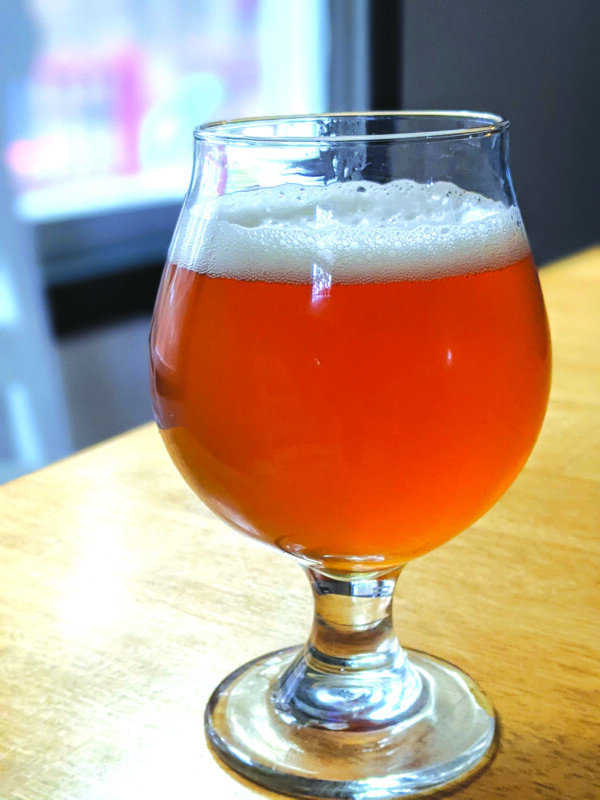
The West Coast IPA features prominent flavors of citrus and pine and a lot of bitterness. So you still get citrus flavors as you probably would with a New England-style IPA, but you would not consider calling these beers juicy. These beers bite and the presence of pine notes sets this style apart even more.
You’ll see West Coast IPAs described with words like “dank” and “resin.” Now, look, clearly no one placed a call to a marketing agency when they came up with those words, but it’s too late now. I don’t know that there is an explicit definition of the term “dank,” but I take it to mean the brew is sort of funky — in a good way.
For a lot of IPA drinkers, it’s that hop bitterness from the West Coast or American-style IPA that drew them into this style in the first place. It’s also what turns off others from truly giving the style a chance.
Looking at the pour, the West Coast style tends to lack the thick, golden haze of a New England-style IPA. West Coast IPAs can range from nearly clear to a rich amber color.
Now, brewers are constantly experimenting and the guidelines for specific styles are getting broader and broader by the minute, so keep that in mind.
But, to me, the West Coast IPA is just an exciting brew that smacks you around with a ton of bold flavors. Sometimes you do need to get smacked around a little bit.
OK, that’s enough, let’s get to the beer.
New England Gangsta by Earth Eagle Brewings (Portsmouth)
Yes, you can make West Coast IPA on the East Coast. This has a nice floral bouquet on the nose with prominent hop character — fresh, bright and not overly bitter.
Union Jack by Firestone Walker Brewing Co. (Paso Robles, Calif.)
“Big and loud,” as the brewery describes it, is right on. This is super hoppy and flavorful. The hops hit you right in the face from a variety of angles — so be ready.
Stone IPA by Stone Brewing (Escondido, Calif.)
Another iconic West Coast IPA, this hits you with a ton of tropical flavor and pine.
Pitch A Tent by Hobbs Brewing Co. (Ossipee)
This double IPA is well-balanced, featuring tropical notes and plenty of citrus and just enough bite. The pour is nearly crystal clear. At 8 percent ABV, be careful.
What’s in My Fridge Juice Lord by Lord Hobo Brewing Co. (Woburn, Mass.) This is super-juicy and full of big fruit flavor as you’d expect, but it’s also bitter, maybe more bitter than I expected. It took me a second to get used to that, I think just because I really wasn’t expecting it, but after a few sizable sips, I was all in. Yet another Lord Hobo brew you should track down and enjoy. Cheers!
Featured photo: West Coast IPA. Photo by Jeff Mucciarone.
What’s it like to operate a new restaurant during a pandemic? Despite myriad challenges, local chefs, restaurateurs and cafe owners have weathered the ongoing restrictions in the industry and found success along the way. Here’s a look at some of their stories.
Merrimack’s Big Kahunas Cafe & Grill, which also offers barbecue catering options with an island-style flair, has been established for just under 10 years. According to co-owner and chef Jum-Pa Spooner, it was a customer who first told him and his wife, Amanda Persijn-Spooner, about the newly vacant kitchen in an adjoining space of Shooter’s Outpost in Hooksett.
“We were playing around with the idea of a second location … [and] we already had the smokehouse menu lined up from our catering,” Spooner said. “So we just kind of said ‘OK,’ and then Covid kind of happened simultaneously with it.”
Big Kahunas Smokehouse had originally been slated to open in April before pandemic restrictions pushed it back to June. Spooner said having a built-in covered deck immediately allowed them to place tables and chairs outside for dining, as well as small live music acts.
“As soon as we got that first warm day, the tables and chairs were out,” he said. “We’re lucky because we have such a beautiful wrap-around deck with plenty of shade and easy accessibility.”
Takeout is the biggest part of the eatery’s business, offering a menu of fresh entrees with various sides and signature sauces to choose from.
“Most Americans think of Texas or Louisiana when they think of barbecue … but they don’t tend to think about the other side of the continent,” Spooner said of eatery’s concept. “This is just something just a little bit different from what people might be familiar with.”
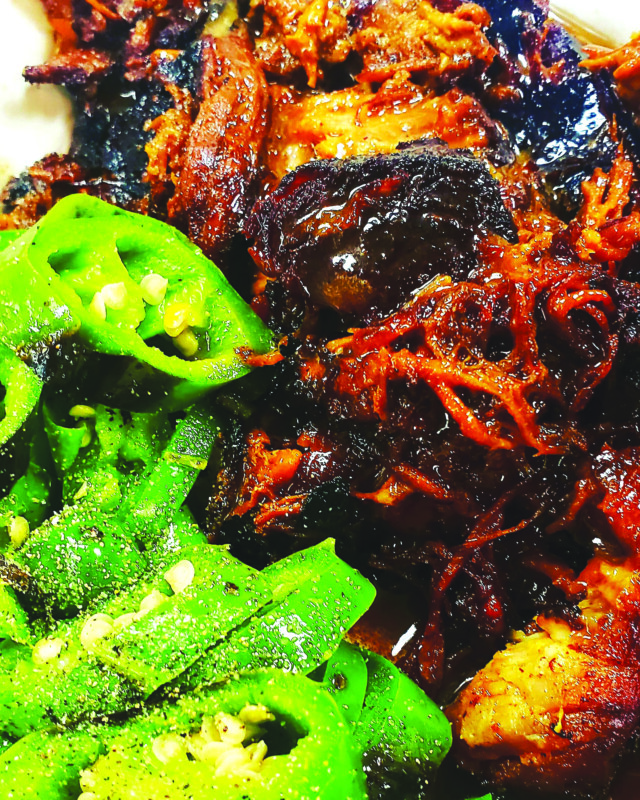
Lechon kawali, for instance, is a special kind of crispy pork belly that’s charred on the outside and tender and juicy on the inside. Caribbean pulled pork with hand-cut slaw, and smashers, or smoked potatoes cooked on a hot griddle with seasonings, are among its other staples.
BiTsize Coffee Bar
1461 Hooksett Road, Unit A1, Hooksett, 210-2089, bitsizecoffeebar.com
Opened: September 2020
Even though BiTsize Coffee Bar (pronounced “bite-size”) opened the Tuesday after Labor Day weekend in 2020 in Hooksett’s Granite Hill Shoppes plaza, its genesis dates all the way back a full year. The shop, which offers single-origin Costa Rican coffees, espresso drinks, teas and smoothies, as well as a food menu of fresh baked goods and pastries, is a partnership between Granite Hill Shoppes property owner George Kassas and Rabih Bou Chaaya, who has owned Maya Gourmet in Methuen, Mass., since 2014.
The two men met when Kassas, who had envisioned a coffee bar for the then-vacant space on the lower level of his Hooksett plaza for more than a year, visited Bou Chaaya’s Methuen shop in the summer of 2019 and invited him to take a look at the space. Delays in the formation of their business plan lasted several months before construction could even begin.
Now, newcomers consistently discover the shop almost every day.
“We’ve still been getting a lot of new customers that haven’t left the house yet, or they have been working from home since the pandemic started and are finding us now,” Bou Chaaya said.
Initially, BiTsize Coffee Bar’s baked goods, which include French-style butter croissants, cookies, muffins, scones, and Danishes, were prepared at Maya Gourmet the night before. Now they’re all made fresh onsite, many sourced overseas from a bakery in France. Maya Gourmet’s baklava is available for sale, in addition to other treats out of a bakery display that include French macarons and cake slices in several flavors. Newer items like breakfast sandwiches and pistachio and lavender lattes were recently added to the menu too.
Late last year, online ordering and curbside pickup were implemented. Starting on May 1, according to Bou Chaaya, the shop’s hours on Fridays, Saturdays and Sundays will extend from 4:30 to 6:30 p.m., with outdoor patio furniture seating available on the deck.
bluAqua Restrobar
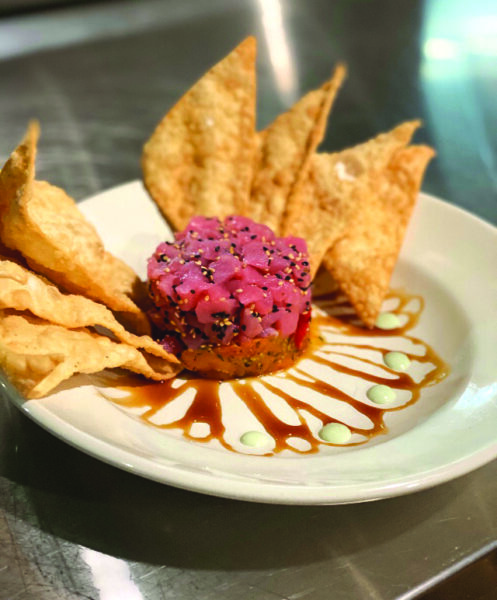
Tuna tartare. Photo courtesy of bluAqua Restrobar.
930 Elm St., Manchester, 836-3970,
bluaquarestrobar.com
Opened: January 2020
Scott Forrester estimates he was open for roughly 30 days before his Southern-inspired Manchester eatery began feeling the pandemic’s effects. For much of the initial two-month shutdown from mid-March to late May, bluAqua Restrobar wasn’t even open for takeout.
“It was a tough decision to make … [but] I really didn’t want the first impressions of our place to be coming from food from some takeout container,” Forrester said. “Also being downtown, it’s just not an environment that’s set up for quick and easy takeout.”
As soon as bluAqua was able to reopen outdoors, Forrester and his staff created a makeshift patio space out on the sidewalk. Despite its success throughout the summer, Forrester said he’s still waiting on some patio furniture and heating lamps that he ordered last year to arrive.
The menu changes seasonally but has included po’ boy sandwiches, gumbo, shrimp and grits, jambalaya, and other Southern-style foods. Due to a greater lack of walking traffic downtown, Forrester said keeping bluAqua open for lunch has not been viable.
“Every time you think you’ve overcome an obstacle, there’s another one behind it,” he said. “There have definitely been times when business is so inconsistent that I just can’t keep some menu items on hand. … We are seeing an uptick in business for dinner, though. This past March was our best month of the year, so that was refreshing.”
Cornicello
11 Water St., Exeter, 580-4604,
ilcornicello.com
Opened: March 2020
Chef-owner Tim O’Brien was set to open the Italian scratch-kitchen Cornicello the very weekend after Gov. Chris Sununu’s emergency order limiting New Hampshire eateries to takeout only.
“I had people hired, trained and ready to go, and I had to let them go and drop my staff down to zero,” said O’Brien, a former high school English teacher who also owns Enoteca Athena in Brunswick, Maine. “They never technically worked a shift.”
Instead, Cornicello initially launched as a once-a-week takeout-only model, usually on Sunday afternoons. O’Brien would create a limited menu of fresh pastas, seafood and other items each week, inspired either from his family’s recipes or from his travels throughout the many regions of Italy. For several months until he was able to open for indoor dining that June, he would drive down from his restaurant in Maine on a Saturday night or early Sunday morning and prepare Cornicello’s food and wine orders for that week.
“I needed to open up to try to get my name out there to some extent,” he said. “That was incredibly difficult, to try to build a reputation in town while only being able to do takeout.”
When restaurants were able to welcome customers back indoors in June, Cornicello did so with entirely new staff members from those O’Brien had previously hired in March. But it would be several more months to follow before he felt that Cornicello had really hit its stride.
“By around October was kind of when we hit that turning point, because we finally started to get an established group of people that I would say have been regulars,” he said. “Before then, there were many days and weeks when I was just ready to throw in the towel.”
Cornicello is open Wednesday through Saturday for dining in, but even now O’Brien sometimes has to consider switching to takeout-only due to a lack of staff availability. Otherwise, he said, takeout has become a minimal part of his business while he now puts more focus on dining in.
“It can be difficult, because we’re spread out and it’s already such a small space that we’re in, but we do what has to be done,” he said.
Recently, O’Brien has been in negotiations with his landlord to use the empty lot next door to Cornicello as a patio. He has also proposed adding an onsite oyster bar to the town.
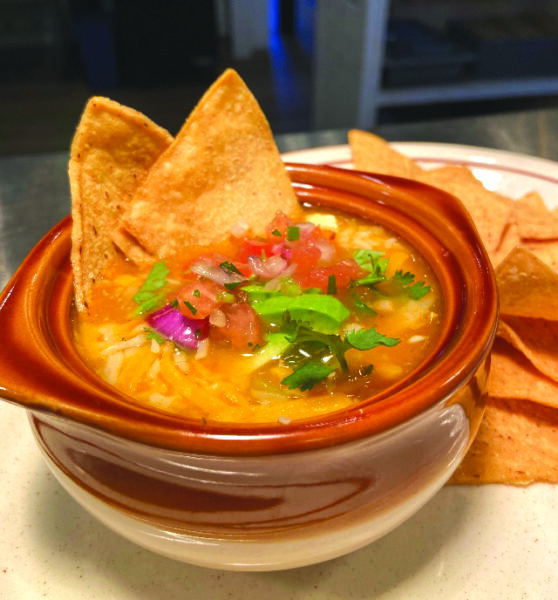
Chicken tortilla soup. Photo courtesy of Diz’s Cafe.
Diz’s Cafe
860 Elm St., Manchester, 606-2532,
dizscafe.com
Opened: May 2020
Named after owner and longtime chef Gary “Diz” Window of Manchester, Diz’s Cafe was about three weeks away from opening when the statewide stay-at-home order was first issued.
“We had signed the lease in January, and we were in the midst of trying to hire when everything started shutting down,” general operations manager Billy Martin said. “That delayed us getting our last couple of permits and inspections that we needed to open.”
More than two months later, Diz’s Cafe finally got the green light to open just after Memorial Day weekend. But with still a few weeks left to go before New Hampshire restaurants became allowed to welcome patrons back inside for dining, Martin said a collective decision was made to serve takeout orders directly out onto the street through the eatery’s front windows.
“It almost felt like we were operating like Cremeland [Drive-In],” he said of those first few weeks. “The second week we were open, we got clearance to put tables outside, so it was kind of like a takeout picnic-area model for a week or so. Then indoor dining resumed on June 15.”
Takeout still represents a significant percentage of Diz’s Cafe’s overall sales, Martin said, especially earlier in the week. The eatery is known for its scratch-made comfort foods and home-cooked meals, including its appetizers, burgers and sandwiches, but also its customizable “build-your-own” menu of at least one protein and up to three fresh sides.
“We’ve seen incredible growth, which has been encouraging,” he said. “We’ve definitely seen more people lately who have been more comfortable with dining in, as more people go back to work and there’s more activity downtown.”
As the weather continues to turn warmer and Diz’s closes in on a full year being open, the eatery is expected to add more tables and chairs out on the sidewalk. Martin said monthly specials will continue too, including possibly some Cinco de Mayo-inspired items in May.
School Street Cafe
1007 School St., Dunbarton, 774-2233, schoolstreetcafe.com
Opened: August 2020
Lindsey Andrews and Carrie Hobi had worked together at MG’s Farmhouse Cafe in Dunbarton Center until its permanent closure in the spring of last year. The two cousins, who had talked while growing up about one day opening their own bakery and coffee shop, were later offered the space to rebrand and remodel that summer as the School Street Cafe. Since opening in August, the cafe has become known for its build-your-own breakfast sandwiches, fresh baked pastries and yogurt parfaits, as well as coffee sourced from Hometown Coffee Roasters of Manchester and several flavors of ice cream from Blake’s.
“We’ve recently introduced online ordering, which has been a huge success,” Andrews said. “We also have several picnic tables outside now … to help control the flow of traffic inside, or if you just want to sit out and enjoy the sunshine.”
According to Andrews, the School Street Cafe is also currently developing a catering menu that would include package options such as breakfast pastries and boxed lunches. Similar to last year, evening hours for the cafe will likely be extended in the near future for ice cream.
Second Brook Bar & Grill
1100 Hooksett Road, Unit 111, Hooksett, 935-7456, secondbrook.com
Opened: September 2020
It was Christmas Day 2019 when Jeanne Foote noticed the vacant space that had been DC’s Tavern while driving through Hooksett. The Manchester native had spent more than a decade working at The Puritan Backroom and Billy’s Sports Bar, later owning Bella’s Casual Dining in Durham before its closure a few months prior. A lease was signed for the Hooksett storefront in January 2020, with the goal to open what would become Second Brook Bar & Grill in early May.
Even though the pandemic delayed the new casual comfort and homestyle eatery for four months before it finally opened in September, Foote said it actually proved to be beneficial.
“The restaurant needed a lot of work,” she said, “so Covid hitting really kind of gave us more time to think about what we wanted it to be, instead of just trying to throw something together.”
TJ’s Tavern was the eatery’s original name before it was renamed Second Brook, after the nearby brook by the railroad tracks that Foote frequented as a hangout spot while in high school.
Just within the last month, Foote said, takeout orders at Second Brook have been “off the charts,” especially on weekend evenings, while new customers also continue to dine in for the first time.
“We just recently hit our six-month mark, and I feel like the word is still getting out that we’re even here, with more people getting vaccinated and not being as afraid to go out,” she said.
Menu items, which include everything from appetizers, soups and salads, to burgers, sandwiches and plated entrees, also continue to evolve with new ideas, like mini pretzel bites with homemade beer cheese sauce, and prime rib French dip with homemade chips.
Stones Social
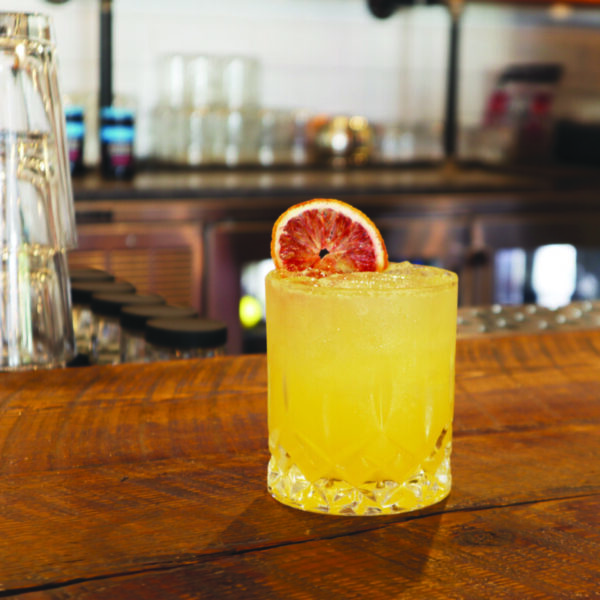
The Marge and Rita cocktail. Photo courtesy of Stones Social.
449 Amherst St., Nashua, 943-7445,
stonessocial.com
Opened: June 2020
Inspired by the supper club, or the concept of serving creative comfort foods and cocktails in a small and intimate setting, Stones Social had been in the works well before the start of the pandemic. The eatery is the latest venture of Stones Hospitality Group, which also owns two restaurants in northern Massachusetts — Cobblestones of Lowell, which has been serving elevated tavern fare since 1994, and Moonstones, an eatery featuring global small plates that opened in Chelmsford in the late 2000s.
According to beverage director Aislyn Plath, the family-run group took over occupancy of the space that would become Stones Socal in late 2019. Following a remodeling period, Stones Social would have been ready to open within a week of everything shutting down in mid-March.
“We knew that things were going south, but there was nothing we could do,” Plath said. “We decided to put [Stones Social] on the back burner and put all our energy into Cobblestones and Moonstones, because we knew we couldn’t let those suffer at the behest of a new space. … We also didn’t want people being introduced to us by eating something from [a takeout] box.”
Stones Social would eventually open in late June once indoor restaurant dining restrictions in New Hampshire were loosened. The menu, which includes lighter bar snacks like Buffalo tenders and Chinese short ribs, as well as burgers, wood-fired skillets, poke bowls and a wide array of house cocktails, has remained consistent throughout. Plath said a few promotions have been added too, like “Throwback Thursday” wood-fired pizza specials, and “Social Sunday” specials featuring smoked meats, brunch options and family-style meals.
Business was slow to start at Stones Social, but Plath said she has recently been seeing an influx of new people coming through the door. Since June, the eatery has also amassed a respectable following of regulars.
“They’ve been our biggest champions during this time,” she said. “It feels like we’ve been a little family over the last year.”
Trio’s Cafe & Cantina
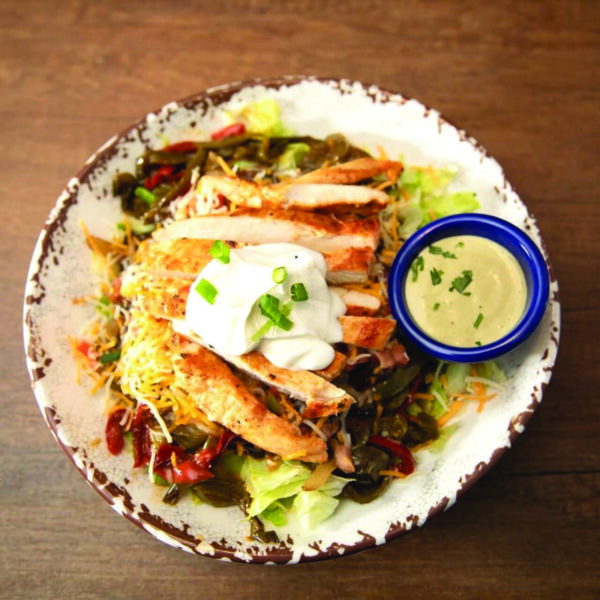
Chicken fajita salad. Photo courtesy of Trio’s Cafe & Cantina.
264 N. Broadway, Unit 105, Salem, 458-6164, trioscc.com
Opened: January 2021
Salem native Julie Manzer opened this eatery, which features breakfast and lunch items with a unique Southwestern flair, in the Breckenridge Plaza in mid-January of this year. Trio’s gets its name from the owners — a “trio” of generations of the same family that includes Manzer, her mother, Janet, and father, Paul, and her two daughters, Tanna and Keira Marshall.
“Takeout used to be crazy, but I think more people have been getting more comfortable with coming in,” Manzer said. “We also just recently put out tables on the patio.”
The birria tacos, she said, have been among the more recent popular menu items at Trio’s.
“It’s a stewed beef that we cook overnight, so it’s super tender and falls apart like a pot roast would,” she said. “We serve corn tortillas with it and an adobo sauce.”
The menu also features staples like chicken or steak fajita salads, Mexican street corn tenders, and tacos and quesadillas with a variety of fillings, plus a selection of signature margaritas and a Happy Hour on Tuesdays, Wednesdays and Thursdays, from 2 to 5 p.m.
White Birch Eatery
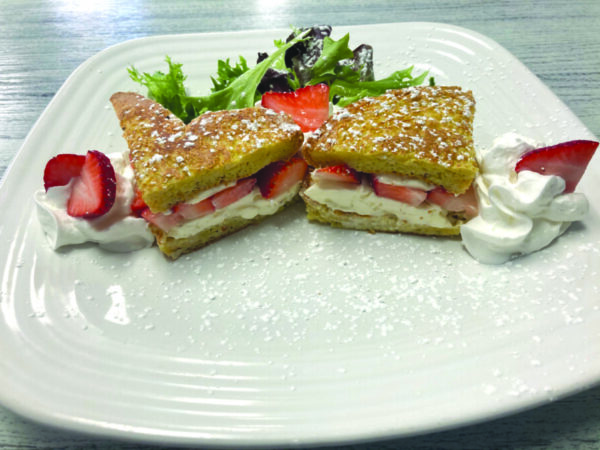
Strawberry Cheesecake French toast. Photo courtesy of White Birch Eatery.
Cyndee Williams of Merrimack opened White Birch Eatery, her first restaurant as owner, on March 9, 2020. Just seven days later came Gov. Sununu’s emergency takeout-only mandate.
“Everyone was just starting to hear about the pandemic and what was going on,” Williams said of that first week being open. “[I was] super-nervous just as far as trying to figure out what was happening in the kitchen, like do I have enough spatulas and that kind of thing … and now I have to wonder, ‘Will I be able to stay open’? It was definitely a lot of long days and longer nights, where you ask yourself, ‘Is this going to work?’”
Williams said she and her staff attempted to offer takeout for a couple of days, but to no avail. After just one week of being open, White Birch Eatery ended up closing for nearly four months.
“The company that owned this space before us, Chiggy’s Place, did not do takeout, so we didn’t even have that takeout clientele, plus our restaurant was a completely different feel,” Williams said. “So first, it was just trying to get people to come in and try us … and then on top of that, getting them to wear a mask, not sit next to people and all that kind of stuff. It was difficult.”
White Birch Eatery finally reopened on July 6 and has been going strong ever since, thanks in part to Williams’ receiving aid from the state’s Main Street Relief Fund. The spot is now known for its breakfast and lunch items made with fresh, local ingredients, from grain bowls and sandwiches to toasts, omelets, breakfast plates and espresso drinks, plus its seasonal specials and an entire menu of options appealing to vegan and vegetarian diners.
Even though it didn’t take off right away, Williams said takeout is now integral to her business.
“We went from having no takeout to some days doing almost half of our sales in takeout, which is not what I had in mind at all,” she said. “We have come into one of those sticky situations now where on the weekends we will have so much takeout that we have to stop it.”
Williams, who has more than a decade of catering experience in several restaurants and hotels, said White Birch Eatery will also soon focus more on catering, for small gatherings like corporate events and bridal and baby showers out of an adjoining 40-seat banquet facility.
Zachary’s Chop House
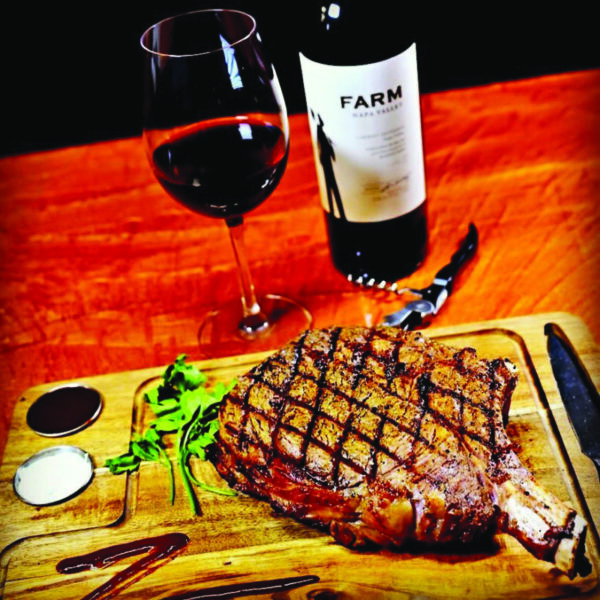
Cwboy Rib-eye. Photo courtesy of Zachary’s Chop House.
Zach Woodard had owned The Lobster Tail in Windham for the last six years and had worked there as a chef for about a decade prior to then when he decided he was ready for a change. The new concept he came up with was simple: to bring an upscale steakhouse experience you’re more likely to get in a bigger city to rural New Hampshire.
Zachary’s Chop House opened in late July following a quick two-month turnaround that included a complete remodeling of the space. With the help of Woodard’s friend, Godsmack singer and frontman Sully Erna, he was able to quickly secure connections with contractors to redo everything in the restaurant from its front windows to its bathrooms and HVAC systems.
“It’s more casual fine dining, so we don’t have tablecloths or anything, but we do have a very nice upscale menu where we cook all sorts of steaks, and a little bit of seafood too,” Woodard said. “We do brunch on Sundays, [and] then for lunch we do burgers, salads, that sort of stuff.”
The eatery does limited takeout during the day, but Woodard will usually stop those services around 4 p.m. In addition to weekly indoor dining, Zachary’s Chop House has quickly become a favorite spot for its weekend brunches on holidays such as Easter Sunday, when there are items that include carving stations, omelet stations and fresh fruit displays.
“Here, it’s really about coming in and having that experience,” Woodard said. “We feel that the sky’s the limit for us once the restrictions stop and more of the vaccines are being rolled out.”
Zizza Authentic Pizzeria
653 Elm St., Milford, 249-5767,
zizzapizza.com
Opened: January 2021
Michael Zielie of Wilton never could have predicted the volume of response that Zizza Authentic Pizzeria would get during its opening night in Milford on Jan. 15.
“We opened at 11 that morning and even by 3 p.m. we were busier than I thought we were going to be,” Zielie said. “Then the orders started pouring in after that. Between 3 and 4:30 p.m., we received probably about 150 orders alone.”
Beginning at around 5 p.m. that evening and lasting for several hours, Zizza’s 19-space parking lot remained full, with nearly a dozen additional cars parked on the side of Route 101 and police cruisers directing traffic. At one point, Zielie said, he counted around 90 people in the lobby and parking lot all waiting for their orders, a majority of which had been placed online through the website or via a mobile app the company developed.
“As the night went on, we decided instead to just start calling out names asking people what they ordered, and we just made those pizzas to order,” he said.
The next day, the decision was made to temporarily shut down the ordering app and instead implement a system in which customers choose their own pickup times in a five-minute window. As of last month, Zielie said, ordering through the mobile app and website is now back online, with specific times you can choose to pick up your order.
Zizza Authentic Pizzeria opened following the success of Friday and Saturday Wood-fired Pizza Nights at the nearby Hilltop Cafe in Wilton, which the Zielie family also owns. In addition to handcrafted pizzas, the menu features salads, made-to-order milkshakes, homemade Italian sodas, and “ZZandwiches,” or sandwiches made with folded pizza dough.
Hand-filled cannolis, each made to order with sauces like lemon curd, caramel and chocolate, and toppings like chocolate chips, pistachios and walnuts, were also recently added to the menu.
“Hopefully by the summertime, we’re going to introduce other Italian pastries and desserts, like gelato, cookies and ricotta pie,” Zielie said.
Feautred photo: Smoked Caribbean pulled pork. Photo courtesy of Big Kahunas Smokehouse.