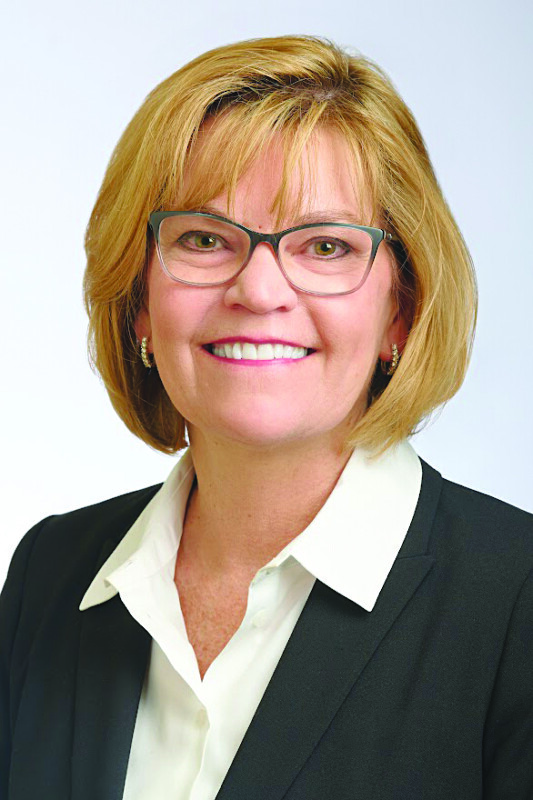
Meet Susan Santana, the new vice president of patient care services and chief nursing officer at Southern New Hampshire Medical Center in Nashua.
What is your background in health care?
I came from Lowell General Hospital, and I’ve been a nurse for over 30 years in various leadership positions. I have extensive experience driving and improving nursing practice. … I have a lot of experience in the Magnet designation program and the American Nurses Credentialing Center’s program, which is a designation for excellence in patient care, and that has really been the footprint that has driven much of what I’ve done as a leader in nursing. … I would say that, as a leader, I’m compassionate, visible, accessible and approachable. I’m focused on the work environment for nurses and also, more broadly, for all health care workers. My No. 1 professional passion is to create an environment that empowers the voices of the nurses so that they can provide quality care for patients, and to create a culture of teamwork and shared decision-making.
What does your job entail?
I oversee all of the nurses and their practice at Southern New Hampshire Health. I’m visible to the frontline nursing department, and I work collaboratively with the non-clinical departments, as well, with the goal of improving care for our patients [at SNHMC], and patients within our community. I’m involved in driving strategy that makes for a very strong Patient Care Services Division and positioning us to be the best place to work and the best place to practice medicine.
What are some of the biggest challenges in the nursing field right now?
I would say that the biggest challenges are staffing and the impact that the pandemic has had on the health care environment as a whole. There is a shortage of nurses. Many people are deciding to leave health care due to the effects of the pandemic. We’re working very closely on recruitment, retention and growing our workforce. Workforce development and professional development of our employees is of great importance, so we’re making sure that we’re partnering with human resources and posting those positions. … Also, because there aren’t enough nurses, the nurses are often working overtime, and they do get tired, so it’s very important that we support those nurses who are working tirelessly to care for our patients.
What do you hope to accomplish in your role?
To bring pride and excellence to the nursing division, to continue the good work that’s been started by this organization and to create a work environment that is a magnet for people to want to work in. … My vision is to have an engaged workforce that simply enjoys and loves the work that they do, and a workforce that is driven by the outcomes of their patients and in being involved in making a difference by improving the care of the patients.
What do you find rewarding about your work?
Helping to grow our young nurses and to mentor them as young leaders. Seeing that growth is very rewarding, and you don’t see it everywhere. The culture here at [SNHMC] is very special, and the teamwork and commitment of its employees is really second to none, so being in an environment like that is certainly rewarding, as well.
Why should someone consider a career in nursing?
I would say that nursing is one of the most rewarding fields that you can go into. There are endless opportunities as a nurse in this health care environment. There’s nursing inside of health care organizations, nursing in the community, the business side of nursing — there’s something for everyone in the nursing profession.
Information from the New Hampshire Department of Health and Human Services.
Covid-19 news
State health officials reported just 93 active hospitalizations due to Covid-19 on Feb. 23 — that’s down from more than 400 back in early January and also the first time since the early fall that it has dipped below 100. “The omicron surge is decreasing, both in New Hampshire and nationally,” state epidemiologist Dr. Benjamin Chan said during a press conference that day. “As population immunity has increased, there’s also been a notable decline … in the severity of disease from Covid-19, and largely due to the availability of vaccines.” In response to the continued downward trend of cases and hospitalizations, Chan announced new updates to the state’s mask recommendations. “At this point … we are no longer recommending universal face masks for people in indoor, public locations, unless a person is required to wear [one] for their specific situation,” he said. Chan noted that this change does not apply to certain situations where face masks are still required under federal guidance or regulations, such as while someone is on board public transportation or when inside of a health care facility.
As of Feb. 25 there were 2,130 active infections and 92 hospitalizations. The state averaged 290 new cases per day over the most recent seven-day period, a decrease of 27 percent compared to the week before. All 10 counties remain at substantial community transmission levels.
Governor veto
Last week, Gov. Chris Sununu vetoed HB 319, which would have required students in the university and community college systems of New Hampshire to pass the United States Citizenship and Immigration Services civics naturalization test. In his veto letter, Sununu said that last year he passed SB 320, which implements a similar civics competency exam for high school students that goes into effect in 2023 “and will help continue the Granite State tradition of a citizenry actively engaged in self-government. As such, House Bill 319 would serve to address the lack of civics education only in out-of-state public post-secondary students. House Bill 319 would also represent the first time the legislature has imposed a universal graduation requirement for students at our public colleges and universities. I am concerned that this would create a precedent for future legislatures to mandate extreme requirements.”
State settlements
New Hampshire is expected to receive its full share of settlement funds — approximately $115 million paid over 18 years — following the final approval of the $21 billion opioid agreement with the nation’s three major pharmaceutical distributors: Cardinal Health, Inc., McKesson Corporation., and AmerisourceBergen Corporation. According to a press release from the New Hampshire Attorney General’s Office, the defendants will start releasing funds to a national administrator on April 2, and states will start getting funds in the second quarter of 2022. Under state law, all of the funds will be used for opioid abatement purposes to support treatment, recovery, harm reduction, and other strategies to address the opioid epidemic, with 85 percent of those funds going directly into a dedicated opioid abatement trust fund, the release said.
The State has also entered into a settlement agreement with the Monsanto Company, Solutia Inc., and Pharmacia regarding polychlorinated bi-phenyl contamination of state waters and other state property. According to a press release, the old Monsanto Co. marketed and sold numerous products containing PCBs knowing that PCBs caused harm to human health and the environment from 1929 to at least 1977. This caused 104 state water bodies to be impaired with PCBs and has required the state to issue numerous fish advisories. Monsanto has agreed to pay $25,000,000 to resolve this case, and the State will get $20,000,000 of that after paying attorneys’ fees, the release said.
Lottery app
The New Hampshire Lottery has launched a new mobile app, allowing players to check their tickets, find retail locations, stay up to date on new promotions and customize the app to their preferences to show their favorite games and winning numbers. According to a press release, the app is available on iOS and Android devices, giving users an easy way to stay up to date with the latest news from the New Hampshire Lottery, including winning numbers, jackpot amounts, current scratch ticket games and results. A Ticket Checker lets players see if they are winners by scanning the barcode from the bottom front of scratch tickets and Powerball, Mega Millions, Lucky For Life, Tri-State Gimme 5, KENO 603 and other games, the release said. Players can also purchase Fast Play tickets from any Lottery vending machine by scanning the QR code.
No Russian spirits
On Feb. 26, Gov. Chris Sununu issued Executive Order 2022-2, an order instructing all of the state’s Liquor & Wine Outlets to immediately remove all Russian-made and Russian-branded spirits from store shelves until further notice. The order is one of several similar measures taken by state governors as a show of solidarity with Ukraine against Russia’s invasion of the country just days earlier. “New Hampshire stands with the people of Ukraine in their fight for freedom,” Sununu said in a statement on social media. Brands include Stolichnaya, Russian Standard and Hammer and Sickle — according to a statement from the New Hampshire Liquor Commission, sales have been suspended at each store per the governor’s order, and updates on each product’s availability will be provided “as the situation evolves.” Visit liquorandwineoutlets.com.
Dining with dogs
Sununu also signed SB 17, an act relative to permitting dogs in outdoor dining areas of restaurants, last week. The bill will go into effect on April 25, according to a report from NHPR. It allows restaurants to permit dogs in outdoor dining areas alongside their owners if the restaurants follow certain guidelines, like putting up a sign so patrons know where dogs are allowed, taking food safety measures, ensuring dogs are under their owners’ control, and not allowing restaurant staff to play with or pet the dogs.
Travel board
State Division of Travel and Tourism director Lori Harnois has been elected to serve on the U.S. Travel Association’s Board of Directors. According to a press release, Harnois will serve a two-year term beginning this month. “It is an honor to be elected to serve in this capacity,” Harnois said in a statement. “I’m looking forward to being more involved in national issues … and elevating New Hampshire’s presence on a national level.” Based in Washington, D.C., the U.S. Travel Association represents all components of the travel industry and produces research in the form of travel data, analysis and insights to keep the industry and lawmakers informed. According to the release, the newly elected directors will convene for the first time in person at a meeting in Washington, D.C., in April.
The Raymond Coalition For Youth is partnering with Unite Us to expand Unite Us in New Hampshire, a coordinated care network that aims to address the unmet needs of people and families throughout the state. According to a press release, Unite Us helps connect people to mental and behavioral health services, youth and family resources, and financial assistance. By partnering with Unite Us, the Raymond Coalition For Youth will offer a central point of contact where health care providers, social service organizations and individuals can access and refer people to needed services while monitoring progress.
The public is invited to the Manchester Land Use Code Code-a-Palooza on Monday, March 7, and Tuesday, March 8, at the Palace Theatre’s Spotlight Room. Put on by the City of Manchester and Town Planning and Urban Design Collaborative, the event is a chance for residents to talk with community members, city staff and planners to share ideas, hopes and concerns about the future of the Queen City’s sustainability, character, housing, and development, according to a press release. A schedule of meetings can be found at manchesternh.gov/landusecode.
Rev. Andrew Armstrong, Senior Minister of The First Church Nashua, plans to travel approximately 2,000 miles from Nashua, Iowa, to Nashua, New Hampshire, to raise awareness and funds for repairs to the 129-year old church bell tower. According to the press release, the church has started a GoFundMe page to support Armstrong’s ride and the restoration of the historic New England landmark.
Head to the Currier Museum of Art (150 Ash St in Manchester; currier.org) today for Art After Work, when the museum admission is free from 5 to 8 p.m. and the Winter Garden offers drink specials and a full menu for purchase as well as live music — this week’s performer is Paul Nelson. Tours include a 5:30 p.m. tour of the exhibit “As Precious As Gold: Carpets from the Islamic World,” which is on display through Sunday, Feb. 27. The Currier is open Thursdays from 10 a.m. to 8 p.m. and Friday through Sunday from 10 a.m. to 5 p.m. Admission costs $15 for adults, $13 for seniors, $10 for students and $5 for ages 17 to 13; kids under 13 get in for free.
Thursday, Feb. 24
Head to the Rex Theatre (23 Amherst St. In Manchester; palacetheatre.org) for a screening of 1954’s Seven Brides for Seven Brothers today at 10 a.m. as part of the Senior Movie Mornings series. Tickets cost $10.
Friday, Feb. 24
The final weekend of the LaBelle Lights, a walk-through light show at LaBelle Winery in Derry, starts tonight. LaBelle Lights is open from 5 to 8 p.m. tonight through Saturday, Feb. 26. See labellewinery.com for tickets (which can also be purchased on site); tickets cost $15 for adults (plus fees, for all paid tickets), $10 for 65+, $8 for ages 4 to 12 and free for kids 3 and under, according to the website.
Friday, Feb. 25
Millyard Brewery (25 E. Otterson St. in Nashua; millyardbrewery.com) hosts an exploration of the pairing of beer and chocolate featuring Loon Chocolate tonight at 6:30 p.m. Tickets cost $12 and are available online. Sample four beers with four specially paired chocolates.
Head back to Millyard Brewery for the pairing of Saturday night and laughs: Comedian Jimmy Cash will headline a comedy show starting at 7 p.m. on Saturday, Feb. 26.
Friday, Feb 25
Catch the Soggy Po Boys tonight at 8 p.m. at the Bank of NH Stage (16 S. Main St. in Concord; ccanh.com). Tickets cost $18 to $21 (plus fees). See the Cap Center website for a video that shows off their New Orleans-inspired sound.
Saturday, Feb. 26
Relax with Klipper (Austin Klipp’s piano and vocals) at Liquid Therapy (14 Court St. in Nashua; liquidtherapynh.com) this afternoon at 2 p.m. Find more live music at area bars, breweries, restaurants and other locales in the Music This Week listing, which starts this week on page 42.
Saturday, Feb. 26
“Hostess with the mostest?” Monique Toosoon will preside over the monthly “Life Is a Drag” show at Chunky’s Cinema pub (707 Huse Road in Manchester; chunkys.com) at 9 p.m. Tickets to this 21+ show cost $25; doors open at 8 p.m.
Wednesday, March 2
Get some free doo-wop at the Concord City Auditorium (2 Prince St. in Concord) tonight at 7:30 p.m. when The Rockin’ Daddios perform. See walkerlecture.org or call 333-0035.
Prepare to beam up: March 3
Head to the Capitol Center for the Arts (Chubb Theatre, 44 S. Main St. in Concord; ccanh.com) on Thursday, March 3, at 7 p.m. for a screening of 1982’s Star Trek II: Wrath of Khan followed by a live presentation featuring Capt. James T. Kirk himself, William Shatner. The actor will tell stories about his career and take questions from the audience, the website said. Tickets cost $39.75 to $99.75.
Featured photo. Tent featured in the “As Precious As Gold” exhibit.
Benny, Casey, Tucker — those are the options for the name of the New Hampshire Fisher Cats’ new bat dog in-training, and fans are being asked to vote for their favorite. According to a press release, the golden retriever puppy won’t be working as the bat dog this year, but he will be making appearances at Delta Dental Stadium throughout the season, including his official debut at the May 13 game. The to-be-named puppy is a rescue who came from New Hampshire-based volunteer organization Hero Pups, which provides support dogs to veterans and first responders in New England. “We’re proud to continue the legacy of Ollie the Bat Dog, who provided us so many wonderful memories over the years,” Fisher Cats President Mike Ramshaw said in the release.
Score: +1
Comment:The winning name of the Fisher Cats’ new bat dog in training will be announced in the coming weeks. Vote at nhfishercats.com.
Help wanted
New Hampshire employers are having a hard time finding people to work for them: According to WalletHub’s 2022 States Where Employers Are Struggling the Most in Hiring report, the Granite State ranks 4th in the nation. The report said that overall the country’s labor force participation rate is experiencing the slowest recovery of any recession since World War II. In New Hampshire the job openings rate during the latest month was 8.50 percent; in the past 12 months it was 7.28 percent. Alaska topped the list, followed by Vermont and Wyoming, the report said.
Score: -2
Comment:This is tough on businesses, and customers too — understaffing is making for longer lines at the grocery store, longer waits at the drive-thru and more frustrating customer service experiences.
Professional education opportunities
Through its micro-credential program, UNH is now offering more than 250 micro-credential courses and 26 certificate programs, the New Hampshire Department of Business and Economic Affairs announced last week. Classes and programs focus on providing work-ready skills and are available in areas ranging from computer science and cryptocurrency to business management and law, according to a press release. Classes are taught in person and online; they start as low as $50 and are open to anyone, not just UNH students. Several similar programs are available at other schools in the state’s Community College System, including at NHTI, where all micro-credentials lead to an NHTI certificate or a degree program, the release said.
Score: +1
Comment:“Our state’s micro-credential programs give individuals a cost-efficient option to higher education that allows them to obtain and showcase ‘work ready’ skills,” BEA Commissioner Taylor Caswell said in the release. “It’s an interesting turning point in our higher-education system that will shape the future of the state’s workforce as a whole, benefitting thousands of companies.”
QOL score: 60
Net change: 0
QOL this week: 60
What’s affecting your Quality of Life here in New Hampshire? Let us know at news@hippopress.com.
The Celtics went into the All-Star break within one infuriating JaysonTatum isolation play on a 10-game winning streak. With them having won 11 of their last 13 most will say that’s me seeing the glass as half empty.
But while I know that it got him a makeable 18-foot buzzer-beater in a 112-111 loss to 19-41 Detroit, I also know putting that Kobe wannabe shot/game in the top drawer had a big part in why they suddenly were/are playing so well. I could go into more detail, but suffice it to say I think it’s better for all when he aggressively takes it to the basket as he did during all but one play in the streak.
As for the streak, it’s nice, but I’m not gaga over it yet, as aside from the 50-point dismantling of Philly, six wins were against under-.500 teams, while Miami and Denver had half their top players out with injuries.
Still, there were clear signs of playing more effectively as a unified team, which is the best news as the second half starts in Brooklyn on Thursday night.
Here are a few other NBA stories making news at the break.
Speaking of Brooklyn, BillParcells once famously said, “You are what your record says you are.” So since their record is 4 and 10 in the 14 games the unvaxxed KyrieIrving has played I’m not sure why it’s such a big deal whether he plays or not.
Rodney Dangerfield You’re Waaaay Off Award: To me, for saying Phoenix would have a hangover season after going to the finals last summer. Wrong. At 48-10 they have the league’s best record and lead Golden State by 6 1/2 games out West. My bad.
I also didn’t see Memphis (41-19) and Cleveland (35-23) getting as good so quickly behind their young stars. JaMorant is already among the NBA’s 10 best players while DariusGarland and EvanMobley are going to be big-time players for the Cavs.
Incidentally, think New Orleans regrets taking the always injured ZionWilliamson over Morant in the 2019 draft?
Not sure what planet TracyMcGrady moved to after he retired. But hearing him say that GiannisAntetokounmpo would “struggle” in McGrady’s era is evidence it’s in a galaxy far, far away.
How about the L.A. Lakers rescinding the season tickets for life given by the late owner JerryBuss to Laker all-timer JerryWest? But that’s what a franchise now run by daughter Jeannie did to a guy who, as an iconic player, coach and GM, was instrumental in building it to be worth $2 billion or so today. Better yet, they didn’t even tell him. They did it with a text to his wife. Classy.
Actually, here’s a real example of class. Got to love JoelEmbiid paying the $20,000 fine of just-up-from-the-D-Leaguer JoseAlvarez after the two got double T’s for jawing at each other in a recent Sixers-Pelicans tilt. The picture of the 6-foot Alvarez standing chest to chest with the 7-foot Embiid is hilarious. The big fella reportedly said he did it because “there was nothing to it beyond just two guys jawing. He’s on a two-way contract, I make a lot more money and liked his spunk.” Not sure spunk-hating LouGrant would do it, but it was classy.
Stop me if you’ve heard this one before. After building ridiculous expectations on a mediocre for most franchises barely-make-the-playoff season, the ravenous New York media is now killing coach TomThibodeau because the Knicks haven’t lived up to the not in touch with reality expectations they set in the first place. Even though they’re the ones who hailed bust KembaWalker as a savior mainly because he played his high school ball in the Bronx. Ditto for ever inconsistent free agent EvanFournier. While it’s true the Knicks have struggled, who’s really to blame for the natives being restless, a team that’s at the level everyone outside New York thought they would be at, or a media horde dumb enough to pitch them far above what they actually were?
And remember, these are the same doofuses who proclaimed the now twice traded 7’3” KristapsPorzingis as an emerging superstar even though he did his best work 30 feet from the basket. Who turned out to be an injury-prone middling player with a one of a kind name.
Ben Simmons Saga Finally Ends: The short summary of the JamesHarden–BenSimmons blockbuster trade is that each team gave up a guy who quit on them for someone who could quit on them in the future.
But when the final results are in I expect Brooklyn to win this deal big for two reasons.
First, Nets GM SeanMarks got more by getting a much younger and signed for three more years headliner in Simmons, a solid three-ball shooter in SethCurry and two first-round picks for the unhappy Harden, whom they likely were going to lose as a free agent in four months.
Second, who remembers the fall-away jump shooting MichaelJordan in Washington? Or how about RussellWestbrook in L.A. now?
To keep Harden, Philly will have to give him a five-year deal worth north of $250 million. A contract that starts at 33 for a guy who clearly is much bigger than in Houston and has seen his scoring average drop from 34 per to 22 a night in two years. If the size is age, not just being out of shape, that will affect his killer first step, which in turn will make his killer step back easier to defend. All of which means they’ll eventually be paying $50 million to a guy who’s lost half his offensive arsenal.
Thus Philly had better win a title in the first two years or this could be a catastrophe, because like with Westbrook they’ll never be able to dump the contract at the end.
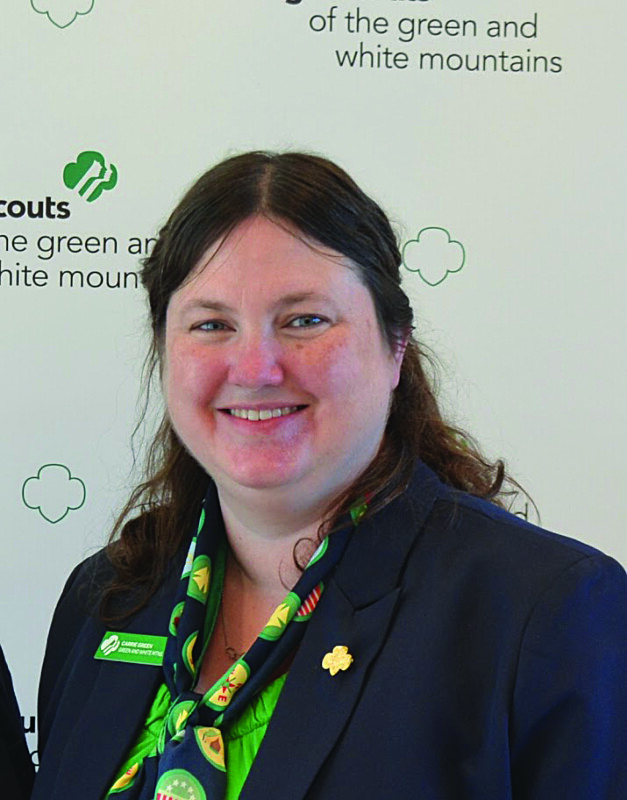
Carrie Green Loszewski, vice president of engagement for the Girl Scouts of the Green and White Mountains, talked about Girl Scout cookie season and how customers can buy cookies and support their local Girl Scouts.
What challenges are Girl Scouts facing with cookie-selling this year?
Like so many industries over the last two years, we’ve been hit in the Girl Scout cookie industry the past few months with shortages and delays. The bakers we contract with have experienced some staffing shortages and ingredient delays and, now, some transportation issues that have resulted in us not receiving the full order of cookies we placed. We were able to fill all the orders the girls took for the first part of the sale in January — that’s when they go door to door and ask their neighbors and friends and family [to buy cookies], and they collect orders on their order card or through our digital app. Those orders get placed in what we call the ‘initial order,’ and those were all delivered last weekend. Our ‘covered orders,’ which are a smaller portion of our sale and are the cases you see the girls selling outside Walmart and the grocery stores on the weekends — for those, we didn’t receive the full amount of different varieties of cookies we ordered.
What are the different ways people can buy cookies?
We have a cookie locator on our website where people can enter their zip code and see all the booths … happening within 20 or 30 miles. … The girls also have the ability [to sell through] our online platform called Digital Cookie. They set up their own electronic cookie store, upload a video, their goals and set all the parameters. Then, they can share that link with friends and family, who can purchase cookies using a credit card. If they’d like, they can select to still have their cookies [hand] delivered by the Girl Scout. … [People who don’t know a Girl Scout personally] can go to that cookie locator on the website and select a troop’s digital link … to purchase cookies online to be shipped to their house. The cookies often come within two to three days. … We also have DoorDash available in the Manchester area, so people who live in that vicinity can order their cookies through DoorDash.
How are troops keeping themselves and customers safe while selling in the community?
They have to follow all the safety protocols; they’re expected to wear masks and follow any requirements by the store [where they’re selling]. Some troops got really creative last year and this year with large chutes [to distribute] the cookies or used a Plexiglas display as part of their booths to make sure everyone stays safe.
Which cookies are available and which are in short supply?
Some booths won’t have all the varieties customers are used to seeing. The shortages are mainly with the Tagalongs, Trefoils and the new cookie the Adventurefuls. We’ve still got plenty of Thin Mints, which are the No. 1 selling cookie … and the Do-si-dos, Lemon-ups and S’mores should all be available at the booths. There are fewer cases of Samoas, but most booths should have some. … [For online orders,] we have some varieties [labeled unavailable] because … we aren’t sure what we’re going to be receiving for reorders, and we don’t want people to purchase them online and then not [receive what they ordered] … but we’re hoping we’ll be able to [make] more varieties [available] once we know what we’re going to be receiving for reorders, which will hopefully be in the next few weeks.
How can a customer support Girl Scouts if the cookies they want aren’t in stock?
We’re encouraging customers to try a different variety that maybe they haven’t tried before, or to stock up on [other cookies that are in stock]. … Customers can also choose to donate a box if they don’t see a variety they want to eat. [Donated boxes] will be given by the troop to local fire departments or hospitals or military veterans.
What are the proceeds from cookie sales used for?
The cookie program is the main money-earner for our troops. They’re using these funds to go camping in the summer, to go on trips, to do service projects in their community and to help them earn badges.
What kinds of skills are the girls learning from selling cookies?
The cookie program has always been a great way for girls to learn business skills. … [With the shortages], they’re learning firsthand how to help customers who might be disappointed and how to sell some of the different varieties we have available. … The skills they’re learning have also stayed really up to date. Twenty or 30 years ago, when I was selling cookies, it was all about building your confidence to knock on someone’s door or make a phone call. Now, they definitely still build those types of skills, but they’re also learning about what information to share on a video [online] … so that it makes a good sales pitch and how to share a store link to get the most customers to see it.
Featured photo: Carrie Green Loszewski. Courtesy photo.