At the Sofaplex 21/11/25

Home Sweet Home Alone(PG)

Rob Delaney, Ellie Kemper.

Another kid is left at home during a family trip and another feckless duo of adults attempts to steal from his house in this remake/sequel of the 1990 holiday film.

This time, it’s Max Mercer (Archie Yates) who suddenly finds himself home alone when his family, including mother Carol (Aisling Bea), has had to take two separate chaotic flights to Tokyo. A few days before this, Carol used the interesting mom-hack of stopping at a real estate open house to let Max use the bathroom. It was there he met Jeff (Delaney) and Pam (Kemper), a couple reluctantly selling their family home because a job loss has required some financial downsizing. Jeff happens to be moving a box of weird dolls he inherited from his mother and Carol mentions in passing that one particularly creepy-looking one may be worth hundreds of thousands of dollars. Later, when Jeff checks this out with eBay, he finds that in fact, yes, the “ugly little boy” as he calls the doll may be worth more than $200,000 and be the answer to the family’s financial problems. But, when he goes to find it, the doll is missing. He suspects Max, who was sassy when Jeff denied him a soda, and he goes looking for the Mercer household to retrieve it. One thing leads to another and soon Jeff and Pam are trying to break in to what they think will be an empty home to steal back the doll they think Max has stolen from them. Except, of course, when Max overhears them talking about selling an “ugly little boy” he thinks they’ve come to kidnap him and thus does he plan an iced-over-driveway, butter-on-the-stairs series of booby traps to keep himself safe.

On the one hand, this creates a gentler setup — nobody’s really trying to harm Max. On the other hand, Max sets Pam on fire and uses thumbtacks as a weapon and just generally offers up a lot of interesting ideas for children looking to do some mayhem. So be advised if you’re thinking of showing this to younger kids (by which I mean “don’t show this to younger kids”). Common Sense Media gives it a 9+ age ranking but I might go even older than that.

As entertainment that parents might also be roped into watching, I’m equally unenthusiastic. There are some nice moments of broad comedy with Delaney and Kemper, including a few that skew a bit toward the weird, which is an appreciated bit of tartness in this corn syrupy Christmas cookie. And original Home Alone fans will like the nods toward the source material. But there is less exhausting fare out there for family viewing. C+ Available on Disney+.

Finch ( PG-13)

Tom Hanks, voice of Caleb Landry Jones.

Cranky engineer Finch Weinberg (Hanks) is desperate to help his dog Goodyear survive without him in a post-apocalyptic world in this movie with shades of Castaway, WALLE and also George Clooney’s downbeat Midnight Sky, which you probably didn’t see and don’t need to.

Living alone with only the dog and rover-bot named Dewey, Finch is, as the movie starts, putting the finishing touches on a bipedal AI-run humanoid, which eventually calls itself Jeff (Jones). Finch needs Jeff to be smart and adaptive enough to take care of Goodyear in a world where all food must be scavenged from abandoned stores and the heat and ultraviolet rays of the sun can cause skin to sizzle after a few moments. Apparently solar flares at some point in the recent past have turned the ozone layer into “Swiss cheese,” as Finch explains to Jeff, and now much of the continental U.S. is a dune-filled desert, beset by sandstorms and other extreme weather. After some number of years living in such an environment, Finch is now dying from the radiation exposure.

Finch is not quite finished uploading data into Jeff when a superstorm is predicted to hit the wind-powered St. Louis-based factory where he and Goodyear (and Dewey and Jeff) live. Without the food (or the longevity) to last the 40 days that the storm is predicted to be overtop him, he decides to pack his canine and robot family into a fortified RV and head out toward San Francisco, the only region of the country he doesn’t know for a fact is some kind of hellscape.

So it’s a road trip movie! And along the way, Finch tries to teach Jeff, who is extremely emotive, how to be a real boy and convince Goodyear, who isn’t so fond of this new robot caregiver, to treat Jeff as his new “person.”

Granted, my current appetite for apocalyptic entertainment is at a particularly low ebb. But this movie grated from the beginning, with its seemingly-cobbled-together elements from previous movies and its insistence that I root for (and find charming) what is essentially a walking Siri.

So I will stipulate that I am probably not this movie’s ideal viewer. And, look, Hanks is fine in this role — I mean, of course he is, he’s done it before. And the movie has some nice visuals — both in terms of scenery and how Jeff and Dewey are presented. But it’s not an enjoyable watch and it does not give me the “triumph of the human spirit” glow that it seems to want to deliver. C+ Available on Apple TV+.

Madres (18+)

Ariana Guerra, Tenoch Huerta.

A couple expecting their first child and newly moved to a rickety old farmhouse is terrorized in Madres.

Diana (Guerra) and her husband Beto (Huerta) leave 1970s Los Angeles to move to a small town in agricultural California where Beto will manage a large farm and pregnant former reporter Diana plans to write a book. They get to the house that Beto’s boss Tomas (Joseph Garcia) has secured for them to find a lot of faded paint, creaky floorboards and a shed whose door can scarily flap open at random. Beto tries to calm Diana by explaining it’s the country, weird sounds abound, but pretty quickly visions of a ghostly woman in red and a creepy music box that seems to follow her around convince her that there is more going on than Beto wants to believe. She also finds a cache of pamphlets and newspaper clippings from the home’s former occupants, many of which suggest that a condition called Valley Fever, experienced by lots of the Latin American women in town, may be related to the pesticides the farm uses.

Diana’s ability to suss this out — and just to make friends in general with Beto’s coworkers — is stymied a bit by a language barrier. Beto, a recent immigrant from Mexico, speaks fluent English and Spanish but Diana, a woman of Hispanic background born in the U.S., is shaky at best when speaking Spanish, the main language of many people in their new town.

Are the women of this town cursed, as local healer Anita (Elpidia Carrillo) says they are? Or is something more man-made causing the illness (and strange dreams and odd visions) that Diana herself begins to experience?

This movie won me over almost instantly with its little moments exploring Diana’s self-consciousness about not speaking Spanish and various socioeconomic tensions within the Mexican-American community in this town. These elements offer a nice bit of complexity to the story.

Then we get to the real evil and, if it isn’t the most horrifying Bad Thing I’ve seen in a horror movie ever, it is still pretty high on the list. This movie winds up in a pretty unsubtle place but it is well done and the impact is exactly as gut-punching as it should be. A- Available on Amazon Prime.

Zog and Zog and the Flying Doctors

Lenny Henry, Hugh Skinner.

Both of these shorts are unrated and based on books by Julia Donaldson, both illustrated by Axel Scheffler, who also illustrated her Room on the Broom and The Gruffalo books. These shorts very much have the look of those books and the same gentle rhythm in their tale of the dragon Zog (voiced by Rocco Wright as a young dragon, Skinner as an older one), who learns assorted dragon skills like breathing fire and roaring but eventually becomes part of a team of flying doctors with Princess Pearl (voice of Patsy Ferran in both movies), a young woman who prefers medicine to fancy dresses and crowns. Also patching the ouchies and illnesses of the enchanted land is Gadabout (voice of Kit Harrington in the first movie, Daniel Ings in the second), a knight who has realized that splints and bandaging is his true calling.

The movies — from 2018 and 2020 — are charming, funny and pretty adaptations of the books, with very little in the way of story addition. Instead, the movies fill in the expanded storytelling space with dragon silliness and often impressively light-touch visual gags. I think I laughed as much as my kids when we watched these two. While perhaps not the absolute perfection of the 2012 Room on the Broom short (which is a must-see), these two shorts are a sweet delight and perfect for, maybe, kindergarten and up. The stories subtly reinforce the “you can be who you want to be” message while providing plenty of gentle fun. A- Available for rent or purchase.

Queenpins (R)

Kristen Bell, Kirby Howell-Baptiste.

Connie (Bell), a former Olympic athlete who medaled in speed walking, and JoJo (Howell-Baptiste), a victim of identity theft who is trying with minimal success to make her makeup business work, are best friends, neighbors in their Phoenix suburb and couponers, who load up on deals so that they can “buy” more than a hundred dollars worth of groceries but only pay $16. Does Connie, who is struggling after the miscarriage of a baby, really need all the diapers and toilet paper she stockpiles? Maybe not but she definitely doesn’t need IRS auditor husband Rick (Joel McHale) and his constant badgering her about money and their debt to the fertility clinic. The coupons are, as she tells us in voiceover, her only real wins right now. But then a chance encounter with that biggest of big wins, the “one item free” coupon, sets her on a path to an international crime caper: She and JoJo find employees at the printer in Mexico that produces all the “free item” coupons to help them obtain (i.e. steal) coupons that they can then sell in the U.S. for half the value of the item. The buyer gets a good deal and the women make a very tidy profit.

They make so much money — and the sudden influx of coupons becomes so noticeable to the companies making the cereal and diapers — that they attract the attention of a supermarket’s loss prevention investigator, Ken (Paul Walter Hauser), for whom the illegal couponers become his white whale. He attempts to get the FBI to join him on the case and eventually gets the Post Office involved in the form of postal investigator Simon (Vince Vaughn).

I get the sense that the movie has some opinions about, like, gender and corporations but it has too much going on to really be able to do much with these ideas. Still, I liked all the performances here and even some of the sillier stuff. You get the sense that this movie sometimes thinks it’s doing a The Big Short but it reminded me more of Buffaloed, another recent light ladies-doing-crime movie. B- Available on Paramount+.

The Guilty (R)

Jake Gyllenhaal, Adrian Martinez.

Joe (Gyllenhaal) is a Los Angeles police officer working as a 911 operator. We learn through bits of dialogue that he is in deep personal and professional trouble and perhaps staring down more trouble due to something that’s going to happen in court tomorrow. His stresses are all the greater as he works a shift in a smoke- and fire-filled Los Angeles with all sorts of frantic calls coming in. But then a woman who Joe eventually learns is named Emily (Keough) calls pretending to talk to her child, allowing him to figure out that she’s been abducted. Joe quickly becomes invested in Emily’s predicament, leaning on various law enforcement agencies to try to get her situation investigated.

I don’t know that I buy everything the movie seems to be saying message-wise (if it is saying anything) but as a straightforward “90-ish minutes of tension” exercise, performed by a very small cast in a very small number of locations (basically just Joe’s call center and a few neighboring rooms), The Guilty is sort of fun. It’s a little bit puzzle, a little bit chase, a little bit detective story. It’s like a less goofy version of Fox’s 9-1-1 drama but just as stripped down when it comes to the action.B- Available on Netflix.

The Protégé(R)

Maggie Q, Samuel L. Jackson.

And having a boatload of fun is Michael Keaton, playing somebody IMDb claims is called Rembrandt, though actually I don’t recall his character having a name. He’s sort of a “vice president in charge of killing” type for a rich and powerful Big Bad. Michael Keaton is sent to “take care of” Anna (Maggie Q), the titular protege for Moody (Jackson), a top-notch assassin. An inquiry about a person connected to one of Moody’s old assignments gets her and Moody the notice of Michael Keaton’s employer. Anna finds Moody dead and decides to go after everybody involved.

Along the way, Keaton’s character and Anna develop a kind of “game recognizes game” relationship of mutual respect, trying to kill each other and also having the hots for each other. I suppose I can suspend disbelief and buy this aspect of the movie, but I also don’t know that it was entirely necessary and it is one of the times the movie needs to be either smarter or way dumber to really work. As it is, The Protégé is doing its best work in its choreographed fight scenes and feels a little half baked at all other times. Maggie Q, Jackson and Keaton are all good in these roles, but — outside of the action sequences — they don’t always feel like they are exactly in the same movie. I liked this movie fine as low-effort, lazy-night- on-the-sofa entertainment but I don’t think I’d rush out to rent it or anything. C+ Available to rent or own.

Once Upon a Wardrobe, by Patti Callahan

Once Upon a Wardrobe, by Patti Callahan (Harper Muse, 320 pages)

His good friend J.R.R. Tolkien might be more popular in Hollywood, but Clive Staples Lewis — you know him as “C.S.” — continues to sell books nearly 60 years after his death.

The Oxford scholar and Christian apologist not only wrote books but inspired them. The Lewis-related catalog includes more than a dozen biographies, memoirs by people who knew him (among them A Severe Mercy by Sheldon Vanauken) and collections of Lewis quotes.

And now Southern writer Patti Callahan is capitalizing on Lewis’s enduring popularity by writing novels in the Lewisverse. They’re not quite historical novels, not quite fan fiction, but a blending of two disparate genres.

Callahan’s first was Becoming Mrs. Lewis, the 2018 account of the relationship between Lewis and his wife, New Yorker Joy Davidman. Written in first person, the book is Callahan’s imagining of how the relationship transpired, but apparently quite factual. Davidman’s son called it “extraordinarily accurate” and said the novel was more truthful than many nonfiction accounts about his mother.

Callahan’s latest, Once Upon a Wardrobe, again takes first person, this time the voice of a 17-year-old college student, Megs Devonshire, who befriends Lewis and his older brother, Warnie, in order to answer a question for her little brother.

Megs’ brother, George, is 8 and not expected to live until 9 because of a heart condition. He spends most of his time in bed and has become enthralled with a recently published children’s book, Lewis’s The Lion, the Witch and the Wardrobe. A deep thinker for his age, George is obsessed with learning where the idea for Narnia arose, if the place is real. Since Megs takes classes near Magdalen College, where Lewis teaches, he begs her to find out.

Megs agrees; she adores her brother and wants to provide whatever happiness she can in his limited life. “I loved Dad with a fierce love, but I loved George more,” she says. “Maybe when we know we will lose someone, we love fiercer and wilder. Of course there will always be loss, but with George the end lingered in every room, in every breath, in every holiday.”

Although she often sees Lewis walking around the Oxford campus, she’s too shy to approach him directly and instead follows him home one night and takes to hanging out in the shrubbery, trying to summon the nerve to knock on the door. It’s there that the kindly Warnie discovers her one day, and, this being before stalking was a thing, he invites her inside for tea.

From there, a relationship evolves between the Lewis brothers and Megs, who is a math whiz studying physics and was initially dismissive of The Lion, the Witch and the Wardrobe, until she read it with her brother and became equally entranced by the story. C.S. Lewis, who went by Jack, is reluctant to answer Megs’ question outright, and instead offers her a series of stories about his life, told over a number of visits, which she goes home and relays to her brother.

In this way, Once Upon a Wardrobe is yet another Lewis biography, told in a fresh way, and like The Lion, the Witch and the Wardrobe, it’s told in deceptively simple language. The narrator, after all, is a 17-year-old girl, although she delves into mature themes, such as illness and death. She’s a bit heavy-handed with the book’s theme, which is that life, and our experience of it, is the sum of the stories we tell ourselves, or that others tell us.

Even 8-year-old George grasps that, telling his sister, “I know you think the whole world is held together by some math formula. But I’ve thought about this a lot, and I think the world is held together by stories, not all those equations you stare at.”

The book at times feels somewhat formulaic (all protagonists must be earnest outsiders who don’t quite fit in; children are dispensers of wisdom) but Callahan has a deft touch and is beautifully descriptive. She goes to the source — Lewis’s memoirs and letters — to try to craft an answer to George’s question. When it comes, it might not be what you think. In fact, Lewis’s first imagining of a faun carrying an umbrella more resembles Stephenie Myers’ dream of a human and a vampire in a field than a theologian trying to create an allegory that represents Christianity. And Narnia, the name, didn’t come from a dream, but from a map: It’s derived from the name of a town in Italy.

Ultimately, this is a book for the diehard Narnia fan; people with little interest in those stories would have zero interest in this novel. But the prolific Callahan has 15 other novels worth checking out, including one published earlier this year. Surviving Savannah is historical fiction about an 1838 shipwreck that was called “The Titanic of the South.” B


Book Notes

The best-selling Hollywood memoir this month looks to be Will, a memoir by actor Will Smith, co-written with Mark Manson (Penguin, 432 pages), and this probably would have been true even before Oprah Winfrey deemed it the best memoir she’s ever read.

The Manson-Smith collaboration is an interesting one. Usually celebrity authors get writing help from relative unknowns. Manson is an author who may not be a household name but has serious publishing cred by virtue of his own books, 2016’s The Subtle Art of Not Giving a F*** (Harper, 224 pages) and its followup Everything is F***ed, a Book about Hope (Harper, 288 pages).

We can safely assume there will be expletives in Will, but from the opening, it looks like a powerful, poignant read with no gratuitous cursing. An excerpt: “What you have come to understand as ‘Will Smith,’ the alien-annihilating MC, the bigger-than-life movie star, is largely a construction — a carefully crafted and honed character — designed to protect myself. To hide myself from the world. To hide the coward.”

Also in the entertainment category comes two “oral histories” of popular shows: The Office and The Sopranos. Setting aside how it can be an oral history on a printed page, these books promise to tell the most ardent fans stuff they don’t already know.

Welcome to Dunder Mifflin: The Ultimate Oral History of The Office (Custom House, 464 pages) is written by Brian Baumgartner, who played Kevin on the show, with Ben Silverman and Greg Daniels, the producer and original showrunner, respectively.

The other, also published this month, is Woke Up This Morning, the Definitive Oral History of The Sopranos (William Morrow, 528 pages). It’s by Michael Imperioli, who played Christopher in the HBO series, and Steve Schirripa, who played Bobby Baccalieri.

For the record, if it doesn’t explain the series’ infamous ending, they need to stop calling the book “definitive.”

Book Events

Author events

BRENE BROWN Author presents Atlas of the Heart. Virtual event hosted by Gibson’s Bookstore in Concord. Thurs., Dec. 2, 8 p.m. Via Zoom. Tickets cost $30. Ticket sales end Dec. 2, at noon. Visit gibsonsbookstore.com or call 224-0562.

ERNESTO BURDEN Author presents Slate. The Bookery (844 Elm St., Manchester). Thurs., Dec. 2, 5:30 p.m. Visit bookerymht.com or call 836-6600.

JACK DALTON Kid conservationist presents his book, Kawan the Orangutan: Lost in the Rainforest. Toadstool Bookshop, 375 Amherst St., Nashua. Sat., Dec. 4, noon. Visit toadbooks.com.

DAMIEN KANE RIDGEN Author presents Bell’s Codex and My Magnum Opus. Toadstool Bookshop, 375 Amherst St., Nashua. Sun., Dec. 5, noon. Visit toadbooks.com.

MICHAEL J. FOX Author presents No Time Like the Future. Virtual event hosted by Gibson’s Bookstore in Concord. Tues., Dec. 7, 7 p.m. Via Zoom. Registration required. Tickets cost $17.99, and include a copy of the book. Visit gibsonsbookstore.com or call 224-0562.

JEN SINCERO Author presents Badass Habits. Virtual event hosted by The Music Hall in Portsmouth as part of its “Innovation and Leadership” series. Tues., Dec. 7, 7:30 p.m. Includes author presentation, coaching session and audience Q&A. Tickets cost $22. Visit themusichall.org or call 436-2400.

KATHRYN HULICKAuthor presents Welcome to the Future. Sat., Dec. 11, 2 p.m. Toadstool Bookshop, 12 Depot Square, Peterborough. Visit toadbooks.com.

Poetry

NH POET LAUREATE ALEXANDRIA PEARY Poet presents a new collection of poetry, Battle of Silicon Valley at Dawn. Virtual event hosted by Gibson’s Bookstore in Concord. Tues., Dec. 14, 7 p.m. Via Zoom. Registration required. Visit gibsonsbookstore.com or call 224-0562.

DOWN CELLAR POETRY SALON Poetry event series presented by the Poetry Society of New Hampshire. Monthly. First Sunday. Visit poetrysocietynh.wordpress.com.

Book Clubs

BOOKERY Online. Monthly. Third Thursday, 6 p.m. Bookstore based in Manchester. Visit bookerymht.com/online-book-club or call 836-6600.

GIBSON’S BOOKSTORE Online, via Zoom. Monthly. First Monday, 5:30 p.m. Bookstore based in Concord. Visit gibsonsbookstore.com/gibsons-book-club-2020-2021 or call 224-0562.

TO SHARE BREWING CO. 720 Union St., Manchester. Monthly. Second Thursday, 6 p.m. RSVP required. Visit tosharebrewing.com or call 836-6947.

GOFFSTOWN PUBLIC LIBRARY 2 High St., Goffstown. Monthly. Third Wednesday, 1:30 p.m. Call 497-2102, email elizabethw@goffstownlibrary.com or visit goffstownlibrary.com

BELKNAP MILL Online. Monthly. Last Wednesday, 6 p.m. Based in Laconia. Email bookclub@belknapmill.org.

NASHUA PUBLIC LIBRARY Online. Monthly. Second Friday, 3 p.m. Call 589-4611, email information@nashualibrary.org or visit nashualibrary.org.

Album Reviews 21/11/25

Papercuts, Baxter’s Bliss EP (Psychic Friends Records)

Papercuts is the stage name of Jason Quever, San Francisco-based dream-pop guy who was last heard from in 2018 in the Slumberland Records-released full-length Parallel Universe Blues. He’s produced records from the likes of Beach House, Luna/Dean Wareham, and Sugar Candy Mountain, and between that and his very agreeable tuneage his resume is pretty formidable if your thing is tasteful, non-posturing indie. Like a lot of indie things that have appeared on my desk recently, it has light-headed singing, but steeped in obeisance more for Simon and Garfunkel soundscaping than the half-cocked Beach Boys stuff that was all the rage for what seemed like forever. “A Dull Boy,” the opening track of this five-song EP, is wide, lush and comforting, reminiscent of Clinic but with much less of an unstable edge. “Try Baxter’s Bliss” is even dreamier, tabling so much lazy beach vibe you can practically smell the vinyl from your childhood blow-up raft. The spell is broken somewhat when a cover of Leonard Cohen’s “The Partisan” appears, with its folksy examination of fascism, but you could still tan yourself to it. I’d recommend it, sure. A

Curtis Roach, The Joy Tape (self-released)

Today I learned that TikTok view counts can be a little — OK a lot — deceiving. See, when you land on a TikTok video, it counts that first play as a “hit” and then every replay that follows, if any (once a TikTok video plays, it’ll go right back to the start and play again). I can’t remember a time when I watched one of those 5- to 15-minute clips just once, especially if they were funny, so, again, TikTok hit counts are deceptive, including the eleventy-billion views this laid-back Detroit rapper racked up for his 15-second “Bored In The House” clip, which became one of the big coronavirus mini-anthems in 2020 and subsequently led to a cooperation with Tyga, who knew a fast buck when he smelled it and partnered with Roach for a three-minute version. Cut to now, with Roach fully branded as a blissfully phlegmatic-sounding emcee with, ahem, anxiety. Oh, it’s all good, I don’t have a problem with this record; there are clamorous beats everywhere, woofer-blasting thumpings and whatnot, and his nasal what-me-worry flow is totally inviting. Brands gotta brand and all. A-

PLAYLIST

• Heyyy, it’s Thanksgiving, ya turkeys. Ha ha, I’ve always wanted to write that! I doubt there will be a lot of new albums for me to insult, I mean briefly critique, here, but I shall go look, in the name of duty and humanity. Many people will be spending Thanksgiving at home, so maybe the record companies are putting out some albums and I can put an end to this mindless riffing and get to some business here. Ack, nope, there are only three albums on my radar for Nov. 26. That seems kind of stupid to me, like, wouldn’t you think Black Friday would be a great day for new albums? No? Well I would. You know, go to the mall, eat a fancy pretzel, get some coffee that doesn’t taste like the rat poison you have during the morning commute and buy some albums. No? Well, what if one of the albums was called Ascension Codes, and it came from a band called Cynic? That’s reason enough to go to the mall and get triggered by all the people who are/aren’t wearing face-bandanas, isn’t it? What’s that you’re asking? No, I’ve never heard of them either, but we need to start somewhere on this album-less album-release Friday, so let’s slog over to see what Wikipedia has to say about this band, shall we? Hm, they’re from Miami, and they are a progressive metal band, which I never would have guessed from the album title, which totally sounds like some egghead catch-phrase that only astronauts ever use when they start heading back to earth, not that I care either way (you don’t either, right? Good). So anyway, one of the songs from his album is called “Mythical Serpents,” and it’s actually not that bad, for a band that uses heavy metal guitars to make fusion music. It’s complicated and rather cool, like imagine 1980s-era Return To Forever except with nothing but heavy metal guitars and a few Cookie Monster growls — wait, there’s some actual singing, the guy sounds kind of like the Smashing Pumpkins singer, which isn’t something I’ve ever heard before. Maybe there is hope for this egghead-metal band and their fusion-metal and their stupid astronaut album title, go hear it for yourself.

• Shows you how lame Deep Purple’s public relations people are, they never even told me about Whoosh, their 21st album, last year. I feel besmirched, because I would have been happy to give it the thorough trashing it probably deserves, but it’s too late, and I only talk about new things in this space, and one new thing is their latest album, Turning To Crime! Yow, look guys, it’s an album of nothing but cover songs, probably all from bands whose members are even older than the guys in Deep Purple, if it’s even possible to be that old. Like, the single is Love’s “7 And 7 Is,” a song that was probably really groovy to listen to if you were driving an Austin Powers Shagmobile in 1966. But Deep Purple gave it a jolly good try, so their version isn’t hilarious, just mildly amusing.

• Hard-rock-metal whatevers Black Label Society‘s new LP, Doom Crew Inc., is on the way! Spoiler alert: Zakk Wylde still sings like Ozzy, and the single “Set You Free” sounds like a filler track from when Ozzy really became boring. So psyched!

• Last stop, kiddies, let’s have a quick look at NOËP’s new EP, No Man Is An Island! NOËP is an Estonian, Andres Kõpper, and his new single is “Kids,” featuring singer Emily Roberts, who, like everyone else on Earth, sounds exactly like Lorde. The song has an LMFAO vibe, but it’s not very fun, but by all means be my guest.

If you’re in a local band, now’s a great time to let me know about your EP, your single, whatever’s on your mind. Let me know how you’re holding yourself together without being able to play shows or jam with your homies. Send a recipe for keema matar. Message me on Twitter (@esaeger) or Facebook (eric.saeger.9).
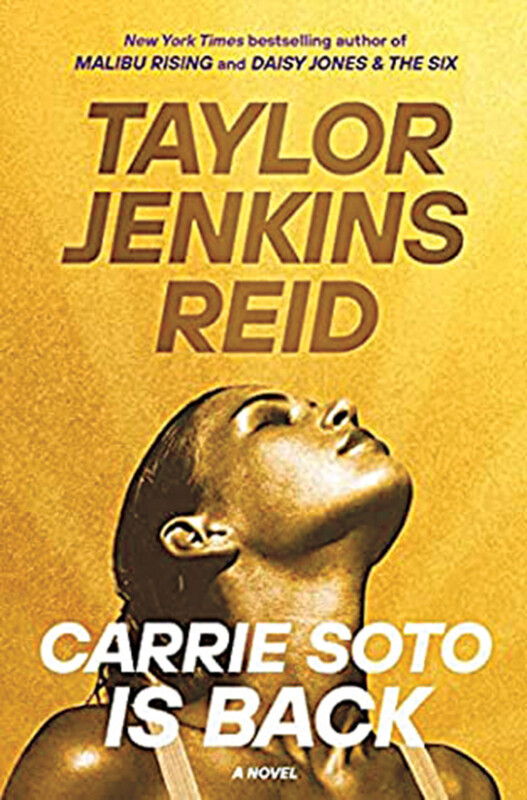
Pastoral Song, by James Rebanks

Pastoral Song, by James Rebanks (Custom House, 294 pages)

Occasionally a book does so well across the Atlantic that publishers in the U.S. pick it up, hoping that American readers will warm to the author as well despite the peculiarities of some English words. This worked out splendidly for J.K. Rowling.

There are similar hopes for Pastoral Song, which the U.K.’s Sunday Times pronounced “nature book of the year” when it was first published as English Pastoral. Subtitled “A Farmer’s Journey,” the book is a meditation on the plight of small farmers who struggle to keep family farms going even as the despised “factory farm” gobbles a larger share of our food dollars each year.

James Rebanks, the author, is a thinking-man’s farmer, although he makes it clear that no true farmer has time to sit and think. He inherited his land from his father but got his love of farming from his grandfather, who was the bigger influence in his life. Of his father he writes, “I would try to help him and would inevitably do something wrong and be shouted at.”

The grandfather was gentler in his approach, not only to his grandson but to farming.

“He would simply gaze at his cows or sheep for what seemed like ages, leaning over a gate. As a result he knew them all as individuals. He could spot when they behaved differently because something was wrong, when they were coming into season or were about to give birth. He thought only fools rushed around,” Rebanks wrote.

This is all well and good for the practice of farming, but unfortunately for the reader, Rebanks brings his grandfather’s style to this book. In sum, it is Rebanks leaning over a gate, for what seems like ages, musing leisurely about the challenges of farming. It’s watching the grass grow, with very little happening in long stretches, but for the occasional offing of varmints. (And I wish I had not learned how Rebanks’ father rid his fields of rabbits, but it’s too late for that now.)

To be fair, Rebanks memorably conveys the harshness of a lifestyle that has been romanticized. “My parents were half-broke. I could see it in the second-hand tractors, rusting barn roofs, and old machinery that was always breaking down and never got replaced. But I could taste it too, in the endless boiled stew and mince that was served up.”

The family earned a tenuous living that would be foreign to workers with biweekly direct deposit. Their pay varied with the weather, and with rising interest rates and diving market prices, and the occasional murder of crows that could swoop in and destroy a field of barley. And farming requires an extraordinary amount of emotional toughness, what with all the horrible ways in which farm animals can die, even outside of slaughter. (When’s the last time you watched a rat try to drag away a chicken?)

“The logic chain is simple: we have to farm to eat, and we have to kill (or displace life, which amounts to the same thing) to farm. Being human is a rough business,” Rebanks writes. But, he says, there is a difference “between the toughness all farming required and the industrial ‘total war’ on nature that had been unleashed in my lifetime.”

The past 40 years, Rebanks says, has upended thousands of years of farming practices that came before it, and when his father died, leaving him the land, he was faced with the same dilemma confronting his father and grandfather — how to earn enough from the land “to pay our bills, service our debts, and make some money for us to live on” — in circumstances vastly different from theirs.

Then, after all this musing in his motherland, Rebanks up and comes to America to visit friends. And traveling through Iowa and Kentucky, eying the Confederate flags and Trump signs, he figures out who to blame: those grungy Americans!

This may have played well in the U.K., but it was a startling turn of events in an otherwise mournful elegy for the farmer, to have him pick up a bat and start swinging it wildly in the Iowa cornfields. He said Kentucky felt like a “landscape littered with ghosts and relics” and called Iowa “dark, flat and bleak.”

“Everything old was rotting. Barns leaned away from the wind, roofs half torn off.” The cause of this dystopian Midwest: “America had chosen industrial farming and abandoned its small family farms,” as if there was a lever we pulled in our last election. In fact, we vote for factory farms every time we visit a supermarket, he says. “The people in those shops seemed not to know, or care much, about how unsustainable their food production is. The share of the average American citizen’s income spent on food has declined from about 22% in 1950 to about 6.4% today … The money that people think they are spending on food from farms almost all goes to those who process the food, and to the wholesalers and retailers.”

Fair enough. But read the room. An English farmer coming over here to lecture Americans about their grocery shopping, diss our fruited plains? It feels a little rude.

And Rebanks concedes that “the overwhelming majority” of farms are not factory farms. “About 80 percent of people on earth are still fed by these small farmers,” he writes. That said, the work of a small farm is a “tough old game and doesn’t fit with any economic principle of minimizing work and maximizing productivity.” So what to do? Besides supporting your local farmers, “thinking longer term and with more humility,” Rebanks suggests planting trees. He plans to plant a tree every day for the rest of his life.

It’s clear to see why English Pastoral was a hit in the U.K., with its call for more sustainably produced food there “in order to avoid importing more from sterile, ruined landscapes like those of the American Midwest, or from land being cleared of pristine ecosystems in places like Indonesia and the Amazon.”

It’s less clear why this occasionally plodding, occasionally melodic memoir would do well here. As our grandmothers would say, don’t bite the hands that feed you. C


Book Events

Author events

HILARY CROWLEY Author presents The Power of Energy Medicine. Virtual event hosted by Gibson’s Bookstore in Concord. Thurs., Nov. 18, 7 p.m. Via Zoom. Registration required. Visit gibsonsbookstore.com or call 224-0562.

WENDY GORTON Author presents 50 Hikes with Kids: New England. Virtual event hosted by Toadstool Bookshops of Peterborough, Nashua and Keene. Sun., Nov. 21, 4 p.m. Via Zoom. Visit toadbooks.com.

TANJA HESTER Author presents Wallet Activism: How to Use Every Dollar You Spend, Earn, and Save as a Force for Change. Virtual event hosted by Gibson’s Bookstore in Concord. Mon., Nov. 22, 7 p.m. Via Zoom. Registration required. Visit gibsonsbookstore.com or call 224-0562.

BRENE BROWN Author presents Atlas of the Heart. Virtual event hosted by Gibson’s Bookstore in Concord. Thurs., Dec. 2, 8 p.m. Via Zoom. Tickets cost $30. Ticket sales end Dec. 2, at noon. Visit gibsonsbookstore.com or call 224-0562.

JACK DALTON Kid conservationist presents his book, Kawan the Orangutan: Lost in the Rainforest. Toadstool Bookshop, 375 Amherst St., Nashua. Sat., Dec. 4, noon. Visit toadbooks.com.

DAMIEN KANE RIDGEN Author presents Bell’s Codex and My Magnum Opus. Toadstool Bookshop, 375 Amherst St., Nashua. Sun., Dec. 5, noon. Visit toadbooks.com.

JEN SINCERO Author presents Badass Habits. Virtual event hosted by The Music Hall in Portsmouth as part of its “Innovation and Leadership” series. Tues., Dec. 7, 7:30 p.m. Includes author presentation, coaching session and audience Q&A. Tickets cost $22. Visit themusichall.org or call 436-2400.

KATHRYN HULICKAuthor presents Welcome to the Future. Sat., Dec. 11, 2 p.m. Toadstool Bookshop, 12 Depot Square, Peterborough. Visit toadbooks.com.

Poetry

DOWN CELLAR POETRY SALON Poetry event series presented by the Poetry Society of New Hampshire. Monthly. First Sunday. Visit poetrysocietynh.wordpress.com.

Book Clubs

BOOKERY Online. Monthly. Third Thursday, 6 p.m. Bookstore based in Manchester. Visit bookerymht.com/online-book-club or call 836-6600.

GIBSON’S BOOKSTORE Online, via Zoom. Monthly. First Monday, 5:30 p.m. Bookstore based in Concord. Visit gibsonsbookstore.com/gibsons-book-club-2020-2021 or call 224-0562.

TO SHARE BREWING CO. 720 Union St., Manchester. Monthly. Second Thursday, 6 p.m. RSVP required. Visit tosharebrewing.com or call 836-6947.

GOFFSTOWN PUBLIC LIBRARY 2 High St., Goffstown. Monthly. Third Wednesday, 1:30 p.m. Call 497-2102, email elizabethw@goffstownlibrary.com or visit goffstownlibrary.com

BELKNAP MILL Online. Monthly. Last Wednesday, 6 p.m. Based in Laconia. Email bookclub@belknapmill.org.

NASHUA PUBLIC LIBRARY Online. Monthly. Second Friday, 3 p.m. Call 589-4611, email information@nashualibrary.org or visit nashualibrary.org.

Language

FRENCH LANGUAGE AND LITERATURE CLASSES Offered remotely by the Franco-American Centre. Six-week session with classes held Thursdays from 6:30 to 8:30 p.m. $225. Visit facnh.com/education or call 623-1093.

Album Reviews 21/11/18

Blonder, Knoxville House (Cool world Records)

At this writing, this debut record from Long Island native Constantine Anastasakis isn’t due out until February 2022, so there’s obviously an initiative to get the buzz going as quickly as possible before reviewers realize how much it sucks and tell people like you about it. I mean, Pitchfork Media will probably love it, as it conjures images of Pavement reborn as a half-synth-powered cyborg, and basically every song has a woozy, discombobulated feel to it, everything wandering in and out of pitch like a vinyl album that was left on top of a radiator for a few hours. Think of it this way: Brian Eno and Manchester Orchestra reinterpreted by the dumbest college student you’ve ever known, mixed into a hybrid no one would have ever asked for, except the melodies aren’t all that bad. Better than Dale Earnhardt Jr. Jr. accomplished, which is simultaneously the closest stuff to this, and yes, the faintest possible praise I can muster at the moment. D

Salt Ashes, Killing My Mind (Radikal Records)

The stage name of Brighton, U.K., singer Veiga Sanchez, Salt Ashes is diva pop with a good amount of retro house, tunes that are form-fitted for velvet rope clubs but could also work as soundtrack for a beachside Tilt-A-Whirl. “Love, Love,” the touchstone single, is pure Mariah Carey meets Janet Jackson, which is about where her voice fits. Unsurprisingly, she digs ’80s floor-filler stuff, checking off Giorgio Moroder, The Knife and Fleetwood Mac as influences; she’s been a dance-music player since her 2016 self-titled debut album, which was produced by the late Daniel Fridholm (a.k.a. Cruelty). Her lyrics deal with a laundry list of things that aren’t wildly unique to today’s young women: unrequited love, sex, anxiety, relationships, mental health, sexual harassment and such. The LP kicks off with a foggy, steam-driven, goth-infused electro-dance joint, “Lucy,” which is more Kylie Minogue than anything else. “Mad Girl” is ’80s as heck, down to the busy organic synths; “I’m Not Scared To Die’ covers the obligato ballad entry with aplomb enough. B

PLAYLIST

• Nov. 19 is here, and with it some new rock ’n’ roll albums. Some will be good and some will be bad, depending on one’s individual tastes or lack thereof. I’m looking at a rather large list of new albums, and I’m sure there will be something that won’t make me power-guzzle a six-pack of Pepto Bismol, but you never know. We can be nice and casual this week, because there is a plethora of albums to choose from, starting with Phantom Island, from a band called Smile, a project from Björn Yttling (Peter Bjorn and John) and Joakim Åhlund of the Teddybears. I think this will probably be safe for me to check out, because the Teddybears are awesome, so I’ll take my chances on the latest single at this writing, “Call My Name.” This song features vocals from mononymed Swedish singer-songwriter Robyn, who isn’t a very good singer, but the tune is a low-key, piquant, very pleasant blend of ABBA and Miss Kittin, very 1970s-radio if you can get past Robyn’s not-very-great voice. There’s a snowy, upbeat feel to it, which is just what the doctor ordered if you need something smooth and cocoa-y to wrap your ears around as we descend into the frozen North Pole of yet another New England winter.

• Well, that wasn’t so bad, was it. Hmm, dum de dum, why don’t we — wait, hold everything, here we go, a new album from Elbow, called Flying Dream 1, why didn’t someone tell me about this before? Elbow is one of the few indie bands in the world that still tinkles my jingle bells; they are from Bury in Greater Manchester, England. If past is prologue here, this will probably be awesome; their previous stuff has been like a cross between We Were Promised Jetpacks and VNV Nation, and — wait, I did a fly-by, didn’t I; you haven’t the foggiest idea what that even means. Unfortunately I do, so I’ll try to translate. Picture a stuffy literature professor starting a mildly aggressive rock band but never doing anything really punky, sort of like a British version of Bruce Springsteen except the singer doesn’t suck and it’s mostly mellow-ish, and the tunes are really catchy and cool. That’s Elbow, at least up until this moment, when I’m about to find out if their single “Six Words” is any good. OK, it is, it’s a mellow, almost Coldplay-ish tune comprising a synth arpeggio but without being annoying like Coldplay. It’s awesome, mildly mawkish but ultimately upbeat and very pretty. I so totally love these guys.

• Not bad, I haven’t even thought about uncorking the Pepto Bismol during this exercise at all! I’ll tell you, gang, this may be my lucky — oh no, it can’t be. Do you hear those booming tyrannosaurus footsteps, coming for me, to ruin my day? Yes, look, it’s the hilariously overrated Sting, smashing buildings as he strides toward me, holding out some awful new album! The LP is called The Bridge, and it has a single, called “Rushing Water.” Oh jeez, oh jeez, this sounds like like every boring elevator-music song this egomaniacal Matrix-clown has ever foisted onto listeners of dentist-office-rock, basically a souped-up version of “Every Breath You Take” except with some rap-speed lyrics. Don’t worry, you’ll probably only hear this once, either on Jimmy Kimmel or The Today Show; it’s definitely not interesting enough to warrant anything more “hip” than that.

• We’ll wrap up this week’s business with 30, the new album from Adele, whose hobbies include publicly sucking up to Beyonce and being this decade’s Celine Dion. “Easy On Me” is a depressing but powerful pop ballad as always, and she does some high-pitched professional singing. As if you couldn’t guess, it is a song that will be loved by 20-somethings who don’t trust their boyfriends, and with good reason.

If you’re in a local band, now’s a great time to let me know about your EP, your single, whatever’s on your mind. Let me know how you’re holding yourself together without being able to play shows or jam with your homies. Send a recipe for keema matar. Message me on Twitter (@esaeger) or Facebook (eric.saeger.9).
Truffle Hound, by Rowan Jacobsen

Truffle Hound, by Rowan Jacobsen (Bloomsbury, 283 pages)

You may think, because you’ve never eaten a truffle nor been interested in doing so, that you would have no interest in reading about this delicacy of the 1 percent, who pay upwards of $200 an ounce for bulbous underground fungi.

But you would be wrong.

In the hands of celebrated food writer Rowan Jacobsen, Truffle Hound is a joyful romp through a very strange world, no less interesting for those who care nothing about truffles, or who only care about the chocolate kind. In fact, the book may be even more fascinating to readers who come to it with only a vague knowledge of truffles and why people love them so much.

Jacobsen, who lives in Vermont, was once that person, despite being part of an enviable club: writers who write primarily about food. (His previous books have included deep dives into oysters and apples.) He had consumed truffle fries, truffle salt and other truffle dishes with no particular interest, but one day, at a meeting in Italy, he encountered a small fat truffle, a “bulbous pearl” under glass, that made his world explode.

“I have smelled lots of yumminess before, but this was different,” he writes. “… It was hardly a food scent at all. It was more like catching a glimpse of a satyr prancing across the dining room floor while playing its flute and flashing its hindquarters at you. You think, What the hell was that?”

Jacobsen returned to his table but couldn’t stop thinking about what he had just experienced. “I kept asking my dining companions if they wanted to go smell the truffle,” he writes. Mind you, this reaction arose from the most humble of organisms: a fungus with very little taste and a lumpy shape that is considered delicious by wild pigs. And yet it has inspired kings, philosophers and even Oprah Winfrey, who reportedly carries her own stash of white truffles with her when she travels.

Like William Butler Yeats, who wrote that “Love has pitched his mansion in the place of excrement,” Jacobsen considers the idea that truffle mania is Mother Nature’s joke: “I began to wonder if [truffles] were more like little Trojan horses, wheeled into the finest dining rooms in the world, only to discharge a scent that mocked civilization and its trappings.”

But he quickly throws that thought aside to travel the world in search of the finest truffles and the people and dogs who find them. His quest takes him to forests in Italy, and to an oddly productive truffle farm in North Carolina. Along the way he encounters a fascinating trove of characters, such as the “hotshot in food media circles” (whom, annoyingly, he grants anonymity) who once worked as a truffle dealer in New York City. She’d go to the airport to pick up a box of about 30 pounds of truffles that had been shipped overnight from Europe (the intoxicating scent fades rapidly) and then try to sell them to the city’s most famous chefs. One day, between calls, she bought a warm bagel and took a few truffle shards out of her cooler and grated them on it. “That may have been the best thing I ever ate,” she told Jacobsen.

In anecdotes like this we learn the important stuff about truffles (they require their own specialty utensil, the truffle shaver) and that the truffle oil you see in grocery stores and restaurants most likely contains no actual truffles but is olive oil infused with a truffle-like scent. Also, be careful if you are vacationing in Italy and are offered the opportunity to go on a truffle hunt: Chances are the experience is about as authentic as the “Pirates of the Caribbean” ride at Disney. Cheap truffles are often planted so that customers can get the thrill of seeing a truffle dog “find” one of these homely edible jewels.

About the only question that Jacobsen doesn’t answer about truffles is whether you can legally bring them into the U.S. He confesses that, having spent upwards of 300 euros for three small white truffles (a transaction conducted surreptitiously in a hotel lobby, like a drug deal), he dared not declare them to the customs agent. “Raw fruit, vegetables, and meat are definitely banned, as is soil, but fungi are theoretically fine,” but still, he stuffed his truffle in a sock stuffed in a boot, which seems the sort of thing that can get you detained.

Like the author and naturalist Diane Ackerman, Jacobsen brings the eye of a scientist and the voice of a poet to his work, which is the main reason that this book is so engrossing. Could it have been 50 pages shorter and still as interesting? Absolutely, and it doesn’t leave the reader wanting more; there is really only so much truffle information that the mind can hold.

But for the truly insatiable, there’s an index of resources (websites where you can buy truffles, find authentic truffle hunts and international truffle fairs, and even where you can buy your very own trained truffle dog). There are also a few truffle recipes and a really nice collection of color photographs so you can see what Jacobsen is writing about.

The only thing that’s missing is a scratch-and-sniff page, and a warning that you, too, might become a truffle hound after accompanying the author on this pleasurable hunt. A


Book Notes

New Hampshire runner Ben True has been in the news a lot lately because of his debut in the New York City Marathon Nov. 7. So why mention this in a book column?

It’s because True and his wife, Sarah, a professional triathlete, named their first child after a character in a novel.

As Runner’s World magazine reported, the Hanover couple named their son, born in July, Haakon (pronounced HAWK-en). The name is a derivative of Hakan, the name of the protagonist in a novel by Hernan Diaz, In the Distance (Coffee House Press, 240 pages).

Independent of its plot, the book has a fascinating origin story. It was the author’s first book, and he broke all the rules by submitting it to a small publishing house without first obtaining an agent. But the novel got a glowing review from The New York Times and was a finalist for the Pulitzer Prize.

With that sort of reception, it’s no surprise that Diaz has already sold a second novel, Trust, which won’t be released until May but is already available for pre-order on Amazon. This time he snared a big publisher: Riverhead. If the Trues have another child and follow their Diaz-naming tradition, it looks like their next choices will be more common: the main characters are Benjamin and Helen.

Meanwhile there’s a new book out that examines a sport of special interest in New Hampshire: skiing. Powder Days by Heather Hansman (Hanover Square Press, 272 pages) examines “ski bums, ski towns and the future of chasing snow.” A review in Publishers Weekly calls it “as exhilarating as the act of skiing itself.”

Book Events

Author events

KEN FOLLETT Author presents Never. Virtual event with author discussion and audience Q&A, hosted by The Music Hall in Portsmouth. Sun., Nov. 14, 1 p.m. Tickets cost $36 and include a book for in-person pickup at The Music Hall. Visit themusichall.org or call 436-2400.

HILARY CROWLEY Author presents The Power of Energy Medicine. Virtual event hosted by Gibson’s Bookstore in Concord. Thurs., Nov. 18, 7 p.m. Via Zoom. Registration required. Visit gibsonsbookstore.com or call 224-0562.

WENDY GORTON Author presents 50 Hikes with Kids: New England. Virtual event hosted by Toadstool Bookshops of Peterborough, Nashua and Keene. Sun., Nov. 21, 4 p.m. Via Zoom. Visit toadbooks.com.

TANJA HESTER Author presents Wallet Activism: How to Use Every Dollar You Spend, Earn, and Save as a Force for Change. Virtual event hosted by Gibson’s Bookstore in Concord. Mon., Nov. 22, 7 p.m. Via Zoom. Registration required. Visit gibsonsbookstore.com or call 224-0562.

BRENE BROWN Author presents Atlas of the Heart. Virtual event hosted by Gibson’s Bookstore in Concord. Thurs., Dec. 2, 8 p.m. Via Zoom. Tickets cost $30. Ticket sales end Dec. 2, at noon. Visit gibsonsbookstore.com or call 224-0562.

JACK DALTON Kid conservationist presents his book, Kawan the Orangutan: Lost in the Rainforest. Toadstool Bookshop, 375 Amherst St., Nashua. Sat., Dec. 4, noon. Visit toadbooks.com.

DAMIEN KANE RIDGEN Author presents Bell’s Codex and My Magnum Opus. Toadstool Bookshop, 375 Amherst St., Nashua. Sun., Dec. 5, noon. Visit toadbooks.com.

KATHRYN HULICKAuthor presents Welcome to the Future. Sat., Dec. 11, 2 p.m. Toadstool Bookshop, 12 Depot Square, Peterborough. Visit toadbooks.com.

Poetry

DOWN CELLAR POETRY SALON Poetry event series presented by the Poetry Society of New Hampshire. Monthly. First Sunday. Visit poetrysocietynh.wordpress.com.

Book Clubs

BOOKERY Online. Monthly. Third Thursday, 6 p.m. Bookstore based in Manchester. Visit bookerymht.com/online-book-club or call 836-6600.

GIBSON’S BOOKSTORE Online, via Zoom. Monthly. First Monday, 5:30 p.m. Bookstore based in Concord. Visit gibsonsbookstore.com/gibsons-book-club-2020-2021 or call 224-0562.

TO SHARE BREWING CO. 720 Union St., Manchester. Monthly. Second Thursday, 6 p.m. RSVP required. Visit tosharebrewing.com or call 836-6947.

GOFFSTOWN PUBLIC LIBRARY 2 High St., Goffstown. Monthly. Third Wednesday, 1:30 p.m. Call 497-2102, email elizabethw@goffstownlibrary.com or visit goffstownlibrary.com

BELKNAP MILL Online. Monthly. Last Wednesday, 6 p.m. Based in Laconia. Email bookclub@belknapmill.org.

NASHUA PUBLIC LIBRARY Online. Monthly. Second Friday, 3 p.m. Call 589-4611, email information@nashualibrary.org or visit nashualibrary.org.

Language

FRENCH LANGUAGE AND LITERATURE CLASSES Offered remotely by the Franco-American Centre. Six-week session with classes held Thursdays from 6:30 to 8:30 p.m. $225. Visit facnh.com/education or call 623-1093.

Stay in the loop!

Get FREE weekly briefs on local food, music,

arts, and more across southern New Hampshire!