
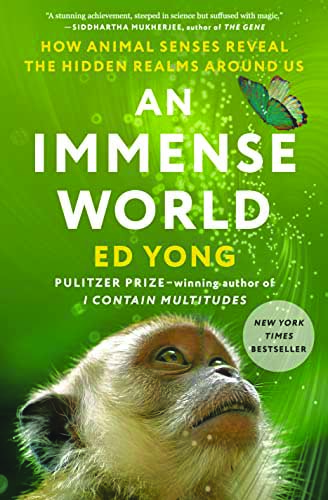
An Immense World, by Ed Yong

An Immense World, by Ed Yong (Random House, 359 pages)

In the 17th century, the French philosopher and priest Nicolas Malebranche wrote: “animals eat without pleasure, cry without pain, grow without knowing it: they desire nothing, fear nothing, know nothing.”

That hasn’t aged well.

While the sentiment may have been useful for vivisectionists throughout the ages, what’s not self-evidently wrong in the statement has been proven false by research over the past few decades. As for “knowing nothing,” that nonsense is grandly refuted in Pulitzer Prize-winning science writer Ed Yong’s second book, An Immense World.

Animals may not know how to build bridges or perform cardiac surgery, but they possess extraordinary abilities that humans lack, some of which we now well understand (like echolocation), others that we still can’t. Yong walks us through the ongoing research into animals’ capabilities while trying to make sense of their “umwelt” — their “perceptual world.”

“Umwelt” is a German word coined by a biologist in 1909 to describe what it’s like for a spider to be a spider, for a bird to be a bird. It’s impossible to fully understand animals’ perception of their world, but a genre of scientists called sensory biologists are trying. And their research is fascinating, once you push past wondering why tax dollars are going to pay for their experiments. Thankfully, much of this research is going on in other countries.

For example, there is the scientist who studied insects called treehoppers in a Panama forest and listened to the communication of a family by clipping microphones onto a plant and listening with headphones. Without the headphones, he could hear nothing. But headphones allowed him to eavesdrop in the treehopper world, where the insects were making sounds similar to cows mooing. “The sound was deep, resonant, and unlike anything you’d expect from an insect. As the babies settled down and returned to their mother, their cacophony of vibrational moos turned into a synchronized chorus.”

In anecdotes like this, An Immense World seems a sequel to Yong’s first book, 2016’s I Contain Multitudes, in which he explored the microbes that populate the human body. The takeaway from both is that for all our abilities, for all the wonders of the human eye and ear, we are oblivious to much of what is going on around us (and inside us). When we take the time to learn and pay attention, there is as much reason for awe as there is when we contemplate the night sky.

Yong tantalizingly suggests that learning about animals’ seemingly miraculous senses can help us to make better use of our own. Like the oft-quoted aphorism that humans only make use of a fraction of our brain power, it appears that much of our sensory power goes unused.

Yong visits a California man, blinded by cancer in infancy, who naturally learned to echolocate like a bat. He navigates by making a clicking sound and following the echoes. This doesn’t just allow him to walk and bike down streets, but also to do things sighted people can’t do. For example, when Yong accompanies the man on a walk, he asks if someone had parked on their lawn at a house they passed. The car was half on concrete, half on grass. The man was able to perceive this without seeing, just from decades of practicing echolocation. He is blind, but inhabits a rich sensory world that sighted people don’t access; that is his umwelt.

Similarly, animals inhabit worlds that may not be as expansive as ours in some ways, but they are attuned to scents, sensations, chemicals and magnetic and electrical fields we don’t perceive.

As Yong travels the world interviewing scientists who work with animals ranging from manatees to electric fish to rattlesnakes, he explains their extraordinary abilities in largely accessible language (although there are passages in which an advanced degree would help).

He devotes a chapter to the subject that is most controversial in the general population: how animals experience pain. Pain, as Yong describes it, is “the unwanted sense,” and it is a difficult subject for modern scientists to explore, since most of them reject the ancient belief that animals are fundamentally oblivious to it. There is still wide disagreement about to what degree animals experience pain, and whether this is reason enough to stop eating lobster.

What most people call pain is actually two different experiences, Yong explains. The first is nociception, which is our response to painful stimuli, such as touching a hot stove or an electrified fence. Our sense of touch apprehends danger and we pull back instinctively. The pain that follows is a different thing. Some scientists have argued that all animals’ reactions to painful stimuli is nociception, that they can’t suffer as we do. Not everything that is alive has consciousness, which is believed to require a nervous system. And some creatures exhibit behavior in which they do seem oblivious to what we would think of as excruciating pain: say, the male praying mantis that mates with a female that is devouring him.

But research has shown that a wide range of animals subjected to pain will choose painkillers that are offered to them. This is true of even zebrafish. And animals who respond to injury by licking and grooming will stop when given painkillers. But Yong offers no clear answers, like the scientist who tells him, “I’m often asked if crabs and lobsters feel pain, and after 15 years of research, the answer is maybe.”

Yong is more definitive when it comes to what our response should be to new knowledge about how animals’ lives are governed by senses of which we are largely unaware. For example, we now know that the migratory patterns of birds and butterflies are affected by artificial light, that sea turtle hatchlings (which have a 1 in 10,000 shot of enduring to maturity) die because they are drawn to house lights and bonfires when these eclipse the moonlight, which would normally guide them to sea.

The fluttering of moths around a lightbulb can be fatal to them; many die of exhaustion. The “Tribute of Light” that New York City installs each year to commemorate 9/11 can be seen for 60 miles and disrupts the migration of thousands of songbirds, so much so that when too many confused birds start circulating the light, it’s shut off for 20 minutes to allow them to, as your GPS would say, recalculate.

Animals evolve and adapt and many will eventually adjust to modernity if they don’t go extinct. The pandemic showed us, however, that nature can quickly bounce back once humans change their behavior. The first step in doing so is knowledge.

An Immense World is a lackluster title; not so the book. Others have dabbled in this topic, such as primatologist Frans de Waal in 2016’s Are We Smart Enough to Know How Smart Animals Are? Yong, who seems incapable of covering a topic superficially, does it better than most. A


Book Events

Author events

• LAURIE STONE presents Streaming Now: Postcards from the Thing That Is Happening at Gibson’s Bookstore (45 S. Main St., Concord, 224-0562, gibsonsbookstore.com) on Thursday, Aug. 4, at 6:30 p.m.

• MARIANNE WILLIAMSON presents The Politics of Love at the Bookery (844 Elm St., Manchester, bookerymht.com, 836-6600) on Wednesday, Aug. 10, at 7 p.m. Free event; register at www.bookerymht.com/our-events.

• KATHLEEN BAILEY and SHEILA BAILEY present their book New Hampshire War Monuments: The Stories Behind the Stones at Gibson’s Bookstore (45 S. Main St., Concord, 224-0562, gibsonsbookstore.com) on Thursday, Aug. 11, at 6:30 p.m.

• R.A. SALVATORE presents Glacier’s Edge at Gibson’s Bookstore (45 S. Main St., Concord, 224-0562, gibsonsbookstore.com) on Friday, Aug. 12, at 6:30 p.m.

• CASEY SHERMAN presents Helltown at the Bookery (844 Elm St., Manchester, bookerymht.com, 836-6600) on Sunday, Aug. 14, at 1:30 p.m. Free event; register at www.bookerymht.com/our-events.

Poetry

• OPEN MIC POETRY hosted by the Poetry Society of NH at Gibson’s Bookstore (45 S. Main St., Concord, 224-0562, gibsonsbookstore.com), starting with a reading by poet Sam DeFlitch, on Wednesday, July 20, from 4:30 to 6 p.m. Newcomers encouraged. Free.

• DOWN CELLAR POETRY SALON Poetry event series presented by the Poetry Society of New Hampshire. Monthly. First Sunday. Visit poetrysocietynh.wordpress.com.

Writers groups

• MERRIMACK VALLEY WRITERS’ GROUP All published and unpublished local writers who are interested in sharing their work with other writers and giving and receiving constructive feedback are invited to join. The group meets regularly Email pembrokenhtownlibrary@gmail.com.

Book Clubs

• BOOKERY Monthly. Third Thursday, 6 p.m. 844 Elm St., Manchester. Visit bookerymht.com/online-book-club or call 836-6600.

• GIBSON’S BOOKSTORE Online, via Zoom. Monthly. First Monday, 5:30 p.m. Bookstore based in Concord. Visit gibsonsbookstore.com/gibsons-book-club-2020-2021 or call 224-0562.

• TO SHARE BREWING CO. 720 Union St., Manchester. Monthly. Second Thursday, 6 p.m. RSVP required. Visit tosharebrewing.com or call 836-6947.

• GOFFSTOWN PUBLIC LIBRARY 2 High St., Goffstown. Monthly. Third Wednesday, 1:30 p.m. Call 497-2102, email elizabethw@goffstownlibrary.com or visit goffstownlibrary.com

• BELKNAP MILL Online. Monthly. Last Wednesday, 6 p.m. Based in Laconia. Email bookclub@belknapmill.org.

• NASHUA PUBLIC LIBRARY Online. Monthly. Second Friday, 3 p.m. Call 589-4611, email information@nashualibrary.org or visit nashualibrary.org.

Language

• FRENCH LANGUAGE AND LITERATURE CLASSES

Offered remotely by the Franco-American Centre. Six-week session with classes held Thursdays from 6:30 to 8:30 p.m. $225. Visit facnh.com/education or call 623-1093.
Album Reviews 22/08/04

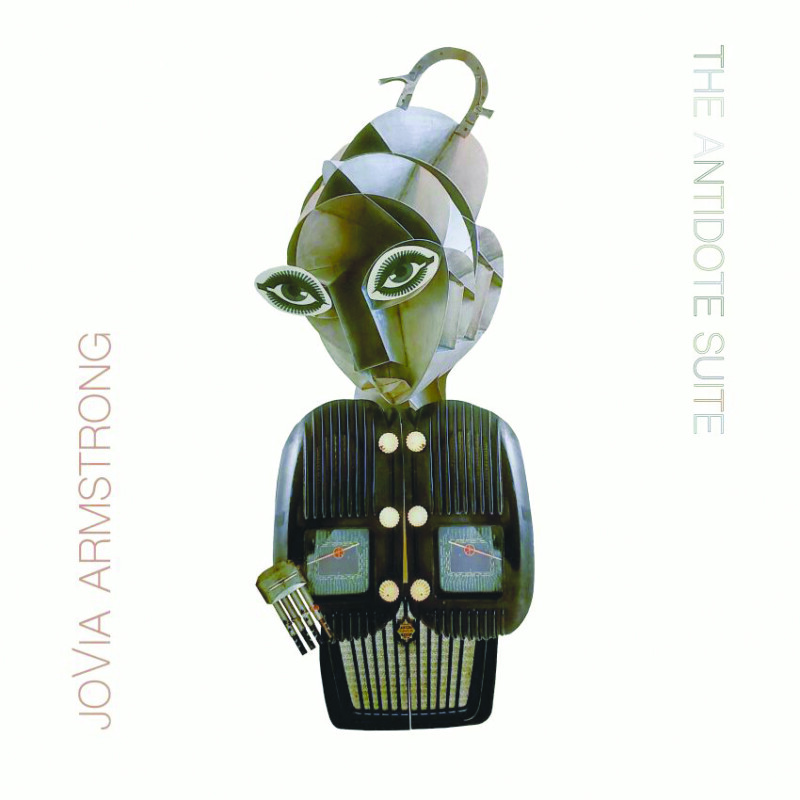
JoVia Armstrong, Antidote Suite (Wild Kingdom Records)

The term Afrofuturism — referring to a “cultural aesthetic and philosophy of science and history that explores the intersection of African diaspora culture with science and technology” — was coined by culture critic Mark Dery, an on-again/off-again friend-acquaintance who’s been mad at me for like a year because I clumsily made fun of him on Twitter for his nerdy distaste for sports. Speaking of clumsy, the genre definition offered above — can’t we just say Afrofuturism is Black cyberpunk culture? no? — is a bit misleading as pertains to this album, which, if it’d come from anyone whose musical career hadn’t been borne of a, well, too-academics-driven approach to a life’s mission of spreading awareness about Black struggle in the Information Age, would be immediately classified as chilly, often beautiful but not earth-shakingly original soundscaping. Guests include bassist Isaiah Sharkey, guitarist Jeff Parker, vocalist Yaw Agyeman and rapper Teh’Ray Hale. There’d be no earthly reason for me not to recommend this to anyone; lots of interesting genre-mixing here. A+

Sator, Return of The Barbie-Q-Killers (Wild Kingdom Records)

Here we go, just what I needed right now, an old-school punk band from Sweden. And I do mean old-school; they’ve been together since 1981, originally under the moniker Sator Codex, which points to the Throbbing Gristle/Cabaret Voltaire niche they cite as an influence. Other than that, the record collections of the members’ youth were pretty standard: Motorhead, Chuck Berry, Ramones, Clash and such. Doesn’t matter, though. There are 24-count-’em songs crammed into this release, with most of the songs clocking in at around two minutes, which put it at an A grade before I even listened to any of it. The music is a blur of Misfits/Ramones gloriousness, opening with a punkabilly-tinged “Get Out Of My Way”; a Lords Of The New Church-sounding “Shimmy Shake,” even an obvious nod to New York Dolls in “Pumps, Purse And A Pillbox Hat.” From my seat there’s nothing wrong with this album whatsoever. A+

Playlist

• Gross, it’s freakin’ August already, it’s just going to be hot and insane out and then we’ll have those perfect September days with blue skies and a tinge of autumn in the air. So pleasant and nice, I hate it so much, but it’s on the way, and our first order of August business is to talk about the albums that’ll be in the stores and Pirate Bays and virus-slathered darkweb cubbies on Aug. 5. I usually try to get the least pleasant stuff out of the way first, and this week that’s definitely overrated Scottish club DJ Calvin Harris’s new album, Funk Wav Bounces Vol. 2. No, I’m not saying I mindfully loathe Harris; it’s just that when my journalistic beat was the velvet-rope techno-club scene, Harris was one of those tedious funk guys, and he bothered me the same way Steve Aoki did. Not enough progressive house in his mix, is what I mean; I really prefer progressive house over regurgitated Chicago-style house, which is too heavy on the disco (think Madonna’s “Vogue” for reference’s sake). OK, you’re staring at me wondering what I’m talking about, as if I even know; suffice to say that I’d rather listen to a deep house genius like King Britt than a lowbrow slob like Calvin Harris. And now that I’ve gotten that off my chest, you know what’ll happen next, I’m going to go listen to Harris’s new single “Potion” and it’ll actually be OK. But I doubt it; guest vocalists for this album include ridiculously overexposed lummoxes like Justin Timberlake, Halsey and Snoop Dogg, and — wait, here’s the video for “Potion.” It features corporate-pop diva Dua Lipa with Young Thug, and — yup, there it is breezy after-party music that’s too loud and in-your-face for an after-party. Yuck, it’s too disco-ey, possessed of basically no class. My God, my life would have been so much easier if I’d been born the type of imbecile who’d prefer this over Oscar G or whatever. No one should listen to this song, period. It’s got the vibe of the typical soundtrack to a 1970s porno movie. Barf barf barf.

• Uh-oh, look sharp everyone, it’s British sort-of-tech-metal heroes Kasabian, with The Alchemist’s Euphoria, their new album! If you’re wondering, yes (I just found this out for sure), they were named after Linda Kasabian, the former Charles Manson groupie, isn’t that special, and for the record, everything I’ve heard from them to date has been pretty cool. That brings us to the here and now, with a new song called “Scriptvre,” a noisy, trashy joint that’s a cross between Rage Against The Machine and Red Hot Chili Peppers’ “Give It Away.” Definitely something of a ’90s-rock-revival persuasion, which, let’s face it already, isn’t the worst thing that could happen, being that the current ’80s rebirth is well past its sell-by date.

• Blah blah blah what else — ah, here’s one, a new album titled All 4 Nothing, the second album from Lauv, a.k.a. Ari Staprans Leff, a San Francisco-born singer-songwriter! With a title as stupid as All 4 Nothing I’d expected the title track to dredge up memories of Marky Mark or something equally hideous, but it’s not quite that bad, that is unless the thought of an Auto-Tuned Peabo Bryson makes your stomach a bit unstable. Nothing to see here, folks, just a smooth bedroom beat, a millennial whoop thrown in to stupid-check Leff’s target audience, etc. It’s listenable.

• We’ll end with a new live album from ancient folk-pop mummy and dreadful singer Neil Young, Noise & Flowers, I can’t wait, can you? All I know right now is there’s a live version of the tune “From Hank To Hendrix” that’s pretty good if you can get past that wounded-possum voice of his, ack ack.

If you’re in a local band, now’s a great time to let me know about your EP, your single, whatever’s on your mind. Let me know how you’re holding yourself together without being able to play shows or jam with your homies. Send a recipe for keema matar. Message me on Twitter (@esaeger) or Facebook (eric.saeger.9).

At the Sofaplex 22/07/28

PERSUASION EDITION

Persuasion (PG)

Dakota Johnson, Cosmo Jarvis.

Also starring Richard E. Grant, Henry Golding and Nikki Amuka-Bird. The mopiest of Jane Austen’s big four novels (the others being Emma, Sense & Sensibility and Pride & Prejudice; Northanger Abbey and Mansfield Park have always seemed like the Austen B-team), Persuasion is the tale of Anne Elliot (Johnson), the sensible middle daughter of a titled but indebted family, who is still mourning the loss of Frederick Wentworth (Jarvis), the Navy man she was engaged to but then broke up with at 19. He was a poor sailor, and family friend Lady Russell (Amuka-Bird), who served as Anne’s mother figure after the death of her own mom, felt the match was all wrong for Anne. Lady Russell convinced Anne to give Wentworth up but Anne never got over him and never married anyone else. Now she’s in her late twenties and, as she tells us in some direct-to-camera chatter, still self-medicating with long baths and lots of wine.

Anne is thrown back into the path of her ex when Wentworth, now wealthy and looking to marry, visits Anne’s sister Mary (Mia McKenna-Bruce, doing a lot of fun things as the whiniest Elliot sister) and her extended family, with whom Anne is staying now that her family has been forced to rent out their fancy manor house. Anne can’t figure out how Wentworth feels about her now and, despite being pretty mouthy in a way that is not exactly canon for this character, can’t seem to communicate her own feelings to him.

Acerbic chattiness and excessive drinking are two of many ways this Anne doesn’t exactly jibe with the Anne Austen fans might know from the book or earlier movie adaptations. One of the others is that she is Dakota freakin’ Johnson and an obvious knockout whereas book Anne has always felt to me like someone who thinks of herself as a wallflower who blooms according to the circumstances. I get what this movie seems to be doing, with its “what if Bridgerton plus Dickinson to the power of Fleabag” approach, but for me Anne’s character just doesn’t work. The 2020 Emma highlighted what a jerk the Emma character could be, but it did this by making that existing element of the character bolder. Here, I feel like the movie invented a new Anne (someone maybe closer to an Elizabeth Bennet from Pride and Prejudice) and then shoved her in book Anne’s story, with the two elements always in opposition. It’s never clear why this Anne let herself be “persuaded” away from her bae in the first place and why she stayed that way all these years, even as she becomes a Regency-era Daria.

That said, I didn’t hate it or at least I didn’t hate this Persuasion as much as headlines suggest other reviewers hated it. It’s the first Persuasion I’ve seen that dug a little more into the Anne/Lady Russell relationship. You understand how these two women could remain close in spite of the persuasion-ing that has made Anne so unhappy.

I also liked everything to do with Mary and her in-laws, the comic-relief-y Musgrove family. They feel less goofy and more like full characters than in previous iterations. And this movie gets the tone of the William Elliot (Golding) character maybe better than any other movie I’ve seen. He is the right amount of “up to something” and charming and very open about all of it in a way that would be appealing to a brainy girl like Anne. And, for what it’s worth, the movie does a pretty good job of demonstrating how to cast actors of color in period stories that don’t include characters of color: you just do it. It works great here and allows this huffily received movie to at least get to be part of the “Henry Golding having fun on screen” film genre.

Persuasion feels like a “for Austen completists only” product but, as just such a person, I’m not mad that I watched it. B- Available on Netflix.

This newest Persuasion had me wanting to remember how other adaptations had approached the story. Here’s a look at some of the other Persuasion adaptations available for viewing. I’m not including Bridget Jones: The Edge of Reason, the novel of which claims a loose connection to Persuasion, for the carefully considered and scholarly reason that I don’t wanna.

Modern Persuasion (PG, 2020)

Alicia DeWitt, Bebe Neuwirth.

Also Mark Moses (a “hey it’s that guy” from like everything on TV; maybe you remember him as Duck Phillips on Mad Men) and Liza Lapira (who is fun on The Equalizer) and Shane McRae as the love interest.

Here, instead of the central family living at Kellynch Hall, Keller Keller-Lynch is the name of some kind of PR firm that has gone through hard times recently and had to downsize from offices in Manhattan to, gasp, Brooklyn. Wren Cosgrove (DeWitt), this movie’s Anne, is a loyal worker, giving her all to Keller-Lynch. Perhaps this is because she can’t get over her decision not to follow her college boyfriend Jasper Owen (I’m sure McRae is a nice person but he leaves absolutely no impression in this role) to San Francisco. Her aunt, Vanessa (Neuwirth), was insistent that Wren not give up her career for a man and while Wren agreed at the time, she has grown to wish she’d chosen differently.

Jasper, now the CEO of a company that does some app thing, interviews Keller-Lynch to run his PR, putting him and Wren back in contact. The firm’s social media girls (Tedra Millan, Daniella Pineda) stand in for the Musgrove sisters as the young women Owen flirts with, and instead of a title-protecting cousin Wren gets her flirting action from Tyler (Chris O’Shea), a guy at a rival PR firm.

This movie is incredibly lightweight and has that quickie rom-com feel of Hallmark movies and some of the more discount-y Netflix romances. It’s perfectly fine as “something that’s on”-level entertainment but it doesn’t offer much else in the way of romance or comedy or any fun twist to the original story. C- Available via Hulu and Amazon Prime and I guess you could pay money to buy or rent it but, like, I wouldn’t.

Persuasion (NR, 2007)

Sally Hawkins, Rupert Penny-Jones.

Penny-Jones, this ITV movie’s Wentworth, was apparently the mayor in the recent The Batman, IMDb informs me. Also here are Tobias Menzies (of The Crown, Outlander and Game of Thrones, among many other things), as Wentworth’s romantic rival for Anne, William Elliot. And see Watcher Giles himself, Anthony Head.

Head is pretty perfect as the vain and oblivious Walter Elliot, father of Anne (Hawkins), who believes himself to be much better than everyone despite having completely decimated his family financially. This very faithful, in story and in period, telling hits all the familiar points: Anne goes to stay with her sister Mary (Amanda Hale) and her family only to find herself reintroduced to Frederick Wentworth (Penny-Jones), the naval officer she loved but was persuaded to dump years earlier.

What this movie offers that others don’t is more of a window on Wentworth and his feelings. He’s still angry when he first sees Anne again and it’s clearer here than in other tellings that his flirtation with another woman is more about his reaction to Anne than his genuine attempts to find a non-Anne wife.

Coming in at just over 90 minutes, this adaptation is worth a watch for Austen fans — if you can find it. As far as I can tell, it’s not available for rent or purchase and only available to stream with BritBox, which I got a month’s subscription to just for this project and now excuse me while I go watch the eleventyjillion gardening-based shows that this service offices. B Available on BritBox.

Persuasion (PG, 1995)

Amanda Root, Ciarán Hinds.

This is my OG Persuasion, the one I can’t help but measure all other Persuasions against. Wikipedia says this movie appeared on TV in the U.K. and got a small theatrical release in the U.S. But I suspect it found most of its audience the way first I saw it, on VHS (ask your grandparents about ye olde video stores). Austen was having a bit of a moment in cinema — Sense and Sensibility would be released later in 1995 and the BBC’s Pride and Prejudice (or, as you may know it, “the one with Colin Firth and the wet shirt”; kids, ask your moms) aired in the U.K. in fall 1995 and on A&E in early 1996, according to Wikipedia.

Thusly, I don’t know if it’s nostalgia or some kind of imprinting or solely on the basis of the performance that Amanda Root is, for me, the just-right Anne. She isn’t a wimp but she isn’t outgoing. She’s smart and capable but she’s not some anachronistic trailblazer. Because she’s capable, she seems to get her family’s messiness plopped on her to deal with — closing up the house when the Elliots move to Bath to economize without, you know, looking like they’re economizing, and dealing with her aggrieved sister Mary (Sophie Thompson), who is always believing herself to be ill. (Is she bored with her life and illness is the only acceptable way to throw off the expected duty of a wife and mother? Or is she truly ill but society at the time sees women’s pain only as a sign of moral weakness? — Free essay ideas!)

This Wentworth (Hinds) is more of a mystery; we are definitely looking at their relationship and its effects on Anne through her eyes.

This movie might have the most malevolent-seeming group of Elliot family and associates. Whereas other Ladies Russell often seem to soften on Wentworth or at least seem to want a happy Anne more than they want to stick to their guns, this Lady Russell (Susan Fleetwood) really does not seem to budge, seeming to pressure Anne to consider the extra shady William Elliot (Samuel West). This Elizabeth (Phoebe Nicholls), Anne’s snooty older sister, is a particular sour lemon of a person.

These BBC Austens are not fast-paced laughs-a-minute but they are enjoyable adaptations, particularly if you know the books and enjoy seeing the smaller characters and details brought to life. I deeply enjoyed watching it again and, even after 27 years, I think it holds up. A Available to rent or purchase.

Rational Creatures

Kristina Pupo, Peter Giessl.

OK, technically this one isn’t a movie but a web series. The first season is available at rationalseries.wixsite.com and a second season is scheduled to drop this summer, according to the website. Here, Ana Elias (Pupo) and Fred Wentworth (Giessl) are modern twentysomethings. Ana goes to stay with her sister Marisol (Gabriela Diaz) after the travel agency owned by her father, Guillermo Elias (Armando Reyes), can no longer pay her. Ana, who seems like a sweet and gentle pleaser, isn’t sure what to do with her life now and is still thinking about her high school relationship with Fred, now a travel writer/internet personality.

Amanda Root might be the ur-Anne to me but Pupo perfectly captures the essential Anne qualities of being uncertain without being wimpy and being always predisposed to put others first without necessarily being a pushover. I found myself charmed at how the story unfolded and riffed on the source material. I am genuinely looking forward to the next season. B+ Available online.

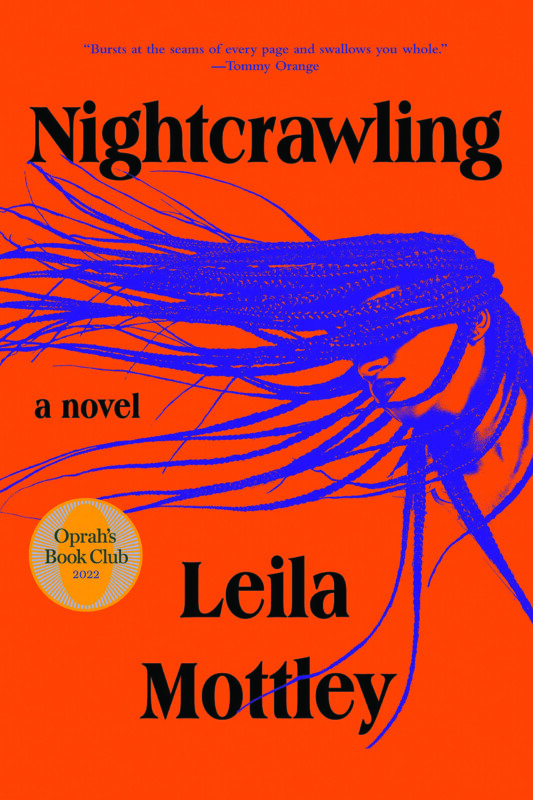
Nightcrawling, by Leila Mottley

Nightcrawling, by Leila Mottley (Knopf, 271 pages)

Promising young writers don’t always live up to their potential; they can collapse under the combined weight of heavy expectations and featherweight talent. In the interest of kindness, let’s not name names.

Not so Leila Mottley, the young novelist that Oprah Winfrey has been gushing about. Mottley started writing Nightcrawling at 17; she’s now 20. Her novel is all Winfrey promised it would be, and then some.

It’s based on actual events in Oakland, California: the sexual abuse of a young Black woman by police officers who trapped her into serving an ever expanding number of officers sexually. Mottley, who lives in Oakland, read about the case and the ensuing cover-up and couldn’t stop thinking about the young woman and the experience of growing up “vulnerable, unprotected and unseen.”

From her imagination came Kiara, a 17-year-old in similar circumstances. Kiara and her older brother, Marcus, live in a run-down apartment complex where the pool is contaminated with feces. “Houses give away all their secrets at the door. Dee’s is full of scratches. Mine doesn’t even have a working lock no more,” Kiara muses in the first-person narrative which is both lyrical and devastating.

Their father is dead; their mother long gone and currently living in a halfway house. Their only other family member is an uncle who is something of a rap star in L.A. and has no contact with them.

Kiara carries the weight of their meager existence, since her brother spends his days recording rap music in hopes of hitting it big like his uncle. When the apartment complex is sold and they receive notice that the rent has been doubled, she is desperate, not only for herself and her brother, but also for Trevor, the young boy in an adjacent apartment whom she has been caring for in the absence of his mother.

She tries to find work, but without a work history, she is repeatedly turned away. Even the third-rate bars to which she applies won’t hire her until she turns 18.

One night, she has a sexual encounter that is more of a business transaction than romance, and the shock of receiving several hundred dollars for sex leads Kiara into selling her body more frequently. One night, she’s picked up by a couple of police officers who, in exchange for not arresting her, take advantage of her services. They soon begin calling her regularly and sharing her with other officers, to the point of her being the “entertainment” at police parties.

Although Kiara does not know the officers by name, she knows them by their badge numbers, and they indulge in her services so much that she knows their preferences and habits; she is paid both in money and also in a shabby form of protection. For example, once, when she is at a party, she gets a call from an officer who tells her that there are undercover officers in the house and there’s about to be a bust. An officer picks her up, preventing her arrest, but his “protection” involves taking her to his home for the night and sexual activities for which she is not paid.

One day, police come to her home and take Kiara to the station for questioning. The administration has learned of Kiara’s existence and abuse through a suicide note left by a member of the force. Kiara denies any involvement with officers and is released, but from there, must confront more dilemmas that a teenager should never have to face.

She has choices, but they’re all terrible. She feels she can trust no one; the institution that is supposed to protect her is corrupt. Her brother — who loves her so much that he had her fingerprint tattooed on his neck, who pierced her ears with a sewing needle as a gift for her 16th birthday — is in jail. And Kiara is unable to pay the rent and buy food without the money she receives from sexual encounters with the police.

While Kiara’s experiences and life, even before she descended into sex work, are foreign to much of America, they will be painfully familiar to many.

Mottley clearly knows something about the humiliation of poverty: of having nothing but cereal and ramen in a roach-infested pantry; of having to share a washing machine with someone else at the laundromat; of making your own birthday cake from a mix using syrup because you don’t have any oil; of never having slept in a real bed, or been invited to anyone’s house because your daily existence is limited to staying alive.

In one moving scene, Kiara remembers going grocery shopping with her mother, before she disappeared. While her mother is trying to figure out how much credit was left on their EBT card, how much they could spend, young Kiara wistfully fills a carriage with frozen pizza and “fancy” cereal — things that, to her mind, were luxuries only rich people can afford.

“I don’t think you can feel more trapped than in the center of food you’re not allowed to eat, waiting to go home, and not knowing if anyone will remember your existence,” Kiara says.

While Nightcrawling takes us into a deeply depressing underworld of shame, despair and corruption, it is still a pleasure to read. Mottley’s voice is true and compelling, and she endows Kiara with unsettling wisdom that gives us hope that she will survive and move (both literally and figuratively) to a better place, with Marcus and Trevor in tow. A

Book Notes

It’s hard to believe it’s been nearly a year since the disappearance of Gabby Petito, the young woman traveling across the country in a van with her boyfriend, Brian Laundrie, who the FBI has said claimed responsibility for killing her, according to a January story in the New York Times and other media reports. That case mobilized a nation of armchair investigators. We can all track down murderers now from the comfort of our living room, or at least come up with tips that might prove helpful.

And there are plenty of unsolved cases out there, as Trailed by Kathryn Miles reminds us. Trailed (Algonquin, 320 pages) is the account of two women, Laura “Lollie” Winans and Julie Williams, who were found dead in Shenandoah National Park in Virginia, and Miles’ personal investigation into their deaths. The case remains unsolved, but Miles, a science writer who lives in Portland, has evidently done a masterful job of telling this story; there are lots of “couldn’t put this book down” in reader reviews. The author explores not only the flaws that plagued the investigation, including charges that the National Park Service tries to bury cases like this so people feel safe on its property, but also the unique dangers that confront women and members of the LGBTQ community when in the wilderness.

The “true crime” genre isn’t for everyone, but for those who enjoy it, there are plenty of offerings this summer. Another is When the Moon Turns to Blood(Twelve, 320 pages), journalist Leah Sottile’s account of the Idaho murders allegedly committed by Lori Vallow, a former beauty queen, and her husband Chad Daybell, a doomsday novelist. The couple are accused of killing two children and Daybell’s ex-wife. (The trial is scheduled for January 2023.) The subtitle promises “a story of murder, wild faith and end times.”

Less sensational but equally dark is We Carry Their Bones (William Morrow, 256 pages) by Erin Kimmerle. The author is a forensic anthropologist who examines the crimes committed at the Dozier School in Florida, which operated from 1900 to 2011 despite reports of cruelty, abuse and unexplained deaths of young boys, many of whom were Black. School records show that about 30 boys were buried in a field on the property; Kimmerle found that there were actually twice the number of graves.

And finally, those who enjoy true crime will appreciate Unmasked: My Life Solving America’s Cold Cases (Celadon, 288 pages) by Paul Holes. Hole is the forensic detective whose obsession with the case of the Golden State Killer led to a former police officer’s arrest for 13 murders and 50 rapes in California between 1974 and 1986.


Book Events

Author events

• DIANE HALLENBECK presents Rejecting Fear: Learning to Be Led By Loveat the Bookery (844 Elm St., Manchester, bookerymht.com, 836-6600) on Thursday, July 28, from 5:30 to 6:30 p.m. Free event; register at www.bookerymht.com/our-events.

• MARY ELLEN HUMPHREY presents My Mountain Friend: Wandering and Pondering Mt. Majorat Gibson’s Bookstore (45 S. Main St., Concord, 224-0562, gibsonsbookstore.com) on Thursday, July 28, at 6:30 p.m.

• LAURIE STONE presents Streaming Now: Postcards from the Thing That Is Happeningat Gibson’s Bookstore (45 S. Main St., Concord, 224-0562, gibsonsbookstore.com) on Thursday, Aug. 4, at 6:30 p.m.

• KATHLEEN BAILEY and SHEILA BAILEY present their book New Hampshire War Monuments: The Stories Behind the Stones at Gibson’s Bookstore (45 S. Main St., Concord, 224-0562, gibsonsbookstore.com) on Thursday, Aug. 11, at 6:30 p.m.

• R.A. SALVATORE presents Glacier’s Edge at Gibson’s Bookstore (45 S. Main St., Concord, 224-0562, gibsonsbookstore.com) on Friday, Aug. 12, at 6:30 p.m.

• CASEY SHERMAN presents Helltown at the Bookery (844 Elm St., Manchester, bookerymht.com, 836-6600) on Sunday, Aug. 14, at 1:30 p.m. Free event; register at www.bookerymht.com/our-events.

• VIRGINA CHAMLEE presents Big Thrift Energy: The Art and Thrill of Finding Vintage Treasuresat Gibson’s Bookstore (45 S. Main St., Concord, 224-0562, gibsonsbookstore.com) on Monday, Aug. 15, at 6:30 p.m.

• SPENCER QUINN presents Bark to the Future: A Chet & Bernie Mysteryat Gibson’s Bookstore (45 S. Main St., Concord, 224-0562, gibsonsbookstore.com) on Thursday, Aug. 18, at 6:30 p.m. and on Sunday, Aug. 28, at noon at the Bookery (844 Elm St., Manchester, bookerymht.com, 836-6600). The Bookery event is BYOD: bring your own dog.

• PHIL PRIMACK presents Put It Down On Paper: The Words and Life of Mary Folsom Blair in a Literary Lunchtime event at Gibson’s Bookstore (45 S. Main St., Concord, 224-0562, gibsonsbookstore.com) on Thursday, Sept. 8, at noon.

Poetry

• OPEN MIC POETRY hosted by the Poetry Society of NH at Gibson’s Bookstore (45 S. Main St., Concord, 224-0562, gibsonsbookstore.com), starting with a reading by poet Sam DeFlitch, on Wednesday, July 20, from 4:30 to 6 p.m. Newcomers encouraged. Free.

• DOWN CELLAR POETRY SALON Poetry event series presented by the Poetry Society of New Hampshire. Monthly. First Sunday. Visit poetrysocietynh.wordpress.com.

Writers groups

• MERRIMACK VALLEY WRITERS’ GROUP All published and unpublished local writers who are interested in sharing their work with other writers and giving and receiving constructive feedback are invited to join. The group meets regularly Email pembrokenhtownlibrary@gmail.com.

Book Clubs

• BOOKERY Monthly. Third Thursday, 6 p.m. 844 Elm St., Manchester. Visit bookerymht.com/online-book-club or call 836-6600.

• GIBSON’S BOOKSTORE Online, via Zoom. Monthly. First Monday, 5:30 p.m. Bookstore based in Concord. Visit gibsonsbookstore.com/gibsons-book-club-2020-2021 or call 224-0562.

• TO SHARE BREWING CO. 720 Union St., Manchester. Monthly. Second Thursday, 6 p.m. RSVP required. Visit tosharebrewing.com or call 836-6947.

• GOFFSTOWN PUBLIC LIBRARY 2 High St., Goffstown. Monthly. Third Wednesday, 1:30 p.m. Call 497-2102, email elizabethw@goffstownlibrary.com or visit goffstownlibrary.com

• BELKNAP MILL Online. Monthly. Last Wednesday, 6 p.m. Based in Laconia. Email bookclub@belknapmill.org.

• NASHUA PUBLIC LIBRARY Online. Monthly. Second Friday, 3 p.m. Call 589-4611, email information@nashualibrary.org or visit nashualibrary.org.

Language

• FRENCH LANGUAGE AND LITERATURE CLASSES

Offered remotely by the Franco-American Centre. Six-week session with classes held Thursdays from 6:30 to 8:30 p.m. $225. Visit facnh.com/education or call 623-1093.
Album Reviews 22/07/28

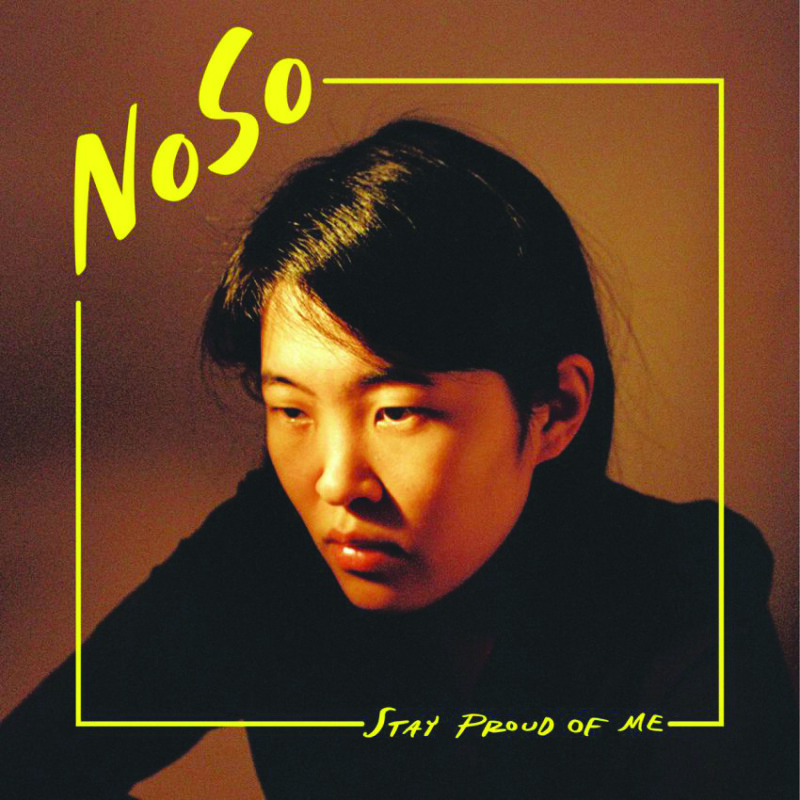
NoSo, Stay Proud Of Me (Partisan Records)

Abby Hwong is L.A.-based non-binary Korean-American singer-guitarist NoSo, whose debut album — this one here — had a successful launch on Soundcloud. Seems to me they’re big into epic indie-techno like M83, but their trip is more of a songwriter thing, and what first struck me was Hwong’s vocal likeness to Sarah McLachlan. The songs are big and lush, pretty much yacht-rock but with a lot of blooping percolation running along the lowest deck; I know there’s been a big Kate Bush resurgence of late owing to Stranger Things, and that’s fortuitous for Hwong, who sets their sights on the usual targets that strike dread into the hearts of differented people trying to make peace with themselves: of course there’s a song called “Suburbia” here, steeped in mellow Goldfrapp steez. Beautiful stuff here, folks. A+ — Eric W. Saeger

Trashed Ambulance, Future Considerations (Thousand Islands Records)

Today I learned that when Barenaked Ladies recorded the theme song to the TV show The Big Bang Theory, there were actually several other verses in the song, and most people have never heard them. I’m not suggesting you run right to YouTube and start memorizing those lyrics; it’s certainly not required listening for die-hard fans, and the rest of the song isn’t that great anyway. This album — from an Alberta, Canada, punk crew that’s been around for eight years, if I’m reading their sloppy press materials correctly — is the same kind of stuff as that, geeky Hoobastank-splattered nerd-punk that couldn’t hurt a fly if it wanted to. But point of order, they’d probably prefer I leave names like the Barenakeds and They Might Be Giants out of it: They’re actually “inspired by the likes of Pulley, Face to Face, and The Flatliners,” names that I could have dug up with a little luck, but since you have no idea who those bands are, to save us all time, just expect a bunch of tunes in the vein of the Big Bang Theory theme song, and they’re mostly good. All set? B+

Playlist

• Well isn’t that special, it’s July 29 already, how can this even be happening? Before you know it the summer will be gone, I mean, why don’t I just put all my winter stuff in my car, like my snowshoes and parka and my emergency survival bug-out bag with bear repellent and extra rations of Fritos and Devil Dogs in case I slide off the road and need rescuing from some crazy enchanted remote witch-filled forest in deepest, darkest Meredith, New Hampshire. OK, fine, I’m riffing mindlessly, and trust me, you’d do the same thing if you were supposed to be writing about Beyoncé’s new album, Renaissance, which comes out on Friday the 29th. Everyone knows that the only reason a critic of eclectic art would even mention the new Beyoncé album at all would be to demonstrate that said critic hasn’t been hiding under a rock, much as I’d much prefer that to trying to talk about an album that will instantly inspire one of only two possible reactions in people: They’ll either instantly decide to buy it, or they’ll yell “LOATHE ENTIRELY” like the Grinch and hope they never have to hear it playing at the Food Court. I’m sort of stuck in the middle myself, like my days of humming along to sexually baffling pop music ended when I turned 10, but in the meantime I still have to see what’s going on with Bee’s new single, “Break My Soul,” a tune she, ahem, “wrote” with like five other people, including her husband, Jay-Z, who’s credited as “S. Carter.” You know, I’m way too much of a punk to take royalty seriously, especially fake-royal cultural icons du jour, but since there are probably five of you who’ll actually buy this album just to irritate me, I’ll give this stupid song a whirl, why not, maybe it consists of more than the usual three notes that can be played on a Fisher Price toy xylophone. Nope, there’s only two notes, but the beat is kind of ’60s-James Bond-y overall but nothing more innovative than a ripoff of Young MC’s “Bust A Move” from back when Fred Flintstone drove a brontosaurus crane. Regardless, the success of that song gave her the distinction of being the first woman to notch at least 20 top 10 titles as a solo artist and at least 10 top 10 tracks as a member of a group on the Billboard Hot 100 chart. Yay, super-lucky famous people, aaand we’re moving.

• Ack, ack, it’s Groundhog Day, it has to be, wasn’t I talking about some other “Elephant 6 musical collective”-affiliated band last week (Austin group Elf Power, if I recall correctly) (yes, that was it), and saying how much I dislike that stuff? Well, no matter, because Of Montreal are here with a new album, the first two words of the title being Freewave Lucifer, whatever that means, and I have to go listen to their new single, “Marijuana’s A Working Woman.” Bulletin: There are festive, childish watercolors in the video. Oh boy, it wants to be Flaming Lips meets The Shins or some such, unlistenable analog-ish console noise and a barely discernible hook. Holy crow, folks, people are still listening to this kind of thing?

• If you ever wondered where Billie Eilish got the idea to use barely-there techno bloops to build songs like “Bad Guy” around, it safe to say she was at one point really into the song “Alaska” by googly-eyed Maryland anti-diva Maggie Rogers, whose new LP Surrender will be out Friday. I like the teaser track “That’s Where I Am” a lot better than anything I’ve heard from Billie; her yodel-y singing goes well with the punk no-wave-ish groove. It’s cool, you’ll like it.

• Finally it’s American singer-songwriter and fiddle player Amanda Shires, who’s in the country supergroup The Highwomen. Her new full-length, Take It Like A Man, features a title track that’s torchy and depressing if you like that sort of thing.

If you’re in a local band, now’s a great time to let me know about your EP, your single, whatever’s on your mind. Let me know how you’re holding yourself together without being able to play shows or jam with your homies. Send a recipe for keema matar. Message me on Twitter (@esaeger) or Facebook (eric.saeger.9).

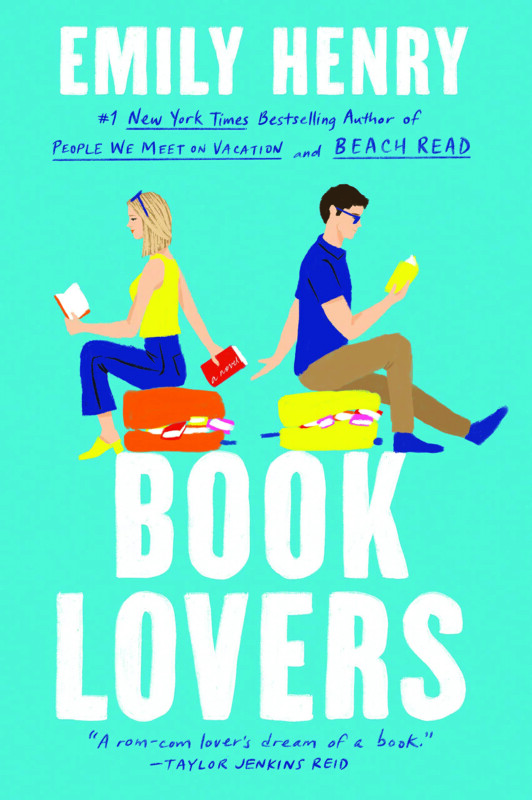
Book Lovers by Emily Henry

I love a well-written rom com that’s not super cheesy and entirely predictable, and I often still enjoy the ones that are. I’ve read Emily Henry’s two other novels, Beach Read and People We Meet on Vacation, and I really enjoyed them (that falls somewhere between just plain “enjoyed” and “loved”). I admit I was hoping Book Lovers — a book about love and people who love books?! — would reach “loved” status, but ultimately the main characters were a little too bland to get me there.

Still, I really enjoyed Book Lovers, which centers on Nora, a New York City literary agent who is described as cold and entirely focused on her job. She thinks of her life as a book; as the main character, she sees herself as the villainess, never the hero. She meets Charlie, a book editor, to pitch her author’s latest book. He says no. They’re not especially kind to each other. The end.

But! Two years later, that book she’d pitched has become a bestseller with a different editor, and Nora heads to the town the book is set in, Sunshine Falls, because her sister Libby is pregnant with her third child and said she wanted to get away, specifically to that small town, before the baby is born. Nora agrees to go with her sister because she feels like the two used to be closer, and she wants to rebuild that bond. She even agrees to follow Libby’s checklist of small-town things to do, like sleep under the stars and save a small business.

Guess who lives in Sunshine Falls, guys? Charlie! It’s his hometown, and he’s back to help his parents, who have health issues, run their bookstore. Turns out he’s not so bad! Even with him there, though, the story is more about Nora and Libby and family and the things we do for them no matter what. It’s … nice.

Here’s one of my issues with the book. Nora is constantly described as cold-hearted and ruthless. Her author’s newest book is kind of about her, in fiction form; the main character is known as a “shark.” Nora sees herself in the character immediately and hates that people see her that way.

The thing is, there are very few times in the book — Book Lovers, not the book in the book – that Nora actually seems cold-hearted. She’s never really mean. She desperately wants to please her sister. She spent much of her young adult life making sure Libby was taken care of after their mom died, which meant sacrificing the relationship she was in at the time, and, for a long time, the possibility of other relationships. She’s cautious, but understandably. So that contradiction throughout the book was a little frustrating for me, and I had a hard time connecting with her character.

I also vacillated between loving the dialogue and being annoyed by it. It definitely flows well and is fun to read most of the time, but occasionally it feels a little over the top, a bit too scripted — like, no one in real life can banter back and forth that wittily for that long.

Take this small part of a scene where Nora and Charlie are at a bar, begrudgingly sharing bits of their lives before challenging each other to a game of pool.

‘Why do you care why I’m here?’ I [Nora] ask.

‘Morbid curiosity. Why do you care about my bad day?’

‘Always helpful to know your opponent’s weaknesses.’

He holds the cue out. ‘You first.’

I take the stick, flop it onto the edge of the table, and look over my shoulder. ‘Isn’t now the part where you’re supposed to put your arms around me and show me how to do it?’

His mouth curves. ‘That depends. Are you carrying any weapons?’

‘The sharpest thing on me is my teeth.’

Really?

But then I loved the very next, non-dialogue line: “I settle over the cue, holding it like I’ve not only never played pool before but have quite possibly only just discovered my own hands.” The book, for me, was a roller coaster of “Ugh, Emily Henry, you’re trying too hard,” and “Aah, Emily Henry, your writing is brilliant!”

The plot is somewhat unique, and the genius of it is that the predictability is meant to be predictable because it’s a romance novel that’s about book lovers who are experts in the typical tropes and characterizations of romance novels. Henry describes them in those terms, and creates a plot that’s purposefully “this is where the story is supposed to go,” and it does. There are a couple of twists, which I didn’t find all that stunning or exciting, but there is some originality that helped level up my feelings for the story.

All in all, Book Lovers is definitely worth the read. It was a little more same-same than I had hoped, but it’s still a fun book that most rom-com lovers will really enjoy. B+ — Meghan Siegler

Book Notes

Animals, including humans, not only eat less in periods of hot weather, but also do less. Researchers have found a connection between high temperatures and lower productivity. If this tendency toward summer sloth also applies to your reading, it’s a good time to take a break from the 400-page multi-generation historical novels and indulge in bite-sized fare. Here are some story and essay collections easily digested in the embrace of a hammock.

Night of the Living Rez (Tin House, 296 pages) is a collection of 12 stories set in the Penobscot Indian Nation in Maine. The author, Morgan Talty, is a citizen who grew up there. This is his first book, but his writing has been published in collections of the best American short stories in 2020 and 2021.

The Angel of Rome: And Other Stories (Harper, 288 pages) is from Jess Walter, whose six novels include Beautiful Ruins and The Financial Lives of the Poets. His stories have been called “wonderfully inventive” and the publisher says they’re about “those moments when everything changes — for the better, for the worse, for the outrageous.”

Embrace Fearlessly the Burning World (Random House, 352 pages) is a collection of essays by Barry Lopez published posthumously. Lopez was a widely acclaimed nature writer (Arctic Dreams and Of Wolves and Men) who died of cancer in 2020; his work has been compared to that of Henry David Thoreau.

Ghost Lover (Avid Reader Press, 240 pages) is by Lisa Taddeo, a two-time Pushcart Prize winner who lives in Connecticut. The Guardian says Taddeo is known for writing about “female desire.” The Kirkus Review says the stories “take us into the world of people cooler and more attractive than we are.”

Finally, O. Henry Prize winner Frederic Tuten is out with The Bar at Twilight (Bellevue Literary Press, 288 pages). From the Los Angeles Times Review: “In ‘The Snow on Tompkins Square Park,’ a man has entered a horse bar, and the bartender, a blue horse, tells him flatly, ‘We serve horses here, and people who look horsey. You aren’t and you don’t.’” Sign me up. — Jennifer Graham


Book Events

Author events

• PAULA MUNIER and SARAH STEWART TAYLOR present their respective mystery novels The Wedding Plotand The Drowning Sea at Gibson’s Bookstore (45 S. Main St., Concord, 224-0562, gibsonsbookstore.com) on Thursday, July 21, at 6:30 p.m.

• LINDA REILLY presents her cozy mystery No Parm No Foul at Gibson’s Bookstore (45 S. Main St., Concord, 224-0562, gibsonsbookstore.com) on Tuesday, July 26, at 6:30 p.m.

• DIANE HALLENBECK presents Rejecting Fear: Learning to Be Led By Love at the Bookery (844 Elm St., Manchester, bookerymht.com, 836-6600) on Thursday, July 28, from 5:30 to 6:30 p.m. Free event; register at www.bookerymht.com/our-events.

• MARY ELLEN HUMPHREY presents My Mountain Friend: Wandering and Pondering Mt. Majorat Gibson’s Bookstore (45 S. Main St., Concord, 224-0562, gibsonsbookstore.com) on Thursday, July 28, at 6:30 p.m.

• KATHLEEN BAILEY and SHEILA BAILEY present their book New Hampshire War Monuments: The Stories Behind the Stones at Gibson’s Bookstore (45 S. Main St., Concord, 224-0562, gibsonsbookstore.com) on Thursday, Aug. 11, at 6:30 p.m.

• R.A. SALVATORE presents Glacier’s Edge at Gibson’s Bookstore (45 S. Main St., Concord, 224-0562, gibsonsbookstore.com) on Friday, Aug. 12, at 6:30 p.m.

• CASEY SHERMAN presents Helltown at the Bookery (844 Elm St., Manchester, bookerymht.com, 836-6600) on Sunday, Aug. 14, at 1:30 p.m. Free event; register at www.bookerymht.com/our-events.

• VIRGINA CHAMLEE presents Big Thrift Energy: The Art and Thrill of Finding Vintage Treasures at Gibson’s Bookstore (45 S. Main St., Concord, 224-0562, gibsonsbookstore.com) on Monday, Aug. 15, at 6:30 p.m.

Poetry

• OPEN MIC POETRY hosted by the Poetry Society of NH at Gibson’s Bookstore (45 S. Main St., Concord, 224-0562, gibsonsbookstore.com), starting with a reading by poet Sam DeFlitch, on Wednesday, July 20, from 4:30 to 6 p.m. Newcomers encouraged. Free.

• DOWN CELLAR POETRY SALON Poetry event series presented by the Poetry Society of New Hampshire. Monthly. First Sunday. Visit poetrysocietynh.wordpress.com.

Writers groups

• MERRIMACK VALLEY WRITERS’ GROUP All published and unpublished local writers who are interested in sharing their work with other writers and giving and receiving constructive feedback are invited to join. The group meets regularly Email pembrokenhtownlibrary@gmail.com.

Book Clubs

• BOOKERY Monthly. Third Thursday, 6 p.m. 844 Elm St., Manchester. Visit bookerymht.com/online-book-club or call 836-6600.

• GIBSON’S BOOKSTORE Online, via Zoom. Monthly. First Monday, 5:30 p.m. Bookstore based in Concord. Visit gibsonsbookstore.com/gibsons-book-club-2020-2021 or call 224-0562.

• TO SHARE BREWING CO. 720 Union St., Manchester. Monthly. Second Thursday, 6 p.m. RSVP required. Visit tosharebrewing.com or call 836-6947.

• GOFFSTOWN PUBLIC LIBRARY 2 High St., Goffstown. Monthly. Third Wednesday, 1:30 p.m. Call 497-2102, email elizabethw@goffstownlibrary.com or visit goffstownlibrary.com

• BELKNAP MILL Online. Monthly. Last Wednesday, 6 p.m. Based in Laconia. Email bookclub@belknapmill.org.

• NASHUA PUBLIC LIBRARY Online. Monthly. Second Friday, 3 p.m. Call 589-4611, email information@nashualibrary.org or visit nashualibrary.org.

Language

• FRENCH LANGUAGE AND LITERATURE CLASSES

Offered remotely by the Franco-American Centre. Six-week session with classes held Thursdays from 6:30 to 8:30 p.m. $225. Visit facnh.com/education or call 623-1093.
Stay in the loop!

Get FREE weekly briefs on local food, music,

arts, and more across southern New Hampshire!