
At the Sofaplex 21/09/23

Nightbooks (TV-PG)

Krysten Ritter, Winslow Fegley.

Upset after nobody comes to his horror-themed birthday party, 11-ish-year-old Alex (Winslow) runs off to burn all the scary stories he’s ever written, which are both his beloved hobby and the thing that he thinks has painted him as a weirdo to other kids. On the way to his family’s apartment building incinerator, he passes the open door of an apartment where his favorite movie (Lost Boys) and a piece of pie entice him inside. He passes out after a bite of the pie and awakens to learn that he’s been trapped in the apartment by Natasha (Ritter), a full-on fairy-tale cackling witch. She decides to let him live, for a little while at least, if he can tell her one new scary story a night. He reads from his Nightbooks, what he calls his scary story collection (with each story rather cutely presented in the movie as its own mini B horror film), and, with the help of fellow captive Yasmin (Lidya Jewett), tries to write new ones, which leads him to the witch’s spectacular library — and possibly clues on how to escape.

This is a fun adventure horror tale that is based on a book by J.A. White that Amazon labels as being for 8- to 11-year-olds. I’d put this movie at about the 11- to 12-year-old-and-up age range, as there are some scary images and story elements here. The movie does have nice messages about believing in yourself and your unique abilities and interests as well as some fun magicy visuals and Ritter’s wonderfully hammy performance. B Available on Netflix.

Being James Bond

This documentary is essentially a 45-minute commercial for the overall concept of Daniel Craig as James Bond and perhaps as a reminder that, despite some two years of trailers, you really are excited for No Time To Die, which is (at least, as of mid-September) scheduled for a theatrical release on Oct. 8. The movie is largely behind-the-scenes footage of all the Craig Bonds, including some footage from a screen test, with discussion by Craig and producers Michael G. Wilson and Barbara Broccoli. The movie goes into some of the creative decisions made for this stretch of the series and some of the difficulties faced during Quantum of Solace and Spectre. The movie appears to be basically free to watch via Apple and is definitely worth your time if you are at all interested in Bond; I think it even made me want to revisit the previous films before Craig’s final outing is released. B Available on Apple TV.

Lady of the Manor (R)

Melanie Lynskey, Judy Greer.

As well as Justin Long, Tamara Austin, Wallace Jean, Luis Guzman and Ryan Phillippe, going full popped-collar “do you know who my father is?” entitled adult-brat. Tanner (Phillippe) is the last in a long line of Wadsworths, the family that has owned historic house Wadsworth Manor for generations. Hannah (Lynskey) meets Tanner when she is particularly down on her luck: she has just lost her (illegal) job as a marijuana delivery person due to a mix-up between Ave. and St. — a mix-up that also got her arrested in a To Catch a Predator-style sting and led to her breakup with the guy she was living with. Tanner, about to get cut off from the family allowance because he fired the guide (for not wanting to date him) at the Manor (a popular tourist site), hires Hannah, who happily takes the job. In addition to giving guests facts about the Manor, the guide also dresses up as the 1870-lady of the house, Lady Elizabeth Wadsworth. Hannah knows nothing about the Manor, the Wadsworths or being a lady — something pointed out by a visiting history professor, Max (Long). But she charms him into letting her “this is ye olde living room” presentation slide.

Not willing to let historical inaccuracy or a potty mouth slide is Elizabeth Wadsworth (Greer), who shows up regularly to interfere with Hannah’s attempts to get high and have drunken trysts with Tanner. Elizabeth is patronizing and annoying and very dead — which leads Hannah first to try to get rid of her via a good saging but then to start to figure out what it is ghost Elizabeth is sticking around for. Elizabeth offers to give Hannah lady lessons to help her keep her job.

This slight, dopey movie has a lot of fart-related humor. And if that’s a pass (sorry) for you, then this is not your movie. I laughed a big dumb laugh at the first fart joke and I’m sorry to say they were never not funny. Not brilliant-comedy funny but, like, “some part of me is still in the fifth grade” fart-joke funny.

I like Melanie Lynskey and Judy Greer. I wish they had sharper, smarter material, but I also didn’t mind just seeing them do this silly blend of very broad humor plus ghost jokes plus a little light mystery-solving. B- Available for rent or purchase.

Mellencamp, by Paul Rees

Mellencamp, by Paul Rees (Atria, 320 pages)

John Mellencamp hasn’t been a reliable hitmaker since the 1980s, back when he was known as John Cougar. Generation Z would be hard-pressed to name five of his singles, even though “Jack & Diane” and “Pink Houses” still get play on oldies stations.

Mellencamp himself could qualify as an oldie, as he’s about to turn 70 next month. So why would anyone but his biggest fans read a book about his life?

Billed as the definitive biography of the rough-hewn rocker from a small town in Indiana, Paul Rees’ Mellencamp works because it’s written by Paul Rees, a longtime British music writer immersed in the industry and gifted with the elegant prose common in magazines like GQ and Vanity Fair. He takes a local-boy-makes-good story and adds a touch of mystery, making Mellencamp a surprisingly engrossing story even for people who are only vaguely aware of Mellencamp’s music.

Even more surprising is that he’s helped by the subject himself, a profane and rough-edged product of an often dysfunctional house who seems unable to utter a sentence without dropping an f-bomb. Prudes, cover your eyes. The direct quotes from Mellencamp in this story wouldn’t make it past TV censors, even as loose as their standards have gotten lately.

Mellencamp uses profanities as casually as the rest of us use verbs and admits to having a high-voltage temper that lost him jobs early in his career. He came by it honestly: His father was an angry man who once beat his teenage son savagely and violently cut off his hair. That’s the sort of thing that would land a lot of people in therapy for decades, but Mellencamp grew up as tough and defiant as his dad and, astonishingly, says he has good memories of his childhood, which he paints in vaguely Ozzie-and-Harriet terms. Theirs was a church-going family which, for fun in the evenings, would have “bongo parties” in which grown-ups would gather around the gramophone, singing boisterously to artists like Woody Guthrie while someone kept the beat on a bongo drum. “These were happy, rowdy affairs,” Rees writes.

In retrospect, there was no sign in Mellencamp’s teen or early adult years that he would be able to support a family let alone become a famous musician. When he was 18, he got a 21-year-old woman pregnant, then secretly married her but continued to live with his parents. The secret was exposed the night he went to the prom — with another girl — and was congratulated on his marriage by someone who had seen something about it in a local paper. That’s the sort of wild story that populates this book; whether or not you’re a fan of Mellencamp’s music, or his style of living, he has led an utterly fascinating life, and the story that Rees skillfully teases out of these early anecdotes is ultimately more about determination than talent.

Living off his new wife’s income, young Mellencamp bounced from job to job, showing little evidence of ambition. (In another of those bizarre anecdotes, he once got fired from a job at a telephone company after accidentally disconnecting an entire town from its service.) But he kept coming back to his music and at some point developed a steely resolve that allowed him to leave Indiana for the first time and go to Manhattan to go door-to-door at music companies, leaving demo tapes. This went on for a while. He papered a door in his home with rejection slips. But then magic happened. He got a call from a manager who liked what he heard and told him he was sending him a plane ticket and he should return to New York the next day. That would be Mellencamp’s first plane ride.

It would take years, however, before Mellencamp found success, and when it first came it was, ironically, in the U.K., where his first hit, “I Need a Lover,” took off before it hit the airwaves in the U.S. In those difficult years, in which Mellencamp’s first marriage was unraveling, Rees gives us a glimpse into the pop-music industry, as Mellencamp crosses paths with a star-studded roster of antique rockers, to include The Cars and The Eagles. For all his bravado, Rees writes, Mellencamp struggled to maintain belief in himself and his product, as he listened to these bands recording their now famous songs in nearby studios. “I’d walk by their room and hear all of those beautiful songs coming out. Then I’d listen to what I was doing and it was a … joke. It got to the point where I didn’t want to go to the studio,” Rees quotes Mellencamp as saying.

How the singer overcame his doubts, foul mouth and hot temper to ultimately have 28 hit singles and sell more than 60 million albums worldwide is as interesting as what he does now, which is … paint. Didn’t see that coming, but the singer sells his work on johnmellencampart.com, and to this untrained eye, it’s quite good.

Before Rees gets there, however, he answers many questions you didn’t know you had, such as how “Jack & Diane” came about, and what was up with the ever-changing name. (A manager insisted he debut as Johnny Cougar, which Mellencamp hated. And even Mellencamp wasn’t the family’s original name. A great-great-grandfather who emigrated from Germany Americanized Mollenkamp.)

There is also a satisfying amount of crude philosophy from the rocker who says, “Happy is not a normal way to be.” Happiness, according to Mellencamp, is a “very small commodity.”

“We live to work. And we should toil like galley slaves and try to find happiness in our work. That’s what life is about,” Rees quotes him as saying.

Them’s fighting words to hedonistic America, but Mellencamp has always been a rebel with a punch at the ready. B+


Book Notes

Earlier this year the Macmillan imprint Feiwel & Friends announced that it would be publishing a handful of classics with a twist: The beloved characters of books like Little Women and Wuthering Heights would be of different ethnicities than the original and as such would experience the world differently. Otherwise, the plot and themes would be roughly the same.

The first of the series, called “Reclaimed Classics,” came out this month. It’s a retelling of Treasure Island called A Clash of Steel, written by C.B. Lee (Feiwel & Friends, 432 pages), and the main characters are Asian girls sailing the South China Sea.

Also out this month is a reboot of Little Women, with Jo, Meg, Beth and Amy March portrayed as Black. Called So Many Beginnings (Feiwel & Friends, 304 pages), it’s written by Bethany C. Morrow.

Yet to come are reimaginings of Robin Hood and Wuthering Heights.

Meanwhile, the finalists for the National Book Awards in fiction were announced last week. You’d have to read more than one a week to get all 10 read by Nov. 17, the day the winner is announced, but with enough coffee it’s definitely possible.

And the nominees are:

Cloud Cuckoo Land by Anthony Doerr (Scribner, 640 pages, release date Sept. 28)

Matrix by Lauren Groff (Riverhead, 272 pages)

Abundance by Jakob Guanzon (Graywolf, 328 pages)

Zorrie by Laird Hunt (Bloomsbury, 176 pages)

The Love Songs of W.E.B. Du Bois by Honoree Fanonne Jeffers (Harper, 816 pages)

The Prophetsby Robert Jones Jr. (G.P. Putnam’s Sons, 400 pages)

Intimacies by Katie Kitamura (Riverhead, 240 pages)

The Souvenir Museum: Stories by Elizabeth McCracken (Ecco, 256 pages)

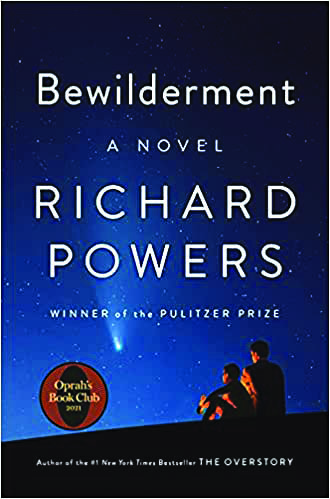
Bewilderment by Richard Powers (W.W. Norton & Co., 288 pages, released this week)

And finally, noteworthy if only for its title, Hell of a Book by Jason Mott (Dutton, 336 pages)

Book Events

Author events

EMMA PHILBRICK Author presents Arkivestia. Barnes & Noble (1741 S. Willow St., Manchester, barnesandnoble.com). Sat., Sept. 25, 1 p.m.

DAVID SEDARIS Humor writer presents. Capitol Center for the Arts (44 S. Main St., Concord, ccanh.com), Sun., Sept. 26, 7 p.m. Tickets start at $49.

ARCHER MAYOR Author presents Marked Man. Mon., Oct. 4, 6:45 p.m. Gibson’s Bookstore (45 S. Main St., Concord). Visit gibsonsbookstore.com.

MELANIE MOYER AND CHARLIE J. ESKEW Virtual author conversation presented by Toadstool Bookshops of Nashua, Peterborough and Keene. Sat., Oct. 9, 11 a.m. Visit toadbooks.com.

DIANNE TOLLIVER Author presents Life Everyone Has a Story. Barnes & Noble (1741 S. Willow St., Manchester, barnesandnoble.com). Sat., Oct. 9, 10 a.m.

ARCHER MAYOR Author presents Marked Man. Virtual event by Toadstool Bookshops of Nashua, Peterborough and Keene. Tues., Oct. 12, 6 p.m. Visit toadbooks.com.

HOWARD MANSFIELD Author presents Chasing Eden: A Book of Seekers. Thurs., Oct. 14, 6:30 p.m. Gibson’s Bookstore (45 S. Main St., Concord). Visit gibsonsbookstore.com.

Book sales

MULTI-BOOK CHILDREN’S AUTHOR SIGNING AND SALE A Freethinker’s Corner(652 A Central Ave., Dover, 343-2437, freethinkerscorner.com), Sat., Sept. 25, noon to 4 p.m.

FRIENDS OF BROOKLINE PUBLIC LIBRARY TWO-DAY BOOK SALE Featuring hardbound and paperback books of all fiction and nonfiction genres, plus CDs, DVDs and audio books, for sale. 4 Main St., Brookline. Saturday, Sept. 25, and Sunday, Sept. 26, 10 a.m. to 2 p.m. Visit brooklinenh.us/brookline-public-library/pages/friends-of-the-brookline-public-library.

Book Clubs

BOOKERY Online. Monthly. Third Thursday, 6 p.m. Bookstore based in Manchester. Visit bookerymht.com or call 836-6600.

GIBSON’S BOOKSTORE Online, via Zoom. Monthly. First Monday, 5:30 p.m. Bookstore based in Concord. Visit gibsonsbookstore.com/gibsons-book-club-2020-2021 or call 224-0562.

TO SHARE BREWING CO. 720 Union St., Manchester. Monthly. Second Thursday, 6 p.m. RSVP required. Visit tosharebrewing.com or call 836-6947.

GOFFSTOWN PUBLIC LIBRARY 2 High St., Goffstown. Monthly. Third Wednesday, 1:30 p.m. Call 497-2102, email elizabethw@goffstownlibrary.com or visit goffstownlibrary.com

BELKNAP MILL Online. Monthly. Last Wednesday, 6 p.m. Based in Laconia. Email bookclub@belknapmill.org.

NASHUA PUBLIC LIBRARY Online. Monthly. Second Friday, 3 p.m. Call 589-4611, email information@nashualibrary.org or visit nashualibrary.org.

Album Reviews 21/09/23

Chet Doxas, You Can’t Take It With You (Whirlwind Recordings)

Minimally accessible but solid jazz album, a straightforward mixture of progressively minded post-bop loaded with curveballs, the 12th full-length from Doxas, a New York-by-way-of-Montreal saxophone guy. A guy who has some pretty cool friends, I should elaborate; the professed theme here is inspiration, most specifically thoughts that came up while Doxas was on tour in Europe with the band Riverside and wound up sitting in a van “with the cool kids,” Carla Bley and Steve Swallow. Bley asked him why he didn’t just form a trio, et voila, it was done, so this is Doxas with pianist Ethan Iverson and drummer Thomas Morgan. The title track is as nice and friendly as it gets, and then comes the first of many self-indulgent moments in “Lodestar,” dedicated to Lester Young, one of far too many legendary saxophonists whose genius wasn’t enough to keep him from succumbing to self-destruction. Noisy noodling on “Cheryl and George”; some spazzy bumblebee-ness on “Soapbox.” Not something I’d recommend to anyone other than someone who really wanted to see inside Doxas’s head. B-

David Duchovny, Gestureland (Westbound Kyd Records)

No, you shut up, we’re doing this and that’s final. Yes, it’s the guy from The X-Files, and this is his third album. I’ll cut him some slack because he’s not one of the mega-famous Hollywood Vampires guys; he’s just a schmo with enough money and leisure time to make an album with some guys who probably help him clean up after pool parties. No, I kid, he’s still the man to all us alien-goth heads, and hey, the first song is almost OK, like Neil Young but with Mulder singing, and holy crow is the guitar solo awful, whichever one of these guys did this is a terrible human being. Ah, then there’s a mellow bit, “Holding Patterns,” boasting a guitar melody you’d imagine your uncle writing during off-hours from his accounting job. It’s kind of Tom Petty-ish I suppose — wait, “Chapter And Verse” is a monstrosity, maybe inspired by early Traffic from the 1960s. Good lord, I can’t take another minute of this. D

PLAYLIST

• Here it comes, Sept. 24, with a freshly baked basket of new album releases, some of which might actually be good — I haven’t even looked yet, because I am afraid to. When I check my Metacritic list, the “gig” acts are all in bold print, while the small fry are all non-bolded. I think it should be the other way around. Smaller acts should be bolded and more established bands should be in really small print, to give the smaller releases a chance to make a few bucks instead of all the money going to Eric Clapton’s mansion, or the Hollywood Vampires clubhouse, where the money is instantly converted to gold coins and sealed in a vault that’s guarded by a dragon that knows all the Beatles and Rolling Stones guys and just lets them scoop out piles of gold coins to buy a random Walmart or whatever for no reason at all. Anyway, I’m looking at the list and — um, guys? Why on earth is Flux, the new album from crazed shock-metal chick Poppy, not bolded? What, did they think I wouldn’t see that there was an actual cool album in the list just because it was in normal font? Poppy is a local Boston girl and had a sneak appearance a few months ago on the Grammys or whatever it was, and she makes Billie Eilish look like Marie Osmond. Talk about edgy; the only band she rips off as far as I’ve noticed so far is Meshuggah, meaning she makes music for breaking stuff, or at least she did until now. She was a bubblegummer at first, then she just wanted to freak people out, and now she’s back to bubble-pop, to go by the title track of this album. It’s basically Avril Lavigne but obviously influenced by A Perfect Circle. It’s pretty disposable, and it will definitely alienate all the fans that liked her gore-metal phase. Girl really needs to make up her mind.

• The guys in English reggae/ska band The Specials are all one million years old, but they still like to kick out the jams, or whatever I’m supposed to call it nowadays in order to fake that I’m young and can only speak in short-shelf-life crutch phrases. Yes, the same band that brought you “A Message To You Rudy” may be older than Neanderthal bones, but they know that protest music is important, especially in these final years of human existence. The band’s new LP, Protest Songs 1924-2012, is exactly what it looks like, a collection of old protest songs that tried to inspire people to Do Stuff to fight oppression and make our world a better place (no, there are no Justin Bieber songs on here). One of the covers is a drummy, rattley version of the Staple Singers’ 1965 tune “Freedom Highway.” It is not bad for a band whose members are so old they used to keep trilobites as pets.

• Oh how lovely, another album from an actor who probably should have stuck to acting instead of barfing random albums into my to-do list. This time it’s Caleb Landry Jones, with his second full-length, Gadzooks Vol. 1, which probably means I’ll have to deal with a Vol. 2 at some point. No, ha ha, I’ll just ignore it next time, but for now, sure, why not, let’s see if the guy who played Banshee in X-Men: First Class sings like a dachsund and whether or not the reviewers who gave his last stupid album an average rating of 7.5 were paid to do it. Hmm, this single looks interesting, “The Loon.” Oh geez, come on, it starts off with one of those French café accordions, so of course in the video he’s dressing up like a stupid clown, and then the song starts ripping off Pink Floyd’s “Brain Damage.” We can mark this one as done, yes?

• Finally, it’s New York post-hardcore band Quicksand, with their latest album, Distant Populations! Album-opener “Inversion” is pretty cool, like early Mastodon but with Jane’s Addiction’s singer, you might like it.

If you’re in a local band, now’s a great time to let me know about your EP, your single, whatever’s on your mind. Let me know how you’re holding yourself together without being able to play shows or jam with your homies. Send a recipe for keema matar. Message me on Twitter (@esaeger) or Facebook (eric.saeger.9).
At the Sofaplex 21/09/16

He’s All That (TV-MA)

Addison Rae, Tanner Buchanan.

Also appearing here is Rachel Leigh Cook — who you may remember took her glasses off thus signifying her transition from nerd to looker in 1999’s She’s All That. Here she plays Anna, mom to lead girl Padgett (Rae). A high school senior, Padgett doesn’t just dress fancy and use eye-puffiness-reducing masks for funsies; she’s a paycheck earning, free-stuff getting social media influencer with hundreds of thousands of followers. She even helped her boyfriend Jordan (Peyton Meyer) gain followers and jump-start his pop star career. But then she catches Jordan cheating on her — and, horror of horrors, the moment is livestreamed. She loses her sponsorship (which she’d been counting on to fill her college fund) and finds herself meme-ed as “bubble girl” from the snot bubble in her nose during her break-up crying. To earn back her followers (and her sponsorship) she agrees to a bet with frenemy Alden (Madison Pettis): find a loser and make him a hottie. Alden picks as the loser a flannel-wearing 1990s throwback named Cameron (Buchanan, who is also on the TV show Cobra Kai and is really making a nice career out of nostalgia-based media).

Cameron is all sarcasm about high school and taking film photos with messaging about the shallowness of society, which his best friend Nisha (Annie Jacob) finds entertaining. (Nisha is probably the movie’s most interesting character overall. When Netflix turns this thing into a series or cinematic universe or whatever, it should follow Nisha.) At first he isn’t sure what to make of Padgett’s sudden interest in him, but soon, and with some nudging from his younger sister Brin (Isabella Crovetti), he finds himself genuinely starting to like her. Likewise, Padgett starts to see Cameron as more than just a project, but will the secret of what led her to start hanging out with him jeopardize their chance at a real friendship?

Ooo, will it? If, based solely on the movie’s title, you sketched out all the beats in this movie and then took a drink every time the movie hit one, you’d be drunk before the first half hour. He’s All That hits every expected plot point — but delightfully. This movie knows what it is and knows who is watching it, a group that probably includes some actual teenagers but probably also includes a fair number of me-agers who saw the 1999 original and enjoy the Snapple-and-a-Hot-Pocket treat that is this silly blend of “Ha! That guy!” and teenage rom-com storytelling. So pop some popcorn and watch this puppy, fellow Olds; come for the Rachel Leigh Cook and modern day Clueless-y look at excessively rich teenagers, stay for an entertainingly cast supporting character who shows up in the movie’s final scenes. B Available on Netflix.

Vacation Friends (R)

John Cena, Lil Rel Howery.

Marcus (Howery) and his girlfriend Emily (Yvonne Orji) are in Mexico for a relaxing getaway — or it could be relaxing if Marcus weren’t so tense about all of his plans for his big proposal. When they get to their fancy suite, which should be all rose petals and romantic music, they find a soggy mess from a burst Jacuzzi from the room above. Despondent and unable to find a room at any hotel better than a Best Western by the airport, Marcus and Emily agree to accept the offer of random fellow vacationers Ron (Cena) and Kyla (Meredith Hagner) to stay in their giant suite (which happens to be the one whose leaky Jacuzzi flooded their room). Rona and Kyla seem crazy to the tightly wound Marcus, what with their carefree jet-skiing and their cocaine-rimmed margaritas, but, in the spirit of having a romantic vacation, Emily convinces him to just go with it. Eventually, the four end up having an adventure-filled week, full of bar-dancing (Marcus) and bar fights (Kyla) and culminating with Marcus and Emily getting married (for real? Maybe?) in a cave by a shaman type and then getting so drunk Marcus can’t totally remember the rest of the evening. And maybe doesn’t want to, as the flashes he does remember seem to suggest that he and Kyla got a little friendlier than is cool for the night of one’s wedding to another person.

When they say goodbye to Ron and Kyla at the airport, Marcus and Emily are fairly confident that they will never see that couple again but then, in the midst of the festivities for their “real” wedding — with Emily’s posh, disapproving parents (Robert Wisdom, Lynn Whitfield) running the show — Ron and Kyla show up again.

Cena and Howery have very good buddy (or maybe reluctant-buddy) chemistry. This is the type of role that makes great use of Cena — one that balances his physicality with his comedy chops. And the pairing with Howery works to complement both actors, playing up Howery’s stress so that he isn’t just a straight man to Cena’s wackiness. Orji and Hagner are also key elements to the mix here, not just “girlfriend role” characters who fill out the scene. Hagner in particular has a kind of good-hearted, upbeat zaniness that feels like a blend of Kate Hudson and Isla Fisher.

Have the dumb “crazy people in extreme situations” comedies changed or have I changed, because Vacation Friends feels like the kind of movie that might have once annoyed me but that I really enjoyed. I mean not “and the Oscar for best original screenplay goes to” enjoyed but laughed a couple of big belly laughs at and basically liked spending time with. Is this another example of a movie being more suited to the relaxed atmosphere of one’s own sofa versus the “you paid money to be here and even more money for this popcorn” of the theater, where one (me) may be less forgiving? I don’t know the answer to these questions but I do know that Vacation Friends was enjoyably stupid fun. B Available on Hulu.

Kate (R)

Mary Elizabeth Winstead, Woody Harrelson.

Birds of Prey underused Winstead’s awesomeness in her role as The Huntress and this movie feels like the demonstration of how much more action hero she has in her. Here, Kate (Winstead) is an assassin who is bothered by a job that had her killing a man right in front of his teenage daughter, Ani (Miku Patricia Matineau). Months later, she tries to tell her handler Varrick (Harrelson) that she wants to retire but as you know if you see even one of these movies, retirement is seldom in the cards for your fancy assassin-types. Instead, she finds herself poisoned with about a day to live and seek vengeance on everyone who had something to do with her fast-approaching death.

The movie is set in Tokyo and takes place mostly at night, giving the whole thing a kind of neon coolness. She does a fair amount of snazzy fighting — some shooting, some stabbing, one guy is felled by her getting him to trip. Winstead is entertaining enough that I regularly forgot the movie didn’t have a whole lot more going on. This is a fine if not particularly innovative pick for when you just want some low-effort action. C+ Available on Netflix.

Disney Princesses Remixed: An Ultimate Princess Celebration (G)

This special/short film is primarily a handful of performances by what the internet tells me are Disney stars (in the live-action people sense) doing pop (or in one case, punk-y rock) takes on Disney movie songs. Brandy also shows up to sing an original song. The whole thing is knit together with a framing device that has a skateboarding, Disney-loving young girl picking the songs and princess qualities to build the remix with the help of an Alexa-like personal assistant. The gist of all of this is, I think, to sell the princesses, even some of the older ones with soppier character stories, as good and non-problematic modern girl avatars. And I think this special is fairly successful at this. The songs, while a bit on the poppy side for my personal taste, were a hit with my kids, whose big complaint is that there weren’t more. B Available on Disney+.

Worth (PG-13)

Michael Keaton, Amy Ryan.

Keaton gives a solid performance, reminiscent of his work in Spotlight, as Ken Feinberg, the lawyer who was the Special Master of the federal Sept. 11 Victim Compensation Fund. Shortly after the attacks of Sept. 11 he is appointed to get victims’ families to sign on to receiving money from the U.S. government in lieu of suing — the airlines, among other possible targets. His team has to deal with the raw emotions of people who recently lost loved ones, many of whom see pretty much any dollar figure as an insult. Though full of individual heartbreaking 9/11 stories (many of which are based on real people or are composites of real people, according to an article in Slate), the movie is actually largely a procedural about how Feinberg attempts to balance the staggering weight of the emotion of the situation with what both Congress and the president paint as an urgent need to get the financial aspect of the deaths settled without potentially economy-tanking lawsuits. The movie shows Feinberg mess up in his initial attempts to present the fund to the families, and slowly learn how to navigate his difficult task. This is not a particularly fun watch but it is a solid group of performances and an interesting look at the messy, personal aftermath of the attacks for those who lost someone. B+ Available on Netflix.

Come from Away (TV-14)

Jenn Colella, Sharon Wheatley.

This musical play tells the story of the passengers from all over the world who found their flights diverted to Newfoundland on Sept. 11, 2001. The Broadway cast performs a live stage production, recorded earlier this year in front of an audience of people wearing masks as we see in the movie’s opening scenes. The cast, most of whom play several characters (identifiable by a change of hat or jacket and maybe a different accent), make up the townspeople of Gander and the people from across the globe who wind up in the town after a harrowing day on a plane. Sometimes, literally more than a day, as passengers sat on their airplanes, between flights and just waiting on a tarmac, for 28 hours. We meet the mother of a New York City firefighter, a couple who find their relationship fraying, a man from London who becomes smitten with a woman from Texas, a female pilot who knew one of the pilots in the hijacked planes as well as the head of the local SPCA who is desperate to get food and water to the pets stuck in airplane cargo holds, various small-town mayors, a new TV reporter. It’s a lively show that manages to have humor and energy while still capturing some element of anxiety and the gravity of the event it’s depicting. And it does a good job of bringing us up close to the performers while still letting us see some of the staging magic. B Available on Apple TV+.

Water, A Biography, by Giulio Boccaletti

Water, A Biography, by Giulio Boccaletti (Pantheon, 300 pages)

Watching muddy brown water flood the streets of Louisiana, Mississippi and New York City, I want to turn to Giulio Boccaletti’s Water, A Biography for an explanation of how we suddenly seem on the verge of being extras in that 1995 film Waterworld.

The excess, or lack, of water gets more of its share of headlines these days, so the timing seems right for a serious look of how we got here and where we’re going, told in a compelling narrative that can engage non-scientists.

Unfortunately, Water, a Biography is not that book. It’s a treatise written by an economist and scientist for other economists and scientists, and for their policy-making friends. While it may win awards, Boccaletti’s book will not be attractive to the general public; for that, you’ll want Philip Ball’s H20: A Biography of Water, published in 1999. Boccaletti’s work is encyclopedic, in both scope and presentation.

He begins promisingly, with words that evoke Genesis if written by a physicist told to write a version of “In the beginning” without mentioning God:

“Long before Earth ever formed, the subatomic particles that emerged from the Big Bang’s first instants formed a plasma of hydrogen and helium. Gravity pulled them together in a nuclear fusion that fueled the first stars, the furnaces that forged heavier elements like oxygen. In the proto-stellar material left by the death of those first stars, hydrogen and oxygen reacted. They produced water.”

That’s lovely, and Boccaletti goes on to provide a fascinating overview of water throughout space and history: why water exists everywhere in our solar system, what caused ice ages, why a great flood myth is common to cultures all over the world, and why water, in the author’s words, is the “principal greenhouse gas” that wraps the planet like a blanket. He then moves into a history of how access to water played into the change from hunter-gatherer societies to the sedentary agriculture-based communities, and the development of crude dams, canals and irrigation systems.

In these early societies, water also played a role in religious myths. In one story found on tablets in Nineveh, Boccaletti writes, lesser gods were required to maintain the canals. “Eventually the gods, tired of having to do all the work, created man to do the digging for them. In other words, those who wrote [the epic] believed that humans existed for the struggle of managing water.”

He goes on to examine the use and control of water in Egypt, Greece, Italy and China, among other ancient societies. Rome’s system of controlling water was particularly sophisticated. “At the time of Augustus, Rome already had far better infrastructure than most European cities would have until the nineteenth century,” he writes. (In fact, one of those ancient aqueducts is still in use today.)

It’s about here that the book begins to bog down for the reader who may not be overly fascinated by European power struggles over water access throughout the Middle Ages. There is relief in a discussion about what’s known as the Little Ice Age, the period of cooling temperatures that began in the 14th century and saw temperatures fall about 2 degrees below average in Europe for a few centuries. During that time, there were also violent, flooding storms in Denmark, Germany and the Netherlands. “Between 1620 and 1621 the Bosporus froze. Baghdad flooded in 1630. The Arctic pack ice grew enough for Inuits to land kayaks in Scotland. Snowfall, heavier than ever recorded — before or since — lay on the ground for months.”

The cause of the Little Ice Age? Well, no one is sure, just like no one is sure how water came to be on Earth, although there are theories to explain the Little Ice Age, to include volcanic eruptions and sun spots. Regardless, Boccaletti explains, the slight changes in temperature created societal problems to include a “shorter, less reliable growing season,” which led to higher costs of grain and, in some places, famine or malnutrition. “The political crisis of the seventeenth century was inseparable from changes in environmental conditions,” he writes.

As for our current climate, Boccaletti takes it up late in the book and does so carefully, saying it’s too early to predict the extent of the challenges ahead, although “There is a very good chance that [the climate] may change far beyond anything in recent experience, thanks to modernity’s impact on the chemistry of the atmosphere.”

Some countries, however, are better equipped to deal with the changes: “Countries that are rich can manage water better, but it is often the case that countries are rich because they found a better way of managing water.” China’s Three Gorges Dam, the largest dam in the world, may be one of the most impressive attempts by a society to control water. But Boccaletti argues that it is an illusion that society can protect itself from a variable climate with concrete. “The question, once again, is what will happen when — not if — that illusion is shattered.” And for that, he has no answers, or has saved them for another book. B-


Book Notes

In the aftermath of deadly flash floods in New York and New Jersey, The New York Times amused some of its readers by publishing a guide to packing a “go bag” and “stay bin” in order to be prepared for emergencies.

Such information is readily available, even on government websites, but the old gray lady is not usually in the ranks of doomsday preppers, people who are equipped to take on any sort of natural or man-made disaster.

One thing conspicuously absent from Tara Parker-Pope’s list, however, was any sort of book. This is odd because if you’re bugging out to an emergency shelter, bunker or cave, you’ll need something to do when you get there, possibly for a long time. (May I recommend Moby-Dick, The Gulag Archipelago or Les Miserables?)

More importantly, if a doomsday scenario ever occurs, you’re not going to have internet access. So it seems that any sort of survival bag should contain at least one book that teaches you, well, to survive. Enter the newly released 4th edition of The Survival Medicine Guide, by Dr. Joseph Alton and Amy Alton of YouTube survival video fame. It’s billed as “the essential guide for when help is not on the way” and, at nearly 700 pages in paperback, seems to cover everything. Moreover, it’s published by the brilliantly named company Doom and Bloom LLC.

From a legacy publisher, there’s also last year’s The MeatEater Guide to Wilderness Skill and Survival by Steven Rinella (Random House, 464 pages). You may not want to learn how to do everything Rinella teaches, but you definitely want to know someone who did.

And out this week is the paperback version of a 2009 book, Hawke’s Green Beret Survival Manualby Mykel Hawke (Skyhorse, 456 pages). He promises to deliver the information you need on not only medicine and food but also fire, tools, navigation, shelter and “survival psychology.” The publisher promises it’s geared to the untrained civilian, i.e., me.

Finally, one of the best fiction books about surviving a flu pandemic that wipes out much of the human race is Peter Heller’s The Dog Stars (paperback, Vintage, 336 pages). It was published in 2012 but feels alarmingly relevant these days.

Book Events

Author events

AMY TIMBERLAKE Newbery Honor winning author presents her second Skunk and Badger book, Egg Marks the Spot. Virtual event via Zoom, hosted by Gibson’s Bookstore in Concord. Tues., Sept. 21, 7 p.m. Visit gibsonsbookstore.com or call 224-0562.

JEFF BENEDICT Author presents The Dynasty. Gibson’s Bookstore, 45 S. Main St., Concord. Wed., Sept. 22, 6 p.m. Visit gibsonsbookstore.com or call 224-0562.

EMMA PHILBRICK Author presents Arkivestia. Barnes & Noble (1741 S. Willow St., Manchester, barnesandnoble.com). Sat., Sept. 25, 1 p.m.

DAVID SEDARIS Humor writer presents. Capitol Center for the Arts (44 S. Main St., Concord, ccanh.com), Sun., Sept. 26, 7 p.m. Tickets start at $49.

DIANNE TOLLIVER Author presents Life Everyone Has a Story. Barnes & Noble (1741 S. Willow St., Manchester, barnesandnoble.com). Sat., Oct. 9, 10 a.m.

Book sales

MULTI-BOOK AUTHOR SIGNING AND SALE A Freethinker’s Corner(652 A Central Ave., Dover, 343-2437, freethinkerscorner.com), Sat., Sept. 18, noon to 4 p.m.

MULTI-BOOK CHILDREN’S AUTHOR SIGNING AND SALE A Freethinker’s Corner(652 A Central Ave., Dover, 343-2437, freethinkerscorner.com), Sat., Sept. 25, noon to 4 p.m.

FRIENDS OF BROOKLINE PUBLIC LIBRARY TWO-DAY BOOK SALE Featuring hardbound and paperback books of all fiction and nonfiction genres, plus CDs, DVDs and audio books, for sale. 4 Main St., Brookline. Saturday, Sept. 25, and Sunday, Sept. 26, 10 a.m. to 2 p.m. Visit brooklinenh.us/brookline-public-library/pages/friends-of-the-brookline-public-library.

Poetry

DOWN CELLAR POETRY SALON Poetry event series presented by the Poetry Society of New Hampshire. Monthly. First Sunday. Visit poetrysocietynh.wordpress.com.

SLAM FREE OR DIE Series of open mic nights for poets and spoken-word artists. Stark Tavern, 500 N. Commercial St., Manchester. Weekly. Thursday, doors open and sign-ups beginning at 7 p.m., open mic at 8 p.m. The series also features several poetry slams every month. Events are open to all ages. Cover charge of $3 to $5 at the door, which can be paid with cash or by Venmo. Visit facebook.com/slamfreeordie, e-mail slamfreeordie@gmail.com or call 858-3286.

Book Clubs

BOOKERY Online. Monthly. Third Thursday, 6 p.m. Bookstore based in Manchester. Visit bookerymht.com/online-book-club or call 836-6600.

GIBSON’S BOOKSTORE Online, via Zoom. Monthly. First Monday, 5:30 p.m. Bookstore based in Concord. Visit gibsonsbookstore.com/gibsons-book-club-2020-2021 or call 224-0562.

GOFFSTOWN PUBLIC LIBRARY 2 High St., Goffstown. Monthly. Third Wednesday, 1:30 p.m. Call 497-2102, email elizabethw@goffstownlibrary.com or visit goffstownlibrary.com

BELKNAP MILL Online. Monthly. Last Wednesday, 6 p.m. Based in Laconia. Email bookclub@belknapmill.org.

NASHUA PUBLIC LIBRARY Online. Monthly. Second Friday, 3 p.m. Call 589-4611, email information@nashualibrary.org or visit nashualibrary.org.

Album Reviews 21/09/16

Barry Altschul’s 3Dom Factor, Long Tall Sunshine (Not Two Records)

Jazz drummer Altschul is staring down the barrel of 80 years of age in 2023. Before the great Covid rain delay, he’d been (and assuredly still is) considering wrapping up the touring period of his career, the prime of which happened during the 1960s, when he worked with such legends as Paul Bley and Chick Corea and gained some fame out of it. So we come to the fourth album of his experimental sax-bass-drums trio, following 2017’s Live In Krakow, which, like this one, finds the band noodling around with five of Altschul’s originals, again in a live setting but this time recorded in a location no one seems to remember (“somewhere in Europe,” read the liner notes). The first 19-odd minutes, encompassing two songs, are a skronk-and-rattle clinic, a sure-sounds-like-improv frontal assault that spazzes and subsides over and over, until it ends with sax guy Jon Irabagon spitting and slurping on his instrument in a display of (so some think) contempt for jazz wonks. “Irina” is a well-behaved beatnik-post-bop ballad, fit for power-guzzling gin; “Martin’s Stew” is a workout that’s terrifying in its power. Not for beginner listeners, put it that way. A

Armored Saint, Symbol of Salvation Live (Metal Blade Records)

I’m probably the least qualified music journo to be discussing this vaunted Los Angeles metal band. One of my old bandmates and I met them once and hung out on their tour bus. It was a bit awkward; there were no girls with them, and they were so bored we finally had to make an excuse to leave. Anyway, I found their music singularly unexciting, vanilla indie-metal thingamajigs falling midway between Savatage and Iron Maiden (that’s a pretty small niche, if you don’t know), so really, the most notable thing for me with regard to this record is that the band is largely the same as it’s been for 38 or so years, save for their original guitarist, who died in 1990, the year before Symbol of Salvation — the album performed live on this LP — came out. Like the other live album mentioned this week, the (European or U.S.) venue isn’t stated, but it sounds somewhat large. The songs are jaw-droppingly generic, some cookie-cutter Judas Priest here, a little Accept-ish rough-housing there. Anyway, a new Armored Saint live album, everyone. B

PLAYLIST

• The next general CD release date for most album releases is Friday, Sept. 17, so let’s dive right into the deep end of this week’s foul-smelling bushel of new music albums, starting with Moor Mother’s Black Encyclopedia Of The Air! Yes, there are albums coming out from much bigger names, but this album sounds like it might actually be interesting, unless it’s some black metal band from Finland, so let’s find out. Nope, Moor Mother’s real name is Camae Ayewa, she’s from Aberdeen, Maryland, and is one half of the Black Quantum Futurism crew, along with Rasheedah Phillips; she also helps lead the group Irreversible Entanglements. She’s a musician, poet and activist, and her last album, Circuit City (released in 2020), dealt with “housing inequality, private ownership and institutional racism.” Given all that, I assumed this new record is super cool off the bat, but for due diligence’s sake I went and listened to the teaser track, “Obsidian.” Very much intended for hyper-urban tastes, it features edgy Alabama-based rapper Pink Siifu canoodling with Ayewa, their voices drenched with Death Grips and Oz-Munchkin effects, over a glitch-noise beat. It’s cool and largely inaccessible for normies, let’s just leave it at that and continue.

Lindsey Buckingham is of course the original genius guitarist for arena-pop superstar band Fleetwood Mac! He has created many many yuge and tremendous hits for people who don’t buy albums unless all their friends like them, but he did have a moment of ignominy in 1979, when he took over all control of the Tusk album, but no one else in the band really cared because they all hated each other anyway. The result, as we all know, was Fleetwood Mac’s worst album ever, and Buckingham has been busily making up for it ever since, even now, when he refuses to have anything else to do with the band. His new album is self-titled and features the single “I Don’t Mind,” which is pretty cool, quite the indie vibe, although it doesn’t really deliver much of a hook. His guitar emulates a mandolin, just like back when Jimmy Carter was president, in case that affects your buying decision. By the way, guess what, he was just here in the area recently, on Sept. 12, at the Music Hall in Portsmouth, so this is all a little late, but it’s his fault for going on tour before his new album was out. So tough cookies, Lindsey Buckingham, maybe work with me here next time.

• I’ve always loved everything about Melissa Etheridge except for her music, so it’s been a slightly strained relationship, given that her job is to make good music, not make people think about heavy stuff. But because she’s kind of an activist, she does make me think about heavy stuff, so I’ll listen to the title track from her new One Way Out album, because, oh, I don’t know, just because, whatever. Say what, looks like this is an old song she never got around to recording until now. It’s got a grunge-rock edge, like, imagine if Pearl Jam wore generic T-shirts with bald eagles on them and had Melissa Etheridge as their singer, this is what it’d sound like.

• We’ll end all this horror with Local Valley, the new album from José González, whom I really only know from his time singing for mildly trip-hoppy band Zero 7. The album opener “Swing” is of course mellow and only half-there, an upbeat beach lullaby to drink pina coladas by, pretty nice escapism.

RETRO PLAYLIST

Let’s go back to 13 years ago this week, when I was still all aflutter over shoegaze heroes Raveonettes, who were releasing four free digital EPs over the course of the coming months. The one they were releasing that week included re-dos of songs like “Dead Sound” (as an 80KIDZ remix, not that a remix was necessary, because the song is fine without one), the rather sucky “Aly Walk With Me” (Nic Endo redid that one) and “Lust,” as remixed by Trentemøeller. It was a nice gesture of them, and I’ll leave it at that.

The featured albums that week included Seattle emcee Common Market’s Tobacco Road, in which emcee RA Scion “gleefully expends terawatts of energy trying to put the Seattle hip-hop scene on the map,” oddly enough by being as townie as he could, that is to say most of his callouts were in-jokes. I failed to see the need for it: “Scion, in his shoulder-shrugging Lupe Fiasco voice and baseball-card-in-the-bike-spokes flow, gives an opaque shout-out to the Virginia Tech killer, scolds his townie brethren in code, then bawls for his lost Kentucky boyhood, not necessarily in that order of sequence or importance.” Blue Scholar beat guy Sabzi was on board with this high-end but a little too ’90s record, “whittling out rinky-dink gospel/blues/jazz samples and whatnot.” If this is all new news, you didn’t miss much.

There was good news, though, in the form of goth-losers-turned-steampunk-winners Abney Park’s Lost Horizons. If we ever have geek conventions again, you’ll definitely want to check these guys out: “moderately grindy industrial with fiddle and a Loreena McKennitt chick doing the enchanted fairy thing.” Closing track “Post Apocalypse Punk” is “the most interesting slice of this pie, with its layer of steam-engine clatter and whatever other appropriate samples they could drum up.” HG Wells would wince at this noise, but it’s still a lot of fun.

If you’re in a local band, now’s a great time to let me know about your EP, your single, whatever’s on your mind. Let me know how you’re holding yourself together without being able to play shows or jam with your homies. Send a recipe for keema matar. Message me on Twitter (@esaeger) or Facebook (eric.saeger.9).
Stay in the loop!

Get FREE weekly briefs on local food, music,

arts, and more across southern New Hampshire!