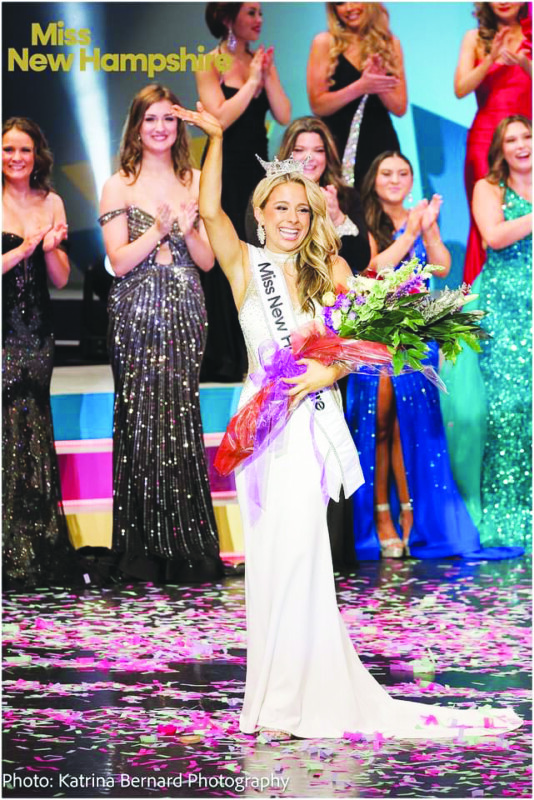
A year of service

A talk with the reigning Miss New Hampshire

Miss New Hampshire 2024, Emily Spencer, talks about what the role entails and the work that she does for the community. Find out more at missnh.org.

Can you explain how Miss New Hampshire is a year-round program of style, service, scholarship and success?

Absolutely. Every woman who competes for the title of Miss New Hampshire starts off with competing for a local title. … This past year I was Miss Winnipesaukee. I won that title in August and then throughout the year you are doing different community service events in that community of which you are representing. Through there you connect with different nonprofit organizations. As Miss New Hampshire, you attend all sorts of community service events throughout the year as well as talking on the radio, involving your own service initiative into your year and performing at different events around the state. For me, I’m a dancer, so I’ll go and dance at events as well as local competitions that start at the beginning of June.

What are the main issues you want to focus on as Miss New Hampshire?

My service initiative is about working with students and athletes with disabilities. This past year I created a nonprofit called Miss Inspiration which awards scholarship funds to young women with disabilities through an adaptive pageant. So my service initiative is truly integrating students and athletes with disabilities with their mainstream peers through one-to-one friendships, developing life skills, confidence, and just attending events together.

What made you want to become Miss New Hampshire?

I started in the organization eight years ago competing in the teen program for two years and this is my fourth time going for Miss New Hampshire. I at first was really engaged and intrigued by the performance opportunity on stage because I’ve been dancing my whole life, but I also really liked the community service aspects. Right when I joined I fell in love with the program and truly idolized the women older than me who were competing, so I knew this was something that I wanted to involve myself in for the rest of my life. The more I competed the more I was like, ‘I’ve got to be Miss New Hampshire, what an amazing opportunity.’ They say your son is more likely to play in the Super Bowl than your daughter walk on the Miss America stage. Just to have that higher platform to get community outreach and meet so many people throughout the year was a goal I was ready to accomplish and excited to accomplish. I’m truly honored to be Miss New Hampshire this year and to say yes to as many opportunities that I can.

How much money has the Miss New Hampshire Scholarship Foundation raised for students?

This year we were able to award $73,000 total at the Miss New Hampshire Scholarship Competition…. All the funds raised and awarded to the women involved … goes right toward our education, so to pay for whether you’re actively enrolled in college or your loans.

Are there any misconceptions about the program you’d like to address or talk about?

One that we kind of already addressed was that people think that you prepare for one competition out of the year but it’s really a year-round service job. I think there’s a big misconception that it’s truly only about … looks, but really the organization has women doctors and women in the army and truly [is] just making a big change in the community. It’s all about intelligence and service, talent, and promoting all those aspects, as well as beauty, into the organization.

Are there any events coming up that you are excited to be a part of?

We have some Memorial Day parades coming up. The Best Buddy Walk in Exeter happening June 22. There are some Special Olympics events that I’m involving myself with at the beginning of June and there’s a Make-A-Wish rafting event in Meredith that’s happening in July. … Also, our local season starts at the beginning of June, so that’s pretty exciting…. Girls who want to compete next year for Miss New Hampshire … they start competing at the local level, so those 26 locals start happening for next year’s Miss New Hampshire competition beginning in June.

— Zachary Lewis

Featured image: Emily Spencer. Courtesy photo.
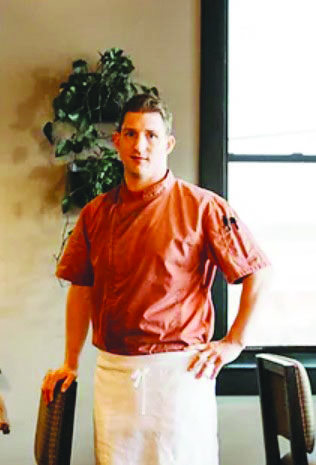
In the kitchen with Corey Fletcher

Corey Fletcher is the award-winning chef and owner of Revival Kitchen (11 Depot St., Concord, 715-5723, revivalkitchennh.com). Prior to Revival, Chef Fletcher was the executive chef at the Centennial Hotel and Granite Restaurant in Concord. Before Granite Restaurant, he worked at Colby Hill Inn and 55 Degrees. He is a graduate of Southern New Hampshire University.

What is your must-have kitchen item?

A good sharp chef knife or tongs — either one is in my right hand for about one third of my day. They are an extension of my mind.

What would you have for your last meal?

A well-marbled and properly seasoned grilled New York strip steak, medium rare, loaded baked potato with bacon, sour cream, butter and chives, along with buttered blanched broccoli. It’s a classic dinner in my mind and is comfort food for me.

What is your favorite local eatery?

My house with my wife and daughter, as I don’t get too many dinners with them at home, but that’s not an ‘eatery.’ So I’d say Moritomo for sushi!

Who is a celebrity you would like to see eating your food?

Dan Barber — mostly because he is the pinnacle of locally sourced dining.

What is your favorite thing on your menu?

Our menu changes seasonally and my preferences change with that, so right now it’s the fennel spice rubbed pork loin with lemon and olive oil-braised beans and Swiss chard, with black garlic puree, and a pea green radish salad. It sounds like a ‘heavy’ dish; however, the brightness of the lemon in the beans and the textures of the pea greens and radish is crisp and refreshing, making a good spring dish.

What is the biggest food trend you see in New Hampshire right now?

Supporting small/micro producers — from honey, baked goods, coffee roasters, restaurants, for example. Consumers continue to be selective about where their money is spent and they want to support people’s dreams and stories, rather than spending it at chains, etc.

What is your favorite thing to cook at home?

Roasted chicken — my wife and daughter’s favorite, great for a relaxing Sunday.

Lemon Hummus
From Corey Fletcher

3 cups cooked chickpeas
3/4 cup tahini
4 Tablespoons olive oil
4 Tablespoons lemon juice
1 Tablespoon salt
zest of 4 lemons
¼ cup garlic, minced

Puree all together; adjust with cold water.
Adjust seasoning as necessary.
Serve with your favorite crackers, naan or pita, or seasonal vegetables.

Featured Photo: Corey Fletcher. Courtesy photo.

On The Job – Melissa Fournier

Owner of Mellifera modern

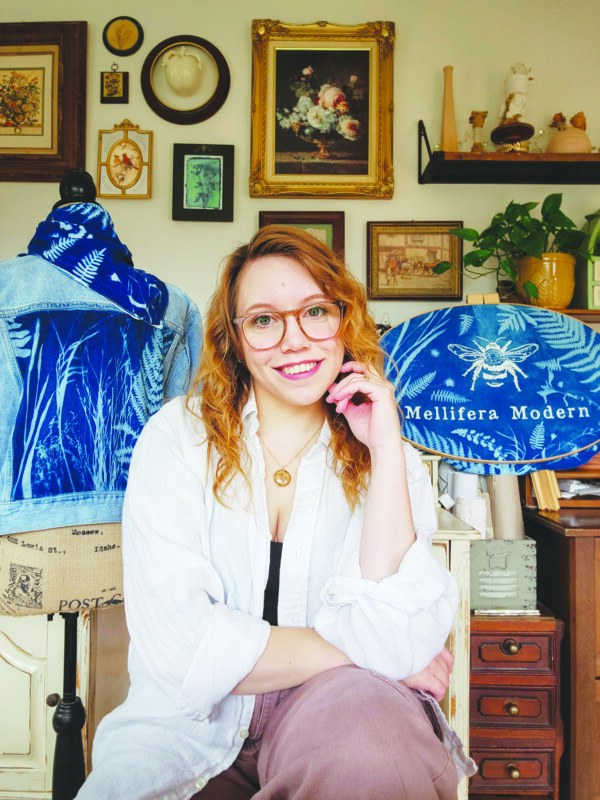
Melissa Fournier is an artist and the owner of Mellifera Modern, which focuses on custom clothing with fine art photography elements (melliferamodern.com).

Explain your job and what it entails.

I do a lot of different types of art but I specialize in cyanotype on clothing, so I make custom clothing, basically, usually on denim. The process of cyanotype is actually one of the oldest photographic processes that exists. Chemicals go on in a darkroom, just like any other darkroom process, you bring it out into the sun and … then when you rinse it out it’s a beautiful blue color. I use a lot of pressed botanicals and other things like that to create that artwork….

How long have you had this job?

I have been making art for probably about a decade but I have been full-time for about five months.

What led you to this career field and your current job?

A few years after college I really honed my craft to figure what I wanted to do with it. My repertoire is very big, so I had to narrow it down to be able to have a clientele and have a fanbase. …

What kind of education or training did you need?

I have a bachelor of fine arts. … it did help me hone my skills and learn new things that I can then implement in my artwork.

What is your typical at-work uniform or attire?

Messy clothes. … I am working with chemicals that stain fabric, I’m painting, I refurbish furniture on the side … Then, when I’m actually showing, I tend to wear my own artwork … to advertise it.

What is the most challenging thing about your work, and how do you deal with it?

Probably getting people to see it. Especially online, the market is so saturated. Social media is very hard to break into and there’s only so much in-person work you can do.

What do you wish you had known at the beginning of your career?

I think that I underestimated how much work actually went into it and how long it would take to get to a point where I could go full-time.

What do you wish other people knew about your job?

How much work it is behind the scenes. I would say I am only actually making artwork 40 to 50 percent of the time. The other half is finding markets.

What was your first job?

I was a photographer for a Life Touch studio in a Target in high school.

What is the best piece of work-related advice you’ve ever received?

To not take a break after college. A lot of my professors and alumni warned me that you work so hard in college as an artist that a lot of people tend to take a break and … it becomes harder and harder to pick it back up. —Zachary Lewis

Five favorites
Favorite book: I have a first-edition copy of the best works of Roald Dahl that was given to me by my professor in college when I graduated, so that one is very very special to me.
Favorite movie: Probably 500 days of Summer
Favorite music: It’s a little cliche but Taylor Swift
Favorite food: Anything sweet. I like chocolate. Lots of desserts.
Favorite thing about NH: … I would say probably that, how much nature is here.

Featured photo: Melissa Fournier. Courtesy photo.

For the forest

Conservation, education, recreation

Dave Anderson is the Senior Director of Education at the Concord-based Society for the Protection of New Hampshire Forests. To learn more about their work, to get involved, or just to find a cool spot to hike, visit forestsociety.org.

What kind of trailwork project is going on at Mt. Major? [Work started May 13.]

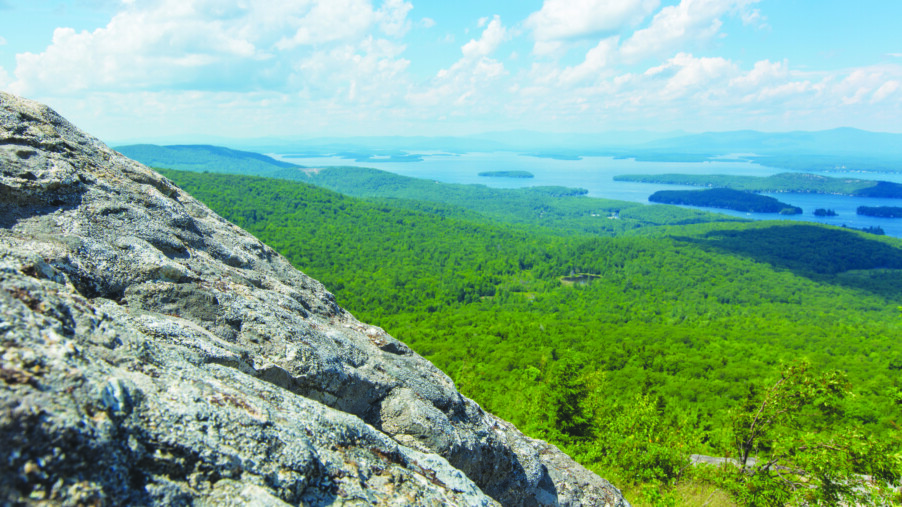
At Mount Major there are three prominent trails that go from the parking lot on Route 11 in Alton to the summit. They are the Boulder Loop, which is blazed in orange; the Main Trail, which is the fastest, most direct route, which is blazed in blue; and then there’s a yellow trail, which is called the Brook Trail. And we’re closing about a tenth-of-a-mile section of the blue trail, the main trail, and building a bypass that goes around it. Even while the construction is happening, there is the ability to get to the summit using the orange trail and even the blue trail…. When the trail reopens it will be a more sustainable trail both for preventing erosion and also just for hiker experience on the mountain…. During that time the main parking lot will be closed because it is a staging area for heavy equipment that will be working on the relocation. There’s parking along Route 11 … This is expected to be … till sometime in July. Depending on the weather it could be early July … or if we encounter difficulties it will be late. … By doing this kind of work we can reinforce and harden one of the most popular hiking trails in New Hampshire…. 80,000 people is the estimate of the number of people who climb Mount Major [every year].

What’s going on at the Morrill Dairy Farm?

The Forest Society is working to purchase a conservation easement of a portion of the Morrill Family Land here in Concord along the Merrimack River with direct frontage on the Merrimack River…. There are 124 acres of farm fields with spectacular views of Kearsarge which we protected in 2021, and now we’re working to protect the home farm of the Morrill Dairy Farm — they call it the home farm because they live nearby. It’s just north of Sewalls Falls and it’s on the Concord and Pentacook border, and this is part of Rob Morrill’s grandfather’s farm that was established in 1925, where they raised Red and Black Holstein cows. This particular property … includes 1.2 miles along the main stem of the Merrimack River and then an additional 1.3 miles of frontage on what’s known as Oxbow Pond. So it’s a little section of the Merrimack River just north of downtown Concord that’s easily accessed from the public boat launches, and people who paddle the Merrimack River upstream are familiar with where the dairy farms are, and the total is 208 acres which will be under conservation easement, which means it cannot be subdivided and developed…. more than 700,000 people get their drinking water from the Merrimack River in New Hampshire, so we’re working to protect the lands right on the water.

Why do you think it’s important to educate the public about the environment they live in?

Well, think about what we take for granted in New Hampshire. We’re the second most forested state in the nation by land area. We depend on forests for clean air but also for clean water. Then also, recreation tourism in New Hampshire is a huge industry, so all of those things we associate with forest and mountains and trails and also our rivers and clean lakes are benefiting from forest cover and the headwater streams. So we’re not just thinking about the forest; we’re thinking about the New Hampshire advantage, which is open space and conserved open space that’s never going to be developed, contributes to our state’s economy and human health and even our spiritual wellness….

What are some success stories you’d like to share?

The Forest Society goes way back. We are New Hampshire’s oldest, largest statewide nonprofit conservation organization. At our founding in 1901 to 1911 we lobbied Congress to pass the Weeks Act, which created the White Mountain National Forest, which is now 804,000 acres, and that was the beginning of a legacy of land conservation in New Hampshire that continues to this day. Today the Forest Society is the fourth-largest landowner in New Hampshire…. New Hampshire’s land area is about 5.8 million acres, and 34 percent of that land in New Hampshire has been permanently protected through the work of the Forest Society and other land trusts like us.

— Zachary Lewis

Featured image: Mt. Major. Photo courtesy of Jerry Monkman.

On The Job – Corey McNabb

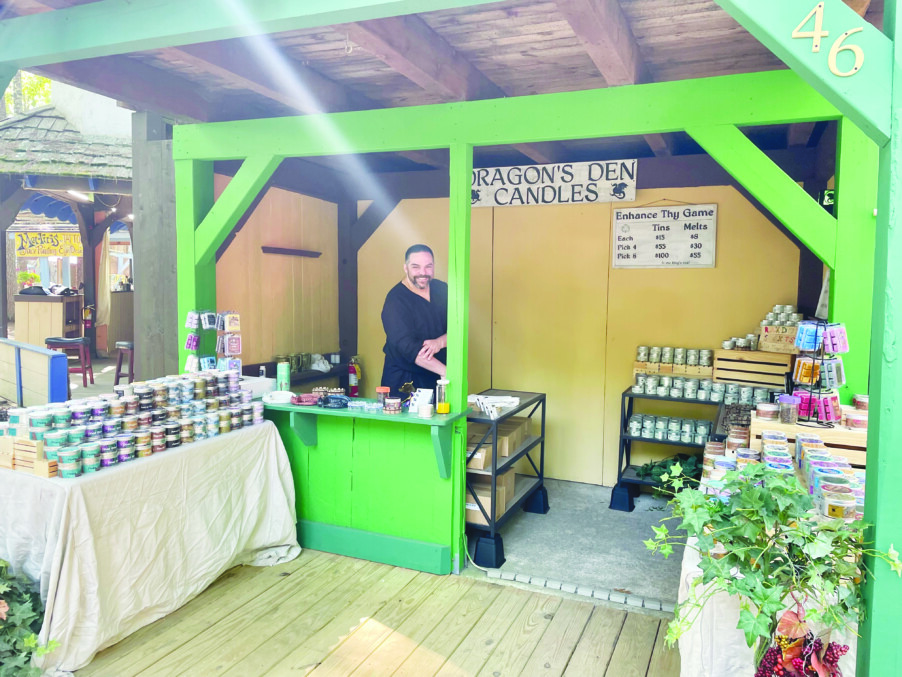
Owner of Dragon’s Den Candles in Nashua

Explain your job and what it entails.

I own and operate Dragon’s Den Candles [DragonsDenCandles.com]. I make fantasy, tabletop gaming themed candles that are all designed with a certain sense in mind to give ambiance when you’re playing a game, or reading a book, watching a movie, that kind of thing.

How long have you had this job?

It’s what I’ve been doing for the last couple years now, about 2 1/2 years now.

What led you to this career field and your current job?

I worked in retail for 20 years and I finally got myself out of that…. Trying to come up with something new on a random Sunday my wife and I started making candles just for fun and we both really enjoyed it and it just kind of snowballed from there. I’m a big nerd so I took it in the nerdy direction with the candles I make.

What kind of education or training did you need?

I was mostly all self-taught. Did a lot of research online. We got some candle-making starter kits that had like the basic instructions and just looked up all the different ways people do them and figured out from there, as we narrowed it down and honed our method.

What is your typical at-work uniform or attire?

Just my usual casual everyday wear. We do all this right out of our house so … just khakis and a T-shirt.

What is the most challenging thing about your work, and how do you deal with it?

We have two different candle lines we mainly sell at conventions and craft fairs and ren faires…. We’re constantly traveling up and all over New England selling at different places. It’s a lot of maintaining the proper amount of stock…

What do you wish you had known at the beginning of your career?

Any kind of knowledge into all these different kinds of shows and events that we sell at would have helped tremendously, and just the general knowledge of how much of my house doing this was going to absorb.

What do you wish other people knew about your job?

Probably the amount of time that goes into it. It is a long process making all the candles that we make.

What was your first job?

My very first job ever, I worked at when I was 16 years old, Whalom park down in … Mass. It was a little amusement park. It’s no longer there. I did puppet shows, marionette shows and [was one of] the big costume guys that walked around the park.

What is the best piece of work-related advice you’ve ever received?

At the start of anything you do, it’s always going to look messy. You just need to keep pushing through. It will eventually get to what it needs to be. —Zachary Lewis

Explain your job and what it entails.

I own and operate Dragon’s Den Candles [DragonsDenCandles.com]. I make fantasy, tabletop gaming themed candles that are all designed with a certain sense in mind to give ambiance when you’re playing a game, or reading a book, watching a movie, that kind of thing.

How long have you had this job?

It’s what I’ve been doing for the last couple years now, about 2 1/2 years now.

What led you to this career field and your current job?

I worked in retail for 20 years and I finally got myself out of that…. Trying to come up with something new on a random Sunday my wife and I started making candles just for fun and we both really enjoyed it and it just kind of snowballed from there. I’m a big nerd so I took it in the nerdy direction with the candles I make.

What kind of education or training did you need?

I was mostly all self-taught. Did a lot of research online. We got some candle-making starter kits that had like the basic instructions and just looked up all the different ways people do them and figured out from there, as we narrowed it down and honed our method.

What is your typical at-work uniform or attire?

Just my usual casual everyday wear. We do all this right out of our house so … just khakis and a T-shirt.

What is the most challenging thing about your work, and how do you deal with it?

We have two different candle lines we mainly sell at conventions and craft fairs and ren faires…. We’re constantly traveling up and all over New England selling at different places. It’s a lot of maintaining the proper amount of stock…

What do you wish you had known at the beginning of your career?

Any kind of knowledge into all these different kinds of shows and events that we sell at would have helped tremendously, and just the general knowledge of how much of my house doing this was going to absorb.

What do you wish other people knew about your job?

Probably the amount of time that goes into it. It is a long process making all the candles that we make.

What was your first job?

My very first job ever, I worked at when I was 16 years old, Whalom park down in … Mass. It was a little amusement park. It’s no longer there. I did puppet shows, marionette shows and [was one of] the big costume guys that walked around the park.

What is the best piece of work-related advice you’ve ever received?

At the start of anything you do, it’s always going to look messy. You just need to keep pushing through. It will eventually get to what it needs to be. —Zachary Lewis

Five favorites
Favorite book: The Hitchhiker’s Guide to the Galaxy
Favorite movie: Who Framed Roger Rabbit?
Favorite music: lo-fi ambient music that I can have going on while I’m doing other stuff
Favorite food: pizza with bacon on top
Favorite thing about NH: I like the environment. It’s hilly, there’s trees, there’s rivers, I like that general atmosphere, that kind of outdoorsy air that it has here.

Featured photo: Corey McNabb. Courtesy photo.

Fair history

How an annual fair comes together

Janet Robinson, the crafts fair manager at St. Peter’s Episcopal Church in Londonderry, discusses the history of the annual St. Peter’s Artisan Craft Fair. The church also holds a fair in the fall.

Can you give a brief history of St. Peter’s?

St. Peter’s [was] established in Londonderry in 1987. At that time there was a very small church and it has grown since.

There was an interesting building discovered on site?

The church itself was a house with a carriage house. The carriage house was used by the former owner as a craft shop. We added onto the house once we purchased it and built the sanctuary area onto it and continued to use the carriage house.

Can you describe the original building the craft fair was in?

[The] carriage house [is] kind of like a garage without the garage doors. If you go by the church you’ll see it, it’s right in the middle of the parking lot. Years ago they used to use them just for what it’s called, for the horses and the carriages. … The past owner decided, ‘Oh, well, we need to do something with that.’ She started selling some crafts and then she decided, ‘Well, maybe we’ll invite other crafters.’ I know there were a few years that we did get together with Mack’s Apples and another small craft business in that area to make it a community day, and that went well for a while, so it has taken many turns over the years.

Who owned the craft shop?

All I know is that her first name is Karen and she owned ‘Catnip Corner,’ that’s what she called it. There was a woman’s board at the church and they wanted to carry on that tradition of her craft fairs so they reached out to her … and asked her if she minded if we continued that tradition. At first she wasn’t really happy about it and then she came back to us and said, ‘You know, I think that will be a really nice thing for Londonderry, let’s keep it going.’ She provided a list of 35 crafters, we sent out letters to those 35 crafters, and about 50 percent stayed on as crafters in our fair….

So there was a craft fair in that spot before the church moved in?

Yes. She would open up her grounds for other crafters on the weekend after Labor Day weekend. That’s the weekend we continue on. As we had gotten trained and more experienced in craft fairs we added the spring fair also.

How has the craft fair grown since 1987?

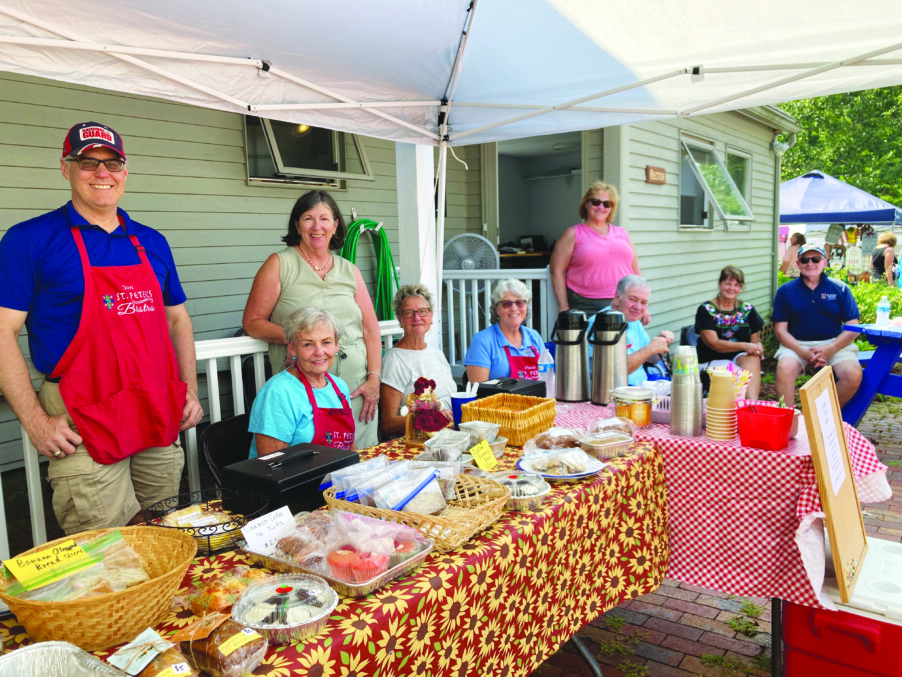
We’re now up to 72 crafters. They do set up their tents and tables on the lawn, on all available spots with the lawn. We also have a food truck that comes. In the beginning what they were doing was they used to call it ‘the bistro’ and they would have volunteers manning a grill, serving hot dogs and hamburgers and that grew to wraps. Then, the volunteers started getting much older and we didn’t have anybody who was willing to volunteer so we switched over to food trucks hoping to give local small businesses some business.

Do you all have a great turnout every year?

Yes, we do. We actually are adding a police detail because it has grown so much. All are welcome. It’s juried so it’s not just anybody. We keep it so that all products have to be handmade by the crafter.

Do you all still use the carriage house in the fair?

We do. What we do is we ask each of the crafters to donate an item for raffle and we call it the ‘Crafter Show Case.’ We ask them to give us, you know, ‘what craft that you make that stands out to represent yourself.’ Then we have a raffle for that and at the end of the fair we will raffle off those products to people who have bought tickets.

Is the fair itself free?

Yes, the entrance to the fair is free. We do have parking although when there’s large crowds it does get limited but there is street parking.

St. Peter’s Episcopal Church Artisan Fair
Where: 3 Peabody Row in Londonderry
When: Saturday, May 18, 9:30 a.m. to 4 p.m.
Admission: free
More info: stpeterslondonderry.org/craft-fair, 437-8333
Food truck provided by One Happy Clam

— Zachary Lewis

Featured image: Courtesy of St. Peter’s Craft Fair.

Stay in the loop!

Get FREE weekly briefs on local food, music,

arts, and more across southern New Hampshire!