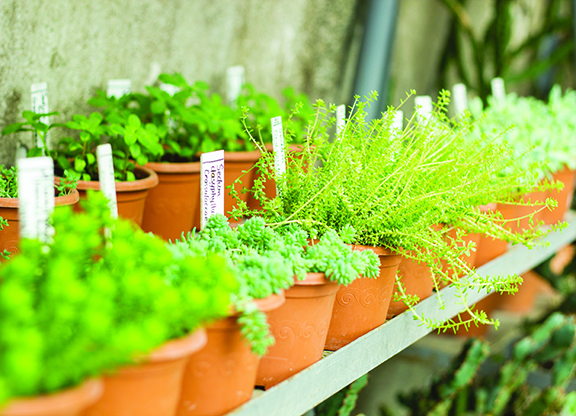
Get new flowers and greenery for the growing season at area garden clubs and garden enthusiasts plant sales. Because the club members are the ones selling the plants, you can get some planting advice along with your new annuals and perennials. Here are a few sales slated for the next few weeks. Know of a plant sale not mentioned here? Let us know at adiaz@hippopress.com.
• Garden Club of Deerfield will hold its plant sale on Friday, May 8, from 3 to 6 p.m. and Saturday, May 9, from 9 a.m. to 1 p.m., at the Deerfield Town Hall on Church Street, according to a post on the club’s Facebook page.
• The Amherst Garden Club will hold its plant sale on Saturday, May 9, from 8:30 a.m. to 1 p.m. at Wilkins School, 80 Boston Post Road in Amherst, according to amherstgardenclub.org/plant_sale.
• The Colonial Garden Club of Hollis will hold its sale Saturday, May 9, from 9 a.m. to noon at Lawrence Barn, 28 Depot Road, according to hollisgardenclub.org.
• The Friends of the Audi and Concord’s General Service Department will hold their Perennial Exchange on Saturday, May 9, at 9a.m. to noon at the Concord City Auditorium, according to theaudi.org.
• The Rye Driftwood Garden Club will hold its sale on Friday, May 15, from 9 a.m. to 2 p.m., and Saturday, May 16, from 9 a.m. to noon, at Goss Farm, 251 Harbor Road in Rye, according to ryenhgardenclub.org.
• The Nashua Garden Club will hold its sale on Saturday, May 16, from 8 a.m. to noon at the Nashua Historical Society, 5 Abbott St. in Nashua, according to a post on the Nashua Garden Club’s Facebook page.
• The Bow Garden Club will hold its plant sale on Saturday, May 16, from 8 a.m. to 12:30 p.m. at the Bow Community Center, 2 Bow Center Road, according to the club’s Facebook page.
• The Goffstown Garden Club will hold its plant sale on Saturday, May 16, from 8 a.m. to noon in the Goffstown Commons, according to their Facebook page.
• The Milford NH Garden Club will hold its annual plant sale on Saturday, May 16, from 8:30 a.m. to noon at the Community House Lawn, according to milfordnhgardenclub.org.
• The Candia Garden Club will hold its sale on Saturday, May 16, from 9 a.m. to noon, at the Masonic Hall, 12 South Road in Candia, according to a post on its Facebook page.
• The Windham Garden Club will hold its sale on Saturday, May 16, from 9:30 a.m. to 1 p.m. at 61 Kendall Pond Road in Windham, according to a post on the club’s Facebook page.
• The Bedford Garden Club will hold its plant sale on Saturday, May 16, from 10 a.m. to 2 p.m., at the Educational Farm at Joppa Hill, according to bgcnh.org/plant-sale-2026.
• The Hooksett Garden Club will hold its annual plant sale on Saturday, June 6, from 9 a.m. to noon (or sellout) at the Hooksett Public Library, 31 Mount Saint Mary Way in Hooksett, according to hooksettnhgardenclub.org.
• The Derry Garden Club will hold its plant sale on Saturday, June 6, from 9 a.m. to 2 p.m., at Robert Frost Farm, according to the club’s Facebook page. See derrygardenclub.org.
• The NH Audubon’s McLane Center, 84 Silk Farm Road in Concord, will hold a Pollinator Fest & Native Plant Sale on Saturday, June 6, 10 a.m. to 7 p.m., according to nhaudubon.org.
• The Merrimack Garden Club will hold its annual sale on Saturday, July 18, at the American Legion on Baboosic Lake Road, according to merrimackgardenclub.org.
Spring Craft Market offers pre-Mother’s Day shopping
One of the less obvious signs of spring is when craft shows come out of their winter quarters and blossom. Jody Donohue, the owner of Great New England Events (gnecraftartisanshows.com), is excited about this weekend’s Spring Craft Market at LaBelle Winery in Derry, which will be partly outside.
“The market will be located in four spaces,” she said. “We have the Harvest Room, we have the ballroom, a large tent on the terrace, and this year we’re also expanding into the parking lot. So we’re pretty excited about having those 18 exhibitors out in the parking lot just outside the terrace area.”
The Mother’s Day weekend event has also expanded its hours, Donohue said.
“Last year, we were one day, Saturday only, but due to the popular demand of it, we’re also extending to Friday evening, from 4 to 8 p.m. And then it’s also Saturday from 10 a.m. to 5 p.m.”
The word-of-mouth exposure from last year’s Spring Market was excellent, Donohue continued. “We’ll have 78 exhibitors,” she said, “and we received over 400 applications for those 78 spots. We have exhibitors coming from New York. We have one group coming in from Delaware. Craftspeople will be there from Vermont, Maine, New Hampshire, [and] Massachusetts, bringing their products. And our mission [statement] at GNE is “Never the same show twice, but always just as nice.” So you’re going to see some of the same exhibitors, but you’re also going to see many new products and exhibitors there with their handmade products.”
The Spring Craft Market will include craftspeople from across the craft spectrum, Donohue said. “It’s a very popular event. So we’re really excited to be offering lots of different gifts for mom for the spring, for home decor, for your outdoor decor, garden, birdhouses, and we have some specialty foods. We’ll have fudge and chocolate and all that handmade in small batches. We have six different jewelers this time coming in, We have glass jewelry coming. We’ve got some artists painting, photography, candles, fabrics, metal art, beautiful wood-turned products, from games to home decor to bowls to candlesticks.”
While some crafts will be typical of craft shows, Donohue said, others will be a surprise.
“I always like our lamp guy, Quinton,” she said. “He comes in and he’s made all these different lamps. He will find oddities and make lamps out of them. He’ll find a bubble gum machine and turn it into a lamp. He’ll use railroad ties or water pipes or rustic clocks and he’ll turn them into lamps. He’ll make little vintage [toy] cars into lamps. He even has a clarinet he turned into a lamp. He is pretty spectacular to meet and see how creative he is in designing these lamps.”
“We have a wood carver,” Donohue said. “She uses chainsaws of various sizes. She can carve into wood and make a 3D image. I had a custom one made for my house. We live on the water … so she did the water and she did some sandpipers in there for us and it just came out really well. Her work is just beautiful. She can design pretty much anything you want. She’ll do beach scenes. She’ll do lighthouses. She’ll do flowers. She’ll have a lot of flowers this time around for Mother’s Day, and they’re varying sizes. Some of them can be 8 inches and some can be 28 inches. She’s a unique crafter.”
The 2026 Great New England Mother’s Day Spring Craft Market When: Friday, May 8, from 4 to 8 p.m., and Saturday, May 9, from 10 a.m. to 5 p.m. Where: LaBelle Winery Derry, 14 Route 111, Derry, 672-9898, labellewinery.com/labelle-winery-derry. Admission and parking are free. Visit gnecraftartisanshows.com/calendar.
Spring arrives in New England in fits and starts: hot and sunny one day, chilly and drizzly the next. Maybe even a few flurries to outrage the impatient gardener. But there is much that can be done now, even on a rainy day.
I much prefer tools with wooden handles: If treated properly they will last your entire lifetime. Every year or two I clean up and oil the handles of my garden tools, which keeps the wood supple. I‘ve got tools with wood handles I’ve used regularly for over 40 years, and some from my grandfather that are more than 75 years old.
First I clean up the handles by rubbing with fine steel wool or, if very rough, with 100 grit sandpaper. Then I wipe them down with a scrap of a towel. Finally I use a brush to paint them with boiled linseed oil. I then let them dry in the sun or in the barn it’s a rainy day, and wipe them down the next day.
Shovels should be sharpened from time to time. Get a wide, medium-rough flat file and push it firmly across the shovel’s edge on the backside of the blade. Take long, slow strikes but do not saw back and forth with your file. Look carefully at the angle it came with, and try to mimic that angle with your file. A sharp shovel is much more efficient than a dull one. But it’s not a good idea to sharpen the blade until it’s knife-sharp. It will dull quickly if you do. Sharpening a dull shovel is not quick work,
Impatient to get things growing in the vegetable garden? Peas, spinach, arugula and lettuce are very cold-hardy and can be planted early by seed, even if frost will still occur. Soil temperatures of 40 degrees are adequate for germination of them, but I think 50 degrees is better. For most seeds, I prefer to wait until the soil hits 50 degrees or more. I worry seeds will rot if the soil is too cold and wet. That goes for potatoes and onions, too. Cukes, squash, pepper and tomato seedlings I don’t plant until June.
Soil thermometers look like little probes with a dial on top, something like the one you poke in a turkey to see when it’s done. Garden centers sell them. If you get one, poke it down 4 inches to get your reading.
If your soil was covered with leaves or straw for the winter, rake that off your planting beds now so that the sun will hit your soil directly and warm it up. Mulch keeps the soil cool. If there are weeds coming up, pull them as soon as you can — no sense letting them get a head start on your plants.
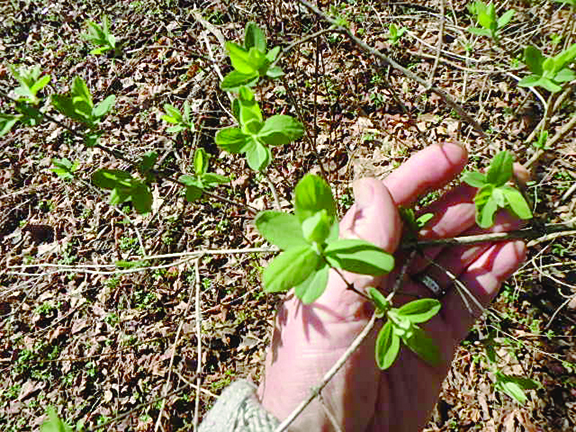
This is also a good time to look for invasive plants on your property. For me, the cast of characters includes bush honeysuckle, barberry, buckthorn and multiflora rose. If you have a Norway maple, you probably have lots of new seedlings from it that are easy to pull.
You can get a list of invasives from your state online, but I found the Vermont Invasive Plants list is best. It includes just the 12 most common, along with pictures, so it’s easier to use.
Many invasives leaf out early and drop their leaves late in the fall. That gives them an advantage over many natives. Honeysuckle puts out greenery in mid-April for me. Burning bush holds its red leaves late in the fall, so it’s easier to find small ones then.
Although not easy, digging out invasives is generally the best way to control them. Cutting them down usually does not kill them. Buckthorn is the worst: Cut one to the ground, and a dozen will grow from the roots. If you can double-girdle all the stems down low, it will die after two winters. Basically, you’re starving the roots from the nutrition produced by the leaves.
Potting mix is readily available at all garden centers, big box stores, and even some mini-marts. But if you are going to fill up lots of flower pots, you can save money by making your own.
If you never emptied your pots and window boxes last fall, you can reuse it this year. First pull the dead plants and dump the used potting soil into a pile. Then make up some new potting soil and mix it 50-50 with your old potting soil.
To make potting soil, mix add equal parts coir or peat moss, compost and perlite (which looks like crumbled Styrofoam but is actually super-heated volcanic minerals) to it in roughly equal quantities in a wheelbarrow until mostly full. Stir well. Add half a cup of a slow-release organic fertilizer like Pro-Gro or Plant-Tone and mix well. It is best to water the peat moss or coir before using as it can be very dry.
When I make potting soil, I don’t measure things exactly. I probably use more compost than perlite or coir. If you have a good source of mature compost, you can save money and add good microorganisms to the soil. The finished product should be fluffy and not quick to clump up when you grab a handful of it. But if you are only going to use a few pots, just buy a bag of potting soil.
So don’t get discouraged by a few cold days now. Summer is on the way, so get ready.
You may reach Henry at henryhomeyer@comcast.net.
Featured photo: Honeysuckles have opposite branching. They leaf out early. Photo by Henry Homeyer.
Long before Danny Scialdone became general manager of the New Hampshire Renaissance Faire, he was better known as court jester Aspergillius Gleekman, mirthfully roaming the annual event. That’s not changed, and when Scialdone is called to answer a problem at the Faire these days, he still arrives with bells on.
It’s a visage not everyone is prepared for, he recalled in a recent phone interview as preparations for this year’s Faire in Fremont were underway.
“Some of the looks that I get from the people when I come walking up,” he said. “I’m like, ‘Hi, I’m Danny, how can I help you?’ and they’re like, ‘Oh, OK, you’re the manager? OK.’”
That blend of whimsy, warmth and genuine community spirit is exactly what the New Hampshire Renaissance Faire is all about. It’s why thousands of visitors make the trip each spring to step back in time, eat an enormous turkey leg, and lose themselves in a world of knights, aerial artists, fairies and more.
The Faire has come a long way since its founding in 2005, when it launched with a modest lineup of about nine vendors. This year roughly 170 merchants and performers will fill the fairgrounds. Many are traveling from across New England and the East Coast, with some coming all the way from Michigan, Ohio and beyond.
The growth reflects a hunger for the immersive, cosplay time travel experience provided there. “In the early 2000s, the only New England state that didn’t have a Renaissance Faire was New Hampshire,” Scialdone said, and founder Shannon McCracken-Barber from Farmington wanted to change that.
Scialdone came on board in 2012, a year after McCracken-Barber departed.
“It got to be a little bigger than I think she had ever expected it to get, and trying to run it all by herself was getting more and more daunting,” he said. To ensure the Faire continued, she urged the formation of a nonprofit. Three Maples Renaissance Corporation was born.
For curious first-timers unsure of what to expect, Scialdone’s advice is simple: just show up.
“It’s an amazing experience, and it’s hard to actually describe,” he said. “My recommendation is to come out and experience it. Even if it’s the only time that you ever do, I know you’re going to love it.”
The Faire is designed to be a fun family day out, reasonably priced for parents and kids to enjoy without stress. Archery instruction is one of many extras included with admission, offering the chance to learn from a professional bowyer and fire a volley of arrows at a real target. “It’s a very popular activity,” Scialdone noted.
For those who crave more spectacle, the Brotherhood of the Arrow and Sword sets up a fully authentic 15th-century knights’ encampment, complete with armor displays and live, unchoreographed sword fighting. Aerial artists are among Scaildone’s favorite participants, bringing a modern dash of circus flair.
Storytellers, period performers and roving characters fill every corner of the grounds. Scialdone also confirms drumsticks are still very much available, though he warns that as the day winds down so does the supply. “People can be absolutely devastated when our vendor runs out.”
Some of his best memories from past Faires have little to do with planned programming. Last year a soaking rain flooded part of the grounds. The staff referred to the resulting mess as Lake Complain, but two small boys dressed as dragons were overjoyed and spent the afternoon gleefully splashing through mud and puddles.
A crowd of onlookers laughed and filmed their spontaneous romp, turning a potential disaster into a fun memory.
“That’s the biggest take back for me,” Scialdone said. “Just getting to stand there and watch people have such a blast.” He’s also proud of the Faire’s success as a fundraiser.
Since the current team took over, the Faire has donated more than $700,000 to causes including the New Hampshire Food Bank, Meals on Wheels of Rockingham County, Exeter Hospital’s Beyond the Rainbow cancer recovery program, and several others. “Our entire goal and purpose of doing what we do,” he said, “is to help out people in need in New Hampshire.”
2026 New Hampshire Renaissance Faire When: Saturdays (May 9 & 16) and Sundays (May 10 & 17), 10 a.m. – 5 p.m. Where: Brookvale Pines Farm, 80 Martin Road, Fremont Tickets: See nhrenfaire.com
Featured photo: Renaissance Faire. Courtesy photo.
A look at a complex, elegant, comforting and not at all ordinary culinary star
We take vanilla for granted. According to pastry chef Addie Leader-Zavos, we use vanilla as a background flavor in so many things we eat that it’s easy to forget it’s there.
“The special thing about vanilla,” Leader-Zavos said, “is that it adds so many beautiful top notes to whatever we cook with it. You want things that are going to taste good and are going to taste good in your mouth for a long time. And vanilla has so many intricacies that it really helps make other flavors more complex, more interesting. But at the same time, because it has been used for so long and in so many contexts, it’s part of what people expect. But if it’s missing in some context, it can really feel like the flavor of the food is a little flat.”
“You know, there’s no possible way for actual natural vanilla to meet the demands that we have for it,” Leader-Zavos continued. “It only comes from three or four places in the world. And there’s only two or three species that pollinate it. A lot of vanilla is actually hand pollinated. Unless it’s grown in Mexico, there aren’t any natural pollinators.”
There are dozens of flavor compounds in vanilla, but one of the main ones is a chemical called vanillin. It is present in many species of hardwood, Leader-Zavos explained, which is one of the reasons many types of alcohol — most famously bourbon — are aged in oak barrels. “Straight bourbon has to be aged in American oak barrels and also has many of the same scent components as coconut, as cocoa butter, as oddly dill. All oak species have some amount of vanillin in them — the French varieties have the most, followed by American varieties.” This is where artificial vanilla comes from, she said.
Because vanilla extract is usually suspended in an alcohol solution, many high-end pastry chefs use actual vanilla beans, Leader-Zavos said.
“Some people kind of like the flavor of the alcohol that’s with the vanilla. I don’t as much because I think it’s a little bit distracting. I want to taste just the vanilla and not the sort of alcohol. That’s sort of a preference issue.” The alcohol in vanilla extract is one reason many recipes call for adding it after a dish has come off the heat. “The flavor compounds are really volatile in vanilla. And alcohol can carry them away as it cooks off. Generally, you want to add it off the heat, or to use gentle heat, hot enough to take care of the alcohol but not hot enough to break down the vanilla compounds — about 170°F.”
Ashley Savoy is the owner and baker of Savvy Sweets and Treats, a baking business that specializes in French-style macarons. She takes vanilla very seriously. Because people typically eat macarons slowly and focus on their flavors, the vanilla she uses has to be of the highest quality possible, she said.
“We talk a lot about quality ingredients,” Savoy said, “but people tend to forget about vanilla, which can be a mistake. It really is one of those ingredients that you want to spend your time and your money on because good vanilla really can make a big difference. So in my kitchen, in my bakery, I make all of my vanilla [extract] and my vanilla paste from scratch. It’s not bought from a store. I buy high-grade vanilla beans from places that ethically source them. It’s really quite simple to make your own vanilla. People, you know, think it’s quite complicated, but it’s really not. It’s just, it’s simply vanilla beans and vodka. It’s not anything else. You don’t even really want to use a high-end vodka because the high-end vodkas tend to have more of a flavor profile. And that’s not really what you want. You want the flavor of vanilla beans.”
“Really good vanilla has a flavor that can really make a dish go from just kind of a dish to something really special,” Savoy said, “because the vanilla really does have that much of a change based on how good it is. Once you start having real vanilla — the good stuff — you’ll start to notice the difference. You can pick out that imitation vanilla almost immediately. You know that something there isn’t quite right, and you’ll end up getting a taste for it.”
“If you’re looking for more of a pronounced vanilla flavor,” Savoy said, “a lot of times people just fall back on throwing vanilla paste in, but for a pastry cream or anything like that the best thing to really do is to infuse your milk or your cream with the vanilla [beans] before you’re making your pastry, and that’s going to give you the most flavor enhancement and it’s, again, it’s quite simple to do. You just, you heat up your milk or your cream — not to a boil — just until it starts to steam a little, and then you split your vanilla pods in half and throw them in. One is usually enough. Just give it 30 minutes to an hour, and the cream is completely infused and ready to cook with.”
Vanilla pods can be used more than once, Savoy said.
“A lot of bakers who use the vanilla beans — the pods — we save them because they have a lot to give. Even if you scrape all the seeds out, down to just the pod, the pod still can be thrown in vodka and then made into vanilla extract. It still has way more life to give.”
Ice cream
Most Americans associate vanilla with ice cream. According to Jim Richardson, the owner of Richardson’s Farm Ice Cream, there’s a reason for that: Vanilla has an affinity for dairy. The problem, he said, is finding the right vanilla.
“We use an extract,” he said. “We have tried four or five different vanillas over the course of several years, and it took a while to find one that we liked better than the others, a good, clean vanilla. There are a couple that have a sharp, bitter end to them. We’ve tried the Dare [Virginia Dare, a well-regarded brand of vanilla]. It’s expensive, but I don’t like the flavor of it. And we tried a bourbon vanilla two years back, and I wound up putting two ounces of that in a batch of vanilla ice cream just to use it up, and it was vile!”
(“Bourbon” vanilla doesn’t have anything to do with bourbon whiskey; Bourbon vanilla beans are grown in a particular part of Madagascar.)
“Over the years we’ve tried several. The one that has a consistently nice flavor — a good clean vanilla — is Edgar Weber, out of Illinois. We use almost all of their flavors because they make all natural flavors and they won’t sell it to us unless we sample it. If you want a sample to try something, you call them up and they’ll ship us eight ounces … or 12 ounces, depending on what we’re making.”
Richardson said vanilla ice cream is in such a constant high demand that he keeps two tubs of it open in the freezer at all times.
“We use it all the time,” he said. “Sometimes the two look like different colors, because [vanilla ice cream] changes color as it warms up. It also tends to be a little bit softer. With warmer ice cream, the flavor comes through more.”
By the way, when looking for vanilla ice cream you might find both vanilla and French vanilla on the menu. What’s the difference? Eggs. French vanilla uses a custard base made with eggs, which is why it has a deeper, slightly more yellow color than plain vanilla. Ice cream made without eggs is referred to as “Philadelphia-style” ice cream.
Beer
At a completely different end of the food spectrum from ice cream is beer. Brian Parda is the head of sales and marketing for Great North Aleworks, which is known for its vanilla porter.
“Our Robust Vanilla Porter dates all the way back to the beginning of Great North Airworks,” he said. “It was one of our original releases and it goes back even before the brewery. It was one of the original home-brew recipes that the owners, Rob and Lisa [North], would serve when their friends came over. If they didn’t have it on tap at home people would be outraged. And so we’ve been making it for over 10 years now and we make it year-round. As a matter of fact, a couple of summers ago we tried to pause making it for a couple months over the summer because sales will slow a little bit. But we got enough phone calls and emails and messages that we never did that again. So we now make it year-round.”
One of the reasons Great North’s vanilla porter is so popular, Parda said, is that it defies expectations.
“Porter is a darker beer,” he said. “I mean, if you hold it up to the light, it’s more brown than black. Obviously, you eat and drink with your eyes, but I think a lot of people see a dark beer and are intimidated by that. They think it’s going to be heavy and thick and rich and cloying and sweet. The porter that we brew before we add the vanilla is actually a very light drinkable beer. It’s flavorful. It has a lot of those darker flavors — kind of more reminiscent on the chocolate side than on the heavy roast, like a stout would be. It doesn’t really have the heavy coffee roast, but a little bit of coffee. I think the vanilla bridges that gap there where people kind of go from intimidated to, ‘Oh, wow, that’s actually really good.’ We get a lot of that when we’re pouring it for somebody for the first time.”
“I think that vanilla, when people smell it,” Parda continued, “it usually has a positive olfactory memory for people. You smell vanilla and you think of all kinds of great, delicious things. So yeah, maybe it’s being taken for granted or considered ordinary — like ‘plain vanilla’ — that kind of thing. But I think it’s actually kind of the special sauce, if you will, for our porter. I don’t know that it would sell as well if we made it without it.”
“When I’m sampling it, either at a store or at a beer festival,” he said, “if someone comes up to the table and they say, ‘Hey, what’ve you got?’ I’ll tell them about our IPAs [India Pale Ales — light, very hop-forward beers] and they’ll be like, ‘Oh, I don’t want anything too bitter. I don’t want anything too hoppy.’ I’ll say, ‘Why don’t you try my porter?’ and they’re like, ‘I don’t know…,’ and they get all intimidated. It’s funny, because I think the vanilla kind of shocks them and they realize, ‘Oh, maybe I could drink a dark beer.’ I sometimes describe it as like French vanilla iced coffee for people that are trying to understand it. Again, there’s just a touch of that light roast coffee flavor from the darker malt, and then that vanilla, and it’s cold. It blows their minds a little bit.”
To avoid breaking down vanillin and other flavor compounds, the vanilla is added after the actual brewing process, Parda said.
“It’s added what we call ‘on the cold side.’ After the beer’s been fermented and is getting close to being finished as we’re preparing it to be packaged is when we add the vanilla.We use a really high-quality extract. The origin of the beans is Madagascar, if you want to get specific. A couple of years ago there was a hurricane or something in Madagascar and there was a bit of a supply issue, so we explored some other brands and some other products, and none of them worked. We couldn’t change the flavor profile too much, but thankfully we were able to source enough and we continue to be able to source that same brand.”
Scent
Many of the subtle characteristics of vanilla come from its smell, something that is very important to Tamsan Tharin, the owner and chief perfumer of Essense Parfumerie.
“One of the most interesting characteristics of vanilla,” she said, “is that it has the ability to impinge equally on both sense of smell and sense of taste. Vanilla is used in so many products. It’s considered like a comfort food. People find it very, very comforting. It’s the ultimate comfort food like sugar cookies with a slight aroma of vanilla or vanilla cake. But it’s also used in products like baby products or some cleaning products. It’s put in almost all lipsticks. So people just have the sense of comfort with the smell of vanilla. As you say, they don’t necessarily recognize it as vanilla, but they’re getting these comfort feelings from it because nothing affects our feelings and our emotional states more than smell. When you smell something, it goes right to the old part of your brain, the old lizard part of the brain and the brain stem. And so we have immediate reactions.”
“Vanilla is a base note,” Tharin said, “but it plays well with everything. It mixes with everything. You can put vanilla with musks. You can add it to powdery scents like baby powder. You can add it to oriental scents, which is an amber-based, exotic, woodsy scent. It’s comforting. … People consider it sexy and they associate it with love. And again, we’ve got the comfort association as well.”
The vanilla panel Eden’s Table Farm (240 Stark Highway North, Dunbarton, 774-1811, edenstablefarm.square.site) Essense Parfumerie (Main Street, Meredith, 409-2799, essense.com) Great North Aleworks (1050 Holt Ave., No. 14, Manchester, 858-5789, greatnorthaleworks.com) Richardson’s Farm (170 Water St., Boscawen, 796-2788, richardsonsfarmnh.com) Savvy Sweets and Treats (Bow, 387-0241, savvysweetsandtreats.com)
Vanilla recipes
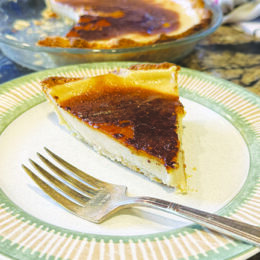
Vanilla Cream Pie
This is a vanilla-forward take on an Indiana-style sugar cream pie. It is extremely user-friendly, but during the final bake you need to watch it like a rattlesnake to make sure it doesn’t overcook.
One pie crust, blind baked — this means prebaked. If you’ve never blind-baked a pie crust before, watch a how-to video. It’s not difficult – you will probably want to crumple up a sheet of parchment paper and weigh it down with dried beans. I like to use chickpeas.
1 cup (198 g) sugar
¼ cup (28 g) cornstarch
2 cups (454 g) whole milk
½ cup (1 stick) butter, cubed
1 Tablespoon vanilla paste or vanilla extract
¼ teaspoon ground cinnamon
Preheat oven to 375°F.
In a medium saucepan, whisk the sugar and cornstarch into the milk. Over medium heat, bring to a simmer. The mixture will thicken considerably. Keep cooking, stirring or whisking continuously until it is thick enough to coat the back of a spoon.
Remove the sweetened milk mixture from heat, then stir in butter and vanilla.
When everything has incorporated, transfer the mixture to your pre-baked pie shell. Bake until golden brown — after 10 minutes or so, keep a close eye on the pie to make sure it doesn’t get too dark. While delicious, the pie filling is not to be trusted; it will darken suddenly and with almost no warning.
Let the pie cool, then chill in your refrigerator for at least two hours. It is very good served at room temperature, but I prefer it very cold. It is very vanilla-forward and satisfying.
Vanilla-Rum White Russian
1 ounce coffee liqueur — Kahlua is the classic base for a white Russian, but coffee-flavored brandy will work well too.
1 ounce dark rum — because the focus of the flavors in this drink is vanilla, don’t bother using a top-shelf, expensive, aged, sipping rum for this. I like Myers’s. Yes, it’s a “spiced” rum, but guess what constitutes the spices – mostly vanilla.
½ teaspoon vanilla extract — probably the best you can find. Artificial vanilla is perfectly fine for many applications, but not this one. Use the real stuff.
½ ounce Galliano — this is a vanilla-scented Italian liqueur in a really tall bottle.
2½ ounces half and half
In a mixing glass, stir all the ingredients except the cream with ice until it is chilled and combined thoroughly. Strain over fresh ice in a rocks glass.
Place a spoon against the side of the glass, and very gently pour the cream over the back of the spoon. The cream is slightly less dense than the boozy mixture and will float on top of it, making lava-lamp-looking layers. This is a good second-date, make-an-impression drink. It tastes of coffee, cream and, of course, vanilla.
Vanilla Soufflé
3 Tablespoons butter, cubed
3 Tablespoons all-purpose flour
Pinch of salt
1 cup (227 g) whole milk
1 Tablespoon vanilla paste or extract, separated – 1½ teaspoons and 1½ teaspoons
½ cup (99 g) sugar
4 egg yolks
5 egg whites
Butter and sugar to coat your soufflé dish
Preheat oven to 375°F.
Butter and sugar the inside of a soufflé dish — I like to use a generous amount of butter for this, about a tablespoon.
In a saucepan or small skillet, combine the flour, butter and salt to make a “roux.” This means that you will melt the butter and cook the mixture over medium heat for several minutes, until it darkens slightly to something like the color of a lion. Remove from the heat. Reassure the roux that you will come back to it; make sure it doesn’t feel abandoned.
In a small saucepan, heat the milk and half the vanilla, stirring until it reaches a gentle simmer. Add the roux to the milk mixture, and whisk to combine. Add the sugar, and bring the mixture back to a simmer, whisking constantly. Cook for two to three minutes, until it thickens noticeably.
Remove the mixture from heat and stir in the butter and the rest of the vanilla, combining thoroughly. Temper in the egg yolks. Return to the heat, and bring it back to a simmer, whisking constantly, then transfer the mixture to a mixing bowl, and set it aside to cool slightly. The egg yolks will turn the mixture yellow.
Beat the egg whites to stiff peaks. Stir 1/3 of the egg whites into the yellow mixture “to loosen it up.” (This is what most cookbooks say, though in my opinion that sounds a little judgmental. Who are we to tell the mixture that it needs to loosen up?) Gently fold half of the remaining egg whites into the mixture, until it is 95 percent incorporated, then fold in the remaining egg whites.
Transfer the now fluffy egg mixture to your prepped soufflé dish. Bake for 25 to 30 minutes, until it has puffed up and turned golden brown. When it is ready to take out of the oven, it will still be slightly jiggly in the center.
This is when you’ll want to take a picture of your soufflé. As it cools, it will shrink a little; if you like to post photos of your food to social media, take the picture as soon as it comes out of the oven. This will be a warm, delicate, vanilla-forward dessert that will top off your cooking confidence. Soufflés have a reputation for being temperamental. They really aren’t, but when you manage to achieve soufflé victory, you will know that you are capable of anything.
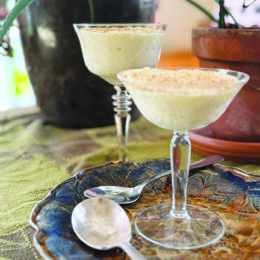
Vanilla Tapioca Pudding
This is a delicious, very old-fashioned dessert, with a caviar-like texture.
2 cups (454 g) whole milk
1 cup (227 ) heavy cream
1/3 cup (61 g) small-pearl tapioca
Pinch of salt
1 egg yolk, beaten
1/3 cup (66 g) sugar
2 teaspoons vanilla paste or extract
I Tablespoon nonfat dry milk (optional)
Vanilla tapioca. Photo by John Fladd.
Combine the milk, cream, salt and tapioca, then set it aside for 45 minutes or so, to let the tapioca pearls hydrate.
Add the sugar and milk powder, and cook over medium heat until it reaches a simmer. Cook the mixture for 15 to 20 minutes, until it thickens and the tapioca becomes tender.
Remove the mixture from the heat, and whisk in the egg yolk and vanilla. Return the mixture to the heat, and simmer it for two to three minutes, whisking continually, to make sure that the egg yolk has become completely incorporated and there are no egg pockets to turn into scrambled eggs.
Remove the mixture from the heat, and let it cool for 30 to 45 minutes, then transfer it to serving dishes, and chill overnight, or at least two hours. Serve cold with a sprinkle of grated nutmeg.
Catch Bluz Chile performing their New England blues tonight at 8 p.m. at Riley’s Place, 29B Mont Vernon St. in Milford. Find more live music at in the Music This Week listing, which starts on page 32. Have a gig? Let us know at adiaz@hippopress.com.
Saturday, May 9
The New Hampshire Sheep and Wool Festival will take place today from 9 a.m. to 5 p.m. and Sunday, May 10, from 9 a.m. to 4 p.m., at the Deerfield Fairgrounds, 34 Stage Road in Deerfield, and will feature workshops, a youth sheep show, a fleece sale and more, according to nhswga.org, where you can purchase tickets.
Saturday, May 9
The Granite State Trading Card and Collectibles Show will take place today from 9 a.m. to 4 p.m. at the Everett Arena, 15 Loudon Road in Concord, according to the Facebook page for Jimmy’s Place Sports Cards and Memorabilia in Tilton. See jimmysplacesportscards.com
Saturday, May 9
Queerlective’s spring market — “Reduce, Reuse, Upcycle ” — will take place today from 11 a.m. to 4 p.m., at the YWCA, 72 Concord St. in Manchester. The event will feature hands-on craft activities such as embroidery, heat press designs, sewing patches and more, according to queerlective.com. At 1 p.m., there will be a release party for State of Queer NH, aresource that “brings together queer and BIPOC organizations, businesses, artists, and spaces from across New Hampshire,” the website said.
Saturday, May 9
Catch Monster Jam Freestyle Mania today at 1 and 7 p.m. and Sunday, May 10, at 1 p.m. at the SNHU Arena, 555 Elm St. in Manchester. See snhuarena.com for tickets and see monsterjam.com for a look at this team-up between Monster Jam trucks and Freestyle Motocross bikes.
Saturday, May 9
Mosaic Art Collective, 66 Hanover St., Suite 201, in Manchester will hold an opening reception for “Shaping Ourselves,” “a group exhibition exploring the forces that shape identity,” tonight from 5 to 7 p.m., according to a press release. The exhibit will be on display through Tuesday, May 26. See mosaicartcollective.com.
Saturday, May 9
The New Hampshire Gay Men’s Chorus continues its spring concert series “Love, Pride & Hope,” with a show tonight at 7 p.m. at BNH Stage, 16 S. Main St. in Concord, ccanh.com. See nhgmc.com for additional upcoming performances, which include Saturday, May 16, at 7 p.m. at Christ the King Lutheran Church in Nashua and Sunday, May 17, at 3 p.m. at Rex Theatre in Manchester.
Saturday, May 9
Cosmic Blossom will bring their “funk, soul and rock & roll” to the Andres Institute of Art, Big Bear Lodge, 106 Route 13 in Brookline, on Saturday, May 9, at 7 p.m. See andresinstitute.org for tickets.
Tuesday, May 12
Merrimack Parks and Recreation begins a six-week “Tuesday Tennis with Coach Dee” program today from 6 to 8 p.m. at Wasserman Park Tennis Courts for adult intermediate level players, according to merrimackparksandrec.org, where you can register for the program.
Save the Date! Saturday, May 15 Joppa Hill Educational Farm in Bedford will host Star Gazing and Sky Watching on Friday, May 15, from 8 to 10 p.m., featuring 4-H volunteers and the NH Astronomical Society, according to jhef.org/events-at-the-farm, where you can register for the event. “This adult focused star party is for anyone with an interest in the night sky. We welcome people with all levels of experience,” the website said. Learn about perpetual star maps and how to identify constellations and planets, the website said.