Whiskey man

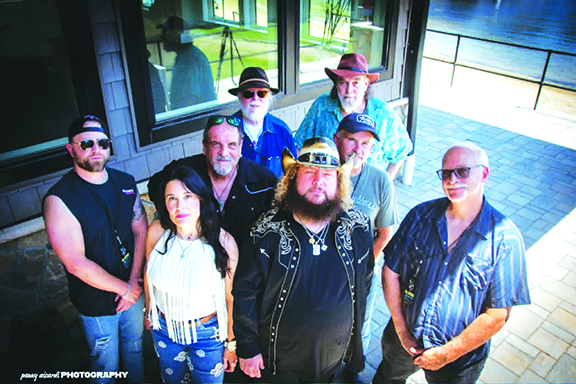
Chris Stapleton tribute act Traveller hits Riley’s Place

Traveller is not Alec Antobenedetto’s first tribute act. There’s the Allman Brothers-based Peacheaters, now in its 25th year, and Confounded Bridge, which covers Led Zeppelin’s catalog. However, Antobenedetto is particularly suited to songs like “White Horse” and “Parachute,” so his Chris Stapleton-centric band happened almost by acclamation.

For years he’s been a drummer and occasional singer. A few years ago he began to notice crowd members turning to each other whenever he sang a Stapleton song, nudging, pointing fingers, looking at him incredulously.

“People started coming up saying, ‘You sound just like him,’” he recalled in a recent Zoom meeting. “‘It’s scary how much like him you sound.’”

One year ago in April he threw caution to the wind and booked Traveller’s first show — before the band had ever gathered together to play.

“It’s just what I do; I’ll schedule a gig before we have our first rehearsal,” he said. Their debut came last September at Boggestock, a western Massachusetts festival he organizes every year.

“It took off like wildfire,” he continued. Now leading from the front of the stage instead of the back, Antobenedetto brings a few distinctive touches to the band’s performance. He talks with the audience more than the regularly reserved Stapleton, and he doesn’t play guitar. The latter is something he’s cheerfully unapologetic about.

“It hurts my fingers. I don’t like it. The guitar and me do not have a good relationship,” he said with a laugh, adding that it doesn’t interfere with the mission. “People are coming for that Chris Stapleton experience. They’re coming for the songs that they love and want to hear when Chris is not playing the area. I try to fulfill that need.”

That said, Traveller doesn’t simply mine Stapleton’s hits, though “Tennessee Whiskey” is usually a set closer. He’ll ask the crowd for liquid fortification before kicking into the song. “Because if they buy me a shot of Jack Daniel’s, I’ll sing it much better,” he said. Where it’s sold, he’ll drink some of Stapleton’s own whiskey (with the same name as his band).

The set list goes deep, including songs from Stapleton’s early bluegrass band The SteelDrivers, his covers of Vince Gill’s “Whenever You Come Around” and “Shameless” by Garth Brooks, along with the rowdy Rodney Crowell rocker “Ain’t Livin’ Long Like This” as it was interpreted by Waylon Jennings.

Because Antobenedetto knows that every fan has a favorite.

“If I ask the audience, I’ll get a hundred different answers,” he said. His personal choice is a deep cut, “When the Stars Come Out.” He’s also partial to “Crosswind” and “What Are You Listening To?” along with Stapleton’s cover of John Fogerty’s “Joy of My Life.”

Traveller includes Peacheaters bandmates Rick Goode on guitar and bassist Dave Hines, along with Jay Tullio on acoustic guitar and mandolin, Leon Melanson playing keys, pedal steel and guitar, Mike Duca on percussion and Mike Iannantuoni on drums. When he’s unavailable, Peacheaters drummer AJ Vallee fills in.

Standing alongside Antobenedetto at every show on backing vocals and light percussion is his girlfriend, Tina D’Aurizio. “How lucky are you to be able to do music with the person you’re in love with, you know what I mean? I’m very blessed with the guys that I work with.”

An upcoming show at Riley’s Place in Milford is a return. The Peacheaters were there recently, getting two encores.

“They wouldn’t let us get away with just one,” he said, praising the venue’s warm wooden-walled sound. “For anybody that is a true music fan, this is a place that they have to go. You could actually record an album in that room; it would be amazing.”

Antobenedetto remains a bit bemused by the reception he gets as a doppelgänger, but as a fan he welcomes the chance to celebrate Stapleton in Traveller.

“People ask me to sign stuff for them, sometimes they think I’m him,” he said. “But it’s really all about the music. The music is the captain of the ship, in every way possible.”

Traveller – The Chris Stapleton Experience
When: Friday, May 8, at 7 p.m.
Where: Riley’s Place, 29 Mont Vernon St., Milford
Tickets: $15 at eventbrite.com

Featured photo: Traveller. Photo by Penny Aicardi.

The Music Roundup 26/05/07

Civil roar: With a 2025 concept album inspired by George Washington’s Rules of Civility, Paul Gilbert continues his WROC world tour with a stop in Derry. The shredding legend’s latest is high-energy rock blending humor, history, and precision guitar work from the man who co-founded both Mr. Big and Racer X. Blues and jazz guitar giant Greg Koch opens the energetic double bill. Thursday, May 7, at 8 p.m., Tupelo Music Hall, 10 A St., Derry, $45 and up, tupelohall.com.

Roots unit: After he left Hot Day at the Zoo, Michael Dion formed Daemon Chili and electrified many of his old band’s bluegrass songs, comparable to Bob Dylan’s transformation at the 1965 Newport Folk Festival. Inspired by the Dead, the Allman Brothers and others, they fuse elements of rock, blues, reggae into an Americana sound. The most recent LP is 2017’s Mercy of the Sea. Friday, May 8, at 9 p.m., Penuche’s Ale House, 16 Bicentennial Square, Concord, $5 at the door, 21+.

Totally fab: In a crowded field of Beatles tribute acts, Britain’s Finest stands out for youthful exuberance — according to their website they’re the youngest touring Fab Faux. The detail and scope of their act is also notable. They perform in period costumes, use vintage Rickenbacker, Ludwig and Gretsch instruments, and perform songs once done live alongside studio-only tracks. Saturday, May 9, at 2 and 7:30 p.m., Rex Theatre, 23 Amherst St., Manchester, $44, palacetheatre.org.

Family way: Nobody knows John Prine’s songs like his brother Billy Prine. During concerts celebrating a life in song, he tells stories behind his beloved catalog, like the first time John played a reel-to-reel recording of “Paradise” for their father at the family kitchen table. The show includes classics like “Speed of the Sound of Loneliness” and “In Spite of Ourselves” (with singer Scarlett Egan). Sunday, May 10, at 4 p.m., BNH Stage, 16 S. Main St., Concord, $54, ccanh.com.

Victory lap: Marking the 30th anniversary of their breakout album Bringing Down the Horse, The Wallflowers perform in the Lakes Region. On the strength of hits like “One Headlight,” “Sixth Avenue Heartache” and “The Difference,” the 1996 release earned multiple Grammy nominations and helped move Jakob Dylan out of his famous father’s shadow to establish him as a musical force. Tuesday, May 12, at 8 p.m., Colonial Theatre, 609 Main St., Laconia, $57 and up, etix.com.

The Super Mario Galaxy Movie (PG)

Get twice the princesses, twice the Bowsers, more sidekick-y characters, more video game beep-boops and big loud everything in The Super Mario Galaxy Movie, which is fine, cute even at times.

You get even more callbacks to Super Mario game play here but also a “kitchen sink cookie”-like jumble of beats that feels very Lego Movie and Star Wars and even a little Frozen. It feels a little more like one of those Oreo Reese’s candy mashups than a whole new thing unto itself.

Mario (voice of Chris Pratt) and Luigi (voice of Charlie Day) are now sort of interworld fix-it guys, which is how they meet Yoshi (voice of Donald Glover), one of the many “more characters, less time with any specific character” additions here. Meanwhile, Princess Peach (voice of Anya Taylor-Joy) is still curious about her origins. Elsewhere, a similar-looking Princess Rosalina (voice of Brie Larson), mother to a bunch of those star thingies similar to that gleefully nihilistic star in the first movie, has been kidnapped by Bowser Jr. (voice of Benny Safdie), who is looking to redeem the legacy of his father, Bowser (voice of Jack Black), who, as the movie begins, is still in his pet-turtle-sized tiny incarnation and is trying to “work on himself” and has also taken up painting.

The Bowser family is probably the most kooky-fun element of this movie even though it does fall into the “twice as much and somehow less” overall feel of the movie. The movie has a fun visual sensibility, between the color and the sort of winking malevolent cuteness of everything. It walks up to the line of that kind of cleverness overall but never quite manages the quirky zaniness of, say, a Lego Movie that would push it into the territory of a movie with all-ages appeal. It is an engaging candy mashup fully enjoyable for kids and mostly tolerable for their adults. C+ maybe even a B- if you were a Mario player or are a kid just looking to be entertained or are a parent looking to zone out during something loud and pleasant. In theaters now and slated for a VOD release May 19.

The Christophers (R)

Ian McKellen and Michaela Coel star in what plays out like a slow-motion art heist in The Christophers, a Steven Soderbergh-directed movie.

Sallie (Jessica Gunning) and Barnaby (James Corden) are the children of artistic great Julian Sklar (McKellen). Or at least he was a great, back in the day, but his talent and drive seem to have faded away and he hasn’t painted anything in decades. Deep in the attic of one of his London townhouses is a series of half-finished paintings that would be valued in the millions if they were sold as finished, never-seen-before works. Sallie attempts finishing one, resulting in a painting that resembles that church fresco that was “restored” and ended up looking more monkey than man. They turn instead to Lori Butler (Cole), a friend of Sallie’s from art school who has talent in her own right but who is also skilled at capturing the work of other painters. Lori is meant to work as Julian’s assistant, while also finding the missing “Christophers,” as the paintings are called, and finishing them to then return them to the attic for them to be “discovered” after Julian’s death. And clearly Sallie and Barnaby, who have a terrible relationship with their self-centered father, are hoping that end comes sooner rather than later. Their interest in “The Christophers” has, however, pushed the paintings into the front of Julian’s mind, and Julian would prefer to see them destroyed than sold. Lori, a one-time fan of Julian’s, seems conflicted about what the fate of the paintings should be.

Both Cole and McKellen can at times feel like they’re doing one-person shows that bump into each other, but wow is it fun to watch them work. Cole keeps Lori’s feelings close to the vest with silences and subtle facial expressions; McKellen hides how Julian really feels in long self-important monologues which of course he delivers with impeccable dry humor. Together they push against each other’s defenses, annoying each other and also drawing the other person out. You can at times forget that there is a forward-moving plot in all this, it’s easy just to enjoy two great actors doing great acting playing off each other. B+ In theaters and slated to come to VOD in May.

Normal (R)

Bob Odenkirk plays yet another regular-joe guy who finds himself needing to kick butt in Normal, a totally fine example of this genre.

It ranks, I think, between the two Mr. Nobodys — not quite as good as the first, better than the second.

After a career- and soul-shaking incident in his hometown where he was a longtime police officer, Ulysses Richardson (Odenkirk, also a co-writer according to IMDb) has become a traveling interim sheriff. He’s wound up in small town Normal, Minnesota, where he stays in a grimy motel and leaves his estranged wife long internal-monologue-ish messages. Normal is as advertised — with most of Ulysses’s work being pulling apart townsfolk fighting over something stupid. But generally, people are friendly and life seems to be going well, perhaps a little better than you’d expect for a small rural town here in the mid-2020s. And this small police department seems to have a weirdly well-stocked armory. Ulysses, policing in kind of a pleasant, semi-disinterested funk, is helpful to all, including to Lori (Reena Jolly), who turns out to be half of a duo, with Keith (Brendan Fletcher), of bank robbers. That the whole town freaks out when its local bank, which appears to have only a small wad of cash and a handful of coins, is robbed is one of many clues that all in Normal is not, well, normal. (The first clue is the movie’s opening scene featuring an unhappy Yakuza boss.)

I appreciate how this movie has a short story approach to its action, keeping us mostly in the here and now and mostly resisting the urge to load up on back stories or telling us how every single thing works out. Ulysses eventually gets a sort of sidekick in Alex (Jess McLeod), the grieving adult-kid of the previous, recently-deceased sheriff, and their partnership adds a nice plucky little element to the story. Normal is exactly what its trailer promises — a blend of low-volume humor and theatrical violence that makes for an enjoyable time. B In theaters now and slated to hit VOD in May, according to Forbes.com.

Featured photo: The Super Mario Galaxy Movie

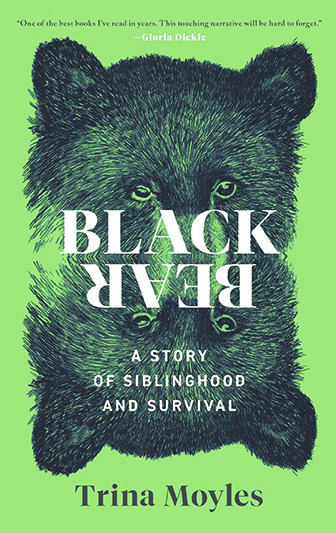
Black Bear: A Story of Siblinghood and Survival, by Trina Moyles

(Pegasus Books, 297 pages)

When she was 5, Trina Moyles’ father brought home a black bear. A wildlife biologist in Alberta, Canada, he often took possession of orphaned wildlife while trying to place the animals with zoos and rehabilitation facilities; the 3-month-old cub had lost its mother to a forester’s excavator. As the cub tumbled around the family’s basement, Moyles and her older brother looked on, entranced.

The memory stayed with her and shaped her into a girl who played with toy bears instead of Barbies, and later a woman whose fascination with bears grew as she took a job monitoring forests in a fire tower.

In her new memoir, Moyles entwines her knowledge of bears with the deeply personal story of her tumultuous relationship with her drug-addicted brother. The pair, just three years apart, were close in childhood even though Brendan was an extrovert, “collecting friends the same way I sought the company of books.” Moyles was naturally reserved but willing to be led on risky adventures by the brother she revered.

Theirs was a wildish childhood: building forts out of tree limbs in the woods, jumping off boulders into rivers, grouse hunting with their dad. When Moyles was a teenager she bought a horse with money she earned working at her town’s rec center; on one afternoon trail ride with a friend, they encountered a cinnamon bear (a subspecies of black bear), standing upright. “It was,” she writes, “the first time I’d ever come face to face with a bear in the wild. Everything my dad had taught me couldn’t prepare me for the shock of it. My mind and body flooding with fear and awe.”

She would soon come to another kind of fear, however, after Brendan moved out and she watched from afar his descent into alcohol and drug abuse. Hard partying was, she writes, a common pastime for young people in their area, and she herself edged close to the thin line between recreational use and full-blown addiction. But Moyles was able to stop before crossing that line; her brother did not, despite a car accident, a family intervention, AA and finally a spell of sobriety during which Moyles hoped she’d finally gotten the brother she loved in childhood back after a period of complete estrangement.

When Brendan had a baby daughter with his girlfriend, Moyles was the first person he texted, writing, “You had to be the first to know, Treen.”

All the while, Moyles was getting more obsessed with bears as she worked as a lookout at a 100-foot-high fire tower in northwestern Alberta, at a location so remote that she and her dog had to be flown in by helicopter. There was an electric fence around the cabin to keep bears out, although the bears occasionally broached it and she became familiar with them, even giving them names.

She begins to draw parallels between them and her own life.

When, for example, she observes an enormous bear dubbed Oscar rub against a tree, imbuing it with his scent and ostensibly increasing the chance he will find a mate, she reflects on her romantic prospects, or lack thereof. “As a woman in her mid-thirties, I’d been choosing to live alone in the forest, removing myself from civilization, from letting my scent be trailed by potential mates in grocery store aisles and cafe lineups, from parties and potlucks, from swiping left or right on dating apps.”)

When she encounters a bear hibernating in a ditch not far from where she is living, she approaches the den, hoping to hear the bear snoring. Later that night, she writes, “I felt comforted by knowing that the bear was there, so close, burrowed into the road. As I climbed beneath the covers of my duvet, I thought of the bear, curled in her den, and my loneliness softened.”

As her bear encounters multiply, Moyles learns of their curiosity toward humans, but she maintains a healthy fear of what they can do. One of the more distressing aspects of the memoir is the recounting of fatal and near-fatal bear encounters — there is no more dangerous bear than a mother with cubs, we all know, but Moyles writes that there is such a thing as a “good bear” — bears that exist peacefully alongside humans without conflict. She has such a relationship with a bear she observes for years, and a friend remarks at one point the bear, which she named Osa, probably knows Moyles better than she knows herself.

Brendan, who works in the oil industry, comes and goes in the narrative but returns with devastating effect at the end, and Moyles must come to terms with their loving but troubled relationship. It seems to take a very long time to get here; one must have a lot of interest in bears to stay with this story, and a high tolerance for tales of bear romance.

Most of us will never encounter a bear in the wild or in our yard, but if we do we’ll be better equipped to deal with it for having read this book. Far more of us know someone struggling with addiction and will relate to not just Moyles’ observations, but her pain. B

Featured Photo: Black Bear: A Story of Siblinghood and Survival, by Trina Moyles

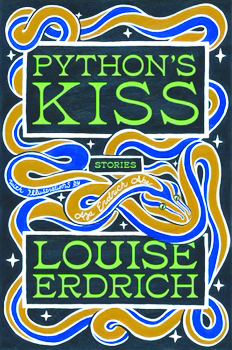
Python’s Kiss, by Louise Erdrich

(Harper, 222 pages)

The titular short story in Python’s Kiss is ostensibly about a dog named Nero whose job is to guard the 8-year-old narrator’s grandparents’ grocery store. The grandfather sleeps beyond locked doors “with my grandmother on one side and a loaded gun on the other. This is not a place where a child got up at night to ask for a glass of water.” The 8-year-old is staying there because her mother is about to have a baby, and she forms a bond with the dog. Nero, however, is infatuated with a cocker spaniel who belongs to a woman the narrator’s uncle is infatuated with. As events unfold, they intersect with the narrator’s memory of a traveling show of exotic, dangerous animals that went amok at her school.

This story, like the others in this imaginative collection, offers a smorgasbord of memorable characters. They are ordinary people in strange circumstances, often with an animal involved.

In “The Feral Troubadour” we meet a man enamored of poetry and stray cats. He lives alone in an apartment where he is decorating the bathroom with black and white tiles on which he writes excerpts from poems with a permanent marker. One day, like the narrator of “Python’s Kiss,” he receives what he perceives to be a sign from the universe, this one telling him “You must change your life.” The events that transpire are a confluence of absurdities that, against all odds, ends on a positive note. Not every story does, so enjoy it while you can.

In “Wedding Dresses,” four dresses stored in a basement closet are ruined by mold after a water pipe bursts, and their owner is confronted by her visiting niece: Why were there four wedding dresses? Who had she married and why did they divorce?

“This was suddenly like being a real parent. Having to explain her own past to a child, and do it in a way that would have little impact, either negative or perhaps overly positive.” The four-time bride goes through the story of each dress. Along the way we learn what she tells her niece and what she doesn’t. It’s a brilliant bit of storytelling.

In “Domain,” there is an afterlife controlled by corporations, which charge people for the privilege of uploading their consciousness into the one of their choice, or rather, the one they can afford. The narrator has been injured in a free-climbing accident and applied for early admission to an afterlife called Asphodel (also the name and subject of another story in the collection). When she arrives there, she sees what’s left of her carcass, but it’s not upsetting because “I have a new body now and it’s made of thought.” And she now has one overwhelming thought: how to find and eliminate — for good — her father, who she holds responsible for the death of her son.

The final story, “The Stone,” is as strange and riveting as the rest. It involves a woman who found a large, smooth stone as a child and adopted it as a kind of talisman, taking it with her to college, carrying it with her to concerts when she became a famous pianist. Stroking the stone gives her a sense of calm — until the day she has something that resembles a quarrel with the stone, and it breaks in two. As she slips from its emotional grip, we see the highlights of the stone’s existence over a billion years, the other lives it’s been part of.

There are 13 stories here, of which seven were previously published, in The New Yorker and elsewhere, but for anyone unfamiliar with Erdrich’s work this collection is a gateway drug to more. They are a great distraction from the everyday world, if there’s anything going on that you’d like to tune out for a while. A

Featured Photo: Python’s Kiss, by Louise Erdrich

Album Reviews 26/05/07

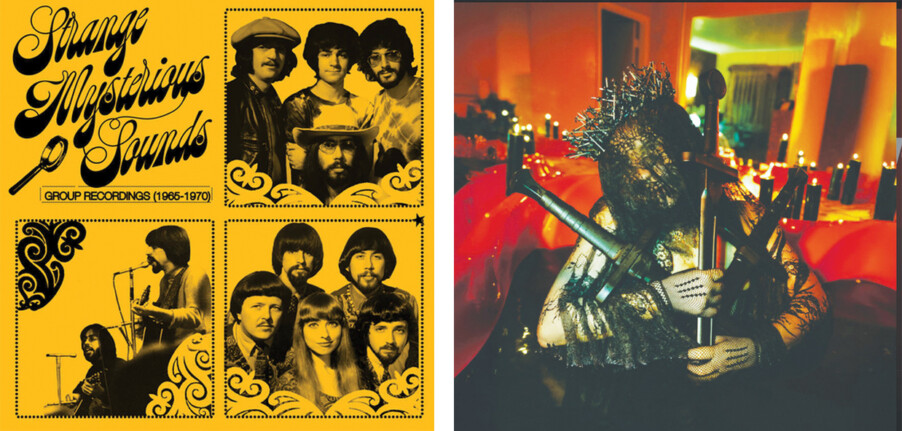
Ted Lucas, Images of Life [Disc 1: Strange Mysterious Sounds (1965-1970)] (Third Man Records)

Forgive me for being overly complicated in this bit: What we have here is disc 1 of a three-LP (vinyl) set covering the life’s work of one Ted Lucas, a fixture in the Detroit music/counterculture scenes of the 1960s and ’70s; disc 2 was released the other week, and the third won’t be released until the whole thing comes available on May 22. Everyone with me? OK, so for some reason — probably something to do with cultural preservation of early Motor City psychedelic-cum-proto-punk music, or possibly owing to the fact he felt Lucas was “unfairly” obscure — Jack White (who owns Third Man Records) wanted to release this compilation, which includes music from three of Lucas’ bands, Spike Drivers, The Misty Wizards and The Horny Toads. As well, White unearthed some rare live appearances and whatnot to complete the package. Like I hinted at earlier, it’s a historical artifact, its target taste most certainly acquired during that particular decade. To be honest — and I don’t say this just to help meet my self-imposed yearly quota of making fun of Jack White — the stuff on this set sounds as dated as first-album-era Jefferson Airplane, like, it’s trying so hard to be trippy it comes off as self-mockery — think the “Bat Dance” from the 1966 episode of Batman when Adam West couldn’t stop dancing with the hippie girl. For all I know this would be manna to 75-year-olds who miss the good old days (and sitars), but past that I have no idea what to tell you. D

Holy Wars, Shadow Work / Light Work (Pale Chord Records)

Time once again for another lady-fronted epic-metal album recommended by friend-of-the-Hippo Dan Szczesny, one that’s been in the queue since he first flipped over this Los Angeles band’s first one, after which his Substack-column co-writing daughter “Little Bean” made email-friends with Kat Leon, the band’s singer. Usually when a bandwagon-jumping L.A. outfit clambers onto my desk I can expect two things: great musicianship (bad musicians find out just how bad they are after, like, two days in that city and give up quickly) and a lack of originality (anyone remember when L.A. band Gliss tried to be relevant in the shoegaze space? Anyone at all?). The first part gets a checkmark (if anything it sounds overly tight, typical for the genre); however, I wouldn’t write off these guys as Cassyette/Evanescence clones; Leon does have a distinctive flourish to her vocal lines that matches her ’tude, which is less untouchable Amy Lee dom-princess vibe and more bemused Natasha Lyonne “where even am I” puzzlement. Stronger songs than I’d anticipated, too. A

PLAYLIST

A seriously abridged compendium of recent and future CD releases

• Come sail away with me, my legion of drunken scamps who still believe in rock ’n’ roll for some inexplicable, intricately convoluted reason, come have a gander at the new albums of Friday, May 8, through our mud-colored Jagermeister goggles! First up in our list of abject disappointments new records is Look For Your Mind, the latest from Long Island, N.Y., jangle-poppers The Lemon Twigs, a band semi-famous for collaborating with Bread-worshipping mope-popper Weyes Blood and perpetually unexciting veteran dude Todd Rundgren! Knowing those facts, I wasn’t expecting a whole lot from these guys’s new single “My Golden Years,” but I’ll admit that they did make a valiant effort to resurrect the ’70s-radio-bubblegum sound of The Raspberries, down to the Beatles guitars and creamy, sugar-frosted vocal lines. Much of the song is spent trying to re-create Eric Carmen’s way with a hook, which of course doesn’t happen, but like I said, they did try, which counts for — well, nothing really, but I’ll pretend it does if someone out there feels it’s necessary. Now, if you happen to be in a neo-jangle-pop band and want to sound like The Raspberries, the fastest way to create those tunes is by (A) being a decent songwriter, and (B) not even bothering to try doing it at all, since our current timeline in rock ’n’ roll has an unquenchable thirst for mediocrity, which these guys possess in big bucket-loads. I predict that they will do more songwriting with Todd Rundgren, which will deplete even more from their oeuvre, and they will eventually give up and become part of the problem, working in the music business as “talent scouts” and signing random bands to contracts they don’t deserve, but that’s enough inside baseball for today.

• Now, like I just kind-of said, being in a band that would like to try to sound like Raspberries is evidence of having good intentions at least, which I’ve never accused Canadian milquetoast-hipster clowns Broken Social Scene of harboring, but here they are, with a new album, Remember the Humans. Aside from giving us a couple of debatably decent songs from charter member Leslie Feist, Broken Social Scene has mastered the art of bland, un-catchy music, and we music critics have had to pretend to like them forever now, mostly because catchy music is bad for people’s ears because — well, it just is, never even mind why (it’s like the Aughts have never ended as far as overrated indie bands like Broken Social Scene are concerned). But fine, cut to now, and the new single “Not Around Anymore,” which sounds like a Strokes (of course) filler track that’s been put through a Jamie Lidell modulator and just aspires to be, you know, a really bad song. Let’s continue.

Lykke Li is a Swedish dream-pop/dance-pop singer, songwriter, model and actress, because hot-looking people should never have to settle on just one attention-seeking specialty, amirite folks? Her forthcoming sixth LP, The Afterparty, is claimed to be her final one; there’s no explanation for that as far as I could find on my ’puter, but she recently had her second child and wanted to explore darker “themes of the lower self, including revenge, shame and despair,” and that’s fine with me. “Knife In The Heart” sounds like ABBA trying to be Sigur Ros, which isn’t as bad as it might look.

• And finally we have British emo/noise-rock/soft-grunge band Basement with Wired, their fifth album and first since 2018’s Beside Myself. I expect this to be good, let’s go see. Yup, nope, “Be Here Now” is just Foo Fighters’ “My Hero” in a fake beard and sunglasses, I hope this has edified you.

Featured Photo: Ted Lucas, Images of Life [Disc 1: Strange Mysterious Sounds (1965-1970)] and Holy Wars, Shadow Work / Light Work

Stay in the loop!

Get FREE weekly briefs on local food, music,

arts, and more across southern New Hampshire!