Two decades of delicious

How the food scene in New Hampshire has grown since the Hippo’s debut

The local food scene looked a lot different when the Hippo launched 20 years ago. Farm-to-table menus were few and far between, smoking in restaurants was still allowed, and craft beer was mostly still a thing do-it-yourselfers were brewing in their garages. In the third of our month-long series looking back at some of the subjects Hippo has covered over the years, we talked to a few people who have been part of that food scene about how it’s changed, what it might look like 20 years from now and the challenges ahead.

Alex Ray

Alex Ray

Alex Ray is the owner and founder of the Common Man Family of Restaurants, which includes six Common Man restaurants throughout the state, the Airport Diner in Manchester, the Common Man Roadside at the rest stops in Hooksett off Interstate 93, and several other restaurants in the Lakes Region and beyond. He opened the first Common Man in Ashland in 1971.

How would you describe the local food scene 20 years ago?

Twenty years ago I think there was a greater percentage of independent owner-operated places where the owner, and often the family, was on site every day. Some restaurants were big, some small, but they were predominantly owner-run day to day.

What do you think the most significant changes have been over the last 20 years, pre-pandemic?

I think there’s less individual personality [in] restaurants. I think as a result there’s less variety and more national branded restaurants. Another change is [that there is] less on-site cooking and creating from scratch across the board and more pre-prepped food. This is because labor costs have risen faster than general costs.

What has surprised you about the way the state’s food scene has developed?

There has been a more recent return to independent restaurants with buying local and more individual chefs and owners coming into the industry. In general people don’t come to restaurants just to eat food; they come for an experience. They like the personality of a place. That personality and vibe comes from the greeting and service that are welcoming and enjoyable. The vibe could be a burger shack or a high-end bistro. People return again and again not solely for food but for that consistent experience they enjoy.

What do you think the food scene will be like 20 years from now, and what challenges will it face?

I think this year people are looking for prepared food in markets or grocery stores and to-go food in restaurants. This is a new world restaurants are adapting to based on increasing demand. People value time but still enjoy a well-made meal. Markets have responded well to this demand and restaurants are starting to address this well. Quality food and packaging along with the personality of a place will be important. This is a great new sector for those who pursue it.

What’s your favorite part of owning restaurants in New Hampshire?

The fun is in the dining room — the hum, buzz, cacophony. You hear it when you walk in. Again, people go out for a pleasant experience. It starts when you open the door and stays with you going out [the door] at the end of the evening. But most of all it’s the people who come to the restaurant and who work in the restaurant every day. You said your grandmother worked at the Capital City Diner back in the ’80s. I remember her well. She was that spark that makes a difference to guests. Those are the memories that are my favorites.

Aside from your own place, what’s your favorite local restaurant?

Long-term favorites vary greatly, from the well-oiled Panera to the unique Corner House Inn in Sandwich, and even new places like the Friendly Toast. The Main Street Station diner in Plymouth is also a favorite. I have lots of favorites!

Meghan Siegler

OLYMPUS DIGITAL CAMERA

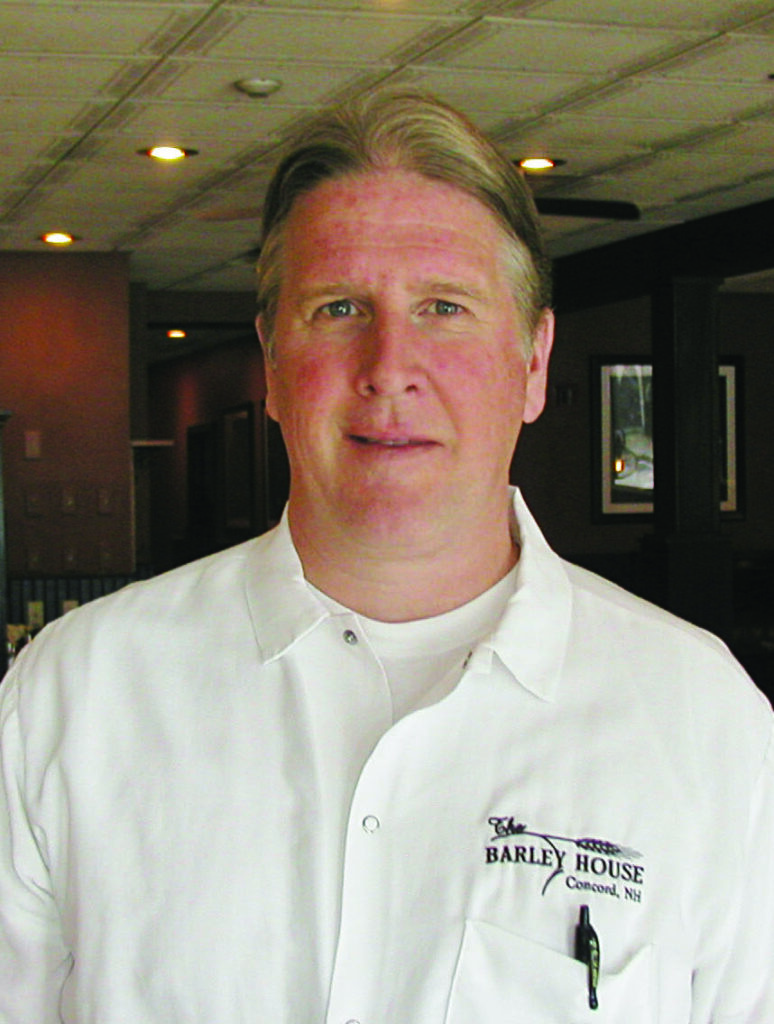
Brian Shea

Brian Shea is the owner and executive chef of The Barley House Restaurant & Tavern, which opened on Main Street in downtown Concord in March 2000.

How would you describe the local food scene 20 years ago?

I originally had the idea to open up a brew pub, but then when this location across the street from the Statehouse came up we kind of pivoted to being a tavern and a beer bar. There were a few restaurants around Main Street [in Concord], but I really felt like we were bringing something that was brand new at the time. … I’ve always been a burger guy, and when I was in culinary school, I remember I had this idea in my head that I wanted to build this place called Brew and Burger, which would be an upscale burger place … and I remember we were about three years in at The Barley House, and I think I was down in Brooklyn, New York, and I’m watching all of these cool things that some of these smaller places are doing, like grinding their own beef for their burgers, curing their own pork bacon and things like that, and I had a little bit of an epiphany. I said, ‘Why am I not doing this?’ So that’s exactly what we started doing. We grind and form our own fresh burger patties every single day, we cure our own bacon and smoke it, and we make our own sausage. If that wasn’t new and different in Concord, or even in New Hampshire at that point, I don’t know what was.

What do you think the most significant changes have been over the last 20 years, pre-pandemic?

There has been, kind of, this movement toward comfort foods. For us, we always want to evolve and keep looking for fresh ideas to keep the staff excited, and we try to do that across the board, because we’re going for a smaller and more concise menu with a bigger bang.

What has surprised you about the way the state’s food scene has developed?

I don’t know if anyone could predict that IPAs would become such a big thing. … When craft beer really took off, the IPA went through all these different Americanizations and all of a sudden we’re having three to four IPAs on our draft. I think IPAs really led to the beer drinker becoming more and more engaged and discovering different flavors and styles, and that’s emboldened breweries unbelievably.

What do you think the food scene will be like 20 years from now, and what challenges will it face?

Delivery and takeout is a part of the future, there’s no question about it. I think the days of larger restaurants with 300 seats are gone. Because of Covid, everyone has to think differently now about how to go forward. One of the things we’ve started diving a bit into is Detroit-style deep dish pizza. … I just like things that are kind of simple that you can sort of elevate.

What’s your favorite part of owning a restaurant in New Hampshire?

The best part of this business is the people. The food part of it is great too, but it’s nothing without the people around you. Especially your staff, because you’re with them a lot, and you get to know them and their life and they spend a lot of time with you. … It’s rewarding when you bring somebody in, and maybe it’s their first job in the kitchen, and maybe two months later they are doing prep or six months later they’re up to line cooking, and then eventually they might leave you to go get a very high-paying cooking job somewhere. That’s a great feeling, because The Barley House is a place where you can experiment and pursue your passion. If you show me you have some passion, I want to ignite that.

Aside from The Barley House, what’s your favorite local restaurant?

That’s a good question. I don’t really have a favorite, but for me what really hits home are kinds of places where I can just sit at the bar, like Hermanos, where I can have a beer or a cocktail and just be relaxed.
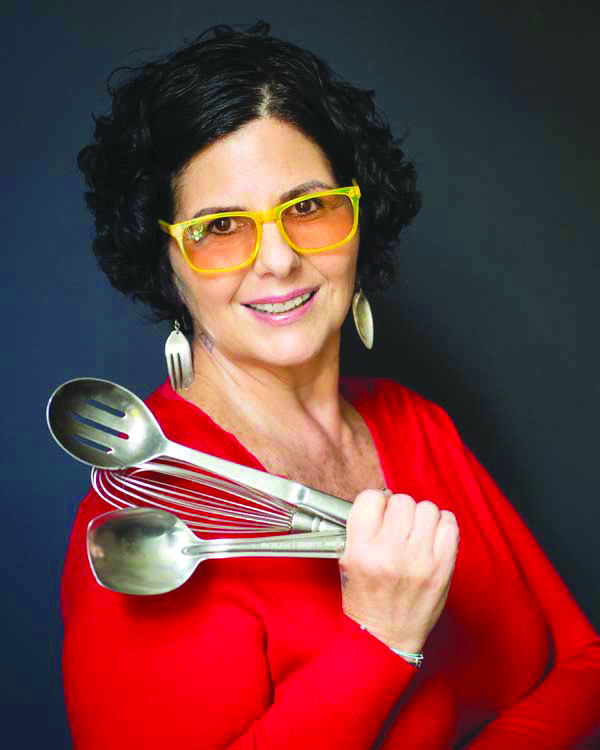
Carol Lawrence

Carol Lawrence

Carol Lawrence was just 23 years old when she bought the Red Arrow Diner in September 1987. In her more than three decades as owner and president, she has been at the forefront of building on the beloved spot’s brand while staying true to its nostalgic charm. Additional Red Arrow Diner locations under Lawrence’s leadership have opened in Londonderry, Concord and, most recently, Nashua last May.

How would you describe the local food scene 20 years ago?

I grew up in restaurants — my parents actually bought the Belmont Hall [and Restaurant in Manchester] when I was 11 years old. One of the first things that we did at the Red Arrow was we went smoke-free, and that was unheard of in restaurants at the time. Everybody, even my dad, told me that we would go out of business if we went smoke-free, but the following Monday after we did, sales immediately went up 10 percent.

What do you think the most significant changes have been over the last 20 years, pre-pandemic?

I’m still very close with the original owners, the Lamontagne family, who have always been about the quality and consistency in the food. Way back when, our most popular item besides breakfast was called the No. 1 Special, which is a basic hot hamburg sandwich. … They really don’t sell as much as they used to, and in that respect I’ve seen a lot of changes in that way. We’ve put up daily specials where we would be crazy creative with different things and they’d sell well. The power of just even offering items to customers with a lot of different additions, like the burger bar or the poutine bar, has always intrigued me.

What has surprised you about the way the state’s food scene has developed?

Just the nostalgia and the charm of the diner. People, when they hear about us from afar, tend to come to the Manchester location and usually they can never get in. … Every four years, I always ask myself if all the politicians are going to come back and they all do. There have been people that have come in and gotten engaged at the diner, and now they’re married and their kids are coming in, some whose parents I’ve known before they were even married.

What do you think the food scene will be like 20 years from now, and what challenges will it face?

The diner is still going to be the focal point of the community, but I also think that, because of this pandemic, a lot of things are definitely going to change. We’re definitely going to continue with outdoor seating. That has been a new revenue stream for us we never thought we’d have. … We’ve added online ordering too, which I was actually against at first. I said, ‘Who’s going to order eggs online?’ But that’s actually been a huge hit and something that we should have done sooner.

What’s your favorite part of owning a restaurant in New Hampshire?

By far, for me, it’s the history and just meeting so many great people. My staff are like my family. We have some people that have been with us for 20 years.

Aside from the Red Arrow Diner, what’s your favorite local restaurant?

I have two. My husband and I are Mexican food fanatics, and our favorite go-to place is Puerto Vallarta on Second Street [in Manchester]. I also really love the North End Bistro on Elm Street. The sweet and spicy salmon is delicious.

Edward Aloise

Edward Aloise

New York City native Edward Aloise already had more than two decades of hospitality experience in New Hampshire when he and his wife, Claudia Rippee, opened Republic Cafe on Elm Street in Manchester in 2010, followed by Campo Enoteca, a farm-to-table Italian restaurant and wine bar also on Elm Street a few years later. From 1989 to 2000, Aloise and Rippee owned and operated Cafe Pavone in Manchester’s Millyard. They also ran a restaurant consulting company, E&C Hospitality and Consulting Services, in the early and mid-2000s. In August 2020, Republic moved all its operations under the same roof as Campo Enoteca, where both restaurants continue to serve separate menus.

How would you describe the local food scene 20 years ago?

When I first arrived here, it was like the hospitality environment was non-existent, not only in Manchester but in the southern tier. You’re looking at primarily a few ethnic restaurants … and a lot of diner-style American food kind of places. … Right about then, even Boston was just beginning its culinary awakening. That really didn’t happen until the early ’90s, and I think a lot of what was happening down in the Boston area kind of worked its way up here. You had chefs like Jody Adams and Todd English that were doing some really cool culinary stuff … and the hospitality industry, for the most part, follows the market. As a consultant, I can tell you that restaurateurs … are exciting people. They are hardworking people. They are not always risk-takers, contrary to what people believe. They kind of say, ‘Well, what do people want.’ So that was kind of making people look down at Boston and New York and kind of copy them. … The thing that was missing was the farm-to-table aspect, and that’s what Claudia and I saw as an opportunity.

What do you think the most significant changes have been over the last 20 years, pre-pandemic?

In the year 2000, I started [E&C Hospitality and Consulting Services] … and I was able to maneuver myself throughout the southern tier and to watch what was developing in the hospitality area, mostly between Portsmouth, Manchester and Nashua. As the [industry] developed, the city seemed to develop around it as well. … I would say from the year 2000 on, the momentum up here really started to change. The physicality of downtown Nashua changed. The physicality of downtown Portsmouth changed. … Bedford started to become a little more of an engine with the Bedford Village Inn as an institution. … When Claudia and I opened up Republic, that really kicked off a whole other resurgence of the area here as well, because farmers and raisers were now beginning to see that they had a market besides somebody just driving up and buying a couple dozen eggs or a bag of lettuce or something. … [Farm-to-table] was already a big deal from up in the Hudson Valley down to New York City, but New Hampshire was like a desert for that. The first four years of Republic it was a struggle just to keep product in house, but as we got busier and busier, finally we found vendor partners. There were more people who understood what was going on.

What has surprised you about the way the state’s food scene has developed?

The biggest surprise was that it moved so quickly once it started. The hospitality industry was very staid until the ’90s and 2000s, and then it just exploded. Regionally, it was really something to see in the Portsmouth and Boston areas.

What do you think the food scene will be like 20 years from now, and what challenges will it face?

I’m not expecting any explosions of immense creativity or chefs breaking out of their shells … until at least the fall, when there’s some stabilization in the market. … People are going to just open their doors and grab as much business as they possibly can, because they need it. … Once that happens, I’m thinking the next big move is going to be more non-protein-based items. I’m not saying steakhouses are going to be gone, but I think that’s going to be the next underlying, driving trend, is predominantly non-protein-based menus. I mean, we’re finding it out even right now. A good 35 to 40 percent of what we sell here is non-protein-based.

What’s your favorite part of owning a restaurant in New Hampshire?

It wasn’t our intention to come to this state. We came here for financial reasons … and like anything else, we started to look around and get more and more comfortable here. The area appreciated what we were doing from a business perspective and it really rewarded us and solidified us as human beings. We became part of the community … and I wouldn’t have it any other way.

Aside from Republic Cafe or Campo Enoteca, what’s your favorite local restaurant?

Our favorite restaurant in the area is Surf down in Nashua. I’ve known [chef and owner] Michael [Buckley] for over 30 years. There’s also a place on the Seacoast … called the Atlantic Grill in Rye. We have a friend that lives out there, so whenever we are in Rye we go there.
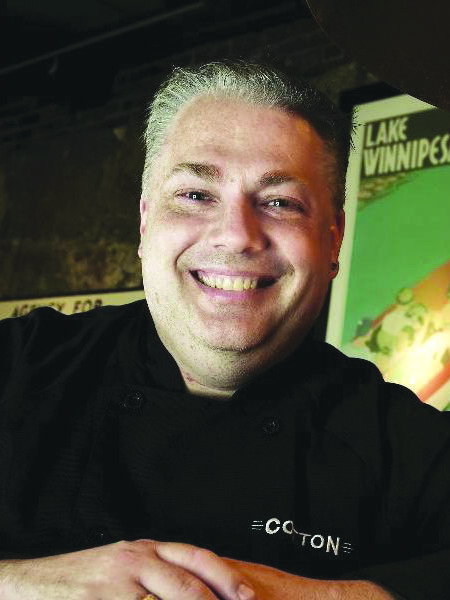
Jeffrey Paige

Jeffrey Paige

Jeffrey Paige has owned and operated Cotton Restaurant in Manchester since 2000 and has been part of the New Hampshire food scene since the age of 24, when he became executive chef of Levi Lowell’s Restaurant in Merrimack. In 1988 he became the chef at the Canterbury Shaker Village, and he helped establish the New Hampshire Farm to Restaurant Connection in 1991.

How would you describe the local food scene 20 years ago?

For me, it hasn’t changed that much. I’ve been sourcing local for over 35 years now. [There are] a lot more options now available to source local provisions … and there are a lot more chef-owned establishments continuing to drive the farm-to-restaurant movement. Chef-owners tend to be willing to spend a little more to source local. … There are still a lot of restaurants owned by business people, [or] non-chefs. Sometimes it’s difficult for them to justify spending more for local products when similar products are available by national food vendors at a lower price. This has changed dramatically over the past 10-plus years, as both restaurateurs and chef-owners see the value offered in supporting local.

What do you think the most significant changes have been over the last 20 years, pre-pandemic?

The amount of new cattle, pig and chicken farms, vegetable farms, mushroom foragers and growers, wineries, breweries, distilleries, cheesemakers, fishermen, etc., along with the growth of chef-owned and -operated restaurants, bread bakeries and pastry shops opening. It’s so wonderful to see! If you’re a chef or a consumer, you can pretty much find it now in New Hampshire.

What has surprised you about the way the state’s food scene has developed?

How slow [buying and supporting] local was to catch on here in New Hampshire. Vermont, Maine and Massachusetts have always been several steps ahead of us, but New Hampshire has just as much to offer. It’s nice to see that New Hampshire can hold its own now with our neighboring states. The support has been tremendous the past 10 years and it continues to grow. [I am] also surprised at how craft brewing really took off here.

What do you think the food scene will be like 20 years from now, and what challenges will it face?

I think it’s going to continue to grow with both new restaurants and local vendors and sources. My only concern is that we could reach a saturation point where there are more sources than restaurants and consumers to support each other.

What’s your favorite part of owning a restaurant in New Hampshire?

All of the people I’ve met and the friendships I’ve made, from patrons, employees to vendors, [like] cheesemakers, fruit growers, dairy farmers, vegetable farmers, pig, chicken or cattle ranchers, smokehouses, sugar shacks, breweries [and] wineries.

Aside from Cotton, what’s your favorite local restaurant?

[I have] too many favorite restaurants to narrow it down to one. Polly’s Pancake Parlor, Hanover Street Chophouse, Mint Bistro, O Steaks & Seafood, Buckley’s Great Steaks, Asian Breeze, Bavaria German Restaurant, KC’s Rib Shack and many more.

Kevin Cornish

Kevin Cornish

Kevin Cornish and his business partner, Greg, opened KC’s Rib Shack in Litchfield in 1998 before moving to its current location on Second Street in Manchester.

How would you describe the Manchester food scene 20 years ago?

I think the Manchester food scene was just starting to blow up a little bit around when we opened in ’98. I think the recent additions of cable TV channels such as the Food Network, the Cooking Channel and the Travel Channel played a huge part in many different types of food getting exposure in parts of the country that may have never been heard of before. Cooking-themed shows definitely played a big role in barbecue spreading across the country. People had barely heard of pulled pork when we first opened 22 years ago. That’s certainly not the case now. The restaurant scene was mostly dominated by small privately owned restaurants but that was beginning to change as the larger chain restaurants began to move into town, which [started to push out] many of the smaller locally owned restaurants.

What do you think the most significant changes have been over the last 20 years, pre-pandemic?

I think people were excited for something different as the new chains came to town. Your Bugaboo Creeks, Dave’s Famous BBQ, Chili’s, Ruby Tuesday, Outback Steakhouse and TGIF. The list is long and some of them have survived but I think over the years people started to resent corporate chain restaurants and began to support locally owned business again. Pretty much all of [those] chain restaurants … have all come and gone in the last 20 years and I’ve seen more privately owned local restaurants begin to thrive again.

What has surprised you about the way the state’s food scene has developed?

I think I was surprised the most by the restaurant scene’s growth. I remember in the first decade we were open I could put an ad in the paper for kitchen or front of house help and literally get 50 or 60 applicants. I had to start taking pictures of people as I interviewed them and staple a copy to their application in order to help me remember who I liked and had spoken to that afternoon. There were several times I called and hired a different person than who I thought I was hiring just because I had too many applications on my desk. Fast forward to the restaurant scene just before Covid hit and I was lucky to get one applicant if I posted a job. It was getting very hard to find employees. I was questioning where some of these new restaurants that were coming to town planned on finding people to work for them. Literally every person who wanted a job in the food service industry already had one.

What do you think the food scene will be like 20 years from now, and what challenges will it face?

Boy, isn’t that the golden question? I wish I had a crystal ball for that one. I’m still working on trying to figure out what challenges I will face in the next 20 weeks.

What’s your favorite part of owning a restaurant in Manchester?

My favorite part of owning a restaurant in Manchester is I love that KC’s has become a landmark in not only my hometown of Manchester but in the entire state of New Hampshire. We have gotten notoriety on several worldwide television programs such as Food Paradise and Man vs Food, which just last month proclaimed KC’s Rib Shack as “The Best BBQ in America.” I love cooking barbecue and making people happy. It makes me very proud that out of 327 restaurants listed in Manchester on Tripadvisor we have remained in the Top 5 for the last decade. I’m very grateful for our success and longevity. Prior to Covid we had over 20 years in a row of growth.

We are super thankful for the support Manchester and all of New Hampshire has given us over the years.

Aside from your own place, what’s your favorite local restaurant?

My two favorite local restaurants are Cotton in Manchester and Amphora in Derry.

Meghan Siegler

Tom Boucher

Tom Boucher

Tom Boucher is the CEO of Great New Hampshire Restaurants, which includes T-Bones, Cactus Jack’s, CJ’s and The Copper Door. He started out as a server at T-Bones, which opened its first location in Salem in 1984.

How would you describe the local food scene 20 years ago?

[There weren’t] nearly as many restaurants as there are today, and healthy options were just starting to become a trend, although at the very early stage of it. Fine dining really did not exist as it does today.

What do you think the most significant changes have been over the last 20 years, pre-pandemic?

The growth in fast casual is probably the most significant change — think Chipotle or Panera concepts. These will continue to see growth in the near future.

What has surprised you about the way the state’s food scene has developed?

It’s really grown to include a variety of cuisines, and the dining scene has splintered into more segments. It used to be fast food or casual dining. It’s now fast food, fast casual, casual, upper casual and fine dining. This brings a lot more choices in — not only the level of dining but the variety of cuisine has certainly expanded.

What do you think the food scene will be like 20 years from now, and what challenges will it face?

That’s a tough one to answer! Certainly the pandemic has already shown what the future will look like with more technology, more delivery, more takeout [and] drive-thru. I think you will see more and more convenience and the lines will continue to blur between restaurants and groceraunts.

What’s your favorite part of owning restaurants in New Hampshire?

I love seeing our employees grow with our company and fully embrace their careers with care and passion.

Aside from your own place, what’s your favorite local restaurant?

I would have to choose Hanover Street Chophouse. We rarely travel to downtown Manchester but when we do it’s to visit the Chophouse.


The Weekly Dish 21/01/21

News from the local food scene

Soup’s on: Assumption Greek Orthodox Church (111 Island Pond Road, Manchester) will host a drive-thru soup fest on Saturday, Jan. 30, from 11:30 a.m. to 2 p.m., with orders being accepted now through Jan. 26. The menu includes homemade soups like fasolada (Mediterranean white bean soup) and avgolemono (Greek egg lemon rice soup), as well as spinach pita, baklava, koulourakia (crisp braided butter cookies) and finikia (honey walnut cookies dipped in honey syrup). Ordering online in advance is required. Event is pickup only and attendees are asked to stay in their cars. Visit foodfest.assumptionnh.org.

Simple stir frys: Chef Liz Barbour of The Creative Feast in Hollis will hold a livestreamed virtual knife skills class on Sunday, Jan. 24, from 4:30 to 6 p.m. Using three cameras in her kitchen studio, Barbour will lead participants step by step on how to chop, slice, dice and mince ingredients for a stir fry, which she will then demonstrate at the end of the class. The cost is $25 per person and a link to a list of ingredients, equipment and recipes for the class will be provided to registrants. Barbour also has other upcoming virtual classes in February — learn to make 20-minute sheet pan dinners with her on Feb. 8, and how to prepare chicken stock for soups on Feb. 21. Visit thecreativefeast.com.

Concord winter market finds a temporary home: The Downtown Concord Winter Farmers Market has returned to an in-person format on Saturdays from 9 a.m. to noon as of Jan. 16. According to co-organizer Shelley Morley, the market is inside the Families in Transition building at 20 S. Main St., next to the Concord Food Co-op, with free parking available in the Storrs Street parking garage. The 20 vendors will be spaced out to allow for social distancing, and the number of shoppers at one time will be limited. Morley said the location is a temporary home for the market as it awaits approval to launch a new space on Storrs Street. Online pre-ordering through harvesttomarket.com is also still an option for shoppers. Follow the market on Facebook @downtownconcordwinterfarmersmarket.

On the canned wagon: Hermit Woods Winery & Deli in Meredith is now offering four of its products in recyclable cans: Petite Blue, sparkling Winnipesaukee rosé and Dolgo sparkling heirloom crabapple wines, as well as its Hermit hard cranberry apple cider, according to a press release. Hermit Woods co-founder Bob Manley said the canned releases are not intended to replace bottles, but rather to give customers another choice. “Considering our winery is located a few hundred yards from … [Lake] Winnipesaukee, we are frequented all summer long by folks arriving by boat,” Manley said in a statement. “We felt cans were the perfect way … to enjoy our products while experiencing the great outdoors.” Hermit Woods joins several other local wine producers like LaBelle Winery, Moonlight Meadery and Sap House Meadery in starting canned wine sales. According to the release, the winery hopes to expand its canned product line in the future. Visit hermitwoods.com.

Winter survival

Help your plants make it through winter

If you are like me, you buy new perennials, trees and shrubs every year. Most plants sold locally are hardy, but not all. It’s good to know the “zone hardiness” of plants before you buy them, and how the zone maps work. In a nutshell, the colder the climatic zone, the lower the number.

The U.S. Department of Agriculture has created maps showing the climatic zones of all states and regions. They are based on many years of temperature records, and rate each zone according to the coldest average temperatures in each zone. Summer temperatures are not considered in creating the hardiness zones.

Each zone covers a 10-degree range of temperatures. The coldest zone in New England is Zone 3, which includes places where temperatures each winter range between minus 40 and minus 30 degrees Fahrenheit. Some maps include an “a” and “b” designation to further describe the zones. An “a” is 5 degrees colder than a “b.” So Zone 4a is minus 25 to minus 30, and 4b is minus 20 to minus 25.

Trees and perennial plants that survive in Zone 4, which includes much of Maine, Vermont and New Hampshire, should be hardy to minus 30 degrees, though we often only see minus 20 degrees. Zone 5 is minus 20 to minus 10, Zone 6 covers areas where temperatures range between minus 10 and zero, and Zone 7, which includes much of Rhode Island, temperatures only drop down to zero or 10 degrees above.

All that said, you can grow perennials, trees and shrubs that are not rated to be hardy in your zone. The key is to get them well-established before winter arrives and to provide them with growing conditions that are optimal: sun, soil and moisture levels that correspond to their needs. You probably cannot grow perennials and woodies that are rated for two zones warmer than yours, but one zone is generally possible.

Some trees and shrubs will survive in a colder zone but might not bloom every year. Or ever, for that matter. Here in Zone 4, old-fashioned wisteria vines that do well in Connecticut or Rhode Island will survive but their flower buds (which are set the summer before) are spoiled by our cold, so they do not bloom.

Harvey Buchite of Rice Creek Gardens in Blaine, Minnesota, wanted a wisteria that would bloom in his Zone 4 gardens. He was given a seedling on his wedding day 34 years ago, one started from a seed of a fairly tough hybrid. His turned out to be a wonder vine, and he named it the Blue Moon Wisteria and sold it for many years. It blooms reliably after winter temperatures of 30 below. The reason for its success? Blue Moon, unlike most other wisteria, blooms on shoots grown in the current season — on new wood.

I called Harvey Buchite in 2006 and he reported that even after hard winters it will bloom, and often three times each summer. I’ve had one since 2004 and get a very nice set of blooms each year around the Fourth of July. It usually re-blooms a little in the fall. Others have been developed since then that will bloom in Zone 4, including “Amethyst Falls,” which I grow and like even better.

Survival rates in a cold winter can be improved by mulching the roots of your delicate or borderline-hardy plants. I bought a Japanese andromeda this year, even though it is only hardy to Zone 5. In the fall I spread a thick layer of leaves around the base to keep the roots warm as winter approached. I could have used bark chips instead, which is also a good mulch.

Trees and shrubs extend their roots in the fall up until the ground freezes, and I wanted my little shrub to grow as big a root system as possible. And later, when temperatures drop to minus 20 and below, I wanted to keep the roots protected.

That andromeda was loaded with flower buds when I bought it. I may wrap it with burlap or landscape fabric to protect those blossoms from harsh winter winds, though I haven’t yet. In the long run it will have to survive on its own — I have too many plants to fuss over them all every year. The first year is always the most important — once established, plants are tougher.

Sometimes freezing and thawing of the ground will push a plant up and part way out of the soil. This allows roots to be exposed to the air, freezing and dehydrating. That is almost always lethal. But this usually only happens the first winter after planting. Check new plants after a thaw, and if a plant has popped up, push it back down and mulch it well.

Wrapping shrubs or small trees with burlap or a synthetic, breathable cloth will help to protect flower buds from desiccation and dieback. I find roses in my climate often are badly burned by winter winds, but I rarely do anything to protect them. I just cut back the roses to green wood in April or May, and they bloom nicely. I cut back a nice double red “Knockout” rose to the ground this past spring, and it rewarded me with dozens of blossoms all summer, starting in June.

I do lose some plants to winter conditions most years, but don’t feel bad about that. As I see it, I learn something each time one dies, and losing one plant means I can try a new one! Or, if a particularly loved plant does not survive in one location, I may buy another and plant in a different spot.

Henry’s book, Organic Gardening (not just) in the Northeast: A Hands-On, Month-by-Month Guide has been re-printed and will be shipped to people who ordered it soon.

Featured Photo: Blue Moon wisteria blooms on new wood, so is not bothered by cold winters. Photo by Henry Homeyer.

Kiddie Pool 21/01/21

Family fun for the weekend

Planes and iBOTs

Take a hike

Beaver Brook Association is offering a Kids Fitness Hiking Club that meets on Tuesdays and Thursdays for four weeks, starting Tuesday, Jan. 26. The hikes run from 3:45 to 5 p.m. and are open to students in grades 4 through 8. These “vigorous” hikes explore the trails of the Beaver Brook campus at 117 Ridge Road in Hollis. Students will also learn a bit about hiking and survival basics and play some trail games. Masks are required when meeting in a circle but may be removed during the hikes when physical distancing is possible. The cost is $120. Visit beaverbrook.org or call 465-7787.

New Hampshire’s Audubon centers are still closed, but their sanctuary trails are open for families who want to get outside and safely enjoy nature. There are miles of trails at the center in Concord (84 Silk Farm Road, 224-9909) and in Auburn (26 Audubon Way, 668-2045). The trails are open from dawn until dusk. Visit nhaudubon.org.

Or take a family walk throughAmerica’s Stonehenge (105 Haverhill Road, Salem, 893-8300, stonehengeusa.com), a 4,000-year-old stone construction that was built by ancient people as an astronomical calendar to determine solar and lunar events of the year. Take a tour (mostly outdoors) and learn about the site, which was also used as a stop on the Underground Railroad. Kids can dig for gemstones with tools used by real archaeologists, and interactive tools are now available, including a free audio tour that parents can download to their smartphones. The museum is open daily from 9 a.m. to 4 p.m. (last entrance at 3 p.m.). Admission rates are $13 for adults, $11 for seniors age 65 and up, $7.50 for kids ages 5 through 12, and free for kids age 4 and under.

Hit the ice

Your guide to skating outside

A month into winter, outdoor ice skating rinks across the state are open for the season.

Local rinks

Local cities and towns like Manchester, Concord, Nashua, Bow, Merrimack and Hopkinton have outdoor rinks that are free and open to residents and non-residents.

The rinks may be open on and off, depending on the temperatures, so be sure to call or check your city’s or town’s website or social media before you go. Matthew Casparius, director of Merrimack Parks & Recreation, said temperatures must stay below 32 degrees consistently for the ice at Merrimack’s rink at Watson Park to freeze.

“Ice conditions can vary greatly with a temperature change as small as a few degrees,” he said. “If it doesn’t get cold or stay cold, then the rink season may be shortened.”

The rinks are skate-at-your-own-risk. Skaters are asked to stay off the ice if the rink is closed, and to practice common-sense Covid-19 safety measures while on the ice.

“We don’t really regulate it, but obviously people should maintain social distance, and masks are recommended,” said Janet Horvath, Manchester’s recreation and enterprise manager.

“Anyone that is showing symptoms of Covid-19 or has been exposed to Covid-19 should not visit the facility until they have been cleared by a medical professional,” Casparius added.

That’s especially important since skating so far this season seems to be a popular idea.

“This year, with a focus on outdoor activities as being safer for all, there has been more interest in skating than ever before,” said Veronica Lester, director of marketing for Strawbery Banke Museum in Portsmouth, home to Labrie Family Skate at Puddle Dock Pond.

Puddle Duck Pond is approximately 12,500 square feet, “75 percent of the size of a standard hockey rink,” she said. With an admission fee of $12, it features amenities like an outdoor patio and food truck on weekends; services including ice skate rentals and sharpening; rink rentals for private events; and skating lessons for kids and adults.

The perfect skates

Dave Palisi, owner of Capital Sporting Goods in Concord, which sells new and used pond or recreational skates and hockey skates, shared some tips for buying your first pair of skates.

If you plan on going ice skating on any kind of regular basis, Palisi said, it’s worth it to buy your own skates. Owning your own skates allows you to skate anywhere rather than being limited to rinks that offer skate rentals, and your skates are going to fit better and be more comfortable than rentals.

“You aren’t going to get a good fit with a pair of rented skates because you don’t get properly fitted when you’re renting. They just give you skates based on your shoe size,” he said. “That’s fine if all you’re looking to do is get into a pair of skates so you can spend a half hour skating, then take them off and be done.”

If you decide to buy your own skates, getting professionally fitted in person at a local shop that sells skates is the only way to ensure that you’re buying skates in the right size, Palisi said, adding that he would “recommend 110 percent not buying skates online.”

“I can’t emphasize enough the fitting process and how important it is,” he said. “If you put the time and effort into getting fitted correctly, you know it’s going to fit and that it’s going to perform the best for you.”

The biggest mistake people make when it comes to buying skates, Palisi said, is buying skates that are the same size as their regular shoe size.

“People think they know what size they need, but shoe sizes and skate sizes are totally different,” he said.

Another common misconception is that the best-fitting skates are the skates that are more expensive and higher-quality.

“You do not need to spend a lot of money,” Palisi said. “You’re better off buying a cheaper skate that is properly fit.”

A good-fitting skate should be tight against the foot. If the skates are “loose and floppy” and have enough space inside for your feet to move around, that will lead to soreness and discomfort, Palisi said.

For the best possible fit, you can get heat moldable skates. Palisi said Capital Sporting Goods and most specialty skate shops have a special “oven” that can “bake” the moldable skates. Once the skates are heated up, you wear them for 15 minutes or so, creating a custom mold around your feet.

If you’re trying to decide what type of skates to buy, Palisi recommends hockey skates for beginners, as opposed to figure skates. The blade on figure skates is fully exposed, with a squared-off tail on the end and a jagged “pick” at the toe. The blade on hockey skates is inset in a plastic holder and is smooth and slightly curved on both ends. To slow down or stop on hockey skates, the skater rotates their leg and scrapes the ice with the flat edge of the skate, whereas on figure skates, the skater uses the pick to push off and stop, which Palisi said is more challenging and takes some practice.

“If you don’t know what the toe pick on figure skates is or know anything about how to use it, just don’t even go there,” he said. “You don’t need to. Just go with a hockey skate.”

If you’re only skating outdoors, Palisi said, it’s futile to get your skates sharpened more than once a season.

“All the sand and grit on outdoor ice is going to ruin your sharpening, and there’s just nothing you can do about it,” he said, “but as long as you’re staying outdoors, [sharpening] is not a big need.”

Build a backyard rink

Building your own backyard rink is a great way to get in more skating time this winter while maintaining social distance.

“There are lots of backyard rinks right now,” Palisi said.

First, he said, find an area of level ground and decide how large you want your rink to be.

Then, go to a hardware or home improvement store and get a sheet of plastic for the base of the rink, and boards to enclose it.

“Just tell the people at the store that you’re looking for some liner to make a backyard rink, and they’ll know exactly what you’re talking about,” Palisi said, adding that some stores also sell complete backyard rink kits.

Another perk of building your own rink is that it doesn’t require as much freezing as public ponds do, so you can still skate even when the public ponds are closed.

“Ponds are deeper, so there needs to be several inches of ice,” Palisi said, “but if you make a backyard rink with just one or two inches of water, you don’t need it to be as cold for as long.”

To maintain your rink simply hose it down after each use at night when temperatures are freezing.

“It’ll smooth out overnight and be ready for the next day,” Palisi said.

Guided forest bathing walks
Not all rinks may be open. The open/closed status of the rinks can change from week to week depending on the temperatures. Call or check the city’s or town’s website or social media for the most recent information.
Beaver Meadow Pond, at Beaver Meadow Golf Course, 1 Beaver Meadow Dr., Concord, 225-8690, concordnh.gov/1410/winter-activities. When open, hours are daily from dawn to dusk.
Bow Town Pond, next to the Bow Community Center, 3 Bow Center Road, Bow, 223-3920, bow-nh.com/256/Parks-Recreation.
Dorrs Pond, adjacent to Livingston Park, 56 Hooksett Road, Manchester, 624-6444, manchesternh.gov/departments/parks-and-recreation. When open, hours are daily from dawn to dusk.
Four Corners, behind Holman Stadium, Sargent Avenue, Nashua, 589-3370, nashuanh.gov/1464/ice-skating-rink–seasonal. When open, hours are daily from 11 a.m. to 4:30 p.m. and 6 to 10 p.m. for general skating, and before 11 a.m. and between 4:30 and 6 p.m. for hockey.
Ice Skating Rink at Watson Park, 441 Daniel Webster Hwy., Merrimack, 882-1046, merrimackparksandrec.org/watson-park. When open, hours are daily from dawn to 9 p.m.
Jeff Morin Fields at Roby Park, 126 Spit Brook Road, Nashua, 589-3370, nashuanh.gov. When open, hours are daily from 10 a.m. to 8 p.m. for general skating, and from 8 to 10 p.m. for hockey.
Kimball Lake, 47 Kimball Lake Road, Hopkinton, 746-8263, hopkintonrec.com/info/activities. When open, hours are daily from 8 a.m. to 10 p.m.
Labrie Family Skate at Puddle Dock Pond, at Strawbery Banke Museum, 14 Hancock St., Portsmouth, 422-0600, strawberybanke.org/skate.cfm. Open daily from 9 a.m. to 9 p.m. Admission costs $12 for skaters age 5 and up. Skate rentals are available for $6, and skate sharpening is available for $7.
Rollins Park, 116 Broadway St., Concord, 225-8690, concordnh.gov/1410/winter-activities. When open, hours are daily from dawn to dusk.
White Park Pond & Hockey Rink,1 White St., Concord, 225-8690, concordnh.gov/1410/winter-activities. When open, hours are daily from dawn to dusk.

Buy skates
Here are some local shops selling ice skates.
• Capital Sporting Goods, 276 N. State St., Concord, 224-6921, capitalsportinggoods.com
• TSR Hockey, 5 Kelly Road, Salem, 898-7777, tsrhockey.com

Featured Photo: Labrie Family Skate at Strawbery Banke Museum’s Puddle Dock Pond in Portsmouth. Courtesy photo.

The Art Roundup 21/01/21

The latest from NH’s theater, arts and literary communities

Art by Roberta Woolfson, on display at Creative Ventures Gallery. Courtesy photo.

Palace goes virtual: The Palace Theatre in Manchester presents a new virtual series of live streamed performances, starting with The All New Piano Men, a tribute to Stevie Wonder, Billy Joel, Elton John, Barry Manilow, Freddie Mercury and other music legends, on Friday, Jan. 22. On Friday, Jan. 29, it’s the Palace Teen Company Takeover show, where teens will perform their dream Broadway roles. Professional singers and dancers from New York City will perform Palace artistic director Carl Rajotte’s original musical Divas through the Decades, a tribute to Etta James, Gloria Estefan, Tina Turner, Madonna and other female vocalists of American pop music on Friday, Feb. 5. Finally, My Mixtape: The Sounds of the 80s will pay tribute to Queen, Def Leppard, REO Speedwagon, Journey, Pat Benatar and other 80s favorites on Friday, Feb. 19. All shows start at 7 p.m. Tickets cost $15. Call 668-5588 or visit palacetheatre.org.

Classical for social justice: The Concord Chorale will present a free virtual concert, “When the Night is Furthest Worn,” with showtimes on Saturday, Jan. 23, at 7 p.m., and Sunday, Jan. 24, at 3 p.m. “This concert is our effort to bring choral music to our audience during the pandemic,” Chorale president BJ Entwisle said. “We are really excited that we have continued to sing together and can now share our work with our greater community of music lovers.” Under the direction of Jenny Cooper, the concert will feature pieces that emphasize social justice and equal rights, including the preamble of A Choral Quilt of Hope, with music by Adrienne Albert and the text of the Universal Declaration of Human Rights adapted by Susan Suntree. The Chorale will also perform Non Nobis, Domine by Rosephanye Powell; Bogoroditse Devo by Sergei Rachmaninov; My Heart be Brave with music by Marques L.A. Garrett set to the poem “Sonnet” by James Weldon Johnson; and Sure on this Shining Night by Morten Lauridsen. Collaborative pianist Molly Lozeau will play several short classical pieces by African American composers. The concert will run about 30 minutes, and a recording will be available to view for free all year. Donations will be accepted. Visit concordchorale.org.

Memoir on stage: New Hampshire Theatre Project’s new play development program SoloStage presents Where Do I Begin? from Jan. 22 through Jan. 24, in person (theater at 959 Islington St., Portsmouth) and online, with showtimes on Friday and Saturday at 8 p.m. and Sunday at 2 p.m. The new 75-minute, one-woman play written and performed by Stephanie S. Lazenby is based on Lazenby’s formative years, growing up as an only child in New Rochelle, New York. Tickets cost $30 for in-person shows and $20 for virtual shows. Call 431-6644 or visit nhtheatreproject.org.

New art on display: Creative Ventures Gallery (411 Nashua St., Milford) has a new collection of art by more than 20 area artists on display now in person and online. “Promoting the work of local artists has long been my goal,” gallery owner Betsy Craumer said in a press release, “and I am pleased to finally be able [to use] technology to launch this step in the process.” Call 672-2500 or visit creativeventuresfineart.com.

Toadstool Bookshops awarded: The New Hampshire Retail Association has named The Toadstool Bookshops its 2021 New Hampshire Retailer of the Year, according to a press release from the Association. Owned by Holly and Willard Williams, Jeff Osgood and Lowell Morris, The Toadstool has locations in Nashua, Peterborough and Keene. The award recognizes retailers in the state that achieved excellence in creativity, customer service, commitment to the community and work environment. “The Toadstool Bookshops are known for their customer focused attitude and employee retention, are an integral part of their communities and are always willing to sponsor and host events such as pickleball tournaments and poetry readings,” the press release said. “[They] are an excellent example of a New Hampshire family business and very deserving of this recognition.” Visit retailnh.com.

Call for art: The New Hampshire Art Association is accepting artwork submissions for its 35th annual Omer T. Lassonde juried exhibition. This year’s theme is “Beyond the Boundaries.” NHAA members and non-members are invited to submit one to three pieces in any medium. The online submission deadline is Friday, Feb. 5, at 5 p.m. Cash prizes of $1,000, $750 and $500 will be awarded to the top three submissions. The annual exhibit honors Omer T. Lassonde, who helped found NHAA in 1940 to exhibit the work of contemporary artists throughout the state. It will run March 31 through May 30 at the NHAA’s Robert Lincoln Levy Gallery (136 State St., Portsmouth) and online, with a virtual opening reception and awards ceremony planned for Thursday, April 15, at 6:30 p.m. Visit nhartassociation.org or call 431-4230.

Stay in the loop!

Get FREE weekly briefs on local food, music,

arts, and more across southern New Hampshire!