News & Notes 24/09/19

New library

A groundbreaking ceremony was held on Sept. 12 for a $6 million library project that will replace Mont Vernon’s Daland Memorial Library with a larger, modern, accessible structure, according to a press release from the Mont Vernon Library Charitable Foundation.

The new library is expected to be completed in the fall of 2025 and is a “public/private partnership with financial support provided by a bond and capital reserve fund approved by taxpayers, a significant gift from the Sophia G. Daland Trust and a successful capital campaign conducted by MVLCF,” the release said. The current building was built in 1909; the new building will allow for a “significant expansion of the library’s collection” as well as offer “space, technology and accessibility to allow library staff and visiting presenters to offer high-quality programming for area residents,” the release said. For more on the project, see mvlcf.org.

Daland Memorial Library produces the Tiny Town Library Podcast, which offers monthly episodes with town news, community updates, book recommendations and guest interviews, according to the description on Apple Podcasts. The most recent episode includes an interview with “special guest Howard Brown, beloved school bus driver,” according to the library’s website, dalandlibrary.com.

Driving for all

The New Hampshire Department of Education’s Bureau of Vocational Rehabilitation has acquired an adaptive driving van to help individuals with disabilities gain access to adaptive driving training, according to a press release. The department acquired its 2021 Chrysler Pacifica wheelchair-accessible van and handicap vehicle from MobilityWorks in Londonderry, the release said.

“The addition of this high-tech adaptive driving van represents a major milestone in our commitment to supporting Granite Staters with disabilities,” said Frank Edelblut, education commissioner, in the press release. “We understand how important it is for teens and young adults living with disabilities to learn how to drive and achieve another step toward independence.”

The department is seeking a qualified Certified Driver Rehabilitation Specialist to oversee the vehicle and provide the specialized training, the release said.

Manchester bike tour

The nonprofit Queen City Bicycle Collective hosts the 2024 Tour of Manchester on Sunday, Sept. 22. Join the 30-mile family-friendly ride around the city, from 8 a.m. to noon, or just the 8-mile West Side loop with its views of the city from Rock Rimmon and the Hands Across the Merrimack footbridge, which starts at 10 a.m. There’s also a 22-mile option. Bicyclists receive lunch and a commemorative T-shirt, and proceeds from the ride help QCBC continue its affordable bike repair offerings and its Earn-a-Bike program. Registration is $55 for ages 14 and older, $20 for ages 6-13, free for those under 6 years old. Ages 13 and younger must be accompanied by an adult rider. The tour offers rest stops, bike support, and lunch at the end of the ride, according to the website. Visit qcbike.org to sign up and see some nifty video from previous rides.

Always next year

The New Hampshire Fisher Cats concluded their 2024 season with a loss to the Somerset Patriots on Sunday, Sept. 15, who took the Eastern League Northeast Division second half title, with the Fisher Cats finishing the season in sixth place in the Northeast Division, according to a Fisher Cats release. But season tickets are already on sale for the 2025 season, which kicks off on Friday, April 4, at Delta Dental Stadium with a matchup against the Binghamton Rumble Ponies, the release said. See nhfishercats.com.

Staying warm

The United Way of Greater Nashua is holding a “Button Up Workshop” as part of their monthly “Coffee and Causes” series on Friday, Oct. 4, from 11 a.m. to 12:30 p.m. at the Amherst Town Library, 14 Main St. in Amherst, according to press release. Presentations by Andy Duncan, energy trainer, and Tim McDonald, weatherization director from Southern NH Services, will focus on explaining how to improve a house’s energy efficiency, weatherization programs, available rebates on gas and electric appliances and more, the release said. The presentation is followed by a Q&A; register at tinyurl.com/Oct2024-Coffee and email info@unitedwaynashua.org for more information.

Healthy lakes

NH Lakes, a statewide nonprofit organization whose mission is to “restore and preserve the health of New Hampshire’s lakes,” is urging homeowners to get their septic systems inspected for Septic Smart Week, which runs through Sept. 20, according to a press release. Problems in septic systems can “lead to nutrients and bacteria seeping into groundwater and finding their way into our lakes, causing potentially toxic cyanobacteria blooms,” the release said. The release said a licensed professional should inspect an entire system once every three years, in addition to regular pumping of septic tanks based on type of system and usage. See nhlakes.org.

Woodworking

The second annual New England Woodworking Competition will be held Saturday, Nov. 2, at University of New Hampshire in Durham, with both amateur and professional woodworkers encouraged to enter, according to a press release from the Guild of NH Woodworkers, which is organizing the event in association with the university and the New Hampshire Furniture Masters. The deadline to enter is Friday, Oct. 18, up to two pieces per woodworker allowed for judging, according to the press release and the rules for entry at gnhw.org. The cost is $60 for the first piece, $30 for the second piece for non-members, with no charge for students (of middle or high school, college or technical school) who enter (students are limited to one entry), the website and release said. Judges will evaluate the entries in 11 categories relative to ability and experience, the release said.

Many of the submissions will be for sale, the press release said. Admission is $22 in advance, $25 at the door, and includes complimentary hors d’oeuvres and an awards program, the release said.

Eclipse art exhibit

The Museum of the White Mountains at Plymouth State University will open a new exhibition, “In the Path of Totality,” about the April 2024 solar eclipse, on Friday, Oct. 4, from 3 to 5 p.m., according to a press release. The exhibition will feature more than 20 art pieces in a variety of media as well as weather data gathered by students and faculty who participated in NASA-funded eclipse research, the release said. The museum is located at 34 Highland St. in Plymouth and is open Tuesdays through Fridays from 10 a.m. to 4 p.m. and Saturday from 11 a.m. to 4 p.m. (closed Mondays, Sundays and university holidays), according to plymouth.edu/mwm. The exhibition is free and open to the public Saturday, Oct. 5, through Friday, Dec. 13, the release said.

BioBlitz!

BioBlitz, the annual dawn-to-dusk biological survey of Odiorne State Park in Rye, will take place Saturday, Sept. 21, from 7 a.m. to 4 p.m., according to the website and a press release for the Seacoast Science Center. Come for all or part of the day; admission costs $17 for ages 12+, $15 for ages 3 to 11 and senior and military, according to seacoastsciencecenter.org, where you can sign up. Explore the park with the center’s experts as well as guest experts, the release said. “In 2023, we found a total of 426 species, 34 of which were new to our list! That brings the total number of species identified since our first BioBlitz in 2003 to 2,388,” according to the website, where you can find an exploration schedule.

UNH Wildcats women’s basketball team, under first-year head coach Megan Shoniker, has released its 2024-2025 game schedule, with the first home game at Lundholm Gymnasium at UNH Durham versus Worcester State University on Monday, Nov. 4, according to a press release. See unhwildcats.com for the full schedule and to purchase tickets; single game tickets to women’s basketball games at UNH are $12 in advance ($14 on the day) for general admission and $10 in advance ($12 on the day) for youth and seniors. Single game courtside tickets are $17 in advance, $19 on the day. Wildcats men’s basketball will play their first home game on Wednesday, Nov. 6, against UMass Boston.

Franco-American Centre will hold a black-tie-optional Beaujolais Nouveau Gala dinner and dance on Saturday, Nov. 23, from 6 to 10 p.m. to celebrate the release of the 2024 Beaujolais in France. The three-course meal, with optional wine pairing with each course, will be at Oscar Barn Wedding Venue, 191 W. River Road in Hooksett. Tickets cost $115 ($90 without wine) for non-members. See facnh.com.

Tickets are on sale now for the Trans-Siberian Orchestra appearance on Friday, Nov. 29, at the SNHU Arena in downtown Manchester. The shows are at 2:30 and 7:30 p.m. Tickets cost $59.99 to $119.99, according to snhuarena.com.

NH Roller Derby will hold a Charity & Community Yard Sale on Saturday, Sept. 28, from 8 a.m. to 3 p.m. at 57 Joppa Road in Merrimack. According to the group’s Facebook page, there will be a large variety of items for sale including a “cappuccino maker, kids’ toys, stained glass, shoes, beach gear” and more.

Discover the Corn Maze Craze — 9/19/2024

Do you like puzzles? Be in one at an area corn maze — a fun attraction at several local farms and orchards. We look at some of the spots where you get even more entertainment with your apples, pumpkins and cider doughnuts.

Also on the cover It’s an events-packed weekend! You’ve got your NH Highland Games (see page 24), your Granite State Comicon (page 18) and your Concord Multicultural Festival (page 25).

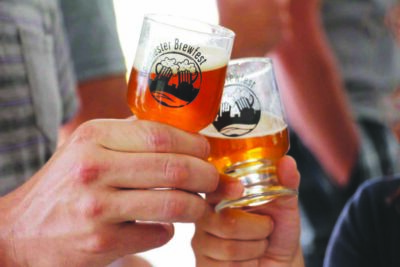
But, wait there’s more! Aerospacefest (page 19), a Brewfest in Manchester (page 25), Senie Hunt doing the rounds on a trip back to NH from Nashville (page 32). So much music (page 33)! So much family fun (page 18)! So much arts (page 14)!

Read the e-edition

A graphic the shape of the state of New Hampshire, filled in with the New Hampshire flag made up of the crest of New Hampshire on a blue field.
New library A groundbreaking ceremony was held on Sept. 12 for a $6 million library project that will replace Mont ...
A graphic the shape of the state of New Hampshire, filled in with the New Hampshire flag made up of the crest of New Hampshire on a blue field.
Ken Burns looks at Leonardo Da Vinci for his latest documentary Ken Burns lives in Walpole and is an American ...
Near miss for Pats
The Big Story: So much for hopes of an undefeated season as the Patriots went down in a 23-20 OT ...
A graphic the shape of the state of New Hampshire, filled in with the New Hampshire flag made up of the crest of New Hampshire on a blue field.
Good year for falcons In a Sept. 1 blog post New Hampshire Audubon released the figures for New Hampshire’s peregrine ...
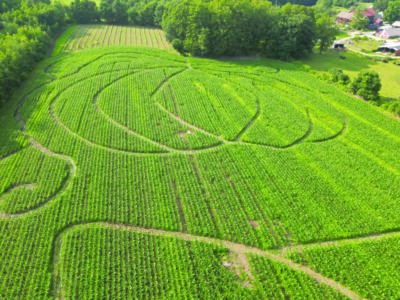
Overhead view of corn maze shaped like a pumpkin
Where to have fun on farms with a live action puzzle By Zachary Lewiszlewis@hippopress.com In addition to filling totes with ...
Photo of Franklin Einspruch over a zoom call
Bookery talk fosters appreciation By Michael Witthausmwitthaus@hippopress.com Visual artist and critic Franklin Einspruch will appear at an upcoming Bookery Manchester ...
The Art Roundup 24/09/19
The latest from NH’s theater, arts and literary communities • Series wrap-up: Twiggs Gallery (254 King St. in Boscawen; 975-0015, ...
Family fun for whenever Special events • Manchester Proud and the Manchester School District will present CelebratED! On Saturday, Sept ...
antique badge or medal that looks a little worn
Dear Donna, I found this in my dad’s jewelry box. Wondering if you can tell me if it’s military. My ...
Red round icon that reads Weekly Dish
News from the local food scene • Kofta and cocktails: A new Mediterranean restaurant and craft cocktail lounge has opened ...
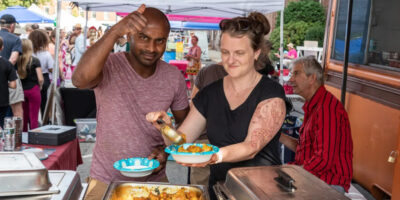
NH Highland Games return for another year of Scottish food and fun By John Fladdjfladd@hippopress.com This weekend marks the return ...
Animal shelter is this year’s charity By John Fladdjfladd@hippopress.com The Manchester Brewfest will return to Arms Park (10 Arms St., ...
Salsa music meets Somali food at this year’s Concord Multicultural Festival By John Fladdjfladd@hippopress.com This weekend’s Concord Multicultural Festival will ...
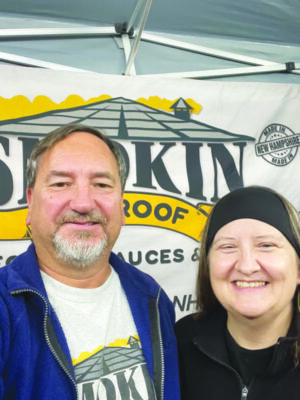
Phil Pelletier is the owner of and recipe developer for Smokin’ Tin Roof Hot Sauce (899-7369, smokintinroof.com) in Manchester. Before ...
Thomas Babington Macaulay lived in a time when politicians were expected to be, or at least were comfortable being, intellectuals ...
The Black Pacific, Here Comes Our Wave (Dine Alone Records) The long-awaited second album from this side project led by ...
Burn,by Peter Heller (Knopf, 291 pages) Jess and Storey have been friends since they were kids growing up in a ...
At the Sofaplex 24/09/19
Going Varsity in Mariachi (PG) The mariachi band of Edinburg North High School in the Rio Grande Valley of Texas ...
Local music news & events S• Helping hands: A local woman’s battle against breast cancer is the impetus for a ...
Three area shows before Senie Hunt returns to Nashville By Michael Witthausmwitthaus@hippopress.com Since moving from Concord to Nashville a few ...
Caterpillar on a leaf
AerospaceFest 2024 brings all kinds of STEM By Zachary Lewiszlewis@hippopress.com The Hippo recently spoke with Katie Marinoff-Silk, the Director of ...
Teenage Mutant Ninja Turtles from 1990
Fans of all stripes will find fun at the Granite State Comicon By Zachary Lewiszlewis@hippopress.com The Granite State Comicon is ...
Two Lumberjacks competing and cutting a log of wood
Friday, Sept. 20 Tonight the Capitol Center for the Arts (44 S. Main St., Concord, 225-1111, ccanh.com) has a treat ...

Pick Apples Make Pie

This year’s apple harvest looks (Golden) delicious

This year’s apple harvest looks (Golden) delicious

By John Fladd
jfladd@hippopress.com

2023 was an exceptionally bad year for apples in New Hampshire.
After a particularly frigid snap in February, temperatures in May across the state plunged well below freezing and killed off almost all the apple blossoms. Without apple blossoms, there can’t be any apples. Many apple-growers lost 80 percent or more of their crop. Sen. Jeanne Shaheen urged Congress to provide disaster assistance to New Hampshire farmers impacted by the weather. The event was later declared a disaster by the U.S Secretary of Agriculture.
But that was last year.
2024 has been as good as 2023 was awful.
“It’s a good apple year,” said Madison Hardy, the president of the New Hampshire Fruit Growers Association (38 Broad St, Hollis, 465-2241, nhfruitgrowers.org). “The weather has been cooperating and people have good crops. We’re looking forward to the fall agritourism since we didn’t have the apples last year; it’s shaping up to be a good fall here.”
In spite of some hail earlier in the summer, the weather has been excellent for apples.This spring and summer were warm, with plenty of, but not too much, rain, and Hardy said the September weather has cooperated, too.
“We’ve had some good, nice, cool weather that’s coming in. That really helps the apples color up this time of year. A lot of people are wrapping up picking Paula Reds and early varieties and we’re starting to get into the McIntosh and Cortland season coming up,” Hardy said.
Dianne Souther, co-owner of Apple Hill Farm (580 Mountain Road, Concord, 224-8862, applehillfarmnh.com), agrees that this year has been a lot less stressful than 2023. Her farm was one of the ones that lost more than 80 percent of its apple crop, but like other apple-growers, she is cautiously optimistic.
“This year’s crop is looking good,” Souther said. “The weather’s been good to us this year. We expect to pick through Indigenous People’s Day in the middle of October.”
Unlike Dianne Souther, Tim Bassett at Gould Hill Farm (656 Gould Hill Road, Contoocook, 746-3811, gouldhillfarm.com) wasn’t badly affected by last year’s weather — at least not directly.
“We did have a pretty decent crop last year,” Bassett said, “and unfortunately I think the news was out that there were no apples and we just didn’t have people coming out. So it just seemed [business was] very off last year and not because we didn’t have apples, just because I think people thought nobody had apples.”
Bassett said that this year is looking good, though.
“We’ve been open for a week for Pick Your Own,” he said. “Our hard cider company is open weekends, and we have a restaurant. I think we have nine varieties of hard cider going. So we kind of try to get people and give them a full day’s experience here,”
As Madison Nelson said, picking has already started on early-season varieties of apples like Paula Red, McIntosh and Summermacs. Mid-season varieties should be ready to pick sometime until the end of September. These include Cortland, Empire, Gala and Macoun apples. Late-season varieties like Mutsu, Honeycrisp, Braeburn and heirloom cider apples should be available through October, and perhaps a little longer.

APPLE FACTS
According to the United States Department of Agriculture (USDA), as of 2022 (the most recent year with published data) New Hampshire had 271 working apple farms, covering 1,435 acres.

According to Gould Hill Farm (656 Gould Hill Road, Contoocook, 746-3811, gouldhillfarm.com), far and away the most popular apple in New England is the McIntosh, which was developed from a sapling graft in 1870 by John McIntosh of Ontario, Canada. It is a sweet, firm apple, good for out-of-hand eating or baking.

The biggest apple producer in the U.S. is Washington state, which produces 6.7 billion tons of apples annually, according to the USDA.

Pick Your Own

Here are a some of the nearby orchards allowing you to pick your own apples. Dates and times may change according to the weather.

  • Applecrest Farm Orchards (133 Exeter Road, Hampton Falls, 926-3721, applecrest.com) Open 7 days a week, 9 a.m. to 6 p.m. The orchard also features a corn maze and a sunflower trail. For up-to-the-minute weather and picking conditions, call the orchard’s PYO hotline at 926-3721. Apples can also be ordered online.
  • Apple Hill Farm (580 Mountain Road, Concord, 224-8862, applehillfarmnh.com) Open 7 days a week, 8:30 a.m. to 5 p.m. This year there are 19 varieties of apples available. Different varieties will be ready to pick at different times throughout the season. Apple prices for PYO is $24 for a peck, $36 for a half bushel.
  • Appleview Orchard (1266 Upper City Road, Pittsfield, applevieworchard.com, 435-3553) Open for PYO Saturday and Sunday only, 10 a.m. to 6 p.m. Enjoy baked treats, ice cream and a petting zoo.
  • Brookdale Fruit Farm (41 Broad St., Hollis, 465-2240, brookdalefruitfarm.com) Open 7 days a week, 8 a.m. to 6 p.m. An ice cream stand is open daily from 11 a.m to 6 p.m. Call the Farm for current picking conditions.
  • Carter Hill Orchard (73 Carter Hill Road, Concord, 225-2625, carterhillapples.com) Open 7 days a week, 8 a.m. to 6 p.m. An on-site bakery offers a variety of pies, sweet breads and cookies, cider doughnuts and whoopie pies. Visit the Orchard’s website for apple variety descriptions, calendar and orchard map.
  • Currier Orchards (9 Peaslee Road, Merrimack, 881-8864, currierorchards.com) Open Tuesday through Sunday, 10 a.m. to 6 p.m., with the last entry for PYO at 5 p.m. Apple varieties include Jonastar, Honeycrisp, Liberty and Empire.
  • Elwood Orchards (54 Elwood Road, Londonderry, 434-6017, elwoodorchards.com) Open 7 days a week, 8 a.m. to 6 p.m. There is a corn maze on site.
  • Gould Hill Farm (656 Gould Hill Road, Contoocook, 746-3811, gouldhillfarm.com) Open Tuesday through Sunday, 10 a.m. to 5:30 p.m. More than 100 varieties of apple are available during the picking season. Visit the website for a description of each variety and to find out which are ripe and ready to be picked.
  • Hackleboro Orchards (61 Orchard Road, Canterbury, 783-4248, hackleboroorchard.com) Open seven days a week, 9 a.m. to 6 p.m. Pick your own in half peck, peck, and half bushel amounts. The orchard’s owners report having a very good crop this season.
  • Hazelton Orchards (20 Harantis Lake Road, Chester, 490-9921, facebook.com/HazeltonOrchardsChesterNH) Open 10 a.m. to 6 p.m. Monday through Friday, 10 a.m. to 5 p.m Saturday and Sunday. Many varieties of apple, including McIntosh, Honeycrisp, Cortland, Gala and Zestar.
  • Kimball Fruit Farm (184 Hollis St, Pepperell, Mass., 978-433-9751, kimball.farm) Open 7 days a week, 9 a.m. to 6 p.m.
  • Lavoie’s Farm (172 Nartoff Road, Hollis, 882-0072, lavoiesfarm.wordpress.com) Open 7 days a week, 8 a.m. to 7 p.m. Apple varieties include Fuji, Spartan Macs, Gravenstein and Sansa. Guests can enjoy hay rides, a corn maze, a corn boil and apple cider, all free with any produce purchase.
  • Lull Farm (65 Broad St., Hollis, 465-7079, livefreeandfarm.com) Open 7 days a week, 7 a.m. to 7 p.m.
  • Mack’s Apples/Moose Hill Orchard (230 Mammoth Road, Londonderry, 434-7619, macksapples.com) Open 7 days a week, 9 a.m. to 6 p.m. Mack’s Apples is the largest pick-your-own destination in New Hampshire. Driving between picking stations is recommended. Call the Orchard’s hotline at 432-3456 for the latest picking conditions and to find out what varieties are ready.
  • McLeod Brothers Orchards (735 N. River Road, Milford, mcleodorchards.com) Open Monday through Friday, 1 to 5:30 p.m., Saturday and Sunday, 10 a.m. to 5:30 p.m. Apple varieties include McIntosh, Gala, Mutsu and Cortland.
  • Meadow Ledge Farm (612 Route 129, Loudon, 798-5860, meadowledgefarm.com) Open 7 days a week, 9 a.m. to 6 p.m. Fresh-pressed apple cider and award-winning apple cider doughnuts are available at Meadow Ledge’s farm store. For the most current information, visit the Farm’s Facebook page.
  • Oliver Merril and Sons (569 Mammoth Road, Londonderry, 622-6636, facebook.com/olivermerrillandsons) Open Monday through Friday, 10 a.m. to 5 p.m., Saturday, 9:30 a.m. to 4:30 p.m., and Sunday, 10 a.m. to 4:30 p.m.
  • Smith Orchard (184 Leavitt Road, Belmont, 387-8052, facebook.com/SmithOrchardNH) Open 7 days, 9 a.m. to 5 p.m.
  • Stone Mountain Farm (522 Laconia Road, Belmont, 731-2493, stonemtnfarm.com) Open Thursday to Monday, 10 a.m. to 6 p.m., Tuesday and Wednesday, 10 a.m. to 4 p.m. 30 apple varieties are available as they become ripe.
  • Sunnycrest Farm (59 High Range Road, Londonderry, 432-7753, sunnycrestfarmnh.com) Open 7 days a week, 9 a.m. to 6 p.m. Call Sunnycrest’s PYO hotline at 432-9652 for daily updates on picking conditions and varieties available. There is a “Meet the Farm Animals” area, home to goats and sheep along with the occasional pig. Visitors can feed and pet the animals through the fence.
  • Washburn’s Windy Hill Orchard (66 Mason Road, Greenville, 878-2101, washburnswindyhillorchard.com) Open Monday through Friday, 10 a.m. to 5 p.m., Saturday and Sunday, 9 a.m. to 6 p.m. There is a corn maze, ice cream and hot apple cider doughnuts.

Making an apple pie is as easy as — well, it’s not hard
Advice from an expert

Lynn Donnelly is the owner of Bittersweet Bake Shoppe (272 Derry Road, Litchfield, 978- 649-2253, bittersweetbakeshoppe.com), a small-batch bakery that specializes in seasonal desserts. It would be fair to call her an apple pie expert.

What makes a good apple pie?
A well-made apple pie has color and texture — the greens, the reds — brown sugar so it’s a little more caramely, and of course a fresh homemade crust.

A top and bottom crust?
Yes, though we do switch it up [at the bakery]. We do a Dutch crust with the crumbs on top, and sometimes we do a lattice crust. Some people just want it like an old-fashioned rustic tart, so to speak. We just fold the edges in. But our typical [apple pie] is a two-crust pie.

What’s the secret to a good crust?
The secret to the crust is a secret.
Actually, it’s a technique. Everybody has one. We have one that works for us, but you have to make sure that fat you choose — whether it’s shortening or butter or a little of both — you have to make sure it’s good and cold so that when you bake it, your layers will explode and pop with the fat and create the flakes.
What kind of fat do you use in your crust?
Do you ever use shortening? The shortening crust can be delicious. But stay with the Crisco because at least you know where it’s been, what it’s doing, and it is non-hydrogenated. They were the first ones to jump into that. I will use shortening in my crust because it adds to the flake.

Do you cook the apples down before you put them in the crust?
Not really. The apples are the last thing to go in. I make my filling, the roux [a thickened sauce], and I put in my fruit last. And then I cook it until it’s just right. The apples aren’t fully cooked. They’re only somewhat cooked. And it’s only because they’ll release some juice and change the texture of the roux. So you’ve got to make sure that all comes together; then you pour it into the pie, and it’ll finish baking in the oven. That way, your apples aren’t mushy. You want them to hold up so when you slice it [the pie] you’ll see pieces of apple.

—John Fladd

Apple pie
This recipe comes from owner Brookdale Fruit Farm owner Cameron Hardy’s grandmother Betty Hardy. Cameron and his wife, Nicole, recommend baking this pie with raw, crispy apples, preferably Baldwin, Northern Spy or Jonagold. They, too, are proponents of a Crisco crust.

1 recipe pastry for a 9-inch double-crust pie
1/2 cup unsalted butter
3 Tablespoons all-purpose flour
1/4 cup water
1/2 cup white sugar
1/2 cup packed brown sugar
8 apples, peeled, cored and sliced
Preheat oven to 425°F (220°C).
Melt the butter in a saucepan. Stir in flour to form a paste.
Add water, white sugar and brown sugar, and bring to a boil. Reduce temperature and let simmer.
Place the bottom crust in your pan. Fill with apples, mounded slightly.
Gently pour the sugar and butter liquid over the apples, and cover with a latticework of crust. Bake 15 minutes in the preheated oven, then reduce the temperature to 350°F (175°C). Continue baking for 35 to 45 minutes, until the apples are soft.

Additional apple reading
To learn more about the long and strange history of apples, Louisa Spencer from Farnum Hill Cider recommends reading The Botany of Desire: A Plant’s-Eye View of the World (2001) by Michael Pollan. “In a way, I think that’s the best book he ever wrote,” she says. The movie documentary based on the book was partially filmed at Farnum Hill’s orchard.

Apple by the glass

A look at cider, brandy & wine — from apples

By John Fladd
jfladd@hippopress.com

When most of us think about apple season, we think of apple-picking, pies and lunch boxes. There is a completely different side to apples, though — one best enjoyed in a glass.
Flag Hill Distillery and Winery (297 N. River Road, Lee, 659-2949, flaghill.com) makes an apple-cranberry wine around the holidays, but its main interest in apples is for making brandy. Brian Ferguson is the owner of Flag Hill. According to him, fermenting apples and distilling brandy from them are important, and taken very seriously, but the key process for making excellent apple brandy is how it’s aged.
“After fermentation, we double pot distill [the cider],” Ferguson explained. “It’s very similar to the way we would make bourbon, but with a very full flavor, very rich. And then we put it in a barrel and it sleeps there for about six years.” He said Flag Hill uses several types of oak for the barrels — toasted, to bring out specific flavors to infuse the brandy — but that it is vital that some of the oak has been aged for at least three years, which allows microscopic strands of fungi to tunnel through the wood. “The mycelium [fungus], as it grows throughout the oak, creates more porosity over that longer period of time,” he said. “So we get more micro-oxidation during this process. These are much more expensive barrels to use, but they result in much more of the exciting compounds that we’re looking for out of the brandy.” The porosity — the tiny tunnels — in the oak provides more surface area to allow the exchange of flavor-bearing chemicals.
Apple brandy and its slightly more relaxed cousins apple wine and hard cider are enjoying a renaissance. It has taken about a century to recover from an involuntary hiatus that knocked the apple alcohol industry back on its heels since 1920. The Volstead Act, otherwise known as Prohibition, was rough on apple farmers.
Up until that time, in the U.S. and around the world, apples were used more for making alcohol than for eating or cooking. Louisa Spencer of Farnum Hill Ciders (98 Poverty Lane, Lebanon, 448-1511, farnumhillciders.com) explained that American orchardists had to rethink everything about their industry. Prior to Prohibition, the vast majority of apples grown in the U.S. were specialized varieties that were excellent for fermenting into hard cider but not very good for eating out-of-hand.
“When you’ve got acres and acres and acres of woody plants that do not produce anything that anybody would put in a pie or a fruit bowl, what are you going to do?” Spencer said. “You can see in these old agricultural journals people talking about in the run-up to Prohibition whether they’re going to stop making cider, and what they’re going to do was disassociate the word ‘cider’ from alcohol. And alone on Earth, we became a culture that thinks of cider as apple juice. That was quite intentional. They distinguished sweet cider from hard cider and it happened incredibly fast.”
For several generations, apples remained lunch-box fruit and cider was a cold, refreshing, alcohol-free beverage. That changed in the 1980s. Woodchuck hard cider, made from Vermont apples, was the first mainstream commercial cider, and Farnum Hill led the way with artisanally made cider from heirloom varieties of apple.
“So the decision was made here at Poverty Lane Orchards to plant a whole lot of apples that no one in the States had ever heard of and no one would be able to eat even if they had heard of them,” Spencer said.
Since then, apple-based alcohols have become increasingly popular, especially in apple-growing regions like New England.
In addition to making traditional red and white wines, Sweet Baby Vineyard (260 Stage Road, Hampstead, 347-1738, sweetbabyvineyard.com) produces eight different fruit-based wines. Lewis Eaton is the vineyard’s owner; he has made apple wines for 16 years, making his vineyard one of the pioneers in New Hampshire apple wine. “You know it,” he said. “We’ve been around a bit.”
Sweet Baby makes two apple wines: a cranberry-apple wine, and one with apples only. Their complex flavors come in part from the number of varieties of apple used to make them.
“[We use] 13 different kinds of apples,” Eaton said, “heirloom and standard varieties. The heirloom apples are old English-style apples.” Sweet Baby starts with a proprietary blend of apple juices from Applecrest Farm Orchard (133 Exeter Road, Hampton Falls, 926-3721, applecrest.com). “It’s what they call their holiday cider,” Eaton said. “So it’s the best of the best, in that it has all those 13 or so different kinds of apples. Obviously they adjust the blend, depending on whether it’s too sweet or too tart, and then we take it in as fresh pressed cider. We remediate it to get up to 12 percent alcohol.” Eaton and his team use Champagne yeast, which tolerates higher levels of alcohol than traditional cider yeast, which normally tops out at 4 or 5 percent alcohol by volume.
Sweet Baby Vineyard makes about 400 cases of the straight apple wine per year, and 200 cases of their apple-cranberry.
“We sell out of it every year,” Eaqton said. The apple-cranberry wine is extremely popular around the holidays. “It goes bonkers and we never seem to make enough,” he said. “People get a little mad, but whatever. It is what it is. Maybe that makes them want it more, I suppose. If we made too much of it, then they wouldn’t want it so much.”
By contrast, Pete Endris, the owner and cider-maker at Bird Dog Farm and Cidery (150 Bayside Road, Greenland, 303-6214, birddogcider.com), has been in business for two years. He, too, is a firm believer in using juice blends from different apples to make a complex cider.
“At Bird Dog we focus on making ciders using traditional methods,” he said, “and definitely paying attention to the right cider varieties. So what I like to tell people is much like with wine, you don’t make the best wine from table grapes, and it’s usually the case that you don’t make the best cider with just any old apple.” He credits the popularity of hard ciders to the resurgence of bitter-tasting heirloom apple varieties. “They tend to have more tannins, which are usually associated with bitterness or complexity, and they have different flavor compounds that, honestly, over the years have made them maybe less desirable for eating, and some of these apples have fallen by the wayside. And the traditional cider movement is bringing some of these apples back to the forefront.”
As a small cider producer, Bird Dog Farm is just getting started. “We’re just getting kind off the ground,” Endris said. “We make around 2,000 gallons of cider a year, but alongside the cider we’re growing out our orchard, so we have nearly 1,500 trees planted. My wife and I bought this farm, which for most of its modern history was a working dairy farm, but it hasn’t been a working farm for about 50 years. And so we have planted all these trees, and we’re growing them in a high-density fashion, like a vineyard, basically. They’re on a trellis, they’re dwarf rootstocks, the trees only get to be about maybe 12 feet tall, and they’re kept within about a 3-foot space.”
Endris is in the process of opening a tasting room where customers can compare Bird Dog Farm’s eight varieties of cider.
“We’ve been spending a lot of time renovating an old dairy barn built in the 1950s,” he said, “and it now houses our cidery. Recently we’ve been focusing on the tasting room part of it, which we will be planning to open up here in late September.”

An apple vocabulary word to make you look cool
Under certain conditions, apples can develop rough, brownish skins. This is called “russeting”. Some varieties that are particularly susceptible to russeting have the word “russet” in their names — golden russet or English russet, for example. Russet potatoes are called that because they are entirely covered with russetted skin.

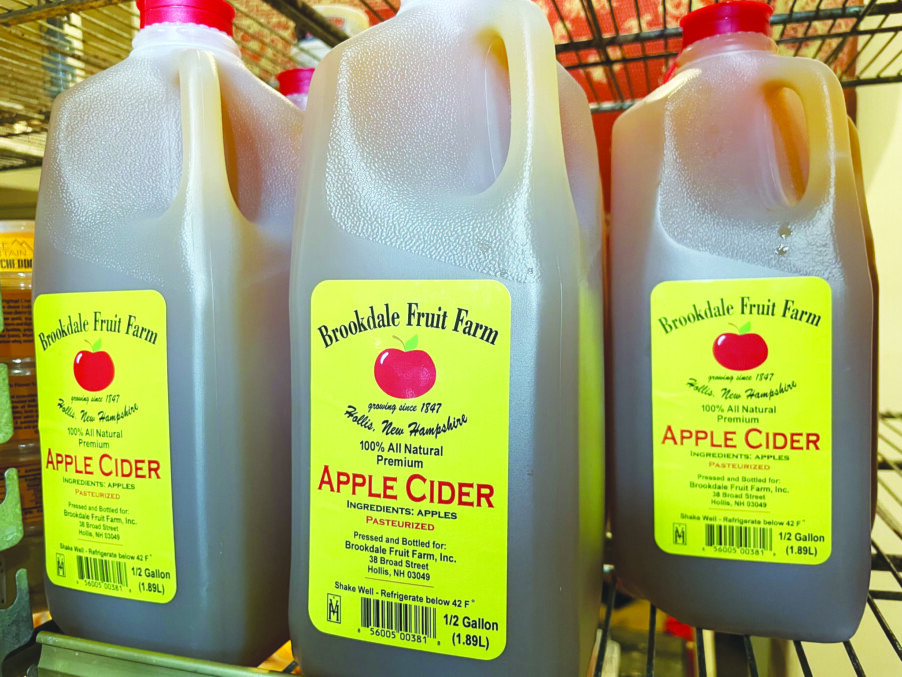
Featured Photos : Brookdale Fruit Farm. Courtesy photo.

On The Job – Louisa Amirault

owner of Vintage 101


Louisa Amirault owns and operates Vintage 101 (292 Route 101 in Amherst), which curates a unique selection of vintage and antique decor, furniture and other accessories for purchase. Visit their Facebook page or call 930-6583.

Explain your job and what it entails.

Basically I sell vintage, antique and unique items.

How long have you had this job?

Since March 23 of this year.

What led you to this career field and your current job?

I started out just kind of fixing up and making over old furniture. From there I got into other beautiful old things. Then, with the things that I was able to rescue, I wanted to share them. I had an antique booth for two years at the Milford Market. I needed more space so I opened the shop.

What kind of education or training did you need?

Actually, I had a degree in business and for 20 years I did web design and hosting. I found that I liked more hands-on creativity and that’s how I got into fixing up furniture.

What is your typical at-work uniform or attire?

Business casual.

What is the most challenging thing about your work, and how do you deal with it?

The most challenging thing for me is having to be in one place for a long period of time. Where I’m the only one working I can’t just leave to take a 10-minute break … but when the day is busy it just flies right by. I have a lot of nice old books I’ve kept myself entertained with.

What do you wish you had known at the beginning of your career?

That there would be an adjustment period for me to kind of get used to being stuck in the store all the time … being the only employee … but I’m getting better. I had my own business before for 20 years but I could make my own hours.

What do you wish other people knew about your job?

The value of the antique and vintage items. To me it’s so special to save these items. People come in and they’re like, ‘They don’t make anything like this anymore,’ and they get it. But some people don’t and I wish more people understood how good this furniture is, how long it lasts, how durable it is. Some of the dishes I have are from the early 1800s … [and they’re] made so well and with so much care.

What was your first job?

My first job ever was when I was 16. I was a waitress at a breakfast place. I liked it.

What is the best piece of work-related advice you’ve ever received?

Just to do something that you enjoy and then it doesn’t feel like work. Having just a little bit of creativity in my job where I can hand-pick the items and I can set up the little vignettes, that gives me joy.

Zachary Lewis

Five favorites
Favorite book: Lately I’m very much into the Jane Austen books. Pride and Prejudice, I know that’s kind of girly, I can’t help it.
Favorite movie: Signs
Favorite music: I like all kinds of music but I mostly like ’90s alternative rock like Radiohead, Live, Bush.
Favorite food: Lately I’m really into Indian food.
Favorite thing about NH: The diverse landscape. Everything about the geography is just perfect.

Featured photo: Louisa Amirault. Courtesy photo.
Kiddie Pool 24/09/12

Family fun for whenever

Indoor and outdoor fun

• Auburn will hold its 31st annual Duck Race on Saturday, Sept. 14, at 2 p.m. as part of 2024 Auburn Day, which runs from 10 a.m. to 3 p.m. at Auburn Village on Hooksett Road. Winning ducks get their ticket-holders prizes — from $1,000 for first prize through $25 for 6th through 10th place. The day will also feature an apple pie contest, a cookie baking contest for kids, a small petting zoo, music by Ray Zerkle, the Pinkerton Marching Band, a New Hampshire National Guard Black Hawk helicopter, food trucks, children’s games and more. See auburnhistorical.org.

• Friends of Benson Park’s third annual Family Fun Day will take place Saturday, Sept. 14, from 11 a.m. to 4 p.m. in Benson Park (19 Kimball Hill Road, Hudson, friendsofbensonpark.org). Cub Scouts Pack 21 and Girl Scouts Troop 12070 will be in attendance, as will Balloons by Michelle, UFO Party Rental and the Carriage Shack Farm Traveling Petting Zoo with their fuzzy animals. Participants will enjoy music from SNHUG, While My Guitar Gently Weeps, and Let’s Play Music soloist Aryanna Cabrera throughout the day.

• The Granite State Fair at 72 Lafayette Road in Rochester will run Thursday, Sept. 12, through Sunday, Sept. 15, and Thursday, Sept. 19, through Sunday, Sept. 22. Find a ride list with height requirements at granitestatefair.com. One-day tickets cost $10 per person through Sept. 11, or $12 per person Sept. 12 and beyond (children 8 and under get in free).

Pelham Old Home Day is Saturday, Sept. 14, from 7 a.m. to 6 p.m. at 3 Main St. in Pelham. The day will include music, fitness demonstrations, dance and martial arts demonstrations, food trucks (meat pies, poutine, hot dogs, fries, chicken fingers, ice cream, beverages and desserts), a pancake and sausage breakfast at the Church Fellowship Hall, crafts and goods vendors, a white elephant yard sale, a 5K road race, kids’ games, touch a truck, a cornhole tournament, a grand parade, a performance by the Windham Community Band, a penny sale raffle and more, according to pelhamoldhomeday.org.

Especially for the littles

• The Children’s Museum of New Hampshire (6 Washington St., Dover, childrens-museum.org, 742-2002) will hold Toddlerfest, its annual celebration of the littlest museum-goers featuring special activities and events, Tuesday, Sept. 17, through Sunday, Sept. 29. A visit to the museum requires online reservations.

• Different Drummer Farm (55 South Road, Candia, differentdrummerfarm.com ) wants Granite Staters to pack up their picnic baskets and favorite teddy bear or other stuffed friend on Sunday, Sept. 15, from 11 a.m. to 2 p.m. for their Teddy Bear Picnic. Children can enjoy petting and feeding the farm animals, creating teddy bear crafts, going on a bear hunt or wagon ride, a storytime put on by Ballet Misha, a family photo at the photo op spot, and an optional pony ride. A limited amount of picnic basket lunches are available in advance. There will be sweet treats, teddy bear gifts, souvenirs and additional food at the snack bar. Tickets are $50 for a family of three or more, or $20 per individual ticket. The rain date is Sunday, Sept. 22.

Especially for the pups

• The Humane Society for Greater Nashua will hold its Wags to Whiskers Festival Saturday, Sept. 16, from 11 a.m. to 3 p.m. at Anheuser-Busch Brewery (221 DW Highway, Merrimack, 595-1202, anheuser-busch.com/ breweries/merrimack-nh). It will be a day of fun, featuring vendors, food trucks, demos, games and raffles. There will be an adoption tent on site with puppies. Visit hsfn.org/wags-whiskersfestival. Tickets are $15 for adults 21 and up, $12 for ages 17 to 20. Ages 16 and younger attend free.

Fall gardening chores

Never make mulch volcanoes

By Henry Homeyer
listings@hippopress.com

Despite some hot sunny days, fall is fast approaching and it’s time to start thinking about cleaning up the garden and putting it to bed. No, I am not suggesting you cut back all your perennials or pull all your vegetable plants. But October, the time most gardeners put the garden to bed, may be cold and rainy. We even got 5 inches of wet snow one October. So get started!

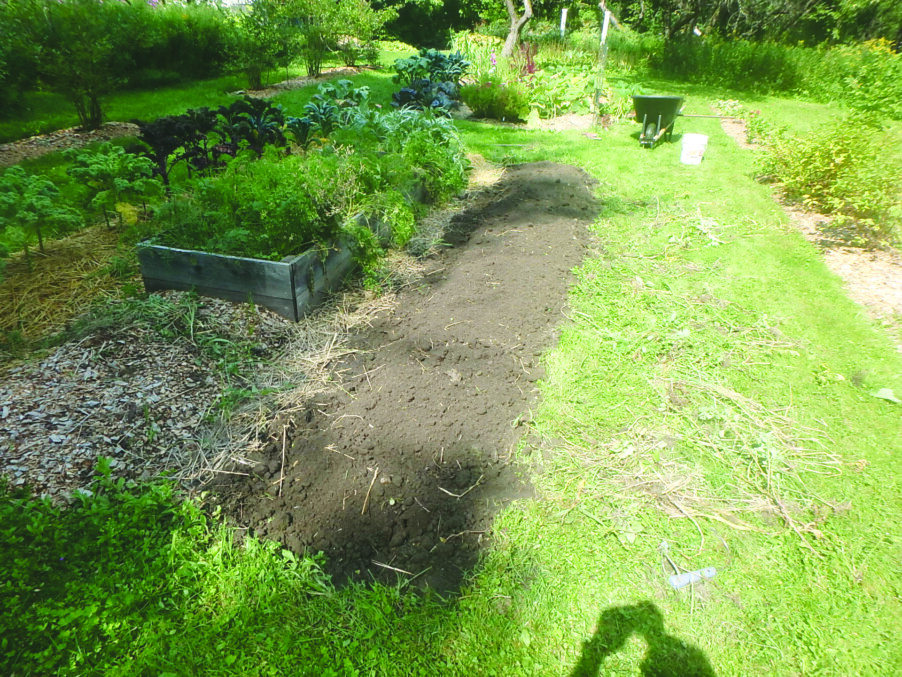
Let’s look at the most neglected area: the vegetable garden. By October many gardeners are sick of weeding, so they pick their peppers, pull the carrots and quit. I recommend cleaning up each bed as soon as all the food has been harvested. So far I have pulled my garlic and dug my potatoes. Each time I took half an hour or so to weed the bed, cover it with old newspapers (four to six pages) and then covered that with 4 to 6 inches of straw. That way, next spring, weeds and grasses won’t take over beds while the soil is still too cold and wet for planting vegetables.

The leaves and stems of any vegetable that showed signs of blight should be treated with care: Instead of putting the diseased plants in the regular compost pile, put them in a separate pile, one that will not be used to produce compost. Spores are the “seeds” of disease and can survive most composting. Squash family plants often have fungal diseases, as do tomatoes and potatoes.

Your flower beds need weeding, too. If you don’t use an edging tool to create an impenetrable canyon around your flower beds, it is important to pull creeping grasses and vines like ‘Creeping Charlie’ that have probably been sneaking in all summer. Use a good weeding tool to go down deep when you weed. I like the CobraHead weeder best. (www.cobrahead.com). It is a curved single-tine cultivator that can get below weeds so you can pull from below as you tug on the tops. It can tease out long roots of things like goutweed.

Once Jack Frost visits, you can cut back any annuals to the ground. If you pull them, you leave a bare spot for wind-borne weed seeds to settle in and wait for spring. And on slopes, leaving loose soil exposed is likely to allow hard rains to wash away some of your good soil. You can pull the roots of those annuals when you plant more next summer.

I use three methods for minimizing weeding each year in my perennial beds. The best is to just fill every square foot of each bed with plants you love. Groundcovers like barren strawberry or foam flower will spread and fill in around the peonies and coneflowers – even if they are shaded by them. With time, most perennials create bigger clumps until weeds are shaded out and new airborne seeds don’t easily find a place to thrive.

The next alternative is to mulch those bare spots around existing plants with chopped autumn leaves. Chopped leaves break down more quickly than chopped branches or bark mulch. They provide organic matter to feed the soil organisms, enriching the soil. They also provide a soft landing and good places to hide for caterpillars that are ready to make their cocoons that become butterflies and moths. This fall think about running your lawnmower over the leaves on the lawn and either using a bagger, or raking them up. You can spread them this fall, or save in a pile to use in the spring.

Since I rarely have enough leaves, the third alternative for keeping down weeds is to buy finely ground bark mulch in bulk. For big gardens like ours it would be expensive to buy mulch in bags, but for around $50 a scoop of a front end loader, I can get a pickup truck load from my local sawmill or garden center.

I recommend buying a natural-colored bark mulch. The orange or black mulch has been dyed with chemicals, and I don’t want them in my garden. Hemlock and cedar are probably the longest-lasting bark mulches but hardwood mulch may be better for your plants and the soil. Never apply more than a couple of inches of bark mulch on your beds — otherwise moisture from short rains will not seep through to water your plants. And NEVER make “mulch volcanoes” around your trees — they will rot the bark and eventually kill the trees.

When your perennials look bedraggled it’s time to cut them back. But I leave flower stalks with seeds that birds can eat in winter. These include purple coneflower, black-eyed susans, Joe Pye weed, sedum ‘Autumn Joy’ and anything else that would feed the birds.

You can cut back your perennials with your hand pruners, but I find it slow and tedious. I prefer to use a harvest sickle or even a serrated steak knife. These allow me to grab a handful of stems and slice right through them all. You can use a string trimmer to work even faster, or even a lawn mower, I suppose.

By the way, if you haven’t cut the tops off your Brussels sprouts yet, do so today. This will keep the plants from getting taller, and they will instead produce big, fat “sprouts.” I did it much earlier than usual this year, and I am already getting nice big sprouts. Kale is very frost hardy, so I will leave mine alone, just harvesting what I need for smoothies or soups. It can last until Christmas in the garden.

So enjoy the warm and sunny days of September to get a jump-start on your fall cleanup. And read a good book by the woodstove on those cold, gray, drizzly days of October.

You can reach Henry at henry.homeyer@comcast.net.

Featured image: Photo by Henry Homeyer.

Stay in the loop!

Get FREE weekly briefs on local food, music,

arts, and more across southern New Hampshire!