Album Reviews 22/06/30

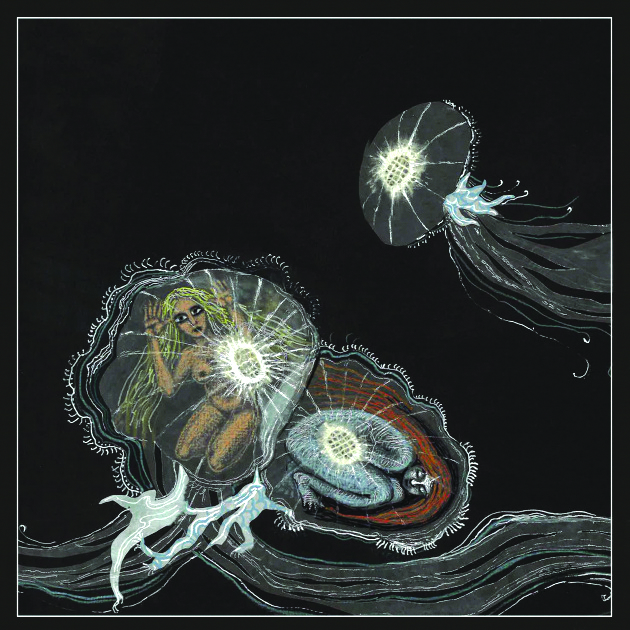
Ghostkeeper, Multidimensional Culture (Victory Pool Records)

One usually doesn’t think of indigenous people as dancing jigs and playing fiddles, but the Métis people — Canadians with a mixed heritage of indigenous and European ancestry — are big on that. The husband-wife team of Ghostkeeper aims to put this culture on the map by infusing Métis music with ’70s freak-folk, proto-punk and various forms of psychedelica (this isn’t a case of cultural appropriation, if that’s any concern; they originally met in the Paddle Prairie Métis Settlement in Alberta). So, then, the album title is accurate in its way, but the music backs up the gauntlet that’s implicitly thrown. You can all but see the groovy 1960s liquid-light effects morphing into non-shapes behind opener “Doo Wop” as singer Shane rants Nick Cave-ish through a bullhorn, and it’s there that you quickly realize that these kids aren’t sheltered know-nothings; Trent Reznor would be proud of them, put it that way. As the record goes on, it’s impossible not to think of both Jerry Lee Lewis (“Finn”), screwy Aughts-indie (“Grassy Plains”) and even shoegaze (“Summer Child”). Well worth investigating. A

Darren McClure, Slow Up Speed Down (Audiobulb Records)

A soundscaper from Northern Ireland who now lives in Matsumoto, Japan, McClure uses found sounds (as in yeah, he’ll literally go outside and record stuff, or capture oddball digital bleeps and such from wherever, all toward an effort to fill out his compositions). His main intent, so I’m informed, is to “create music to zone out to and zone into, a balance of widescreen drones and more minimal, abstract ambience.” Out of that little word salad I’d say there’s some truth to it, but one really has to travel far through this record to find anything I’d call music. And that’s OK; no harm, no foul; McClure’s an experimentalist after all, and that’s what these tracks are. The title track, for instance, is 12 minutes of what I’d call Neptunian swamp vibe; there are War Of The Worlds-style alien hisses and such peeking out of a gently droning synth (I think) sample. This time out, he aims for slowness and immersion, incidental patterns that bespeak eternity without much noisy fuss. It’s hypnotic enough, sure. B

Playlist

• Happy Upcoming Fourth Of July, everyone. Here I am to give you some Christmas gift-giving ideas, because brand new albums will “hit the streets” on July 1! I’m sure all the 8-year-olds will be glad to hear that one of the new releases is from Imagine Dragons, the false metal band that would be Kiss if they weren’t awful. This glorified joke band will have a two-pronged assault of music on Friday, because Mercury: Act 2, which continues the aimlessness the band tabled in Mercury: Act 1, will street on the July 1, along with an 18-track double album comprising both Mercury “Acts,” so I hope you’ve been saving your allowance or your paper route money if you want to buy these new rock ’n’ roll records from this stupid band, because it’s going to be expensive. The first sampler tune I ran into in my halfhearted search for something to review was “Darkness,” which sounds more like a Conor Oberst campfire-indie sing-along than the sort of lightweight hard-rock piffle that put these guys on the map, but what makes this tune particularly bad is the high-pitched vocal that rounds out the hook part. It’s a joke, basically, one that I don’t find very amusing. Aside, has anyone over the age of 10 ever bought one of these guys’ albums?

Burna Boy is Damini Ebunoluwa Ogulu, a Nigerian-born Afrobeat/dancehall guy, whose sixth album, Love Damani, is on the way! Here’s your fun trivia factoid regarding this super cool dude: In 2020, his album Twice as Tall was nominated for Best World Music Album at the 63rd Annual Grammy Awards, making him the first Nigerian with back-to-back nominations at the Grammys. His trip has been based in legitimacy from birth, being that his grandfather once managed Afrobeat superstar Fela Kuti, not that that should matter all that much, but it kind of does, sorry. Whatever, if you’ve ever liked Elephant Man or anything even close to that, you really need to check out the first single from this album, “Last Last,” because it’s pretty amazing, just take my word for it.

• Oh no, I’m writing this on a Tuesday, which means a new Guided by Voices album is coming out! This month’s eyeroll-inducing self-indulgence from pathologically prolific songwriter Robert Pollard is yet another full-length album, Tremblers And Goggles By Rank. My having to discuss a new GBV album really has become sort of a meme found only in this paper, and the only reason I’m going to bother listening to “Unproductive Funk,” the single from this new album, is that I adhere to the tenets of due diligence and chronicing the growth of rock ’n’ roll artists who’ve given so much to society, all of which actually means “I’m sure that this song will be as limp and uneventful as the last 500 Guided By Voices songs, but that wouldn’t be nice for me to say, so let’s get this over with already.” I assume that with a title like “Unproductive Funk,” there will be some funk in the recipe, but it’ll be super-lame. OK, nope, I’m listening to it now, and it’s basically like a cross between Gang Of Four (the “funk” part, I’m assuming) and Starz (the ’70s-throwback “unproductive” part). There was no good reason Pollard made this record, but when did that ever stop him?

• In closing, let’s talk about Electrified Brain, the new album from Virginia-based crossover-thrash band Municipal Waste! I’ll listen to the title track so you don’t have to, because I care. Huh, it’s pretty much like early Slayer, some of you might actually like it, who knows. The end.

If you’re in a local band, now’s a great time to let me know about your EP, your single, whatever’s on your mind. Let me know how you’re holding yourself together without being able to play shows or jam with your homies. Send a recipe for keema matar. Message me on Twitter (@esaeger) or Facebook (eric.saeger.9).

Lessons in Chemistry, by Bonnie Garmus

Lessons in Chemistry, by Bonnie Garmus (Doubleday, 386 pages)

There are a lot of things to appreciate about this debut novel from Bonnie Garmus: The story is original, the writing is engaging and the cast of characters is mainly quirky and fun. Well, except for most of the men. And therein lies one of the problems with this book.

Lessons in Chemistry is fiercely devoted to the idea that women in 1960s California were treated entirely unfairly and had no opportunities for careers outside of the home, and that men were generally awful humans who had zero respect for women and were successful only because they were born male.

The book centers on chemist Elizabeth Zott, who works with an otherwise all-male team at Hastings Research Institute, where she doesn’t feel her work is respected. Prior to that job, Elizabeth was trying to get her Ph.D. but was sexually assaulted and kicked out of the program after defending herself with what must have been a pretty sharp pencil. So she has a particularly strong point of view about the male species and equality. Fair.

“Elizabeth Zott held grudges … mainly reserved for a patriarchal society founded on the idea that women were less. Less capable. Less intelligent. Less inventive. A society that believed men went to work and did important things … and women stayed at home and raised children.”

But then she meets Calvin Evans, a renowned scientist who appreciates Elizabeth’s intelligence and passion for the sciences. His character is reminiscent of The Big Bang Theory’s Sheldon Cooper, with his academic genius far superior to his emotional intelligence and ability to understand human behavior and societal norms. But he is a champion of Elizabeth almost from the start, despite her oft-exaggerated views on life.

“‘You’re saying,’ he said slowly, ‘that more women actually want to be in science.’

She widened her eyes. ‘Of course we do. In science, in medicine, in business, in music, in math. Pick an area.’ And then she paused, because the truth was, she’d only known a handful of women who’d wanted to be in science or any other area for that matter. Most of the women she’d met in college claimed they were only there to get their MRS. It was disconcerting, as if they’d all drunk something that had rendered them temporarily insane.

‘But instead,’ she continued, ‘women are at home, making babies and cleaning rugs. It’s legalized slavery.’”

Not to be too dramatic or anything.

Elizabeth has self-righteous tendencies and can be annoying at times. There are some contradictions in the book too; Elizabeth spends so much time talking about how she deserves equality, yet she ends her cooking show, Supper at Six, with “Children, set the table. Your mother needs a moment to herself.” So fathers can’t be home cooking? If the point here is equality, shouldn’t it work both ways?

Still, Elizabeth as host of the show is one of the author’s more clever moves; Elizabeth takes the job begrudgingly when life seems to leave no other option, and she uses it as a forum to bolster the spirits and promote the intelligence of the housewives who are watching. She uses scientific formulas in her recipes and encourages women to do more and be more. The problem is, she isn’t likable (in my opinion — as of this writing, the book has a 4.4-star review on Goodreads, so I’m not necessarily in the majority here). I had a hard time believing that anyone would watch her show; she comes across as smart, yes, but not personable. She speaks like the scientist she is, and it’s not relatable dialogue. No one who is not a scientist — man or woman — would know what she’s talking about most of the time, and it’s not like Google existed back then to figure it out.

The book’s other “lesson in chemistry” — the chemistry between Elizabeth and Calvin — is short-lived. Their relationship was the highlight of the story to me, but it ends abruptly, and the plot disappointingly transitions to its heavy-hitting feminist focus. Calvin’s character becomes less about his impact on Elizabeth’s life and more about a convoluted subplot regarding his family history, an adoption mystery and the funding of scientists.

There are some fascinating characters, like Elizabeth and Calvin’s daughter Mad, and Mad’s babysitter Harriet, both of whom add depth and refreshingly different points of view to the book. And then there’s Six-Thirty, Elizabeth and Calvin’s dog, who learns to understand hundreds of words that Elizabeth teaches him. I appreciate the purpose of that message — anyone, and any dog, can do anything! — in the context of this book, and it’s mostly delivered well, through the eyes of other characters, like Elizabeth (who thinks it just makes sense that a dog could learn any words) or Harriet (who thinks Elizabeth is strange). But there are a few random, abrupt moments in the book where we’re seeing things from Six-Thirty’s point of view, and I found it a bit off-putting. His perspective didn’t seem to add anything to the story and, to me, it just slowed down the flow.

Ultimately, I enjoyed the first half of the book. The second half was missing, well, chemistry. Elizabeth is a better character alongside Calvin, which is likely the opposite of what Garmus was aiming for, her message seemingly being that women don’t need men. That message might have gone over better if Elizabeth were the least bit happy and hadn’t been described in the first few pages of the book as “permanently depressed” and “ashamed” of her job as a TV host — it’s hard to cheer for a bitter “hero.” C+Meghan Siegler

Book Notes

Nora Ephron’s most famous films were When Harry Met Sally and Sleepless in Seattle, but it was Heartburn, not insomnia, that made her famous.

A novel loosely based on her breakup with Carl Bernstein of Watergate fame, Heartburn (Knopf, 179 pages) was made into a movie starring Meryl Streep and began the transformation of Ephron from journalist to screenwriter and director, although she never stopped writing books. Her 2006 book of essays, I Feel Bad About My Neck (Knopf, 137 pages), was a droll reflection on aging.

Ephron would be pleased that her neck is concealed in the photo on the cover of the new book about her life. Nora Ephron, a Biography (Chicago Review Press, 304 pages) is by Kristin Marguerite Doidge, a journalist who combed through Ephron’s own writing and interviewed colleagues such as Tom Hanks and Martin Short.

Meanwhile, the ex who inadvertently launched Ephron’s Hollywood career published his own memoir this year: Chasing History, a Kid in the Newsroom (Henry Holt & Co., 384 pages). His work with Woodward at The Washington Post resulted in the 1974 book and subsequent film All The President’s Men, which was consequential in bringing down a president, Richard Nixon.

Incredibly, it’s the 50th anniversary of the Watergate scandal (although Nixon didn’t resign until 1974), which means that Woodward and Bernstein are making the rounds on news shows. There’s also a new history of Watergate called, quite redundantly, Watergate, a New History (Avid Reader Press, 832 pages) by Garrett Graff.

Did we need a new Watergate history? “The answer turns out to be yes,” writes Len Downie Jr., but he’s a former Washington Post editor, so take that with a grain of salt.

Meanwhile, if you’d rather not revisit the Nixon years, go back even further in time to The Monster’s Bones (W.W. Norton, 288 pages), promising nonfiction by David K. Randall. It’s about the discovery of the first T-rex skeleton in Hellcreek, Montana, in 1902, and how this fueled our fascination with dinosaurs — and natural history museums. —Jennifer Graham


Book Events

Author events

PAUL DOIRON Author presents Hatchet Island. Gibson’s Bookstore, 45 S. Main St., Concord. Wed., June 29, 6:30 p.m. Visit gibsonsbookstore.com or call 224-0562.

PAUL BROGAN Author presents A Sprinkling of Stardust Over the Outhouse. Gibson’s Bookstore, 45 S. Main St., Concord. Thurs., June 30, 6:30 p.m. Visit gibsonsbookstore.com or call 224-0562.

SARAH MCCRAW CROW Author presents The Wrong Kind of Woman. Gibson’s Bookstore, 45 S. Main St., Concord. Tues., July 19, 6:30 p.m. Visit gibsonsbookstore.com or call 224-0562.

CASEY SHERMAN Author presents Helltown. Bookery, 844 Elm St., Manchester. Sun., Aug. 14, 1:30 p.m. Visit bookerymht.com or call 836-6600.

Poetry

DOWN CELLAR POETRY SALON Poetry event series presented by the Poetry Society of New Hampshire. Monthly. First Sunday. Visit poetrysocietynh.wordpress.com.

Writers groups

MERRIMACK VALLEY WRITERS’ GROUP All published and unpublished local writers who are interested in sharing their work with other writers and giving and receiving constructive feedback are invited to join. The group meets regularly Email pembrokenhtownlibrary@gmail.com.

Book Clubs

BOOKERY Monthly. Third Thursday, 6 p.m. 844 Elm St., Manchester. Visit bookerymht.com/online-book-club or call 836-6600.

GIBSON’S BOOKSTORE Online, via Zoom. Monthly. First Monday, 5:30 p.m. Bookstore based in Concord. Visit gibsonsbookstore.com/gibsons-book-club-2020-2021 or call 224-0562.

TO SHARE BREWING CO. 720 Union St., Manchester. Monthly. Second Thursday, 6 p.m. RSVP required. Visit tosharebrewing.com or call 836-6947.

GOFFSTOWN PUBLIC LIBRARY 2 High St., Goffstown. Monthly. Third Wednesday, 1:30 p.m. Call 497-2102, email elizabethw@goffstownlibrary.com or visit goffstownlibrary.com

BELKNAP MILL Online. Monthly. Last Wednesday, 6 p.m. Based in Laconia. Email bookclub@belknapmill.org.

NASHUA PUBLIC LIBRARY Online. Monthly. Second Friday, 3 p.m. Call 589-4611, email information@nashualibrary.org or visit nashualibrary.org.

Language

FRENCH LANGUAGE AND LITERATURE CLASSES

Offered remotely by the Franco-American Centre. Six-week session with classes held Thursdays from 6:30 to 8:30 p.m. $225. Visit facnh.com/education or call 623-1093.

Album Reviews 22/06/23

Chastity Brown, Sing to the Walls (Red House Records)

The long and short of this album is that it’s like Adele but with approximately 564 times more soul. Like everyone else’s, Brown’s world slowed to a crawl when Covid hit, and as a bonus she got to watch the horror of the Minneapolis riots unfold from her place in the city (we probably all have a story or two from those days, don’t we, when we were all still trying to get an understanding of exactly what Covid is, and suddenly there’d be something afoot right on our doorstep that scared us silly?). As a Black woman, she’s got plenty of anger to burn from those days (and these days, for that matter), but the songs here are Americana-steeped easy listening neo-soul for the most part, slow pensive beats combining with seriously good songwriting to make for a really comforting, Roberta Flack-ish vibe. Nothing wrong with this record from my seat; I’d recommend it for fans of both Adele and Amy Winehouse. A+

Todd Marcus Orchestra, In the Valley (Stricker Street Records)

Ack, my envy’s really acting up thanks to this one. I started listening to this, the nine-piece jazz group’s first album since 2015’s Blues For Tahrir, without having first read the blab sheet and was tooling around with something else I had to do, so the goodly amount of dissonance had me grimacing a little; if you’ve read this column for basically any amount of time, you’re aware that I prefer my jazz the way I like my coffee, bold but not too obtrusive. Turns out, though, that clarinetist/bandleader Marcus is a frequent visitor to Egypt, the one place I’ve always wanted to see and probably never will now that Covid’s all but officially endemic. Anyway, Marcus’ dad is Egyptian, and like I said, he’s been there a lot, darn him, and the previous album was largely inspired by the 2011 Arab Spring movement, whereas this one focuses more on the history and nuances of the country. Hence you’ll hear quite a few turns that sound cobra-charmer-ish (the closing title track especially), but don’t turn up your nose yet; there’s plenty of nicely written straightforwardness in the form of modern jazz, post-bop, etc. A niche product that’ll enchant certain ears, obviously. A

Playlist

• This Friday, June 24, is the next date for new CD releases, and wow, look at this, folks, it’s Closure/Continuation, the new album from British prog-rock band Porcupine Tree! It’s funny this came up now; a few weeks ago I was on the phone with an old bandmate of mine, and he said he totally loves this band and was planning to drop $400 to see them play someplace, I forget where. If you’re interested, I myself wouldn’t pay $400 to see any band, ever, unless there was a working time machine involved and I could see Al Jolson play at some club around 1931 or so, but my homie loves Porcupine Tree so much that he’s going to pay $400 and he’s going to this show by himself because no one else would do something that crazy. But to each his own, and just to reassure myself that I wasn’t a fool for not spending $400 to see these guys, I looked into their oeuvre on YouTube, and sure enough, their big-ish 2009 single, “Time Flies,” is indeed very cool, providing instant proof, at least to me, that the dearly departed Minus The Bear stole some ideas from them. Anyhow, this band has been around since 1987; they broke up for 10 years between 2010 and 2021, so this is a reunion album of sorts that features all the original members except for bassist Colin Edward. The most recent single at this writing is “Of The New Day,” a chill song with a decidedly mature edge reminiscent of Disco Biscuits but without the goofy funk samples. To be honest it mostly reminds me of the local band Vital Might, not that you’ve heard of them, or Disco Biscuits either, for that matter. Little bit of Pink Floyd going on with this band, before I forget to mention it.

• Well, here’s a blast from the past; it’s surf-rocker Jack Johnson, with his eighth LP, Meet The Moonlight, his first since 2017’s All the Light Above It Too. Johnson’s a pretty cool guy as guys come, always pretty happy (who wouldn’t be if they spent a lot of time surfing in Hawaii and elsewhere?), known to support and donate to such causes as Amnesty International, things like that; his most popular single was 2010’s “You And Your Heart,” a likable-enough unplugged Bonnaroo-begging campfire-indie sing-along that you’ve surely heard at one time or another. As for the new record, the leadoff single is the title track, a — spoiler alert — mellow surf-folk tune that’s a little bit Red Hot Chili Peppers and a little bit Beck, nothing groundbreaking but nothing to sneeze at either.

• Huh, look at this, my little 4chan trolls, it’s a new album from punkish Russian chick-rocker Regina Spektor, called Home Before And After! I’m sure there’ll be something fun on here; remember when she did the theme song to Orange Is The New Black, and it was kind of awesome? I mean I’m sure I’ll like the new single, “Becoming All Alone,” let’s go see. OK, it’s a poppy ballad-ish tune that’s reminiscent of 1970s radio-pop lady Maria Muldaur. Nice and catchy, this, but it’s not punky, so forget everything I said in the first part of this blurb.

• We’ll wrap this week up with Canadian “post-hardcore” crazies Alexisonfire, whose new LP, Otherness, will be here before you can say, “I sure hope this doesn’t sound like Good Charlotte, please don’t be another band that sounds like Good Charlotte.” OK, it doesn’t, it really is some sort of attempt to make “post-hardcore” music if you ask me, like it’s very yell-y but it’s also kind of doom-metalish. It’s neat, like if Imagine Dragons were an actual rock ’n’ roll band with “Anarchy” T-shirts and stuff instead of, well, whatever you’d call Imagine Dragons

If you’re in a local band, now’s a great time to let me know about your EP, your single, whatever’s on your mind. Let me know how you’re holding yourself together without being able to play shows or jam with your homies. Send a recipe for keema matar. Message me on Twitter (@esaeger) or Facebook (eric.saeger.9).

Two Nights in Lisbon, by Chris Pavone

Two Nights in Lisbon, by Chris Pavone (Farrar, Straus and Giroux, 436 pages)

As perhaps the only semi-literate person on the planet who hasn’t read or seen Gone Girl, I still know enough about Gillian Flynn’s blockbuster novel to know that her fans would like Two Nights in Lisbon. In fact, but for the pesky laws of copyright, Chris Pavone could have called his fifth novel “Gone Guy.”

The thriller is set in Portugal, where a bookstore owner named Ariel Pryce is on a business trip with her husband, John. On their third night there, she wakes up alone and when he doesn’t immediately respond to her texts she starts to panic. Everyone she consults, from the housekeeping and wait staff at their luxury hotel to the local police, assures her that it’s premature to worry, that John probably went on a long run or is meeting with one of his clients. That’s why they are here, after all — for business.

Even as the hours tick by (in Jack Bauer-ish 24 fashion), unconcerned detectives and embassy staff are more inclined to think that John is off with another woman, or maybe even left his older wife permanently; it’s far too early to worry that anything criminal has occurred, they say. (“Senhora, I hope you understand that it is not possible for the police to search for every man whose wife cannot find him in the morning. We would never do anything else.”)

Ariel, however, is insistent from the start that John, her husband for only a year, isn’t like that, especially since he insisted she accompany him on the trip. (What married man wants his wife to come along if his planned activities include a tryst?) Her fears grow as she starts to think someone is following her, and seem to be confirmed when a hotel maid finds a note under her bed that indicates John intended to be away for only a few minutes and planned to meet her for breakfast.

From the start, though, there are suggestions that Ariel may be an especially unreliable narrator, or at the least, a woman prone to unusually high levels of anxiety that could distort her view of what is happening.

The local police she repeatedly contacts are suspicious not only about John (they ask if he uses drugs, among other things) but also about Ariel herself, to the point that they have a detective follow her when she leaves the station. Meanwhile, we get hints of former identities for both Ariel and John, who seem to not know very much about each other. There are flashbacks to earlier times in Ariel’s life, when she went by another name and apparently lived a life much higher on the socioeconomic ladder.

Then there’s the question of her teenage son, George, an increasingly moody kid with whom she lives on a ramshackle farm a couple of hours from New York. It’s unclear who the boy’s father is, and why Ariel walked away from her former life for one that seemingly has a lot more troubles and goats.

Pavone boasts a roster of heavyweight endorsements from John Grisham — who says “I defy anyone to read the first twenty pages of this breakneck novel, then try to put it down for five minutes. It can’t be done.” — to Stephen King, who seems to be trolling Grisham when he says, “There’s no such thing as a book you can’t put down, but this one was close.”

This may be because, in addition to his own writing career, Pavone has worked for 33 years in publishing. In other words, he’s hardly a supernova who burst out of nowhere; he’s as establishment in the business of words as you can get. As such, he is a craftsman when it comes to the construction of a made-for-Hollywood thriller. The foreshadowing is a bit too heavy-handed in places — particularly with regard to news going on in the U.S. that is constantly on TV screens in Portugal.

But the twist that turns the story on its head at the end is deftly done. In fact, Two Nights in Lisbon may require two readings: the second to see how the story changes once you finally learn what was really going on.

To be sure, Pavone injects a generous amount of moralizing, which was interesting at first but grew a bit tiresome as the story developed. Here he is on college degrees: “oversold, overpriced, undervalued educational achievements that turn out to be almost meaningless on the job market,” and on the internet: “The magic of the internet. It’s easy to forget this, looking at the toxic effects of social media, at the economic devastation wrought by online retail and the tech-driven gig economy and the decline of Main Street, at the mis- and disinformation that threatens the integrity of democracy, in fact the integrity of everything.”

Cultural asides are useful when lobbying for prizes or stretching a thin story to novel length, but the frequent digressions seem so much overreach, similar to its bloated, self-important final paragraph that tries to give the novel more authority than it earned.

Two Nights in Lisbon is actually a misnomer, as the book spans six days (six days and three months, if you count the epilogue). It could have been satisfyingly shorter, and will be in a screenwriter’s hands.

Some Amazon reviewers have noted the resemblance of a pivotal character to a certain former president who has been unusually divisive. Meh. That’s surely the author’s intent, but the parallel is not heavy-handed enough to make this book political. More radical is the age-old question the novel offers about whether an end justifies a means. As cultural commentary Two Nights in Lisbon comes up short, but it’s an excellent beach read. B+

Book Notes

Even without a print magazine and daily talk show, Oprah Winfrey still wields power in the world of publishing. She still has a book club through her website, Oprahdaily.com, where she recently guaranteed the publishing success of Leila Mottley, the 19-year-old author of the new novel Nightcrawling (Knopf, 288 pages).

Mottley began writing the book when she was 16. It’s set in Oakland, California, where she lives, and it’s about a high-school dropout named Kiara who has to work to support her family and a neighbor child, but gets embroiled in a scandal involving the Oakland Police Department.

The last book Winfrey recommended before this was the memoir of actress Viola Davis, called Finding Me (HarperOne, 304 pages). Released in April, it has 3,800 ratings on Amazon, most of them five stars.

Can Bill Gates crown an author like Oprah can? He keeps trying. His summer recommendations for fiction are weirdly dated: last year’s The Lincoln Highway by Amor Towles (Viking, 592 pages) and Naomi Alderman’s The Power, published in 2016 (Penguin paperback, 352 pages).

More current is actress Reese Witherspoon, whose Reese’s Book Club features only books with female protagonists. Her pick this month is Counterfeit (William Morrow, 288 pages) by Kirstin Chen. It’s about a Chinese American lawyer and mom who gets inadvertently sucked into a counterfeit purse scheme run by an old friend. And actress Gwyneth Paltrow’s Goop book club is recommending Circa by Devi S. Laskar (Mariner, 192 pages), a coming-of-age story of an Indian American girl.

“Celebrity” book clubs may be pushing the bounds of celebrity when they include Jenna Bush Hager, who some people may not recall is the daughter of former President George W. Bush. But I like her recent pick, Remarkably Bright Creatures by Shelby Van Pelt (Ecco, 368 pages), a novel about a lonely janitor who makes friends with an octopus at the aquarium where she works.


Book Events

Author events

ANDREA PAQUETTE Author presents Loveable: How Women Can Heal Their Sensitive Hearts and Live and Love as Their True Selves. Sat., June 18, 6 p.m. Toadstool Bookstore, Somerset Plaza, 375 Amherst St., Nashua. Visit toadbooks.com.

PAUL DOIRON Author presents Hatchet Island. Gibson’s Bookstore, 45 S. Main St., Concord. Wed., June 29, 6:30 p.m. Visit gibsonsbookstore.com or call 224-0562.

PAUL BROGAN Author presents A Sprinkling of Stardust Over the Outhouse. Gibson’s Bookstore, 45 S. Main St., Concord. Thurs., June 30, 6:30 p.m. Visit gibsonsbookstore.com or call 224-0562.

SARAH MCCRAW CROW Author presents The Wrong Kind of Woman. Gibson’s Bookstore, 45 S. Main St., Concord. Tues., July 19, 6:30 p.m. Visit gibsonsbookstore.com or call 224-0562.

CASEY SHERMAN Author presents Helltown. Bookery, 844 Elm St., Manchester. Sun., Aug. 14, 1:30 p.m. Visit bookerymht.com or call 836-6600.

Poetry

DOWN CELLAR POETRY SALON Poetry event series presented by the Poetry Society of New Hampshire. Monthly. First Sunday. Visit poetrysocietynh.wordpress.com.

Writers groups

MERRIMACK VALLEY WRITERS’ GROUP All published and unpublished local writers who are interested in sharing their work with other writers and giving and receiving constructive feedback are invited to join. The group meets regularly Email pembrokenhtownlibrary@gmail.com.

Writer submissions

UNDER THE MADNESS Magazine designed and managed by an editorial board of New Hampshire teens under the mentorship of New Hampshire State Poet Laureate Alexandria Peary. features creative writing by teens ages 13 to 19 from all over the world, including poetry and short fiction and creative nonfiction. Published monthly. Submissions must be written in or translated into English and must be previously unpublished. Visit underthemadnessmagazine.com for full submission guidelines.

Book Clubs

BOOKERY Monthly. Third Thursday, 6 p.m. 844 Elm St., Manchester. Visit bookerymht.com/online-book-club or call 836-6600.

GIBSON’S BOOKSTORE Online, via Zoom. Monthly. First Monday, 5:30 p.m. Bookstore based in Concord. Visit gibsonsbookstore.com/gibsons-book-club-2020-2021 or call 224-0562.

TO SHARE BREWING CO. 720 Union St., Manchester. Monthly. Second Thursday, 6 p.m. RSVP required. Visit tosharebrewing.com or call 836-6947.

GOFFSTOWN PUBLIC LIBRARY 2 High St., Goffstown. Monthly. Third Wednesday, 1:30 p.m. Call 497-2102, email elizabethw@goffstownlibrary.com or visit goffstownlibrary.com

BELKNAP MILL Online. Monthly. Last Wednesday, 6 p.m. Based in Laconia. Email bookclub@belknapmill.org.

NASHUA PUBLIC LIBRARY Online. Monthly. Second Friday, 3 p.m. Call 589-4611, email information@nashualibrary.org or visit nashualibrary.org.

Language

FRENCH LANGUAGE AND LITERATURE CLASSES

Offered remotely by the Franco-American Centre. Six-week session with classes held Thursdays from 6:30 to 8:30 p.m. $225. Visit facnh.com/education or call 623-1093.

Album Reviews 22/06/16

Ironflame, Where Madness Dwells (High Roller Records)

As you may have noticed, I’ve ignored all the bleating from our Baby Iron Maiden Band desk for months now, but my luck ran out today when this one refused to be denied. It’s the fourth full-length from the straight-up project led by Ohio’s Andrew D’Cagna, who, as you probably don’t know, is still involved with the bands Brimstone Coven and Icarus Witch (in case you thought he was some boring old normie, he says he’s got a black metal thing going at the moment as well). D’Cagna apparently liked Maiden’s Number Of The Beast album a lot, as we hear on “Everlasting Fire,” which is too much like that aforementioned LP’s title track to chalk it up to coincidence. But wait, he loves him some late-’80s power metal too, as the Savatage-ish “Under The Spell” attests; that one’s a more energetic headbanger. It goes on uneventfully from there (trust me when I say I looked for something that proved he really did want to add some “fun” parts), a dreary yowling metal moaner played in a minor key, etc., etc. B-

John Carpenter, Firestarter Original Motion Picture Soundtrack (Sacred Bones Records)

Boy, this has become a tradition in this space, hasn’t it, another soundtrack from horror filmmaker Carpenter, who redefined the meaning of “bad movie soundtracks” with the eternally dated-sounding music he contributed to such 80s classics as Halloween and The Fog. But I’ll admit, this has more going for it than the last few Carpenter-backgrounding records we talked about (and if you can remember what those were, I congratulate you for being blessed with a memory like Krazy glue). Don’t get me wrong, there’s still stupid stuff here, like the Rockman-plugged guitar on ther title theme, which is right out of “Danger Zone” from the original Top Gun’s soundtrack, but this time it looks as if Carpenter really wanted to have the creeps set in. There are Omen-like monk-choir things but they’re not at all overdone, the melodies actually have some heft, and, best of all, there’s a welcome paucity of that old Casio keyboard he used to love. I haven’t seen the movie and don’t plan to, but at least I can spoil that the soundtrack is fine. A

Playlist

• Yikes, folks, we’re staring down the barrel of June 17, which, like every Friday, is a perfect Friday for new releases, hopefully good ones! So let’s start with British art-punk/math-rock/indie-rock trio Foals and their seventh album, Life is Yours, just to get it out of the way, because there’s nothing I look forward to messing up each week more than trying to grok the intentions of a band that wants to fall under every category except schottisches played on kazoo and trumpet. No, I’m kidding, for all I know I’ll like this record as much as I have the last few Al Jolson albums. By the by, 1930s Jolson records are really all I’ve really listened to in the car for the last two weeks. When he messes with the lyrics of “Is It True What They Say About Dixie” and changes it to “Is it true what they say about Swanee,” it lights up my heart, reminding me that our species was in fact pretty neat at one short point in history, unlike now. Right. OK, what was I talking about again, oh, yes, Foals. OK, OK, right, these guys, the ones who did “Mountain At My Gates.” That was actually a really good song, like, if you heard it at a sports bar, you’d know it wasn’t the typical sleepy rawk fare you’d hear in such a place; in fact there’s a good chance you’d kind of bob your head along to it while you chew your cheeseburger. What does this mean? It means the hipster press probably didn’t like it, because it’s an actual good song, you know how this goes by now. Right, where were we, OK, the new single “2am.” I see, they’re trying to revive the Black Eyed Peas or LMFAO, whatever, because the beat is bloopy and crunchy, it’s a cross between The Weeknd and some tedious Aughts indie band like Shins or something. People will like this a lot but I really don’t. And yes, I’m being that difficult on purpose, I’m finally admitting it to the world right here, today.

• Dum de dum, how bad will it get this week, gang, how freaking bad could it possibly — wait, what do we have here, it’s Ugly Season, the new album from indie-popper Perfume Genius, real-named Michael Hadreas, whose most popular tune so far has been 2020’s “On The Floor,” a Wham!-style bump-and-grind disco thing. The new album features songs Hadreas wrote for “The Sun Still Burns Here,” an immersive dance project with choreographer Kate Wallich, a show that played in a few American cities in 2019. One of those songs, “Eye In The Wall,” is an unnerving, understated techno thing with wub-wub bits and other weird things. It’s OK.

• Brooklyn, N.Y.-based rapper/singer/actor Joey Bada$$ has done it all: gotten arrested for breaking some poor security guard’s nose; started a really stupid and apparently never-ending Twitter beef with Troy Ave, and landed a role in a cable TV series, Power Book III: Raising Kanan on the Starz network. His new LP, 2000, is coming out imminently and will feature a bunch of songs that are only available in snippet form at this writing, stuff that was inspired by Tupac and all Bada$$’s other rather conventional influences, including an R&B tune that’s chill and sexy enough.

• We’ll wrap up this week with Farm To Table, the second album from indie-rock/jazz-rap dude Bartees Strange, who was born in Britain and forced to grow up in Mustang, Oklahoma, where the population is about 85 percent white, which made for a decidedly miserable experience for Strange, who’s Black. His debut LP, Live Forever, received universal acclaim for its odd mix of influences, which appear again here in the gorgeous new single “Heavy Heart,” a rap-decorated mixture of Hootie and The Blowfish and Coldplay. You should really give this a listen, folks.

If you’re in a local band, now’s a great time to let me know about your EP, your single, whatever’s on your mind. Let me know how you’re holding yourself together without being able to play shows or jam with your homies. Send a recipe for keema matar. Message me on Twitter (@esaeger) or Facebook (eric.saeger.9).

Musical Revolutions: How the Sounds of the Western World Changed, by Stuart Isacoff

Musical Revolutions: How the Sounds of the Western World Changed, by Stuart Isacoff (Deckle Edge, 320 pages)

In modern parlance, we’re most likely to use the word “revolution” to describe a political uprising. But in Musical Revolutions, pianist Stuart Isacoff uses it like Copernicus did when describing the movement of the planets. There is still “a disruptive shock of the new” in this sort of revolution, he says, but there is symmetry, growth and expansion.

Isacoff, the longtime editor of “Piano Today” and the author of three other books about music, explores the disruptive shocks of music history in his latest book, which will appeal most to readers with a comprehensive music education. He also offers a general audience an overlook of things they have probably not thought of before: how and why, for example, “do re mi fa so la ti do” became a thing long before The Sound of Music and how the first music notations emerged.

The book also provides a fascinating thread on how music has been used — one might say exploited — to harness emotions and manipulate listeners, and the reason that certain forms of music (including opera) have been denounced as demonic throughout their history.

Early Christian leaders, for example, realized that meditative chants, used broadly and uniformly, could be a way of unifying a far-flung church. But they had to be taught, which was no easy task without sheet music. Enter an Italian monk named Guido, a singing instructor who would develop a form of musical notation using a staff of four lines with color coding that showed the singer what to sing. Guido’s system is the basis of the music we read today, although the four lines became five and the colors were replaced with clefs.

The development of uniform notation, however, also led to increasing complexity in music, as singers began weaving disparate melodies in songs that were harmonious but complex. While archeologists have found instruments dating back to the most primitive cultures (in Germany, they found a rudimentary flute made from a vulture bone is thought to be 35,000 years old), early Christians struggled with music’s ability to both enhance and distract from morality. St. Augustine, for example, was beset by guilt when he allowed a soaring melody to distract him from sober contemplation. And the “busy textures” of the complex harmonies known as polyphony was denounced by Pope John XXII, who said in 1324 that these cutting-edge medieval composers were “ceaselessly intoxicating the ear without quieting it, and disturbing devotion instead of evoking it.”

Things got worse with the invention of opera in the late 1500s. The first opera has been lost to time, so the first surviving one, called Euridice, was commissioned for the wedding of King Henry IV of France. It was, Isacoff writes, “music for a select audience, more to be admired than felt,” but it became all the rage, and “New theaters became staging areas for the hedonists and rabble-rousers” of the time, with box seats becoming venues not only for the enjoyment of music, but for engaging in “notoriously indecent behavior.”

Isacoff turns his attention to Johann Sebastian Bach in a chapter called “Out of the Bachs,” in which he chronicles the rise of the Bach family as multigenerational “musical royalty.” Amusingly, Isacoff reveals that the composer who is a giant of Western music was all too human and once had a knife fight with another music student after calling him “a nanny goat bassoonist,” which is as good an insult as any that Shakespeare composed.

He moves on to French composer Claude Debussy and synthesizer developer Robert Moog, before taking on jazz, which arose in late 19th-century America with an appeal that was “instantaneous and widespread.”

“It moved feet all over the country,” Isacoff writes, before exploding in Europe in the 1920s, helping to enable the celebrity of Josephine Baker. But then came Prohibition, George Gershwin, Paul Whiteman and the advent of what was known as symphonic or orchestral jazz, and the swing era in the 1930s and ‘40s. Isacoff examines how the music and musicians (like Dizzy Gillespie and Miles Davis) intersect with political and social events of the day.

He concludes by reflecting on how music and musicians are often targeted during cultural revolutions, as in China in the 1960s when musicians “began burying their instruments, destroying music books, and melting down their vinyl records” as artists and intellectuals lived under threat of imprisonment and death. Much has changed since then; New York’s renowned Juilliard School now has a campus in China.

Musical Revolutions ends somewhat abruptly, with Isacoff declining to take on the most prevalent popular forms of music in America today, rock and its derivative, rap. He addresses this omission early on, saying his expertise is the Western canon of music, and “If rock is to be written about, it deserves a more knowledgeable observer than myself.”

Rock’s story, of course, is ongoing; incredibly, the Rolling Stones are touring this summer, led by a 78-year-old Mick Jagger. A much-heralded Elvis movie is about to come out. Rock’s history and impact is everywhere these days; for everything preceding it, Musical Revolutions is a fine, if selective, primer. B+

Book Notes

This is a hot take, but I’ve never understood the appeal of murder mysteries. There are too many murders in real life, and murder as entertainment, as in the start of the new Mary Kay Andrews novel, The Homewreckers, feels sort of icky. And last month came the news that a self-published Portland author who wrote a treatise called “How To Murder Your Husband” was convicted of … murdering her husband. Let’s hope there’s no cause for authorities to start a post-mortem investigation of Agatha Christie.

All that said, I’m in the minority here. The reading public loves murder mysteries. Here are some recent ones you might want to consider:

The Murder of Mr. Wickham by Claudia Gray (Vintage, 400 pages) takes a Jane Austen character and has him murdered in the midst of a house party at a country estate, leaving the guests to figure out who did it.

Sulari Gentill’s The Woman in the Library(Poisoned Pen Press, 288 pages) offs a patron at the Boston Public Library and the suspects are four strangers sitting quietly around a table in the reading room.

A Botanist’s Guide to Parties and Poisons (Crooked Lane Books, 304 pages) is by Kate Khavari and involves a university research assistant’s search for the killer of a professor’s wife who dropped dead of apparent poisoning at a dinner party.

Then there’s Last Call at the Nightingale (Minotaur, 320 pages) by Katharine Schellman, which deposits a body outside a nightclub in New York during Prohibition, embroiling a young fun-seeking seamstress in a dangerous underworld of crime.

And coming at the end of the month is Hatchet Island (also Minotaur, also 320 pages) by Paul Doiron, a double-murder mystery set on an island off Maine that is a sanctuary for endangered seabirds.

If you like the book and also like fishing, there’s an added benefit: You can go fly fishing with the author, who is a registered Maine fly fishing guide who lives on a trout stream. Also, if you’re wondering, you pronounce his name “Dwarren,” according to Doiron’s website.


Book Events

Author events

ANDREA PAQUETTE Author presents Loveable: How Women Can Heal Their Sensitive Hearts and Live and Love as Their True Selves. Sat., June 18, 6 p.m. Toadstool Bookstore, Somerset Plaza, 375 Amherst St., Nashua. Visit toadbooks.com.

PAUL DOIRON Author presents Hatchet Island. Gibson’s Bookstore, 45 S. Main St., Concord. Wed., June 29, 6:30 p.m. Visit gibsonsbookstore.com or call 224-0562.

PAUL BROGAN Author presents A Sprinkling of Stardust Over the Outhouse. Gibson’s Bookstore, 45 S. Main St., Concord. Thurs., June 30, 6:30 p.m. Visit gibsonsbookstore.com or call 224-0562.

Poetry

DOWN CELLAR POETRY SALON Poetry event series presented by the Poetry Society of New Hampshire. Monthly. First Sunday. Visit poetrysocietynh.wordpress.com.

Writers groups

MERRIMACK VALLEY WRITERS’ GROUP All published and unpublished local writers who are interested in sharing their work with other writers and giving and receiving constructive feedback are invited to join. The group meets regularly Email pembrokenhtownlibrary@gmail.com.

Writer submissions

UNDER THE MADNESS Magazine designed and managed by an editorial board of New Hampshire teens under the mentorship of New Hampshire State Poet Laureate Alexandria Peary. features creative writing by teens ages 13 to 19 from all over the world, including poetry and short fiction and creative nonfiction. Published monthly. Submissions must be written in or translated into English and must be previously unpublished. Visit underthemadnessmagazine.com for full submission guidelines.

Book Clubs

BOOKERY Monthly. Third Thursday, 6 p.m. 844 Elm St., Manchester. Visit bookerymht.com/online-book-club or call 836-6600.

GIBSON’S BOOKSTORE Online, via Zoom. Monthly. First Monday, 5:30 p.m. Bookstore based in Concord. Visit gibsonsbookstore.com/gibsons-book-club-2020-2021 or call 224-0562.

TO SHARE BREWING CO. 720 Union St., Manchester. Monthly. Second Thursday, 6 p.m. RSVP required. Visit tosharebrewing.com or call 836-6947.

Stay in the loop!

Get FREE weekly briefs on local food, music,

arts, and more across southern New Hampshire!