
Album Reviews 22/12/01

Monster Magnet, Test Patterns: Vol. 1 (God Unknown Records)

Holy cats, a new Monster Magnet album, folks — there’s a jolt to the brain, isn’t it? They suddenly showed up from out of nowhere — a.k.a. Red Bank, New Jersey — working a noise rock angle that was, and I quote, “a cosmos away from the major-label, alternative rock boom that would suck the band into the shiny MTV world of the early to middle 90s.” In other words they were pretty useful, and antidote to all the Hawkwinds and Nirvana wannabes that made the 90s so useless, and this is more of the same, two versions of a 25-odd-minute-long fuzz-jam called “Tab.” The first version is a remix from 2021, pure Brian Jonestown Massacre meets Norman Greenbaum’s “Spirit in the Sky” but without any real musical purpose aside from being trippy, and then comes the original version, from a 1988 demo, which is virtually indistinguishable from the last 150-odd songs King Gizzard has put out this fiscal quarter. And here I’ll bet you’d thought these guys were gone forever, didn’t you? Weird, or what? B

The White Buffalo, Year Of The Dark Horse (Snakefarm Records)

When the pandemic put everyone in the entertainment business into stasis chambers, people did different things to stay sane. I know of two guys who picked up the drums just to stay sane, but this fellow here, Oregon-born Jake Smith, a guitarist by trade, picked up a synthesizer to make this LP, the follow-up to his 2020 full-length On The Widow’s Walk, more of a creative challenge as he “embarked on a voyage of discovery.” Well isn’t that special, and this isn’t a synth tour-de-force, but it does work in many ways, especially if you dug his early Americana-rock (he hates it when people call it that). The first tune, “Kingdom For A Fool,” begins with the same sleepy-but-buzzed-out vibe as Bread’s “Guitar Man,” but then it’s on, folks, Smith’s vocal tabling some unabashed rawk-melodics I wasn’t expecting at all. The sound is pretty full and rich as far as California-steeped radio-pop goes (he’s living in Cali these days, for the record), for example “C’mon Come Up Come Out” has a Red Hot Chili Peppers laziness to it, and if you like Beck, you’ll like a lot of this stuff. A

Playlist

• Land’s sakes, Jane, stop this crazy thing, we’re into the first week of December already, and there will be (I hope) a few new albums slated for release on Friday, Dec. 2. Ah, here’s a few of the little rascals, the first thing to which I’ll give a funny sideways look is (or course) a box set (because box sets and reissues make great holiday gifts for record collectors who already have everything they don’t need), specifically the big fat Sail On Sailor – 1972: Super Deluxe Box Set from the Beach Boys, who are celebrating their 60th year of making totally groovy music for Woodstock druggies or whatever their mission statement is. But now it’s time for today’s big reveal: I, multiple-award-winning music journo that I am, had no idea whatsoever that the Beach Boys were the ones who did that song in the first place. No, seriously, I’d always figured it had been some Chicago-wannabe 1970s band like Stealers Wheel, but no, it was the Beach Boys. I never really liked that song all that much, but you guys remember when it was playing over some scene in The Departed involving hams or whatever, and it was so edgy and cool? No? Well maybe you should go watch it again, just try to get past Jack Nicholson’s usual overacting and all that, it was a cool scene. And so on and so forth, this $120 heap of CDs and nonsense covers the Boys’ 1972 albums Carl And The Passions and Holland. Says here “This 6-CD set features a 48-page book with extensive liner notes, rare photos and more. The collection includes remastered versions of the original albums as well as outtakes and session highlights from the original Mount Vernon and Fairway EP from Holland, plus a previously unreleased concert from Carnegie Hall, 1972. Also included are dozens of studio and live additional tracks, sessions and alternate versions.” Yow, all I needed was a normal version of “Sail On Sailor,” but instead it’s basically a hilariously overpriced pu pu platter of mostly chicken fingers instead of the beef teriyaki strip I really only wanted in the first place. How do I shut this off?

• Los Angeles skate-punk veterans NOFX have been a thing since 1983, but they still know where to buy Day-Glo Hawaiian shirts, K-Mart cutoff shorts and all the other parts of their clown outfits, so here’s to those guys and their new album, titled Double Album! Wait a second, though, guys, wait a second, you’ll die when you hear this, are you ready? Right, it’s not actually a double album, just a single album, with 10 songs! The irony, I’m sorry, I’m really getting the vapors and need to lay down with my smelling salts, land’s sakes alive. So, whatever, appropriately enough, the test-drive single is called “Punk Rock Cliché,” and it’s pretty gosh darn cool if you don’t mind that the main riff is pretty much stolen from Thin Lizzy’s “Thunder and Lightning,” and the whole tune will be mistaken for a disposable Hoobastank filler song, but that’s the price of fame: help to invent a genre one year, and then watch as a bunch of 18-year-old scamps put you out of business. Seriously, how do you stop this crazy thing?

• St. Louis-based hip-hop producer/DJ/etc. Metro Boomin has only been around since 2009, but one of the first questions that comes up when you Google the guy is, “Is he retired yet?” Yes, that’s how ancient you are, I’m sorry for you. Heroes & Villains is his new record, and the beats are epic (but annoyingly trappy) in the single “Gods Don’t Bleed,” which features 21 Savage & Travis Scott. You might like it.

• We’ll end with Cleveland-bred techno-dude Galcher Lustwerk and his new 100% Galcher LP. “Put On” is a nice, hypnotic bit of mid-aughts deep house, unadventurous but perfect mall ambiance for chilling out to while your girlfriend tries on dresses she’ll regret buying.

If you’re in a local band, now’s a great time to let me know about your EP, your single, whatever’s on your mind. Let me know how you’re holding yourself together without being able to play shows or jam with your homies. Send a recipe for keema matar. Message me on Twitter (@esaeger) or Facebook (eric.saeger.9).
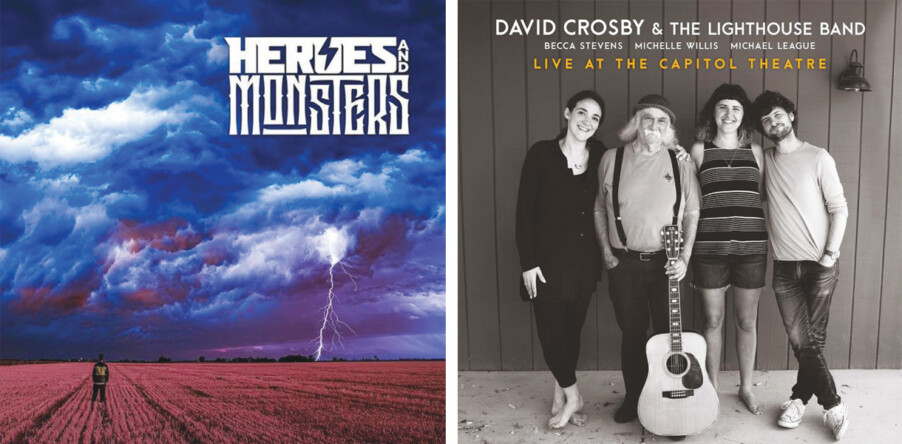
Novelist as a Vocation, Haruki Murakami

Novelist as a Vocation, Haruki Murakami; translated by Philip Gabriel and Ted Goossen (Knopf, 224 pages)

The career of Haruki Murakami is one of the more mystifying legends in the literary world. He’s told the story many times: how, sitting in the stands at a baseball game, he suddenly had the thought that he could write a novel, despite not having written anything much more substantive than college papers. It was, as he calls it, an epiphany. The next day, he bought a fountain pen and paper and started writing a novel at his kitchen table after he got home from work in the evening. It took six months.

That was 35 years and 25 books ago.

Everyone now trying to do the same thing (or something similar) during November for NaNoWriMo (National Novel Writing Month) should know, however, that even Murakami didn’t think much of that first book, Hear the Wind Sing, of which he now writes, “What I had written seemed to fulfill the formal requirements of a novel” yet “was rather boring, and as a whole, left me cold.”

But possessed of the idea that writing a novel was his destiny, Murakami did not stay discouraged even though he wasn’t satisfied with the first draft. As he tells in his new memoir Novelist as a Vocation, he swapped the pen and paper for a typewriter and started again in English instead of his native Japanese. That limited the vocabulary available to him and forced him to write more precisely — to create, as he says, “a creative rhythm distinctly my own.”

Ultimately he rewrote the entire novel in this style and found that writing “filled the spiritual void that had loomed with the approach of my thirtieth birthday.” A year later, the book was short-listed for a prize for new writers, which he won. And Murakami Inc. was off and running, despite the disdain of some of Japan’s literary elites, one of whom has called him a “con man.”

Novelist as a Vocation recounts many of the stories that Murakami has already told, including how he got started and why he became a long-distance runner who runs every day (and a marathon every year). It also explains, in some ways, the Murakami phenomenon — why he has enjoyed enduring popular success despite a writing style that is often plain-spoken. Along the way, he offers advice to aspiring novelists, although he doesn’t seem to have a high opinion of them as a species, writing, “The way I see it, people with brilliant minds are not particularly well suited to writing novels.”

He also says, “There are exceptions, of course, but from what I have seen, most novelists aren’t what one would call amiable and fair-minded. Neither are they what would normally be considered good role models: their dispositions tend to be idiosyncratic and their lifestyles and general behavior frankly odd.” He tells the story of the 1912 meeting of Marcel Proust and James Joyce, who barely spoke to each other at a dinner party in Paris. “Writers are basically an egoistic breed, proud and highly competitive. Put two of them in the same room and the results, more likely than not, will be a disappointment.” A certain arrogance also helps novelists who succeed, he suggests.

What novelists are, besides dogged, is accommodating. They are tolerant of other novelists because, as Murakami puts it, there’s always more room in the ring. Many people write one or two novels; few do what he does: churn them out consistently. Not that even Murakami makes his sole living from writing novels — he also has done English-to-Japanese translations for 30 years.

I have always been something of a Murakami skeptic. Even his celebrated memoir What I Talk About When I Talk About Running, which I’ve read twice, seems flat to me, its sentences as matter-of-fact as a grocery list. So it was interesting to read that the author himself does not pay heed to too much of his press. “… I am, when all is said and done, a very ordinary person,” he writes. “ … Not the type to stand out when I stroll around town, the type who’s always shown to the worst table at restaurants. I doubt that if I didn’t write novels anyone would ever have noticed me.”

Also, he writes of being removed from the literary elites, having failed to win a couple of other prizes that he was shortlisted for early in his career. This has made him question the value of any prize, “from the Oscars to the Nobel.” The most important thing to have is good readers, not the acclaim of one’s peers, he says. (It’s worth noting, though, that Murakami also acknowledges that his career as a novelist might have fizzled if he hadn’t won the Gunzo Prize for his first effort.)

In short essays about his life and the craft, he goes on to muse about the importance of originality (and the difficulty of having an original style be accepted, whether in writing, painting or music); the mechanics of writing (he doesn’t work on novels unless “the desire to write is overwhelming” and instead does more mundane tasks, like translation, until that occurs); and why a scene from the movie E.T. is an apt metaphor for novelists who don’t have a lot of life experience. (Short version, you have to assemble a transmitter with an odd assortment of junk stored in the garage.)

Murakami estimates that 5 percent “of all people are active readers of literature” but those 5 percent are ardent, he says. “As long as one in twenty is like us, I refuse to get overly worried about the future of the novel and the written word.”

Perhaps the most fascinating line in Novelist as a Vocation is this: “I don’t make promises, so I don’t have deadlines. As a result, writer’s block and I are strangers to each other.” So many writers convince themselves that they need deadlines to motivate them to work, but Murakami suggests that creativity flows best without this pressure. He also doesn’t seem to put a lot of pressure on himself as far as output goes, writing only about 1,600 words a day when he’s working on a novel, with a hard stop after 10 pages, even if he wants to write more.

Interestingly, this memoir was released in Japan in 2015 and took seven years and two translators to make it to the U.S., just in time to help NaNoWriMo participants who need a jolt of adrenaline to power through. It serves that purpose well, and is also a surprisingly pleasurable read for anyone trying to understand the magic of Murakami more broadly. B+

Album Reviews 22/11/24

Soen, Atlantis (Silver Lining Music)

With Trans-Siberian Orchestra’s traditional holiday tour coming soon, our thoughts turn of course not to Santa Claus and all that stuff but instead to progressive metal bands, like this Swedish one, which first hit the scene in 2004 as a “supergroup” consisting of former Opeth drummer Martin Lopez, ex-Testament bassist Steve Di Giorgio, Willowtree singer Joel Ekelöf and some dude named Joakim Platbarzdis on guitar. I don’t know if it’s still considered a supergroup, but they’re good, if you like epic prog-metal and whatnot, especially live albums from same, which is what this is. I don’t know how “live” this album actually is; if I’m reading this right, they just re-rubbed a bunch of their po-faced old stuff, opening the set with “Antagonist,” which is a lot more Scorpions than it is Megadeth. There’s a version of Slipknot’s “Snuff” added for variety, but most of the time it’s a mixture of different but usually depressing sci-fi-convention ambience. Is what it is. B+

Louis Armstrong, The Standard Oil Sessions (Dot Time Records)

Any list of the greatest jazz musicians of all time would automatically include Louis Armstrong, Jack Teagarden and Earl “Fatha” Hines. From 1948 through 1951, those three legends played as Louis Armstrong and His All Stars. Unfortunately they didn’t make many studio recordings, and most of the live recordings that have survived are in really bad shape. But on Jan. 20, 1950, Armstrong, Hines and Teagarden appeared in a San Francisco recording studio to record a number of songs for Standard Oil’s “Musical Map of America” program. Teagarden got to do his signature “Basin Street Blues” while Hines performed a show-stopping version of his “Boogie Woogie on St. Louis Blues.” But it was Armstrong who was in the spotlight throughout, in peak form vocally and especially on the trumpet, improvising completely different solos on “Muskrat Ramble,” “Panama,” “Struttin’ with Some Barbecue” and other signature numbers. “Classic” would almost be an insult; this is timeless stuff. A+

Playlist

• Great, here come the holidays, which means there’ll be barely anything for me to write about here in a couple of weeks, in this multiple award-winning column. But for now I am safe, because look at all these albums that you will be able to buy at Walmart or 7-Eleven or Petsmart, you know, anyplace that still sells albums! Look gang, can you even believe all these — oops, wait a minute, it’s Black Friday this week, and the next general-release date for albums is Nov. 25, so there’s no time to put out any new albums in time for the holidays, I’m in some hot water now, just great, holy catfish! Well, we’ll have to do something here, and you probably don’t want to hear about all the ins and outs of my last medical exam, so let’s ’ave a look at the new album by Stormzy, titled This Is What I Mean, coming out this Friday! This dude’s real name is Michael Ebenezer Kwadjo Omari Owuo Jr., and he is a British rapper, singer and songwriter who gained attention on the U.K. underground music scene through his Wicked Skengman series of freestyles over classic grime beats. Like everything else that’s grime-based, it was cool stuff, but what about this new record? I don’t know, let’s find out, shall we? The teaser single, “Hide & Seek,” is high-class stuff, kind of a cross between Seal and Drake, but with a humble, eminently British attitude that doesn’t rely on controversy or dissing someone else. Yes, folks, in other words it is doomed to eventual failure just because it’s good and decent and nice, you know how this goes by now.

Marcus Paquin is a record producer/writer/multi-instrumentalist who has worked with Arcade Fire, The National, Stars, Raine Maida, Local Natives, basically any Canadian indie band that’s gotten on my nerves over the last 12 years. His new album is Our Love, and the single, “The Way Forward,” is likable enough, fronting your basic Bon Iver/Sigur Ros chill-tech-indie contrivances, but it’s OK. His vocals have a weird but not entirely unapproachable effect added in order to make them more awkward and anti-edgy, the sort of angle we’ve heard a million times by now, but there is indeed some epic-ness once you get to the chorus, where the vocal sound remains weird but actually works within the scheme of it. I dunno, an overproduced Gorillaz ballad would be similar; it’s not wildly addictive but a lot better than the recent things I’ve heard in this genre.

• Wait, ermagerd, looky over there, my little rascals, it’s an album on which we can just go to town and laugh our little tuchuses off, and bonus, it’s a holiday album! It’s 80-year-old pop-crooner Cliff Richard, who was once the most dreaded name in “rock ’n’ roll,” basically about as counter-culture as Lawrence Welk! Christmas With Cliff, his first holiday-themed album in 19 years, features 10 covers done by the only artist in the world to achieve Top 5 albums in eight consecutive decades! Includes classics like “Sleigh Ride,” “Joy to the World,” “Blue Christmas” and whatnot, as well as three original songs.

• We’ll finish this off and get to some serious drinking by talking about Glasgow-based goth-glam sextet Walt Disco and their new EP, Always Sickening, won’t that be terrific? There’s a cover of Stephanie Mills’ 1980 disco hit “Never Knew Love Like This Before,” but it’s super slow and weird, you’ll probably be like “I hate this,” just letting you know ahead of time. And there we are.

If you’re in a local band, now’s a great time to let me know about your EP, your single, whatever’s on your mind. Let me know how you’re holding yourself together without being able to play shows or jam with your homies. Send a recipe for keema matar. Message me on Twitter (@esaeger) or Facebook (eric.saeger.9).
At the Sofaplex 22/11/17

Sassy girls in olden times edition

Rosaline (PG-13)

Kaitlyn Dever, Isabela Merced.

Before there was Romeo and Juliet, there was Romeo and Rosaline — also a Capulet who was wooed by Montague Romeo in secret. An off-screen character who just rates a mention in the Shakespeare play, Rosaline (Dever), here the center of the story, is so certain of her True Love for Romeo (Kyle Allen) that she makes an extra effort to scare off all the potential husbands brought to her by her weary father (Bradley Whitford), who really just wants her to pick someone and leave the nest already. But Rosaline, when she’s not dreaming of Romeo, dreams of being a cartographer and not so much of being some thrice-married widower’s most recent wife. Rosaline is particularly peeved when one of these forced dates — with actual handsome young man Dario (Sean Teale) — makes her late to the masquerade ball where she was planning to meet up with Romeo.

Rosaline writes letter after letter to apologize for missing him but later learns that he has been spending all of his time writing letters to her young cousin, Juliet (Merced). Rosaline tries to convince Juliet to enjoy the single life and forget about this sweet-talking phony Romeo but, with a kind of Disney princess sweetness, Juliet can’t quit the equally besotted Romeo.

Rosaline is a fun bit of romantic comedy using the familiar story to (lightly) examine romantic heartbreak and the dearth of occupation choices for women in Renaissance-era Italy. Dever is a treat as Verona’s Daria, who doesn’t like to admit when she’s wrong, and Merced does a good job of walking the line between dopily innocent and smarter than people give her credit for. Allen makes his Romeo a goofy but good-natured dude who could be plausibly appealing to two very different kinds of girls. B Available on Hulu

Catherine Called Birdy (PG-13)

Bella Ramsey, Andrew Scott.

Or, if you prefer, Game of Thrones’ little badass Lady Lyanna Mormount playing the daughter of Fleabag’s hot priest/Sherlock’s Moriarty. In this Lena Dunham-written and -directed movie (based on the book by Karen Cushman), Birdy (Ramsey), as Catherine, the oldest daughter of a noble but not terribly flush family in 1290 England, is called, gets her period and finds out that she’s the most valuable asset her spendy father Lord Rollo (Scott) has. Thus is Birdy paraded in front of a series of men, whom she is able to scare off by pretending to be various kinds of unhinged — or just demonstrating that she’s mouthy and willful, which, this being medieval times, is enough to brand a woman unmarriable. But Rollo keeps on — he’s in need of the cash a dowry will bring, what with Birdy’s mother Lady Aislinn’s (Billie Piper) regular (if sadly unsuccessful) pregnancies, his son Robert’s (Dean-Charles Chapman) own marriage hopes and the family manor to run. But Birdy wants to stay at her family home with her nurse (Lesley Sharp), her childhood buddy Perkin (Michael Woolfitt), fellow reluctant-marriage-market-participant Aelis (Isis Hainsworth) and her mother’s brother, Uncle George (Joe Alwyn), a former soldier in the crusades whom Birdy girlishly worships. She sees him as a hero and wishes to either be him or marry him — oh if only he were her cousin and not her uncle, she says with “I know that boy band singer and I would be perfect together” breathlessness.

Catherine Called Birdy sort of straddles the line between being a thoroughly modern story with a medieval setting and being a peek at life in an earlier time. Birdy is sassy and opinionated and often scored with a solid line-up of pop songs that would make Sofia Coppola proud. But she also has only the life options of a 1290s girl. Even as she scares off some suitors, it’s clear that eventually she will have to let one of them catch her and that the rough stuff of childbirth and mothering is in her future, like it or not.

Watching Birdy grow up a little, going from a clearly loved and indulged child to someone who comes to understand more of the balance of bitter and sweet in life, is surprisingly affecting. Beneath all the veils and period dress, we get a lot of frustrated parents trying to help their kids find their way and very teen-like kids trying to balance duty and their own desires. Ramsey does this well, making for a compelling not-quite-kid but not-yet-adult woman coming to terms with society’s limits and how and when she can push them. It’s a sweet story, told with a winning sense of humor. B+ Available on Amazon Prime Video.

The Princess (R)

Joey King, Dominic Cooper.

A princess in unspecified olden times wakes up to find that the jerk (Cooper) her father the king (Ed Stoppard) wanted her to marry has seized the castle and is holding the king, the queen (Alex Reid) and the princess’ younger sister (Katelyn Rose Downey) hostage. She left him at the altar, correctly sensing his tyrannical ways, but now he’s going to force a marriage like it or not. The princess is chained and locked in a tower until the ceremony; good thing her warrior buddy Linh (Veronica Ngo) has spent years teaching her to sword fight with the best of them.

Look, this ain’t Shakespeare or even a riff on a Shakespeare tertiary character, but The Princess is real punchy kicky swashbuckle-y fun. It’s an hour and 34 minutes long and could probably lose another 20 minutes, much in the manner that the princess loses bits of her fancy wedding dress with each fight, becoming more badass with each encounter. We get some training flashbacks, some flashbacks to “girl as a ruler? Preposterous!” from the father-king. But mostly it’s just the princess, kicking and stabbing as she grows more determined to save her family and friends. B Available on Hulu.

The School for Good and Evil (PG-13)

Sofia Wylie, Sophia Anne Caruso.

Besties find themselves at a boarding school for the future heroes and villains of one-day fairy tales in this Harry Potter-y, The Descendants-ish warmed over mash with a strangely good cast.

Behind the scenes: director Paul Feig. In front of the camera: Michelle Yeoh, Rachel Bloom, Rob Delaney and Patti freaking LuPone, all in blink-and-you’ll-miss-it bit parts, as well as Kerry Washington and Charlize Theron as the leaders of the Good and Evil schools respectively and then Laurence Fishburne as the one school headmaster to rule them all. How? Why? And if you have them, why not give them something interesting to do?

Teenage-y Sophie (Caruso), living in a crummy ye olden days village filled with small-minded ye olden days peasants, is a crackerjack dress designer who dreams of becoming a fairy tale princess and has the talking-to-squirrels skills to back up that dream. Her best friend Agatha (Wylie) is the daughter of the town witch and shunned as a witch herself. When Sophie is dragged off to the School for Good and Evil after making enrollment there her fondest wish-upon-a-wishing-tree wish, Agatha follows her in hopes of keeping her friend safe. They’re dumped off in the school yards — but are they the right school yards? The golden-haired princess-wannabe Sophie finds herself at the School for Evil, where the students are called Nevers. Agatha is in the taffeta nightmare that is the School for Good, where the Evers might be future heroes and princesses but they are currently snotty jerks. Not that the goths at Evil are any better. Why are all these fairy tale folk so awful? Can Agatha save Sophie? Did this movie need to be two and a half hours?

To answer the first and last of those questions: because this is basically high school, and not at all. “People are not all good or all bad” is the message of this movie, but rather than examine this the movie mostly just states it over and over. There are not-bad ideas here about not letting yourself believe whatever arbitrary labels your school or peer group puts on you, but the movie never goes more than half an inch deep. It doesn’t even dig deep enough to be the sort of silly fun that something with Theron as a vampy villain should be. C Available on Netflix.

Mad Honey, by Jodi Picoult and Jennifer Finney Boylan

Mad Honey, by Jodi Picoult and Jennifer Finney Boylan, Ballantine, 450 pages

The new novel by Jodi Picoult, co-written with Jennifer Finney Boylan, is too much about bees. Its protagonist, a divorced New Hampshire mother whose profession is apiarist — beekeeper — describes her work this way: “Like firefighters, we willingly put ourselves in situations that are the stuff of others’ nightmares.”

That includes schlepping out to rescue bees in the cold and dark after a bear has broken into their hive, a first-world problem for sure, but also an old-world problem; beekeeping is the second-oldest profession. And also: informing the bees when their beekeeper has died and formally requesting that they accept the replacement. “In New Hampshire, the custom is to sing, and the news has to rhyme.”

And you thought your job was tough.

This custom is so fanciful that it seems made up, especially being told by two master storytellers. But a quick search of Google confirms that “telling the bees” is actually a thing — not just of deaths, but births, marriages and other momentous events. Mad Honey indeed.

The novel could have been subtitled “more than you ever wanted to know about bees,” and the constant presentation of bee facts at times makes Mad Honey seem like it has a third co-author named Wikipedia. But there is, in fact, a good story here to justify the bee trivia.

Olivia McAfee lives in Adams, New Hampshire, with her son Asher, having moved there from Boston after her marriage to an abusive surgeon blew up. Their lives intersect explosively with a young woman named Lily, who takes turns narrating the novel with Olivia. The narrative conceit is that Olivia tells her side of the story going forward, while Lily tells her side looking back.

Lily moved to Adams seven years ago after her forest-ranger mother found a job that would enable them to escape a bad situation in Seattle. (In one funny moment, when Lily’s mother is telling her about the move, she says she has one question: Where are the White Mountains?)

Asher and Lily are dating and are finding in each other kindred souls, as both are being raised by single mothers and have fraught relationships with their fathers. (Asher meets his dad surreptitiously once a month at a Chili’s in Massachusetts.) They reach the point in their volatile but passionate relationship where they are confiding their deepest secrets and on the verge of becoming intimate.

Soon after, Lily is found dead, and when police arrive, Asher is standing by her body. Despite his insistence that he wasn’t responsible, Asher is charged with first-degree murder. As we work our way to the apex of the trial, we learn more and more about both families’ backgrounds — the difficulties of both the mothers and their children.

Aside from the occasional stilted recitation of bee facts, Mad Honey is skillfully plotted, and Picoult and Boylan have created deeply sympathetic characters who are intelligent and interesting; it’s impossible not to care about them. They authors are, however, a bit slow getting to the point; it’s as if when divvying up the writing tasks, they dispensed with the pesky business of editing and decided they would both write the equivalent of a full book, readers be damned.

But Mad Honey also has an underlying purpose, which is to pull back the curtain on a certain divisive social issue and give readers a glimpse into the humanity at the center of it. I can’t say any more without spoilers. Of course, the biggest spoiler of all is that we know Lily dies at the start, and so there’s no happy ending to be had. But it is not an unhopeful novel, nor depressing; it is saturated more with love than with cruelty. And the ending is as perfect as it can get under the circumstances.

How this book came to be is a story in itself. As Boylan tells in the authors’ notes, she dreamed the basic plot of this book, and that she had co-written it with Picoult. Then she tweeted about her dream, and Picoult reached out, asked what the book was about, then said, “Let’s do it.” (The two had read each other’s work, but never communicated before.) So it’s hard to be too critical of a book that seems to have sprung fully formed from the universe; it was clearly a book meant to be. Picoult says she expects to get hate mail about it, but it won’t be from beekeepers clearly. And for those who just can’t get enough of the sweetness, there are a handful of character-connected recipes at the end of the book. For those of you who like this sort of thing, you’ll love it. For those who don’t, wait for the movie. B+

Album Reviews 22/11/17

Enuff Z’Nuff, Finer Than Sin (Frontiers Music)

Early holiday present for me; new albums from long-irrelevant (at least in the U.S.) hair-metal bands basically write their own reviews after about a minute, unless there’s some smidgeon of off-kilterness present (there never is). This is another band I really never listened to, mostly because of their stupid name, but trust me, I’ve listened to plenty of hair-metal bands (and was in one back when I was a simply irresistible babe), so when I say really dumb band names said all there was to say about a hair-metal album, it’s true. These guys formed in Chicago and were known for their obligato power ballad “Fly High Michelle” (um, wow, this isn’t all that bad) and an obligato dance-metal tune, “New Thing” (well well, ditto). So yeah, singer Donnie Vie is gone; bassist Chip Z’Nuff runs the show now, “Intoxicated” is the obligato power ballad, “Catastrophe” is a decent midtempo rocker. It’s not bad, really, this stuff. The takeaway for me is that these guys did have the potential to become a hair metal Cheap Trick. Too bad about that dumb name. A+

Long Mama, Poor Pretender (self-released)

This Milwaukee-based band has gathered a relatable-enough bunch of tunes together for their debut album, its inherent humanness coming courtesy of singer Kat Wodtke, whose voice traverses the wintry border that separates Dolores O’Riordan from Natalie Merchant (which means it’s pretty thin, which I’d never noticed before). Standard guitar-bass-drums setup here, one that you’d picture floating the background to a k.d. laing record or something like that, but there’s also engineer Erik Koskinen, who added lap steel, electric guitar, and Wurlitzer. Don’t let the Wilco comparisons lead you into this if you happen to see any; it’s really pretty basic Americana-indie-pop, very light on the indie, although there are some punk-ish passages here and there, which is as advertised. The tunes benefit quite a bit from Koskinen’s seemingly ubiquitous steel guitar, leaving me wondering why he’s not a permanent member. Picture a country-fied 10,000 Maniacs and you’d be about there. A+

Playlist

• Uh-oh, look what’s coming, it’s Friday, Nov. 18, only like 10 seconds left for your holiday shopping before all the corporate music-streaming platforms and rock stars starve and become skeletons, all because you had to be all like, “It’s too commercial, what care I if the dude from Coldplay can’t buy his weekly Maserati?” Always thinking of yourself, do you know it’s Christmas, don’t be such a Grinch, holy crow! I mean it’s definitely a festive day for me, because look over there, it’s one of the favorite punching bags of rock ’n’ roll critics all over the world! Yes, I’m talking about none other than Canadian false-metal muttonheads Nickelback, with an album titled Get Rollin’, how could they have thought of such an original thing? Ha ha, you want to know something awesome, upjoke.com has a collection of the best Nickelback jokes, ready? “Fire alarms should just play Nickelback: Anyone who stays in the building deserves what they get,” and, “I can’t get over how cruel some people are. I had some Nickelback tickets on the passenger seat of my car, and I popped into the shop for just five minutes. When I came back, someone had smashed the window and left two more.” Now that is some good old down-home hilarity, isn’t it folks, but uh-oh, there are five or six dudes looking at me all mad right now, and they have mullets and knockoff WWE championship wrestling belts, so I reckon I’d better get a move on, huh? OK, moving on, there’s a video here for the new single “These Days,” look at them, the fellas are walking into someone’s garage, and there’s a lava lamp, a random first-generation Atari system, and now they’re playing, and it’s kind of a neo-country half-ballad that’s just lame and emo-y. It’s like they’re trying to be some sort of boy-band for soccer moms? I don’t know. Anyway, the ’Back is back folks, Nickelback, everyone.

• So I saw that Richard Dawson has a new album coming out called The Ruby Cord this Friday, and then I was like, wait, is he even alive anymore or is he hosting some bizarre version of Family Feud in heaven for the entertainment of all the angels and whatever. OK, I found a video trailer for something that will be on this album apparently, something called “The Hermit,” which is billed as “the trailer for the film,” which means that there will be a movie featuring this dude I guess — Wait a freakin’ minute homies, that isn’t Richard Dawson, it looks more like Ricky Gervais, help me, Hippo readers, I don’t know what I’m even looking at. He’s sleeping in some bed, and the music is sort of like an unplugged Red Hot Chili Peppers B-side but there’s no singing and — wait, some YouTube review says that the opening track for this album is 41 minutes long, I’ll be taking a hard pass there, like, if it’s all like this boring snippet I’d rather eat a bowl of crickets. Another few commentators on YouTube are warning that this dude is into some sort of weird evolutionary theory and he’s sort of insane. Let’s leave this all right here and get out while we can, whattaya say?

• Boy howdy, if there’s anyone who knows how to put out two or three albums every year just to get on my nerves with their bad singing and prehistoric hippie iconography, it’s Neil Young & Crazy Horse, and it’s time for a new one, World Record! Short and sweet: New single “Break The Chain” is like a basic Tom Petty song except the guitar has heavy distortion on it, and, you know, that voice. Aaaand we’re moving.

• Finally, let’s listen to “Denimclad Baboons,” from Röyksopp’s new album, Profound Mysteries III. It’s (spoiler alert) krautrock with some mid-Aughts-house and ’70s-radio-pop vibe. I pronounce it “Fine, whatever.”

If you’re in a local band, now’s a great time to let me know about your EP, your single, whatever’s on your mind. Let me know how you’re holding yourself together without being able to play shows or jam with your homies. Send a recipe for keema matar. Message me on Twitter (@esaeger) or Facebook (eric.saeger.9).
Stay in the loop!

Get FREE weekly briefs on local food, music,

arts, and more across southern New Hampshire!