
Double play

Orchestral rock and Scorpions music from Uli Jon Roth

On his current Pictures of Destiny tour, Uli Jon Roth balances the music he made with Scorpions and his solo material by playing two full shows in three hours. He begins with the classical rock he began making after he left the group, with his original films and artwork on a screen behind him. The set often ends with a new arrangement of “Sails of Charon.”

Perhaps his best-known song with the German hard rocker band, it’s also a bridge to the fan-pleasing second half. With his full band, Roth does a front-to-back performance of Virgin Killer, to help celebrate its 50th anniversary this year, followed by a best-of from his time in Scorpions. Usually there’s a faithful take of “Sails of Charon.”

Roth is realistic that the Scorpions material made his name, while the more complex work that followed didn’t cross into the mainstream.

“I have a new Uli audience who are more into the new stuff,” he said from a tour stop in Denver. “Then there are those brought up with Tokyo Tapes and that kind of stuff. My performances reflect that.”

For many years Roth chafed at the nostalgia of it all, but he now leans into pleasing Scorpions fans.

“Actually, I do enjoy playing it,” he said — particularly 1976’s Virgin Killer. “It feels really fresh. We are doing it slightly differently from the originals, and it feels like it was written now in some strange way.”

The key, it seems, has been learning to bring his current sensibility to the older songs rather than merely recreating them — “Sails of Charon” is a good example. “That’s undergone lots of transformations over the years,” he said. “Simply because I was never satisfied with the original arrangement; I always thought it was slightly unfinished.”

At his upcoming Tupelo Music Hall show Roth will preview material from Requiem for an Angel, a project he returned to recently after shelving it for two decades. Over the past year strings, percussion, drums and guitar tracks were recorded in the studio, and parts of it were performed on a recent Japan tour.

Requiem for an Angel is a large-scale orchestral tribute to Monica Dannemann, an artist Roth met in the mid-1970s. The two were life partners until her death in 1996. Dannemann was crucial to his creative growth, creating artwork for his records and co-writing songs.

“She was always an inspiration; I was really privileged to have even met her,” Roth recalled. “She is still part of my life, because when she passed away, she’s basically irreplaceable — not just for me, but for all of our circle of friends. She is one of these people who is really sorely missed.”

For the first half of the show Roth relies on computer-backed orchestral music. That’s due both to modern music industry economics and personal preference going back years.

“I’m utilizing technology to the max; I always have,” he said. “We can’t carry an orchestra around with us, but I am playing everything live.”

A multimedia show utilizing film, his projected paintings (also on display in the lobby), and time-synced visual footage allows Roth to bring a hundred-piece orchestra’s worth of ambition to small venues like Tupelo. Not that he wouldn’t like the real thing.

“It would be a lot of fun,” he said. “But nobody would pay for it.”

Roth is equally unbothered by AI’s encroachment on creative fields.

“Unlike most of my peers, I’m not afraid of AI — I love it,” he said, adding that he uses it to refine compositions for his videos and assist in the early stages of his paintings before committing to oil on canvas.

He’s also not worried about things like the recent Spotify dustup when an AI “artist” built up big streaming numbers with human-free music. He welcomes it.

“If the day comes that AI creates a better piece of music, then so be it,” he said. “You know, let the best computer win.”

There is one genre that Roth is not at all interested in, machine made or otherwise.

“I’m really not a heavy metal fan,” he said. “The worst is death metal and black metal. I can’t stand it because there’s no wholesomeness in it. It’s just a bunch of question marks and no answers.”

Uli Jon Roth
When: Friday, April 24, 7 p.m.
Where: Tupelo Music Hall, 10 A St., Derry
Tickets: $50 at tupelohall.com

Featured photo: Uli Jon Roth. Courtesy photo.

The Music Roundup 26/04/23

She showcase: A theatrical tribute to more than two dozen female solo icons and groups, Crowned28 ranges from Aretha to Lady Gaga. It’s the latest from Manchester singer Jordan Quinn, who did the diva-centric Queens a while back. The genre-fluid show offers hits from Heart, Linda Ronstadt and Pat Benatar, along with Celine Dion, Dolly Parton and Tina Turner, all backed by a full band. Thursday, April 23, at 7:30 p.m., Rex Theatre, 23 Amherst St., Manchester, $30, palacetheatre.org.

Solidarity songs: To benefit NH Immigrant Mutual Aid Fund, Joyful Resistance: A Night of Protest Songs raises up music as a means to effect social change, from Woody Guthrie and Pete Seeger to Bob Dylan and Bruce Springsteen. The event is hosted by Tess George and The Common Good Chorus, with performances from The Rise Up Singers, Fortune’s Favor, and No Planet B. Friday, April 24, 7 p.m., Unitarian Universalist Church, 58 Lowell St., Nashua, uunashua.org.

Local lights: Celebrating the release of their new album Off The Grid, Slim Volume performs in downtown Concord. The LP offers lush harmonies, jangly riffs and modern lyrics — for the latter, check out “6:51” and the title cut. It’s another winner from one of New Hampshire’s standout acts. The show opens with fellow New Englanders Regals, and Hey, I’m Outside, the latter led by a pair of Southern expats. Friday, April 24, 8 p.m., BNH Stage, 16 S. Main St., $18, ccanh.com.

Reliable rockers: Few Granite State bands can bring the party like Conniption Fits, a rollicking power trio that’s heated up regional nightclubs for multiple decades. From MTV staples like “Come On Eileen” to contemporary hits from Kings of Leon, Bruno Mars and Lorde, the band knows how to get crowds dancing. Their original project Echo the Divide is also very good. Saturday, April 25, 8 p.m., Stumble Inn Bar & Grill, 20 Rockingham Road, Londonderry, conniptionfits.com.

Fleet fellow: A short New England run for Robin Pecknold wraps up in Nashua. It’s been close to two years since his band Fleet Foxes has performed, so a solo acoustic set is a welcome tonic for fans. Along with favorites like “Helplessness Blues” and “Mykonos,” Pecknold in the past has done Joni Mitchell’s “Amelia” and Glen Campbell’s “Wichita Lineman,” so expect surprises. Sunday, April 26, 7 p.m., Nashua Center for the Arts, 201 Main St., Nashua, $57 and up, etix.com.

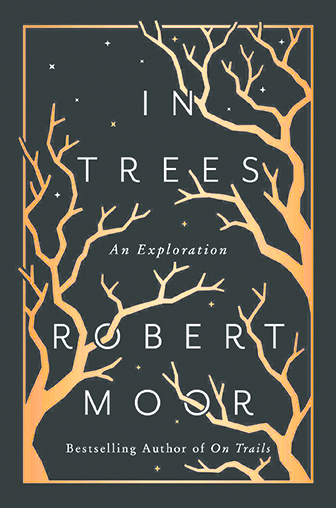
In Trees, by Robert Moor

(Simon & Schuster, 372 pages)

“A tree is not just a thing made up of bark and leaves and sap and wood. At its core, a tree is not even really a noun. It is more like a verb.”

With that musing, journalist Robert Moor puts readers on notice that In Trees aspires to be a combination of qualities he ascribes to trees: “something inventive, exacting and long-lasting. Something wise.” He largely succeeds. In Trees entwines a decade of hands-on research — to include climbing trees, sleeping in them and protesting in them — with lyrical philosophy. The result is an exploration of everything even remotely related to trees.

If, Moor writes, “we could watch the full life cycle of an oak play out in a few seconds, it would look as violent as a fireworks display.” He delves into the three simultaneous processes that result in a mature tree — branching, pruning and gnarling — and proposes that all of life follows much the same pattern. “In one sense, they are nothing more than very big plants,” he writes, but they take hold of the human imagination in a way that other plants don’t, almost god-like in the way that they outlive human beings and provide for us.”

Moor has been interested in trees and their significance ever since he spent time at a monastery in India and visited the site of the Bodhi tree, where the Buddha is believed to have achieved enlightenment. (Moor describes the tree as “a huge ficus with low crooked pale arms propped up by metal crutches, like some kind of decrepit extraterrestrial.”)

But mild interest turned to fascination when he, like Thoreau, went to the woods to live, moving from a New York City apartment to a cabin in British Columbia. For a while it was enough to sit under trees and think about them, but one day Moor felt the urge to climb one, something he hadn’t done since he was a kid.

The urge, however, was thwarted by fear, and so he sought out an instructor, a British man who sees tree climbing as a lost human skill. Under the guidance of this man (who never wears shoes, except when rock climbing, and sees the destruction of a tree as similar to the harpooning of a whale), he comes to see tree climbing as a form of “rewilding” — rewiring the brain in healthy ways.

Later he travels to the World Bonsai Convention near Tokyo, where he considers the question “What is a tree?” in the company of people who snip and trim them into myriad shapes, and later he attempts to nurture a bonsai himself with fairly disastrous results. (After he failed to water it for a while, he writes, “it had taken on a raw-spined, mangey look, like a former show poodle gone feral.”) There was, it seems, no limit to his travel budget. He goes to Papua, in Indonesia, where a tribe called the Korowai lives in treehouses deep in a jungle and mysteriously open themselves up to anthropologists and writers gaping at their way of life; getting there requires more than four hours of walking. With his husband, he goes to Addis Ababa in Ethiopia, searching for the “very stem of the human family tree,” in the form of Lucy, the 3.2-million-year-old fossilized remains, weirdly named after a Beatles song. Then on to Tanzania, searching for wild apes, another component in the human family tree. This is a serious amount of branching out from the core topic.

Nowhere, however, does he stray so far from the Joyce Kilmer vision of trees, however, as when, mid-book, he departs on a story we don’t see coming: how, on a genealogical project with his father, they are confronted with the knowledge that they are descended from a southern physician who owned enslaved people and had children with at least one of them. This leads Moor to track down a cousin he had never known about, a woman who has Black heritage and is a family physician in California. They get to know each other and ultimately take a road trip to Alabama together to visit various civil rights monuments and even try to track down the grave of the enslaved woman who was the genesis of their shared history.

The story fits within the theme of the book in two ways: Moor’s exploration of family trees, and, in a more sinister way, the horrific lynchings of the Jim Crow era in which “Southerners deliberately refashioned trees into murder weapons — murder weapons that lived on for hundreds of years, often in places like the town square — to remind the town’s Black residents to remain subservient.”

It is a dark and poignant chapter that is a startling departure from the rest of the book, although Moor does do a fair bit of preaching about what’s been called the “Great Uprooting” — the abandonment of close-to-the-land lifestyles caused by industrialization and other forces. It was, he says, a change in both the soil and the soul.

Moor, who for the most part nicely blends humor and serious reflection, previously won praise for a similar book, On Trails, which won the National Outdoor Book Award in 2017. In Trees seems a sequel of sorts, fortuitously timed for your celebration of Arbor Day, April 24. You are celebrating Arbor Day, aren’t you? It would surely please Moor, who confesses that he hopes to “arborize humanity” with this book. This is his core advice: “Learn to branch out like a tree, to let go like a tree, to weather hardship like a tree, to rise above like a tree, to set down roots like a tree.” And maybe go climb a tree, as well, spider monkey. B+

Featured Photo: In Trees by Robert Moor

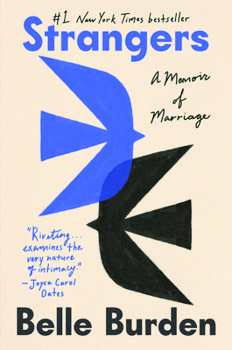
Strangers, by Belle Burden

(The Dial Press, 241 pages)

After Belle Burden and her husband bought a house on Martha’s Vineyard, they became interested in ospreys. Raptors that mate for life, the birds live near water, and a pair nested on Burden’s property, to the family’s delight.

The ospreys are a motif threaded through Burden’s new memoir, Strangers, born of a viral New York Times essay titled “Was I Married to a Stranger?” about how Burden’s husband abruptly moved out when she learned he was having an affair, leaving her to question whether she ever knew the man she’d been married to for two decades.

After the essay was published, Burden received shaming emails, some calling her a bad mother for casting the father of her children as a weapons-grade jerk. But she also got notes from people who said her story helped them get through their divorce. And she had always wanted to be a writer, a dream cast aside by early harsh feedback and a law degree.

Throw in Burden’s lofty pedigree — John Jay and the Vanderbilts are in her family lineage — and of course, publishers wanted her to tell more. The memoir has gotten widespread publicity, from People magazine to Town & Country.

But this isn’t so much a book about a celebrity divorce as it is a book about ordinary heartbreak. Burden begins by recounting the details of the evening when she listened to a voicemail from a man who said her husband was having an affair with his wife. She confronts James — the useless pseudonym she gives her husband (his real name is a click away on Google) — and he assures her the relationship is meaningless and will end. But the next morning he tells her he wants a divorce. “You can have the house and the apartment. You can have custody of the kids. I don’t want it. I don’t want any of it,” he says. Burden was leveled. As she tried to get answers from James, he grew colder.

As she wades into legal machinations of divorce, she reflects on their courtship and the life she had enjoyed until that point.

To the reader there are many red flags. James has a bad-boy history and a controlling nature: Three weeks after they started a romantic relationship, he said, “Tell me you love me” to her. When, after having three children and staying home to care for them, she gets a job offer, he decides the answer is no. He becomes increasingly obsessed with his work; she, increasingly obsessed with family life.

After James left, everything about Burden’s life was cast in a different light, even her custom of sending Christmas cards every year. When holiday cards began to arrive from married friends, she tore them up; they seemed boastful, she writes, and a painful reminder of what she no longer had. She vowed to never send Christmas cards again.

There is little in the way of mystery here, but for how the court case turns out — whether Burden gets to keep the two homes she bought with the entirety of her trust funds, or whether her husband, a hedge-fund manager, gets half of them. It’s important to note that James has told The New York Times that his recollections of some events are different from hers, as is his assessment of what kind of father he is to their children.

The real-time action in Strangers spans just the timeline of the divorce, from her husband telling her he was done to the finalization of the courts, the ospreys accompanying us all the way. This is a bit predictable, as is the self-actualization Burden reaches. No memoir of misery is complete without the realization that all the pain was somehow worth it. Strangers is well-written but also well-trod. B+

Featured Photo: Strangers by Belle Burden

Album Reviews 26/04/23

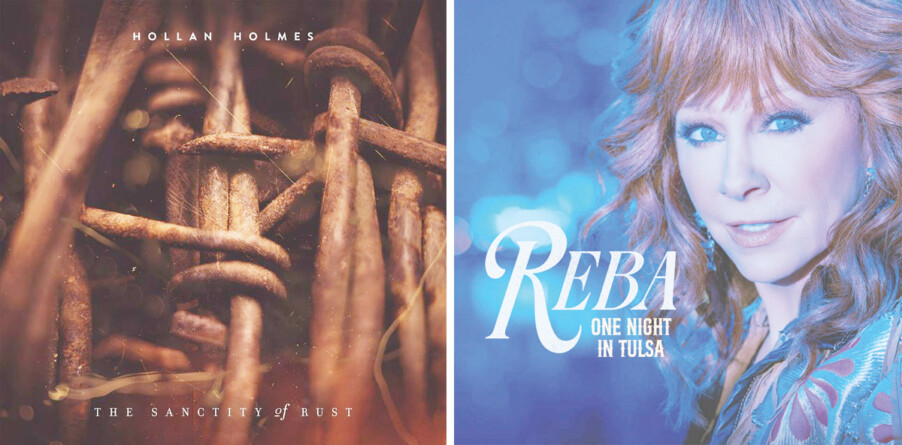
Hollan Holmes, Inside the Sound of Decay (self-released)

Nice surprise here. Usually when an album waddles in here claiming to be “ambient,” I expect to hear something chintzy and low-rent like Daedalus or whatnot (if you don’t know who Daedalus is, count your blessings), but wow, this Texas-based producer is doing a lot here, so much so that such zines as Sonic Immersion and Ambient Visions have sat up and taken notice. Yes, there’s a lot of barely filled space in the tuneage, but this is no Tales From Topographic Oceans; in fact I got the sense that Holmes was constantly ready to start rocking out, which he does almost in clockwork fashion every couple of minutes or so, tabling some next-level video game-soundtracking-ish gravitas, retro Tangerine Dream techno, or even more retro-sounding Return To Forever ’80s prog. Matter of fact, toward the latter, I’d say that’s what this record evinces more than anything else, a nod to ’80s snob-rock, not that there’s anything wrong with that at all, particularly given the state of the art. A+

Reba McEntire, “One Night In Tulsa” (Nine North Records)

OK, stay calm, hipsters, there’s a gag in here somewhere. Reba is something of a running joke in my household, given that my wife’s from Texas (I can get her to start twanging like a complete hillbilly if I walk around the house doing my Foghorn Leghorn-meets-Deliverance-guy imitation for a few minutes); like, whenever there’s nothing even mildly interesting on cable (when is there?) I ask her if she wants me to put it on Reba on CMT. Anyway, this (of course) overblown, over-produced, Celine Dion-style yell-ballad single is pretty freaking good if you enjoy having your lacrimal glands squeezed like lemons (I don’t, but the last Wicked movie did have me sniffling through most of it, which was somehow soul-enriching). But the funny bit here is that along with this tune, she’s releasing a bunch of new singles and mini-EPs and such over the next couple of weeks, which is evidence that the music industry is taking its product-release-schedule ideas from the rap world. Now, if that’s not hilarious, I don’t know what is. A

PLAYLIST

A seriously abridged compendium of recent and future CD releases

• The new music albums scheduled to be released this Friday, April 24, are on the docket, and, as always, I am full of hope that at least one will be decent when I preview them for you in this multiple award-winning music-preview column. Speaking of that, a lot of people message me with questions like, “Hey, man, what is your writing process, like, how does your tummy withstand all the horrible music you expose yourself to on a weekly basis, and plus also, P.S., I hate you forever because of what you said about the new ___ album, why are you so stupid?” Well, that’s a two-part question, so after endeavoring to triangulate the hypotenuse of the biscuit, I’ll reveal my writing process, which is a simple one: You see, ever since I was old enough to construct a run-on sentence — I think I was in second grade — every time I see a blank page, be it physical sheet of ink-ready whatever, like a priceless ancient Egyptian scroll, or a virtual void like a Word document window that’s empty except for a popup bubble of Progressive Insurance spam, I feel compelled to fill it with stuff. That’s the secret, folks. Born writers — and I consider myself to be one, given that I’ve published two obscure books and “penned” (now there’s a word that needs to die) a music column for 23 years now — don’t know what “writer’s block” is even like. Now as to the second segment of the question, the answer can be found within the verbiage of the first segment: I’d be a lot less stupid if 98 percent of the music I listen to every week in order to fill this space with stuff weren’t so bloody awful, boring and/or derivative. While I’m at it, I may as well go full meta with a confession: Like most weeks, today I tried to write most of the opening riff of this multiple award-yadda yadda before even looking at the list of new albums I’ll cover here. So let’s do that now, look at the list. Ah, here’s one that’ll make a nice curveball, put on your cowboy hats, fam, it’s Georgia blockhead Jason Aldean with his 12th LP, Songs About Us! Will there be a politically annoying video for the new single, “Dust On The Bottle,” like when he did the blockheaded video for his 2023 tune “Try That in a Small Town,” or is the new one just a normal drinking song? Yup, it’s the latter, they’re sitting on stools, just pickin’ and grinnin’, you know how it goes, the tune rips off the riff from Electric Light Orchestra’s “Do Ya,” and it’s about drinking, what more do you people even need?

Meghan Trainor, now there’s a familiar name, the gal who did the novelty twerking song “All About That Bass,” were you aware of that silly thing or were you gainfully employed and happily existing without twerking songs? She grew up in Nantucket, Mass., which automatically qualifies her as a nepo baby; her parents are jewelers, on Nantucket, do you have any idea what a string of plastic Mardi Gras beads costs in a Nantucket gift shop, probably $8,000 plus Massachusetts tax! But wait, she’s not just a nepo baby, she’s also a one-hit wonder who hasn’t broken the Top Ten since “…Bass,” but maybe “Still Don’t Care” from her new album Toy With Me will break the spell — nope, it’s just “All About The Bass” if The Corrs had done it. Avoid.

• Is it OK to talk about Foo Fighters again (not that I want to) or is Dave Grohl still canceled for being creepy? Whatever, their new one, Your Favorite Toy, includes its title track, which is pretty neat if you ever liked No Wave music, and I hope you did.

• We’ll call it a multiple award-winning column with Canadian indie band Metric, whose new LP, Romanticize The Dive, features the single “Time Is A Bomb,” a listenable-enough song that’s part Garbage and part Echosmith, I don’t hate it.

Featured Photo: Hollan Holmes, Inside the Sound of Decay and Reba McEntire, “One Night In Tulsa”

Jam Bars

These bars involve no fancy ingredients. You don’t have to know how to temper eggs or anything. They are straightforward and will not add to your stress level.

  • 2 2/3 cups (320 g) all-purpose flour
  • ½ teaspoon salt
  • ¼ teaspoon fresh-grated nutmeg – OK, yes. Trust me; grating it yourself is very much better than the powdered stuff you’ve had since the Obama administration.
  • 1 cup (two sticks) butter
  • ½ cup (106 g) brown sugar
  • ¼ cup (50 g) white sugar, or as you might know it, “sugar”
  • 2 teaspoons vanilla

12 ounces (340 g) jam. It can be any jam. Whatever kind you like. If you feel like playing around, grab a small jar of something cool when you’re picking up peanut butter at the store. Check the net weight at the bottom of the label. Most small jars of jam are very close to 340 grams. “Apricot jam?” you might ask yourself. Sure, why not? “Raspberry?” That sounds delicious, but maybe get the seedless stuff. “Grapefruit marmalade?” You do you.

(For this batch, I used a small jar of ‘Orange Jam”’ that had chunks of orange peel in it, which I picked up at a Middle Eastern market. I suspect it is pretty much orange marmalade with a Lebanese accent.)

Preheat your oven to 325°F.

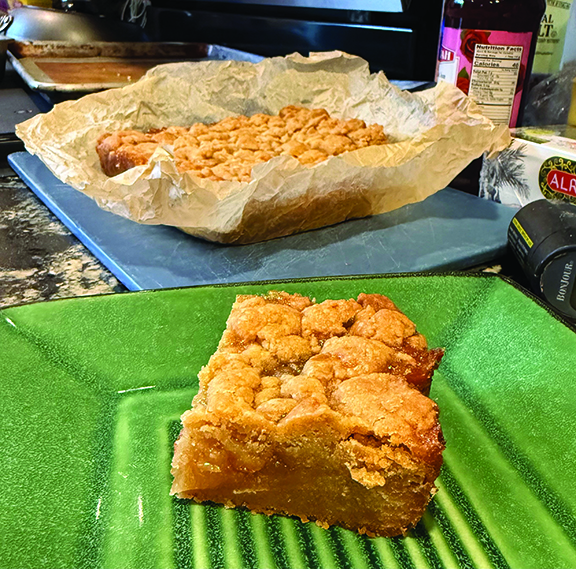
Crumple up a sheet of parchment paper — really wad it up like it owes you money or something. Then open it up and smooth it out. Use it to line an 8×8” baking pan. It’s easy to overthink how to line a pan neatly. With what I call the “Crump-It-and-Dump-It” method, you can check that tiny bit of anxiety off your list.

In a mixing bowl, whisk the flour, salt and nutmeg together and set it aside.

Let’s face it: You probably decided to make Jam Bars on the spur of the moment and didn’t think to leave a couple sticks of butter out to soften up, did you? This is another baking anxiety you can let go of. You’re going to cream the butter and sugar together anyway, so just beat the butter with your mixer for a couple of minutes to soften it up, then add the sugars and beat it until the mixture is light and fluffy, then beat in the vanilla.

Turn the mixer down to its lowest setting, and spoon the flour mixture into the butter mixture, and mix everything until it forms a dough. Leave a quarter of the dough in the mixing bowl, then drop the other three quarters into your parchment paper-lined baking pan. (The “Dump” stage of “Crump and Dump”* system), and smoosh it to cover the bottom of the pan. Make sure you get it in the corners.

Bake for 15 to 20 minutes, until it puffs up a bit, then remove it from the oven.

Scoop your jam (what kind did you end up going with?) on top of the half-baked dough, and spread it around with the back of a spoon or an offset spatula. Break the remaining dough blob into tiny, fingertip-sized bits, and cover the jam with them.

Return the pan to the oven, and bake for 45 to 60 minutes, until the jam bubbles and the dough has turned golden brown.

Cool in the pan, then cut into nine pieces, tic-tac-toe style. Eat warm or cold, topped with ice cream, or buck naked. Err, the jam bar, I mean. But again, whatever reduces your stress is good for all of us.

*I should trademark that.

Featured photo: Jam bars. Photo by John Fladd.

Stay in the loop!

Get FREE weekly briefs on local food, music,

arts, and more across southern New Hampshire!