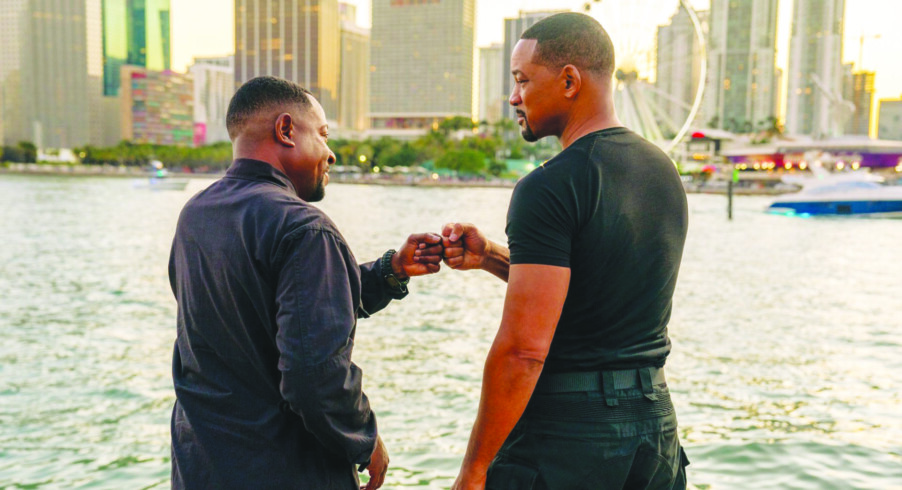
Bad Boys: Ride or Die (R)

The smallest dollop of Bad Boys schmear is scraped across a very dry two-hour movie in Bad Boys: Ride or Die, a fourth movie in the series that started in 1995.

I could complain about how completely improbable the whole “run-punch-kick action cops” thing is for characters played by 59-year-old Martin Lawrence and 55-year-old Will Smith. But, hey, I can suspend disbelief. My annoyance is more that this pretense that they are physically and personality-wise the same Bad Boys they’ve always been probably leaves a lot of comedy and more clever action possibilities on the table. I feel like the movie missed an opportunity to give us a new Bad Boys adventure instead of just a lesser version of the same Bad Boys adventure. Even more annoying is that I feel like I’m getting very little Bad Boys anything — action, fun, gleeful partner silliness — for my movie ticket dollars. The movie is a millimeter thin with every element.

Let’s start with the first 30-ish minutes, which features the wedding of Detective Mike Lowery (Smith) to Christine (Melanie Liburd) and then, at that wedding, the heart attack of Detective Marcus Burnett (Lawrence). Neither of these things is particularly important to the plot and just handling them in a line of dialogue — “Maybe I’d be on my honeymoon right now if you hadn’t had a heart attack at my wedding reception” — would have gotten us to exactly the same place without dragging us through a lot of dullness.

The meat of the movie, such as this wafer-thin slice of deli ham is, involves bad guy James McGrath (Eric Dane) retroactively framing the now-deceased Capt. Howard (Joe Pantoliano) for being a dirty cop who took millions of dollars from drug cartels. I already, like an hour out from seeing the movie, forget the point of this — something about Howard having been on the trail of the real dirty cops. Mike and Marcus are determined to clear Howard’s good name. They turn to Armando (Jacob Scipio), a drug dealer and the assassin who killed Howard in the last movie, I guess — that movie came out in January 2020, who can even remember January 2020. Armando is also the son Mike didn’t know he had. Now in prison, Armando tells Mike and Marcus he can identify the man calling the shots on the dirty police/drug dealer thing. They get him out of jail but then McGrath and his men attempt to kill Armando.

Vanessa Hudgens and Alexander Ludwig also return as, like, junior cadet Bad Boys and they have moments when you feel like a better movie could have made them fun.

Fun is overall what this movie lacks. Smith, who in the 1990s was all fun in a big action movie, doesn’t seem to be having any fun here. Lawrence’s vibe feels very “OK, but I’m only doing the one take.” The movie feels almost like a below-average TV procedural both in how stretched and slow everything feels and in how unspectacular the action is. Every now and then the movie would have a fun idea for an action shot — a drone dropping a grenade on a bad guy, a drone shot of a fight on a circular stairwell platform thing over a gator pit — but then it would pull away or insert what felt like unfinished CGI and the effect would be diminished. At one point, Marcus’ son-in-law, Reggie (Dennis Greene), has to defend the Burnett household from more than a dozen armed henchmen. He does this with aplomb, but we see probably as many shots of Mike and Marcus and the gang watching the fight via Ring cam and reacting to it, like kids watching a video game, as we do of the fight itself. Why are we here if not to watch one guy creatively mow down a bunch of henchmen? C

Rated R for strong violence, language throughout and some sexual references, according to the MPA on filmratings.com. Directed by Adil El Arbi and Bilall Fallah with a screenplay by Chris Bremner & Will Beall, Bad Boys: Ride or Die is one hour and 55 minutes long and is distributed in theaters by Columbia Pictures.

The Garfield Movie (PG)

Garfield and Odie go on an adventure with Garfield’s long-lost cat dad in The Garfield Movie, a perfectly acceptable blend of cartoon antics and, if you’re seeing it in a theater, air conditioning.

Garfield (voice of, sigh, must we, Chris Pratt, but whatever) happily runs up the food delivery app bills living with human Jon (voice of Nicholas Hoult) and dog Odie (voice of Harvey Guillén), who acts as Garfield’s very smart and capable assistant — was that always the relationship? It felt off but it works well enough — which is kind of the assessment for this whole endeavor.

Garfield has lived a happily pampered life with Jon ever since Jon saw sad little kitty Garfield watching him tuck into a pizza from outside an Italian restaurant window. Jon invited Garfield in, Garfield proceeded to eat the whole pizza and a good deal of other food and the two have been together ever since. Garfield’s pre-Jon memories are of being left by his biological cat father in a box in the rain.

Said father, Vic (voice of Samuel L. Jackson), reappears in Garfield’s life by way of a kidnapping. Henchdogs Roland (voice of Brett Goldstein) and Nolan (voice of Bowan Yang) kidnap Garfield and Odie for their boss Jinx (voice of Hannah Waddingham), a cat with a crazy-wall plan to get revenge on Vic. She used to run with Vic in the olden days but during an attempted milk burglary Jinx was caught and she blames Vic. Now she wants him to steal milk for her equal to her original take multiplied by her days in the slammer (the pound, I assume). She is using threats to Garfield’s life as incentive, and her henchdogs force Garfield and Odie to participate in Vic’s big milk theft plan to keep an eye on them.

Vic is not entirely sorry about this as it allows him to spend time with Garfield and perhaps convince him that there’s more to the kitten-in-the-rain situation than Garfield remembers.

But mostly, this movie is animal hijinks, with rubbery action moments — Garfield getting flung and ricocheted to catch a train — that are very cartoon standard. Jon is shown mostly in interstitials trying to find Garfield and Odie and being stuck on hold. The movie is rather flat for how every character is one big characteristic without much depth or personality and the action moves in an extremely predictable flow. There is a wise-guy sarcasm quality that I remember from, say, the olden days cartoon Garfield and Friends that isn’t as pronounced here and that was conveyed by Lorenzo Music’s voice work in a way Chris Pratt doesn’t and maybe can’t.

But the movie is also, you know, fine. You want a non-nightmare-inducing movie that will keep kids reasonably entertained while you enjoy some frosty air conditioning, and The Garfield Movie delivers even if it doesn’t feel particularly Garfield-y to me. B-

Rated PG for action/peril and mild thematic elements, according to the MPA on filmratings.com. Directed by Mark Dindal with a screenplay by Paul A. Kaplan & Mark Torgove and Dave Reynolds (based on the characters created by Jim Davis) The Garfield Movie is an hour and 41 minutes long and is distributed in theaters by Columbia Pictures.

Featured photo: Bad Boys: Ride or Die
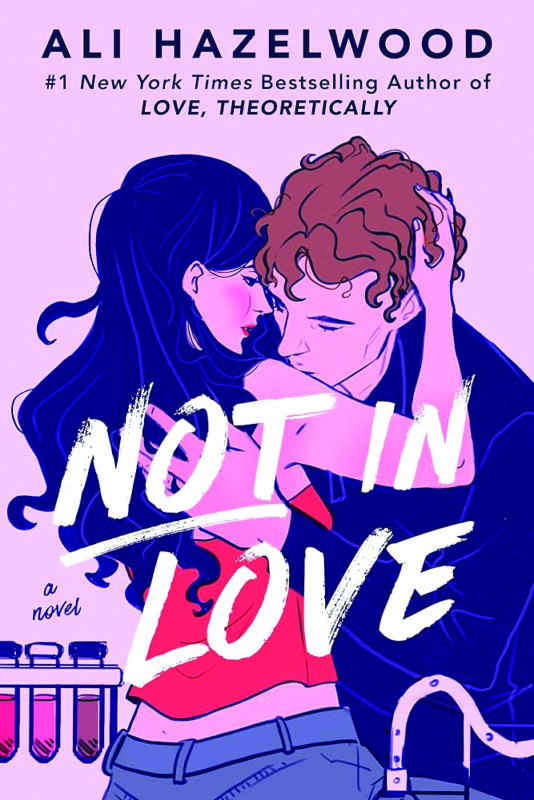
Not in Love, by Ali Hazelwood

Not in Love,by Ali Hazelwood (Berkley, 400 pages)

Ali Hazelwood prefaces her latest book with what is, essentially, a fair-warning note to her readers: Not in Love, she says “is, tonally, a little different from the works I’ve published in the past. Rue and Eli have dealt with — and still deal with — the fallout from issues such as grief, food insecurity, and child neglect. They are eager to make a connection but are not sure how to go about it except through a physical relationship. The result is, I think, less of a rom-com and more of an erotic romance.”

Hazelwood has thus far been known by fans mainly as a rom-com writer who creates smart female lead characters and puts them in STEM-related work environments amongst other smart people and, inevitably, a male counterpoint. In Not in Love, Rue is a biotech engineer working in food science, so we’ve got the STEM setting, and we have the male counterpoint – in this case, his name is Eli, and he works for a company that’s trying to take over Kline, the company Rue works for.

The difference between Not in Love and Hazelwood’s other STEM romances is a much stronger emphasis on sexual chemistry and very explicitly written descriptions of what happens when that chemistry ignites. When Hazelwood warns readers that this is more “erotic romance” than rom-com, she’s not kidding.

But, in addition to the (plentiful) steamy scenes, everything I’ve liked about Hazelwood’s rom-coms is here too: witty banter, emotional complexity and well-drawn characters.

I love that Rue is science-smart but not unapproachable; there are plenty of relatable I-need-to-Google-this types of moments. Case in point, the book opens with Rue and her friend Tisha trying to figure out what a loan assignment is; they ask her friend’s sister, a lawyer, who doesn’t understand their lack of comprehension (“You guys are doctors,” she says, to which Tisha points out that “the topic of private equity firms and loan assignments did not come up in any class during our chemical engineering PhDs. A shocking oversight, I know….”).

Meanwhile, Rue could not be convinced to dumb down the title of her Ph.D. presentation: “A Gas Chromatography and Mass Spectrometry Investigation of the Effect of Three Polysaccharide-Based Coatings on the Minimization of Postharvest Loss of Horticultural Crops.” Her unapologetic thought is, “I had no talent for enticing people to care about my work: either they saw its value, or they were wrong.”

Rue is unapologetic about her dating life, too. She has a “no repeats” rule, meaning one and done, no exceptions; she doesn’t want a relationship, or the emotions that go with it. That was her plan when she matched with Eli on a dating app. She didn’t expect to ever see him again, so of course he ends up at the center of her workplace drama.

Rue probably could have stuck to her no repeats rule — she’s that emotionally stunted — but Eli falls hard for her. I like that the book moves between Rue’s point of view and Eli’s, because we can see how intense his feelings, emotional and otherwise, are, compared to her internal hesitations. And yet Eli is nothing but respectful to her and her hesitations, despite his desire for more, which makes him a very likable character.

The supporting characters aren’t always likable, but intentionally so — they all have a purpose and elevate the story, and many of their interactions with Rue and Eli are hilarious, adding to the novel’s smart, sassy vibe.

The plot is intriguing and believable, as Rue tries to save her scientific work from the grasp of Eli’s company, thinking — incorrectly, of course — that they’re being greedy. More seriously, as Hazelwood points out, there are mentions of grief, food insecurity and child neglect, but it’s not as depressing as it sounds. They’re issues that Rue and Eli dealt with that still impact them as adults, but there are no heavy-handed lessons or weepy sob stories — just real, life-goes-on reminders that what’s in the past doesn’t always stay in the past, and it can take a lot of work to build trust and open your heart after it’s been hurt.

This is another winner for Hazelwood, and I would highly recommend it to anyone who likes their romantic fiction smart, emotional and extra spicy. Just not you, Mom, and if you do read this, please never tell me. A-

Album Reviews 24/13/06

CHVE, Kalvarie (Wicked Cool Records)

Meanwhile on Neptune, we have this one from the vocalist of Belgian post-metal collective Amenra, one Colin H. van Eeckhout, who’s into spiritual gobbledegook and weird old instruments. I was informed this EP was influenced by gloom-metal bands like Neurosis, but what I’m hearing is more like Ianai, more of a monk-like chanting trip meant to, as the artiste claims, heal the soul. In other words it’s New Age stuff that aims to be mind-altering, as van Eekhouts jams out his droning, repetitive patterns on a hurdy gurdy and adds various percussions and effects, which meld nicely with his soft, mid-toned voice throughout a single 15-minute track titled “Eternit.” I repeat, this is an EP, so it’s not reliable backgrounding if you’re holding a yoga class, but it’s certainly atmospheric if a bit long. More meditative than anything else, and there’s really nothing metal about it, which is fine by me. A+

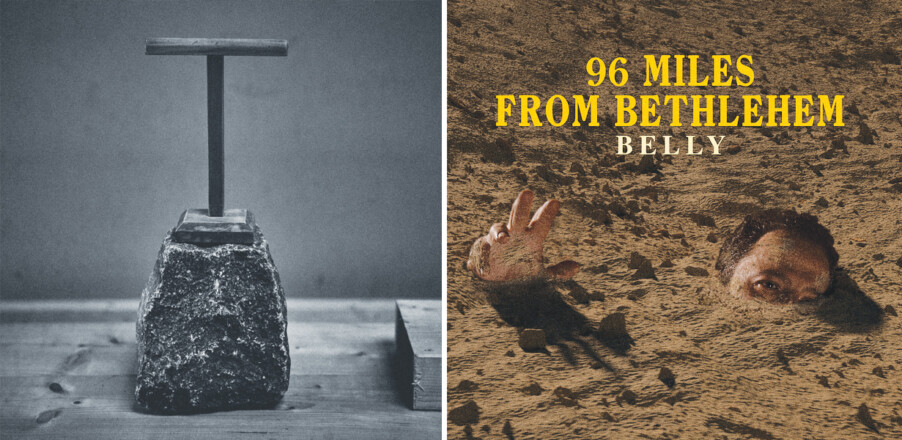
Belly, 96 Miles From Bethlehem (Salxco Records)

This Palestinian-Canadian rapper-singer-songwriter presents this new LP, an ode to his homeland, which is, well, having its calamities. Known for his clever, poetic, and powerful lyrics, Belly delivers searing, emotionally charged performances in this one, outcries that explore the feelings he’s experienced while the catastrophe in his homeland has dragged on, seemingly without end. “God watches while the angels weep,” spat over a woozy, siren-like loop is one of the more measured sentiments on board here. The featured guests in attendance are also Palestinian artists, such as Elyanna, Saint Levant, Ibrahim Maalouf and MC Abdul; the production is from DaHeala (The Weeknd) with traditional instrumentalists. To say the least it’s a profound and heartfelt narrative. All profits from this album will go to organizations supporting various Palestinian relief efforts. A+

PLAYLIST

A seriously abridged compendium of recent and future CD releases

• Friday, June 14, will be a special day of albums, isn’t it great to be alive, folks? The first album up for discussion this week is a new one from The Decemberists, titled As It Ever Was, So It Will Be Again, which is very exciting to hear if you like that band, or have a squirrel costume you like wearing to edgy bars full of people dressed in tiger and kitten costumes! Oh well, as they say, to every person their taste, that’s how these things go, like, some people like 1970s music because that’s what they listened to when Millard Fillmore was president, and some people like really bad music because they want to get on my nerves, but some people just like The Decemberists because they’re sort of a cross between Lynyrd Skynyrd (no, people have actually said that) and Crosby Stills Nash & Young except without anything technically complicated going on, for example The Decemberists only know three chords but those notes usually sound pretty good together every time they rearrange them! Oh come on, let’s stop kidding around, I’m just like you and everybody else, like, I only have one Dememberists album that I actually listen to, and in my case it’s Hazards of Love, from the turn of the decade or whenever it was, like only human squirrels know all the words to any Decemberists album, just stop the nonsense, can’t we all just get along? Right, so I haven’t listened to any of this album yet, but I’ll bet the whole thing is available on YouTube for preview, let’s go see, grab your Roblox backpacks and let’s do a rock ’n’ roll music column, whattaya say, gang? Yep, told ya, the whole thing is available for pirating, right there, and it opens with a song called “Oh No!” Well, this is a weird one; it starts out with a mariachi/Ennio Morricone trumpet part, and then it goes into a Roy Orbison (but lively) thing that actually sounds like REM, if you’re old enough to remember bands from the late 1800s. As always it is cool and hip and catchy but not something I will pirate for my drivetime listening pleasure, because as you know I have my required Decemberists album, there is no need for me to experiment further.

Cola is an art-punk band from Montreal, Canada, so you already know what I’m going to say, like, I am already annoyed that it’ll be too much like every other indie band from Canada and will thus have to censor the first five drafts of this mini-review so that the editors won’t yell at me. But instead of just pretending to listen to it and going to thesaurus.com and looking up synonyms for “offal” and “dross,” I will indeed subject myself to the band’s new album, The Gloss, and its single, “Pallor Tricks,” see what they did there, rock fans? Ack, ack, someone get me my medication, this disgusting mess is like a cross between Blur and Pavement, comprising an angular but badly played guitar line and a fake-drunk pub-rock vocal. Why would someone do this?

• Yikes, look guys, the original debut self-titled album from Monsters of Folk is coming out this week as a deluxe edition! The band is defunct now, because Jim James, M. Ward, Conor Oberst and the dude from Bright Eyes couldn’t fit their egos in the same tour bus, but either way, if you like their loud-jangly-loud sound, this expanded version includes five unreleased studio tracks from 2012, intended for that second album that never happened. OK!

• And lastly we have modern art-poppers Walt Disco, from Scotland, with their new LP, The Warping! The single, “You Make Me Feel So Dumb,” is piano-driven chillout that sounds like mid-career David Bowie if you’re so inclined.

Frangipane

There are words floating around in the air that we’ve heard, that we’d love to use in conversation, but whose meaning we don’t know. We feel like we should know. We’ve read them in books or heard fancy people use them. We’re pretty sure that everyone else in the world knows them, but we don’t want to admit our ignorance.

My favorite one of these words is “insouciant.”

Another of them is “frangipane.” Don’t let this intimidate you. It’s just the term for an almond cream that is used in pastry sometimes.

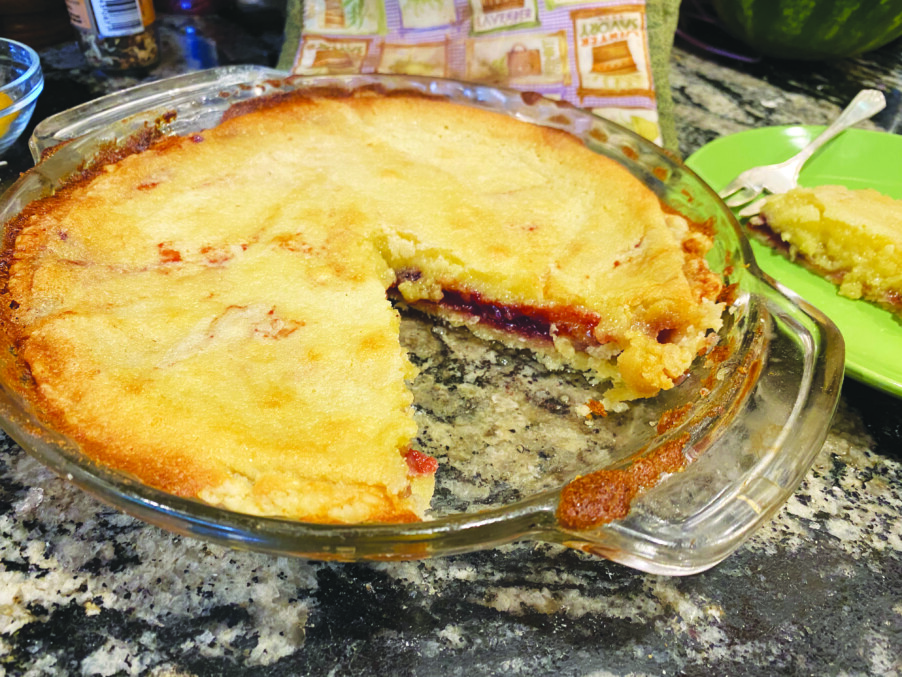
Frangipane-Raspberry Pie

  • 1 pre-baked pie shell – you can buy one of these premade and frozen at the supermarket or you can make your own or you can buy premade pie dough and bake it according to the instructions on the box; blind baking (making a pie crust without any filling in it) is a whole angsty topic that requires a much longer discussion than we have time for today; seriously, the premade dough makes a very credible pie crust, don’t feel guilty about using it
  • 1 1/3 stick (150 g) butter
  • ¾ cup (150 g) granulated sugar
  • 1 large egg
  • 1½ cup (150 g) almond flour – I like Bob’s Red Mill
  • 1 teaspoon almond extract
  • ½ cup (170 g) seedless raspberry jam – I don’t like raspberry seeds, but if you’re some sort of thrill-seeker, feel free to use the full-octane stuff

Preheat your oven to 325°F.

If you’ve baked a pie shell yourself, let it cool completely.

Using a stand mixer, beat the butter and sugar until they are fluffy, 3 to 5 minutes. Most Kitchen Smart People will tell you to use softened butter, but a stand mixer will beat cold butter into submission and be happy about it. If you don’t have a stand mixer, you should probably listen to the experts.

Add the egg. Because the yolk contains a lot of fat, it will mix in with the butter-fluff without complaining, and bring protein with it to give structure to frangipane while it bakes. Follow this with the almond flour and extract.

Beat the mixture until it is fluffy again.

Meanwhile, glop spoon the raspberry jam into your pie shell and spread it around so that it covers the entire bottom.

Transfer the almond mixture to the pie shell, on top of the jam. Spread it evenly with an offset spatula if you have one. If you don’t, try the back of a large spoon. You’ll say to yourself, “What’s the big deal? I beat this until it was fluffy. Twice! I can spread it around with a butter knife!” No, you can’t. While fluffy and delicious, frangipane is stubborn; it needs to be persuaded to spread out on top of the jam instead of mixing into it. Use the spatula to spread the filling toward you until it reaches the edge of the pie pan, then rotate the pan and repeat, until you’ve covered the whole pie.

Wish your pie well, then bake it for 45 to 50 minutes. Check on it during the last 10 minutes or so of baking. If it’s starting to look a little dark, cover it with a sheet of aluminum foil.

Remove from the oven and let it cool completely before serving. You might want to garnish it with whipped cream and fresh raspberries.

This is a delicious pie. It tastes primarily of almonds at first — rich, dense, and a little pecan-pie-like, but the crispy part where the frangipane has bonded with the side crust is something special. The sharpness of the raspberries cuts through the richness of the pie but adds to its sweetness.

There are two advantages to this pie. One, of course, is the pie itself. It’s a really good pie. The other is social. When you share this — and you really will want to show it off — and a friend asks what it is, you can flip your hair insouciantly, and say, “Oh, this? It’s just some frangipane. How do you feel about frangipane?” HA! Take that, Gertrude!

Featured Photo: Frangipane. Photo by John Fladd.

In the kitchen with Clifton McGee

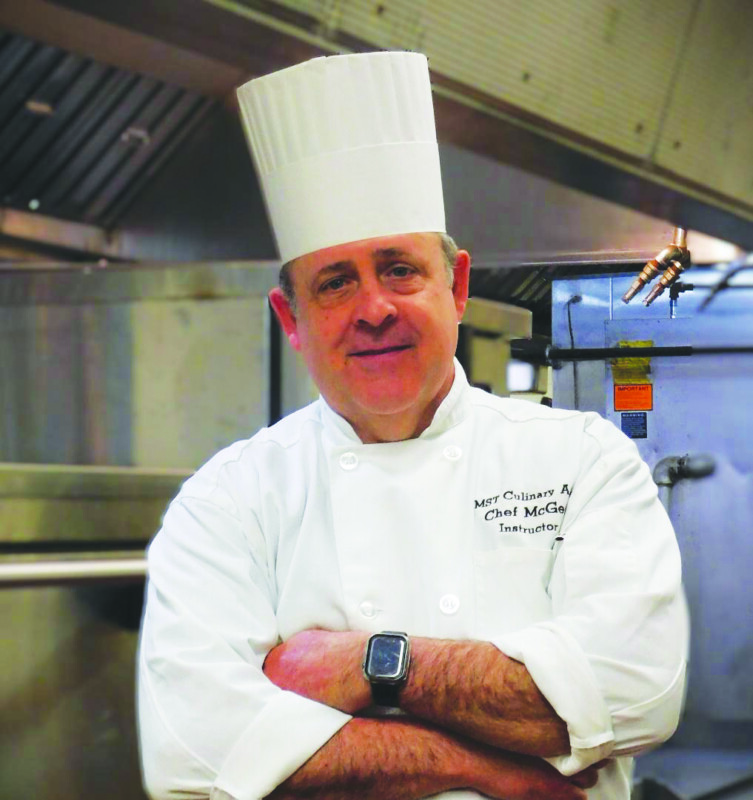
“My journey in the food industry began as a dishwasher/caterer in Clarks Summit, Pennsylvania, in a four-diamond hotel-restaurant complex,” said Clifton McGee. “I entered Johnson & Wales as a student in 1984…” After 18 years holding positions from sous chef to executive chef and chef de cuisine, he started teaching culinary arts in the Manchester School District in 2002, he said. “I’ve always trained younger adults in the business and believed teaching culinary arts would be an effective fit with my skill set. I’ve never regretted the choice. I’ve had the pleasure of teaching many great high school students from Manchester and the surrounding towns.”

What is your must-have kitchen item?

I love having a good immersion blender. Many tasks are less cumbersome with a powerful hand blender.

What would you have for your last meal?

Wellfleet oysters fried or au naturel. Being a chef in New England, I default to seafood. I love the briny fresh flavor of raw Wellfleet oysters and I love them fried and served with a dry sherry.

What is your favorite local eatery?

Revival Kitchen in Concord. I live nearby and I like seasonal menus, especially New England seasonal menus. I also have an ex-student who is the sous chef there. I like supporting local businesses. I avoid corporate eateries.

Who is a celebrity you would like to see eating your food?

Jasper White and Lydia Shire … both were Boston chefs in the ’80s restaurant scene.

What is your favorite thing you teach your students to prepare?

My favorite thing to teach the students is making bread: Lean dough, soft dough, sweet dough and laminated dough. I like teaching bread lessons because it’s relatively new to my repertoire and requires evaluations and adjustments to achieve proficiency.

What would you like to accomplish professionally, in the long term?

In my next chapter, professionally, I aspire to transfer my training skills to restaurant owners, hands on, with best practices in the kitchen. This would include building an efficient team, stressing the importance of an organized work space, and menu creation. Long term, it would be a dream of mine to head north, live off the land and perhaps open a small country store/diner.

What is your favorite thing to cook at home?

Chicken and dumplings. Home food is comfort food, simple, flavorful but not overly elaborate. It’s also the favorite dish of my stepdaughter and mother-in-law. I know what’s important.

Soft Roll Dough
From Clifton McGee
(Like most serious bakers, Chef McGee measures most of his ingredients by weight, not volume. The cups/tablespoon measurements are approximations. If possible, please use his measurements.)


12 ounces (1½ cups) water
0.4 ounces (about two envelopes) active dry yeast
1 pound 5 ounces bread flour (about 5 cups)
2 teaspoons salt
2 ounces (about ⅓ cup) sugar
1 ounce (about 3 Tablespoons) nonfat milk powder
1 ounce (1 Tablespoon) shortening
1 ounce (1 Tablespoon) butter

Add active dry yeast to 105°F water. Mix well and set aside for 5 minutes.
Add all dry ingredients to the mixing bowl and fats. Mix briefly with a dough hook.
Add the yeast and water mixture to the bowl and mix on speed 1 until the dough forms a ball and the bowl is clean and incorporated into the dough ball.
Put mixer on speed 2 for 4 to 6 minutes. Remove bowl from mixer and cover. Keep bowl in a warm area 70F° to 80F° until dough doubles in size (1½ to 2 hours).
Remove dough from bowl and press out the air (flatten and fold).
Cut dough into 1- to 2-ounce pieces and roll. Put on pan with parchment and cover with film wrap until doubled in size (30 minutes to 1 hour).
Bake at 400°F for 8 to 12 minutes.

Featured Photo: Clifton McGee, Chef and Instructor at Manchester School of Technology. Courtesy photo.

Fiddleheads & barley bread

The Colonial springtime menu

So let’s say, hypothetically, you’ve made it through another Colonial winter. It’s springtime in the 1750s, and you, your husband, and your eight children managed not to throttle each other while stuck together in a one-room cabin all winter. The leaves are on the trees, the birds are singing; things are definitely looking up.

Except that everyone’s getting extremely hungry.

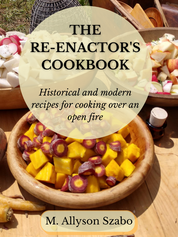
“Spring was the worst time to be a settler,” said Allyson Szabo, who lives in Jaffrey and is an expert on Colonial-era cooking and author of The Re-enactor’s Cookbook, which was published in October 2020. “You’ve run out of the food you had stored from last year, and the food that was left over is now in the ground; you’ve committed it to the new crop. You’re trying to make do with whatever comes up in the spring.”

This isn’t to say there was nothing to eat — there was food to be found if you looked hard enough — but it was hard going for English colonists in New Hampshire. The native tribes had been here for hundreds of years and knew exactly where to find what they needed. The French colonists to the north had largely figured out how to make do until their crops came in. The problem for northern New Englanders was bread, or rather the lack of it. Szabo said the English colonists depended on bread to an extent that would surprise us today.

“Bread was about 60 percent of the colonists’ diet,” she said. And it wasn’t the bread that we are used to today. “Bread was much darker than it is today.” What we consider whole-wheat bread would have been considered white bread in the 1700s. “And that would have been very fine bread indeed, in the 18th century.”

You might bake your bread in a Dutch oven in hot coals, or you might have a beehive oven to bake your bread in. It might be outside — in which case, it would be shaped like a beehive — or it might be built into the fireplace where you did all your cooking. You might have seen these in old fireplaces — little cast-iron doors set off to the side of the hearth. During the 1750s, though, iron was too valuable to use on a door, so Colonial You would have a series of wooden ones that would have to be replaced fairly regularly.

But what happens when you use up the last of your wheat? Szabo said almost anything might be ground up and made into bread.

“I might be grinding barley, “ she said. “I might be grinding up beans. I recently learned that they might have used flour made from dried mushrooms.”

At this point in the Colonial year, you wouldn’t have eaten anything green since October; if you and your family didn’t have full-blown scurvy, you were certainly feeling scurvy-adjacent. Nothing you’ve planted is ready to eat yet — winters lasted longer, 250 years ago — so you would need to forage pretty intensely for vegetables.

“Greens are one of the early things that you can eat right now,” Szabo said. “There would be fiddleheads and nettles. I had horseradish greens this past week in one of my pies; I expected it to be spicy, but it was sweet — almost, but not quite, an apple flavor.”

There would be the very last of the salt pork left, although it might be looking a little worse for wear at this point, and a few scoops of dried peas, lentils, beans or barley.

“Most families would have a cow for milk and butter, “ Szabo said, “and there’d be some chicken. Once the new flock has been laid, you get to a certain point where you start eating the older hens who’ve stopped laying eggs. [Fortunately] at this time of the year … chickens would lay two or even three eggs per day.”

Colonists would have used eggs in everything, Szabo said, describing a common Colonial dish called “Salt Cod with Eggy Sauce”. The eggs would be hard-boiled, and the yolks would be ground up and stirred into the sauce. The hard-boiled egg whites would be grated and mixed in, and the sauce would be poured over the reconstituted dried fish.

Szabo said farmers in New Hampshire 250 years ago would look forward eagerly to the summer. Much like us, the colonists would have been watching their gardens with an eagle eye. Unlike us, they weren’t looking for validation though peonies; they were waiting on lettuce, because, you know — survival.

St. Nicholas Lamb Barbecue and Food Festival
Where: 1160 Bridge St., Manchester
When: Saturday, June 15, noon to 5 p.m

Stay in the loop!

Get FREE weekly briefs on local food, music,

arts, and more across southern New Hampshire!