
The Weekly Dish 22/06/30

News from the local food scene

Get your Greek eats: Holy Trinity Greek Orthodox Church (68 N. State St., Concord) will hold its next boxed Greek dinner to go, a drive-thru takeout event, on Sunday, July 10, from noon to 1 p.m. Now through Wednesday, July 6, orders are being accepted for boxed meals featuring chicken with orzo, Greek salad and a dinner roll for $15 per person. The event is drive-thru and takeout only — email ordermygreekfood@gmail.com or call 953-3051 to place your order. More takeout and pickup meals are expected at the church in the coming months. Visit holytrinitynh.org.

Grape expectations: Join LaBelle Winery (345 Route 101, Amherst) for its next Walks in the Vineyard wine class, the second of a four-part series, on Sunday, July 10, from 11 a.m. to noon. Wine educator Marie King and vineyard manager Josh Boisvert will lead attendees through a fun and educational walk through the vineyard, focused on the life cycles of the vines. Attendees will learn how the wine enjoyed in a glass starts as grapes on vines, and will also get a chance to taste four LaBelle wines during the session. The growth pattern of the vines and the seasonal stages each one goes through, from the onset of ripening to post harvest, will all be covered. More events in the series are scheduled to take place over the coming months through October — no previous attendance or prior knowledge of wines are necessary to attend any of the walks. Tickets are $30 per person plus tax, and reservations are suggested. Visit labellewinery.com.

Tastes of Thailand: Daw Kun Thai Restaurant held a ribbon-cutting on June 17 to celebrate its reopening at a new location at 93 S. Maple St. in Manchester, according to an announcement from co-owner Desmond Holman. The eatery had previously been open across the Queen City, at 2626 Brown Ave., since May 2017. Holman’s wife, Nipaporn, who came to the United States from northeastern Thailand more than a decade ago and learned to cook from her grandmother, serves as the head chef. Named after the national flower of Thailand, Daw Kun features a menu of appetizers, like Thai-style crab rangoons, spring egg rolls with shrimp and deep fried tofu with ground peanuts and a sweet sauce; more than a dozen lunch options like curries, vegetable dishes, fried rice and noodle plates, with beef, chicken or pork; and house specials, like choo chee salmon, with coconut milk, lime leaf, fresh chili sauce and jasmine rice, and Daw Kun spicy ribs, which are served in a spicy curry sauce with black pepper, steamed veggies and rice. At its new spot, Daw Kun Thai is open Tuesday through Thursday, from 11 a.m. to 9 p.m., and Friday and Saturday, from 11 a.m. to 10 p.m. Visit dawkunthai.com.

Caribbean spirits: Faraday West Indies Rum, an ultra-premium blended rum featuring three small-batch spirits from artisanal distilleries in Barbados, the Dominican Republic and Martinique, is now available in New Hampshire, according to a press release. It’s named after the cable ship Faraday, which began its journey in Rye Beach and laid the first transatlantic cables between Europe, the United States and the West Indies. The rum features a citrus and grassy note that’s balanced by butterscotch and vanilla, finishing with a smooth, oak-charred whiskey flavor. “Our promise is that this is a unique rum like none you have tasted,” founder Owen Hyland, a UNH graduate, said in a statement. “It’s authentic [and] made by artisans who have been at it for a long time.” According to the release, the rum recently won a gold medal at the San Francisco World Spirits Competition. Visit faradayrum.com.


On The Job – Andrew Budrick

Upholstery repairman

Andrew Budrick is the owner of Budrick’s Mobile Upholstery Repair, an automobile interior and furniture upholstery repair service based in Manchester.

Explain your job and what it entails.

I own a mobile upholstery repair business that specializes in auto interiors and furniture. I typically repair burn holes, rips and tears in leather, worn out and faded seats, or seams that are coming undone. I sometimes get calls for boat repairs or even restaurant furniture. I mix my own colors to match the upholstery, hand-sew seams back together and have a specialized process of repair for each individual job. Almost all jobs are different, but when it comes to automobiles, certain vehicles have the same defective areas of wear.

How long have you had this job?

I have been doing this for 16 years, but started working for myself nine years ago.

What led you to this career field and your current job?

I had moved to Florida from New Hampshire at the age of 21 with three years of college and no degree and no idea what I wanted to do with my life. I happened to meet a guy who offered me a job which I knew nothing about. He hired me as his helper and taught me everything I know about this specialized line of work. I worked for him for about seven years before moving back to New Hampshire in 2012. Now that I had the knowledge, I started going from car lot to car lot, passing out business cards.

What kind of education or training did you need?

I had on-the-job training for the seven years I was in Florida. The hands-on experience was the best kind of training I could have gotten. I had a really good teacher who gave me one-on-one training six days a week for seven years or so.

What is your typical at-work uniform or attire?

I don’t have any type of uniform. I dress according to the weather, and nothing too nice, because the dyes and paints I use get on my clothes.

How has your job changed over the course of the pandemic?

During Covid, just like most people, I was out of work. When things started opening up again, I started getting calls again from my old accounts. At the end of Covid, my girlfriend pushed to help me advertise more by helping me build a website and posting my business on Google and Facebook. She does all the advertising, which helps me focus on just doing my job. I’m busier now than before Covid because of this.

What do you wish you’d known at the beginning of your career?

I wish I knew more about running a business, but I’ve learned along the way.

What do you wish other people knew about your job?

I wish they knew how much patience and attention to detail goes into what I do. It took me about four years to get really good at all aspects of my work. It’s not something you can learn overnight.

What was the first job you ever had?

I was a stock boy at Market Basket.

What’s the best piece of work-related advice you’ve ever received?

If you enjoy what you’re doing, you’ll never work a day in your life.

Five favorites

Favorite book:
Interview with the Vampire by Anne Rice
Favorite movie: Gladiator
Favorite music: Depends on my mood, but classic rock is always good.
Favorite food: Pizza and coffee Oreo milkshakes.
Favorite thing about NH: That we get to experience all four seasons.

Featured photo: Andrew Budrick. Courtesy photo.

Kiddie Pool 22/06/30

Family fun for the weekend

Shows galore

• O’neil Cinemas’ Summer Kids Series starts on Monday, July 4, with a 10 a.m. showing of Trolls: World Tour (PG, 2020). The movie will also screen on Wednesday, July 6, at 10 a.m. The series continues through the week of Aug. 8, with a new family-friendly film screening Mondays and Wednesdays at 10 a.m. Tickets cost $2 for attendees age 11 and lower, $3 for ages 12 and older, and the cinema is offering a $6 popcorn-and-drink combo pack. For movie times, visit oneilcinemas.com/epping-nh/events.

• The Belknap Mill (25 Beacon St. E. in Laconia) continues its kicking off its Kids in the Park Summer Series on Monday, July 4, with live production ofSleeping Beauty by professional acting troupe Impact, will have an hour long runtime, and will begin at 10 a.m. A prince must work with a good fairy to wake up the princess and save her kingdom from the sleepy spell it was put under, according to the website. Attendance is free. The line-up of events includes storytimes, live dance, nature events and more. See belknapmill.org/mill-events.

• The Palace Theatre (80 Hanover St. in Manchester; palacetheatre.org, 668-5588) begins its Children’s Summer Series with magician BJ Hickman, Tuesday, July 5, to Friday, July 8. Hickman, a Manchester native, is a member of the Academy of Magical Arts, Hollywood Magical Castle, and the International Brotherhood of Magicians, according to the website. His one-man shows are filled with comedy, audience interactions and mystifying illusions, the website said. Showtimes are at 10 a.m. on all days and 6:30 p.m. on Tuesday through Thursday. Tickets cost $10.

Fairs for the crafty

• Artisans from across New England will be selling their homemade goods at the Hampton Falls Liberty Craft Festival, in the Hampton Falls town common (4 Lincoln Ave.) this weekend. There will be more than 75 juried artisans selling everything from custom smartphone cases and handmade beef jerky to decorative throw pillows and paintings. The festival will run Saturday, July 2, deom 10 a.m. to 5 p.m. and Sunday, July 3, from 10 a.m. to 4 p.m. See castleberryfairs.com.

• Celebrate Independence Day with American-made and handmade products at the Gunstock 4th of July Weekend Craft Fair on Saturday, July 2, and Sunday, July 3, from 10 a.m. to 5 p.m. at the Gunstock Mountain Resort (719 Cherry Valley Road, Gilford). More than 90 artisans will be selling carefully crafted goods, including cedar wood furniture, wildlife photography, gourmet oils and vinegars, New Hampshire maple syrups, and much more. The event is rain or shine and free to attend. Leashed dogs are welcome. Visit joycescraftshows.com.

Children’s Museum fun

The Children’s Museum (6 Washington St., Dover) has a whole host of activities for families to do in July. Every Tuesday and Saturday at 11 a.m., the Learning Garden will have Edible Education to help teach children about healthy food options and what is healthy for the environment. Wacky Art Wednesdays will run at 10 a.m. and 2 p.m. every Wednesday of July. Kids will get to create a unique art project that fits the museum’s weekly theme. Every Thursday at 10 a.m. and 2 p.m. is World Culture Thursday. Kids will do a craft, play a game, or make some art that celebrates a different culture from around the world. Science Fridays will have curious kids conducting experiments that launch into larger lessons about different topics in science. All of the programs above are drop-in and are included when families sign up for playtime at the museum. For more information visit childrens-museum.org.

Pick your own

• Have big berry fun over the long weekend at area pick-your-own strawberry farms. In last week’s (June 23) issue of the Hippo, Matt Ingersoll and Jack Walsh took at look at this year’s strawberry harvest, including a list of farms where you can pick your own or just buy berries and get right to the shortcake eating part of your day. Go to hippopress.com and look for the e-edition version of last week’s issue; the story is on page 22.

• Pumpkin Blossom Farm’s annual U-Pick Lavender is slated to start Wednesday, July 6 and will run through Sunday, July 24, at the farm at 393 Pumpkin Hill Road in Warner. Participants will receive sanitized picking supplies and will get instructions on how to bundle their freshly cut flowers. Picking is daily from 10 a.m. to 6 p.m. Bundles will be discounted on Monday through Thursday, costing $10; Friday, Saturday and Sunday the bundles will cost $12. Visit pumpkinblossomfarm.com or call 456-2443.

Treasure Hunt 22/06/30

Dear Donna,

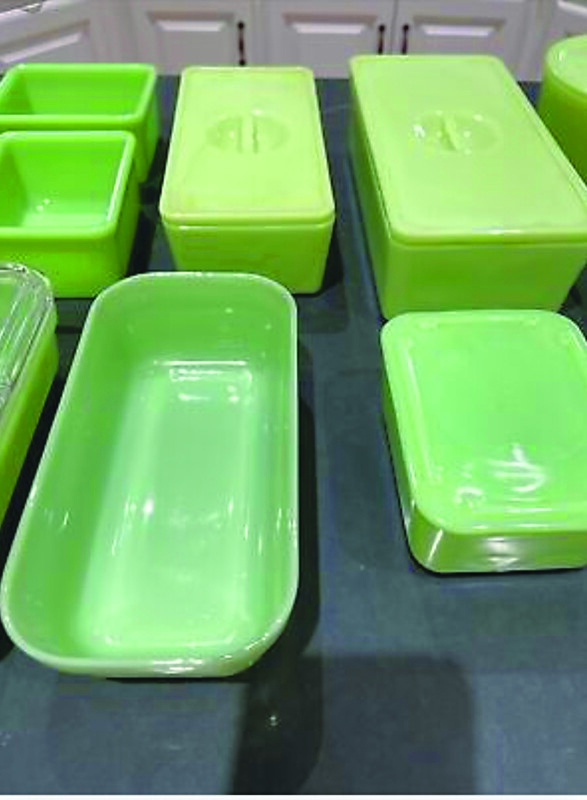
We have an assortment of these refrigerator leftover saving dishes. I inherited them through my family. We never use them so now we are wondering if there still is a use or collectibility for them.

Thank you for any help you can provide.

Carla

Dear Carla,

What you inherited is several pieces of jadeite (opaque green) refrigerator dishes. Great color and collectible too.

Your pieces are from the 1950s and done by the Jeannette Co. This was after they purchased the McKee Co. They produced them until the company closed in the 1970s. Even though there are other colors as well, the green jadeite seems to still today have a high demand for dishware, utility ware, etc.

Carla, the values depend on their being in great condition with no chips or cracks, and complete sets (dish and cover). I think for the amount you have the value would be in the $100 range as long as there is no damage.

Thanks for sharing and I hope you find a new home for your pieces.

Donna

Time to tackle those early summer chores

Weeding the garden is only the beginning

With the advent of summer, it is time to buckle down and get a few jobs done in the garden. In the vegetable garden it’s time to thin out extra plants that are crowding each other. In addition to carrots and beets, others like rutabagas, kohlrabi and parsnips that are started by seed in the ground may need thinning.

Carrot seeds are tiny, so we don’t often plant them one by one. Instead we tend to sprinkle them and, by gum, most of them grow. I maintain that thinning carrots needs to happen by the Fourth of July, so get to work. If they are really close together, you may want to use scissors to cut off the extras at the soil line to avoid pulling up carrots you are trying to save.

I like to be efficient at whatever I do, and that includes keeping a relatively weed-free garden. Many weeds quickly mature, flower, and produce seeds. Your job is to keep them from producing seeds or crowding out your plants.

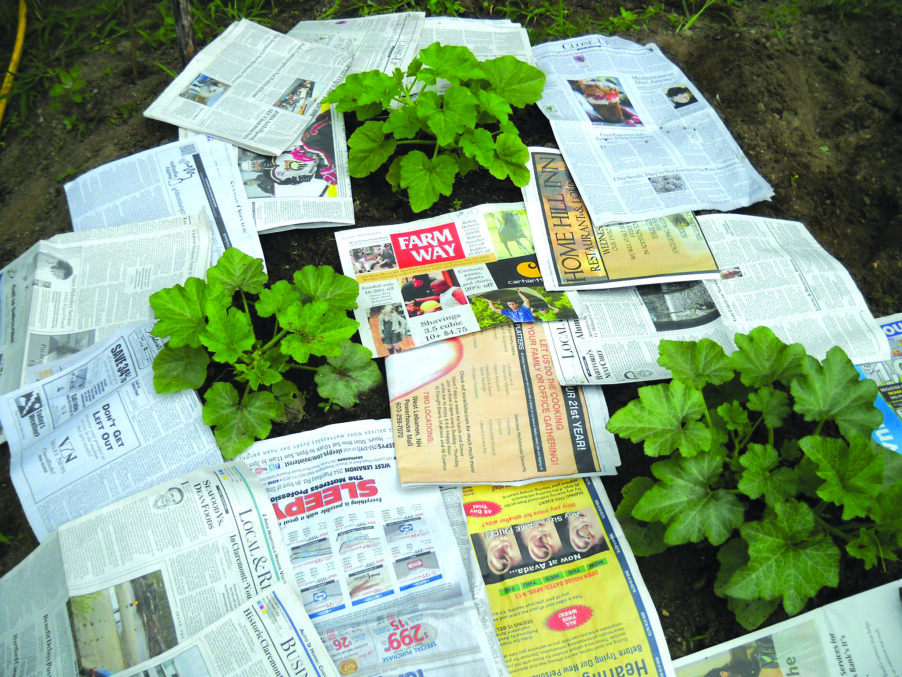
One way to control weeds is to keep them from getting the sunlight they need to grow. You can do this by mulching. I spread out newspapers over the soil and cover them with straw, hay or leaves. Four to six pages of newspaper keeps out light, inhibiting weeds. Three or four inches of straw will keep the papers in place. Earthworms eat the paper over the summer, and newsprint is done with soy-based inks, so you are not adding heavy metals to your soil (which was the case years ago).

This method works well on walkways and around big plants in the vegetable garden but is more problematic for onions and carrots, which are small and closer together. I use grass clippings or chopped leaves, without the newspaper, around small plants.

Mulching in the flower garden is good, too. It keeps down weeds and holds in moisture. But beware: Too much mulch can keep rain from reaching the roots of your perennials. An inch or two of ground bark helps a lot, but 3 or 4 inches will keep quick showers from getting water to your plants.

Some gardeners use landscape fabric under bark mulch, but I generally do not. I find pernicious weeds eventually send roots through the woven fabric and this makes weeding very difficult. Landscape fabric can also constrict perennials as they expand over time, choking them.

What about plain old black plastic? I don’t use it. Sunshine breaks it down over time and makes a mess. It also keeps air and water from getting to the soil, which must affect soil microorganisms. Additionally, the plastic ends up in the waste stream, which I want to avoid.

This is the time to prune lilacs, forsythia and other spring- and early summer-blooming trees and shrubs. They set their buds for next spring in the summer, so if you wait until fall to prune, you will reduce the number of blossoms. But don’t take a hedge trimmer and just buzz off a foot or two. Make each cut thoughtfully.

I start by deciding the perfect height and shape for the shrub. I recently reduced the height of some lilacs from 12 feet or more to a more manageable 8 feet or so. I cut back each stem to a place where two branches meet. If you cut any branch to a random spot, the branch may not heal well. It heals best where two branches meet. Try to hide your cuts by cutting bigger branches in places where foliage from other branches will obscure your surgery.

You can also cut back tall fall-blooming perennial flowers by a third to delay blooming and create shorter plants. This is best done in mid-May, but it’s not too late. Sometimes I will cut back the outer stems of a big clump and leave the center stems at full length. That gives me a longer bloom time, and the lower stems help support the taller stems.

Be forewarned: Not all perennials will bloom if you cut them back. I wouldn’t do it for peonies or iris, for example, but anything like an aster will respond well. Experiment with just a few plants at first. Better yet, read Tracy DiSabato Aust’s book, The Well Tended Perennial Garden: Planting and Pruning Techniques. It has detailed advice for most common garden plants.

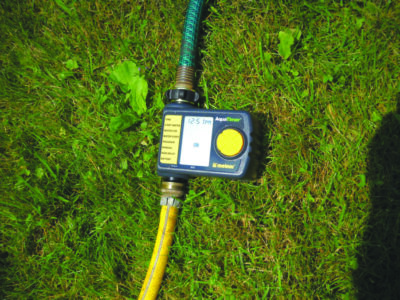
a watering timer hooked up to 2 hoses
A timer will allow you to water when away. Photo by Henry Homeyer.

If we have a dry summer, you may need to water. Established perennials should not need added water, but your vegetable garden might. I don’t favor overhead sprinklers because they water everything: plants, walkways and weeds. I prefer a watering wand, which is a device I attach to my hose. It is a 30-inch aluminum wand with a sprinkler head and a valve. I can direct the water exactly where I want it. I like a brand called Dramm because the sprinkler head allows fast, gentle watering.

Watering cans are good, too. They allow you to see just how much water you are applying. This is important for new trees, which need 5 gallons a week or so. A sprinkler might seem like it is delivering a lot of water, but may not be.

A watering timer will deliver water while you are away on vacation. They attach to your spigot and allow you to use an overhead sprinkler or a soaker hose. So don’t let your garden dictate your vacation schedule. With mulch and a watering system you can come back from vacation with nothing worse than a lawn that needs cutting!

Featured photo: The first step of mulching as I do it is to put down newspaper. Photo by Henry Homeyer.

Fishing for smallies

Smallmouth bass provide an angling experience like no other

“Make him go where he doesn’t want to go,” fishing guide Mark Beauchesne said as I tried to reel in what could only be described as an aggressive fish on the Merrimack River in Concord a few years ago.

The fish in question, a smallmouth bass, dove under the boat and then suddenly sprinted toward the surface, leaping from the water, shaking its head from side to side feverishly. Then it was diving again in relentless, explosive bursts. It felt like it took all I had to keep hold of the rod, never mind figuring out how to make the fish go anywhere.

But as I reeled it closer to the boat, Beauchesne calmly and expertly slid a net into the water, securing the fish and ensuring this would not be a story of the one that got away.

While I was certainly pleased with the size of the fish — probably four pounds or so, Beauchesne guessed — it was more the sheer ferocity and energy the fish exhibited when hooked that I’ll never forget.

“Inch for inch, pound for pound, the gamest fish that swims,” wrote Dr. James Henshall in his 1881 book, The Book of the Black Bass.

“They just don’t have any quit,” said Beauchesne, who, in addition to being a fishing guide, is advertising and promotions coordinator at the New Hampshire Fish and Game Department. “They spend a lot of time airborne. They’re just a very exciting fish to catch.”

The smallmouth bass, also referred to as black bass or a “smallie,” is the most popular game fish in New Hampshire, recently surpassing trout, according to the New Hampshire Fish and Game Department, which surveys its license holders, Beauchesne said.

“The accessibility that we have to them and with the tackle that’s available here now that’s accessible and easy to use, it just makes it easy for anybody to get into bass fishing,” Beauchesne said.

New Hampshire historian Jack Noon, who wrote the book The Bassing of New Hampshire, noted smallmouth bass were introduced in New Hampshire in 1864 in Rust Pond in Wolfeboro, which is right next to Lake Winnipesaukee. New Hampshire fisheries commissioners began stocking smallmouth four years later, ultimately introducing smallmouths to 140 lakes and ponds in New Hampshire, Noon said.

“The immediate reaction was incredibly positive,” said Noon, who also noted smallmouths had a less than positive impact on native trout populations upon introduction. “Smallmouths were very popular in New Hampshire, as they were a species that could be caught in summer when tourists were present and had leisure time. They were just very important for the tourist season.”

They still are, anglers agree, and the species can be targeted with a variety of tactics.

Stick baits, which are torpedo-shaped lures that mimic small fish, are popular lures for targeting smallmouth, as are soft plastic lures that take a variety of forms, including worms and crayfish. (I caught my smallmouth with Beauchesne right up against a cement piling with a plastic worm the fish hit as it dropped to the bottom.)

While live bait is effective for both largemouth and smallmouth bass, using live bait to target largemouth or smallmouth bass is prohibited from May 15 through June 15. Anglers must use artificial lures during that time period.

“They eat a variety of foods,” Beauchesne said. “Crayfish are common, the young of the year, yellow perch, sunfish, insects are often overlooked. People catch them with frogs coming out of their mouths. They take advantage of available food sources.”

Smallmouth bass thrive in rivers, lakes and ponds, though they prefer hard-bottomed areas, whereas the abundant largemouth bass tends to prefer softer, muddier bottoms, Beauchesne said.

An average smallmouth bass comes in at about 1.5 pounds and 15 to 16 inches. The state record is 7 pounds, 14.5 ounces. That whopper was caught on Goose Pond in Canaan in 1970.

Smallmouth bass are a warmwater fish and tend to be most active when the water temperature is between 55 and 75 degrees. Beauchesne notes rivers tend to stay in that range throughout the summer.

Beauchesne suggested using a 6-foot spinning rod with medium or medium-light action with eight-pound monofilament line.

Noon recalled fishing for smallmouth as an early teenager.

“I was fishing at night with a jitterbug, [which is a type of hard plastic topwater lure that chugs along right on the surface],” Noon said. “You just get a huge kick out of casting it out. It makes this glug, glug, glug sound and then all of a sudden [when the smallmouth hits the lure] it sounds like someone just threw a 20-pound rock into the lake.”

Be Prepared
As soon as you make that first cast, you need to be prepared and ready to handle fish, said Mark Beauchesne, advertising and promotions coordinator at the New Hampshire Fish and Game Department. Beauchesne shared some advice:
Have needlenose pliers handy for removing hooks; don’t be digging them out of a tackle box once you’ve landed the fish.
Handle fish as little as possible; don’t let them flop around on the ground.
If the fish is deeply hooked, it’s better to cut off the line at the hook. It has a better chance of surviving with the hook in its mouth than if anglers cause more damage trying to remove it. “Smallmouth bass are set up to eat fish that have spines, like crayfish and other fish, after all,” Beauchesne said.

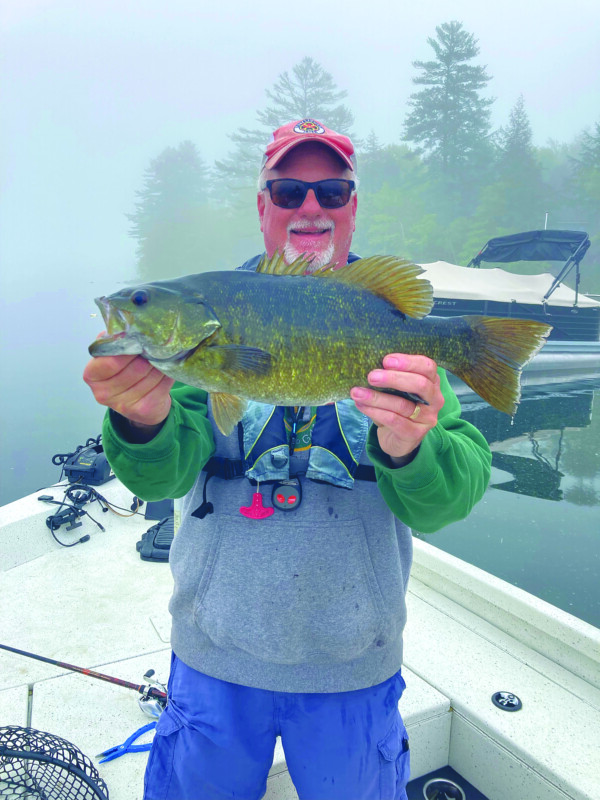
Featured photo: Mark Beauchesne with his catch. Photo by Mark Beauchesne.

Stay in the loop!

Get FREE weekly briefs on local food, music,

arts, and more across southern New Hampshire!