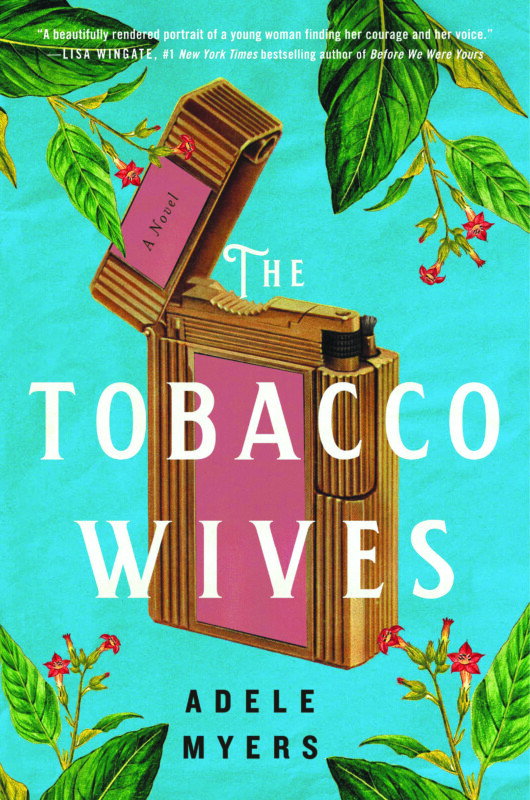
Riverman: An American Odyssey, by Ben McGrath

Riverman: An American Odyssey, by Ben McGrath (Knopf, 272 pages)

The curious life and mysterious death of Dick Conant makes for a story that is the lovechild of Henry David Thoreau’s A Week on the Concord and Merrimack Rivers and Jon Krakauer’s Into the Wild.

Unlike Thoreau’s sometimes tedious account, this is a Riverman that sings. It is a story that author Ben McGrath owns, having spent time with Dick Conant and written about him for The New Yorker, both while he was alive and after he went missing.

Conant was 49 years old when he became a nomad of America’s waterways. You could say he started America’s “Great Resignation” two decades early, having quit his job as a hospital janitor and left his rented house with a dramatic flourish. (He left frozen fish hidden in the attic, “a stink bomb on delayed fuse,” McGrath wrote.) Conant bought a canoe at Walmart, stocked it like a prepper and put it in the water pointed south. And he spent much of the remainder of his life either on the water or preparing to go back out there again.

Conant was not an uneducated man — McGrath describes him as “an old art major with Falstaffian appetites” looking like a cross between Santa and a lobster — who, when he won some money gambling, bought a book, Journals of Lewis and Clark, with his winnings.

Nor, for all his eccentricities (like drinking soy sauce from a bottle), was Conant crazy. The copious journals discovered after his disappearance (McGrath draws on thousands of pages of Conant’s musings) revealed a methodical man who employed the scientific method, if a bit crudely, to solving problems that arose on his travels.

For example, searching for solutions to the age-old bane of outdoorsmen — insect bites — Conant studied the ingredients of expensive store-bought products and realized that many products for itch-relief contained ammonia. So he bought a cheap bottle of plain ammonia and tested it on his skin. Having no unpleasant reaction, he began using it daily. (Probably shouldn’t try this at home, kids.) He was practical and industrious, once fashioning a rudimentary temporary bed out of driftwood.

Like Chris McCandless, the subject of Into the Wild who died after becoming ill in the wilderness of Alaska, Conant took chances most of us wouldn’t take; for example, he drank from some of the rivers he paddled. But unlike McCandless, who likely would have returned to civilization eventually, it was unclear that Conant ever would. His journals reveal a man who expected to die on his travels and was comfortable with that.

His journeys weren’t interludes but his life, unlike Cheryl Strayed’s adventure on the Pacific Coast Trail, detailed in Wild, or Sebastian Junger walking East Coast railroad lines in Freedom. Conant wasn’t seeking publicity or attention; in fact, his life and (presumed) passing might have gone unnoticed by the larger world had he not met McGrath by chance in the riverside town in New York where the writer lives.

The next day, unable to stop thinking about the strange traveler, McGrath literally tracked Conant down the river until he found him, in order to write about him.

Conant proved a cooperative subject, and the men became friendly enough that he stayed in touch, writing to McGrath from the road. He kept McGrath’s phone number on a scrap of paper in the canoe, which is why law enforcement contacted the writer when Conant went missing.

In this book, McGrath engages in what is sometimes known as embedded, or immersive, journalism, having become a part of his subject’s life. This is a perspective we don’t have in reading about another famous “riverman” — the New Hampshire hermit called “River Dave.” Of course, Conant wasn’t a hermit; by all accounts, he was gregarious and made friends easily, many of whom McGrath tracks down as he tries to unravel the mystery that is Conant’s life.

Surprisingly, Conant also had a large family with siblings leading conventional lives. At one point McGrath travels with one of Conant’s brothers to explore a storage unit that reveals more about the sojourner’s hidden life. At age 56, for example, he had applied to (and been rejected by) the University of Nevada School of Medicine. It also turned out that Conant was an artist — the storage locker contained more than 300 original paintings and sketches, done over four decades. In short, the deeper McGrath probes into Conant’s life the more fascinating it becomes. At the same time, the more McGrath learns about Conant during his investigation, the more questions arise.

Conant became a folk hero in river culture because of his travels, but even before he set off in his canoe, his was a colorful and robust life, though one that would not have ever made the pages of The New Yorker. As such, Riverman is, in many ways, the world’s longest obituary, and one of the most beautifully crafted, with the occasional aside into the canons of American river life and literature.

Not long after they met, Conant told McGrath that his life was dangerous and free and exciting, but “at this point in my life, I’ve had enough of this excitement. I’d much rather be home with a woman and a family like you have, than out here on the water. But this is the alternative.”

Those words and Conant’s strange disappearance in North Carolina in 2014 — the canoe was found capsized with the paddle attached, no remains were found — suggest that this story is as much a tragedy as a mystery. Whatever the genre, McGrath’s telling is utterly engrossing. A

Book Notes

Those of us fortunate enough to have a mom who is still living have (checks calendar) a little more than a week to come up with a Mother’s Day gift. Speaking as a mother, a 10-day cruise to somewhere sunny is best, but a book and some flowers will do.

Beyond the boring and predictable (cookbooks and chick lit are to Mother’s Day what grilling books are to Father’s Day), there’s an edgy genre that moms with a wicked good sense of humor might like.

For example: There Are Moms Way Worse Than You(Workman, 64 pages) by comedy writer Glenn Boozan is a Seuss-like ode to offbeat parenting in the animal kingdom and promises to offer “irrefutable proof that you are indeed a fantastic parent.” At first glance it looks like the worst children’s book ever, but it’s actually for moms. Illustrations are by Priscilla Witte.

For moms who like dystopian fiction, check out Jessamine Chan’s The School for Good Mothers (Simon & Schuster, 336 pages), given an “A” here recently.

Nonfiction for the working mom: Ambitious Like a Mother (Little, Brown Spark, 272 pages) by Lara Bazelon examines “why prioritizing your career is good for your kids.”

The Three Mothers, How the Mothers of Martin Luther King Jr., Malcolm X and James Baldwin Shaped a Nation explores a topic that is often overlooked: How the hands that rocked the cradle had an often unacknowledged role in history. The book is from Flatiron, 272 pages.

Also Mom Genes (Gallery, 336 pages) by Abigail Tucker is a scientific exploration of the power of maternal instinct that was well-reviewed.

Maybe not: My Evil Mother, a new short story by Margaret Atwood (author of The Handmaid’s Tale) that’s available only on Amazon as a Kindle original. Unless your mother is a witch. Then chances are she will love it. (It’s about a teenager in the 1950s who suspects her mother might be a witch.)


Book Events

Author events

SY MONTGOMERY Author presents The Hawk’s Way. Gibson’s Bookstore, 45 S. Main St., Concord. Tues., May 3, 6:30 p.m. Visit gibsonsbookstore.com or call 224-0562.

Book sales

SPRING BOOK SALE Features thousands of hardbacks and paperbacks including fiction, nonfiction, mystery and a variety of children’s books, plus DVDs, CDs and audio books. Brookline Public Library, 4 Main St., Brookline. Sat., May 14, and Sun., May 15, from 10 a.m. to 2 p.m.

Poetry

DOWN CELLAR POETRY SALON Poetry event series presented by the Poetry Society of New Hampshire. Monthly. First Sunday. Visit poetrysocietynh.wordpress.com.

Writers groups

MERRIMACK VALLEY WRITERS’ GROUP All published and unpublished local writers who are interested in sharing their work with other writers and giving and receiving constructive feedback are invited to join. The group meets regularly; the next meeting is scheduled for Tues., April 5, from 5 to 7:15 p.m., and will be held virtually over WebEx Meetings. To reserve your spot, email pembrokenhtownlibrary@gmail.com.

Writer submissions

UNDER THE MADNESS Magazine designed and managed by an editorial board of New Hampshire teens under the mentorship of New Hampshire State Poet Laureate Alexandria Peary. features creative writing by teens ages 13 to 19 from all over the world, including poetry and short fiction and creative nonfiction. Published monthly. Submissions must be written in or translated into English and must be previously unpublished. Visit underthemadnessmagazine.com for full submission guidelines.

Book Clubs

BOOKERY Monthly. Third Thursday, 6 p.m. 844 Elm St., Manchester. Visit bookerymht.com/online-book-club or call 836-6600.

GIBSON’S BOOKSTORE Online, via Zoom. Monthly. First Monday, 5:30 p.m. Bookstore based in Concord. Visit gibsonsbookstore.com/gibsons-book-club-2020-2021 or call 224-0562.

TO SHARE BREWING CO. 720 Union St., Manchester. Monthly. Second Thursday, 6 p.m. RSVP required. Visit tosharebrewing.com or call 836-6947.

GOFFSTOWN PUBLIC LIBRARY 2 High St., Goffstown. Monthly. Third Wednesday, 1:30 p.m. Call 497-2102, email elizabethw@goffstownlibrary.com or visit goffstownlibrary.com

BELKNAP MILL Online. Monthly. Last Wednesday, 6 p.m. Based in Laconia. Email bookclub@belknapmill.org.

NASHUA PUBLIC LIBRARY Online. Monthly. Second Friday, 3 p.m. Call 589-4611, email information@nashualibrary.org or visit nashualibrary.org.

Language

FRENCH LANGUAGE AND LITERATURE CLASSES

Offered remotely by the Franco-American Centre. Six-week session with classes held Thursdays from 6:30 to 8:30 p.m. $225. Visit facnh.com/education or call 623-1093.
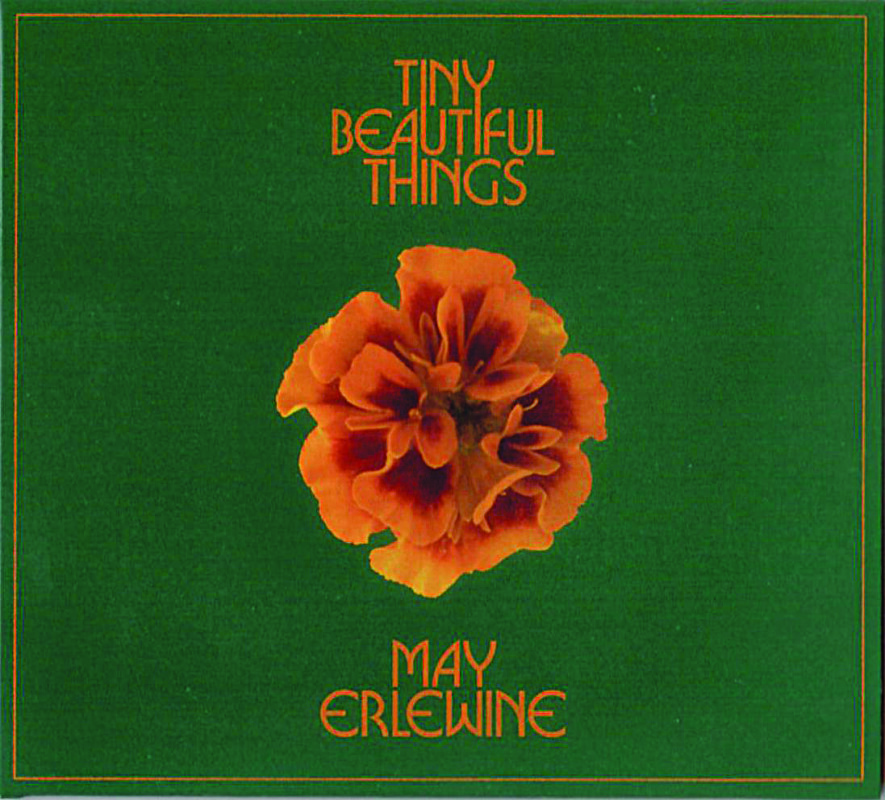
Album Reviews 22/04/28

May Erlewine, Tiny Beautiful Things (Warner Records)

Some really gentle, very pretty stuff here engineered for comfortably settled womenfolk who enjoy sipping chai tea while gazing out the window at lazy rains. This Maggie Gyllenhaal lookalike is from Big Rapids, Michigan, and drew her inspiration for this full-length from the similarly titled book by Rumpus advice columnist Cheryl Strayed. Erlewine has the perfect voice for such a thing, wedged somewhere between Natalie Imbruglia and Jewel, and the songs fit like your favorite super-thick socks, laid-back but earning attention as they putter along. The instrumental bits are always pleasurable, with piano, dobro, acoustic guitar working pretty much perfectly together to form pieces that evoke Americana and AOR-pop at the same time. “Your Someone” is outstanding, fluttering along on silken wings and really blooming at the chorus; “He Knows” borders on Taylor Swift’s early days (when she wrote actual songs); “Could Have Been” flirts with Billie Holiday torch. I can’t find anything wrong with this album at all. A+

Meshuggah, Immutable (Atomic Fire Records)

Oh man, are these guys good, and that’s coming from someone who’s basically a newcomer to their greatness, given that I generally avoid thrash metal and missed out on their stuff for seven full albums (I’ve still got a lot of catching up to do). Immutable is their ninth full-length, and the draw is, as always, Tomas Haake, the drummer for this Swedish tech-metal juggernaut. Here it is, if you want some juxtaposition in order to grok the technical abilities at work here: Dillinger Escape Plan is first-grade math, Meshuggah is quantum calculus. If I were stuck on a desert island with only one record, this one would be in the running as my choice, since it would take a lot of listens simply to understand what’s going on here, which is, namely, very advanced syncopated patterns and polyrhythms, a lot like progressive jazz in a way, as others have noted. But the base of the recipe isn’t post-bop, it’s thrash-metal that has to be heard to be believed. If the above is all old news to you, the first Godzilla-playing-with-a-bunch-of-telephone-poles tune is “The Abysmal Eye,” taking the band’s patented approach that just never gets old. Astonishing. A+

PLAYLIST

• Ay caramba, it’s already the last week of April, and there will be new albums coming your way on the 29th! There’s so many of them for me to pick and choose from this week, so let’s start with 900-year-old bong-collector Willie Nelson, whose 900th album, A Beautiful Time, is winging its way in trucks to the five people who still buy CDs at full retail price! Funny coincidence, I asked a friend whom he thought would make a great president of the United States, and he said Willie Nelson, so maybe that really isn’t just a meme, what do you think? I’ll tell you what I think, I think it’s one of the dumbest ideas I ever heard, having a bong in every room of the White House, and would he offer the Pope cannabis gummies when he came by? I don’t like it, and I probably won’t like this upcoming album’s first single either, it’s called “I’ll Love You Till The Day I Die,” but I’m going to find out right now. So there’s a video for it, and he’s stacking some playing cards on some table in a honky-tonk bar or something, and the song is a typical country-and-western slow-burner, about some girl he once talked to for a few minutes, but that short conversation changed him forever. There is slow piano and thoughtful strumming, in case you couldn’t possibly picture what might be going on here.

• Grammy-winning country songstress Miranda Lambert is known as the other person to marry Blake Shelton, and the first person to place third in the USA Network’s Nashville Star talent show, but that placement was enough to make her into a famous singer, so keep your chins up, people who place third in things. Lambert’s ninth full-length, Palomino, features a tune called “Music City Queen,” and I was actually kind of interested to hear it, because 1980s weirdos The B-52’s are guests on that song, but naturally there’s no advance of that song yet, so it looks like I’m stuck listening to a different single, called “Strange,” which is just a normal tune. She kind of sounds like Dolly Parton when she’s singing on this tune; it’s a pedestrian joint with an unplugged guitar part, then a Reba McEntire part and so on. It’s OK!

• When it comes to stomping industrial-rock madness, I don’t think German band Rammstein is relevant anymore, what with KMFDM still putting out albums and whatnot; I haven’t heard anything from them in years, but supposedly they’re not industrial metal anyway, their style is actually “Neue Deutsche Härte,” which is German for “new German hardness,” a genre that mixes ‘Neue Deutsche Welle’ (whatever that is), alternative metal, groove metal and elements of electro-industrial and techno. Either way, I was never really crazy about them, but here they are, in front of my face, proffering a new album, called Zeit. The title track has a really disgusting video, and the tune is slow and bombastic, and of course they sing in German. It’s about pirates or something with muskets, I can’t understand anything they’re singing, so let’s move on to the next whatsis.

• Lastly we have British indie-rock outfit Bloc Party, with their sixth full-length, Alpha Games! This band is OK, with their jagged Gang Of Four-style guitars and soccer-hooligan vocals, as heard on almost-hit-singles like “Banquet” and “Helicopter”; you’ve probably been exposed to their tunes before at sports bars and beach arcades, but it probably went in one ear and out the other, like, you were like, “Is that The Police? Rancid maybe?” and decided you didn’t care. The new single, “Traps,” is appropriately spazzy; it’s sort of like “Rock Lobster” but more boneheaded. It’s OK.

If you’re in a local band, now’s a great time to let me know about your EP, your single, whatever’s on your mind. Let me know how you’re holding yourself together without being able to play shows or jam with your homies. Send a recipe for keema matar. Message me on Twitter (@esaeger) or Facebook (eric.saeger.9).

From the valley floor

A look at two reds from Napa Valley

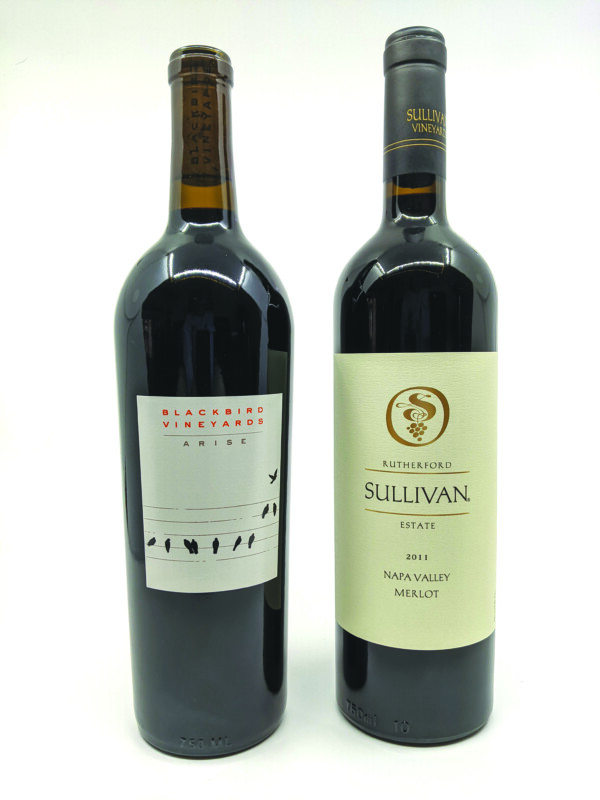
This week’s wines are two exceptional reds, created from grapes grown in neighboring towns almost within sight of each other, in the Napa Valley Floor American Viticulture Area (AVA).

Our first wine comes from the Bespoke Collection Portfolio Wines based in Napa Valley, California. Wikipedia describes Bespoke as a “wine producer and lifestyle brand” whose wine labels are Blackbird Vineyards and Recuerdo Wines. Bespoke means custom-made or commissioned and in times past the word was used to describe hand-tailoring, especially in custom-made apparel. Now, it captures the sense that we want things to be made special for us and the label lends a certain cachet to the product.

The 2016 Blackbird Vineyards Arise Proprietary Red Wine (originally priced at $54.99, and reduced to $32.99 at the New Hampshire Liquor & Wine Outlets) is a blend that emulates the merlot-based wine blends of the Right Bank of the Dordogne River, Bordeaux. The wine is a blend of 55 percent merlot, 25 percent cabernet franc, 17 percent cabernet sauvignon and 3 percent petit verdot. Made from merlot grapes grown on a 10-acre estate in Oakville, on the Napa Valley floor, and enhanced by the other varietals, gathered from 20-plus lots from the Napa Valley Mountain tops, hillsides and bench lands, this limited production of only 236 barrels of equal parts of new and seasoned French oak has an abundance of rich fruit. The color is a deep garnet purple, the nose is rich black cherries and black raspberries, and plums with slight herbal notes. The nose carries through to a full palate and a long, long finish. Robert Parker awarded this bold wine with 92 points.

This is a California red blend, bolder, and thus emulating the Bordeaux blend. The vineyards profit from generations of expert vineyard management and precision agriculture, limiting grape yields for increased quality. Sustainable farming is employed, and indigenous yeasts start the fermentation process. The winemaking team selects two or more parcels of wine after sample trials blended to produce a consistently finished wine that highlights each unique varietal component. This wine becomes a “customized wine,” a “bespoke wine,” according to the winemaker’s website.

The Oakville-Rutherford area is renowned for its cabernet sauvignon and merlot single-varietal wines and blends.

Our next wine comes from Rutherford, also located on the Napa Valley floor, and immediately north of Oakville. The 2011 Sullivan Rutherford Estate Napa Valley Merlot (originally priced at $65 and reduced to $29.99 at the New Hampshire Liquor & Wine Outlets) consists of 100 percent merlot that also benefits from the gravelly-sandy loam and hot, dry summers of this stretch of wine country. The color is a deep purple that has just begun to go amber as it is 20 years old. To the nose and tongue, the fruit is heavy with plum and blackberry, along with some cocoa. The tannins have receded, owing in part to its age. This is an exquisite wine that is a true reflection of how beautiful a merlot can be, given proper attention to the grapes, the blending, and aging.

Sullivan Winery was established in 1972 when James O’Neil Sullivan, encouraged by his friend the legendary winemaker André Tchelistcheff, planted 22 acres to cabernet sauvignon and merlot. He built his home and winery on the estate and produced and sold wine until his death in 2005, leaving the home and winery to his children. In 2018 entrepreneur Juan Pablo Torres-Padilla saw the potential of Sullivan Rutherford Estate and purchased the property. This wine was produced before the property was sold, and the future of the estate remains bright as Torres-Padilla has assembled a world-class winery team that will continue to make history.

Featured photo. Courtesy.

The not quite authentic mint julep

In my relative youth, I worked in a pizza joint for several older Greek men who taught me two important life lessons:

(1) How to swear in Greek.

I got into a conversation with a Greek couple recently and was able to exchange pleasantries in reasonably passable Greek. The shockingly beautiful lady of the couple complimented me on speaking her language so well. I told her that I knew “Hello,” “Thank you,” “You’re welcome” and how to swear.

“Everyone thinks they know how to swear in Greek,” she told me with a knowing smile, “but most of the time they really don’t.”

I let loose with a torrent of Athens-accented profanity that would get me a black eye from any cabbie in Southern Europe. She blushed and smiled, then her eyes got moist and she blotted away a tear.

“You remind me of my Uncle Costas,” she told me.

(2) How to read a racing form.

One of the owners was an enthusiastic loser of money at the dog track. I remember picking up one of his racing forms one day and asking him to explain it to me. He did, and it made a shocking amount of logical sense. I remember thinking at the time that it would be pretty easy to figure out a system to…

That’s when my brain — in one of its very rare moments of good judgment — reminded me that every guy in a rumpled suit with bloodshot eyes and a cheesed-off wife at home has a system for picking a winner from a racing form. In consequence, I have never set foot onto a racetrack.

But I would so very much love to.

Anyway, in honor of next Saturday, Kentucky Derby, Run For the Roses, yadda, yadda:

Solid, Not Quite Authentic Mint Julep

There are more people with strong opinions about mint juleps that there are self-absorbed white guys with podcasts, so I decided to look for a recipe in one of my older cocktail books, the 1935 Old Mr. Boston De Luxe Official Bartender’s Guide. Even in this early manual, there are two julep recipes: one simply labeled Mint Julep, and the other labeled Southern Style, implying a choice between good or authentic.

I’ve got no particular stake in either approach, but the standardized, less authentic version sounded better to me. Unfortunately, as is often the case in early cocktail recipes, ingredients and amounts are maddeningly vague. I’ve updated them here.

Ingredients

  • “Four sprigs of fresh mint” — I used 1 gram of fresh mint leaves
  • 2½ ounces bourbon — I went with Wiggly Bridge, which I’ve been enjoying lately.
  • ½ ounce simple syrup
  • club soda
  • shaved ice — or ice that you’ve wrapped in a tea towel and taught a lesson to with a mallet

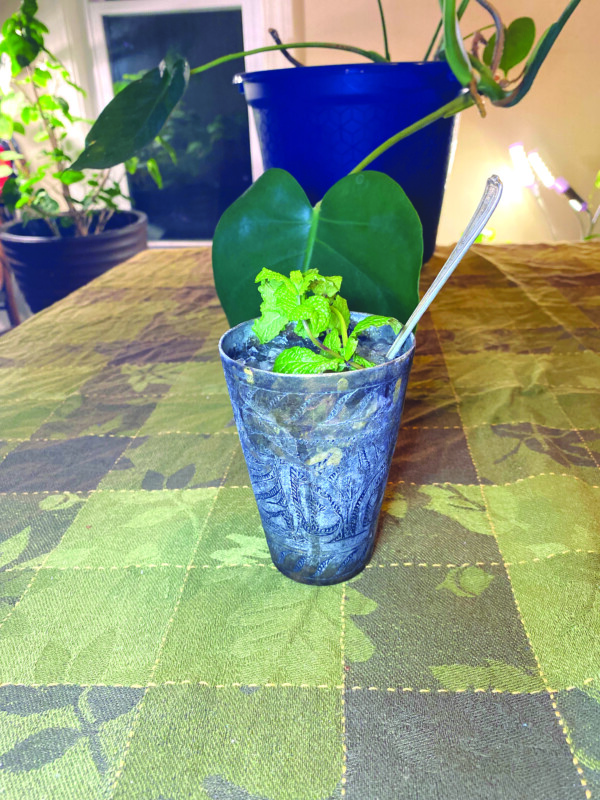
Fill a silver cup with shaved ice. I used one that I think used to be silver-plated.

Muddle the mint in the bottom of a shaker. Add several ice cubes, the bourbon and syrup. Shake enthusiastically.

Strain into your metal cup full of shaved ice. Top with club soda and stir with a silver spoon (or just a spoon) until frost forms on the cup.

Garnish with several more sprigs of mint. Drink while watching coverage of the Kentucky Derby and critiquing Southern women’s hats.

If you’ve never had a mint julep before, it tastes about like you would assume it would, like bourbon and mint. That’s the first sip.

On the second sip you start to appreciate the pulverized ice. There’s something profoundly satisfying about stirring a drink with that much ice with that particular texture. The Very Serious Coldness that it brings to your lips is just as gratifying.

The third sip brings an appreciation of this whole mint julep thing. You start to see the appeal.

Every subsequent sip brings less and less responsible thoughts to mind. Do not read a racing form while drinking this.

Featured photo. A fresh, totally solid mint julep. Photo by John Fladd.

Apple and sage bruschetta

Apples aren’t just for fall cooking! This recipe makes a great appetizer all year long.

When you think of bruschetta, you probably think about a combination of tomatoes and basil. However, there are so many more combinations that are perfect for topping some nicely crisped bread. This recipe uses apples to produce a ridiculously simple and utterly delicious appetizer.

As apples are the focus of this snack, you want to pick a variety that you like. If you prefer foods that are less sweet, a tart apple, such as Granny Smith, will work well. If you like a bit more sweetness, Red Delicious could be your choice. The one thing you don’t have to consider is which apples cook better. These diced apples spend a total of two and a half minutes in a hot pan, so any apple truly can work.

Also key to this recipe is the addition of goat cheese. You may be adding only a smear to each crostini, but the tartness in the cheese really helps to balance the sweetness of the fruit. Plus, it adds a creamy dimension to the crunchy bottom and tender topping.

Yes, this is a recipe that has it all, with only about 10 minutes of cooking time. That’s a great deal, if you ask me.

Apple and sage bruschetta
Serves 4

Small baguette, cut into 1/2-inch slices
2 medium-sized apples, peeled and cored
1 Tablespoon olive oil
2 Tablespoons honey
1/2 teaspoon dried sage
salt
4 ounces goat cheese, room temperature

Preheat oven to 400 degrees.
Place baguette slices directly on oven racks, and bake for 4 minutes or until golden brown.
Dice apples into 1-inch cubes.
Heat a large frying pan over medium high heat.
Add olive oil to the frying pan.
When oil shimmers, add apple cubes.
Cook for 1 minute, stirring constantly.
Pour honey over apples; toss to coat.
Cook for another minute, again stirring constantly.
Sprinkle with sage and a pinch of salt.
Toss, cooking for another 30 seconds.
Transfer to a serving bowl.

To serve, spread a tablespoon of goat cheese on toasted baguette slice. Top with a heaping spoonful of apple and sage mixture.

Featured Photo: Apple and sage bruschetta. Photo by Michele Pesula Kuegler.

In the kitchen with Keith Wilson

Keith Wilson of Brentwood is the production chef of Dunk’s Mushrooms (313 Route 125, Brentwood, dunksmushrooms.com), which grows several varieties of gourmet mushrooms and makes weekly deliveries to multiple New England communities. In addition to making all kinds of specialty mushroom-based products like jerky, pot pies and coffee, the business offers other non-mushroom prepared items under the name Dunk’s Kitchen. Wilson and Dunk’s owner William “Dunk” Dunkerley regularly hold multi-course mushroom-focused dinners — a nine-dinner vegan series wrapped up late last year, and an omnivore series is currently underway. Dunk’s Mushrooms can also be found on dozens of restaurant menus across the Granite State. Wilson has been in the restaurant industry for nearly two decades — outside of Dunk’s, he and his wife Amber, of Stout Oak Farm in Brentwood, own The Seed Chef, an in-home catering and private event service.

What is your must-have kitchen item?

A tasting spoon, because you’ve got to be tasting your own food to know what you’re doing.

What would you have for your last meal?

I’m a sucker for really good sushi. I like the simple stuff, like a regular tuna nigiri.

What is your favorite local restaurant?

There are so many good restaurants. It’s impossible to choose.

What celebrity would you like to see trying something that you’ve made?

I’m going to go with Christopher Walken, just because, if he liked it, I’d want to hear his voice saying ‘Oh my God, this is so good!’

What is your favorite product to make for Dunk’s Mushrooms?

There’s one thing that we made a lot of last year that I really love. It’s a black trumpet maple syrup. … We had a good amount of black trumpet mushrooms from the woods around here [and] I took like four gallons of Grade A dark amber maple syrup and simmered it with all of the mushrooms in a big cauldron that we have. It has this great smoky, savory flavor that I can’t even really describe. I used it a lot to sweeten vegan cheesecakes and stuff.

What is the biggest food trend in New Hampshire right now?

Mushrooms, obviously. … The food system is damaged in a lot of ways, and meat production can be an issue, [but] mushrooms really help fill that void if people let them and they know how to prepare them properly. That’s part of the reason why our vegan series was so successful, because we were doing essentially what would have been meat-based meals, but with mushrooms in their place.

What is your favorite thing to cook at home?

I’ve got four kids and a crazy schedule sometimes, so there’s a lot of meals that just kind of get thrown together. … But if it’s a rare night when it’s just me and my wife and I get to cook something for her, it’s always nice to do that. Stuffed chicken breast is what she wants me to make for her right now, because I made it at the last dinner. … It’s a goat cheese stuffed breast wrapped in bacon with asparagus.

Gorgonzola mushroom spread
From the kitchen of Keith Wilson of Dunk’s Mushrooms in Brentwood (yields about six to 10 servings)

¼ pound Dunk’s chestnut mushrooms, chopped
2 Tablespoons butter, unsalted
¼ cup red wine (sherry or port work well)
2 sprigs fresh thyme leaves, pulled from stem and chopped
10 ounces Gorgonzola cheese
2 to 4 Tablespoons heavy cream
1 teaspoon salt
¼ Tablespoon black pepper

Gather all ingredients. In a heavy-bottom sauce or saute pan, melt the butter. Add mushrooms and saute over medium-high heat. Cook until mushrooms turn a dark golden brown. Turn down heat and add thyme, salt and wine. Cook until all wine is reduced and the pan is dry. Allow the mixture to cool. In a food processor, combine cheese, cream, salt, pepper and the cooled mushrooms. Blend until smooth, using more or less cream depending on the consistency. Serve as a spread on toast or as a dip.

Featured photo: Keith Wilson. Courtesy photo.

Stay in the loop!

Get FREE weekly briefs on local food, music,

arts, and more across southern New Hampshire!