Kill or be killed

Aaron Berg brings his take-no-prisoners act to Moka Pot

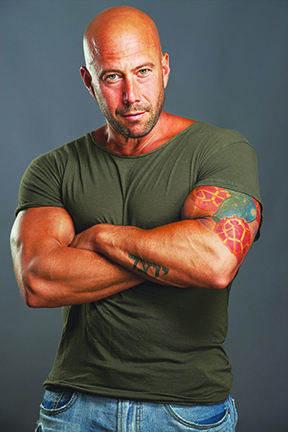
Watching Aaron Berg walk on stage at a comedy club, two thoughts compete for space in one’s head at the same time: he’s either going to make people laugh or totally destroy them. The truth, as Berg tells it, is that he’d really like to do both, metaphorically speaking.

The second thought makes sense because Berg is a competitive bodybuilder, who created his physique the way he builds a set — obsessively, with no shortcuts. He looks less like a comedian than something that wandered off a movie poster, thick-necked, broad-shouldered, all traps and forearms. Along with punchlines, he probably has a deadly right hook.

“I wanted to murder these people,” he said by phone recently, hearkening back on the mentality he brought with him from bodybuilding in his 20s to the comedy stage. “I wanted these people to laugh so hard they were crying. There’s definitely a kill-or-be-killed mentality up there; that does come from bodybuilding.”

Physical conditioning is the throughline in Berg’s career these days, on stage and off. He recently returned to competition, and talks openly now about training, TRT, and the discipline of prepping for competition. His days start at 4:30 a.m. with a quick posing practice, 45 minutes of cardio, a training session, followed by six or seven meals during the day.

“I go all the way in on everything,” he said.

Subject matter that would have seemed like a novelty act a decade ago now resonates with an audience increasingly fluent in peptides and gym culture. Fans now show up specifically for the gym material, then stick around for the rest. Berg keeps busy, doing roughly 20 stand-up sets a week around New York City.

That all-in ethic extends to Berg’s family.

He and his wife, comic Christine Berg, are raising an 8-year-old daughter, Piper, who is now a black belt in taekwondo and, apparently, a fairly sharp critic of his material. “She’ll come to a set, and she’ll go, ‘Dad, that was really offensive,’” Berg said. “And I go, ‘Yeah, but the audience was laughing.’ And she’s like, ‘It doesn’t change the fact it was offensive.’”

Christine chimed in partway through the conversation with her own assessment. Her husband, she said, is “very odd, but very lovable,” and added that there’s no malice behind his material, however far it pushes.

“I’m a very kind person that says horrible things,” Berg said, agreeing with her.

That balance between provocation and warmth is something Berg has had to recalibrate over the years. Roughly a decade ago, around the time he wrote his second book, American Etiquette, he found himself drifting toward overtly political material and a podcast built around it — an effort he now describes as a “grift” that curdled.

“The dog-whistle mentality would allow for fans to basically embrace it just for the purpose of, ‘Oh, they’re saying racial stuff,’ which would then turn into racist stuff,” he said. He walked away, though he did worry about supporting his family. He found assurance from comic friends who insisted he’d land on his feet.

He did. These days the material comes from a more current, more personal place — marriage, fatherhood, and his return to bodybuilding. However, Berg’s stated goal hasn’t changed.

“I want 99 percent of people to love what I do, and I want one percent to be like, what the hell is this?” he said. “And I accomplish that.”

It’s a needle he’s still actively threading on stage, not a settled formula, he continued, and the difference between an edgy joke landing and just being mean is something he checks himself on set to set. The stories he tells trace back to an instinct he found in childhood, that comedy is both a weapon and refuge.

Berg’s best-known feat remains 25 Sets, the 2015 documentary chronicling his attempt to break the record for most stand-up sets performed in a single night. The plan was to hit 26 clubs across New York City, but a car breakdown forced him onto foot and into cabs and cost him a set in Times Square. It left him with 25, still a record, and a title for his movie.

He’s about to make his first appearance in Manchester, at the Moka Pot. Fittingly for the all-or-nothing comic, it’s a two-night run. Berg is learning more about the city and the newly relocated venue, which has several summer shows booked.

“I know the Moka Pot is supposed to be a great little spot for comedy, and there’s a thriving local scene there,” he said. “Everybody seems so excited, but I have no idea where it is. I don’t even know how far the drive is going to be — or if I need to fly or take a small boat.”

Aaron Berg
When: Friday, July 31, and Saturday, Aug. 1, at 8 p.m.
Where: Moka Pot, 8 Hanover St., Manchester
Tickets: $25, eventbrite.com

Featured photo: Aaron Berg. Photo by David Genik.

The Music Roundup 26/07/30

Threefer: A monthly gathering of original performances preceded by food and wine, the next Songwriter’s Roundup has Nashville-based Mary Moore, who released her latest EP, An Honest Thing, last year, along with singer-songwriter Caitlin Piper, whose diary-like debut LP In Cursive is getting good notices. As always, the event is hosted by Katie Dobbins. Thursday, July 30, 7 p.m., Hermit Woods Winery, 72 Main St., Meredith, $12 and up, hermitwoods.com.

Loafing: Drawing from throwback acts like Love and Buffalo Springfield, The Whole Loaf delivers a cocktail of rock, psychedelia and jazz-infused blues, not to mention a bit of Link Wray-channeling twang. Perhaps that’s why they paired a cover of “Folsom Prison Blues” with their rumbling, raucous 2025 jam-out “Garage Floors.” The band plays a downtown show with Vale’s End and Headfirst. Friday, July 31, 7:30 p.m., BAD BRGR, 1015 Elm St., Manchester, thewholeloaf.net.

Tenth: A Derry couple decided to harness a tragedy, their son’s suicide, into a positive force and created Pizzastock to help families and individuals with mental health problems. Ten years later, the organization is making a difference, and an annual concert is its biggest public event. This year it features a dozen bands on two stages — fitting, as Jason Flood was an avid musician. Saturday, Aug. 1, noon, Pinkerton Academy (next to football field), 5 Pinkerton St., Derry, Pizzastock.org.

Youthful: Fresh off winning this year’s Granite State Blues Challenge, The Blues Express will travel to Memphis for the International event in January. Anchored by Nick Spencer, who’s 18 but called Old Soul by bassist Mickey Maguire, the father figure of the young band, they’re a powerhouse. An album produced by Tom Hambridge called Choose Love is due for release soon. Sunday, Aug. 2, 8 p.m., Andres Institute of Art, 106 Rte. 13, Brookline, $25, andresintitute.org.

Tracklist: When playing live for fans less focused on music than screaming got old, The Beatles retreated to the studio, first making Revolver. To celebrate its 60th anniversary, Deconstructing The Beatles host Scott Frieman will lead a song-by-song journey through the album, with audio and video clips, along with a look at the innovative studio tricks they used. Tuesday, Aug. 4, 6:30 p.m., The Sawyer Center, 37 Academy Quad, New London, $25 and up, centerforthearts.org.

Sofaplex viewing

New comedies and other home movie watching fun

I often wonder if a movie I watch at home has to clear a lower bar than a movie I see at the theater.

72 Hours, a new Netflix comedy starring Kevin Hart, feels like it might have been excruciating to watch in a theater. Viewed at home, where I can pause to get a popcorn refill, it is merely very bad — so, evidence of lower bar? Or did I just suffer less?

Hart, who is 47 in real life, plays 40-year-old Joe, a marketing executive gunning for a promotion but failing to wow the room with his latest vodka commercial, which has “how do you do, fellow kids” stink lines wafting off it. How do I pitch to Gen Z? thinks this millennial. Coincidentally, that very day he was also accidentally included in a group chat of 20something dudes headed to Miami for a bachelor party. Because he Venmoed them some drinking money after making fun of their posts, they off-handedly invited him to come along. Failing at work and in a dumb fight with his girlfriend (Teyana Taylor, who I hope was paid really well), Joe decides that he will indeed show up for this stranger’s party weekend, offering to upgrade their rental house and overall experience in exchange for their including him. The bros — groom-to-be Mason (Mason Gooding), his “this is all he’s got in his life right now” buddy Nick (Marcello Hernández), the mourning-a-breakup Hunter (Ben Marshall) and good-natured dummy Freshman (Kam Patterson) — think it’s all very weird but they decide to go with it to have someone pay for a limo.

The movie also piles on gangsters, a subplot where Joe is forced to do cocaine and turns into a Scarface knock-off and a gang of girl criminals posing as a bachelorette party. It feels like someone felt the core comedy situation here wasn’t working so they added on a dozen other things. Which also don’t work.

Here are the “at home” points that I might have been too annoyed to award at a theater: Marcello Hernández is inherently funny and even though this movie doesn’t give him much of a character, he does get a few good lines in. Fun line readings, limited though they are, are doled out to most of the group of bros. Also, maybe one in 10 of the “Millennials versus Zoomers” jokes is a “ha, cute” level of funny.

I feel like the vanity of Kevin Hart — or maybe the writers’ desires to keep him a hero — gets in the way. Born in 1979, real life Hart is a younger Gen X person. Why not have him play his actual age, or older even, to widen the cultural divide? Or why not have him play a younger millennial, experiencing that first existentially painful taste of not being on trend? Why not make him more desperate — the movie doesn’t really go as hard as it could on the weirdness of Joe and his situation. I don’t know that weirding up the movie would have fixed all its problems but it probably couldn’t have made it worse.

For an example of what the tartness of an unself-aware weirdo can bring to a comedy, check out The Dink, on Apple TV, which stars Jake Johnson playing the New Girl’s Nick Miller variant that he does so well.

Here, he is Dusty Boyd, a one-time tennis star whose career ended in his teens after an injury. Now working as a pro at the tennis club his father Chuck (Ed Harris) manages, Dusty is still trying to dine out on his old glories, with fellow employee PJ (Aaron Chen) serving as just enough of a hype man to keep his delusion going. But then Dusty reinjures his wrist and is sent to a doctor (Ben Stiller in a fun cameo part) who suggests Dusty play pickleball to help recover. Dusty, like his father, thinks pickleball is a dorky, not-a-sport endeavor — even though the pickleball crowd (led by Patton Oswalt) is demanding more court space at the club. Dusty plays his first doubles game against retired ladies Gail (Cleo King, who puts extra mustard on her part) and Judy (Lynne Marie Stewart) with his partner Candace (Mary Steenburgen), a woman he first met when he kicked her out of the club for hitting her pickleball into the tennis courts. He hates the game and thinks it’s stupid and, of course, jumps at the chance for a rematch. He also strikes up a friendship with Candace, who is recently divorced and trying to figure things out and is willing to meet him for late night pickleball when he needs some mind-clearing competition.

Even Candace, who admits that, post-divorce, she bought a snake and unsuccessfully attempted pottery, gets to be weird here and I think that helps with this pretty standard sports story that leads up to a big game and a sort of redemption. This movie is lightweight and not terribly taxing but enjoyable enough.

April release The Devil Wears Prada 2 (rent or purchase and as of July 29 streaming on Hulu and Disney+) is a meatier watch. Andy Sacks (Anne Hathaway) did in fact become the important serious journalist she wanted to be back in the 2006 original. And, like so many important serious journalists these days, she gets laid off from her newspaper, in her case via text while accepting a journalism award, giving her an opportunity to go viral tearfully proclaiming that journalism still matters. Meanwhile, Runway magazine, the Vogue-stand-in where she worked her first post-college job, is dealing with a scandal related to a recent story about a fashion brand that turned out to be running a sweatshop. Needing some of Andy’s integrity shine, Runway’s parent company boss, still Irv (Tibor Feldman) from the last movie, hires her to be the features editor — a fact Runway editor Miranda Priestly (Meryl Streep) learns on Andy’s first day of work.

The Devil Wears Prada 2 is a delightfully catty, well-attended, beautiful-to-look-at funeral for a beloved friend, is how I felt watching it. Stanley Tucci and Emily Blunt return (as does Tracie Thoms as Andy’s freebie-bag loving friend) and we get newcomers Justin Theroux and B.J. Novak as two different flavors of modern monsters; Lucy Liu and Kenneth Branagh as two different flavors of decency, and Simone Ashley, Caleb Hearon and Helen J. Shen as Kids Today. And everybody is great and fun to watch and does just enough without doing too much. There are some lovely clothes and some good jokes and a nice visual gag about the two belts that looked so different. But throughout I felt an ache at the passing of magazines and newspapers and the desperate condition of those who are left. The constant attempts to save Runway are aimed at saving something that several characters say is a shell of itself — in the real world it would probably be some kind of bi-monthly-ish affair that might still have a September issue but also put out issues labeled just “Winter.”

There is a nice Hollywood spin on this story that, like a lottery ticket and its “maybe it will be me,” feels both fantastical and just plausible enough that, you know, it could happen. And it feels nice watching a fairy tale ending that is actually more about the joys of a career making a print product and female friendship than a romance. On one level, I enjoyed this movie and had a good time watching it. On another level, sniff.

Remarkably Bright Creatures is another movie I avoided seeing when it came out on Netflix in May, largely because My Octopus Teacher and its Oscar win over better documentaries had me wary of schmoopy octopus movies. And, make no mistake, this is a schmoopy octopus movie, but I rather enjoyed its gentle weepy drama and the performances by Sally Field and Lewis Pullman — and Alfred Molina, voicing the octopus Marcellus, who isn’t particularly impressed with his human captors. He does have some fondness for Tova (Field), the woman who works nights cleaning the aquarium where he lives, giving a proper shine to his tank and talking to him all the while. When she injures her ankle putting Marcellus back in his tank — he likes to squidge out of his tank and wander around, eating some of the other exhibited marine life — the aquarium hires Cameron (Pullman) to fill in. Cameron is passing through town looking for the father he never met. When his van, where he is also sleeping, breaks down, he’s eager for the temp work to pay the repair bill. Tova is at first not impressed with Cameron’s mediocre cleaning skills but she teaches him the “right way” to do the job and introduces him to Marcellus, who also begins to have an irritated fondness for Cameron. Humans with their clumsy interpersonal skills are, Marcellus tells us, rather a dense bunch.

This movie is very pleasant, which I know sounds like faint praise but when paired with the lovely Pacific Northwest scenery and the very beautiful cabin-like home Tova lives in makes for a nice relaxing bit of chillout.

After many weeks in theaters, May release Backrooms is nearing $400 million in worldwide box office and is now available for rent or purchase. This A24 horror-I-guess movie has many claims to fame including its less than $10 million reported production cost and its director, Kane Parsons, who was 20 at the time of its release, according to Wikipedia. And all of that is great, sincerely, both for film now, with this summer’s hopeful box office and the constant need for some non-IP wins, and for the future, since it will encourage production companies and studios to keep taking the occasional chance on weird stuff. About the movie itself, my feelings are more complicated.

Clark (Chiwetel Ejiofor), the depressed owner of a furniture store who is drinking his way through a divorce, finds a portal to somewhere one night in his store in the 1990s. When he walks through a particular spot in his store’s seemingly solid wall, he finds himself in another room, a mostly empty room with a pile of furniture at its center. That room leads to other rooms, all mostly empty, like a hastily abandoned office space that might still have a desk or a sofa or a stop sign or a cardboard cutout of a caveman that seems to be playing a recording of people speaking multiple languages — you know, normal stuff. The rooms are all lit by fluorescent lights giving off a kind of depressing brightness but that also flicker as he walks through hallways and into new rooms, some of which have tiny doors or slanted floors that at first seem like tricks of perspective. When he hears and almost sees what seems to be another being, he runs back to his store and apparently returns often enough that he is able to draw a map of this new space.

When he tells his therapist Mary (Renate Reinsve) about all this, her unbelieving reaction spurs Clark to bring his employee Kat (Lukita Maxwell) and her boyfriend, Bobby (Finn Bennett), who has a video camera, to the store to witness and record what he is seeing.

This movie’s real talent is creating mood, putting you in a place not unlike a nightmare, where spatial relationships don’t always make sense and people and objects don’t look correct. In some rooms, furniture doesn’t sit on the floor but more looks like, Star Trek-style, it has transported into it. Half a sofa sticks out of the floor as parts of a chair stick out of the wall. The emptiness and the room-into-room is disconcerting, the furniture is unsettling but then the sense that a not-fully-seen thing might be lurking is terrifying at a core level. It’s a really well constructed, layered kind of terror that this movie sets up. I feel like the movie sort of stops with the set-up; the resolution, such as it is, feels kind of floppy comparatively. But that quiet, slow-motion panic created by wandering through rooms and halls into doors, that’s pretty impressive.

Another vibes-forward movie capturing more of a sense of the world than its literal reality is I Love Boosters, written and directed by Boots Riley and available for rent or purchase after a May theatrical release (that seems tiny, based on its Wikipedia description). Buddies Corvette (Keke Palmer), Sade (Naomi Ackie) and Mariah (Taylour Paige) are the leaders of a crew of boosters called the Velvet Gang — along with a few other members providing distractions and get-away driving, the ladies steal clothes from a medium high-end chain run by designer Christie Smith (Demi Moore). When selling these clothes at pop-up sales in their neighborhood, the women seem to both be eager to turn a reasonable profit and feel like they’re offering access to fashion to a community that needs it. If Corvette seems a little mopey about the whole thing, perhaps it’s because she also wants to design clothes and Christie isn’t just a mark but also an idol to her. Or she is until Corvette learns some things about Christie, including that, according to Jianhu (Poppy Liu), another woman doing some boosting, the Chinese factory where Christie’s clothes are made treats the workers terribly, constantly increasing the speeds at which they’re expected to work and getting workers sick due to the “sand-basted denim” process. Jianhu is in the booster game for a little righteous revenge and while she doesn’t have a crew she does have a device that can transport all of the items out of the store in seconds.

There is also a supernaturally hot and intense LaKeith Stanfield and a Ponzi-scheme operator played by Don Cheadle and Eiza Gonzalez as a labor organizer, radicalized when her boss (Will Poulter) explains that she must wear Christie Smith clothes for work and their cost will be taken out of her salary.

Its bendy approach to reality and unrestrained use of color make I Love Boosters a treat to watch and also help deliver a rather warm and fuzzy message about people coming together to support friends, coworkers and a wider community to make change. It’s heartwarming, which is unexpected for a movie with a goofy, very R-rated subplot about Stanfield’s character and a delightful spikey performance from Moore.

Female friendship is also at the core of Ride or Die, an eight-episode series released on Prime Video in July and starring Octavia Spencer and Hannah Waddingham. Debbie (Spencer) is the American wife of a British politician who has long put her own career on hold. Her best friend is Judith (Waddingham), a forensic accountant — so she says. Actually, Judith is an assassin trained to have no emotional attachments but who has long nurtured and protected her friendship with Debbie, the one “real” thing in her life. When Judith’s new assignment turns out to involve Debbie’s terrible husband (Jamie Parker), Judith and Debbie soon find themselves on the run from assorted intelligence agencies and the mob, with their friendship on the ropes as Debbie is horrified to learn what Judith actually does.

Waddingham and Spencer have nice long-time friend chemistry — you buy that they can love each other, be mad at each other and work together all at the same time. Debbie might be a civilian but she has useful skills of her own and their work to find their way out of their potentially deadly situation truly is a buddy endeavor. This maybe didn’t need to be a series, might have been more energetic as a movie, but it makes for a nice watch nonetheless.

Released on Prime Video in January, The Wrecking Crew is perfect for when you just need two hours of dumb goofery to cradle you in its beefy tattooed arms. Navy super soldier James (Dave Bautista) and his half-brother cop Jonny (Jason Momoa) annoyedly reunite in Hawaii after years of estrangement when their father, a private detective, dies in suspicious circumstances. Through their bickering and with the help of their cousin Nani (Frankie Adams), James’ wife Leila (Roimata Fox), Jonny’s ex Valentina (Morena Baccarin) and their father’s assistant Pika (Jacob Batalon), the two anger various mobs to uncover a skeevy plan involving business man Marcus Robichaux (Claes Bang). Explosions, fist fights, shootouts and car smash-ups are sewn together by insults and visual comedy about the size of Momoa and Bautista — and it’s all great. I mean, dumb but great. Momoa is quite skilled at being this kind of a character, mixing in the right bit of silliness with his whole “Hulk smash” deal. He and Bautista, here playing the straight man, work well together, with their “muscle vs. muscle”-ness creating something much lighter and sillier than when they play the muscle men individually.

Featured photo: 72 Hours.

People Who Live Alone Talk Too Much, by Sofi Stambo

(Restless Books, 292 pages)

Sofi Stambo was born in Bulgaria and now lives in New York, which is about all anybody seems to know about her, given that her website is down (as of this writing) and the biographical information about her on the internet is scant.

That said, we know from her debut collection of short stories that Stambo is a very good student of the human condition and, from the title of a forthcoming novel, This Train Has Sailed, that she has a fine sense of irony and a very good agent. Which makes her story collection, People Who Live Alone Talk Too Much, very low-risk in terms of your time. In fact, some of the stories here — 34 in all — take less than 10 minutes to read but will stick in your memory much longer than that. Others read more like journal entries than fiction.

Take, for example, “”I Stepped on a Cat,” in which the narrator says, “I started learning English when I was six, and here I am in Brooklyn, and I am still faking it.” It’s a short and lyrical account of a child trying to learn English, “a language not a single Bulgarian villager spoke, that no one in the house understood.” As the only English speaker in the house, it fell to her to translate pirated English-language movies shown via videotape on a TV that was always breaking. As for the dialogue, “I made it all up, and as long as I kept talking simultaneously with the actors and in sentences of similar length, no one complained.”

Fast-moving and irritatingly illustrated with sketches by Yana Mihaylova that are serviceable but do nothing to improve the reader’s experience, the collection skips from interactions in diners to offices to parking lots, most set in the boroughs of New York with a rotating cast of immigrants or the children of immigrants.

In “Ponchicki for the Fine Ladies of Queens,” the narrator is envious of her coworker at the travel agency who “is constantly hungry and forever chewing on something” and who talks lovingly to her boyfriend at lunch about what they’re eating, in hearing range of the rest of the staff: “We don’t have boyfriends, we have husbands, and they don’t care what we eat for lunch, only about what they’ll get for dinner.”

The workers book their clients’ trips to exotic places even though they themselves hardly ever leave Queens. One day a vivacious visitor comes through the door, bearing a box of ponchicki, a type of pastry from Poland. “He shared his strong belief that you must never go anywhere empty-handed and should always bring food with you. It breaks language barriers, and people are generally nicer to you when you feed them.” The women are enchanted. The visitor, however, ultimately serves to highlight the dullness of their everyday existence, in the same way that their love-smitten colleague did.

In “Spying in Manhattan Diners,” a couple sit in a classic Greek diner, observing the clientele and the manager, who, as at virtually any New York diner, is the 20-something son of the owner, “a little bit on the short side, has been to the gym three or four times this week already, and is clearly a fan of the protein shake diet, which makes him brave enough to wear a tight red shirt. You can’t say for sure if it is the protein shake and/or the occasional line of coke, but he repeats everything he says. His name of course is George. It’s always George.”

The titular story, “People Who Live Alone Talk Too Much,” again plumbs the mind-numbing routine of office work, this time for three young women who look from their cubicle windows down on the Hudson River, as a cruise ship passes by at the same time every week. The narrator longs for the adventures experienced by the people on the ship while she slogs through her workday with one coworker obsessed with lucky numbers and another who insists that she has unlucky letters of the alphabet. (“Would you believe it if I told you that in the same year, I had problems with my Cat, and my Carpet, and my Ceiling? … Cat completely ruined my Carpet. The doctor said she had Cancer, are you following the trend? Not only did she die, but on Columbus Day.”)

The best short stories startle us or tickle us and often contain one or more threads that lead us back to our own lives. In “Goods,” Stambo reminds us of our own grandmothers, as the narrator follows an elderly Asian woman who looks like her deceased grandmother, in order to temporarily experience the illusion that her beloved Baba Borka is still alive. With a few succinct vignettes we see this grandmother grow older, her eyelids growing heavier “as if she carried too many memories there,” and eventually pass on, leaving to her granddaughter a handmade dress that she wears proudly until she realizes that it will cease to exist, like her grandmother, if she keeps washing it. (Stambo has a soft spot for grandmothers in general; in her acknowledgments, she says “this book is for the grandmothers who took care of us while our parents were working, who taught us the songs and poems we still know by heart. When we were bored, they read us a book.”)

Some of the stories with the best titles don’t rise to their promise: “How to Blow Your Nose in English,” for example. Conversely, the curtly named “Lists” is a delight, particularly for anyone who frequently makes shopping lists but arrives home missing several things that were critically needed but somehow didn’t make the list. (“On the bright side, we are out of bread but we have pasta. We are out of toothpaste but we are really good on toilet paper. We are actually great on toilet paper.”)

Overall, it’s an uneven collection that is charming in places; the more affection you have for New York and its eccentricities, the more charmed you will be. B

Featured Photo: People Who Live Alone Talk Too Much, by Sofi Stambo

Album Reviews 26/07/30

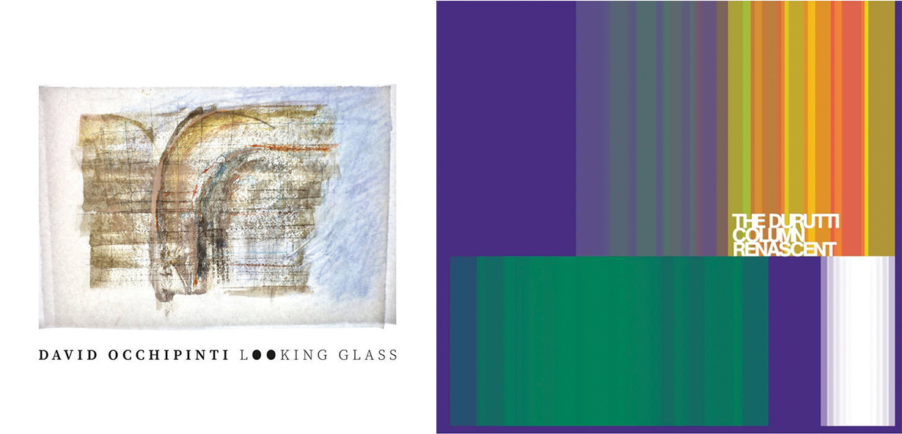
The Durutti Column, Renascent (London Records)

Here’s a band name you’ll want to keep handy in your brain if you often find yourself conversing with fans of artsy post-punk in the vein of this crew’s former Factory Records label-mates Joy Division, et al. Largely regarded as a solo vehicle for the classical-flavored noodlings of brilliant guitarist Vini Reilly (who’s alternately been called the Van Gogh and the Jeff Beck of post-punk, among other appropriately breathless outbursts of praise; he’s collaborated with Morrissey among others), the group is legendary among old-school British New Wavers and such, but, like Wire, they somehow never achieved the household-name status one would have expected. It’s been 14 years since the trio’s last album, 46 since their first, and Reilly’s ability has been affected by three strokes he suffered in 2010 and 2011, but this record is nevertheless a next logical step, a mature-minded collection filled with plenty of lush, bright, sweeping, epic, Orbital-like passages. Shame that the Great Unhelpful Algorithm that rules over us all has made Reilly basically invisible, but now you know, so please get to listening to him. A+

David Occhipinti, Looking Glass (Elastic Recordings)

The recipient of two Chalmers Arts Fellowships and a few Juno nominations, this Canadian composer/guitarist is said to have developed a genre-bending approach to his writing that “gestures toward several styles without comfortably settling into any.” Lots of other fifty-cent words in this one-sheet that sure look smart, and there are indeed some mildly surprising moments here and there, but to my ears this is a form of neo-classical that’s remindful of deservedly acclaimed soundtrackers like Thomas Newman (The Shawshank Redemption, Road To Perdition, etc.). The compositions can get pretty snooty, such as when mezzo soprano Alex Hetherington steps in to lay down some church-y Christa Ludwig epic-ness, but Occhipinti is an unconventional thinker, so it isn’t unusual to hear things (guitars, most prominently) that feel more like curveballs than classical obeisance; “The Frumious Bandersnatch,” his paean to Lewis Carroll, finds him emulating a bloopy synth with (I think) his guitar. A highly advanced classical tinkerer, let’s say. A

PLAYLIST

A seriously abridged compendium of recent and future CD releases

• Yep, this Friday is July 31, all that’s left of the summer is August, when the sun starts going down early and everyone starts in with how much they looove pumpkin spice, which is of course a Stockholm syndrome reaction to the fast-approaching ridiculousness of frostbite weather, like, everyone’s like “fall is my favorite season, don’t you love pumpkin spice and apples,” even though apples are hilariously common in New England, like they’re on half the trees and no one eats them because who even wants to, and pumpkin spice just tastes like fresh-squeezed allergy juice from concentrate. Toward all this horror, the unkindest cut of all came in early June, when I happened upon a giant Starbucks pumpkin spice display at Giant Box Store, which totally floored me, what on Earth are you people even doing, and furthermore, I — oh forget it, I need to get back to the business of this literal award-winning column, and oh just great, look what I have to deal with first, a new album from Wicked actress Ariana Grande, titled petal (in lowercase, not that you’ll find it stylized like that in any other publication other than Nylon), I can hardly wait to hear her new rock ’n’ roll song, for the twerking children! Yikes, what a mess, the advance music on YouTube is a shambles, just 20 seconds of the title track, and then a song that’s also claimed to be “petal” but isn’t, it’s actually called “in the moment” (lowercased again because yadda yadda) and it is gentle and Wicked-y and cultural appropriation-y for all the twerking children, who never heard a Mariah Carey or Beyoncé song before, don’t you wonder what passive-aggressive diva fights Ariana had with Elphaba behind the scenes of Wicked, I’ll bet there are stories to be told!
• The subject of my next live-reaction will be Virginia rapper-singer Shaboozey, who won some Billboard Music Awards (I’d assume because someone paid for those “honors” but who knows, right?) and a Grammy for his collaboration with Jelly Roll on “Amen.” His forthcoming new album, The Outlaw Cherie Lee & Other Western Tales, is largely being ignored on Reddit groups like r/Popheads except for a handful of breathlessly enthusiastic, totally obvious bots, but we will take this album seriously, because it is a country-hip-hop concept album, with videos, in which Shaboozey totally rips off the vibe of Sinners shows off his signature move of channeling Johnny Cash and Lil Nas X. Fine with me, the teaser stuff has a DMX flavor to it, I’d never complain about that, it is gritty and mean, it might be a good album, someone let me know!

• Dum-dee-dum-dee doo, heaven help us all, what’s next, ah, it’s trans Latina experimental composer/DJ Arca with her ninth album in 12 years, XXXXX! Her last one, 2021’s Kick IIIII, was Aphex Twin-like, so maybe this one is decent too. OK maybe not, the song samples consist of stuttering robo-noises with nary an actual beat to be found among them, but it’s not my place to question anyone’s taste.

• We’ll wrap up this remarkably forgettable week with Austin, Texas, indie band Shearwater, which came into being when two of the guys from Okkervil River left the band to play even wimpier music. The New World, the band’s 20th album, includes the single “Daydream Unbeliever,” which actually gets kind of heavy after a Bela Fleck-ish opening bit. I hate the guy’s voice, but your mileage may vary.

Featured Photo: The Durutti Column, Renascent and David Occhipinti, Looking Glass.

Upper Cut

I don’t think it’s possible to buy a bottle of grapefruit juice with bad intentions.

You walk up the juice aisle at the supermarket, thinking about important things, like what kind of animal you could beat in a fist fight. A poll a few years ago revealed that seven percent of American men believed they could defeat a grizzly bear in unarmed combat. (Shockingly, five percent of American women thought they could beat one up.) You aren’t part of that six percent, but you’re reasonably certain that you’re tougher than something — a koala bear, maybe, although that might involve more tree-climbing than you’re comfortable with.

At any rate, you’re walking up the juice aisle and you hear a bottle of grapefruit juice calling to you (in a metaphorical sense). So you buy the grapefruit juice, take it home with you, make one very good cocktail with it, then forget about it. Six months later you find it hiding in the very back of the refrigerator, and you spend the next 20 minutes doing internet searches to find out how acidic grapefruit juice is (It has a pH of roughly 3, for what it’s worth) and the odds of its having gone bad. In the end you pour it down the drain, apologizing to it, saying, “Sorry Buddy, it didn’t have to end this way.”

The point here is that unless you’re super-enthusiastic about grapefruit juice, you’re probably better off just buying an actual grapefruit and squeezing it for that drink.

  • 1¼ ounces Cointreau or other orange liqueur – Grand Marnier would work well, or a dry triple sec.
  • ¾ ounce cachaça, or flavorful rum
  • ½ ounce fresh-squeezed lemon juice
  • ½ ounce fresh-squeezed grapefruit juice (see above)
  • 1 teaspoon dehydrated grapefruit juice powder (optional) – available online, this bumps up the grapefruitiness of the recipe without throwing off any of your liquid ratios, if that’s the sort of thing you invest emotional energy into.
  • 1 dash Angostura bitters

If you actually have dehydrated grapefruit juice powder and are using it in this recipe, mix it with the cachaça at the bottom of a cocktail shaker with a long-handled spoon, until it is completely dissolved. Add some ice, and the rest of the ingredients, and shake thoroughly.

Ask your digital assistant to play “Tie Me Kangaroo Down”; not for any particular reason — it’s just a fun song, and this is a good excuse to break it out.

Strain the cocktail into a coupe glass.

Featured photo: Upper Cut. Photo by John Fladd.

Stay in the loop!

Get FREE weekly briefs on local food, music,

arts, and more across southern New Hampshire!