
Present at the creation

Peter Asher tells stories ahead of The Fixx and Zombies singer Blunstone

From lending Paul McCartney his family’s piano to write “I Want To Hold Your Hand” to discovering James Taylor and later staking his career on the future star, to later producing Linda Ronstadt and helping turn Laurel Canyon into a sound as well as a place, Peter Asher has earned a nickname in rock history: Everywhere Man.

Gratefully, the 82-year-old Asher loves to talk about his time as a performer, producer, manager, record company executive and A&R man. At an upcoming Tupelo Music Hall appearance he’ll tell stories and play songs he made with Peter & Gordon like “World Without Love” and “I Go To Pieces,” along with others he helped bring to life.

The Sept. 8 show touches on three separate rock eras: the 1960s British Invasion that Asher helped launch, and the rush of acts that came after, which included The Zombies; their lead singer, Colin Blunstone, is on the bill. Finally, New Wave is represented by The Fixx, who had hits like “Red Sky At Night” and “One Thing Leads To Another.”

As to how the trio of acts ended up touring together, Asher doesn’t have a tidy answer.

“We hope it fits,” he said. “It wasn’t my idea … by the time it reached me, someone was saying, ‘What do you think about this?’ and I went, ‘That sounds pretty cool — and odd.’” Rehearsals were due to start a few days after the interview.

Blunstone will play a solo set drawing on “She’s Not There,” “Time of the Season” and his early ’70s solo album One Year. The Fixx headlines, with the Reach the Beach catalog that made them MTV stars. Asher hasn’t seen them live until now. “I remember the records, and obviously the hits most of all,” he said. “I’m very excited about it.”

He and Blunstone have crossed paths, appearing on the same British television shows when both had hits in the ’60s, but this 19-date tour is their first together.

“I was a big fan of the Zombies,” Asher said. “Their songs are great, but also [Blunstone’s] voice is spectacularly good. I heard him sing not that long ago, and he sounded amazing.”

Asher’s set is divided between music and stories, the latter with plenty of sidebars.

“I often apologize for digressing too much on stage,” he said, but he receives the deference due to his vaunted history. “When I talk to the audience, they always kind of go, no, go ahead, digress — we’re interested.”

Some stories are never too old to tell, like the one about “You’ve Got a Friend,” famously poached from Carole King by James Taylor for Sweet Baby James after he saw her do it at L.A.’s Troubadour. Recently the story got an update, when King revealed that she’d written it in response to Taylor’s “Fire and Rain.”

“We had no idea,” Asher said, recalling the lyric that sparked King. “‘I’ve seen lonely times when I could not find a friend’ … Carole was basically saying, ‘No, you can find one. I’m here.’ Which changes the song immensely. When things like that happen, you go, ‘Wow, that’s a key improvement on the original story.’”

Peter & Gordon’s initial smash also makes for a fun yarn. McCartney wrote “World Without Love” solo and Lennon hated it. “John thought the opening line ‘Please lock me away’ was a ridiculous way to start a song, so I asked Paul if we could have it, and he said yes,” Asher recalled. “The Beatles were never going to record it.”

McCartney lived in the Asher family home at the time and was engaged to Peter’s sister Jane. Asher dismissed the idea that songs were a form of rent on his London room.

“They were fans of Lieber & Stoller, Mann & Weil, Goffin & King,” he said. “They didn’t think it was giving away songs … [it was] one of the roles they wanted to play.”

When Peter & Gordon’s first hit bumped “Can’t Buy Me Love” from the top of the charts, it delighted McCartney. “Eventually someone’s going to replace you at No. 1 because it’s an inevitable fact,” he told a journalist who’d asked if he was annoyed at being displaced. “It might as well be a song that you wrote. You’re still making money.”

Asher talks about moving to the U.S. solely based on his belief in an unknown Taylor — “I bet my career on James entirely with confidence” — and insisting, against the norms of the era, that Ronstadt’s own ideas about her music be taken seriously, rather than managed around.

The latter notion set Asher apart almost as much as his golden ear, and it helped give the world Heart Like A Wheel.

“She was allegedly ‘difficult’ for an artist, which only meant that she kind of insisted on things, or at least that her point of view and her ideas for a song be considered,” he said. “Some people thought it was their job to make those decisions for her … my instinct was that it was my job to make her decisions work.”

The Fixx, Colin Blunstone of The Zombies, and Peter Asher’s Songs & Stories
When: Tuesday, Sept. 8, 7:30 p.m.
Where: Tupelo Music Hall, 10 A St., Derry
Tickets: $75 and up at tupelohall.com

Featured photo: Courtesy photo.

The Music Roundup 26/09/03

Country pair: As summer approaches its unofficial end, Red Daisy Revival performs outdoors in the Lakes Region. Led by married duo Morgan Clark and Daniel Kassel, the band began during the pandemic and became a love story. They play upbeat, affirming country songs like “The Me I Wanna Be,” which proclaims in positivity, “You don’t judge my story by the chapter you walked in on.” Thursday, Sept. 3, at 6:30 p.m., Kelley Park, 41 N. Main St., Bristol, reddaisyrevival.com.

First Friday: A packed lineup of four local bands anchors a downtown party. Supernothing’s reggae rock provides a perfect excuse for wearing board shorts one more day. They kick things off in Bicentennial Square, followed by multi-genre organ trio J3ST. In front of the Statehouse, SuperBug offers “an energetic, hard-driving, funk-punk beat,” with Bosey Joe closing things out. Friday, Sept. 4, at 4 p.m., City Plaza & Bicentennial Square, Concord, firstfridayconcord.com.

Riot grrrls: Vermont-based feminist punk rock band Burly Girlies top a raucous bill with Snake Lips, Milk St. and 7/11 Jesus. Fronted by singer Rae Murphy, who started the band in an Essex Junction basement with bass player Morgan Vespa a few years ago, Burly Girlies evoke artists like Bikini Kill, Hole and Mannequin Pussy, and organize the biannual Femme Fest in Burlington. Friday, Sept. 4, at 8 p.m., BAD BRGR, 1015 Elm St., Manchester, $10, burlygirlies.bandcamp.com.

String thing: Multi-instrumentalists Gabrielle Macrae and Barry Southern perform as The Horsenecks at a brewery in Epsom known for its patronage of traditional music. According to their website, the Astoria, Oregon, duo’s sound “weaves through layers of influence that include early Appalachian stringband music, classic country, bluegrass and original folk,” with fiddle, guitar and banjo. Saturday, Sept. 5, 7 p.m., Blasty Bough Brewing, 3 Griffin Road, Epsom, horsenecks.net.

Good cause: Feast on unlimited barbecue, bid on a bevy of raffle items and enjoy music from Chris Gendron at the second annual Country Cookout for Charity. Held at a brewery born from restaurateur Michael Buckley’s love for western living, the event is a fundraiser for Tunnels to Towers, an organization begun after 9/11 to provide services to Gold Star and first responder families. Sunday, Sept. 6, at noon, Lost Cowboy Brewing, 546 Amherst St., Nashua, $75 ($25/child), 600-6800.

Toon time

A look at Coyote vs. Acme and Paw Patrol: The Dino Movie

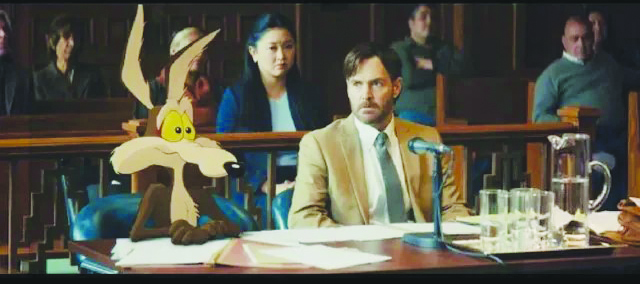
“It’s a limited number of signs,” as a sign held up by Wile E. Coyote explains regarding his verbal communication style, is one of the many good jokes of Coyote vs. Acme(in theaters) and probably a not unfamiliar situation in a world where human people and cartoons, some of whom do not talk, coexist.

After all, a limited number of signs is really all you need when two characters’ relationship is largely one individual (Coyote) devising overly complicated traps, often disguised with birdseed, to catch the other (Road Runner), who is never fooled and always runs off with a “meep meep” right before the trap somehow spectacularly blows back on Coyote. But when Wile E. Coyote brings his woes to human lawyer Kevin Avery (Will Forte) in non-animated Albuquerque, more detailed communication becomes necessary.

Kevin is part of the strip mall law firm of Avery, Jones & Maltese (a fun nod to old school Looney Tunes animators). His specialty is filing nuisance suits against the Acme corporation for injuries to Tunes from Acme’s cartoon products line. The plaintiff gets tossed a $200 or $300 payout and nobody has to set foot (or paw or hoof) in a courtroom. But Coyote’s mountain of defective Acme products could add up to a massive payday, which gets Acme lawyer Buddy Crane (John Cena) and even Acme CEO Foghorn Leghorn (voice of Eric Bauza, who does most of the Tunes in this movie) involved, terrifying the “we always settle” Kevin. The size of Coyote’s lawsuit also threatens to uncover bigger corporate malfeasance on the part of Acme.

We get a lot of the Looney Tunes greats in cameos big and small in this movie — Porky Pig, Daffy Duck, Bugs Bunny hanging out at a Carrot Festival, Tweety Bird forced to work for Acme, a mention of the court case Sylvester vs. Gonzales — but the Wile E. Coyote/Road Runner relationship is at the core, and it’s surprisingly sweet. It’s also fun that this movie, long-delayed by corporate nonsense, has such a plucky story to tell about standing up to a seemingly unbeatable corporation. And it delivers this message with a lot of goofy Looney Tunes antics, using the rubbery, indestructible nature of the Tunes as both part of the movie’s humor and part of the story’s plot.

As for the humans, Forte fits in well with the Tunes, delivering that Looney quality in his performance as an exasperated, always-on-the-back-foot character. Likewise, Cena is a perfect live action version of a cartoon villain, all too-massive smiles and perfect jaw line. Lana Condor, Tone Bell, Luis Guzman and Martha Kelly slide nicely into the high-joke-density toon-filled world, all doing a good job at giving just enough but not getting in the way of the cartoon hijinks.

While Coyote vs. Acme has some multi-generational appeal — cartoon fun for kids, nostalgia and sticking-it-to-The-Man (who is in this case a rooster) for older viewers — other recent animated release Paw Patrol: The Dino Movie(also in theaters) is more geared toward its core audience. The movie is essentially a long episode of Paw Patrol.That’s an 88-minute (according to Wikipedia) episode, with no commercials or pausing-the-TV for bathroom breaks and no toys for young Paw Patrol fans to play with during less interesting parts and also the Dinos of the title are movie-screen-sized, which seemed to, at first, fully freak out one of the kids in the theater where I saw this movie. All of which doesn’t make this movie inappropriate for Paw Patrol-fan-aged movie-goers, but these are things to consider when deciding whether this is a movie to see in theaters or wait to watch on a more manageable TV-sized screen. Also, the movie did not, at least through the first part of the credits, play the “no job too big, no pup too small” theme song, which felt like kind of a letdown.

Otherwise, this fully animated tale of the talking pups and their human boy leader Ryder (voice of Henry Bolan) finding an island filled with dinosaurs — and, as bad-guy Mayor Humdinger (voice of Ron Pardo) notices when he sees a report about it on TV, diamonds — is standard, crayon-colored, good-natured Paw Patrol content. We get introduced to a new pup, Rex (voice of Hayden Chamberlain), who has been stranded on the island for a while and helps take care of the dinosaurs. Wikipedia, and my own vague memories, indicated that both this pup and the general concept of the pups meeting dinosaurs has existed in Paw Patrol TV episodes, not unlike the plots of previous Paw Patrol movies. Fully new or not, this pup and his habitat are an opportunity for the existence of new Paw Patrol toys, which you might think of as “great, more plastic crap in my house” or “great! A new easy-to-find gift item!” — both valid opinions. The core pup in the spotlight for this movie is Marshall (voice of Carter Young), the Dalmatian firefighter pup who is tired of being thought of as “the clumsy one.” For adults, there are some nice voice cameos — Terry Crews, Fortune Feimster, Bill Nye. It’s all completely fine, for what it is, without really offering much for viewers outside the “all is Paw Patrol” phase of life.

Featured photo: Reacher, from season one of Reacher. He is possibly even larger now.

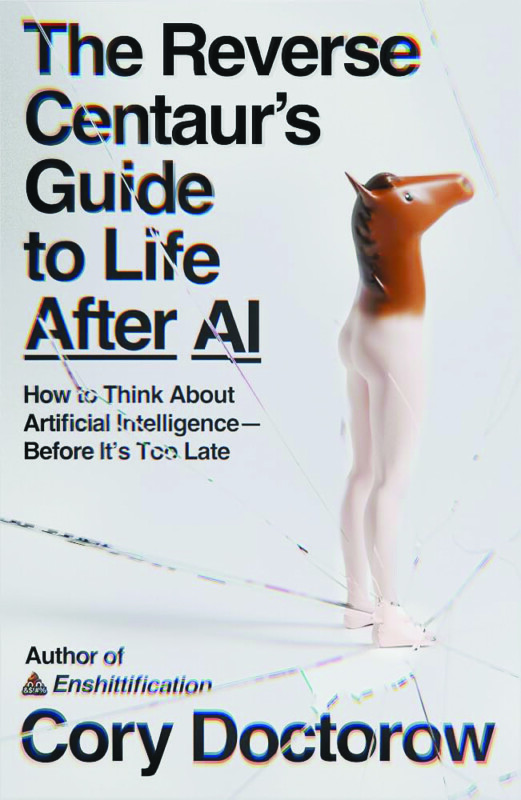
The Reverse Centaur’s Guide to Life After AI, by Cory Doctorow

(MCD, 240 pages)

Cory Doctorow writes with a cynic’s eye about the frontiers of technology, with titles including Information Doesn’t Want to Be Free, Chokepoint Capitalism and How to Destroy Surveillance Capitalism. Although he is primarily a writer of science fiction, he has opinions about how technology is changing society for the worse, and he scratches the itch to share those opinions with a popular newsletter and short books that double as grouchy sermons. Last year’s Enshittification is a good example: It’s about “why everything suddenly got worse and what to do about it.”

He’s back with something that reads like a sequel and brings to mind the old meme about honey badgers that don’t care. Doctorow doesn’t care if the titans of AI don’t like him. He doesn’t care if his clunky, insider-trading title repels potential readers. He doesn’t care if they sit, blinking, while he expounds on the minutiae of tech. He has stuff to get off chest.

For starters, the hype surrounding AI. Doctorow sees it as driven by “growth” businesses (meaning companies like Uber and Lyft, whose worth is calculated not by their current profitability but by their forecast growth) and companies that gleefully see dollar signs in every employee they can let go. “Your boss almost certainly loves AI. Bosses will not shut up about AI,” Doctorow writes.

That’s because, according to Doctorow, there is something of a symbiotic relationship between garden-variety employers and the tech overlords, with each one feeding the other. Tech companies need hype about AI to sustain the illusion of growth, which in turn balloons their profits; once a company is no longer seen as “growing,” it becomes what is known as a “mature” company. “If you’re holding a lot of stock in a growth company, you can certainly enjoy the ride up, but you need to sleep with one eye open and one fist poised over the sell button.”

He offers Meta, circa January 2022, as an example. The company reported “less growth,” which led to a $230 billion devaluation over the next 24 hours, the largest in history. Moreover, because stock options are a large part of the compensation of tech executives, they are not just professionally but personally invested in the market’s perception that the company is growing. This is among the reasons that Doctorow believes, “Even by the standards of tech bubbles, the AI bubble is a whopper.”

The title of the book derives from the tech-bros’ use of the word “centaur,” which in Greek mythology is a creature that is half man, half horse. In the tech world (and in automation theory), a centaur is a human aided by a machine; a reverse centaur, then, according to Doctorow, is a “human who is conscripted into acting as an assistant to a machine.” The “conscripted” part matters. Doctorow is no Luddite; he welcomes AI that is legitimately helpful to a human end; he has used, for example, an OpenAI technology called Whisper that can transcribe and search through downloaded audio, even though he calls the company behind Whisper “grossly overhyped and terrible.”

But there is a segment of the population who aren’t getting to choose how to use AI, but having AI foist upon them for aims that don’t sit well with Doctorow’s democratic-socialist heart. The plight of the Amazon worker comes up a lot, as does the perceived threat to the livelihood of a wide range of artists.

It’s not that the threat is entirely unsupported.

Feed a chatbot the storyline of any popular movie with a couple of key changes and it will spit out an entire screenplay in minutes. And unlike human writers, who are prone to complaining and striking and resisting changes ordered by producers and directors, the chatbot is serenely compliant. But Doctorow explains why the AI product is usually so unsatisfying: The product of any artist — from a novel to a sculpture to a symphony — is the physical representation of a “big, numinous, irreducibly complex feeling” in the artist’s mind, an idea the artist wants to convey. AI, on the other hand, “has no feelings, so it has no feelings to transmit,” and that hollowness comes through in the finished product.

All that said, AI is in its infancy and will improve, and does improve, according to the complexity of prompts it is given. And Doctorow writes all this cognizant that when photography emerged there were people who said it was hollow when compared to a painting, as was the reproduction of sound when compared to a live musical performance. (He notes that the famous composer John Philip Sousa was enraged when people started recording his music and distributing it; he warned about the “menace of mechanical music” and complained to Congress, “Today you hear these infernal machines going night and day.”)

And yet the problem is not so much that AI is flawed and soulless as it is that AI is being manipulated by capitalistic cartels, Doctorow believes, and so The Reverse Centaur’s Guide to Life After AI is very much a socialist manifesto that may not sit well with some whose political ideology runs counter to his. But there is a strong and growing backlash to AI even among fervent capitalists, so there will be an appetite for his recommended solutions “to strike at the source of AI’s power” by raging against the AI machine and its bitter, everyday fruits, like surveillance pricing.

Doctorow is a compelling writer and one of the most interesting thinkers in the world of technology, as such, worth paying attention to as we figure out what’s happening around us, and to us, as AI proliferates. In a world of reverse centaurs, be a centaur, is his message du jour. B+

Featured Photo: The Reverse Centaur’s Guide to Life After AI, by Cory Doctorow

Album Reviews 26/09/03

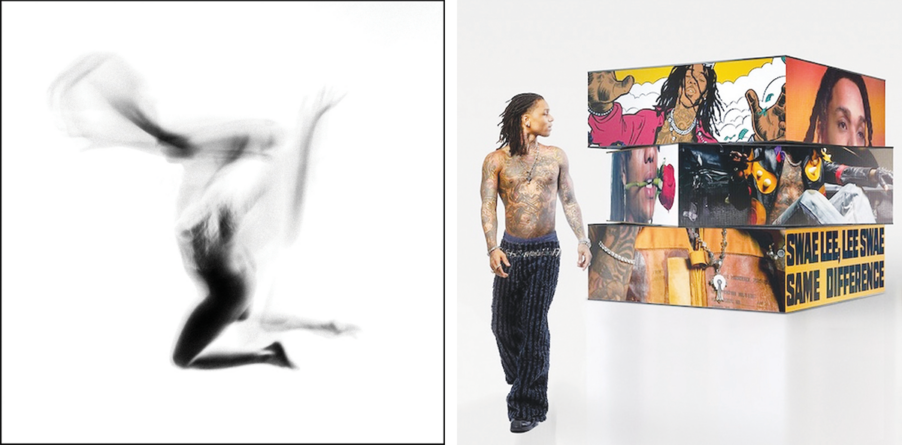
Swae Lee, Same Difference (Eardrama/Interscope Records)

Aw, there’s nothing horribly wrong with this LP, the second one perpetrated by the California rapper who’s one half of the Mississippi-based hip-hop duo Rae Sremmurd, which he formed in 2010 with his older brother Slim Jxmmi, who naturally gets a feat here (on “Working Remote”). Mostly the complaints are coming from people who thought the album was delayed for too long before its April release, which is kind of a whiny thing to fixate on, while others are of the opinion that Side 2 kind of sucks. But critical opinions of music do reflect the attitude of the critic, and it seems like many haters — OK, actually there hasn’t been a whole lot of hate, just accusations that Lee’s delivery is “lazy” (which they should have expected after his chart-topping duet with Post Malone in “Sunflower”), which I suppose is fine if you define focusing on decent, non-AutoTuned singing and having a genuine interest in substance over style as lazy. Nah, it’s probably more about the fact that he’s got a pretty bright future, what with Interscope being involved in all this. We’ll see, won’t we. A

Knots & Chains, Lone Assembly (Metropolis Records)

I really didn’t think this album, the first from Metropolis’s newly signed dark-synth quartet, was going to land any punches I haven’t heard before, but it actually does. For the first few minutes of opener “Call of the Swift” it’s fairly standard goth fare, heavy on the Depeche Mode, but by squinting my ears a little I caught a definite aura of Fields Of The Nephilim in there as well as some Bauhaus, and suddenly, then came the hook, a wide, epic affair that was a bit too morose for me to take too seriously but does work for what it is. What these guys are good at is introducing a tune as a stripped-down, Factory Records-ready gloom-dance exercise and then pouring on the synth layers to make pretty freaking sparkly choruses. They compare themselves to The Editors, which I didn’t really hear; for example the push single “In The Open,” while far from a songwriting masterpiece, comes off like something that was left off the soundtrack for The Lost Boys. They’re definitely on the right track and have played at enough big European festivals to help them know what they want. A

PLAYLIST

A seriously abridged compendium of recent and future CD releases

• The next Friday for new music releases is this one, Sept. 4, a great day for throwbacks, like Dexys (formerly Dexys Midnight Runners), a band I’d assumed had fallen into a tar pit in the 1980s sometime after harshing everybody’s clubgoing experience with one of the dumbest songs in radio-pop history, “Come On Eileen,” you may remember it but I wouldn’t wish that on anyone. The singer had a voice like an actual horse, a whinny that no other singer reproduced until the guy from The Darkness showed up to put the kibosh on the arena-metal resurgence that was gathering strength during the Aughts, and then Greta Van Fleet crawled out of some Dearborn, Michigan, swamp to finish the job, shamelessly ripping off random bits of Led Zeppelin’s oeuvre without adding a single atom of originality, and that takes us to now, with bluesy arena-metal having been destroyed again a la Jason Voorhees from the Friday The 13th films, until the next doomed reboot. Ironically enough, Dexys has a guy in their band who looks a lot like the singer from Greta Van Fleet, or at least he did before the band got old and gray and plush, nowadays all those guys look like famous TikTok dad-joke specialist Dan McFarland, the guy who does gag loops like bringing his own tape measure to Home Depot and the one when everyone in the family ducks for cover behind couches and chairs when he sneezes, because when an old dad wearing comfy New Balance lawn-mowing sneakers sneezes it produces Super Typhoon-level winds (nowadays if the missus and I are in Hobby Lobby for some ungodly reason and I have to sneeze, I rear back like Daenerys Targaryen’s dragon from Game Of Thrones and see if I can make all the unpainted birdhouses on the shelves rattle). Right, where were we, oh, the band goes by simply “Dexys” nowadays, and has since 2003, after founder Kevin Rowland failed twice to revive the band, which had broken up in 1985. Maybe there’s some character to be found somewhere on the band’s fast-approaching new album, LOVE, let me listen to the new single, “You’ve Got The Love.” Yikes, this sounds like Paul Anka covering a 1970s disco song in Las Vegas, why doesn’t the singer sound like a horse, what is even going on in this world anymore.

• As everyone knows, the Hannaford supermarket chain has not one but two national anthems. Every time you go into one of those places it’s like you suddenly went back in time 25-plus years, as you’re guaranteed to hear them both: Natalie Imbruglia’s 1997 anxiety-triggering hit “Torn,” followed by Michelle Branch’s 2001 angst-a-thon “All I Wanted” shortly afterward. There’s some sort of behavioral experiment involved there, maybe some subliminal message meant to convince us that we should buy organic avocados or something, and it’s really gotten dated-sounding, so hopefully they’ll switch to something from Algorithm, Imbruglia’s new album, due out Friday. Right, the title track has the same beat as Men Without Hats’ “Safety Dance” and sounds like it was left off Madonna’s “Vogue” album, so probably forget it.

• Black Bananas is a trio founded by former Royal Trux singer Jennifer Herrema. The band’s first LP in 10 years is Bad Bunch, whose single “Turkey Burgers” has the same sweeping vibe as M83’s “Jessie And Kim” if you like that kind of stuff.

• We’ll close with Australian indie-folk siblings Angus & Julia Stone’s sixth album, Karaoke Bar. This one’s title track is slow and gloomy, sort of like if Bon Iver and Sigur Ros had a baby, I can’t stand it myself, but you do you.

Featured Photo: Stryper, Throne Of Thorns and Brennan Wedl, Brennan Wedl

Fresh Corn Muffins

  • 1 cup (120 g) all-purpose flour
  • 3 teaspoons (= 1 Tablespoon) baking powder
  • ½ teaspoon salt
  • ¼ cup (1/2 stick) butter
  • ¼ cup (50 g) sugar
  • 1 egg
  • 1 cup (227 g) milk
  • 4 cups (112 g) cornflakes
  • 1 cup (160 g) fresh corn kernels – 2 to 3 ears
  • 1 to 2 jalapeño peppers, finely chopped

OK, let’s talk about the jalapeños.

Yes, this is New England, and traditionally people here are nervous about spiciness. The odds are someone in your family is uncomfortable with the idea of putting salt and pepper on their sweet corn. But in the grand scheme of things, let’s face it, a jalapeño is not a life-changingly hot pepper. On top of that, the jalapeños in our supermarkets are especially mild.

Cut one of the peppers in half, then cut a tiny sliver from its side and taste it.

Not terrible, right?

It is? OK, feel free to use a small handful of diced bell pepper instead. It’s better to make a toned-down version of these muffins than to live in fear. (The rest of you, please use the jalapeños.)

Preheat the oven to 400°F. Line 12 muffin tins with paper wrappers.

In a small bowl, mix the dry ingredients — the flour, baking powder, and salt. (Sugar behaves strangely and is, for whatever reason, considered a wet ingredient. Even though it’s dry. Because, reasons.)

With your electric mixer, beat the butter and sugar together, then beat in the egg. Add the milk and cornflakes, and mix it for another minute or so. Spoon in the dry ingredients, and mix until it all just barely comes together.

With a large spoon or a silicone spatula, stir in the fresh corn and jalapeños.

Divide the batter between the 12 muffin cups, then bake for 25 minutes. Let them cool on the counter in the muffin pan for a few minutes. I’m always a little nervous about “What if these are done on the outside but gloppy in the middle?” Something called carry-over heat will take care of that.

Featured photo. Photo by John Fladd.

Stay in the loop!

Get FREE weekly briefs on local food, music,

arts, and more across southern New Hampshire!