Comicon comedy

Jay Chanoine headlines Queen City Center afterparty

As his comedy special Chanoinigans hit YouTube on Halloween Day last year, Jay Chanoine already had enough new material for a follow-up. A week later he flew south to do a half hour of it at the Altercation Comedy Festival in Austin. His headlining set got a standing ovation.

Chanoine will debut the full special Sept. 19 at Queen City Center.

“I think this is the strongest hour of material that I’ve ever written,” he said as he prepared to do a quick set for a food pantry benefit at Manchester’s Shaskeen Pub recently. “I am so proud of this new batch.”

The show is the latest in a series harkening back to a weekly comedy night at the Shaskeen, where Chanoine did his first open mic in 2009. Matt Barry, another comic who also started there, though a bit later, also appears, with Brienna Woodward rounding out the bill.

Future shows in the QCC series, booked by Nick Lavallee’s Wicked Joyful, include Kendall Ferrall on Oct. 3, Sam Jay (HBO, SNL, Netflix) on Oct. 21, Alex Giampapa on Nov. 21, and two nights from Tina Friml (Comedy Central) on Dec. 11 and Dec. 12. A New Year’s Eve bash is also slated, with a lineup still being finalized.

Chanoine’s show is also part of Granite State Comicon, and telling jokes is only part of what the confirmed pop culture nerd will be doing at the event. He’ll also moderate a few celebrity panels, including one with Felicia Day, whose movie spinoff from her gamer-themed series The Guild just broke a Kickstarter record.

Additionally, he’ll run panels with voice actors from Teen Titans and the Grand Theft Auto 5 video game.

“My personality has two sides; take a comic book and a comedy stage and put them together,” he said. “I’ve wanted to do a comedy show to tie into Granitecon for years — because that’s me, man, and those are my people. Get them in a room where I can do jokes for them.”

The show starts promptly at 6:30, with doors at 6, and there’s a reason for the early start.

“They always do an after party at Shaskeen on Saturday night at 8,” Chanoine said. “Comicon stuff ends at 5, so there’s this gap in the middle of your nerdy Saturday. I was like, let’s give them a nerdy thing to come do in between.”

It caps a big year that included a trip to Alaska for the Before You Die Festival.

“The people that run it are friends of friends; we’ve been connected online,” Chanoine said. “It’s been a destination thing that I wanted to do eventually, and this year they were saying it might be the last one. I was like, well, I need to go, to cross it off the list.”

He’s not surprised to be one of a few Shaskeen comics — Barry’s another — to still be around many years later.

“I definitely knew I’d still be doing it at this point,” he said. “I mean, the first time I did stand-up, I was 12 years old. It was something I’d been in love with since I was about 6 or 7. I always wanted to be the funny friend, I was always cracking jokes and trying them out on different groups of friends.”

By the time he stopped playing in punk bands and walked on stage at Shaskeen for the first time, he was more than ready.

“I was already in that writing process. I was already doing it, and turns out part of it was just that I was an undiagnosed autistic kid, and I was trying to kind of formulate this practiced personality.” When he was diagnosed in 2024, it was more confirmation than revelation, and his doctor said he might not want to make it official. Nope, Chanoine replied. “I’m going to need there to be a piece of paper for me to talk about this on stage as much as I plan to,” he told her. “I’m going to need us to be 100% sure before I make fun of this disability.”

Even with that medical stamp, his new special is consistent with Chanoine’s 17 years as a standup.

“It’s always been, just take this,” he said, with a smile stuck between amused and incredulous, waving at his oversized glasses, worn-in Misfits T-shirt and red plaid pants, “and put it into a microphone. And it’s definitely more of that.”

Jay Chanoine, Matt Barry & Brienna Woodward
When: Saturday, Sept. 19, 6:30 p.m.
Where: Queen City Center, 215 Canal St., Manchester
Tickets: $20 at wickedjoyful.com

Featured photo: Jay Chanoine. Courtesy photo.

The Music Roundup 26/09/17

• High time: With an uncanny resemblance in both looks and voice, Remembering John Denver features singer-guitarist Ted Vigil paying tribute to the folksinger. His act has earned praise from members of Denver’s own band. Vigil’s lively set runs through classic songs like “Take Me Home, Country Roads,” “Leaving on a Jet Plane,” “Rocky Mountain High” and “Calypso.” Thursday, Sept. 17, 7:30 p.m., Palace Theatre, 80 Hanover St., Manchester, $40 and up, palacetheatre.org.

• Swede shred: Amidst a tour modestly called Freedom World Crusade, Swedish metal band HammerFall stops in Derry for a show that includes fellow countrymen Evergrey. Led by founder Oscar Dronjak and longtime vocalist Joacim Cans, the band is closing in on three decades of its classic, powerful sound, with songs about medieval battles, fantasy figures, and Templar knights. Friday, Sept. 18, 7:30 p.m., Tupelo Music Hall, 10 A St., Derry, $50 and up, tupelohall.com.

• Nu thing: A weekend of nu metal and EDM, the Weirs Beach Music Festival is built around the Tool-loving 3 Degrees – A Tribute to Maynard James Keenan, which also draws from A Perfect Circle and Puscifer. The band performs at 7 p.m. on Sept. 19, but the event has more, including Charing Cross, Hollow Virtue, Frank EB and DJ MM3, as well as Big Stage Karaoke. Friday, Sept. 18, through Sunday, Sept. 20, 7 p.m., Big House, 306-322 Lakeside Ave., Laconia, bighousenightclub.com.

• Multi core: A bill crowded with heaviness is topped by Texas hardcore stalwarts Soul Exchange, whose latest single “Cash and Cold Hands” packs a punch — one fan described it as “moshing with chains.” Also performing at the all-ages show are Pure Bliss (characterized as “boulder-crushing”), Wise Choice, Infernal Diatribe, Selfish Act and Montreal alt rockers Tarbox. Saturday, Sept 19, 7 p.m., Bungalow Bar & Grill, 333 Valley St., Manchester, $15, @bigboybookings.

• Dog day: Motley Mutts Rescue holds its fifth annual MuttFest, with music from Nightshade & Gold singer Lauribeth, Jimmy & the Barhoppers and Chasing Ghosts. With a mission “to help dogs in need by providing the highest quality care on their journey to an approved forever home,” the organization works primarily with dog rescuers in the South. The event has raffles, food trucks and beer. Sunday, Sept. 20, noon, 603 Brewery, 42 Main St., Londonderry, motleymuttrescue.org.

More of that

Alan Ritchson is always good for an Alan Ritchson type

Playing into that one character you always play might not be the way to blaze a path to an Oscar, but it does seem to be a good strategy for earning a regular paycheck.

Take, for example, Alan Ritchson, traveling butt-kicker Reacher in the Prime Video series Reacher. In addition to playing a large man who has a code and beats up bad guys in that series (which ends its fourth season this week; a fifth season is expected, according to Wikipedia), Ritchson plays a large man who has a code and beats up bad guys in Runner, released in theaters last week, less than two months after the release of Motor City, another movie where he plays a large man who has a code and beats up bad guys.

Hank (Ritchson), who has a “big guy” name, as Owen Wilson’s Ben says, is a courier, running things both legal and legal-status-unknown around Brisbane, Australia, where he lives and works on his sobriety. He is charged with picking up a medical package at the airport, which is where he meets Ben, who explains that he, Ben, is part of the medical package. The item is a secured cooler keeping a liver viable for a sad little girl who needs a new liver and Ben is the guy who knows how to keep it at the right temperature and knows the code to open it.

Things immediately start to go wrong with this assignment as Hank realizes that he and the aggressively chatty Ben are being followed by two SUVs full of bad guys. Soon the shooting and car chasing and occasionally some punching and kicking get underway as Hank and Ben try to race the organ to an out-of-town hospital before it loses viability while a cartel boss’s desperate, sweaty son (Rodrigo Santoro) attempts to hijack it for his mother’s own use.

Just to really hammer home that all of the violence Hank and Ben participate in is For A Good Cause, we see the sick kid and her mother regularly and we spend a little too much screentime on Hank’s sad backstory with his own sad sick daughter. And if that doesn’t do it for you, the movie really underlines the Extreme Danger and Extreme Heroism by scoring a lot of the action with music that feels like it was maybe left over from some Angel Studios’ biblical epic’s battlefield scenes. (Angel, which I know largely for its Christian and Christian-adjacent films, is this movie’s distributor and apparently has also started to release some less overtly faith-based movies. TBD on what all that means.)

Not unlike other movies I talk about here, Runner piles on a lot of unnecessary story elements for its characters — Santoro’s character has a difficult relationship with his mother! Hank is still sad about his failed marriage! These little extras aren’t needed because this movie’s core — overly talkative regular-guy Ben and strong silent type Hank — is very charming. They have good “guys who become buddies doing a task” chemistry, their respective skills help give energy and the right amount of humor to the action scenes. When the movie just gets out of their way, turns down the score and lets them do their things — Ritchson’s Reacher variant, Wilson’s Owen Wilson variant — we in the audience get the fun popcorn time the trailer promises.

In July theatrical release Motor City (available for rent or purchase), Ritchson, playing Vietnam vet and lunch-box-toting factory worker John Miller, is less crackling but still fun to watch. This action-revenge movie of few words lets 1970s production design, costuming and songs do most of the talking. Moments after Miller proposes to girlfriend Sophia (Shailene Woodley), cops are blasting smoke bombs into their home. Sophia and Miller end up under arrest, with police pulling bricks of cocaine out of his car, the car that hours earlier was briefly stolen from him. As we see in flashbacks, before she was with Miller, Sophia was the girlfriend of drug muckety muck Reynolds (Ben Foster) and now Reynolds, with the help of dirty cop Savick (Pablo Schreiber), is getting Miller out of the way. Miller goes to jail and Reynolds goes to Sophia, re-endearing himself to the woman who felt so betrayed by Miller. When she discovers Reynolds’ treachery and he gets violent, Miller’s friends (played by Lionel Boyce and Amar Chadha-Patel) break Miller out of prison to rescue Sophia.

Motor City is aggressive about its stylishness, from its slo-mo-enhanced action choreographed to Fleetwood Mac’s “The Chain” to every choice made with Woodley’s hair. It is very self-consciously Doing A Thing, which I found entertaining mostly and kind of endearing even when it felt like it tipped into A Little Much territory (which for me was when “Nights in White Satin” appeared on the soundtrack). For me, this movie boiled down to the appeal of Alan Ritchson and how he dances through his fight scenes with balletic precision, taking just enough punches so we don’t think he’s a robot.

Ritchson, of course, isn’t the only actor playing his standard character and serving up action in recent releases.

Ryan Reynolds plays that one Ryan Reynolds character who is here a fighter pilot during the Top Gun-era Cold War in Mayday, an Apple TV movie. Troy (Reynolds) is tasked with operating the camera on a spy mission over Soviet territory. When his plane is shot down, he winds up behind enemy lines and is found by Nikolai (Kenneth Branagh), an American-culture-loving former KGB agent who insists on Troy calling him “Nik” and is delighted to have real-life Maverick in his house. When Troy nixes Nik’s suggestion that they just wait out the end of the Cold War safely in Nik’s cabin, the two have to work together to get Troy to safety without Nik being arrested for being a traitor. Chasing them down is Volkov (Marcin Dorocinski), a glasnost-hating KGB agent hoping to use this situation to return the U.S.S.R. to its former hardline glory.

That all of these characters seem more naive than they should be for who they are is probably my biggest beef with this otherwise good-natured, goofy caper-like movie. There is some silliness to the “Russians are people, just like us!” elements of Troy’s journey. But Branagh’s heft helps to cut Reynolds’ patter-based glibness and the result is a highly watchable light bit of comedy.

Also playing his one character is Jason Statham in Mutiny, an August release that showed up last week on VOD for rent or purchase. Statham is Cole Reed, a former British military guy and also former British cop who is now the bodyguard for a shipping magnate Tibu (Ramon Tikaram), who treats Cole like family and buys him a fancy watch and is the stand-in for Cole’s cop father, who died during a police raid or something and Cole feels responsible and this is way too much backstory for a movie that was trying to sell itself by boasting it had the same director as Plane. Plane got right to the Plane of it all. Mutiny takes too long to get us in an actual ship on the actual water. The action kicks off on dry land when Tibu, who is about to sell his company, is ambushed. Cole nearly gets him to safety but Tibu is shot and has just enough time to say “take care of my crappy adult son” (not an exact quote) before dying. Cole then seeks the men who killed his beloved employer, which leads him to sneaking onto a cargo ship. Also on the ship is Angie (Annabelle Wallis), the third mate, who has her own irrelevant backstory. These are the good guys on the ship; everybody else (captain played by Roland Møller plus a bunch of henchmen I couldn’t keep straight) is a bad guy. What Cole and Angie, separately at first and then together, discover is that the ship is part of a human trafficking operation and some of the refugees aboard this particular ship are in dire need of medical attention. To get the help they need, Cole and Angie will need to kick, punch, shoot and stab their way through the bad guys.

There is one particularly fun scene of balletic hand-to-hand combat featuring Statham near the movie’s end. It stood out to me for how much more interesting it was than most of the action that preceded it. Statham does a lot of his Statham thing but the movie doesn’t have the fun this kind of action-focused affair should have. We are watching Mutiny for Mutiny, and all that implies in terms of sassy one-liners and creative violence, not a rumination on father-son relationships and not a study of the different ways human traffickers can be bad. A movie like this can put its characters in scary settings with bad people, and those characters should take it seriously, but the movie where a guy fights another guy with a giant hook shouldn’t take itself so seriously or weigh itself down.

I feel like recent Amazon Prime Video release The Runner also had action-entertainment potential, but it just doesn’t work, I think this is in part because the movie has no faith in itself or in lead Gal Gadot. In a movie that feels like smooshed together bits of other movies, Gadot plays Maia, a London prosecutor and single mom to diabetic kid Noah (Rory Wilmot). She drops her son off at school and then goes on a run before a big day in court where she’s meant to question the one witness who can put away the criminal on trial. Early in her run, she gets a call on Noah’s phone from a man (Damian Lewis) saying he has Noah and needs her to do exactly what he says if she wants to see her son alive again. Naturally, the task is killing the witness and she has about an hour to run a needlessly far distance to his hotel (no Uber in London?) and get the job done before Noah dies of the diabetic coma Damian Lewis (called simply “The Caller” on IMDb) has put him in.

Most of the action is Maia running through the city while talking to Damian. Along the way she tries to figure out how to tell someone what’s happening. This story feels like a copy of a copy of some similar movie that would have starred, for example, Jason Statham, but the movie never figures out a clear lane to stick to — is Damian Lewis a creepy sadist who gets his kicks from this or a professional just doing a task? Is Maia just a regular-lady mom trying to save her son or does she have some weird violent past? Or is Gal Gadot just so unsuited for this part, however well she might physically sell the action elements, that the movie doesn’t know how to compose her character? I vote for that option. One of the many signs of the movie’s total lack of faith in Gadot is the strange close-ups, shaky cams, slo-mos and other camera effects applied to Gadot, particularly in scenes where you might need an actor to convey an emotion. You get the sense that either Gadot couldn’t portray, like, panic or rage, or the moviemakers decided to add the character’s emotions in post. Either way, it highlights the overall limpness of her performance and adds to the “cheap story told cheaply” feel of the whole endeavor.

Featured photo: Motor City.

The Jellyfish Problem, by Tessa Yang

(Berkley, 373 pages)

You’d never know it from the title, but Tessa Yang’s The Jellyfish Problem is a good, old-fashioned ghost story, the kind to lose yourself in on chilly weekends in October when you’re not out pumpkin spicing or leaf peeping. It’s a bit fantastical, as ghost stories usually are, and asks us to care a bit too much about an invertebrate that lacks a brain and heart. But this is a mystery/thriller informed by marine science, and we will learn about jellyfish whether we want to or not. The author, Tessa Yang, clearly intends for us to appreciate jellyfish more after reading her debut novel, but that may not be the effect.

Dr. Jo Ness is a marine biologist who has been obsessed with jellyfish since childhood, when she came across one at the beach and admired “a raw gray thing slouched on the sand like an angel’s lung dropped from heaven.” All grown up now, she worked her way into a job at a struggling aquarium where she tends jellyfish in the first, tiny stages of life while working on a book about jellyfish with her best friend — a brash South American scientist named Aldo who has a remarkable resistance to animal venom.

Jo, who always said she liked jellyfish more than people, made an exception for Aldo, but he died in a scuba accident seven months ago, and Jo is still mourning. They were diving together but became separated in poor visibility, and Jo is wracked by the sense that she was responsible for Aldo’s death.

His loss was the second blow since she finished college: The first was becoming estranged from her college best friend, Nadia, a woman with whom she thought she had the makings of a romantic relationship. But Nadia went AWOL after commencement and they haven’t spoken in 11 years. She knows nothing about Jo’s current life other than that she had been obsessed with jellyfish. Then she unexpectedly calls and tells Jo she is living on an island off the coast of Maine and that they have a “jellyfish problem.”

Nadia doesn’t offer much more information and admits she hasn’t seen the creature herself. But Jo, listless and miserable since Aldo’s death, has plenty of accrued leave and books a cross-country flight, interested not only in the mysterious jellyfish but also in the possibility of rekindling her relationship with Nadia, or at least learning why it abruptly ended.

What she finds there, however, is nothing she expected. Nadia is happily married and nowhere to be found. The jellyfish is singular, not plural. It is said to be a massive, brightly colored, luminescent creature that appears for three days at the time of the full moon and has a strange effect on the locals who see it. They regard the jellyfish as not a fascinating object of study but a literal sea monster, the kind that Jo’s Japanese mother used to tell her stories about when she was a child.

Complicating matters is the geographic isolation of Shattering Point, “800 acres of spruce forest and granite shorelines and bracing, choppy waters that deter all but the gutsiest swimmers.” Twenty-two miles off the Maine coast, the island is reachable by ferry twice a week, but only during the summer season. Other times, to get on or off the island, you have to take an air taxi or catch a ride with the mail boat, which only goes out once a week.

Even though the island relies on tourists during the summer, Jo is not universally welcomed. Some of the islanders are hostile to her, and as she tries to find Nadia and unravel the mystery of the jellyfish, which the people of Shattering Point call Clementine, there is a bitter divide about what should be done about the jellyfish. The danger is not exaggerated or imagined: People are physically affected by even seeing Clementine, and one man has to be hospitalized.

That said, Clementine is not the ghost of this story, but an apparition that Jo begins seeing, which she understands to be a yōkai, a supernatural being that her mother used to tell her about.

The relationship Jo has with her mother is one of the many layers in the story: Her father, who used serve as an intermediary of sorts between mother and daughter, is dead, and their relationship is both distant and fraught, in part because the mother is resistant to her daughter’s sexual orientation and had been hoping that Jo would marry Aldo.

Each chapter of The Jellyfish Problem begins with an excerpt of the book that Jo and Aldo were writing, which serves not only to only impart jellyfish information but also to give us a glimpse of the closeness between the two. The conversation in the document’s editing notes grows poignant over time, and Jo begins to speak to her dead friend in editing mode, as if hoping he could see it. It’s a small but smart thing that Yang does to break up a novel that can feel overly long at times, especially when the suspension of disbelief is called for repeatedly.

When the explanation of everything arrives, it is — well, let’s just go with unusual: perhaps not wholly satisfying, but consistent with the novel’s intelligent foundation and supernatural overlay. The quirkiness of the story, however, is eclipsed by the gorgeous writing. Yang has the voice of a poet and hardly a page goes by without some elegant sentence construction that makes you take note of its grace. Give her bonus points, also, for assigning a cameo role to the University of New Hampshire. Wildcats beat jellyfish every time. A

Featured Photo: The Jellyfish Problem, by Tessa Yang

Album Reviews 26/09/17

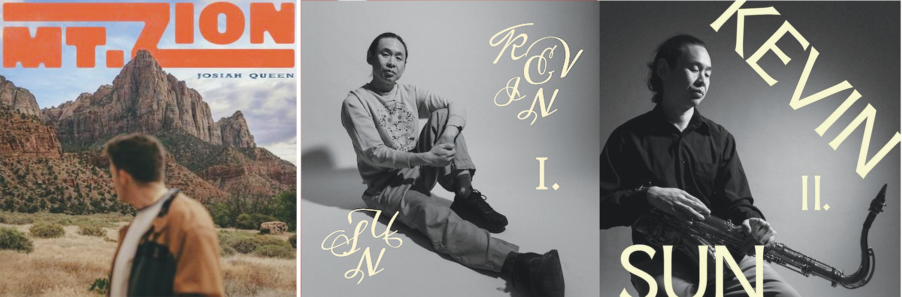
Josiah Queen, Mt. Zion (Capitol Records)

Some weeks I take ’em as they come, and even though I reviewed the new Stryper album just a couple of weeks ago, another Christian rock album gets an ups today, the newest (it’s from last year but his people want me to talk about it, and I’m an easy mark today) from a 23-year-old Christian rocker from Florida who’s had two albums go platinum. I’m not religious at all but do have a weakness for Christian rock (I told you before about that live version of Brandon Lake’s “Resurrection Power” that’s so awesome I can barely stand it, even if I suspect it’s a ripoff of something decent from Creed, not that I’ve heard more than two Creed songs, the second of which only insulted my ears because I was accidentally watching wrestling). Before we proceed, I think this kid’s name is hilarious, like I’ll bet that in the 1970s half the garage bands in America thought about naming themselves “Josiah Queen” and may have even mocked up a logo, but musically this particular Josiah is big into Zach Bryan on the cool-breeze heartland-banjo-rock side and Mumfords and Kings of Leon on the arena-bombast side. It’s all awesome, and, I’m sure, like all Christian rock, blatantly stolen from different places, but hey man, the good kids do deserve their heroes, I suppose. Oh, and yup, my aforementioned home-dog Lake sings on here too (“Can’t Steal My Joy”). A

Kevin Sun, Kevin Sun I/Kevin Sun II (Endectomorph Music)

A lot of self-exploratory artistry for a bro to process here, in the form of two simultaneously released albums and you can just belay the snark about the economic sense of releasing two separate discs as opposed to a single two-disc digipak because I don’t want to hear it. In fact, this jazz saxophonist knows you were going to open your yap about it, and his excuse is that, and I quote, “it’s more like a pair of video games set in the same universe, each with its own style and cast of characters.” Regardless, we can cut him some slack, firstly because each disc has a different threesome backing the man (led by pianist Christian Li on the more reflective II and guitarist Max Light on far more animated I), and secondly because the guy’s a genius, pulling stunts like hammering a waltz into a busy 4/4 (Ryuichi Sakamoto’s “Chanson”) and wedding ever-increasing tension to ever widening thickness in the aptly titled “Hold Music.” One not to miss. A+

PLAYLIST

A seriously abridged compendium of recent and future CD releases

• Onward we trudge into the yawning black hole that is popular music in America this year (which I believe the Chinese have dubbed The Year Of The Xenomorph), as we look at the new CD releases of Friday, Sept. 18, from as sensible a distance as possible. Long list of new ones this week, which, to my delight, is indeed so big that I don’t have to bother sampling anything from Neil Young’s new album, Second Song, with his new band The Chrome Hearts, I’ll take the good news wherever I can get it these days; I assume it’s the usual bunch of messy, off-key-sung tunes featuring our gimmick-voiced hero grousing about Trump or AI or whatever he’s been mumbling about lately while not actually doing anything about all the nonsense, what would we do without rock stars making half-cocked sociopolitical statements, folks, I ask you. But more relevant to Generation X, the generation currently running the country from the C suite, we have a new album titled Apples For Isaac coming out from Liverpool, U.K.’s Echo & the Bunnymen, whom I’m still mad at because several years ago I had mooched passes to a show they were playing in Boston (I think it was at The Paradise club), and I drove there because my wife would rather get dental work than drive in Boston, and we got there a little late and hence they wouldn’t let us in, I assume because we missed one of the two songs they play that more than three people reading this could identify by name (before you start racking your brain, you’re thinking of “Killing Moon,” which you misidentified as being a Cure song the first 20 times you were exposed to it). Nevertheless I have never been mean to the band in these pages, unless you count the last paragraph, at least not that I can recall, and the singer and guitarist are still on the team, so I will give the new single “The Light That Surrounds You” a fair chance to impress me, let me move the barf bag closer to my Golden Sculpted Throne of Judgment, OK all set. Oh, what even is this, it sounds like Franz Ferdinand in trudgy-boring mode, why on Earth are they trying to be relevant in this century? If you were at their show at Boston’s Roadrunner club in June and they were playing this song, trust me, it was one of the times you were like “OK” and got in line at the bar for drinks, waiting for a song you actually know.

• Fans of hilariously overrated arena-rock superstars Queen have something to celebrate this week, as their drummer, Roger Taylor, drops new album Violence Insane In A Beautiful World. I assume he’s only putting it out because Queen is more or less done, given that the band’s guitarist, Brian May, is an astrophysicist (remember when he wrote a book about the planets or something-something, did I review that one here when his people sent it to me? If not, it was really boring and not at all Carl Sagan-like) who doesn’t care about rock ’n’ roll anymore, leaving Taylor to sink or swim on his own if he spent all the money he made during their almost-listenable era, meaning the coda of “Bohemian Rhapsody.” Taylor’s new LP’s opening track, “I See You Now,” is David Bowie-ish but super wimpy and maudlin; it might interest your great aunt if she hasn’t been kissed since 1985.

• Carly Rae Jepsen sang “Call Me Maybe,” remember those days? Her new album, Day And Night, has a single called “We Get By (Day and Night)” that’s pretty decent, sort of Goldfrapp-ish and urban, I do like it.

• And finally, “unplugged metal” flamenco-guitar duo Rodrigo y Gabriela grace us with their newest full-length, OurHome. I’ve never been a fan of show-offy novelty acts and tend to lump these guys in with Buckets The Drummer, like I’d be more entertained if they wore rubber horsie heads as they played, but as usual the title track delivers its hard-driving whatever-it-is as succinctly as ever, you know, that “inimitable” Metallica meets Gene Autry vibe.

Featured Photo: Josiah Queen, Mt. Zion and Kevin Sun, Kevin Sun I/Kevin Sun II

A fall pudding

Traditionally the most fall-ish dish in New England was arguably this pudding. Over the past few decades it has slipped into obscurity, but it is warm and hearty and almost requires you to wear flannel. This recipe is adapted from a collection of holiday recipes that ran in the Boston Globe on Dec. 23, 1923.

  • 1 cup (156 g) yellow cornmeal
  • “A lump of butter the size of an egg” – let’s call it ¼ cup (½ stick)
  • “1 cup molasses” – Molasses was the inexpensive sweetener of choice in New England for generations. For modern tastes it is a little bitter. Let’s go half-and-half with molasses and maple syrup: ½ cup (170 g) molasses, and ½ cup (156 g) maple syrup.
  • 1 egg
  • 1 teaspoon salt
  • ½ teaspoon each ground ginger and cinnamon – alternatively, 1 teaspoon of pumpkin pie spice
  • 1 quart (4 cups/908 g) milk
  • 1/3 cup chopped, crystalized ginger (around 50 g)
  • Another 2 cups (454 g) cold milk
  • 1 cup (227 g) water

The original 1923 recipe recommends cooking everything on the stovetop, then baking it in a bean pot. If you cook it in an oven-proof pot, you can cook it, then move it to the oven. I like to use a 3-gallon soup pot with a tight-fitting lid.

Preheat your oven to 275°F — the 1923 recipe recommended a “slow oven.”

In your oven-proof pot, bring the quart of milk to a boil over medium heat.

Turn the heat down to medium-low, and whisk in the cornmeal, butter, molasses/maple syrup, egg, salt and spices. (If you’re worried about the egg cooking before you can get it mixed in properly, maybe stir it in with the molasses and syrup before you add them.) Whisk continuously until the mixture comes back to a boil and thickens up, then stir in the crystalized ginger pieces.

Mix the remaining milk and the water together, then gently pour them on top of the cornmeal mixture. If you pour it over the back of a spatula, it should go on top without splashing. Your goal here is to top the pudding with a layer of liquid.

Cover the pot with a lid, and transfer it to the oven. Bake it for four hours.

After the four hours are up, remove the pot from the oven, and set it aside to cool.

You can take the lid off and look inside if you want to, but be aware that at this point the pudding is the stuff of nightmares. A hundred years ago puddings were commonly made using a process called “wheying.” A pudding would be baked covered with a layer of milk — or even cream, if you were fancy. As it baked, the dairy fats and proteins would get absorbed into the main body of the pudding, leaving a layer of whey on top. It is supposed to be there. But to modern eyes it just looks wrong. It is better for your peace of mind not to look at it until the pudding has had a chance to meditate and self-actualize.

After half an hour or so, whisk the whey back into the pudding, then serve it warm, with a scoop of vanilla ice cream.

Featured photo. Photo by John Fladd.

Stay in the loop!

Get FREE weekly briefs on local food, music,

arts, and more across southern New Hampshire!