
The Weekly Dish 22/04/07

News from the local food scene

Greek eats: Get your tickets now for a Palm Sunday fish dinner to be held at St. George Greek Orthodox Cathedral (650 Hanover St., Manchester) on Sunday, April 17, around 11:30 a.m. after services. The dinner will be available for both dine-in or takeout, featuring meals of fish, rice, green beans, a salad and a roll for $20 per person. Pasta meals for kids are available for $8 each, and ice cream will also be served for dessert. Tickets must be purchased by April 14 — visit the church office any weekday from 8:30 a.m. to 4 p.m., or call 622-9113. In other Greek food news, Assumption Greek Orthodox Church (111 Island Pond Road, Manchester) is holding its next food fest on Sunday, April 17, at noon, which will also feature a fish dinner with both dine-in and takeout options. Online orders are being accepted now through April 11 for meals of baked haddock filet, rice pilaf, Greek-style beans and bread rolls for $20, as well as kids’ meals of fish sticks with fries or rice for $8. Visit foodfest.assumptionnh.org to place your order.

Pancake breakfast returns: Join the Amherst Lions Club for its 48th annual pancake breakfast and spring raffle, scheduled for Sunday, April 10, from 8 a.m. to noon at Clark-Wilkins Elementary School (80 Boston Post Road, Amherst). The cost for the all-you-can-eat breakfast is $8 per person or $25 per family of four or more, and kids under 5 eat free — this year’s menu will feature pancakes with fruit toppings and New Hampshire maple syrup, plus sausages, pastries and drinks like orange juice, coffee, tea and milk. An Easter basket will be raffled off, and children of all ages are invited to participate in a coloring contest, with prizes awarded for the best coloring in three age groups (ages 1 to 5, 6 to 10 and 11 to 15). Tickets will be available at the door or in advance online at e-clubhouse.org/sites/amherstnh.

Dinner and a show: Chunky’s Cinema Pub in Manchester (707 Huse Road) is hosting a Titanic Kitchen Takeover dinner and movie screening on Sunday, April 10, featuring Chef Keith Sarasin of The Farmers Dinner. The movie will begin at 6 p.m., with a five-course farm-to-table menu served throughout the evening of items inspired by what was served on the Titanic back in April 1912. The cost is $75 per person and includes the meal and the movie screening. An optional VIP package with wine pairings is available for $110. Visit chunkys.com.

Wine all you want: Vine 32 Wine + Graze Bar, a new self-serve wine bar featuring more than two dozen rotating wine options sourced from all over the world, recently held its grand opening celebration in Bedford Square (25 S. River Road). It’s owned by Bedford couple Leah Bellemore and her husband, Tom — wines are available to sample out of Italian-made self-serve Enomatic dispensers, which are able to preserve them for up to 65 days. Staff members known as “wine liaisons” are also on hand to help you use the machines. “This is really more of an approachable way to just figure out what you like,” Leah Bellemore told the Hippo earlier this year. “Since they’ll be rotating, you can try something new every single time you come in, and really be able to expand upon what you might not even know your preference could be.” In addition to the wines, Vine 32 offers a food menu of charcuterie boards, flatbreads and sweeter items like macaroons and truffles. Visit vinethirtytwo.com.


On The Job – Dina Akel

Dina Akel

Fashion director

Dina Akel is the fashion director and owner of Preowned Gowns, a boutique in Nashua selling overstock, discontinued and gently used designer dresses.

Explain your job and what it entails.

We sell overstock and discontinued luxury dresses for a discount. My job is to make sure that every client who comes through our doors finds the perfect dress for whatever their occasion is. As a stylist, I get to gauge clients by asking about their preferred silhouette, fabrics, colors and budget so that I can properly recommend dresses for them. I make sure to provide a fun and comfortable experience to make sure everyone feels extremely special and taken care of.

How long have you had this job?

The business was started in 2020, solely online. We just opened up our [brick and mortar] store in mid-November 2021.

What led you to this career field and your current job?

I was actually in the bridal industry for about five years prior. … Most [wedding gown] shops have to carry all the newest fashion trends, and rarely do they sell 100 percent of what they purchase every year. I noticed that, over time, discontinued dresses would pile up in storage. … The longer dresses stay in storage, the more likely they are to yellow and become completely unwearable. I thought that was a waste. … I knew there had to be a more sustainable process for the formal-wear industry to turn over their stock.

What kind of education or training did you need?

I’ve always had a knack for project management, research and event planning. … I learned a lot while working at the bridal boutique; I would ask the brides questions to find out what was important to them when looking for a dress. … I took part in an entrepreneurship foundation to help me understand the ins and outs of running a business. … I even worked as a wedding planner for two years; I told myself that, in order to be the best at my job [selling gowns], I needed to fully immerse myself in the wedding industry so that I could understand all perspectives.

What is your typical at-work uniform or attire?

Not super-formal, but not casual; I like to dress fashionable and wear trendy clothes.

How has your job changed over the course of the pandemic?

The pandemic didn’t affect us negatively. A lot of [weddings] weren’t being held during the pandemic, but a lot of brides started planning during that time … so the wedding industry started moving forward more quickly and growing after [the height of] the pandemic had passed.

What do you wish you’d known at the beginning of your career?

Having a work-life balance and taking time for yourself. I’m a very ambitious soul, and sometimes I need to remember to slow down a bit.

What do you wish other people knew about your job?

[The store] is a safe and fun space to find a dress. … We’re not pushy salespeople. We always say that, even if you don’t find a gown with us, you’ll leave here learning something new about your style or what you’re in search of.

What was the first job you ever had?

I worked at the Nashua Public Library as a page.

What’s the best piece of work-related advice you’ve ever received?

Something my band teacher in high school would say at practices … was, ‘When you walk through these doors, you leave all your troubles and worries behind you. Focus, and be present.’ That really stuck with me for a long time and has made me so productive and focused in whatever I’m doing.

Five favorites

Favorite book:
Robert B. Parker books.
Favorite movie: The Mummy and Shrek
Favorite music: Jazz and house
Favorite food: Kafta, which is a meat dish, and bacalhau, which is a Portuguese cod dish
Favorite thing about NH: The mix of city and suburban life

Featured photo: Dina Akel. Courtesy photo.

Kiddie Pool 22/04/07

Family fun for the weekend

Easter events

• The Educational Farm at Joppa Hill (174 Joppa Hill Road in Bedford; theeducationalfarm.org) is holding an Easter egg hunt on Saturday, April 9, with open slots at 11 a.m., noon and 1 p.m., as of April 4. For $20 per child, each child can collect 20 eggs, visit farm animals and meet the Easter Bunny, according to the website, where you reserve a time slot.

• The Easter Bunny will drop 1,500 chocolate eggs from a helicopter in the field just outside the Aviation Museum of New Hampshire (27 Navigator Road in Londonderry; nhahs.org) on Saturday, April 9, at 11 a.m., according to a press release. After the candy is dropped and the helicopter clears the area, kids ages 12 and under will be able to pick up some treats, the release said. The Easter Bunny will then hang out at the museum until 1 p.m. to meet kids and pose for photos, the release said.

Participating families should arrive by 10:30 a.m. and children participating in the candy drop will be put in three groups: age 6 and under, ages 7 to 9 and ages 10 to 12, the release said.

The museum is open Saturday from 10 a.m. to 4 p.m. and admission costs $10 for adults, $5 for children ages 6 to 12 and for seniors and military; children ages 5 and under get in free.

• Or go hunting for Easter eggs at the YMCA of Londonderry (206 Rockingham Road in Londonderry) on Saturday, April 9. The YMCA and Beacon Church co-host the event featuring eggs hidden across the YMCA property with hunts slotted for 11 a.m., 11:30 a.m., noon and 12:30 p.m., according to a YMCA social media post. The event is first come, first served for each time slot and will offer off-site parking at Londonderry Park and Ride off Exit 5 with shuttle service to the event, the post said. The day will also feature a petting zoo, snacks, a craft and more. There will be a separate toddler zone for egg hunts at each time slot, according to beaconnh.com. Next weekend, Saturday, April 16, the Londonderry Y will hold a Kid’s Night when kids can be dropped off from 5 to 8 p.m. The cost is $25 per child (ages 4 to 12; $15 for additional siblings) and includes a pizza dinner. See https://bit.ly/ygl-kids-nights; register by April 13.

• Charmingfare Farm (774 High St. in Candia; visitthefarm.com, 483-5623) will host its Egg-Citing Egg Hunt this Saturday, April 9, and Sunday, April 10, as well as next Saturday, April 16. Sign up for a time between 10 a.m. and 2:30 p.m. for a hunt for a dozen chocolate-filled eggs, a horse-drawn or tractor ride, a visit to the barn decorated specially for Easter, a visit with the animals (including spring baby animals) and a visit with the Easter Bunny, according to the website. Tickets cost $22 per person.

On stage

The Southern New Hampshire Youth Ballet presents Cinderellaat the Palace Theatre (80 Hanover St. in Manchester; palacetheatre.org, 668-5588) on Sunday, April 10, 1 to 4 p.m. The show is appropriate for all ages and runs about 75 minutes long (with a 10-minute intermission), according to the website. Tickets cost $25 for adults and $20 ages 12 and under.

Save the date: for more eggs

On Saturday, April 16, Our Promise to Nicholas Foundation will hold an indoor maze to an egg hunt and the Easter Bunny at the NH Sportsplex (68 Technology Dr. in Bedford; ourpromisetonicholas.com) from 8:30 a.m. to noon. Hop along a bunny trail to play games, do a bunny craft and more and then head to the egg hunt field at a specific “egg hunt time” and take photos with the Easter Bunny (as well as other mascots and characters), according to the website. Tickets cost $8 per person; family tickets are also available through Friday, April 15, at 6 p.m. Tickets at the door cost $10 per person.

Treasure Hunt 22/04/07

Dear Donna,

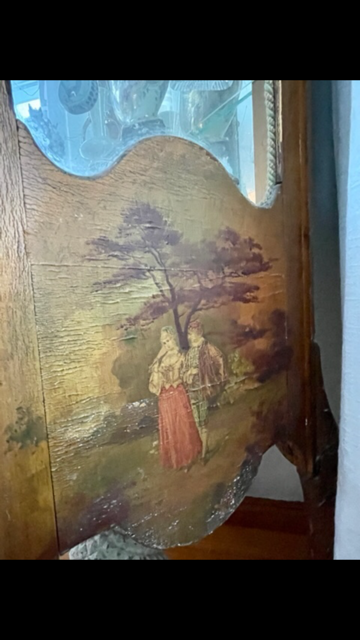
I’m looking for an opinion on how to preserve the painting on this old cabinet. It was poorly stored for many years and I don’t think it’s worth a lot of money, but I’d like to preserve the painting. Could I do so by spray lacquer? Or is there something more appropriate? It is an old glass-shelved curio cabinet.

Clare

Dear Clare,

I want to start off by saying the cabinet looks lovely. Sad to see the wear and tear that things made over 100 years ago can go through along the way.

My advice would be to contact a specialist furniture refinisher. They should be able to do the task and possibly even have painters on hand to replace parts of the missing areas.

The downside to this is that the cost could exceed the value of the cabinet, so you have to decide whether it’s worth it.

As far as attempting the work yourself, it could be tough and the end result is the painting is gone. I feel most of the original varnish would have to be removed. That job would scare me!

I hope this was helpful and you’re successful in restoring your cabinet.

Nuts and berries

Easy to grow and trouble-free

Every year you probably plant tomatoes. Wouldn’t it be great if they would come back every year without the bother of preparing the soil, starting seedlings in April and setting them out? Well, that’s what nut and fruit trees and berry bushes do: Once planted (and mature), they produce food every year. To me, there is a definite allure to plants requiring less work.

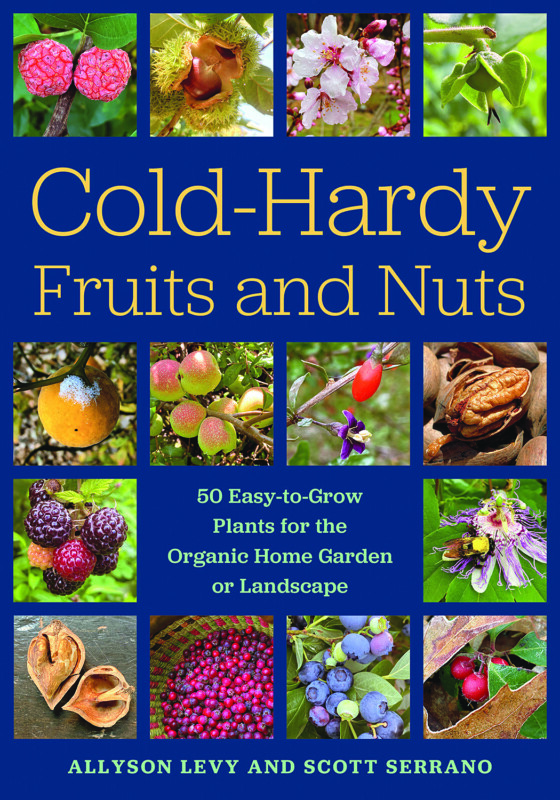
I recently was sent a review copy of a wonderful book by Allyson Levy and Scott Serrano: Cold-Hardy Fruits and Nuts: 50 Easy-to-Grow Plants for the Organic Home Garden or Landscape printed by Chelsea Green Publishing. When I got it I could barely pull myself away from it because it has so much to teach me.

Each of the species included has five or six pages devoted to it and at least five excellent photos. The information starts with “Growth Difficulty Rating” — how hard is it to grow? Most are easy. It includes taste profile and uses, pollination requirements (is it self-pollinating?), site and soil conditions, zone hardiness, good cultivars to look for, and a paragraph on pests and problems, and more.

I called the authors and asked about their experience growing this diverse group of plants. They live in Stone Ridge, New York, a town about 100 miles north of NYC and 10 miles or so from the Hudson River. They are in Zone 6, where winter temperatures only go a little below zero most winters.

They are both artists, and originally started growing plants to use in their art. About 20 years ago they bought 8 acres across the street from them and started their own arboretum, later adding another 10 acres. Their arboretum is Hortus Arboretum and Botanical Garden and is a Level II arboretum according to the Morton Arboretum.

I asked them what they would recommend for fruit if someone had none and wanted to start with winners. Scott suggested blueberries and blackberries. Both are easy and tasty. Elderberries are good, too, they said, although you need to cook the berries to make them palatable. Elderberries, honey and lemon juice make a nice syrup, which I use to help prevent colds in winter.

We talked about honeyberries. It’s a fruit I will definitely plant this year. Although the fruit looks a little like a big oblong blueberry, it is actually in the genus with honeysuckle. It is native to the northern U.S., Canada and Siberia. A friend gave us a few to taste last summer, and I like the flavor.

According to the book, honeyberry is the first fruit to ripen here, a couple of weeks before strawberries. But it is a couple of weeks after they turn blue and look ripe that they actually lose their astringency and turn sweet. This is the kind of information that most books or plant tags don’t have, and only comes from someone who grows and knows the plant. Allyson said she discovered that lots of berries are hidden under the leaves. The fruit gets better every year, apparently.

Another fruit in the book is pawpaw, a somewhat tropical-flavored tree fruit (banana crossed with mango flavor?). As the book explains, you need two different trees (not clones) to get pollination and fruit. I am growing it, but started out with only clones, so I have not gotten fruit yet.

Of the nuts, they recommend hazelnuts. These produce nuts as much younger plants than things like black walnut or pecans, which are tall trees that require years to produce nuts. You need to have two or more hazelnuts as they are not self-fertile. Scott pointed out that the native species has smaller nuts than some of the named varieties.

Pecans are discussed in the book. The biggest difficulty is not growing the tree, but having a growing season long enough for the nuts to ripen. They need 150 to 180 days. But as the climate changes, perhaps this will not be a problem in 25 years. They note that you must have two compatible grafted varieties to get nuts, as the trees are not self-fertile. These are big, handsome trees and should be grown in full sun and rich soil if possible.

A tree that is not native but produces a lot of food for deer is the Korean stone pine. The pine nuts we use for pesto are most often from these trees grown in Asia. The cones open up in winter and drop their seeds, which are rich in oil and high in calories. Scott said in Siberia tigers indirectly depend on the stone pine because they feed the deer and boar the tigers need to survive.

The Hortus Arboretum and Garden is open from Mother’s Day in May until the end of October, Friday to Sunday. Admission is by donation. Because of Covid, they have been scheduling visitors online during the season at their website, hortusgardens.org.

This book is terrifically useful to anyone interested in growing fruit and nuts. I should note that it does not cover apples, plums and peaches because those fruits are well-covered by other writers, and, as they say, much prone to pests and diseases. The plants discussed are generally easy to grow and trouble-free. Just what we all want!

Featured photo: Courtesy photo.

Embrace the muck

The best time is the mud time

By Dan Szczesny

There is no better time to hike with kids in New Hampshire than during mud season.

That’s right, you heard me.

I’m not talking about the ecologically sensitive places among alpine flowers starting to thaw. I wouldn’t suggest that you let your kids go bounding off trail into the deep, wet, tick-infested leaves. But there is a proper way to play outside during this most New Hampshire of seasons. And be warned — it does involve getting dirty. But that’s the point.

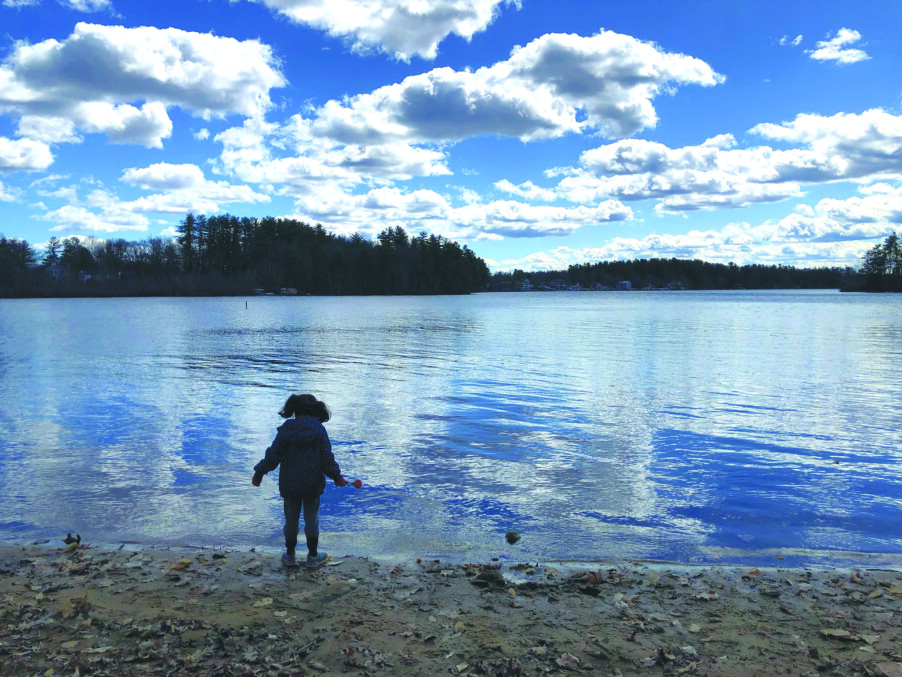
On this clear, cool early spring day, there is no greater testament to the allure of mud season hiking than the rolling hills and oh so muddy beaches of Kingston State Park. Somehow, we forgot my daughter’s boots, but no matter, the mud would find a way to her feet regardless of how we protected them. Little Bean charges headlong across the wide lawn, through the old-school metal playground and right up to the cold, clear water of Great Pond. For a moment it looks like she’s going straight into the water, but she screeches to a halt a half foot from the water and drops to her knees.

In the mud.

She doesn’t wait for permission to get dirty on trips such as this anymore because she understands that getting dirty is the whole point. In my day pack I have a packet of wet wipes, a towel and an extra pair of socks for both of us. My wife and I have raised our daughter to accept the natural world not as a brief interlude or vacation, not as something that is special and happens occasionally, but rather as a part of everyday living. And life can be messy. Therefore, nature is messy — and never so messy than during mud season.

“Daddy, look,” my daughter is calling. “What are these things?”

All along the muddy shore are thousands of tiny squiggling sand shrimp. The warmer weather and perfect shoreline conditions must have contributed to a recent spat of hatchlings and they are everywhere. She decides they need a hotel. No, better than a hotel, they need a shrimp resort.

Using a series of shells, small rocks, and even a small loon feather, she constructs a sand and mud mound resort, digging a channel from the hotel to the pond, scooping out a pool area and even a small stone shed where the shrimpys, as she calls them, can rest out of the sun. Then she goes and gets them, plucking them up and plopping them in their new resort.

It’s a long project. She doesn’t need my help. She cares not at all about the mud. I’ve seen that look in her eye and figure it’s going to be a long afternoon, so I find a nearby park bench, also filthy and covered in dog paw prints, spread out our picnic and lean back to watch her.

I think of naturalist and journalist Richard Louv, who wrote, “Passion is lifted from the earth itself by the muddy hands of the young.” He may not have had a luxury hotel for sand shrimp in mind when he wrote that, but either way, my daughter’s passion is on display.

Kingston Park is beautiful this day, in mid-March, mild with an occasional sharp wind that cuts across the lagoon to remind us that winter hasn’t quite let go yet. There are a few dog walkers, but this is one of those New Hampshire places that, during off-season, becomes magical — a place where only locals and those willing to get filthy would dare to go.

Meantime, my daughter requests that I be present for the opening of her hotel, so I lumber down to the squishy shore and hand her a tin cup of hot chocolate, the steam rising up in front of her smiling face.

“Daddy, we should go check out that staircase,” she says. “And then let’s find some rocks.”

The days grow longer now, and soon swarms of both bugs and tourists will descend on small parks like this all across the state. But today, the mud is ours.

If You Go

Don’t be afraid of the mud

For more information on official park openings and costs, navigate over to nhstateparks.org for a park list scroll-down menu. A couple other off the beaten path state parks you’ll likely have to yourself until the official season begins include Ahern State Park in Laconia and Northwood Meadows State Park in Northwood.

Kingston State Park

124 Main St., Kingston: Located in southeastern New Hampshire, Kingston State Park is a 44-acre park located on Kingston Pond/Great Pond. During the regular season, usually starting mid-May, the park offers boat rentals, a park store (Friday through Sunday only), a small walk around the pond and a clean beach for swimming and picnicking. But go now and you’ll have the place nearly to yourself.

Parking and Trail Access

The park entrance sits right in the center of Kingston, directly along Main Street and across the wide, long, central lawn. In off season you’ll have to just park on the side of the street and walk in. There is a small parking lot near the entrance but that’s just for Kingston residents. The walk to the ponds can be reached along a short well-groomed trail or by taking the empty road. Either way, it’s only about 1/4 mile.

Featured photo: Photo courtesy of Dan Szczesny.

Stay in the loop!

Get FREE weekly briefs on local food, music,

arts, and more across southern New Hampshire!