
Joni’s jazz revisited

Hejira channels the spirit of beloved Mitchell period

Guitarist and composer Pete Oxley spent decades building a solo catalog, along with a reputation as one of Britain’s most thoughtful jazz improvisers. A band dedicated to Joni Mitchell’s music wasn’t in his plans, nor a first-ever U.S. tour, yet that’s what’s happening. The story of how it came to be reads less like a career move than a series of improbable gifts.

Named for Mitchell’s 1976 album Hejira, the band was initially a one-off 2022 Christmas gig at a club in Oxford run by Oxley. The show was dedicated mainly to Mitchell’s late ’70s Shadows and Light live album, and it went well enough for Oxley to add a second date two months out and post tickets on his website.

“By 11 a.m. the next day it was sold out,” he said in a recent Zoom interview. “So I thought, maybe this is a project worth pursuing.”

Since his conservatory days, Oxley had been a fan of Mitchell’s jazz-inflected period, which ran from 1974’s Court and Spark through the extraordinary live album that captured her 1979 touring band featuring Pat Metheny, Jaco Pastorius, Wayne Shorter and Lyle Mays.

“I had Hejira on cassette, and I played it so often that all the treble end was gone,” he recalled. “I just fell in love with it.” Shadows and Light became something of a north star for him. “It just fizzes with electricity when you put it on, yet at the same time it’s really warm, really beautifully produced. It’s always been one of my desert island discs.”

Oxley wanted a singular sonic identity rather than a note-for-note replica of source material. He put together a seven-piece band of players drawn from the British jazz world — bass clarinet, synths, percussion layered with drums.

“It’s not a tribute act,” he told them. “We want to serve the songs and reproduce the vibe … but we’ve got our own colors.”

Surprisingly, he’s found that arranging someone else’s music is harder than composing his own.

“When I’m writing, I have no constraints, but here, my challenge is to keep the melody — that’s what people know — but still make it our own,” he said. “People come up after a show and say, ‘I love the way you respect the songs, but you’ve made it yours,’ and that’s the most heartening response to get.”

Oxley’s Joni is Hattie Whitehead, a jazz singer and songwriter with a solid solo career including her highly regarded debut album, Bloom, released in 2024. She’s also the daughter of British saxophone player Tim Whitehead. The story of how she ended up in the band is its own comedy of near misses.

Three others came and went before Whitehead. One wanted to completely reframe the concept, another demanded that her boyfriend play bass, and a third asked to use her own band. Then Hejira bassist Dave Jones asked Oxley if he knew about a video Whitehead posted on YouTube of her performing songs from Shadows and Light.

“I found it, and it was just totally like yeah, she’s the singer,” Oxley said. He rang up Whitehead, who was quite happy for a chance to sing nothing but Joni. There was one hiccup; she already had a gig that night. But she found a substitute, came to one afternoon rehearsal, and the band was complete.

What she does, Oxley is careful to say, isn’t imitation. When an interviewer asked her how she could sound so much like Joni, Oxley interrupted to disagree. “She sounds like herself,” he insisted. “She sings in tune [and] she’s got a big vibrato like Joni, but she still sounds like Hattie. She’s dedicated and committed to the song, which is a beautiful thing.”

Kismet with a New Hampshire angle helped make Hejira’s American run possible. Milford resident Gary Connolly found their videos on YouTube and was so smitten that he flew to England to see them play. He even offered to drive the van if they made it to the States, and later helped book a show at Andres Institute of Art in Brookline to open the tour; it sold out.

Another crazy twist of fate came when an email arrived from the director of the Syracuse Jazz Festival, a devoted Shadows and Light fan who had also seen the videos. He offered Hejira a main stage slot and, when Oxley mentioned needing more dates to make a trip viable, doubled their fee and covered airfares.

“We kind of talked about it as a pipe dream every now and again — if we could get to America, there’s a big market there,” Oxley said. “Then there was … a ridiculous amount of luck.”

Hejira: Celebrating Joni Mitchell
When: Wednesday, July 15, 7:30 p.m.
Where: Jimmy’s Jazz & Blues Club, 135 Congress St., Portsmouth
Tickets: $23 and up at ticketmaster.com

Featured photo: Hejira. Courtesy photo.

The Music Roundup 26/0709

Summer sounds: The Levitt AMP Manchester Music Series kicks off with Dyer Davis, a rocking singer-songwriter that Downbeat called “one of the most promising up and comers” in his genre. Upcoming at the free weekly outdoor event are Gentlemen Brawlers, Domenic Marte, Kyshona, Old Hat Stringband, Stephen Kellogg, Kuf Knotz & Christine Elise and The Soggy Po’ Boys. Thursday, July 9, at 5 p.m., Veterans Memorial Park, 723 Elm St., Manchester.

Blues rockers: Lowell-based blues rock trio Sons Lunaris makes its first appearance in downtown Suncook, blending ’60s- and ’70s-steeped rock into a sound described on the band’s website as “melting psychedelia over hard-bodied blues.” Their influences range from Howlin’ Wolf to Pink Floyd, and they also brag that Bruce Macomber, who produced the Yardbirds, is among their fans. Friday, July 10, at 7 p.m., Pembroke City Limits, 134 Main St., Suncook, sonlunaris.com.

Funny business: A night of standup comedy is topped by two winners of the Ladies of Laughter competition, Poppy Champlin and Jane Condon. Alumni of the contest, which first happened in 1998 at a New Jersey YWCA, expanding the next year to clubs, casinos and Madison Square Garden, include Amy Schumer, Melissa Rauch, Tammy Pescatelli, Erin Jackson and Zarna Garg. Saturday, July 11, 7:30 p.m., Rex Theatre, 23 Amherst St., Manchester, $40, palacetheatre.org.

Fiddle forward: When she arrived at Berklee College of Music a few years back, fiddle player Louise Bichan planned to study a bit and then return to Scotland, where the band she was in was gaining momentum. The connections she made in Boston changed her mind, though, and she’s been here since, leading her trio and collaborating on other projects like Hildaland. Saturday, July 11, at 6 p.m., Fletcher Murphy Park Stage, 28 Fayette St., Concord, Free, ccmusicschool.org.

Songwriters swap: When both were starting out, Marc Cohn & Shawn Colvin worked with the same producer on their debut albums. Currently, the two singer-songwriters are sharing the stage for a show that’s part concert and conversation. Audiences on the tour have described a warm, unhurried evening built on the pair’s decades-long friendship as much as individual songbooks. Sunday, July 12, at 7 p.m., Nashua Center for the Arts, 201 Main St., Nashua, $66 and up, etix.com.

Minions & monsters & sheep

Movies for family viewing

If you have kids, you will probably have contact with the newest entry in the Minionsverse, Minions & Monsters (PG, in theaters), and that is fine. I kind of view all Minions-related content as not-quite-as-clever Looney Tunes, which is I think a completely acceptable form of entertainment. No, nobody is learning or growing or imparting any life lessons, but also you don’t have to sit through any learning or growing or poorly conveyed life lessons. The Minion-speak means you don’t even really have to listen to all that much dialogue — all the better to avoid quippiness or writers’ attempts at sounding “of the youth.” It’s kinda great.

Here, the movie piles up a bunch of riffs, mostly visual, on the early years of Hollywood — you get some Roaring 20s, silent film, introduction of sound, suffragettes and Prohibition thrown at you along with some nods to 1920s, 1930s and 1940s films and also Jaws and The Day the Earth Stood Still and the existence of George Lucas. Historical inaccuracies, you ask? “Poop” the Minions would say, and I probably agree because these little touches are nice treats for the adults in the audience — probably watching this movie because it is a family outing in the air conditioning.

The Minions (all voiced by Pierre Coffin) wind up in Hollywood after their attempts at finding an evil “Big Boss” to serve fail, usually because the Minions accidentally do in the Big Boss. In 1920s-or-something Hollywood, they stumble through an elaborate action sequence in a movie being shot by director Max (voice of Christoph Waltz). You ruined everything, get out of here!, he tells them. But then the heads of his studio, the Bright Brothers (both voiced by Jeff Bridges), tell him that the Minions sequence is brilliant. You’re my best friends, come make more films with me!, Max says to the Minions after he rushes to find them. The movie focuses primarily on Minions Henry and James and their buddy Edward. Henry and James have long been amusing themselves with outlandish stories and now find in Hollywood the perfect outlet for their imaginings. When the advent of sound ends the Minions’ serious career in Citizen Kane-ish and Maltese Falcon-y films, the trio attempt to make a monster movie by conjuring a real monster, Goomi (voice of Trey Parker). Perhaps they should have paid attention when he said his full monster name, which included “the Deceiver.” (Also adding their vocals to the movie are Allison Janney, Jesse Eisenberg and Zoey Deutch.)

The monsters are fun, the Minions are fun, the callback to Harold Lloyd hanging from a clock and a building falling around Buster Keaton are fun nerdy tidbits. Minions & Monsters is a jolly entry in kid-focused entertainment that offers just enough to the adults who are also in the room.

Of course, learning doesn’t have to be a drag to a kid movie — for example, see the recent The Sheep Detectives (PG, 2026), which was released in May and is now on Amazon Prime Video. This movie, which really feels more straight down the middle all-ages fare rather than just kid-specific, contains a complex examination of grief and what it means to belong and also talking sheep solve a murder.

The sheep here — some kind of computer-generated creatures based on real sheep or something, according to some light Googling — are of the “live-action animation” variety living in an otherwise human live-action world. There is a bit of an uncanny sheep valley you have to walk through and acclimate yourself to but then you can — or at least I could — basically live with what you’re watching, because the sheep are so sweet and so cute and have such a lovely life on their English countryside farm with their shepherd George (Hugh Jackman), who only raises sheep for wool. What would another reason to raise sheep be, wonders Lily (voice of Julia Louis-Dreyfus), displaying that though she is a very clever sheep, she has been protected from some of life’s harsh realities. Well, except for the harsh reality of Murder!, due to George’s nightly reading of mystery and detective novels to the sheep. When George is found dead, Lily and her buddy Mopple (voice of Chris Dowd) and flock loner Sebastian (voice of Bryan Cranston) begin to investigate his murder, trying to nudge village police officer Tim (Nicholas Braun) in his investigation of suspects, principally the people named in George’s will. The chief suspect appears to be American Rebecca (Molly Gordon), George’s long lost daughter. But there’s also the neighboring shepherd (Tosin Cole) who is interested in George’s flock, the local butcher (Conleth Hill) and an out-of-town lawyer (a glammed up Emma Thompson, having such fun).

In addition to sheep being sheep — a Brett Goldstein-voiced pair of rams always looking for something to smash with their horns — we get a very touching and straightforward consideration of grief and how the pain of loss might be worth it to keep the memories of our loved ones. Louis-Dreyfus in particular does a beautiful job at conveying her character’s feelings with her vocal delivery, really helping to bring life to these digital creatures. The movie does a good job of bringing this serious, weighty stuff to the story without weighing it down and still giving us a very solid and fun “English village murder” murder mystery.

If your family movie nights largely involve older middle schoolers and up, Netflix’s recently released Enola Holmes 3(PG-13) is an enjoyable option, if not quite as crackling as its previous entries. Millie Bobby Brown returns as Enola, younger sister of Sherlock Holmes (Henry Cavill), who has been making quite a name for herself as a detective in her own right. And as the movie opens, she’s worried about that name because the wedding dress-wearing Enola is about to become Lady Tewkesbury as the wife of her longtime friend and sort of boyfriend Lord Tewkesbury (Louis Partridge). After some debating whether she actually wants to go through with the marriage, she heads to the church only to be waylaid by Dr. Watson (Himesh Patel), who has come to tell her that Sherlock, who had also come to Malta for her destination wedding, has disappeared, possibly been kidnapped.

Of course this case quickly spreads, with another kidnapping and other nefarious events and Enola desperate to solve the mystery and also figure out how exactly to get the life she wants with Tewkesbury.

There is less Sherlock/Enola teamwork than in previous outings, perhaps one of the reasons the movie doesn’t quite have the same bouncy feel as the others. But the movie still presents its Sherlock riff with adventure and good humor.

Featured photo: Minions & Monsters.

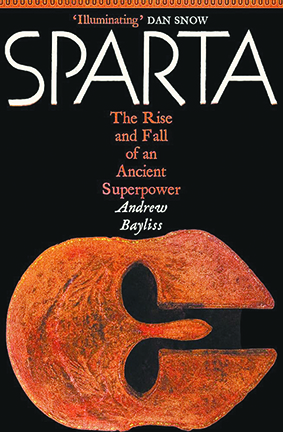
Sparta, by Andrew Bayliss

(W.W. Norton & Co., 326 pages)

Other than Rome, is there any ancient civilization that commands more attention than Sparta?

Sparta remains front and center in the popular imagination in part because of the Spartan Race franchise, headquartered in Vermont, as well as the many books and films about the culture, to include Steven Pressfield’s Gates of Fire. And most everyone who is well-read knows the adjective “Spartan” and has an opinion about whether it should be capitalized.

But the popular view of Sparta is largely informed by myth, which is why historians talk about “the Spartan mirage.” British historian Andrew Bayliss proposes to correct the record in Sparta, The Rise and Fall of an Ancient Superpower.

Although Sparta’s glory days began two centuries earlier, the first surviving history was written in the fifth century BCE. Little was written by actual citizens of Sparta, and even then, that’s “a few hundred lines of verse,” Bayliss writes. How then, did Sparta become so important that it was seen as aspirational by a diverse collection of thinkers, including Plato, Machiavelli, Rousseau, Robespierre and even Samuel Adams, who wanted the United States to become “the Christian Sparta”?

Part of the answer appears to be selective memory because, as Bayliss explains, we have cherry-picked the good of Spartan culture and conveniently excised the abhorrent, such as the practice of throwing prisoners and babies deemed inferior off a cliff and the violent enslavement of “helots” in order to enable the lifestyle of the citizens of Sparta — who were called Spartiates, by the way, not Spartans. (Bayliss uses the terms interchangeably, however.)

Slavery was common at the time, even in Athens, where historians believe there were about 80,000 enslaved people in the fifth century BCE.

“What singled the Spartans out was the ruthlessness with which they conquered and enslaved their fellow Greeks, in order to ensure that each of their own citizens possessed a captive, self-producing human workforce,” Bayliss writes.

The official citizenry of Sparta, determined by their land holdings, did not work at all, at least not in order to sustain themselves and their families. They worked on their bodies, readying themselves for battle and for their famed athletic games. The women, too, participated in athletic games and were required to maintain a high level of fitness, although they were not required to serve in the military. (Women were also allowed to inherit and own land in Sparta, unusual for their time; Bayliss points out that this wasn’t allowed in Britain until 1870.)

Theirs was a communal lifestyle, with everyone required to gather together for meals in the evening, in which the main feature was “unbaked barley burgers” and something called “black broth,” which scholars believe was a liquid derived by boiling pork in salt and blood. “The broth was so unpleasant that a visitor … remarked that he no longer considered the Spartans to be brave after trying their food, because ‘anyone in their right mind would prefer to die ten thousand times than share such a poor living.’”

For the Spartiates, death on the battlefield was considered a privilege, an idea that was inculcated from childhood, and one that enabled the battles that have become legendary, including the “Battle of the Champions” in which 300 elite warriors of Sparta fought an equal number of warriors from the region of Argos. All but three died — two from Argos and one Spartiate; the Spartan warrior later committed suicide because he was ashamed for having survived.

Interestingly, Spartan men who died in battle were the only citizens permitted gravestones, and the ones that have been found are reminiscent of the uniform graves at Arlington National Cemetery: small, identical markers engraved with the name of the warrior and the words en polemoi, “in war.”

In their ideals and practices, Spartan culture lingers in modernity; “Come and take them,” the popular retort of gun enthusiasts, is said to have originated with Leonidas, the Spartan king who died with his men at Battle of Thermopylae, depicted in the 2006 film 300.

Despite their fierceness, the Spartiates were a superstitious people who thought that the devastating earthquake in the fourth century BCE was punishment sent by the god Poseidon. “A tremor at the wrong time would halt a Spartan army in its tracks, in the belief that the god was expressing his displeasure at the mission.”

And yet their government was oddly predictive of modern democracies. Sparta had two kings, from separate families, and a ruling council of elders composed of 28 citizens over the age of 60. The system, Bayliss writes, provided stability and worked to cancel out “the excesses” of the leaders, much like the American system of government is supposed to do. Citizens of Sparta could vote on bills the council had put worth, although the value of this seems dubious since the Sparta constitution said, “If the people choose crookedly, the kings and elders shall set it aside.”

The Spartan Race philosophy is that people become “unbreakable” by doing hard things. Unfortunately, the Spartans proved not to be unbreakable themselves; like Rome, they had a rise and fall, and the fall of Sparta came relatively fast, in less than three months. Their power, too, proved to be “illustory,” Bayliss writes. “Their alliance system gave the impression — both to insiders and onlookers — that Sparta could dominate the Greek-speaking world for generations, and even allowed them to think that they might be capable of taking on and conquering the Persians. In fact, none of this was really possible, because there were simply too few Spartans.”

In short, they overextended themselves, and not for a noble cause.

“The only freedom the Spartans were interested in was their own — and particularly the freedom to treat anyone they thought beneath them as they pleased,” Bayliss says.

Although Sparta is superbly researched, it often feels like required reading for a history class. One must be very interested in Sparta, its enemies and the Peloponnesian War to remain engrossed throughout. Fortunately for Bayliss, a good many people are. For everyone else, there is a lasting takeaway: Choose your heroes wisely. B-

Featured Photo: Sparta, by Andrew Bayliss

Album Reviews 26/07/09

Chuck Bergeron, Bass & Face: Duets With Ten Premier Vocalists (Summit Records)

The ever-polite All About Jazz describes bassist Bergeron as “one of the most active and innovative musicians working in the field of jazz,” not that I’ve ever seen a review from them that went something like, “Boy, this lazy putz should just quit polluting the airwaves,” you know? I mean, I kid, he’s assembled, as described, an elite group of jazz singers that includes Manhattan Transfer’s Janis Siegel; Deborah Silver, who was Grammy-nominated for her 2025 collaboration with the Count Basie Orchestra, and the appropriately named Kevin Mahogany, whose rich, knurled baritone positively floats over Bergeron’s deftly bowed acoustic bass interpretation of Duke Ellington’s “Sound of Love.” Overall this record feels like a comfortable, casual pair of socks, not a novelty release aimed at bass wonks; the funnest moment is Nicole Yarling’s unapologetically urban rendition of “Audubon Zoo/Iko-Iko,” which anyone with ears will recognize as the Mardi Gras singalong from the 1988 film Rain Man. Plenty to like here. A+

Alden Hellmuth, Tether (Leiter Verlag GmbH Records)

Just to reassure regular readers, no, I’m not turning this into an all-jazz column; fact is, over the past few months I’ve been absolutely buried in new jazz releases — physical copies too, not just empty-brained emails with links to confounding whiz-bang download pages that require a master’s degree in IT just to get to the part where one actually listens to stuff — and at this point I’m feeling guilty that I haven’t been able to get to many of them (there are so few music publications covering jazz nowadays). I wasn’t going to let that happen with this imported 12” vinyl LP, which was Fedexed to me from Germany (do you have any idea how much that costs?); its subject is an avant garde saxophonist with a casual fetish for noise. Ipso facto, this one’s obviously from the more experimental space, but New Yorker Hellmuth is as interested in brain-dazzling melody as she is in Mingus bonking; she goes into a deep, center-of-midtown reverie in “Witness,” the best on board here. Fascinating album. A+

PLAYLIST

A seriously abridged compendium of recent and future CD releases

• July 10 would be a great day for some new albums to appear, and lo, thus it shall be, unto us, and yadda yadda. Yikes, look at all the albums that are coming out this week, I wonder if any of those albums will do something more than get on my nerves, let me look. Well, at least the 80-year-olds are still “rockin’ out,” like they say in Kansas, given that The Rolling Stones have a new one, called Foreign Tongues, which isn’t a strictly bad thing I suppose. I mean, they did turn the studio into a giant party, with people like Robert Smith, Steve Winwood, Paul McCartney and the drummer from Red Hot Chili Peppers dropping in to help out, not that the Stones need any help. For example, on “Rough and Twisted,” a loud, loutish blues-rawk tune that name-checks Muddy Waters in the band’s most Muddy Waters-ish tune ever, the Stones’ singer, whatever his name is, plays harmonica, and it doesn’t suck. I don’t know, I’ve never really cared about the Stones but never actively disliked them either, like, my high school friends who liked them were all confirmed druggies, so I just associate the band with drugs, which is what rock ’n’ roll is supposed to be about, or at least it was until it became a distinctly un-fun genre in which Berklee-dropout guitarists showed off the scant few jazz chords they’d learned in school and sang songs about Trump and being awkward around their exes or whatever everyone’s deal is now. I mean, yes, there’s literally no need for a new Rolling Stones record, but at least they’re singing about cocaine and one-night stands at that age, where most people would just be singing about adult diapers. That’s a good thing, isn’t it? I don’t know, you tell me, America.

• I always get a nice short burst of Facebook un-friendings when I mention that I always hated Queen, like when I state that their News Of The World album was a low point in arena rock that will never be matched. I only mention that because Adam Lambert, Queen’s kind-of-replacement for singer Freddie Mercury, has a new album streeting this week, cleverly titled ADAM, in capital letters, because wouldn’t you if you were him? OK, I wouldn’t either, but whatever, we shall talk about this new album, from the one-time American Idol runner-up, because if we didn’t, the 10 people who’ll be buying the stupid thing might feel abandoned, and I wouldn’t want that. O, what horrors will be on this record, OK, at least it isn’t a bunch of covers like the last one, the first single is titled “UNDER THE RHYTHM,” in capital letters, see what he did there, but it isn’t bad if you like Michael Jackson/Bruno Mars-type singing; it’s very busy and well-done, and this is without a doubt the last time you’ll see this album mentioned in any media outlet, ever.

• Release the kraken of hamburger jokes, because it’s a new album from famous burger-eating human Jack White, called Frozen Charlotte! Now, my guess is that the music on this album will be Led Zeppelin-esque, because isn’t it always, but this human Ronald McDonald is at the “One Never Knows What I’ll Try Next” stage of his career, so this may just be heavy metal versions of 1930s polkas, so let’s just do the dutiful and find out. Yup, nope, “Dollar Bill” pilfers the drunken guitar noodling of Zep’s “In My Time Of Dying,” you get the idea, right, let’s move on.

• And finally it’s fashion model/actress/singer/future ex of Robert Pattinson Suki Waterhouse, with Loveland, her third album. Single “Back In Love” regurgitates the breathy, amateurish sound of Aughts bands like Au Revoir Simone, I don’t care for it.

Featured Photo:

Church Wedding

It probably goes without saying that the name of this drink is a reference to a particularly awful dad joke.

Why does a melon have to have a church wedding?

Because it can’t elope.

For this drink, step 1 is to get a cantaloupe.

It would be nice to have some sort of assurance that you’ll be able to get your hands on a good one — sweet, a little acidic, maybe with a hint of musk — but in life, love, and cantaloupes, there are no guarantees. Cantaloupes are fickle. You might get three or four great cantaloupes in a row, then have your heart broken by one that tastes like orange cardboard. You might have been inflicted with a handful of duds and you might be considering giving up hope, when infuriatingly a good one will knock you back to Square One, emotionally.

Do your best. Squeeze the melons. Smell them. Take whichever of them gives you a whisper of a promise.

Secondly, you’ll want a little 2-ounce bottle of fruit-flavored liqueur, like the ones you get on airplanes. You can find a rack of them near the checkout at a liquor store. If you’re like me, over time you’ll find yourself buying little bottles of exotic booze on impulse, and before you know it you’ll find yourself with a drawerful of schnapps and flavored whiskeys that you’ve never gotten around to doing anything with. Today one of them will have its Big Day.

Today’s special cameo performance will be played by (drumroll) pineapple schnapps.

  • 2-ounce bottle pineapple schnapps
  • 2 ounces fresh cantaloupe juice – Scoop out the inside of a fresh cantaloupe, seeds and all, and puree it in your blender, then strain it through a fine-mesh strainer. More than one, if you have them.
  • 1 ounce fresh squeezed lime juice – about half a large lime
  • 2 ounces plain club soda or seltzer

Combine cantaloupe juice, lime juice, and the contents of your tiny bottle of fruit-flavored liqueur with ice in a cocktail shaker. Shake thoroughly, until you hear the ice start to break up into tiny shards.

Strain over fresh ice in a Collins glass, then top with club soda and stir gently.

Drink this with a straw.

Tasting fruity, and a little acidic, and a little zippy from the carbonation, this is a very good drink to have while petting your dog.

If you own a collie, you can call this your Melon Collie Baby.

Featured photo: Raspberry + chocolate. Photo by John Fladd.

Stay in the loop!

Get FREE weekly briefs on local food, music,

arts, and more across southern New Hampshire!