Pump up the volume

Hell Beach / American Television mini-tour hits Shaskeen

When their debut album Beachworld dropped in October 2024, Hell Beach celebrated with a local show at Shaskeen Pub. The big moment, though, came a week later with an appearance at Fest, a pop-punk rival to SXSW, spanning the Florida city of Gainesville. It was a triumph for the Manchester band, and it paid dividends beyond validation.\

“In our genre, if you’re on a tour that includes Fest, you know Fest will be the best show,” Hell Beach frontman Jordan Hill said in an interview at the time. Connecting with other bands is one reason. Hill and his mates met Washington, D.C., punk stalwarts American Television at Fest, and almost two years later they’re joining forces.

A mini-tour — “four shows in three days,” Hill said by phone recently — stops at Shaskeen Pub on July 17. Hell Beach has a new lineup; Hill is on lead vocals, having handed bass duties to Franklin Siplas. Kory Boutin is on drums, with guitarists Brenden Meade and Tim Williams rounding out the band.

Their sound evolved as well, as the synth-rich “keytar era” ended. Megan Simon, who played the guitar-shaped keyboard, left amicably to focus her band Megan From Work.

“I’d have done the same thing,” Hill said of her departure. “This takes up all of my time outside my regular 9-to-5; there’s no way to really do a second band alongside it.”

On an album just completed for new label Counterintuitive Records, the synth of Beachworld gives way to snarl. “It’s got a much more aggressive vibe, more rock and roll,” Hill said. Some of that, he continued, reflects a decision to eschew pop instincts for a heavier sound, but the current zeitgeist is another factor.

“A lot of people are probably writing songs that maybe sound more aggressive, maybe sound darker, and I think that goes with the aggression and darkness in everyday life in the last however many years,” Hill said. “Things are highly politically charged. There’s a lot of stress for everybody, and I think that comes through in people’s art.”

The upcoming Shaskeen show is a stacked night, with Portland, Maine’s Borderlines joining after an attempted booking in Biddeford fell through.

“They’re a perfect fit between us and American Television,” Hill said, adding that their drummer is filling in behind the kit for Hell Beach at the show.

Rounding out the bill is Lovewell, whose inclusion is its own bit of reciprocity, as well as a testament to the cohesiveness that sustains the area’s pop/punk scene. “They’ve always been sweet to us and asked us to play shows, so this is returning the favor,” Hill said.

They’re looking forward to the short run, which starts July 16 in Easthampton, Mass., and ends with day/night shows in Poughkeepsie and Kingston, New York. Hill is happy to share a bill with American Television.

“They’re a punk band, but they have a lot of pop elements as well, and I think our sounds work well together,” he said.

The Manchester date falls just after Hill’s birthday, and he’s not averse to leveraging the occasion a bit. “I’m going to guilt people into coming,” he said with a laugh.

The group’s latest studio effort is a part of a voluminous Green Day tribute album. From Kerplunk!, the band’s final indie release, “Android” has been a favorite of Hill’s since middle school.

“It felt fitting to cover a song about a long stretch of a life, now that we’re all in our mid-30s,” he said. “The vibe and the lyrics made sense, and it’s just a great song.”

Curated by music blog and indie platform Punk Rock Radar and released on Coffin Curse Records, the tribute project has more than 50 bands and benefits no-kill animal shelters. It’s a color vinyl release — Dookie Color Splatter, to be precise. Hill is a big fan of the format, pointing to Hell Beach’s sold-out first pressing of their Beachworld 12-inch with pride.

For the scrappy band, that’s an important milestone, as is the new label deal. The best measure, however, is the sense that their efforts are taking hold with audiences, whatever the size.

“We can play shows and people are singing along, dancing and they’re familiar with the music,” Hill said. “That to me is a huge mark of success.”

Hell Beach, American Television, Borderlines, Lovewell
When: Friday, July 17, 9 p.m.
Where: Shaskeen Pub, 909 Elm St., Manchester
Tickets: $15

Featured photo: Courtesy photo.

The Music Roundup 26/07/16

Get together: North and South join musical forces as April Cushman & Shelly Fairchild perform an intimate show in downtown Concord. Hometown girl Cushman regularly sings the national anthem at Patriots games. The Mississippi-born Fairchild has had success getting her songs on hit shows like Grey’s Anatomy and Riverdale and recorded by artists like Little Big Town. Thursday, July 16, 7 p.m., Cantin Room (BNH Stage), 16 S. Main St., Concord, $36, ccanh.com.

Rock hard: Known for their high-energy, visually driven shows, melodic hard rock outfit Sygnal to Noise tops an intense, four-band metal bill. The Biddeford, Maine, band, whose résumé includes tours alongside Cold and Smile Empty Soul, are joined by guitar-driven Manchester band Day to Attend, Throttle Hyde and Jesse Rutstein. Expect a night of raw, riff-heavy rock at the 18+ event. Friday, July 17, 7 p.m., Jewel Music Venue, 61 Canal St., Manchester, $12, eventbrite.com.

Blues power: Seacoast stalwarts YellowHouse Blues Band are enjoying a moment, having sold out a few local venues of late, while energizing crowds at Concord’s recent Market Days. The nine-piece band features multiple vocalists and a roof-raising horn section. The band covers classics like Stevie Winwood’s chugging ’60s hit “Gimme Some Lovin’” as well as Howlin’ Wolf and Aretha Franklin. Saturday, July 18, 8 p.m., Tupelo Music Hall, 10 A St., Derry, $35, tupelohall.com.

Hibbing bard: Now in its fifth year, Bob Dylan’s Rough & Rowdy Tour has support from Jimmy Vaughan & the Tilt-
A-Whirl Band and gospel-infused singer Brittney Spencer, who broke out singing “Blackbird” with Beyoncé on Cowboy Carter. At recent shows, Dylan reworked “All Along the Watchtower” into a slow blues number and leaned into a lot of newer material. Saturday, July 18, 7 p.m., BankNH Pavilion, 108 Kimball Road, Gilford, $35 and up, ticketmaster.com.

Roots couple: Nashville husband-and-wife duo and three-time Kerrville finalists Twangtown Paramours perform an afternoon set in an atmosphere befitting their rootsy sound. Guitarist Mike T. Lewis’s credits include a Korean pop hit of all things, while MaryBeth Zamer is a veteran of the Washington, D.C., folk scene who once sang backup in “Songbird” Eva Cassidy’s band. Sunday, July 19, 4 p.m., Old Meeting House, 1 New Boston Road, Francestown, bandsintown.com.

Catching up with Kara

Checking in on Supergirl and other sisterly stories

Superman is compelled to protect Earth and do good. Supergirl would like to stay out of it and get her buzz on.

Supergirl(PG-13, in theaters) builds on Milly Alcock’s cameo at the end of last year’s Superman (streaming on Prime Video and HBO Max and available for purchase or rent). After partying on planets whose red sun doesn’t prevent her from getting a little tipsy the way Earth’s yellow sun does, Alcock’s Kara Zor-El came back to her cousin Superman/Clark/Kal-El’s (David Corenswet) Fortress of Solitude to pick up her energetic good boy dog Krypto.

While Clark lives in Metropolis, fighting bad guys and, as Kara says, seeing the best in everyone, Kara just sort of dirtbags around in her RV-esque spaceship, partying on dirtbag-y planets and keeping company primarily with Krypto. She is not looking to save the day — but she can’t quite just live with bullying either. When 13-ish-year-old Ruthye (Eve Ridley) shows up at the bar where Kara is slumming it, Kara seems compelled to fight the patron who tries to steal Ruthye’s sword. Impressed with Kara’s fighting skills even in her low-power red-sun state, Ruthye tries to get Kara to join her on her quest to find and kill Krem (Matthias Schoenaerts), the girl-trafficking villain who killed Ruthye’s family. Kara is all “no thanks, kid” but then Krem and his ruffians steal Kara’s ship, in the process poisoning Krypto. A healer tells Kara that she has three days to get the antidote from Krem or Krypto will die. She still isn’t interested in helping a little girl do revenge but now Kara has no choice but to search for Krem, and Ruthye tags along.

Somewhere along the way, they run into and then keep running into Lobo (Jason Momoa), a bounty hunter with some super strength and costuming that suggests off-brand KISS.

Jason Momoa here is a bit like the cinematic equivalent of what happens when you get a bottle of hot honey — it’s such a fun flavor pick-me-up that you just start randomly putting it on things. It’s not unpleasant, per se, but it doesn’t always feel necessary. Jason Momoa knows how to be in this kind of movie and has good enough chemistry with Alcock but, like, I’m not sure why we’re drizzling him on everything.

Kara’s relationship with Ruthye is nice — big sister-y at times with Kara genuinely interested in keeping young Ruthye from sliding into the same grief and loneliness pit that she has been living in since she left behind the people of Krypton. The flashbacks explain how Kara has a working memory of Krypton culture and her father Zor-El (David Krumholtz), brother of Superman’s dad Jor-El, and yet is younger than Superman. It’s all basically fine, as exposition goes. More than we get from the brief glimpse at Krypton via the Superman parents’ video message in Superman, not quite the dazzling world building that you might want for someone so tied to that part of her life.

I think this movie wants — while still being in the 2025 Superman universe, with cartoony bad guys and Superman’s grounded earnestness — to be about the same sense of hope but from shadows. Kara hasn’t had Clark’s Kansas upbringing, she doesn’t have a found family. She feels alone and adrift in a universe that is mostly crappy, full of pirates and ruined worlds and individuals picking on the weak. Caring, for her, is a road to more grief. But, as her mother told her, she may be tough and not always nice but she is inherently good. So how do you be good in a crappy world? It’s not the shock of “this is different” that I think gave Superman its sparkle but Supergirl is full of interesting ideas, with more smart or funny or thoughtful moments than weak ones. I liked it more than I didn’t and — especially with its under-two-hour run time — had fun without too much checking my watch.

Another movie with a female duo at its otherwise tonally wildly different center is Ready or Not 2: Here I Come (R, streaming on Hulu and available for purchase). Picking up pretty much exactly where 2019’s Ready or Not ended, this gooshy dark-comedy horror starts with bride Grace (Samara Weaving) smoking on the steps of her in-laws’ in-flames mansion, having survived/killed her way out of a Satan-mandated game of hide and seek on her wedding night. She is taken to the hospital, where she wakes up to find herself handcuffed to a gurney — a lot of people died, after all — and trying to explain the situation she’s in to her estranged sister Faith (Kathryn Newton), who is still her emergency contact. Before Grace can do much recuperating or explaining, someone shows up to try to kill her and she learns what we already know, which is that the previous night’s game has leveled up. The death of her in-laws has left a hole in Mr. Le Bail’s, aka the Devil, High Council. As Satan’s lawyer (Elijah Wood) explains, now the remaining High Council families will hunt Grace until sunrise with the family that dispatches her getting to sit at the head of the High Council and basically rule the world. The local family hosting the hunt is the Danforth family, represented by twins Titus (Shawn Hatosy) and Ursula (Sarah Michelle Gellar, who wonderfully understands the assignment). Thus a new group of rich wieners attempt to kill Grace and, because she’s there, Faith, while Grace, outfitted once again in her blood-soaked wedding dress, attempts to fight them off. Fight them off and not get too much goo on herself when the council members explode for having broken a rule, which seems to happen a lot.

This movie, like its predecessor (which is also on Hulu, if you’re looking for a double feature), is giddy and goofy and a real good time. The addition of a sister, and thus a team member, for Grace adds a nice element. The sisters have spikey chemistry but Grace still feels responsible for Faith even if Faith is still nursing her hurt at Grace’s long ago disappearance. Weaving and Newton are also both just well suited for these kinds of characters. They are being chased and threatened and they are scared but they’re not victims.

The sister relationship is the most interesting part of Voicemails for Isabelle, a June-release Netflix rom-com movie. Jill (Zoey Deutch) is trying to figure out who she is and what to do with the rest of her life since the death of her sister Isabelle (Ciara Bravo) from cystic fibrosis. Because of Isabelle’s long history of being in hospitals and, as Jill describes it, stuck at home, their sisterhood was particularly central to their lives. Even when Jill moved out to San Francisco from their hometown of Austin to pursue her career dreams of being a baker, Jill and Isabelle constantly checked in with each other, something Jill continues even after Isabelle has died, listening to Izzy’s old voicemails and leaving new messages at Izzy’s phone number. What Jill doesn’t know is that Wes (Nick Robinson), a real estate broker or something in Austin, has inherited Izzy’s number and is getting Jill’s messages. He’s charmed by Jill and starts to follow aspects of her life like it’s his new soap opera. He hears about her difficulties with her pretentious “yes chef” boss Chef Bastien (Nick Offerman, having great fun) and her attempts at dating. And when he gets a chance, he heads to San Francisco to meet her.

The boy-meets-girl of this movie is very Amazon Essentials Rom Com. It hits all the beats but nothing about the Jill-Wes relationship is particularly exciting or memorable. Jill’s relationship with her sister on the other hand is a nice look at close sisterly bonds (a relationship somewhat mirrored in relationships Wes has with found-family-type people he calls cousins) and how the loss of someone so close is not only the cause of great grief but can change how the remaining person thinks about her whole self. Jill finding her way back to her life, and deciding if the chef-y nonsense of Bastian’s kitchen is as important to her as it once would have been, is watchable, made more-so by Deutch, who is pretty good at adding a little something extra to light lifts like this.

The sisters at the core of Netflix’s recently released Little House on the Prairie series also have a compelling relationship, though one that seems to be more built on struggling with their forced proximity than embracing it. (The eight-episode first season of the show, released in early July, has already won a second season.) Laura Ingalls (Alice Halsey) and her older sister Mary (Skywalker Hughes) have been dragged to the Kansas prairie by their father, Charles (Luke Bracey), in search of new opportunities and open land. That the land is open to settlement is news to the Osage, still hoping to prevent the settlers (and the federal government that would enforce those settlers’ claims) from taking their land. The tension between the newcomers and the land’s inhabitants is one of the interesting points of friction in this new adaptation of the classic novels. Unlike the saintly parents of the 1970s TV show, Charles and his wife Caroline (Crosby Fitzgerald) here start the show at a mom-and-dad-are-fighting simmer. Caroline seems to be all in on Charles’ plan for the family — or at least 70 percent in — but this big move to the new place with no extended family or community amenities (no church, no school, no post office for the first episode) is terrifying to her, as are the wolves that roam the area, the assorted drifter types and, at first, her Osage neighbors, whose claim on the land Caroline doesn’t know about. We see the Osage side of the tensions from neighbors White Sun (Alyssa Wapanatâhk) and William Mitchell (Meegwun Fairbrother), whose daughter Good Eagle (Wren Zhawenim Gotts) becomes fast besties with Laura.

Around the edges, the show also touches on the Civil War and its effects on the men who fought in it and, ever so lightly, on issues of race. We also get more of the frustrations of the female characters about the special restrictions and hardships of places like this for women. Caroline has to put up with a snotty neighbor, Jemma James (Mary Holland, a first-rank “hey it’s that guy” who needs to be in more things), if she wants any female friendship at all. Or at least, she does until she makes better friends with the significantly cooler Emily Henderson (Barrett Doss), the Black owner of the town’s general store, and Lacey Aubert (Rebecca Amzallag), the pants-wearing French lady whose relationship with Mr. Edwards (Warren Christie) is always discussed with raised eyebrows.

I like how show tells the story of Laura and her family with a sympathetic eye to them, particularly to the curious, open-hearted, school-averse Laura, while still being realistic about the injustice-filled situation they’ve rather naively wedged themselves into.

In tone, the show reminded me of the bits I’ve seen of Anne with an E, the Anne of Green Gables adaption from the late 2010s whose three seasons are still available on Netflix. (Little House inspired me to watch or possibly rewatch a few episodes.) There, like here, we get the familiar story but more rooted in the history of the time and reality of the characters. Amybeth McNulty’s Anne is a plucky story-teller with a big imagination but she’s also suffering from the effects of abuse she suffered as the ill-used, unpaid servant to several large families. That show, like the new Little House, isn’t quite a gritty update, it’s more a reconsideration that has you thinking about what the familiar story beats (tweenage orphan or family on the prairie) would actually mean and feel like. The Little House adaptation does have a bit more heft (both in its story and in the strength of its performances) and it seems to be working with a bigger budget, with that money well spent when it comes to setting and overall production.

If you’re looking for more sister-ish relationships on TV, check out the recently canceled Ponies(on Peacock) while it’s still accessible. Even though news came out in June that it would not get a second season, the one-season, eight-episode show, which came out back in January, tells a good, relatively complete story and is worth watching. Mother of Dragons Emilia Clarke plays Bea and Haley Lu Richardson is Twila, both women living with their husbands at the U.S. embassy in Moscow in the late 1970s. They both learn that their CIA husbands have died on assignment and are offered the choice to work in Moscow as embassy secretaries while secretly working for the CIA in hopes of learning more about their husbands’ deaths. Bea has the advantage of being a somewhat native Russian speaker, having learned the language from her Jewish grandmother (Harriet Walter) who lived in the USSR before and during World War II. Twila is a wonderfully plucky, seemingly bumbling American whose mix of street smarts and smart smarts (and curly hair) gives her a somewhat Natasha Lyonne-in-Poker Face vibe. (Poker Face is also a delightful watch, also on Peacock and also, sadly, canceled. But even if the second season doesn’t quite reach the heights of the first season, I also recommend watching all 22 episodes while you can.)

I’m a sucker for some high-quality late 1970s production design and costuming, and this definitely has that as well as some Cold War trade craft and fun character beats, particularly in the growing friendship between Twila and Bea as they work together and separately on increasingly dangerous assignments.

Featured photo: Supergirl.

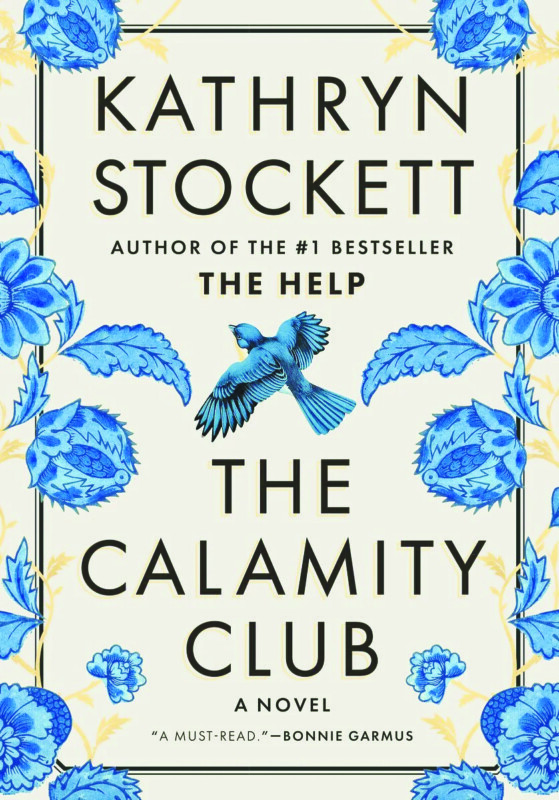
The Calamity Club, by Kathryn Stockett

(Spiegel & Grau, 638 pages)

When your debut novel sells more than 15 million copies, spends nearly two years on the New York Times bestseller list and becomes an Oscar-winning movie with a star-studded cast, what do you do for an encore?

Take your time, and go stay for a while in Peterborough.

That’s how Kathryn Stockett finally finished The Calamity Club, her second novel, which was stalled out when she went to the renowned MacDowell artist retreat in 2016 after five years of working on the book. Ten years after that stay, the novel is vexing reviewers across the country with its sheer heft. At a daunting 638 pages, this is not a book picked up lightly — some readers have gone so far as to weigh it. (It’s 2.2 pounds, according to The New York Times.)

But Stockett, and her publisher, are betting that the people who loved her first book, The Help, will be willing to invest a not-insignificant portion of their time on this new story, which revolves around an orphanage in Oxford, Mississippi, during the Great Depression. For those willing to do so, there is, indeed, a payoff. It’s a satisfyingly complex and well-plotted novel that grows more enjoyable after the first couple of hundred pages, if you can stick with it that long.

There are two central characters in this story, both immensely likeable. Meg is a spunky 11-year-old who was brought to the orphanage two years earlier after her mother disappeared and is being mistreated by a malevolent director. Birdie is a 24-year-old spinster, “churchy and chinless,” who lives with her mother and grandmother in circumstances that are fast dissolving into insolvency.

At first Meg and Birdie have nothing in common except their status as first-person narrators, but their lives will intersect when Birdie travels to Oxford for the uncomfortable task of asking her younger, prettier sister (who’d married a wealthy banker) to give her money so the family won’t lose their house for having not paid the taxes on it for nearly two years.

Birdie’s sister, Frances, is neither villain nor ally. She’s a woman who’s been told she’s beautiful so much that she has come to occupy another, ethereal plain of existence, and she is oblivious to the problems that Birdie can see in her marriage, problems that soon threaten her luxurious existence and that of her distinguished widowed mother-in-law, with whom Frances and her husband live. (In shades of The Help, the Tartt family employs two Black women who run the household, Picador and Polly.)

Getting money out of Frances and her husband is no small task, and Birdie has to move into the house for a while. It’s during this stay that she encounters and befriends Meg, while helping the orphanage balance its books. Although the time they spend together is brief, this connection spins the narrative in unexpected ways, as the young girl and the young woman seek to escape the difficult circumstances of their lives.

For Meg, it’s not just the mistreatment that she is suffering at the orphanage, where she is banished each day to a dank room where mold is blooming. She’s also haunted by the sudden disappearance of her mother, who, as we learn from her memories, had been a devoted and joyful parent right up to the day when she never came home. She dreams of reuniting with her mother, even as she dreams of being adopted. But Meg’s circumstances are more complicated than the child knows, and there are people conspiring to keep her from the happy ending of which she dreams.

Meanwhile, a devastating sequence of events causes Birdie to stay with her sister months longer than she anticipated, and in a major plot twist, she winds up conspiring with the unlikeliest of characters in order to keep Frances and Mrs. Tartt in their house as financial ruin threatens to overtake them.
Like The Help, Stockett’s second novel is threaded with history, much of it disturbing, such as the practice at the time for states to sterilize people, mostly women, that they have declared “feeble minded,” a criterion that included not only disabled people but those addicted to alcohol and those deemed promiscuous. “Feeble-mindedness” was considered hereditary, and sterilization was the solution, according to Mississippi and more than two dozen other states with such laws on the books.

Stockett also writes realistically of what it was like to live during the Depression years in the deep South, and in Mississippi specifically, where in one year, more than a quarter of homes were seized for nonpayment of taxes. Few were exempt from hardship, and Birdie’s struggle to retain hope and dignity in light of odds stacked overwhelmingly against her reflect the situation of many other families, both then and now.

Did this novel need to be 600 pages? Definitely not, and The Calamity Club reminds me of a favorite saying of my mother: Work expands to fill the time. And Stockett had a lot of time to write this novel.

More debatable is whether Stockett needed to give Birdie a love interest, which felt formulaic from the moment this person was introduced. It may be what Hollywood wanted, but it’s not what this character needed. But that’s a quibble, and the fact is that Stockett kept me interested in what happens to these characters throughout all 2.2 pounds of this book, which was no small task. But I finished it thinking of Apollo Creed’s immortal words to Rocky Balboa, “Ain’t gonna be no rematch.”

Ain’t gonna be no sequel. Six hundred-plus pages is plenty, thank you very much. A

Featured Photo: The Calamity Club, by Kathryn Stockett

Album Reviews 26/07/16

Shonen Knife, Let’s Knife Re-Cut (Summit Records)

Full-scale re-rub of the Japanese trio’s 1992 Let’s Knife LP, which Rolling Stone Japan placed at No. 37 on its list of the “100 Greatest Japanese Rock Albums of All Time” in 2007. No idea why they did this; they could have left this album alone and simply rattled off a new collection of Ramones/Black Flag-flavored punk tunes, but instead it just serves to show that they’ve, you know, gotten a lot older. We can start at the start with “Riding On The Rocket,” which has its original raw energy surgically removed and replaced with a version that’s so lifeless it’ll make you think of Invasion of the Body Snatchers. Of course, that might have been the point of doing it; the updated version of “Get The Wow” sounds like a tune that should have made it onto the first Go-Go’s album. It’s still Shonen Knife, but jeez. They’ll be in Durham, N.H., with Men At Work and Toad The Wet Sprocket at the Whittemore Center on July 28. A

Electric Six, I Shall Exterminate Everything Around Me That Restricts Me from Being the Master (red vinyl remaster) (Metropolis Records)

Born in the 1990s Detroit scene that also saw the emergence of bands like the White Stripes, these guys are often considered a “gay disco” band owing to their upbeat, high-energy tuneage and theatrics. If it matters to you, and it shouldn’t, the members all identify as straight but supportive of the LGBTQ community; they’re a go-to band for bros and others who hold such-themed events. This was their fourth album, released in 2007, and it was and is a blast, distilling their fun-filled essence and cementing the band’s reputation as a borderline joke band that can really play (“Down at McDonnelzzz” is a classic among their food-obsessed songs; as one YouTuber commented, “I got this song banned before due to ‘over-requesting’. 6:30 AM, trippin’ nuts, getting Egg McMuffins, and this song on the radio, I can die happy”). The bullet version of their legacy would read “Come for the hard garage rock, stay for the Danceteria madness.” Absolutely relentless record, now with bonus tracks and downloadable stuff and ruby red vinyl. A+

PLAYLIST

A seriously abridged compendium of recent and future CD releases

• July 17’s list of new album releases is in my hands, everybody start drinking and I’ll try to make it as painless as possible! Now, something that’d technically be proper to talk about this month owing to this column’s focus on — you know, famous people playing/singing music and whatnot — was the planned concert series for America’s 250th anniversary, which took place in several U.S. cities, including Los Angeles, California, and Philadelphia, a city in Hell. As everyone knows, the main event was originally planned to be held at the National Mall in Washington, D.C., but since all anyone does these days is argue about politics on Facebook, it got canceled and replaced with a giant thunderstorm, so I tried to find something about that whole 250th kerfuffle that wasn’t horrible, or at least not politically radioactive, and I finally did find something, specifically the appearance of opera-singing tenor dude Christopher Macchio, whose specialty is blending non-operatic genres with, you know, opera, at the Freedom 250 rally performance in D.C. on June 24. He has only made two albums and probably couldn’t care less if SpongeBob SquarePants was our president, but either way he is a great singing human. He hasn’t made an album since 2020, a Christmas album, on which he sang a rendition of my least favorite Christmas jingle, “O Holy Night,” which most singers only sing in order to show that they have lungs made of Kevlar and could probably impress Simon Cowell on his stupid talent shows, in other words it’s the “My Heart Will Go On” of holiday jingles. Will he make another album? I don’t know, but there’s definitely one coming out Friday from trip-hop pioneer Tricky, titled Different When It’s Silent! He was a member of Massive Attack when they were The Wild Bunch, and even though his last appearance on a proper Massive Attack album was 32 years ago, no one can ever utter his name without mentioning Massive Attack somewhere within the same breath. What does this mean? It means he is too cool for school, so let’s see what he’s up to, on this new album! Yep, “I’m Yours” is a great little tune, starting with its 1960s guitar line, over which Tricky lays his usual helium vocals, and then it becomes a loud-ass no-wave thing, he’s still got it, or whatever the kids say nowadays.

• But does rapping man Ne-Yo still have it, he of “I Wish” fame, from 70 years ago? The answer is a definite no if you only like him for his flows about being short or whatever, as he has been going in a more cowboy-hat direction since last year’s “Simple Things,” how do you feel about rappers going country? Highway 79 is the new album, and “Miss Tundra” the single, a chill R&B-tinted cowboy song about a girl with large glutes, don’t you love how nothing ever changes?

• British indie rock band Kasabian has still got it, even though they’ve gone in a more wimpy direction since their early days, remember when “Club Foot” was on the mixtapes of everyone who felt the need to hide their taste for old-school heavy metal, that was a good one. Their latest LP, Act III, finds them trying to become New Order harder than ever, at least as far as the single “Great Pretender” is concerned; it has the same vibe as the old Modern English song “Melt With You,” which will please people who remember that dreadful period of cultural history.

• We’ll call it a week with boomy-voiced rapper Rick Ross and his new LP, Set In Stone! It is the usual fare: Sell stuff on black markets, avoid the po-po, and then buy some Benzes. Reddit’s r/hiphopheads group, which never met any pointless thing that didn’t start fights among the regulars, is mostly angry that the album cover is AI-generated; as far as that business goes, I do not care.

Featured Photo: Shonen Knife, Let’s Knife Re-Cut and Electric Six, I Shall Exterminate Everything Around Me That Restricts Me from Being the Master

From milk to cheese

A day in the life of a cheese maker

Peter Kress is the owner of and head cheese maker at Swallow Ridge Farm in New Boston. This is how he described a day of cheese-making:

The day starts, he said, by picking up milk in Mont Vernon, the next town over.

“I go pick up about 3,300 pounds of milk, bring it back here in my tank, and then we pump it off.” (Dairy farmers measure their milk by weight, not by volume.) Then he pasteurizes it.

“Right now, we are pasteurizing all of our milk. We used to make just raw-milk cheese, but we got just a lot of requests and people nervous with unpasteurized cheese. So we decided to make pasteurized cheese.” Kress explained that the higher the temperature milk is pasteurized at, the more the structure and flavor of the milk changes. “We take it up to 145 degrees,” he said, “and hold it for 30 minutes. We used to have a big factory in Maine, and we had a high temperature-short time process. That would take 161 degrees for 16 seconds, but we do 30 minutes at 145. And then it goes into something called a plate heat exchanger, which cools the milk down to 88 [degrees]. We run well water on one side of the plates, and then the hot milk’s on the other side.”

The actual cheese-making takes place in a large, bathtub-shaped, stainless steel container, Kress said. “That is where we make most of our cheese. We also have a copper kettle where we make most of our Swiss. I like making Swiss in the copper kettle, because in Switzerland, by law, all Swiss cheese has to be made in copper. All Gruyere has to be made in copper. All Parmesan has to be made in copper. And they feel that the copper is a better heat conductor, but they also feel it gives some property to the cheese. So I got this vat” — the bathtub-shaped one — “out of Wisconsin about 30 years ago and it’s probably about 100 years old. So the milk goes into one of these two vats, and then we do our process.”

Once the milk goes into a vat at the proper temperature — 88 degrees — Kress said, he adds culture — strains of beneficial bacteria responsible for acidifying milk and building distinct flavors and textures. “Cultures come from mostly Wisconsin, but [ours are] from France. We let the culture grow for about an hour, then we add rennet, [an enzyme] which coagulates the milk. We use a vegetable-type rennet here. It turns the milk to something like Jell-O in about 30 minutes. Then we take knives and we cut it.”

This leaves Kress with pieces of milk solids and liquid, called curds and whey.

“The curds are what we keep,” he said. “The whey, we spread on the land. If you’re a really big [cheese-making] plant, it goes to a drying plant, they might use it for baby food, potato chips, all kinds of stuff. It’s protein — whey protein powder. We’re too small to do that. The curds we will add salt to, or any other ingredients you might add, like we add jalapeño peppers, or tomato and basil.”

At that point, Kress said, it’s a matter of shaping the young cheese in hoops.

“They’re square, but they’re called hoops,” he said with a shrug — and they get pressed overnight. “In the morning, we’ll have a block of cheese. That block will go into our cooler and age up to a year. Some ages longer than that. We have some cheddars that are almost two years old now. But that’s sort of the quick version of our process.”

According to Kress not all cheeses are equally complicated.

“Swiss is the hardest cheese to make,” he said. He said that recently Swiss scientists determined that the holes in Swiss cheese are due in part to cultures clinging to bits of hay that would traditionally fall into milk that Swiss milkmaids would carry in buckets. Kress said that is difficult to reproduce in modern, sanitary cheese making.

“Those holes, they’re called eyes,” he said. “I can make good Swiss, but sometimes the eyes are not so good. Because to grow those eyes is really hard. So you add a certain kind of culture. We have to add something we call a ‘former’ that helps form gas bubbles. If you have no gas bubbles, it’s called ‘blind.’ You don’t want a blind block of Swiss cheese.”

All Swallow Ridge Farm cheeses are aged.

“Depending on the cheese,” Kress said, “it can go anywhere from 30 days, 60 days, up to a year — some more. We make 20-pound blocks [of cheese]. I can’t lift 40-pound blocks anymore.”

Kress pointed out various blocks of cheese he was aging. “This particular one, this is an Asiago-type cheese, and this one has spices in it. This is our jalapeño. We have some Gouda. We have some flavored with dill.”

Wheels of cheese receive a special coating, Kress said.

“This is a special coating that comes from Holland,” he said, pointing at a red wheel of cheese. “It’s really nice stuff because you can’t scratch it off. It’s very hard and it protects the cheese so you don’t get any mold and it keeps it from drying out too much. It’s like wax but you can feel it’s really really tight and hard.”

And then, there’s the brie.

There is a special cabinet for aging brie, Kress said.

“We don’t have any brie in there right now. This is where we age our brie, and grow the white mold that you’re so familiar with on brie. Brie’s tricky, and we have a lot of trouble with that. We made some really good tasting stuff, and then people want it.” But then, he said, demand might fall off temporarily. And brie is good for about 60 days and then you have to sell it before it starts to break down.

“The cheese business is always adventurous,” Kress said. “I’ve always liked it, I love making the cheese. The hard thing always is selling it. I can make a lot of cheese, but I have to be able to sell it all. That’s the tricky part.”

Swallow Ridge Farm
170 South Hill Road, New Boston, 325-0477, swallowridgefarm.com
Cheeses: Swallow Ridge Swiss, Swallow Ridge Gouda, Swallow Ridge Gouda Rosemary, New Boston Cheddar, New Boston Cheddar Jalapeño, New Boston Cheddar Sun-Dried Tomato & Basil, New Boston Cheddar Caraway, Tuscan (an asiago-style cheese), Tuscan Italian Herbs, Swallow Ridge Havarti, Swallow Ridge Havarti Dill
Buy the cheese: At the farm, order through the website or at farmers markets including the Concord Farmers Market, the website said.

Featured photo: Swallow Ridge cheese. Courtesy photo.

Stay in the loop!

Get FREE weekly briefs on local food, music,

arts, and more across southern New Hampshire!