
Carrying the torch

Dwight & Nicole salute their Kings & Queens at Tupelo

When talking with Dwight & Nicole, there’s a fine line between an interview and eavesdropping.

The married couple, who’ve performed together for more than 20 years, first bonded over a love of traditional blues music, and that’s clearly endured. Answers to questions frequently veer off into discussions between the two, on subjects like whose version of “Ain’t Nobody’s Business” is the best (both agree on Jimmy Witherspoon’s).

It happens so naturally that it’s easy to wonder if their home in Burlington, Vermont, is this way every night — charming banter about clubs played back in the day, how Dwight once nearly booked a show on the Cape with Honeyboy Edwards, the night Nicole saw him open for Otis Rush at the original House of Blues in Cambridge and became instantly smitten.

The answer, it turns out, is yes.

“This is what we do all the time,” Nicole Nelson said as Dwight Ritscher laughed along.

That’s the spirit driving Kings and Queens, a tribute show to a galaxy of influences that the two will bring to Tupelo Music Hall on July 24. The night is built entirely from the songs and singers who first pulled them into blues clubs as teenagers and who, years later, pulled them into each other’s orbit.

The idea had been percolating for years, rooted in a scene the duo watched flourish and eventually fade.

“Both of us came up almost entirely out of the blues scene, which was such a vibrant, thriving thing 20 years ago,” Nelson said, rattling off the rooms that shaped her, like the Rynborn in Antrim, where she played underage, the YardRock in Quincy, which closed in 2003 and where Ritscher remembers catching Toni Lynn Washington and Ronnie Earl.

“We just kind of miss it,” Nelson said. “We’re like, let’s get people together and do that.”

Ritscher views the Derry venue as a natural home for their revival.

“I always saw Tupelo as a blues club,” he said. “Maybe if we’re lucky this could turn into an annual thing. Even if it’s just a gift we can share once a year, just to show that we can break even, I’d be glad to be part of it.”

Picking eight artists out of a lifetime of influences was never going to be an easy task. Leonard Cohen was non-negotiable, as Nicole’s take on “Hallelujah” has become something of a signature. Also in a setlist swinging from Delta grit to lyrical poetry are songs from B.B. King, Lightnin’ Hopkins, Johnny Cash, Etta James, Aretha Franklin and more.

The night leans into American roots music from the ’60s and ’70s, while spanning the 20th century, with blues and jazz from the big-band era. Some choices came down to what still gives them chills, like Hopkins’ “Trouble in Mind,” a song that Nelson begins a cappella.

“One long note out into the crowd, holding it, making eye contact,” she said. “It’s so fun.”

Others arrived after years of deliberately avoiding them. For example, Nelson once sidestepped the Queen of Soul entirely.

“I always felt like everybody sings Aretha,” she said. Then a friend pushed back, telling her she had a gift not many could claim, and she relented. “The first time I sang ‘Natural Woman,’ I nearly lifted off the stage,” she said. “My whole body was tingling, and everyone felt it. Standing ovation. Now I’m like, OK, I’m going to lean into that a little.”

They won’t be doing it alone. Ali McGuirk and Jesse Dee, longtime collaborators, top a confirmed list of guests.

“Ali’s not really a blues singer,” Nelson said. “But she carries the tradition of songwriters deeply rooted in blues music; you hear it in her voice … she’s one of my favorite singers and closest friends.”

Dee, she added, is “phenomenal, a legend … anyone who knows him and has seen him is blown away.” To round out a lineup heavy on musicians they’ve shared stages and studios with for years, Ritscher invited horn player John McBride, “our brother up here” — and bandmate; when not gigging with Nelson, Ritscher plays drums in McBride’s group.

There will be more names. Pressed on surprises, the couple lit up talking about the Boston-scene elders who shaped them — Ronnie Earl, whom Ritscher has stayed in touch with, and Toni Lynn Washington, a singer Nelson suggested during the phone interview. “We can give her a call for sure,” she said. “She’s super wonderful and so inspirational.”

Asked if they were angling for a grand entrance to match Paul McCartney’s helicopter arrival to sing “Hey Jude” at Billy Joel’s final Shea Stadium show, Nelson didn’t hesitate. “That’s what we’re going for, we want some copters landing,” she exclaimed. “We’ll see what we can do.”

Kings & Queens
When: Friday, July 24, 8 p.m.
Where: Tupelo Music Hall, 10 A St., Derry
Tickets: $35, tupelohall.com

Featured photo: Dwight+Nicole. Photo Credit Josh Steele.

The Music Roundup 26/07/23

Sunset trip: An original music-centric summer concert series continues with Cold Engines, who recently dropped two new albums, Madman and Flower Covered Hills the Return. The latter is the fourth installment of a set that commenced in 2021, and it moves through many moods. The lead track, “Have It All,” has the mark of a great Prince ballad, with earnest falsetto vox and come-hither lyrics. Thursday, July 23, 6 p.m., Swasey Parkway, 316 Water St., Exeter, coldengines.com.

Totally rad: For those who still want their MTV, Neon Wave has it covered, doing ’80s bands like Depeche Mode, The Fixx, Duran Duran and others. Their take of Corey Hart’s “Sunglasses at Night” is a highlight, and they also do a banging version of David Bowie’s “Let’s Dance.” Led by Brien Sweet, who also fronts a Bowie-only tribute act, they look and sound the part. Friday, July 24, 8 p.m., Derryfield Country Club, 625 Mammoth Road, Manchester, neonwaveband.com.

Mountain air: Enjoy a day of jam-leaning performers at the inaugural Kinfolk Music & Arts Festival. Ex-Twiddle member Mihali headlines, with reggae acts Joe Samba and Roots of Creation featuring. Rounding out the bill are Gordon Martin, King Kyote, Strange Machines, Mike Jetti Trio, Nate Ramos and Steve Rondo, with food trucks, artisans and a beer garden. Saturday, July 25, 11 a.m., Ragged Mountain, 620 Ragged Mountain Road, Danbury, $75, ticketleap.com.

Rocking hard: Past a 2024 lineup shuffle that moved Edgar Troncoso from bass to lead vocals, Prospect Hill is back on track, releasing two versions of “Victim” last year, one featuring Taproot’s Stephen Richards. Both appear on Blood in the Water, an EP that arrived in April. They play an 18+ local show with Saved By Skarlet, Valoria, Johnnie G & The Royalty and Hush $$$. Saturday, July 25, 8 p.m., Jewel Music Venue, 61 Canal St., Manchester, $25, prospecthillmusic.com.

Local lights: A regular song circle named after a Chris Stapleton song, the latest White Horse Songwriter Round has singer, guitarist and lyricist Ian Galipeau, who just released “Numbered Days,” a lovely tune about holding on to the good times. Expect other original performers for the late afternoon get-together, which was created and is hosted by another area talent, Charlie Chronopolous. Sunday, July 26, 5 p.m., Riley’s Place, 29 Mont Vernon St., Milford, rileysplacellc.com.

Never going home?

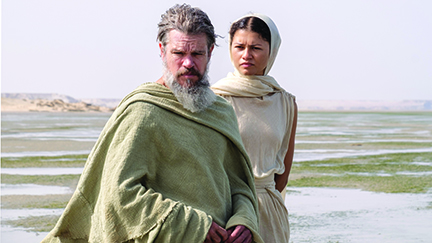
The Odyssey takes you on a journey with its nearly three-hour run time

Step 1 with watching Christopher Nolan’s The Odyssey is to forget.

Like a lotus eater, forget stuff that came before — the barfy discourse around casting, what you think you remember from when you read (or skimmed or got someone to tell you the gist of) The Odyssey in school, what you think you remember about Greek myths in general (the movie explains whatever god or famous Greek-mythology human is at the core of a scene well enough for the purposes of watching the movie). And forget about the runtime, because yes, it’s long but the movie mostly uses those two hours and 50-some minutes pretty well and the pacing picks up right when it needs to. Also probably forget whatever your opinion is of Matt Damon, because the persona of Matt Damon is just going to get in the way of the performance the actor Matt Damon is giving. Ditto Anne Hathaway.

Just focus your viewing experience on the movie itself: the story of the nearly 20 years it takes Odysseus (Damon), king of Ithaca, to get back home to his wife, Penelope (Hathaway), and son Telemachus (Tom Holland), after having left for the Trojan War. We see different parts of this tale, from the beginning when Odysseus is explaining to Penelope why he has to participate in this sure-to-be quagmire-y endeavor and how much the war is going to suck, to the “guys in a horse” part to all the coming home stuff.

Though it’s not told linearly, the main action is roughly this: After 10 years, Agamemnon’s (Benny Safdie) dumb war is over and Odysseus decides instead of looting more from Troy and sailing straight back to Ithaca, they’ll pick up snacks along the way and “see a bit of the world,” a real “three-hour tour” plan that turns into a nearly decade-long trip. Along the way, Odysseus’ army and fleet of three ships meet a Cyclops (Bill Irwin); a witch named Circe (Samantha Morton); some sirens; some zombie soldiers; some armored giants and some supernaturally terrible weather. Each adventure takes a big bite out of the surviving number of Odysseus’s men and makes them both more desperate and less likely to ever reach their homes.

Meanwhile, back home, Penelope is trying to queen the country together but finds tensions high and civility fraying due in part to the many many suitors who have shown up at her castle to try to marry her. She has footed the bill for their years of feasting and drinking while they wait for her to decide to get married again. Telemachus suggests that he could be king, but Penelope points out that he can’t just say he’s the king, he needs everyone to buy in to the idea, which they aren’t right now without a definitive declaration of Odysseus’ death or proof that Telemachus is, essentially, grown up enough to hold the job.

That’s basically the action of the movie. The emotional “what it’s all about,” which becomes clearer as Odysseus works to remember, after years of living in a pleasant lotus buzz on an island with Calypso (Charlize Theron), who he is and what he needs to do, made me think of Nolan’s Oppenheimer. In some ways this movie feels like it is an expansion and examination of the philosophical question that ended that movie, with Oppenheimer worried that he had destroyed the world with the creation he spearheaded. When you’re stuck on a beach for 10 years trying to fight your way into a walled city or rushing to build a catastrophic weapon before a genocidal dictator can, you don’t always think about the long-term repercussions, if you are breaking something that can never be fixed, something that doesn’t just fight this fight but that, as Odyssesu puts it, wages war with civilization itself. That is Odysseus’ struggle, what he doesn’t know how to come back from.

This core struggle allows you to stay rooted in the story of this one family even when the movie brings in a massive cast of characters that range from a goddess (Zendaya) to the weaseliest of the suitors (Robert Pattinson). I never felt like I was getting lost in the spectacle of it all, though the spectacle of it all was mostly enjoyable to watch and I warmed to it over the course of the movie. The razzmatazz of angry Poseidon storms and huge armies on the march augments, not overwhelms, the human story.

The performances are all very good, even Hathaway’s, once I got over some “this is too thin for the Oscar nomination I’ll bet it earns” annoyance. And even Damon, once you let go of the fact that this guy just does not have a “king from antiquity” look or vibe about him, though I think that works for what the movie is trying to do. Everybody — every John Leguizamo and Lupita Nyong’o and Jon Bernthal body — adds a little something, pulls the overall narrative in an interesting little side direction. You could let that pull you out of the tale, but it could also put the story in its rightful place as something that is timeless, as in out-of-a-specific-time and more about the nature of humans than the historical events of the Bronze Age. This is not a history class; it’s a story, literal or metaphorical or somewhere in between, about a guy dealing with the world. And if you want to let your mind wander to the elements about our modern world that the movie seems to be commenting on, there are plenty of places where you can do that too.

(Extra credit; Before you see the movie, amp yourself up with The Odyssey: The Making of an Epic, a 22-minute docummercial on Peacock about the movie which delightfully nerds out about elements such as the on-location sets and the score.After, check out Vulture.com’s story “Christopher Nolan Explains the ‘Key’ to The Odyssey’s Ending,” in which they ask him more about the Oppenheimer-y nature of the movie — though when I thought about the Oppenheimer connection as I was leaving the movie, I didn’t particularly see it as a big reveal for either movie.)

I used Nolan’s The Odyssey as an excuse to check out The Return (streaming on Paramount+ and available for rent or purchase), a 2024 movie more tightly focused, as the title suggests, on Odysseus’ return to Ithaca. Here, broken down old man Odysseus (Ralph Fiennes) is fished out of the water near Ithaca only to be tossed back by some of Penelope’s (Juliette Binoche) suitors, who say there’s already enough of them and they hope he’ll just drown. Instead, he washes up naked on the shore and is tended to by Eumaeus (Claudio Santamaria), who explains how lousy things are on the island with remaining inhabitants at the mercy of the terrible suitors. They steal the livestock, they prey on the women and just generally they’re leading the island to ruin. Up at the castle, Odysseus’ son Telemachus (Charlie Plummer) is trying to keep from getting killed by the suitors and is almost convinced that his mom should just marry Antinous (Marwan Kenzari), the maybe least-awful of the bunch. As with Tom Holland’s Telemachus, Plummer’s Telemachus, as the movie begins, does not quite have the gravitas to take the throne for himself.

The Return is all scorched earth, all people trying to figure out if they can claw their way back from despair and violence. But quietly, without the spectacle of The Odyssey, The Return does its grief and frustration slower and at a lower volume. Which isn’t always to the movie’s benefit in terms of keeping this from being a downbeat slog. But Fiennes gives a solid performance and highlights the emotional struggles of Odysseus.

And speaking of stuff we read (or were at least assigned) in school, I also gave a watch to the 2026 Hamlet, which had a theatrical release in spring and is now available for rent or purchase. This adaptation stars Riz Ahmed as Hamlet, Morfydd Clark as Ophelia, Timothy Spall as Polonius, Sheeba Chaddha (maybe the MVP for me here?) as Gertrude, Joe Alwyn as Laertes and Art Malik as Claudius. Here, Elsinore is the big company that has made Hamlet’s family rich in present-day London. This is a fun adaptation, if “fun adaptation” is a thing you can say about a play soaked in grief and that notoriously features the deaths of pretty much every major character. This isn’t the Baz Luhrmann Romeo + Juliet approach; it’s just a really solid retelling done in a way that, as with The Odyssey, highlights the timelessness of the story.

Riz Ahmed is fully believable as someone who is in the “still figuring it out” phase of his life and doesn’t quite have the maturity at first to know what to do with the information that his uncle was the one who killed his father before nearly immediately marrying his mother. Ahmed also does a good job of making the “whether tis nobler in the mind” of it all feel like natural dialogue and thought, especially for someone addled with grief and anger. Chaddha is equally skilled at delivering Gertrude’s lines in a way that suggests layers of meaning. Gertrude gives Hamlet a look when Claudius is explaining that they are getting married that seems to convey a whole backstory about what is happening and about what she hopes Hamlet understands.

Featured photo: The Odyssey.

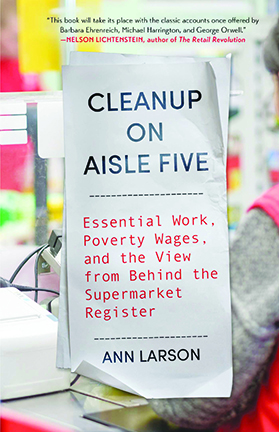
Cleanup on Aisle Five, by Ann Larson

(Atria, 230 pages)

In 2021, Ann Larson published a first-person article in The New Republic, describing what it was like to work as a supermarket cashier — a challenging and low-paying job under usual circumstances, but even more so in the surreal early stages of the Covid-19 pandemic.

Larson had gone to college in Utah and graduate school in New York, planning to work in academia before discovering how few opportunities were there. She’d helped found a group called the Debt Collective that lobbied for the abolishment of student loans. But as the pandemic hit, needing money and wanting to get out the house, Larson applied to work at a local supermarket she liked, thinking it might even be a kind of public service, under the circumstances.

It may well have been — we all needed groceries in 2020 — but the experience was grueling and dehumanizing, as Larson writes in Cleanup on Aisle Five, the nonfiction book that grew out of her essay in The New Republic.

Working long days and unpredictable schedules (sometimes she’d get home at 11 p.m. and have to be back at work at 7 the next morning), Larson writes that she turned into a “walking peanut butter sandwich” because “Being perpetually too tired to cook was one of the ironies of working at the supermarket.” Despite her struggles to complete the most complicated transactions, she was soon promoted to a supervisory role, which came with even more absurdly difficult tasks to master, and frequent opportunities for customers to take out their frustrations on Larson and her coworkers.

Their frustrations surely stemmed in part from the ubiquitousness of self-checkout stands, which have turned all of us into cashiers and made it seem like being a cashier is the easiest of jobs: scan, swipe and go.

But besides the human jobs lost to this convenience, self-checkouts come with a plethora of problems that all have to be solved by a human being (machines that refuse to print the receipt, for example) along with the myriad other unseen jobs that supermarket employees must perform. Larson describes her struggles to learn things such as resetting a broken sensor at a check-stand while angry customers verbally abuse her. (“Can someone come and help this idiot?” one man yelled as she worked to repair a machine.)

Frequently, the problems had been caused by the customers, as when they put cash into the slot marked for coupons.

Staffing is another headache that goes unseen by impatient customers; the supermarket employees call in sick for a variety of reasons (once, a worker confessed to Larson that she wasn’t sick but was too broken up by the loss of her dog to work for a few days), disrupting operations storewide, as others have to fill in. At one point, bathroom breaks have to be limited, and one worker vows to wear an adult diaper.

Larson describes a workplace where people are constantly interrupted from the work that they are doing to do other work: As one person said on an online forum, “Today, no fewer than ten shoppers asked for help while I was on the sales floor. I happily assisted them.” But when the worker returned to his regular job restocking products, he was criticized by a manager for taking too long for that primary work.

Customers can be problematic in other ways that make the lives of supermarket workers harder, as when they wait until they get to the front of the store to decide if they’re buying something, and then leave what they’ve decided not to buy — in supermarket parlance, “gobacks” — for someone else to put back. “Gobacks regenerated like bacterial spores. A worker could spend hours in the aisles and never get to the bottom of the cart,” Larson writes.

Larson weaves her day-to-day experiences, and those of her coworkers, with interesting stories of how the modern American supermarket came into being. Most people consider grocery shopping a chore, and yet the first store where shoppers “got to” pick out their groceries themselves — a store called Piggly Wiggly, in Memphis, in 1916 — was hailed as a boon for busy people, since they no longer had to wait for a store employee to gather their goods. “Every customer will be her own clerk,” one advertisement for the store said.

The Piggly Wiggly model became a trend, as we’re now seeing with self-checkout stands. These vignettes also include the story of a Massachusetts factory worker who designed the machine that gave us flat-bottomed paper bags, and the first robotic grocery store, an “endlessly glitchy” debacle called the Keedoozle, which started — and ended — in the 1940s.

Larson’s account is most sympathetic when she is talking about her coworkers, who labor in the same circumstances as she does without the hope of getting out of them by writing a book.

There is, for example, Whitney, who was making ends meet by selling plasma to supplement her income; George, the security guard who worked full-time but had never been able to save up enough money to take a vacation; a 52-year-old cashier who had been planning to celebrate her 20th wedding anniversary by driving to another state to buy lottery tickets, but then couldn’t afford the gas and so stayed home and worked in the garden instead.

Almost all seem one unexpected expense away from bankruptcy. One 25-year-old cashier needed a root canal and was in pain so bad she could only eat soft food, but she didn’t have dental insurance or the means to pay for the procedure herself, so she was on a waiting list at a local dental school where you could get treatment from students learning how to do procedures.

Some of the employees had come to the supermarket after burning out at Amazon; one person had worked in a warehouse and was required to box 90 items every minute. Not that this grocery store didn’t have quotas — at one point, cashiers were told they needed to scan at least 21 items per minute so that customers didn’t get impatient. They held a contest to encourage the cashiers to scan even faster: The winner would receive a $5 gift card to the deli.

Cleanup on Aisle Five challenges the assumption that checking out groceries is so easy that anyone can do it, and adds to a growing body of work about the indignities borne by unseen workers who make the lives of everyone else more liveable, for little pay. Simon Paré-Poupart’s new release Trash! A Garbageman’s Story does much the same.

These books may not belong on the same shelf as the working-class portraits offered by Barbara Ehrenreich, Michael Harrington and George Orwell, as a blurb on the cover of Cleanup on Aisle Five says, but they offer voices often dismissed or ignored in the conversations about wealth and poverty, and I, for one, will never leave an unwanted item with a supermarket cashier again.

B

Featured Photo: Cleanup on Aisle Five, by Ann Larson

Album Reviews 26/07/23

New England Jazz Collaborative, Tributaries (Amherst College Press)

Well, that’s a scary little jumble of words, isn’t it, the “New England Jazz Collaborative?” It portends a listen that’s rendered somnambulistic and amateurish through the intervention of academic purists, but don’t let that fool you; far from being an uninteresting exercise for wonks, this set of six new works for jazz orchestra by four modern composers explores several different subgenres that make the record crackle with excitement and innovation. The lead single, “Ol’ Liminal,” combines Benny Goodman full-orchestra swing with noir-detective raunch — think the Peter Gunn theme — and then heads straight for Alpha Centauri, launching a fireworks display of hilariously cool melody. “Another Brighter Day” switches gears to bright, midnight-at-the-urban-mecca joy, with classical elements blending with straight Yellowjackets-style progressive steez. This is a composer-driven collective and it shows; in interviews the sound designers indicate that they can hardly believe their luck in being involved with such an overabundance of talented players. This is one you absolutely do not want to miss. A+ —Eric W. Saeger

Sharon Katz & The Peace Train, Desert Air (self-released)

While it’s still summer and you’re in the mood to sway in the beach breeze to musical trifles, this outfit will be performing July 27 through July 31 at The Power of Music Conference at Star Island (one of the Isles of Shoals, 7 miles off the coast of Rye, N.H.). A white guitarist, singer and musical therapist, Katz is from South Africa’s now-renamed Nelson Mandela Bay and has always been something of a missionary; as a teenager during the apartheid era she’d sneak out to the “Blacks only” townships by hiding under blankets in the back seat of her friend’s car, which eventually led to her forming the country’s seminal 500-voice multiracial/multicultural band and youth choir in 1992, performing at all of Mandela’s special events after his election. The music on this record is carefree, absolutely no-contact and no-stress, reminiscent of Sade in some ways and Maryanne Faithfull in others, but altogether twice as gentle, so if you’re attending that event, leave the glow sticks at home. A

PLAYLIST

A seriously abridged compendium of recent and future CD releases

• Look out below and whatnot, new albums are getting airdropped onto our heads this Friday, July 24, I give up, waitwhat, the summer’s already half over, I may as well try to find my Ren & Stimpy chullo hat and noisy swishy snow pants in my nonsense-filled closet, unless Petunia threw them out because smelly, why am I living in the insane Siberian wilderness of New Hampshire again? But whatever, as long as it’s still summer, it’s actually warm in the permafrosted nation of Canada, which we can thank for all their wildfires, which turned our lovely New Hampshire skies the same color of sickly yellow as the planet Venus, remember when the Russians sent a probe there and it melted within 10 minutes, accomplishing nothing more than sending back photos of molten rocks and a barf-yellow sky? But I digress because whatever, one of Canada’s greatest exports is of course Shania Twain, the criminally gorgeous woman with the singularly mediocre voice who was the ’90s girl-AOR version of Adele, when Western civilization was almost palatable and single 30-something women hadn’t yet abandoned all hope that men would ever understand anything that wasn’t cryptocurrency, sports or Roblox. Come on, you remember, she gave us such hits as “You’re Still The One” and “Man I Feel Like a Woman” and people had normal jobs instead of driving an Uber 96 hours a week for Jeff Bezos or whatever’s even going on now? Well, she’s back again, with an album titled Little Miss Twain, ready to lip-sync something from it on the Today show for the entertainment of the five remaining nursing homes in Idaho that still have it on the teevee, let’s go find something from this album and talk about it and drink heavily, not necessarily in that order! How do you like that, she’s gone in an even more country music direction this album, despite the fact that she grew up in the blue-collar high-unemployment-cursed city of Windsor, Ontario, but whatever, the first single from this album is the title track, which features country legend Tanya Tucker, a much better singer than Shania, but then again who isn’t, wait, I get it, there’s a line in this sleepy country ballad where the ladies sing “according to my mother I’m the next Tanya Tucker,” I see what they did there. I don’t know, you might like this song if you have ducks and chickens living on your property, let’s move on.

• Yay, if you can’t deal with Shania’s classy je nes sais quoi, you can always just settle for London rave queen Charli xcx’s occasional twerking, which at least she doesn’t overdo, because come on already, it’s 2026. Her new LP Music Fashion Film features the single “Rock Music,” which is actually neat if you like four-chord electro-punk (who doesn’t?) and can stomach a little AutoTune (it’s acceptable in this case).

• It’s never been cool to slag off New York City indie-rockers The Strokes as a sucky band, but only because they usually aren’t. Their forthcoming seventh album is called Reality Awaits; it starts with the tune “Psycho Sh-t,” which consists of equal parts New Order and Yo La Tengo, it works nicely enough, same as always.

• We’ll wrap things up with now-73-year-old Robyn Hitchcock, whom you might remember from his biggest tune, 1988’s “Balloon Man,” you remember, the video was a stop-motion thing with a can of baked beans and some fruit and it sounded like The Monkees, OK, just forget it, no one knows that song, his new album The Confuser has a single, “My Dead Astronaut,” that’s kind of a joke song, it’s stupid, but he’ll be speaking and signing books in Boston at Porter Square Books on July 27.

Featured Photo: New England Jazz Collaborative, Tributaries and Sharon Katz & The Peace Train, Desert Air

Cherry-Sunflower Shortbread

Shortbread is about as simple as it’s possible for a cookie to be: butter, flour, sugar, and salt. There aren’t any tricky techniques or exotic ingredients. Recipes won’t throw technical put-the-newbie-in-their-place baking terms.

But weirdly, as you learn more about baking you find shortbread seems deeply suspicious.

Where are the eggs? How will the dough hold together without eggs?” It turns out that exactly one half of the point of shortbread is that it is crumbly and delicate, and you don’t actually want it to hold together very long — just long enough to go from the oven to your plate to your mouth.

What about the vanilla? EVERY cookie recipe has to have vanilla!” Yeah, not shortbread. The other half of the point of shortbread is the flavor of the butter. Even Vanilla, Supreme Angelic Queen of the Flavorings would be a distraction from the butter.

Eventually you learn to just accept the shortbreadiness of it all.

2 cups (240 g) flour – all-purpose flour works well for this, but because this is shortbread and does not depend on gluten to hold it together or anything, you can probably go crazy with whatever type of flour you like. Even rice flour would probably work well.

¼ teaspoon salt – I like to use coarse sea salt or kosher salt to bring little crunchy pops of salt to the final cookies.

Zest of two limes

1 cup (2 cubes) butter

¾ cup (85 g) powdered sugar

¾ cup (125 g) dried tart cherries

6 tablespoons (62 g) roasted salted sunflower seed kernels

Don’t worry about preheating your oven, not yet anyway. This dough needs to chill for several hours in the refrigerator before you bake it.

Whisk the flour, salt and lime zest together, then set it aside.

Cream the butter with your electric mixer — I use a stand mixer — until it is fluffy and lighter in color. Then beat in the powdered sugar, slowly at first so it doesn’t poof up into your face.

Slowly, a large spoonful at a time, mix in the flour mixture. You might have to scrape butter from the bottom of the bowl or the paddle of your mixer. Mix in the sunflower seeds and cherries.

Scoop the dough onto a large sheet of waxed paper or parchment paper. Roll it into a log and wrap up each end, then chill it in your refrigerator for at least four hours or overnight.

Now you can preheat your oven — to 325°F.

Unwrap your cookie mummy and cut slices from it about half an inch thick. Place the slices on a silicone- or parchment-lined baking sheet, and bake until they just barely start to brown a little, probably somewhere around 20 minutes or so. You will probably end up with two batches of 12 cookies.

Let the shortbread cool on the baking sheet and enjoy with tea.

Featured photo: Cherry-Sunflower Shortbread. Photo by John Fladd.

Stay in the loop!

Get FREE weekly briefs on local food, music,

arts, and more across southern New Hampshire!